

Last updated November 26th 2026
Some of the links below are affiliate links, meaning at no additional cost to you, we may earn a commission if you click through and make a purchase.
- Treat every gun as loaded
- Point the muzzle in a safe direction
- Keep your finger off the trigger until you’re ready to shoot
- Know your target and what’s beyond
By Nick Hall.
Table of Contents
The Short Answer
Quick Answer: In the 300 Win Mag vs 30-06 matchup, the 300 Win Mag is faster, flatter and hits harder, but the margin is smaller than its reputation. With the same 180 gr bullet from Hornady, it adds 260 fps, about 400 ft-lb at 300 yards and roughly 10 in. less drop at 500. You pay for that in recoil, about 36% more from the same rifle, and in ammo that costs about 40% more per round. For deer and for elk inside 400 yards, the 30-06 does the job and is easier to shoot well. Buy the 300 Win Mag if you hunt elk or moose past 400 yards and can handle the kick.
Most 300 Win Mag vs 30-06 comparisons pit different loads against each other. This one uses the same Hornady 180 gr bullet in both, from the same length test barrel, so every difference below comes from the cartridge. I also cover SAAMI specs, the elk energy line, recoil at four rifle weights, the belt and bolt face, and what rifles and ammo cost right now.
Same Bullet, More Powder: What the Magnum Adds
Both cartridges fire a .308 in. bullet and both fit a long action, but the 300 Win Mag has a longer, fatter, belted case that holds more powder at higher pressure. The SAAMI specifications put the numbers on it. The .30-06 Springfield case is 2.494 in. long. The 300 Winchester Magnum case is 2.620 in. long.
The overall length is the detail most people miss. SAAMI caps both loaded cartridges at 3.340 in. The magnum gets its extra case length by seating the bullet deeper and running a shorter neck, so both rounds fit a long action.
Pressure is the other half. SAAMI sets the maximum average pressure at 60,000 psi for the .30-06 and 64,000 psi for the 300 Win Mag. More case, more powder and more pressure behind the same bullet explain every number below.
How Much Faster Is the 300 Win Mag From a 24 in. Barrel?
About 260 fps. A fair test puts the same bullet in both cases and fires it from the same length barrel. Hornady loads one bullet in both cartridges and tests both in a 24 in. barrel.
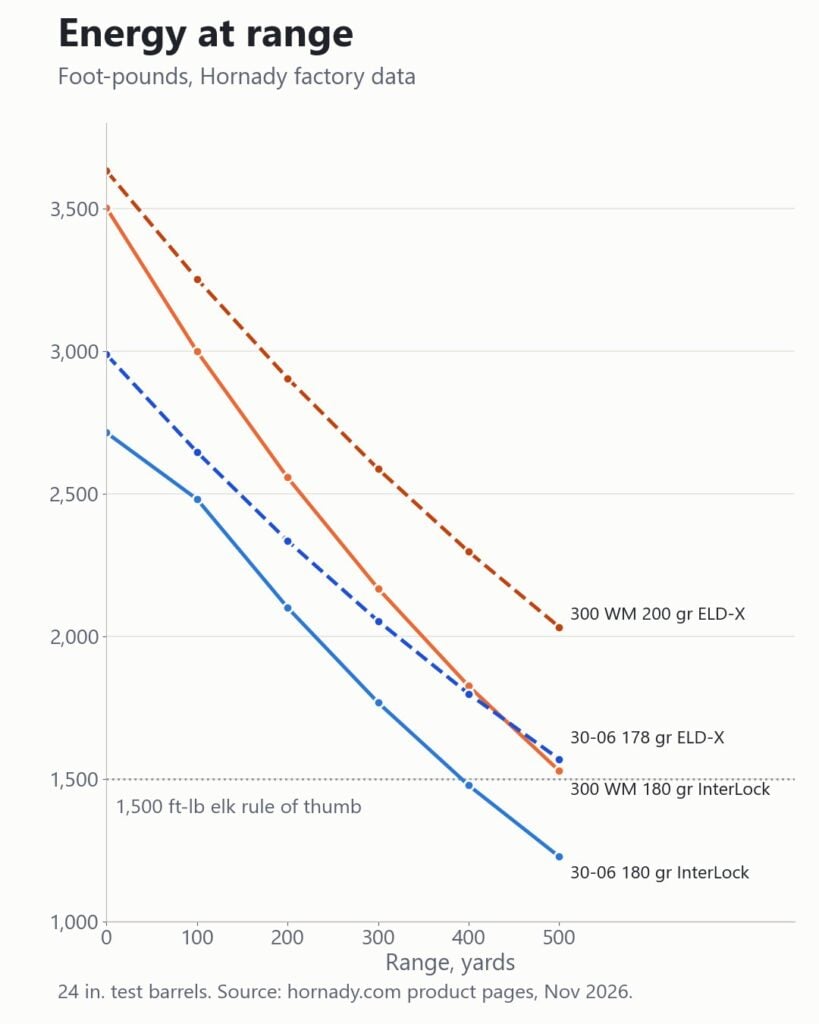
Hornady’s 30-06 180 gr InterLock SP American Whitetail leaves a 24 in. test barrel at 2,700 fps with 2,714 ft-lb. The 300 Win Mag version of the same load leaves at 2,960 fps with 3,502 ft-lb. That’s 9.6% more speed and 29% more muzzle energy.
The raw energy gap shrinks from 788 ft-lb at the muzzle to 301 at 500 yards, but past 100 yards it stays between 21% and 25%. At 300 yards, it’s 2,168 ft-lb for the magnum vs 1,768 for the .30-06, a 400 ft-lb or 23% edge. At 500 yards, it’s 1,529 vs 1,228.
300 Win Mag vs 30-06 Comparison Table
| 300 Win Mag | 30-06 Springfield | |
|---|---|---|
| Case length | 2.620 in. | 2.494 in. |
| Max overall length | 3.340 in. | 3.340 in. |
| Bullet diameter | .308 in. | .308 in. |
| Case head | Belted, .532 in. | Rimless, .473 in. |
| Headspaces on | The belt | The shoulder |
| Max average pressure | 64,000 psi | 60,000 psi |
| Standard twist | 1:10 | 1:10 |
| Action | Long, magnum bolt face | Long, standard bolt face |
| Hornady 180 gr InterLock velocity | 2,960 fps | 2,700 fps |
| Muzzle energy, same load | 3,502 ft-lb | 2,714 ft-lb |
| Energy at 300 yd | 2,168 ft-lb | 1,768 ft-lb |
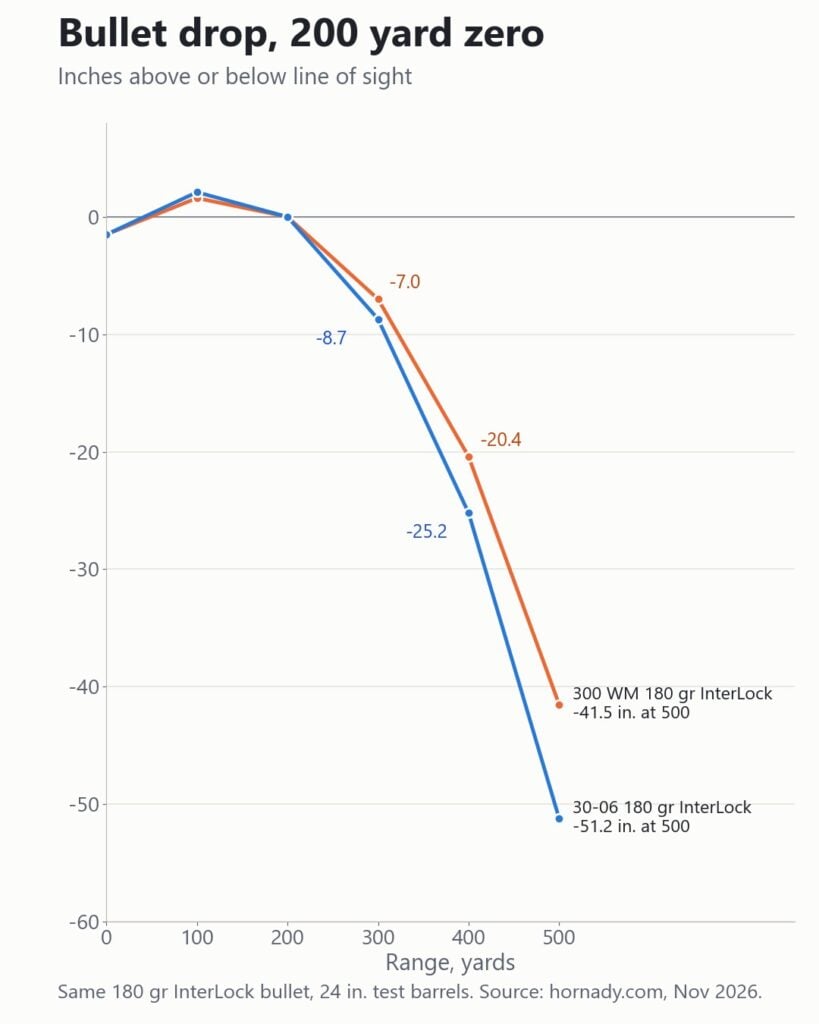
| Drop at 400 yd, 200 yd zero | 20.4 in. | 25.2 in. |
| Drop at 500 yd, 200 yd zero | 41.5 in. | 51.2 in. |
| Free recoil, 8 lb rifle, estimate | About 27 ft-lb | About 20 ft-lb |
| Median ammo price, Nov 26 2026 | $2.87 a round | $2.05 a round |
| Introduced | Winchester, 1963 | U.S. Army, 1906 |
Ballistics: Energy and Drop to 500 Yards
The 300 Win Mag shoots flatter, but “flatter” means inches, not feet, inside normal hunting range. With both 180 gr InterLock loads zeroed at 200 yards, the magnum is 7.0 in. low at 300 yards and the .30-06 is 8.7 in. low. That’s a 1.7 in. difference. At 400 yards, it grows to 4.8 in., and at 500 yards to 9.7 in.
Inside 300 yards, a 1.7 in. difference does not change where you hold. Past 400, it starts to matter if you hold over instead of dialing. With a rangefinder and a turret, it barely matters at all.
300 Win Mag vs 30-06 for Elk: The 1,500 Foot-Pound Line
Elk is where the 300 Win Mag vs 30-06 choice really matters. Many elk hunters use 1,500 ft-lb at impact as a rule of thumb for a clean kill. Here’s where each Hornady load crosses it, from the published tables:
- 30-06 180 gr InterLock SP: about 390 yards, 1,478 ft-lb at 400
- 30-06 178 gr ELD-X: past 500 yards, 1,570 ft-lb at 500
- 300 WM 180 gr InterLock SP: just past 500 yards, 1,529 ft-lb at 500
- 300 WM 200 gr ELD-X: well past 500 yards, 2,033 ft-lb at 500
For deer, the common rule of thumb is 1,000 ft-lb, and every one of these loads is still well above it at 500 yards. That’s why the 300 Win Mag is more gun than any whitetail needs. If you mostly hunt deer, see our best 30-06 rifles instead.
For elk, the magnum pushes the line out by about 100 yards with a cup-and-core bullet, and much further with a heavy, high-BC bullet. If your elk shots run long, that’s the real reason to buy one. Our best elk rifle guide covers the rifles.
Bullet Choice Closes Most of the Gap
A good bullet in a .30-06 carries more energy at 500 yards than a basic bullet in a 300 Win Mag. Hornady’s 30-06 178 gr ELD-X Precision Hunter starts slower than the magnum’s 180 gr InterLock, at 2,750 vs 2,960 fps. But its sleeker bullet loses speed more slowly, and by 400 yards the two are within 30 ft-lb of each other, 1,799 vs 1,826.
By 500 yards, the .30-06 load is ahead, 1,570 vs 1,529 ft-lb, because its bullet has the higher ballistic coefficient. See our ballistic coefficient explainer for why a high-BC bullet holds its speed.
Picking a load is simple. In a .30-06, a 150 to 165 gr bullet is plenty for deer, and 165 to 180 gr bonded or high-BC bullets are the elk choice. In a 300 Win Mag, start at 180 gr, and go to 200 gr or heavier for elk and moose at distance. Heavy, high-BC bullets hold their energy best at distance, which is the reason to own the magnum in the first place.
The flip side is that the magnum gets the same benefit. Hornady’s 300 Win Mag 200 gr ELD-X still carries 2,033 ft-lb at 500 yards, more than either .30-06 load has at 400. Match bullet quality before you compare cartridges.
Recoil: The Price of 260 fps
The 300 Win Mag kicks about 36% harder than the .30-06 from the same rifle. Free recoil depends on bullet weight, velocity, powder charge and rifle weight. Using the standard free-recoil formula with the two 180 gr Hornady loads, and assuming about 56 gr of powder in the .30-06 load and 74 gr in the magnum, here’s the estimate:
- 7 lb rifle: 30-06 about 23 ft-lb, 300 Win Mag about 31 ft-lb
- 8 lb rifle: 30-06 about 20 ft-lb, 300 Win Mag about 27 ft-lb
- 9 lb rifle: 30-06 about 18 ft-lb, 300 Win Mag about 24 ft-lb
- 10 lb rifle: 30-06 about 16 ft-lb, 300 Win Mag about 22 ft-lb
Read that list sideways. A 9 lb 300 Win Mag still kicks harder than a 7 lb .30-06, and a 10 lb magnum still kicks harder than an 8 lb .30-06. Weight alone doesn’t make the magnum feel like an ought-six. A muzzle brake is the other fix. It cuts felt recoil sharply, but it makes the rifle much louder for you and anyone beside you, so plan on hearing protection even in the field if you can.
Magnums also wear barrels faster. Burning more powder behind the same bullet heats and erodes the throat, the start of the rifling, more quickly. For a hunter who fires a few boxes a year, that will not matter for decades. For someone who practices hard at long range, it means a new barrel sooner.
Recoil matters more than most hunters admit, because a flinch costs more accuracy than the magnum’s extra speed buys. If you won’t practice with it, the magnum’s extra reach is wasted.
The Belt, the Bolt Face and Headspace
The belt is the 300 Win Mag’s most visible difference, and it decides what rifle can chamber it. SAAMI draws the magnum’s case head at .532 in. with a belt just ahead of the extractor groove, and the chamber headspaces on that belt. The .30-06 has a .473 in. rimless head and headspaces on its shoulder.
Two things follow from that. First, a 300 Win Mag needs a magnum bolt face, while the .30-06 uses the standard face shared with the .270 Win and .25-06. Converting a .30-06 rifle to 300 Win Mag takes more than a barrel. Second, because both rounds share the 3.340 in. overall length, both use a long action.
Here’s how to tell what you have:
- Read the barrel. It’s marked “300 WIN MAG” or “30-06 SPRG”. Fire only what the barrel says.
- Read the headstamp. The base of the case says “300 WIN MAG” or “30-06 SPRG”.
- Look for the belt. A raised band just ahead of the rim means a belted magnum.
- Measure the case. 2.620 in. is the magnum, 2.494 in. is the .30-06.
Can You Shoot 30-06 in a 300 Win Mag?
No. Never fire a .30-06 in a 300 Win Mag rifle, or a 300 Win Mag in a .30-06. They share a bullet diameter, a twist rate and an overall length, which is exactly why the mix-up happens. A .30-06 has no belt and is shorter and slimmer than the magnum chamber, so it sits with far too much headspace, and the case can stretch and rupture.
The magnum’s belted case is too fat and too long to chamber in a .30-06 at all. Keep the boxes apart, check the headstamp before a hunt, and never load a magazine from loose rounds you haven’t identified.
Rifles and Cost: The Rifle Costs the Same, the Ammo Doesn’t
The five popular bolt-action lines we checked all come in both, and the price gap is small. On November 26, 2026, the lowest listed new prices in our catalog were within about $130 of each other in each line, and the magnum was the cheaper one in three of the five:
- Mossberg Patriot: 30-06 from $354, 300 Win Mag from $390
- Savage 110: 30-06 from $534, 300 Win Mag from $550
- Howa 1500: 30-06 from $539, 300 Win Mag from $527
- Bergara B-14: 30-06 from $700, 300 Win Mag from $630
- Tikka T3x: 30-06 from $749, 300 Win Mag from $620
The ammo is where the costs split. The same day, we tracked 682 in-stock .30-06 listings across 13 retailers at a median of $2.05 a round. The 300 Win Mag had 462 listings across 12 retailers at a median of $2.87, 40% more per shot. Like for like, the same Sellier & Bellot 180 gr soft point ran about $1.11 a round in .30-06 and $1.40 in 300 Win Mag, about 26% more.
The .30-06 also wins on choice. More listings means more bullet types, more weights and better odds of finding your load in a small-town store before opening day. Our best 300 Win Mag rifles page covers the magnum side.
Where They Came From
The .30-06 is the older, military round. The 300 Win Mag is the long-range magnum. The U.S. Army adopted the .30-06 in 1906, and it served through two world wars before it became America’s default big-game cartridge. Winchester introduced the 300 Win Mag in 1963 for its Model 70, built on the belted .338 Win Mag case, lengthened and necked down to .30 caliber, so it would fit a standard long action.
That design choice still shapes the comparison. The magnum was made to fit the same long action as the .30-06 and outrun it, and it does. If you’re weighing other magnums, see our 7mm PRC vs 300 Win Mag and 6.5 Creedmoor vs 300 Win Mag comparisons. For the .30-06 against its own family, read 308 vs 30-06 and 270 vs 30-06.
My Recommendation
In the 300 Win Mag vs 30-06 decision, buy the .30-06 unless you have a specific long-range elk or moose hunt in mind. It handles deer and elk inside 400 yards with the right bullet, it’s easier to shoot well, the ammo costs less and there’s more of it.
Buy the 300 Win Mag if your elk, moose or open-country shots run past 400 yards, you’ll shoot a 9 lb or heavier rifle or run a brake, and you’ll practice enough to tame the recoil. Load it with a heavy, high-BC bullet, or you’re giving away much of what you paid for.
Here’s how I’d match the cartridge to the hunt:
- Whitetails in woods or farmland: .30-06, every time.
- First big-game rifle: .30-06. Learn to shoot without a flinch first.
- Mule deer and pronghorn in open country: either works, and the .30-06 with a high-BC bullet is enough.
- Elk inside 400 yards: .30-06 with a 165 to 180 gr premium bullet.
- Elk past 400 yards: 300 Win Mag with a 180 to 200 gr high-BC bullet.
- Moose: either inside 300 yards with a 180 to 220 gr bonded bullet, the 300 Win Mag past that.
- Big brown and grizzly bears: 300 Win Mag with a 200 gr or heavier bonded bullet.
- Recoil-sensitive shooters: .30-06 with reduced-recoil loads, or a lighter cartridge.
Our 30-06 explainer covers the ought-six in more depth.
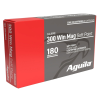
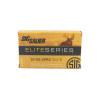
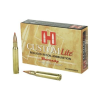
300 Win Mag Ammo Live Pricing
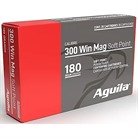
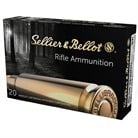
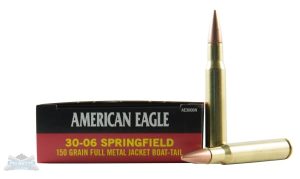
30-06 Ammo Live Pricing

Frequently Asked Questions
Is 300 Win Mag better than 30-06?
For long-range elk and moose, yes. With the same 180 gr Hornady bullet, the 300 Win Mag is 260 fps faster and carries about 23% more energy at 300 yards. For deer and most elk hunting inside 400 yards, the .30-06 does the job with less recoil and cheaper ammo.
How much more recoil does 300 Win Mag have than 30-06?
About 36% more from the same rifle. With 180 gr loads in an 8 lb rifle, the estimate is about 27 ft-lb for the 300 Win Mag vs 20 ft-lb for the .30-06. Even a 10 lb magnum kicks harder than an 8 lb .30-06.
Can you shoot 30-06 in a 300 Win Mag?
No. The .30-06 has no belt and is shorter and slimmer than the magnum chamber, so it sits with far too much headspace, and the case can stretch and rupture. Fire only the cartridge stamped on the barrel.
Is 30-06 enough for elk?
Yes, with a good bullet and a sensible range. Hornady's 30-06 180 gr InterLock stays above the common 1,500 ft-lb elk rule of thumb to about 390 yards, and its 178 gr ELD-X stays above it past 500.
How much flatter does 300 Win Mag shoot than 30-06?
With the same 180 gr bullet and a 200 yard zero, the magnum drops 1.7 in. less at 300 yards, 4.8 in. less at 400 and 9.7 in. less at 500, from Hornady's tables.
Is 300 Win Mag ammo more expensive than 30-06?
Yes. On November 26, 2026, the median price we tracked was $2.87 a round for 300 Win Mag and $2.05 for .30-06, about 40% more. Check the live price boxes for today's prices.
Do 300 Win Mag and 30-06 use the same action?
Both use a long action, and SAAMI caps both at 3.340 in. overall length. The 300 Win Mag needs a magnum bolt face for its .532 in. belted case head, while the .30-06 uses a standard .473 in. bolt face.
What twist rate do 300 Win Mag and 30-06 use?
SAAMI lists 1:10 for both, which stabilizes most 150 to 200 gr hunting bullets.
Is 300 Win Mag overkill for deer?
For most deer hunting, yes. Every Hornady load compared here is still well above 1,000 ft-lb at 500 yards in either cartridge, so the magnum mostly adds recoil and cost on whitetails.
Is 30-06 vs 300 Win Mag a big difference at 300 yards?
Smaller than most hunters expect. With the same Hornady 180 gr bullet, the magnum carries 2,168 ft-lb at 300 yards vs 1,768 and drops 1.7 in. less with a 200 yard zero. Both are far above what deer and elk need at that range.
When did the 300 Win Mag and 30-06 come out?
The U.S. Army adopted the .30-06 in 1906. Winchester introduced the 300 Win Mag in 1963.
2,799+ Gun & Ammo Deals
Updated daily from 200+ top retailers. Filter by category, caliber, action type, and price.
Related Guides