

Last updated August 20th 2026
Some of the links below are affiliate links, meaning at no additional cost to you, we may earn a commission if you click through and make a purchase.
Nobody agrees on how to write this cartridge. People search for it as 30-06, 30.06, 30 06, and my favorite, 30 odd 6. All four mean the same thing, and the last one is closer to right than it looks, because the cartridge is said out loud as “thirty-aught-six”.
That confusion is a decent clue about the round itself. It has been in continuous service since 1906, it fought both world wars, and it is still sitting on the shelf of every gun shop in America. This guide covers what it is, where the odd name comes from, what the ballistics actually do, and whether a cartridge older than sliced bread still deserves a place in your safe. If you already know all that and want to know which rifle to buy, our best .30-06 rifles guide ranks the current field.
Table of Contents
What “.30-06” Actually Means
Both halves of the name are doing a job, and neither is obvious.
How to say it
“Thirty-aught-six”. Aught is an old word for zero, so you are really saying thirty-zero-six. Nobody says “thirty dash oh six” and nobody says “thirty point oh six”, even though a lot of people write it that way. If you have been saying it in your head as “thirty odd six”, you are not far off the sound and you are in very good company.
Where the numbers come from
The 30 is the nominal caliber in inches. The 06 is the year the US Army adopted it, 1906. That is the whole naming convention, and it was normal at the time. The .30-03 that came immediately before it was adopted in 1903, and the .30-40 Krag was named for its caliber and its powder charge in grains.
The actual bullet measures .308 inches, not .30, which is the same projectile the .308 Winchester uses. In metric the cartridge is 7.62x63mm. Winchester also sold it for years as the “.30 Gov’t ’06”, which is the most honest name any of them managed.
| Spec | .30-06 Springfield |
|---|---|
| Bullet diameter | .308 in |
| Case length | 2.494 in |
| Overall length | 3.34 in |
| Metric name | 7.62x63mm |
| SAAMI max pressure | 60,000 psi |
A Short History: 1906, and the Bullet That Forced It
The .30-06 exists because the US Army got its homework marked by Europe and did not like the grade.
In 1903 the Army adopted the .30-03, firing a 220 grain round-nosed bullet at about 2,300 feet per second. It was a perfectly reasonable cartridge for 1903. The problem was that European armies were moving to lighter pointed bullets, called spitzers, which hold velocity far better downrange and shoot much flatter. Against that, a heavy round nose is a brick.
So three years later the Army shortened the neck of the .30-03 case slightly, dropped to a 150 grain flat-based spitzer, and pushed it to roughly 2,700 feet per second. That was the .30-06, and it made the .30-03, the 6mm Lee Navy and the .30-40 Krag obsolete more or less at once. Rifles already in service were rechambered rather than scrapped.
The rifles it was built around
The M1903 Springfield carried it first, then the M1917 Enfield, then the M1918 Browning Automatic Rifle, then the rifle most people picture when they hear the name at all: the M1 Garand. The M1941 Johnson is the one nobody remembers. Between them they covered both world wars and Korea.
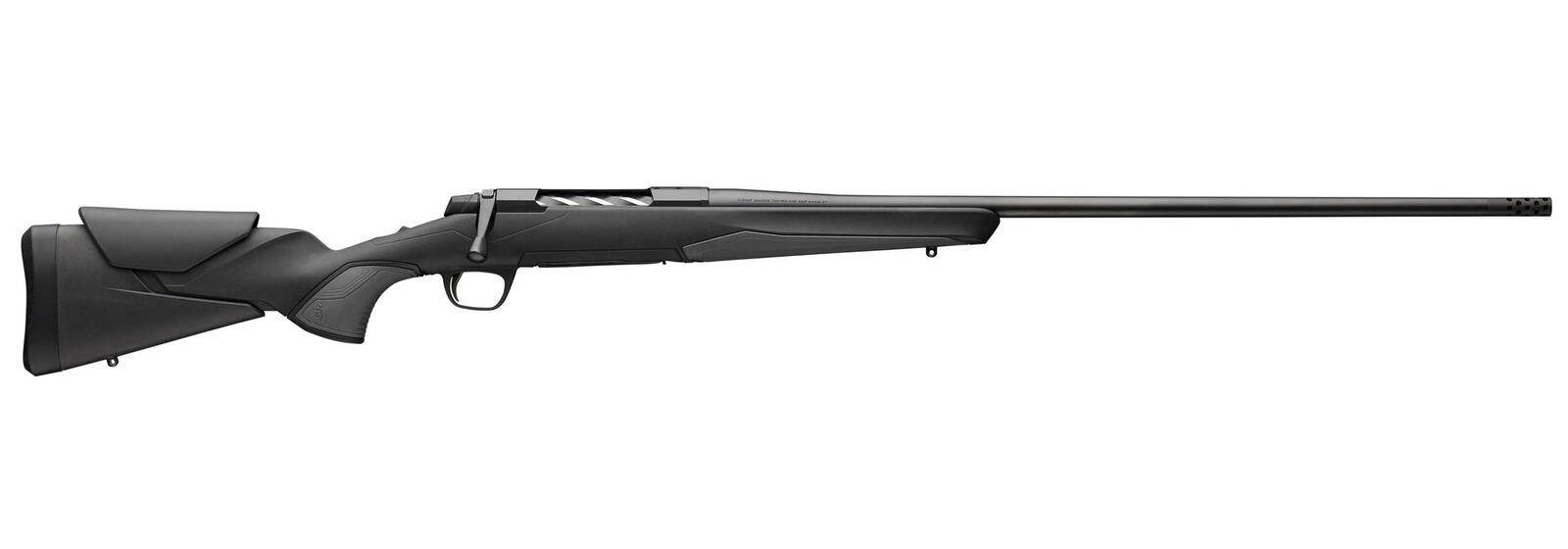
It served as the primary American rifle and machine gun cartridge for close to fifty years, which is a very long run, and it was only replaced in 1957 by the 7.62x51mm NATO and the 5.56x45mm NATO. Note what happened there. The 7.62×51 does almost exactly what the .30-06 does in a shorter case. The military did not decide the .30-06 was wrong, it decided it could get the same job done in less space.
What It Actually Does
Here is the part that matters if you are hunting with it. These are typical factory figures, and the thing to notice is that the energy barely moves across the whole range while the velocity drops a long way.
| Bullet | Muzzle velocity | Muzzle energy |
|---|---|---|
| 150 grain | 2,910 fps | 2,820 ft-lbs |
| 165 grain | 2,800 fps | 2,872 ft-lbs |
| 180 grain | 2,700 fps | 2,913 ft-lbs |
| 220 grain | 2,500 fps | about 3,000 ft-lbs |
That flatness is the whole argument for the cartridge. You are not choosing between a powerful load and a weak one, you are choosing between a fast light bullet that shoots flatter and a slow heavy bullet that penetrates deeper, at roughly the same energy either way. Very few cartridges give you that much room to move without changing rifles.
Which Bullet Weight for Which Animal
- 150 grain. Deer, hogs, antelope. Flattest trajectory of the common weights, which makes it the easiest to shoot well at unknown distances.
- 165 grain. The compromise, and the one I would pick if I had to buy a single box and go hunting with it. Gives up very little trajectory and hits noticeably harder.
- 180 grain. Elk, black bear, moose. This is where the .30-06 earns its reputation as a big-game cartridge rather than a deer cartridge.
- 220 grain. Deep timber and heavy bone at close range. Rainbow trajectory past 200 yards, so know your distance. If close-range timber is most of your hunting, a lever gun is worth a look too.
Bullet construction matters as much as weight, and arguably more. A tough bonded or partition bullet at 165 grains will out-penetrate a cheap cup-and-core 180. If you are hunting anything larger than deer, spend the money on the bullet before you spend it on anything else.
Is It Still Relevant?
This is the real question, and the honest answer is that the .30-06 is not the best at anything and is nearly the best at everything.
The 6.5 Creedmoor shoots flatter with less recoil and has eaten a lot of the .30-06’s lunch with target shooters and deer hunters. The .300 Winchester Magnum hits harder at distance. The .308 does very nearly the same job in a shorter action. Every one of those is a better specialist. None of them covers as much ground.
The Boone and Crockett Club called it the utility infielder, the jack of all trades, and that is exactly right. There is a documented history of hunters taking every species of North American big game with it, Grancel Fitz and J.Y. Jones among them. It is not the ideal choice for wild sheep and goats, where you want something flatter and lighter to carry, and it is not what I would take after the largest coastal bears. For everything between those two extremes it is hard to make a case against.
The other argument is boring and decisive: ammunition. Every manufacturer loads it, every shop stocks it, and you can find it in a hardware store in a town with one traffic light. That is worth a great deal more on the fifth day of a hunt than fifty feet per second.
.30-06 vs .308: The Short Version
They shoot the same diameter bullet. The .30-06 has a longer case, so it holds more powder and runs roughly 100 to 200 feet per second faster with the same bullet weight, and it handles heavy bullets better because the longer action gives them room. The .308 is shorter, which means lighter rifles, shorter bolt throws and slightly less recoil.
In the field, on a deer, at 200 yards, you would struggle to tell them apart. The gap opens up with 180 grain bullets and heavier. We go through it properly in our .308 vs .30-06 comparison, and there is a .270 vs .30-06 breakdown if that is the choice in front of you.
Recoil, Honestly
The .30-06 kicks. Not brutally, but enough that a lot of new shooters develop a flinch on it and never quite shake it. In a light mountain rifle with a thin recoil pad it is genuinely unpleasant, and manufacturers keep building lighter rifles because that is what sells.
The fixes are all cheap. A decent recoil pad, a rifle that weighs more than seven pounds scoped, and a stock that actually fits you will handle most of it. Reduced-recoil factory loads exist and are a perfectly sensible way to bring a new shooter along. There is no prize for taking the full beating.
What to Look for in a .30-06 Rifle
- Weight. Seven to eight and a half pounds scoped is the sweet spot. Lighter carries better and shoots worse.
- Barrel length. 22 inches is the classic. Shorter costs you velocity, which is the main thing you bought a .30-06 for.
- Long action. The .30-06 needs one. That is the trade against the .308, and it is why .308 rifles are lighter.
- Recoil pad. Check what is actually fitted. A hard plastic butt plate on a .30-06 is a false economy.
- Magazine capacity. Four rounds is standard. Anything less is worth asking about.
Used bolt guns in .30-06 are one of the genuine bargains left in shooting. There are millions of them, most were fired a handful of times each autumn, and a tired-looking 1970s rifle with a good bore will shoot better than its price suggests. Our best .30-06 rifles guide covers what is worth buying new, with live pricing.
If You Own an M1 Garand, Read This First
This is the single most expensive mistake you can make with a .30-06, and most buying guides skip it entirely. Do not feed modern hunting ammunition to an M1 Garand.
The Garand is gas operated. A small port under the front sight bleeds pressure off the barrel to drive the operating rod back and cycle the action. That port was designed around military M2 ball, which uses a relatively fast powder that has largely finished its work by the time the bullet passes the port.
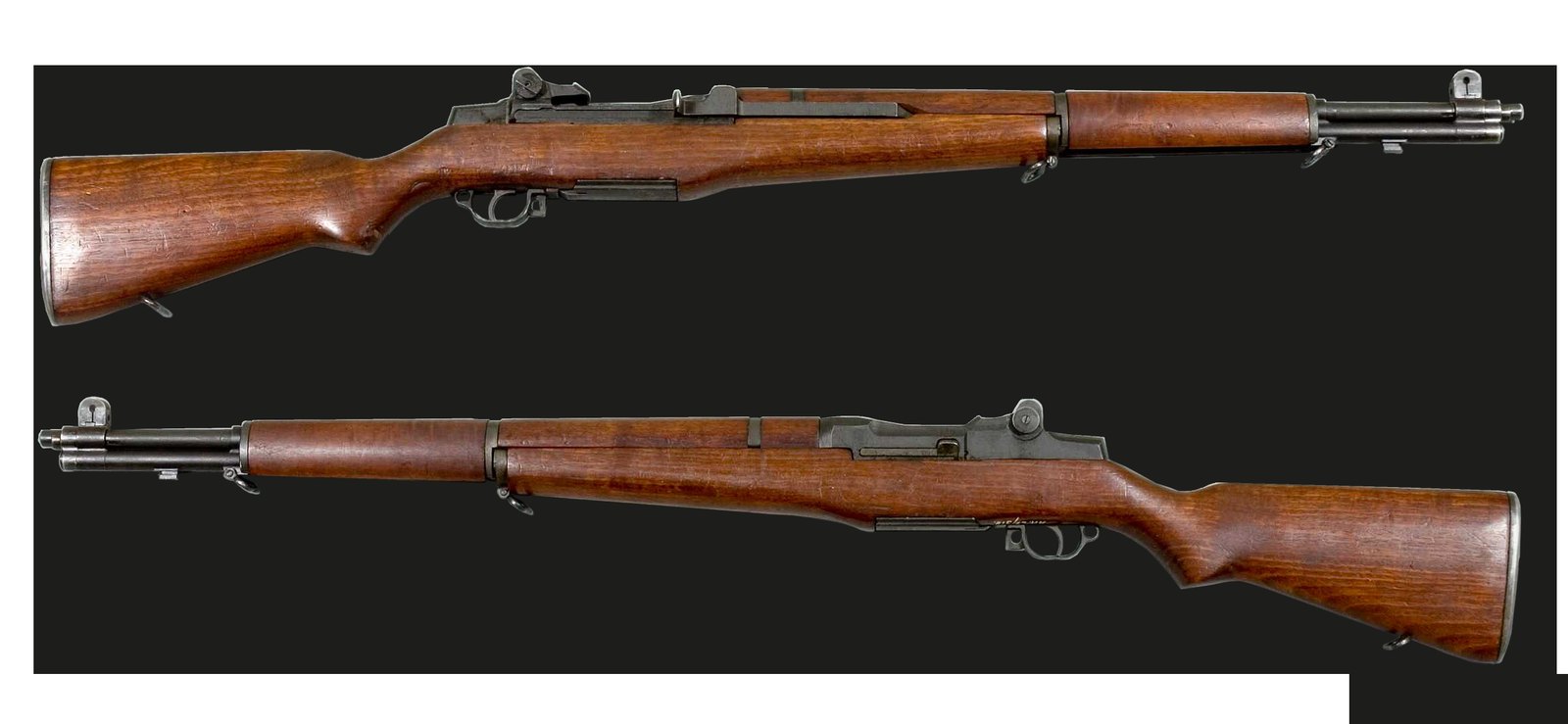
Modern commercial hunting loads are built the opposite way. They use slower powders that keep pressure high all the way down the barrel, which is exactly what you want for velocity and exactly what you do not want at a gas port. The op rod gets slammed back harder than it was ever meant to be, and it bends or cracks. Sometimes that takes a few hundred rounds. Sometimes it takes one.
The working consensus is to stay around 50,000 psi, against a SAAMI maximum of 60,000 for the cartridge, and to avoid heavy bullets driven by slow powder. In practice that means sticking to 150 grain loads and treating anything 180 grain and heavier with real suspicion. Several makers now sell ammunition built specifically for the rifle, including a 150 grain American Eagle Garand load from Federal and a 168 grain Garand load from Hornady. Both are made to work with the gas system rather than against it.
An adjustable gas plug is the other route if you want to shoot whatever you like, and plenty of owners fit one. What you should not do is assume that because the box says .30-06 it is safe in that particular rifle. If you are shopping for one, our used M1 Garand buying guide covers what to check before you hand over money.
Ammo, Surplus and What You Will Pay
.30-06 sits in a comfortable middle. It costs more than .308 because it is loaded in smaller volumes, and far less than anything magnum. Plain soft-point hunting ammunition from the big names is affordable enough that most people never think about it, and premium bonded or monolithic loads cost roughly double.
Availability is the real feature. Anywhere in North America that sells ammunition at all sells this cartridge, which is worth more than a small ballistic advantage when your plans change or your luggage does not arrive.
A warning about surplus
Military surplus .30-06 still turns up, and a lot of it is loaded with corrosive primers. Corrosive does not mean dangerous and it does not mean inaccurate. It means the primer leaves salts in the bore that pull moisture out of the air, and if you leave the rifle uncleaned for a few days you will find rust where there was none.
The fix is simple and non-negotiable: clean with a water-based solvent the same day you shoot it, because water is what dissolves the salts, then oil normally. Plenty of people shoot corrosive surplus happily for decades. The ones with pitted barrels are the ones who meant to clean it tomorrow.
Reloading the .30-06
It is one of the most thoroughly documented cartridges in existence. Every manual covers it, brass is everywhere and lasts well at sensible pressures, and .308 diameter bullets are made in more weights and constructions than almost any other size. If you want to tailor a load to a specific rifle and a specific animal, this cartridge gives you more room to do it than most.
The usual warning applies and it applies harder here because of the Garand problem above. Use current published data from a manual or the powder maker, start at the listed starting charge, and work up while watching for pressure signs. We do not publish charge weights and you should be wary of anyone who hands them out casually. If you are new to it, our reloading walkthrough covers the process on a similar cartridge.
Glass and Practical Range
A .30-06 is a 300 yard cartridge in most hands and a 500 yard cartridge in good ones. The limit is rarely the round. With a 165 grain bullet zeroed at 200 yards you are holding inside a deer’s vitals out to roughly 300 without thinking about it, and past that you need to know your drop and your wind.
Scope choice should follow that honestly. A 3-9×40 has killed more North American game than every other configuration combined and remains the correct answer for a hunting .30-06. Buy the best glass you can afford in that range rather than more magnification than you will use. If you are pushing past 400 yards regularly, a flatter cartridge will serve you better than a bigger scope on this one.
So Should You Buy One?
If you want one rifle that will handle every animal on this continent short of a big coastal brown bear, and you would like to be able to buy ammunition for it anywhere, yes. That has been the correct answer since 1906 and nothing has changed it. It is still one of the first chamberings we point people at in our hunting rifle guide.
If you shoot mostly paper at long range, or you are recoil sensitive, or you only ever hunt whitetail inside 150 yards, something newer will serve you better. The .30-06 does not need defending. It just needs to be the right tool for what you actually do.
Frequently Asked Questions
How do you pronounce .30-06?
Thirty-aught-six. Aught is an old word for zero, so it is thirty-zero-six. Nobody pronounces the dash and nobody says thirty point oh six, even though plenty of people write it that way. If you have been calling it thirty odd six in your head, you are closer than you think.
What does the name .30-06 actually mean?
The 30 is the nominal caliber in inches and the 06 is the year the US Army adopted it, 1906. The .30-03 before it was adopted in 1903 by the same logic. In metric it is the 7.62x63mm, and Winchester sold it for years as the .30 Gov't '06.
Is .30-06 the same as 7.62x63mm?
Yes. Same cartridge, different naming convention. You will see the metric designation more often outside the United States.
What bullet diameter does .30-06 use?
The bullet measures .308 inches, not .30. That is the same projectile the .308 Winchester and the 7.62x51mm NATO use, which is why bullet selection for reloaders is so wide.
Can you shoot .308 Winchester in a .30-06 rifle?
No, and do not try it. The .308 case is roughly half an inch shorter and headspaces on its shoulder, so in a .30-06 chamber it sits with a large gap behind it. That can produce a ruptured case or a separated case head, which is a genuinely dangerous failure. The two cartridges are not interchangeable in either direction.
Why should I not use normal hunting ammo in an M1 Garand?
The Garand bleeds gas off the barrel through a port to cycle the action, and that port was designed around military ball ammunition. Modern hunting loads use slower powders that keep pressure high all the way down the barrel, which drives the operating rod back much harder than intended and can bend or crack it. Stick to 150 grain loads, or buy ammunition made specifically for the rifle, or fit an adjustable gas plug.
Is .30-06 good for deer?
Yes, and it is arguably more gun than a deer needs. A 150 or 165 grain load is the usual answer, and the 165 is the one I would pick if I could only own one box.
Is .30-06 enough for elk and moose?
Yes, with a 180 grain bullet of decent construction. This is where the cartridge stops being a deer round and starts being a big game round. For the largest coastal brown bears most people reach for something heavier.
What is the practical range of a .30-06?
About 300 yards for most hunters and 500 for good ones. With a 165 grain bullet zeroed at 200 you can hold inside a deer's vitals to roughly 300 without thinking about drop. Past that the limit is the shooter, not the cartridge.
Does .30-06 have a lot of recoil?
Enough to matter. It is not punishing in a rifle of sensible weight with a decent pad, but it is enough that new shooters often build a flinch on it. A heavier rifle, a better recoil pad and reduced-recoil factory loads all help, and there is no prize for taking the full beating.
.30-06 or .308: which should I buy?
On a deer at 200 yards you would not be able to tell them apart. The .30-06 holds more powder and handles heavy bullets better, so it stretches further with 180 grain and up. The .308 fits a short action, so the rifles are lighter and the recoil is slightly softer. Ammunition for both is everywhere.
Is the .30-06 obsolete in 2026?
No. It is not the best at anything and it is nearly the best at everything, which is a different criticism. The 6.5 Creedmoor shoots flatter, the .300 Winchester Magnum hits harder and the .308 does it in a shorter action, but none of them covers as much ground, and none of them is stocked in as many shops.
4,335+ Gun & Ammo Deals
Updated daily from 200+ top retailers. Filter by category, caliber, action type, and price.
Related Guides