
Last updated November 2026 · By Nick Hall
Some of the links below are affiliate links, meaning at no additional cost to you, we may earn a commission if you click through and make a purchase.
- Treat every gun as loaded
- Point the muzzle in a safe direction
- Keep your finger off the trigger until you’re ready to shoot
- Know your target and what’s beyond
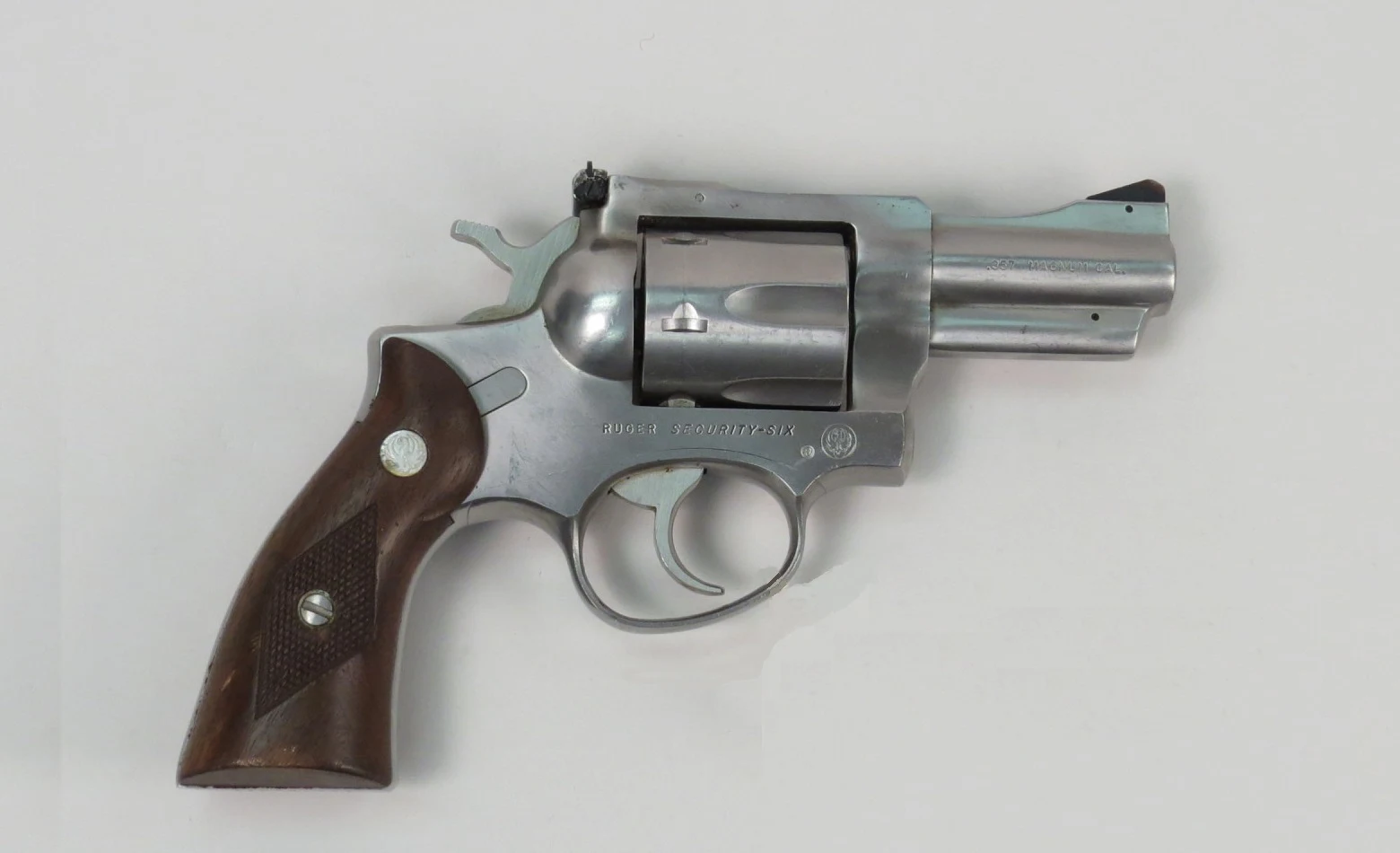
The Ruger Security-Six was Bill Ruger’s first double-action revolver, and it was built to take the police market away from Smith & Wesson and Colt. Announced in 1970 and shipping from 1972, it had a solid frame with no sideplate, coil springs throughout, a transfer bar and a takedown that needed nothing more than a coin. Border Patrol agents, postal inspectors, the NYPD and departments across the country carried it, and Ruger built about 1.25 million of the Six family before the GP100 replaced it.
Today it’s one of the best-value used .357 Magnums you can buy, and it just got more relevant. On October 13, 2026, Ruger stopped making the GP100, SP101 and LCR, so the Six family is again the main used route to a Ruger double-action .357. This guide covers what each model sells for, using 663 completed sales, how to tell a Security-Six from a Speed-Six or Police Service-Six, how to date one by serial number, what to check before you buy, and how they shoot.
Quick take
A used Security-Six is a tough, accurate .357 Magnum for about $505, less than most new double-action revolvers. Buy the adjustable-sight Security-Six for the range and the woods, a round-butt Speed-Six if you want to carry one, and a .38 Police Service-Six if you just want the cheapest good revolver around. Ruger no longer supplies parts or service, so check the timing and lockup before you pay.
- Typical used price (Dec 2025 to Nov 2026 sales): about $505 for a Security-Six, $578 for a .357 Speed-Six, $500 for a .357 Police Service-Six and $350 for a .38 Police Service-Six; 9mm Speed-Sixes sell for about $1,000
- Calibers: .357 Magnum (also fires .38 Special), .38 Special and 9mm
- Made: 1972 to 1988; the adjustable-sight Security-Six ended in 1985
- Legal: guns made more than 50 years ago, roughly through late 1976, count as curios or relics
How we tested: Every pick here is ranked against our testing methodology. Minimum round counts, accuracy and reliability protocols, the failures that disqualify a gun.
Ruger Security-Six Pros and Cons
Pros
- Handles regular .357 Magnum use
- Used guns sell for about $505
- Strips with a coin, no tools
- Transfer bar carries six safely
- Accuracy close to a GP100
- Stainless guns from 1975 on
Cons
- Ruger no longer offers parts or service
- Heavy double-action pull on stock guns
- Small grip bites with magnums
- Black front ramp is hard to see
- Fixed sights favor 158-grain loads
- Serial numbers don’t identify the model
Ruger Security-Six at a Glance
| Spec | Security-Six | Police Service-Six | Speed-Six |
|---|---|---|---|
| Made | 1972 to 1985 | 1972 to 1988 | About 1973 to 1988 |
| Sights | Adjustable rear, ramp front | Fixed (groove in the top strap) | Fixed |
| Grip frame | Square butt | Square butt | Round butt |
| Calibers | .357 Magnum; a few .38 Special and 9mm | .357 Magnum, .38 Special, 9mm | .357 Magnum, .38 Special, 9mm |
| Barrels | 2.75, 4 and 6 in. | 2.75 and 4 in.; 3 in. on some police guns | 2.75 and 4 in. |
| Capacity | 6 rounds | 6 rounds | 6 rounds |
| Weight | About 31 to 36 oz.; 33 oz. for a 4 in. gun | About 31 to 36 oz. | About 31 to 36 oz. |
| Finish | Blued; stainless from 1975 | Blued; stainless from 1975 | Blued; stainless from 1975 |
Table of Contents
What It’s Actually Like to Shoot a Security-Six: Myth vs. Truth
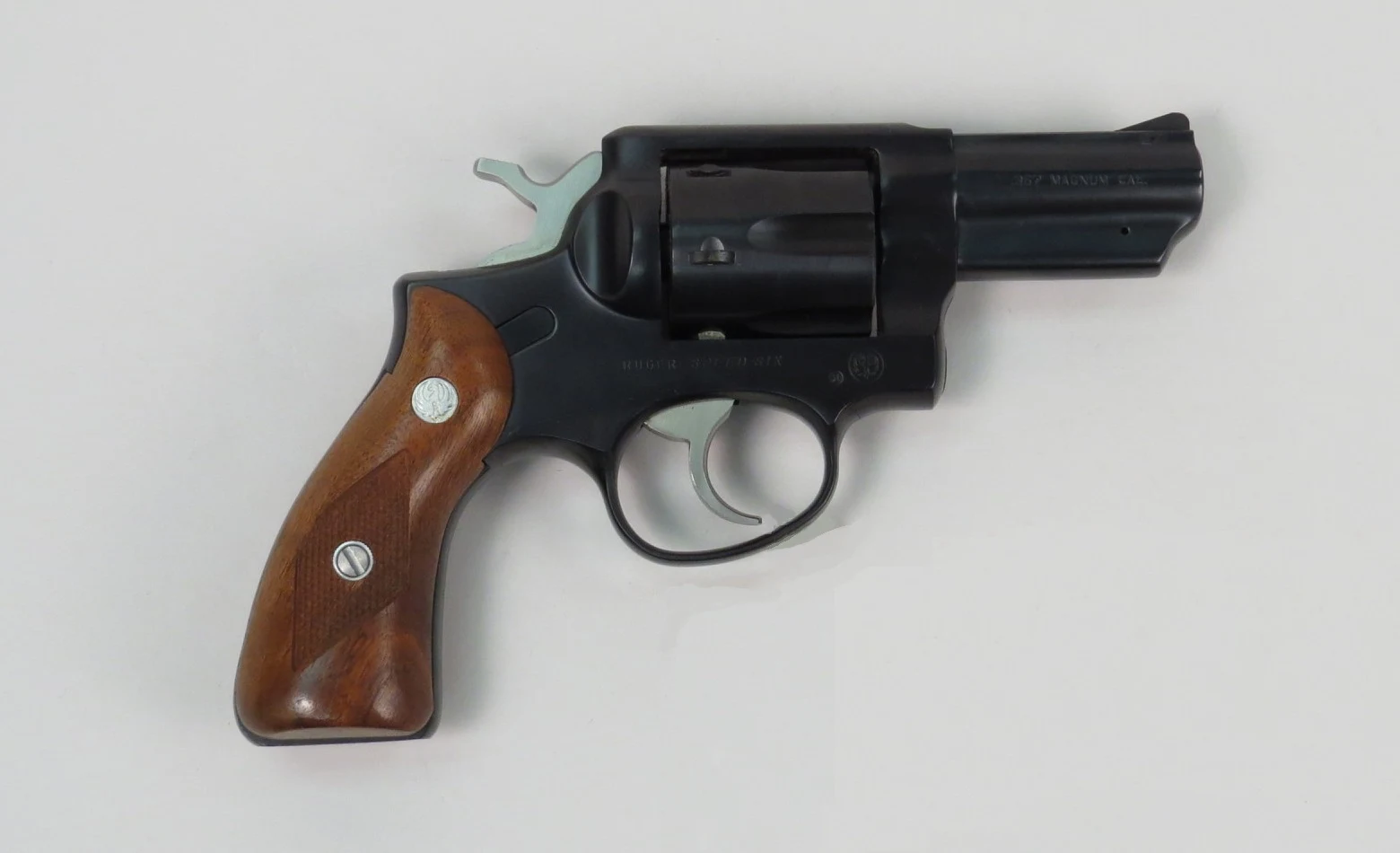
We shot two guns: a stainless 4-inch Security-Six with the adjustable sight, and a blued 2.75-inch Speed-Six with fixed sights. Before shooting, we checked the timing on all six chambers, the cylinder gap and the end shake. Over 150 rounds we fed them .38 Special practice ammo and factory .357 Magnums in 125-grain and 158-grain weights.
From a rest at 25 yards, the Security-Six averaged about 1.9 inches for five-shot groups, which is within a tenth of an inch of what a 4-inch GP100 does. The short Speed-Six averaged about 2.5 inches, and the fixed sights put 158-grain loads on the point of aim while 125-grain loads hit a couple of inches low. From the 4-inch barrel, 125-grain magnums ran about 1,440 fps and 158-grain loads about 1,220 fps. There were no malfunctions. After about a box of dirty .38s, the cylinder started to drag a little until we wiped the front face.
The triggers are the weak spot. A stock Security-Six double-action pull runs about 11 pounds and stacks toward the end, while the single-action pull broke at a little over 4 pounds. Plenty of used guns have had action work, and a smooth, lighter pull on one is common. The grip is small for full-power magnums, and the black front ramp disappears against a dark target.
Loads and point of impact
| Load | Velocity (4 in. barrel) | What we saw |
|---|---|---|
| .357 Magnum 125-grain | About 1,440 fps | Sharp recoil; hit a couple of inches low from the fixed-sight Speed-Six at 25 yards |
| .357 Magnum 158-grain | About 1,220 fps | On the point of aim from the fixed sights; the load these guns were regulated for |
| .38 Special 158-grain | Not measured | Mild and accurate; the best practice load, and it fouls the cylinder face over a box |
The lesson for fixed-sight Speed-Sixes and Police Service-Sixes is to pick a load near 158 grains and stick with it. On a Security-Six, just adjust the rear sight for whatever you shoot most.
| The myth | What we found | Evidence |
|---|---|---|
| “It’s far less accurate than a GP100.” | Our Security-Six grouped within about a tenth of an inch of the GP100 average at 25 yards. | Our range session; Gun Tests |
| “It can’t take steady .357 Magnum use.” | It was built stronger than the S&W K-frame and handles regular magnum shooting. The GP100 was designed for a lifetime of full-power loads, so check the forcing cone on a well-used gun. | Handguns; Handloader; American Rifleman |
| “The double-action trigger is terrible.” | It’s heavy on stock guns, about 11 pounds, but the stock GP100s we’ve measured are heavier still. | Our gauge; Gun Tests |
| “The serial prefix tells you the model.” | All three models share the same 150- to 162- serial run. A serial dates the gun; the frame marking tells you the model. | Ruger product history |
| “There was a recall.” | Ruger has never issued a recall or safety bulletin for the Six family. | Ruger safety announcements |
Who the Security-Six Is For (and Who Won’t Enjoy It)
- The budget .357 buyer: a used Security-Six costs about half the price of a new double-action .357 and shoots nearly as well.
- The home-defense and truck-gun owner: six rounds, a transfer bar and a frame that shrugs off neglect.
- The police trade-in collector: agency-marked guns are a whole hobby, and our police trade-in guide covers how to find them.
- The new revolver shooter: it takes down with a coin, which makes cleaning and learning the action easy.
- Anyone who wants factory support: Ruger no longer offers parts or service for it.
- Shooters who live on hot 125-grain magnums: a Ruger GP100 was built for that diet.
- Concealed carriers with small hands: even the Speed-Six is a big, heavy gun next to a snub.
- Collectors chasing rarity: apart from 9mm guns and some agency guns, most Sixes were made in huge numbers.
What a Ruger Security-Six Costs in 2026
These are completed-sale prices, not asking prices. We tracked 663 used Security-Six, Speed-Six and Police Service-Six sales: 636 GunBroker sales from December 2025 to November 2026, plus older Connecticut and Rock Island auction results. New-in-box guns, contract guns and commemoratives are counted separately. We only give a median where we found at least three sales.
Prices by model and caliber
| Model | Median sale | Middle half of sales | Sales tracked |
|---|---|---|---|
| Security-Six .357 (all) | $505 | $451 to $581 | 422 |
| Speed-Six .357 | $578 | $505 to $682 | 84 |
| Speed-Six .38 Special | $500 | $450 to $599 | 23 |
| Speed-Six 9mm | $1,000 | $871 to $1,312 | 13 |
| Police Service-Six .357 | $500 | $452 to $625 | 84 |
| Police Service-Six .38 Special | $350 | $302 to $400 | 35 |
| Police trade-ins (all models) | $399 | n/a | 19 |
| All three models | $510 | $450 to $600 | 663 |
Prices by barrel, finish and extras
| Type | Median sale | Middle half of sales | Sales tracked |
|---|---|---|---|
| Security-Six 2.75 in. | $561 | $494 to $666 | 53 |
| Security-Six 4 in. | $506 | $450 to $568 | 178 |
| Security-Six 6 in. | $499 | $435 to $557 | 119 |
| Security-Six blued | $495 | $438 to $558 | 72 |
| Security-Six stainless | $555 | $500 to $611 | 135 |
| Security-Six with box or papers | $561 | $499 to $699 | 35 |
| 1976 “200th Year” Security-Six | $638 | n/a | 10 |
| New in box or unfired (any model) | $905 | n/a | 13 |
A few patterns stand out. The 9mm Speed-Six sells for about double a .357 because so few were made. A short barrel or stainless finish adds roughly $50 to $100. The .38-only Police Service-Six, mostly ex-agency guns, is the cheapest way in. Even no-reserve auctions that start at a penny land at the median, so you won’t often steal one, and you shouldn’t need to overpay either.
No new Sixes have been made since 1988, so the cards below show used listings. You can also browse used Ruger Security-Sixes on Guns.com.
Security-Six, Speed-Six or Police Service-Six: The Variants
Security-Six
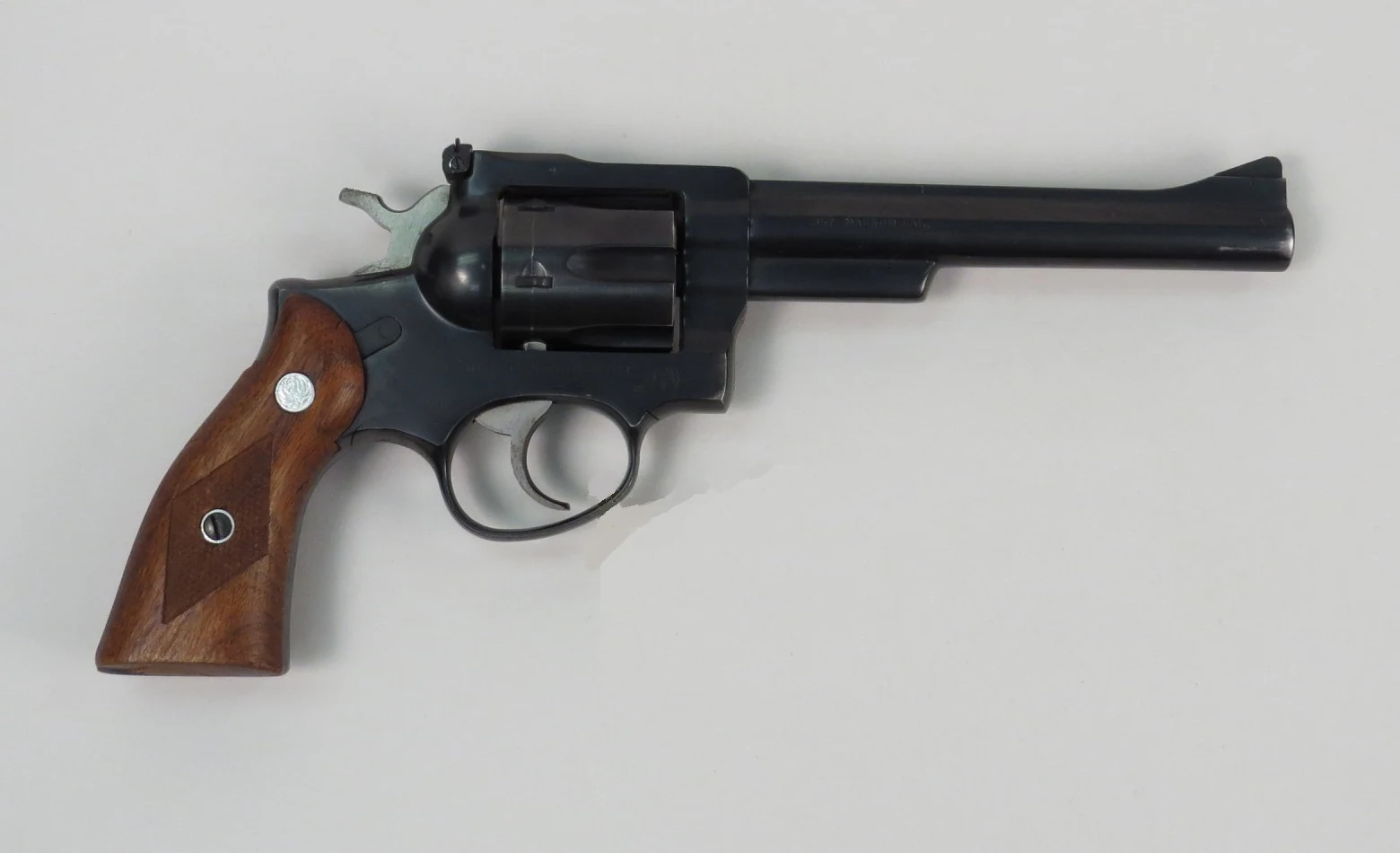
The Security-Six is the adjustable-sight model, with a square butt and barrels of 2.75, 4 or 6 inches. It is the one most people mean by the name, and it’s the best choice for target shooting and hunting because you can zero the sights for your load. The adjustable-sight Security-Six left the line in 1985, when Ruger announced the GP100.
Police Service-Six
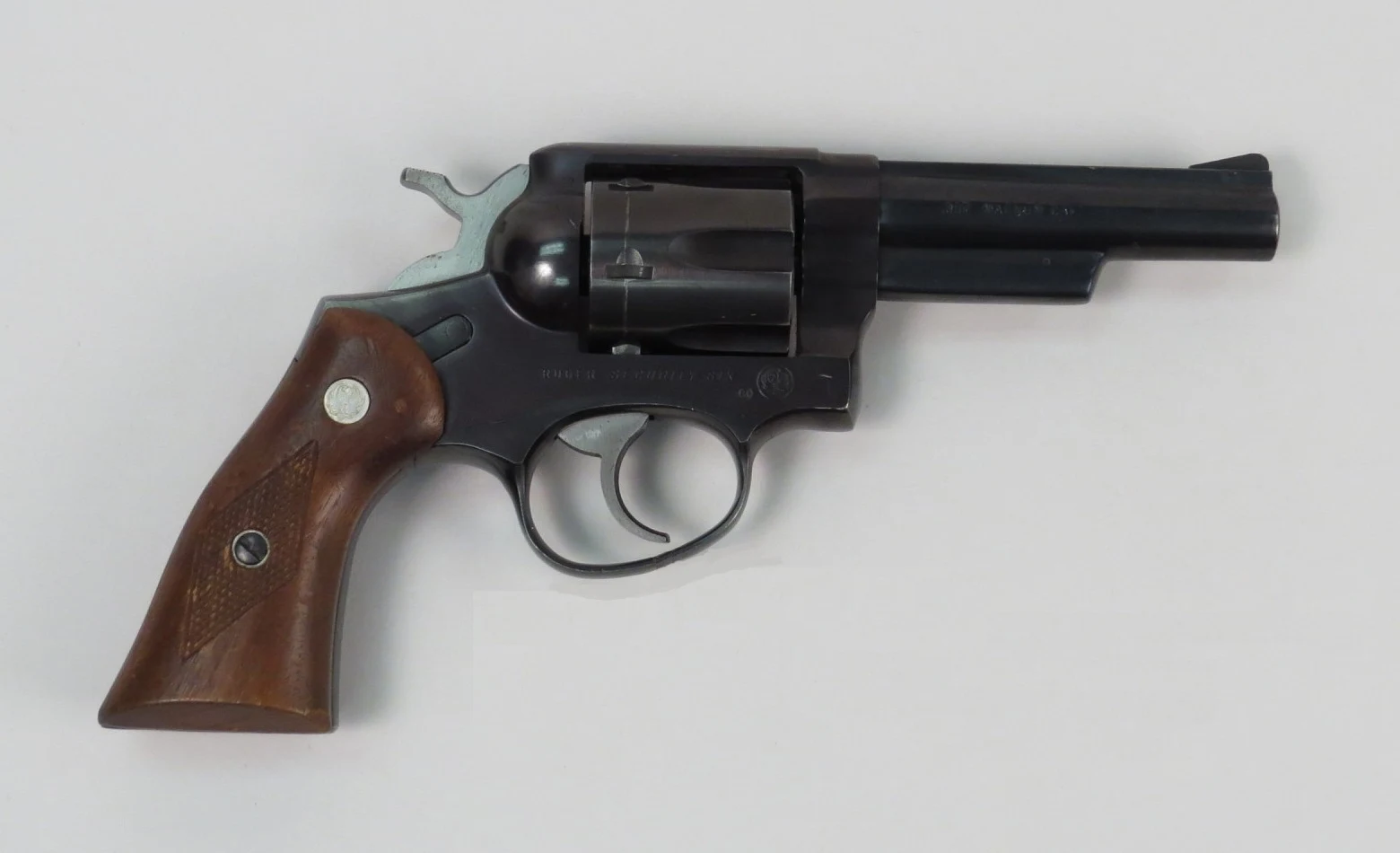
The Police Service-Six is the fixed-sight, square-butt duty gun, marked SERVICE-SIX or POLICE SERVICE-SIX. It came in .357 Magnum, .38 Special and 9mm. Early fixed-sight guns, built on the “low-back” grip frame with 150- serials, were actually marked SECURITY-SIX, and collectors pay about 10% more for them. The SERVICE-SIX marking arrived with the “high-back” frame around 1975. The U.S. Army’s M108 was a .38 Special Service-Six with a lanyard ring.
Speed-Six
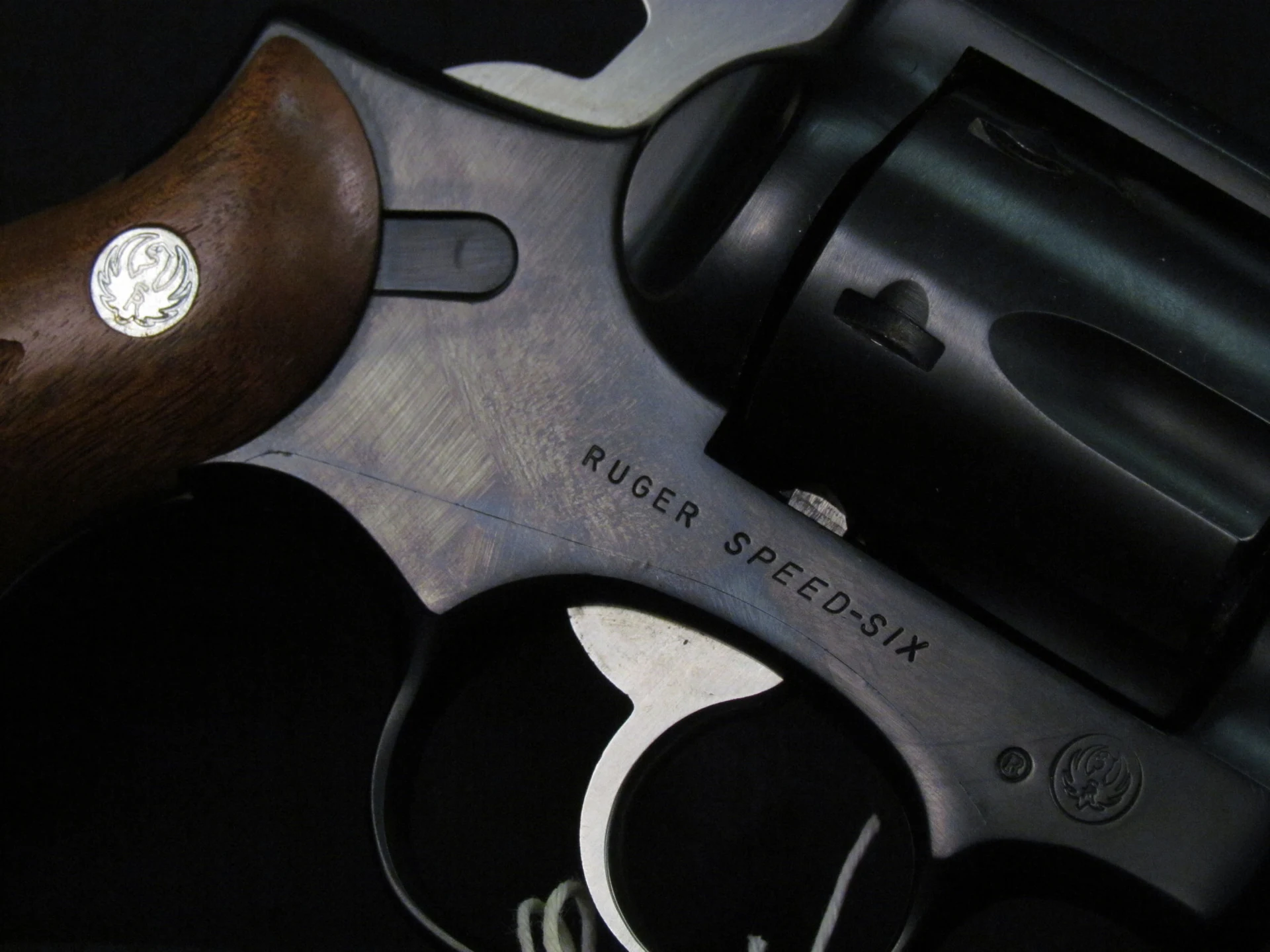
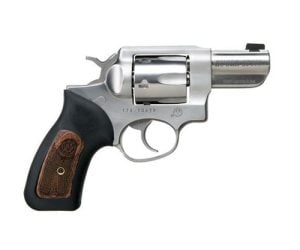
The Speed-Six is the round-butt, fixed-sight model, made from about 1973 for plainclothes officers. It came with 2.75- or 4-inch barrels, and some have a spurless “bobbed” hammer. The Royal Ulster Constabulary carried .357 Speed-Sixes until 2003. It is the Six to buy for carry, and the 2.75-inch .357 sells for a little more than a Security-Six.
9mm and export guns
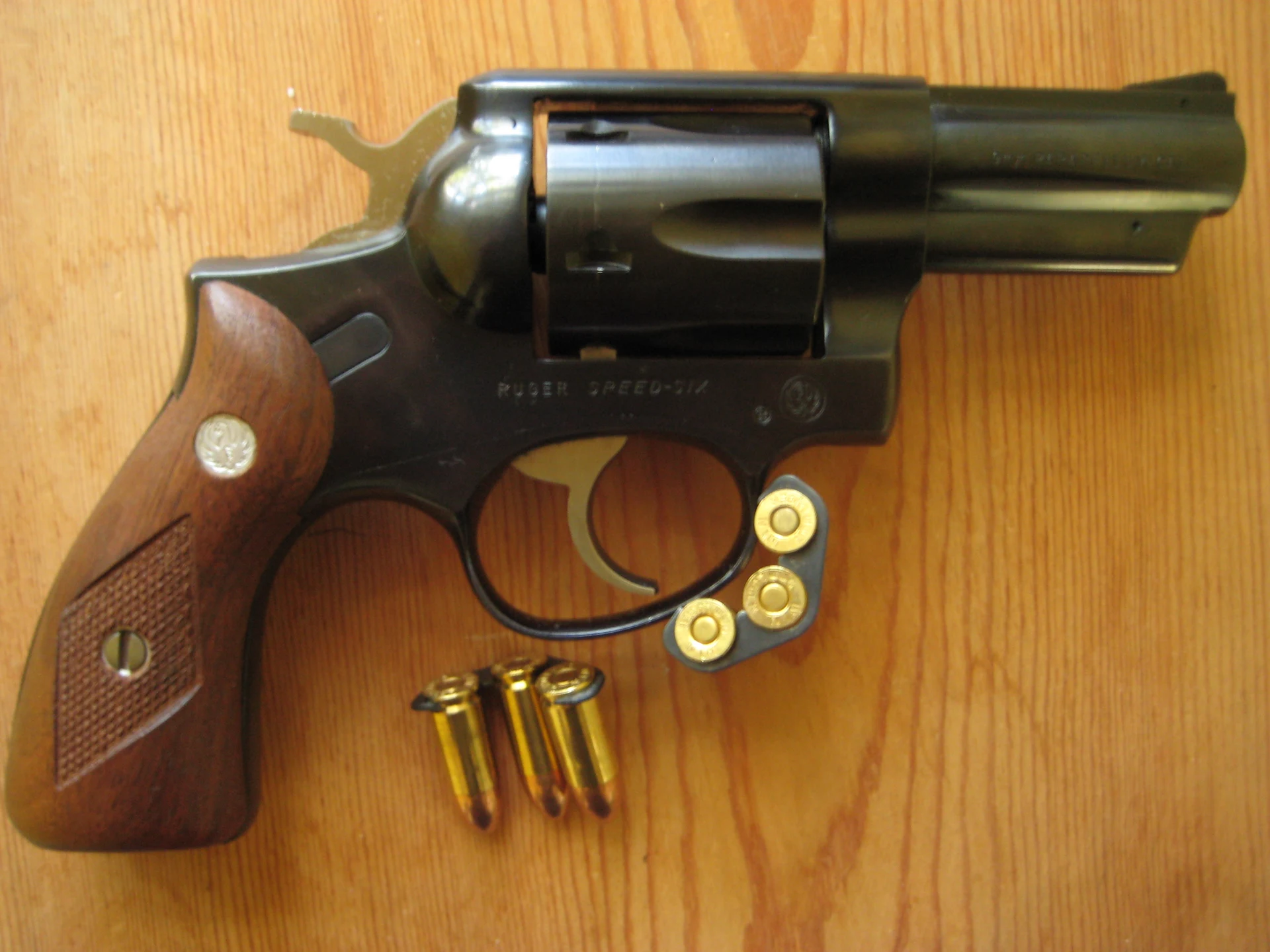
Ruger made 9mm Speed-Sixes and Service-Sixes that headspace on the case mouth and load with half-moon clips. A few early 9mm guns have a wire-ring ejector that won’t take clips, so check before you buy clips. T/K Custom still makes moon clips for them. Ruger also built .38 S&W guns for Indian government contracts, which aren’t in its U.S. catalog. The 9mm guns are the collector Sixes now, at about $1,000.
Ruger Security-Six Condition Guide
Most used Sixes are sold with a description, not a grade, so learn to read the gun yourself. The NRA’s condition standards are the common language, and our gun values guide explains them in full.
| Condition | What you see on a Security-Six | Effect on price |
|---|---|---|
| New in box | Unfired, box and paperwork, no turn line | About $905, close to double a typical gun |
| Excellent | Over 95% finish, faint turn line, crisp roll marks, tight lockup | Upper end of the range |
| Very good | Light holster wear at the muzzle and cylinder, sharp edges | Near the median |
| Good | Visible holster wear, light freckling, a heavier turn line | 15 to 25% below the median |
| Fair | Worn finish, pitting, replaced grips, loose lockup | Shooter or parts price |
Blued Sixes wear at the muzzle, the front of the cylinder and the grip frame edges. Some blued frames have aged to a plum color, which is a quirk of the steel, not a refinish. On stainless guns, look for a brushed finish that has been polished bright, which hides wear but lowers collector value.
Serial Numbers and How to Date a Security-Six
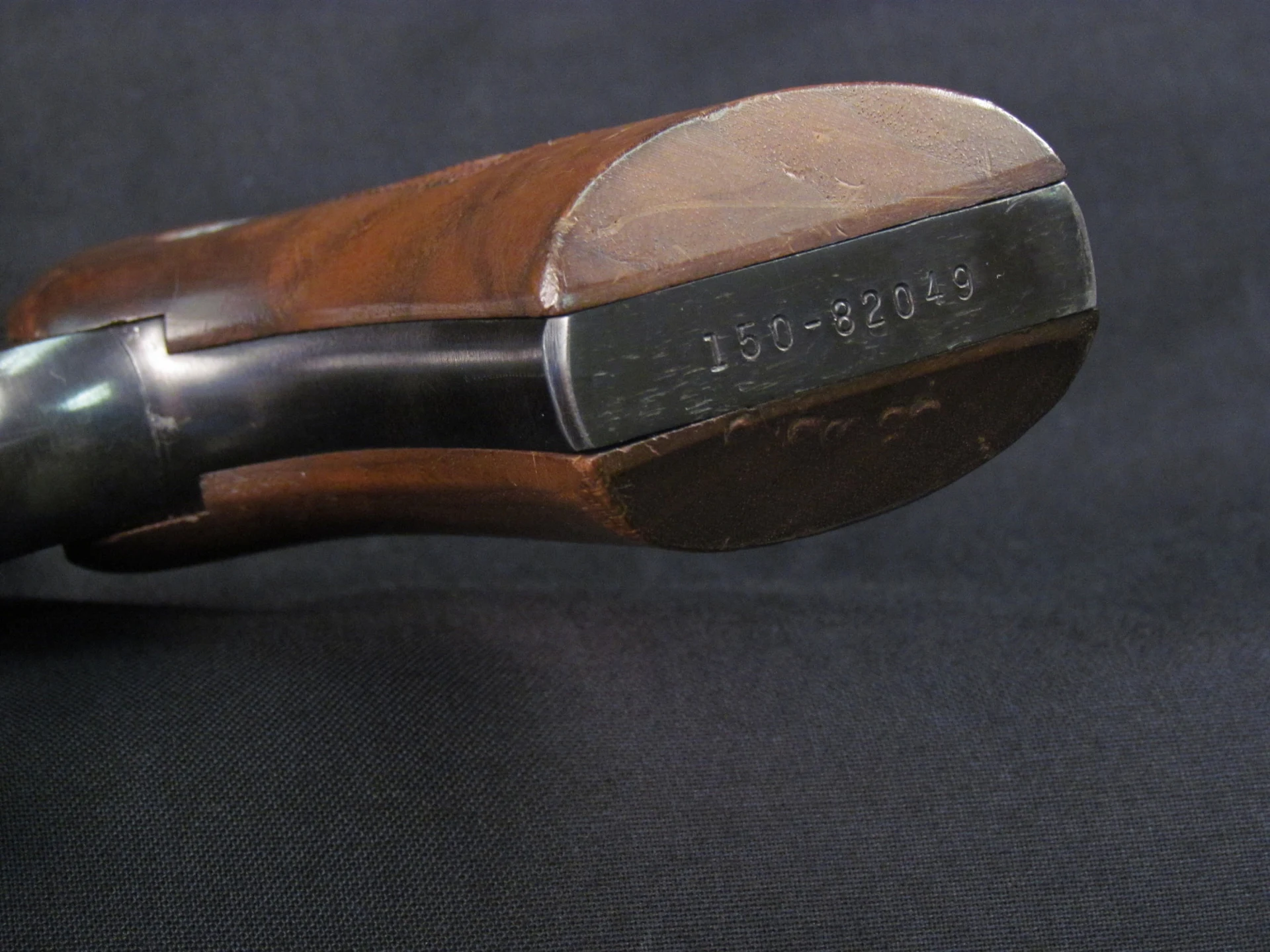
Every Six carries a serial with a 150- to 162- prefix, stamped on the butt. All three models share that run, so the serial tells you when a gun was made, not which model it is. Ruger’s serial lookup returns the model and ship date for many guns, though Ruger says results are “reference only.” Our Ruger serial number guide covers the lookup in detail. These are the first serials Ruger shipped each year:
| Year | First serial | Year | First serial |
|---|---|---|---|
| 1972 | 150-00001 | 1981 | 156-94383 |
| 1973 | 150-35383 | 1982 | 158-12020 |
| 1974 | 150-64961 | 1983 | 159-45126 |
| 1975 | 151-21780 | 1984 | 159-81307 |
| 1976 | 151-76180 | 1985 | 160-58768 |
| 1977 | 152-61012 | 1986 | 161-80082 |
| 1978 | 153-60425 | 1987 | 161-84833 |
| 1979 | 154-63332 | 1988 | 162-39887 |
| 1980 | 155-76844 |
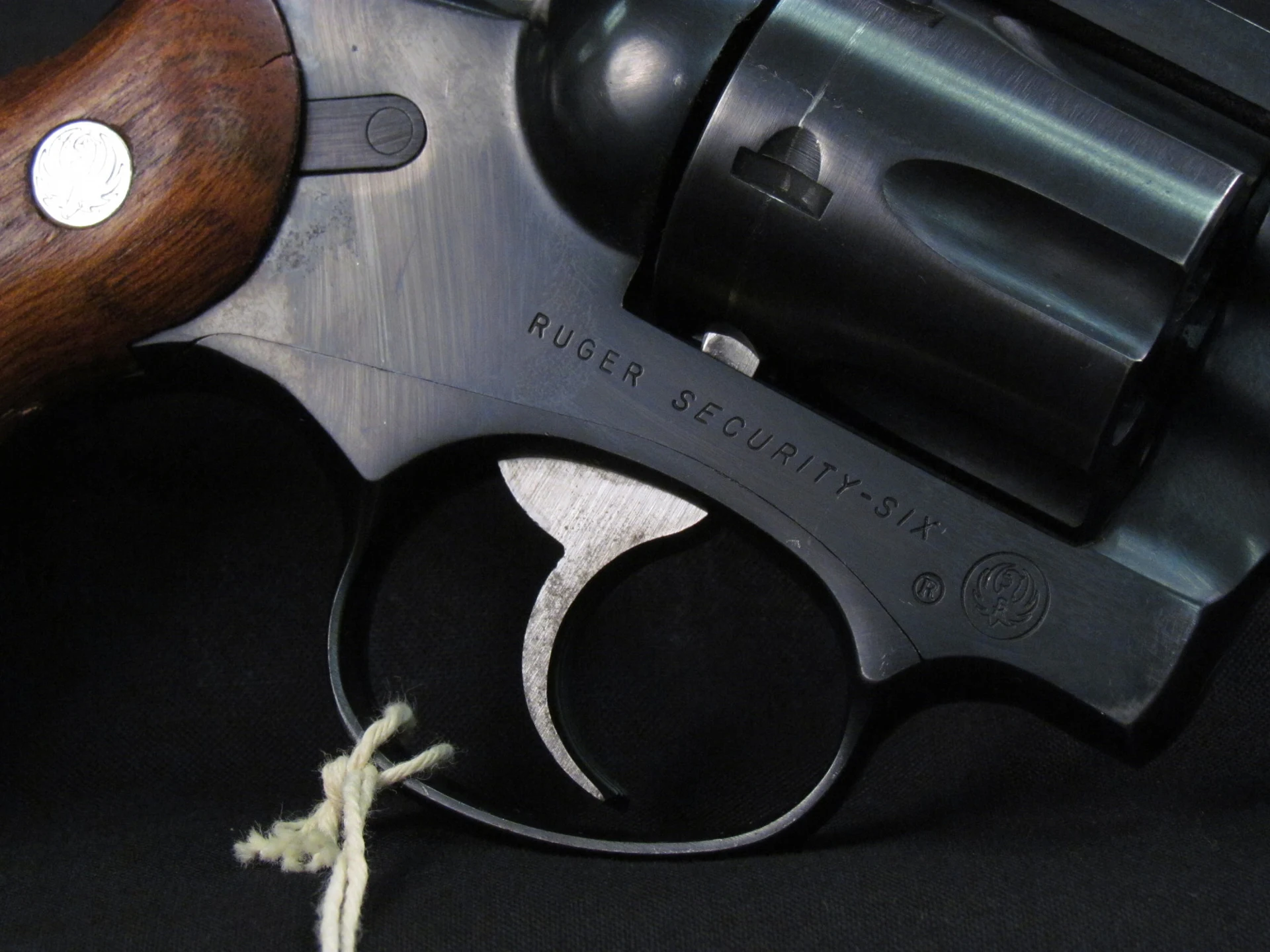
Notice how few guns were made in 1986, only about 4,800. That is the gap when the Security-Six ended and the GP100 took over. Guns made in 1976 carry a “Made in the 200th Year of American Liberty” marking, and those sell for about $638, a little over the typical gun.
Parts, Service and Police Trade-Ins
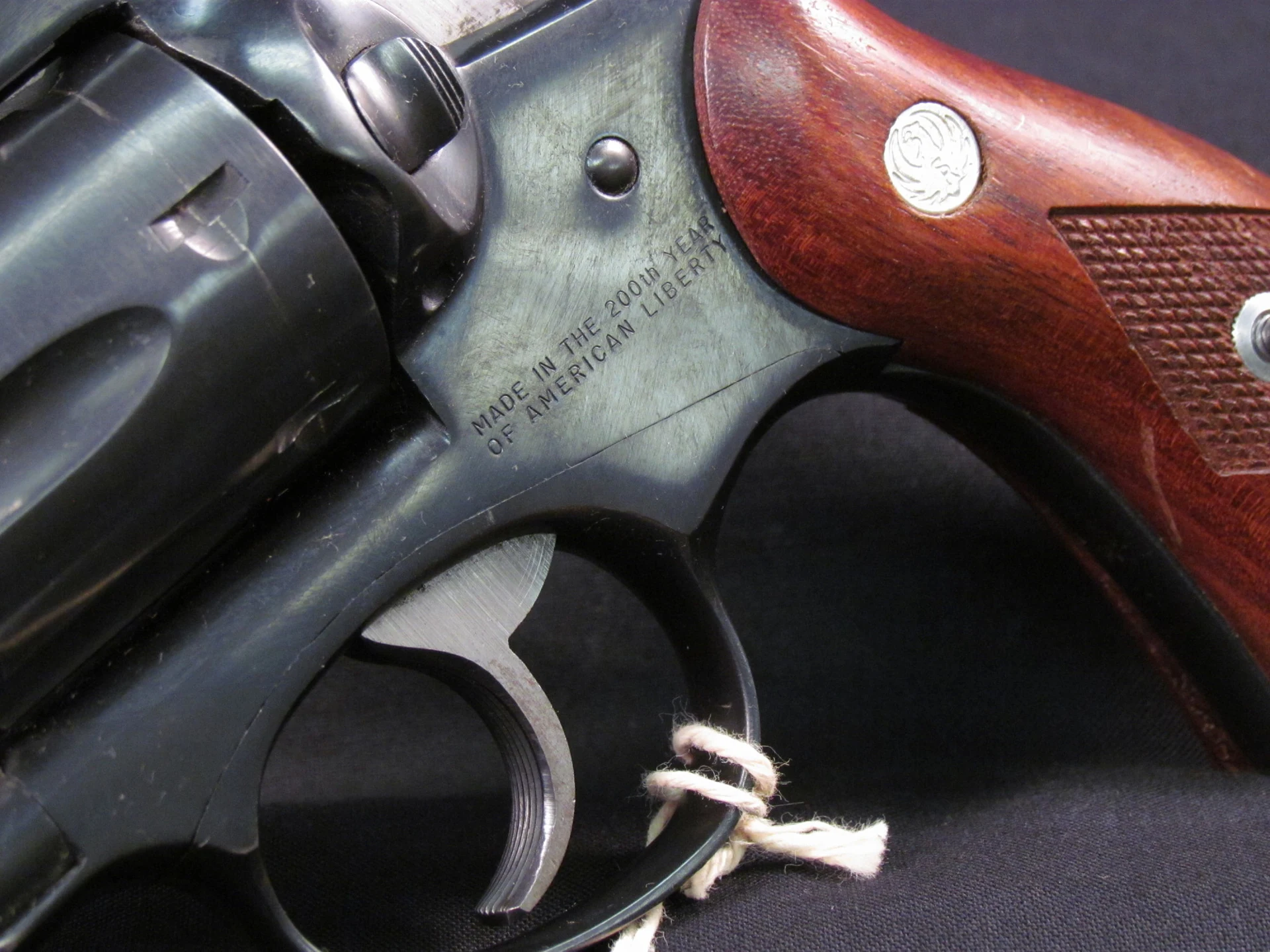
This is the big catch with any Six. Ruger lists the Security-Six under “Firearms with no parts / service available” on its parts and service page, so you cannot send one back to the factory. Parts now come from surplus, new-old-stock and aftermarket sellers, and grips, sights and speedloaders are still easy to find. A good revolver smith can handle timing and action work, but buy a gun that’s already right if you can.
Police trade-ins exist because agencies switched to semi-autos in the 1980s and 1990s. Most sell cheaply, about $399 in our data, and ordinary department marks add little. Rare federal guns, like those marked for the Postal Inspection Service, sold for about $1,000. Our police trade-in guide covers how to buy them.
Pre-Purchase Inspection Checklist
- Read the frame marking and check the sights and butt shape to confirm the model.
- With the gun unloaded, swing out the cylinder and check that the crane closes flush and the latch works cleanly.
- Cock the hammer slowly on each chamber and confirm the cylinder locks before the hammer is fully back.
- Check cylinder play with the hammer down and the trigger held back; a little is normal, a lot is wear.
- Push the cylinder forward and back to check end shake.
- Measure the cylinder gap with a feeler gauge; about .004 to .006 inch is ideal.
- Look at the forcing cone and the top strap above the gap for erosion, cracks or gas cutting.
- Look down the bore for pitting or a ring.
- Check the chamber mouths for burrs or sharp edges.
- Dry fire with a snap cap to feel for grit or hitches in the double-action pull.
- For a 9mm gun, check whether it takes moon clips or has the early wire-ring ejector.
- Check that the grips fit the frame; low-back and high-back grips don’t interchange.
Shooting and Caring for a Security-Six
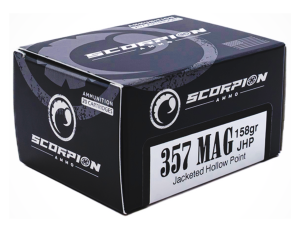
Use only the cartridge marked on the barrel. A .357 Magnum gun also fires .38 Special, which is the cheap and gentle way to practice; a .38 Special gun takes .38 only; and a 9mm gun takes 9mm only. Ruger warns against ammunition above industry-standard pressure. The Six handles regular .357 Magnum shooting, but if you shoot a steady diet of hot 125-grain loads, check the forcing cone and top strap now and then. Our .357 Magnum ammo guide covers the best loads.
Field-stripping is the Six’s party trick. Remove the grip screw with a coin, take off the grips, and use the pin stored in the grip to capture the mainspring; the trigger guard and lockwork then come out without tools. Don’t close the cylinder on a cocked hammer, which Ruger’s manual warns against. Clean the front of the cylinder and the forcing cone after magnums, and keep the crane lightly oiled.


Security-Six vs. GP100: What Changed
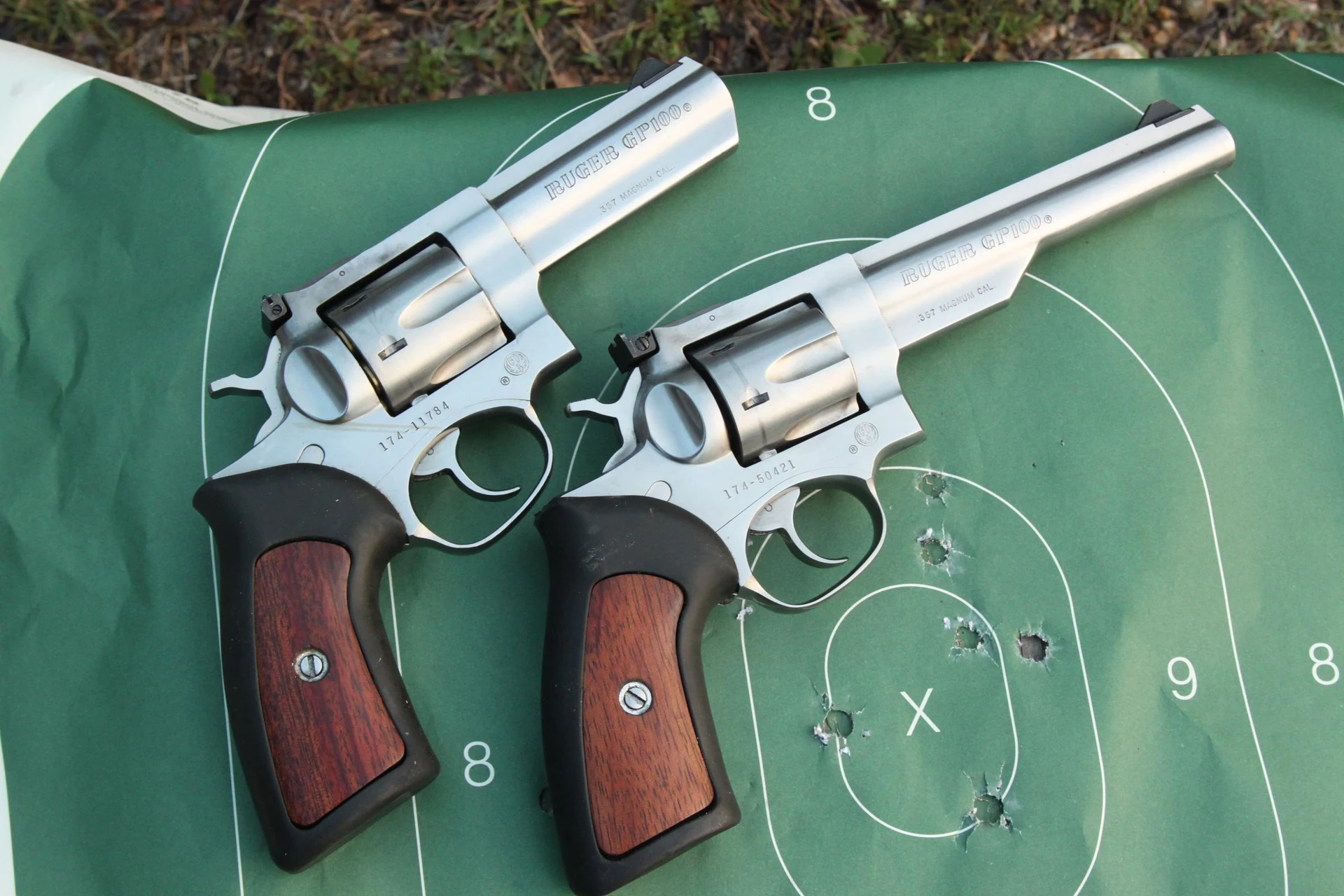
The GP100 was Ruger’s answer to the one complaint about the Six: that a steady diet of hot magnums would wear it out faster than a heavier gun. Ruger announced it in 1985, and its serial numbers start at 170-00001 in 1986. It looks like a beefed-up Six, and in many ways that is exactly what it is.
| Feature | Security-Six family | GP100 |
|---|---|---|
| Crane lockup | Locks at the rear of the cylinder and the ejector-rod tip | Crane also locks into the frame |
| Cylinder | Smaller and slimmer | Larger, for more steel around each chamber |
| Barrel | Half-lug, tapered | Full-lug |
| Grip frame | Conventional frame with wood grips | “Peg” grip frame with cushioned grips |
| Weight, 4 in. .357 | About 33 to 36 oz. | About 40 oz. |
| 25-yard groups (our tests) | About 1.9 in. | About 1.9 in. |
| Stock double-action pull | About 11 lb | About 12 lb |
| Factory parts and service | None | Still listed, though production stopped in October 2026 |
For most shooters, the practical difference is weight and feel. The Six is slimmer and handier and points more like a Smith & Wesson K-frame, while the GP100 soaks up more recoil and will take full-power loads for a lifetime. If you’ll mostly shoot .38s and a box of magnums now and then, the Six gives up very little. If you want a magnum you can shoot hard every weekend, the GP100 is the better tool.
Common Problems and How to Fix Them
The Six’s reputation for toughness is earned, but a 40- or 50-year-old revolver has had a life. These are the issues that turn up most on used guns, and what each one means for the price you should pay.
- Heavy or gritty double-action pull: the most common complaint. A revolver smith can smooth the action and fit lighter springs, and many used guns already have that work done. Ask, because a good action job adds value.
- Cylinder play and end shake: the Six locks only at the rear and the ejector-rod tip, so a well-used gun can show more cylinder wiggle than a GP100. A little is normal; enough to see is wear.
- Timing: if the cylinder doesn’t lock on every chamber before the hammer falls, the gun needs a smith. Timing and action jobs are common on used Sixes.
- Gas cutting and forcing-cone wear: guns fed lots of hot magnums can show erosion on the top strap and cone. Light cutting is cosmetic; cracks mean a new barrel, which isn’t easy to source now.
- Sharp or oversized chamber mouths: some guns have rough chamber edges that a smith can chamfer.
- Grips that don’t fit: early low-back and later high-back grip frames take different grips, and many aftermarket grips fit only guns made from 1975 on.
None of these is a reason to avoid the Six, but they’re the reason to pay the median for a clean gun rather than a bargain price for a tired one. Without factory service, an action or timing job comes out of your pocket.
Which Six Should You Buy?
For most buyers, a 4-inch Security-Six in .357 Magnum is the default. It’s the most common configuration, so prices are steady at about $506, the adjustable sights let you zero for any load, and the barrel is long enough to make magnums pleasant. Pick stainless if you can; it costs about $60 more and stands up better to a life in a truck or a nightstand.
For carry, the 2.75-inch Speed-Six is the one, with its round butt and short barrel. Expect to pay about $580 to $600. For a cheap shooter or a first revolver, a .38 Special Police Service-Six at about $350 is hard to beat, especially since you’ll practice with .38s anyway. If you want something to collect, look for a 9mm gun, an early low-back fixed-sight gun marked SECURITY-SIX, or a gun with documented agency markings.
Upgrades and Accessories
Because so many Sixes were made, the aftermarket is still healthy even without factory parts. These are the changes owners make most, and none of them hurts the value of an ordinary shooter-grade gun as long as you keep the original parts.
- Grips: the small factory wood grips are the main reason magnums sting. Larger wood or rubber grips that cover the backstrap make a big difference. Check whether your gun has the low-back or high-back frame before you order.
- Front sight: the black ramp is hard to see. A dab of bright paint on the ramp is the cheapest upgrade there is, and a smith can fit a new insert or blade.
- Action work: a revolver smith can smooth and lighten the double-action pull. It’s the single biggest improvement for a gun you plan to shoot a lot.
- Speedloaders and holsters: the Six uses its own speedloaders and holsters, which are still made because so many guns are in use.
- Moon clips: 9mm guns need half-moon clips, and T/K Custom still makes them.
Leave collector guns alone. A 9mm gun, an early low-back gun or a gun with agency markings is worth more with its original grips, sights and finish, so keep any upgrade reversible.
Ruger Security-Six History
Bill Ruger, Harry Sefried and Henry Into started work on a double-action revolver in 1966, aiming squarely at the police market. The Security-Six was announced in 1970 as the cover gun of the October issue of GUNS magazine, American Rifleman tested it in May 1971, and Ruger began shipping in 1972. As American Rifleman put it, it was “announced in 1970 and began shipping in 1972.” It listed for $89 with fixed sights and $97.50 with adjustable sights.
The design was different from the S&W and Colt revolvers it competed with. A solid frame with no sideplate, investment-cast parts and coil springs made it strong and easy to service. Stainless models arrived in 1975. Agencies from the Border Patrol, the INS and the Postal Inspection Service to the NYPD put it on duty belts, and the California Highway Patrol bought 500 stainless .38 Special guns in 1983. Overseas, the Royal Ulster Constabulary carried Speed-Sixes, Australia’s Northern Territory Police bought crested guns in 1980, and Indian agencies took .38 S&W export guns.
The adjustable-sight Security-Six ended in 1985, the year Ruger announced the GP100, and the fixed-sight Speed-Six and Police Service-Six followed in 1988. The GP100 added a crane that locks into the frame, a heavier frame and a full-lug barrel. Ruger built about 1.25 million Sixes by its own serial records, though you’ll often see 1.5 million quoted. In October 2026 Ruger stopped GP100 production too, and our news story on Ruger’s production cuts has the details.
Why the Security-Six Is Still So Popular
The Six was the revolver many cops and ordinary shooters could afford, and it was tougher than the K-frame Smiths that cost more. It is accurate, it is simple to strip, and decades on, most of them still lock up tight. With the GP100 out of production and new double-action .357s getting pricier, a $500 Six that shoots nearly as well looks better than ever.
Legal: Curio and Relic Status
Under federal law, a firearm made more than 50 years ago counts as a curio or relic. As of late 2026, that covers Sixes made through about late 1976, roughly serials below 152-61012, and more guns qualify every year. A collector with a curio and relic license can have one shipped directly. State laws still apply. Buying one online works like any other handgun: it ships to a local dealer, and our curio and relic guide and used guns guide walk through the rules.
Where to Buy a Ruger Security-Six
GunBroker, Guns.com and local dealers have the most listings, and police trade-in batches turn up at distributors from time to time. Auction houses like Rock Island add a buyer’s premium on top of the hammer price, so factor that in when you compare.
- Ask for photos of the frame marking, the sights and the butt to confirm the model.
- Ask for the serial to date the gun.
- Ask about timing, lockup and cylinder gap, or buy with an inspection period.
- For a 9mm gun, ask whether moon clips are included.
Use the price tables above as your guide. A clean 4-inch Security-Six listed well over $600 should come with a box, papers or a documented action job to justify it. A gun listed under $400 is either a .38 Police Service-Six, a well-used trade-in or a gun with a problem the seller hasn’t mentioned. Ask for an inspection period on any online purchase, and don’t skip the checklist just because the gun looks clean in photos; timing and end shake don’t show up in pictures.
Local gun shows and pawn shops still turn up Sixes, often priced by people who don’t know one model from another. That’s where knowing the frame markings pays off: a 9mm Speed-Six or an early low-back gun sometimes sits in a case priced like any other used .357.
Ruger Security-Six vs. Its Rivals
| Gun | Frame | Used price | Best for |
|---|---|---|---|
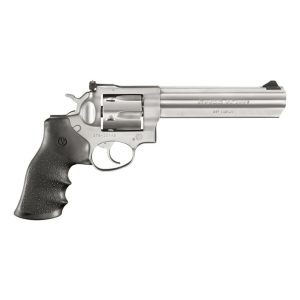
| Ruger Security-Six | Medium, solid frame | About $505 | Value .357, range and home |
| Ruger GP100 | Heavier, crane locks into frame | Higher | Steady full-power magnums |
| Smith & Wesson Model 19 | K-frame | About $749 | Collectors, best vintage trigger |
| Smith & Wesson Model 10 | K-frame, .38 Special | Lower | Cheap .38 duty revolver |
| Colt Python | I-frame | Far higher | Collectors, premium shooting |
For more classic wheelguns, see our classic revolvers guide and our best revolvers list. If you’d rather buy new, the GP100 is the Six’s direct successor, though new ones are getting harder to find since Ruger stopped production.
Final Verdict
The Security-Six is one of the best bargains in used revolvers. For about $505 you get a .357 Magnum that groups nearly as well as a GP100, carries six safely and strips with a coin. Buy a Security-Six for the range, a Speed-Six to carry, or a .38 Police Service-Six if price is all that matters. Just remember that Ruger can’t fix it anymore, so check the timing, lockup and forcing cone before you pay.
Ruger Security-Six FAQ
How much is a Ruger Security-Six worth?
In completed sales from December 2025 to November 2026, a used Security-Six sold for a median of about $505. Stainless guns ran about $555 and 2.75-inch guns about $561. A .357 Speed-Six sold for about $578 and a 9mm Speed-Six for about $1,000.
When was the Ruger Security-Six made?
Ruger announced it in 1970 and shipped it from 1972. The adjustable-sight Security-Six ended in 1985, when the GP100 was announced, and the Speed-Six and Police Service-Six ran until 1988.
What is the difference between the Security-Six, Speed-Six and Police Service-Six?
The Security-Six has an adjustable rear sight and a square butt. The Police Service-Six has fixed sights and a square butt. The Speed-Six has fixed sights and a round butt. Read the frame marking to be sure, because the serial number doesn't identify the model.
Can a Ruger Security-Six shoot .357 Magnum?
Yes. Guns marked .357 Magnum handle regular magnum shooting and also fire .38 Special. If you shoot a steady diet of hot 125-grain loads, check the forcing cone and top strap now and then. Guns marked .38 Special take .38 only.
Does Ruger still service the Security-Six?
No. Ruger lists the Security-Six under firearms with no parts or service available. Parts now come from surplus and aftermarket sellers, and a revolver smith can handle timing and action work.
How do I date a Ruger Security-Six by serial number?
Sixes use serial prefixes from 150- to 162-, stamped on the butt. Ruger's chart starts at 150-00001 in 1972, 151- in 1975, 155- in 1980 and 160- in 1985. Ruger's online serial lookup can also return the ship date.
Was there a recall on the Ruger Security-Six?
No. Ruger has never issued a recall or safety bulletin for the Security-Six, Speed-Six or Police Service-Six. All of them have a transfer bar, so they can be carried with six rounds.
Is the Security-Six better than the GP100?
It's lighter, slimmer and cheaper used, and in tests it groups nearly as well. The GP100 is stronger, with a crane that locks into the frame, so it's the better choice for a steady diet of full-power magnums.
3,502+ Gun & Ammo Deals
Updated daily from 200+ top retailers. Filter by category, caliber, action type, and price.
Related Guides