

Affiliate disclosure: This Bersa Thunder 380 review contains affiliate links. If you buy through our links then we can receive a small commission that helps keep the lights on. You don’t pay anything more.
- Treat every gun as loaded
- Point the muzzle in a safe direction
- Keep your finger off the trigger until you’re ready to shoot
- Know your target and what’s beyond
Table of Contents
How we tested: Every pick here is ranked against our testing methodology. Minimum round counts, accuracy and reliability protocols, the failures that disqualify a gun. Where we have not shot a specific variant ourselves, we say so in that section.
Review: Bersa Thunder 380 – The $280 PPK That Just Keeps Working
Our Rating: 7.8/10
- Street Price: $277.99 (Use our live pricing for the best up to date deal)
- Caliber: .380 ACP
- Action: Blowback, double action/single action with an exposed hammer
- Barrel Length: 3.54 in. (90 mm), 6 grooves, 1:10 twist
- Overall Length: 6.61 in. (168 mm)
- Height: 4.88 in. (124 mm)
- Width: 1.30 in. at the grip, 0.94 in. at the slide
- Weight: 19.75 oz (560 g)
- Capacity: 8+1
- Sight Radius: 4.49 in. (114 mm)
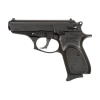
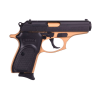
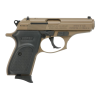
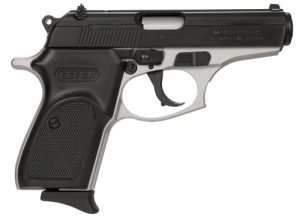
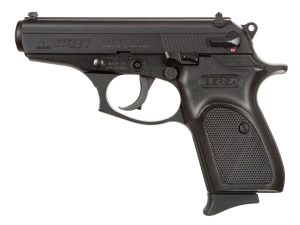
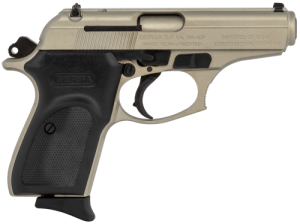
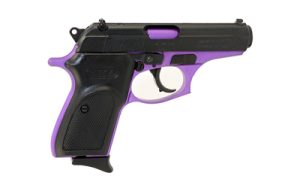
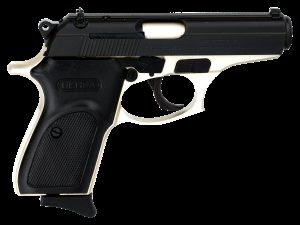
- Finishes: Blued, nickel and duo-tone, plus a run of Cerakote colors at retail
- Safety: Slide-mounted safety and decocker, integral key lock
Pros
- Soft recoil for a small .380
- Decocker makes carry simple
- Cheap and runs ball ammo
Cons
- Only eight rounds standard
- Heavy long first trigger pull
- Too thick for a pocket
Quick Take
The Bersa Thunder 380 is an Argentine .380 built on the Walther PPK idea: a blowback, double action/single action pistol with an exposed hammer and a slide-mounted safety that drops the hammer when you push it down. American Rifleman describes it as taking “its design cues from the Walther PPK.” It costs about two-thirds of what a new Walther PPK/S does, roughly $140 less, and it’s a long-running budget carry gun that has earned its reputation.
If you’ve seen it listed simply as the Bersa 380, this is the gun: Bersa’s own sheet calls it the Thunder 380, with a 3.54 inch barrel and 8+1 capacity. This Bersa Thunder 380 review is built on 600 rounds over two range trips, and the short answer is that it works. Across the retailers we track on September 25, 2026, trusted sellers had the standard gun from $277.99, and the price barely moves with the finish. The real decision is which Thunder: the standard 8-round gun, the slimmer CC, or the 15-round Plus that weighs just 1.5 ounces more.
Best For: Budget concealed carry for people who like a hammer-fired gun with a decocker, and new shooters who want a .380 that doesn’t kick hard. Not for anyone who wants double-digit capacity in the standard model or a gun that fits a pocket.
Design Intent: A Working Man’s PPK
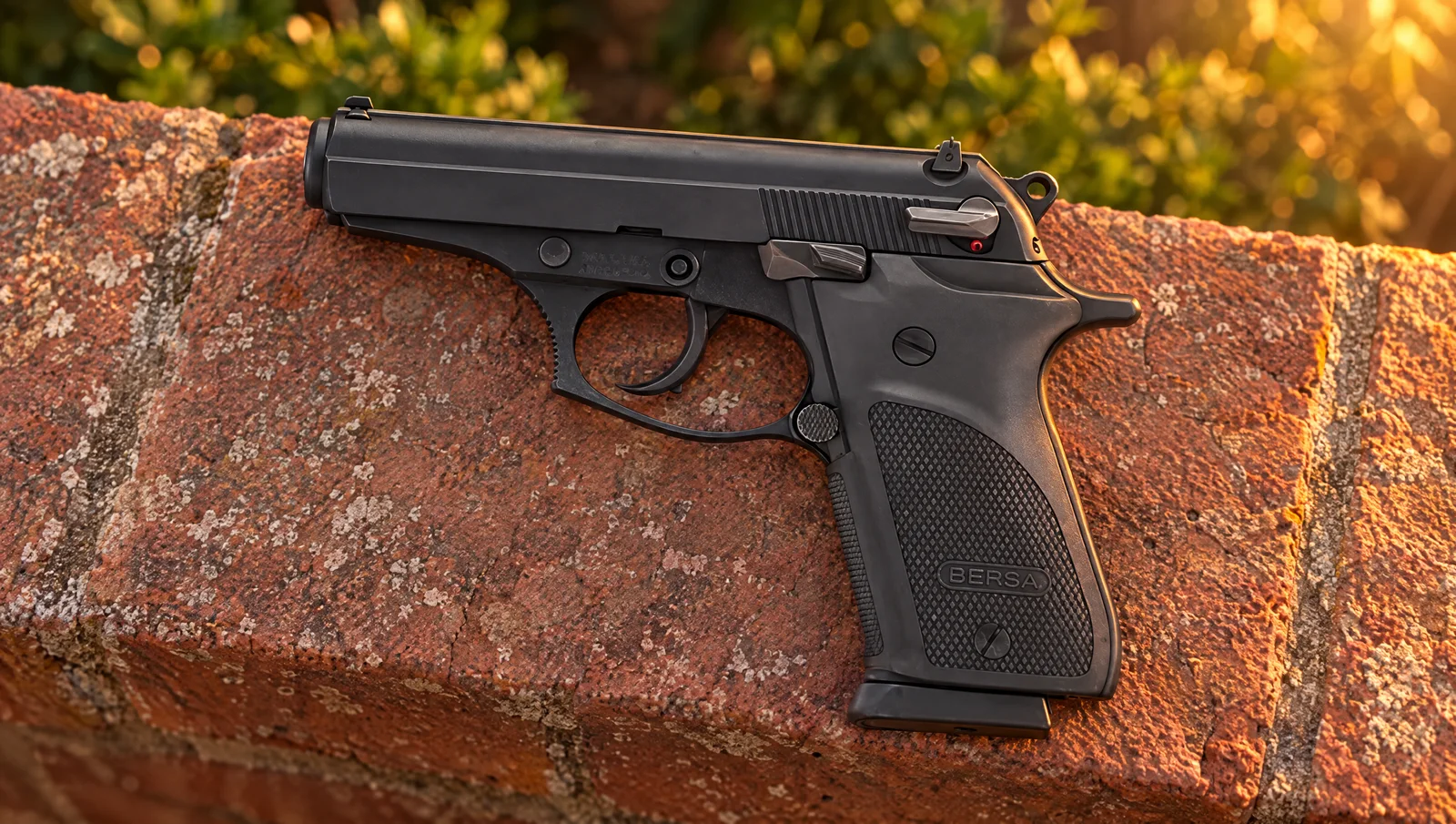
Bersa builds the Thunder in Argentina, and its own spec pages list the gun in metric: a 90 mm barrel with six grooves and a 254 mm twist, 560 grams, an 8-round magazine and a 168 mm overall length. In the units most of us use, that’s a 3.54 inch barrel, 1:10 twist, 19.75 ounces and 6.61 inches long. Bersa’s own copy calls the Thunder 380 an icon in its caliber with the best price-to-performance ratio on the market, which is marketing, but not by much. The slide reads BERSA S.A. and RAMOS MEJIA ARGENTINA, and the frame is stamped MADE IN ARGENTINA.
The controls follow the PPK pattern. American Rifleman’s review lists a slide catch, a round magazine release button and a combined thumb safety and decocker on the left, a takedown lever on the right, and an integral lock that disables the trigger. Push the safety down and it drops the exposed hammer, so the first shot is a long double-action pull and the rest are short single-action pulls.
It’s a blowback gun, which is simple and cheap to build but means a stiffer recoil spring and a slide that takes some effort to rack. The trade is fine at this size.
Bersa Thunder Variants: 380, CC, Plus, 380X and 22
Bersa sells the Thunder in more versions than most buyers realize, and its spec sheets show where they actually differ. These are Bersa’s own figures, converted from metric.
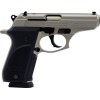
Thunder 380: 3.54 in. barrel, 19.75 oz, 8+1, 6.61 in. long from $277.99
Thunder 380 CC: 3.19 in. barrel, 17.60 oz, 8+1, 6.00 in. long, 1.02 in. grip from $293.99
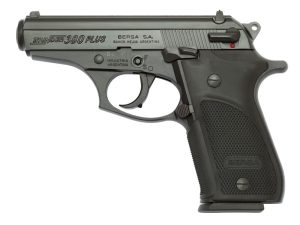
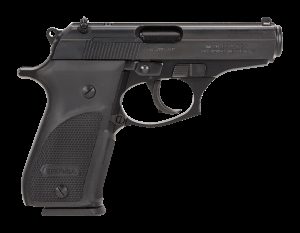
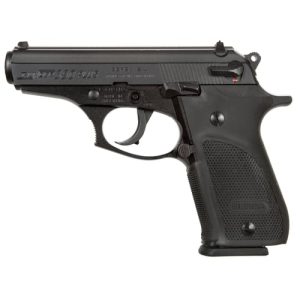
Thunder 380 Plus and Combat Plus: 3.54 in. barrel, 21.27 oz, 15+1 from $341.99
Thunder 380X: 4.25 in. barrel, 20.11 oz, 8+1, 7.36 in. long from $297.99
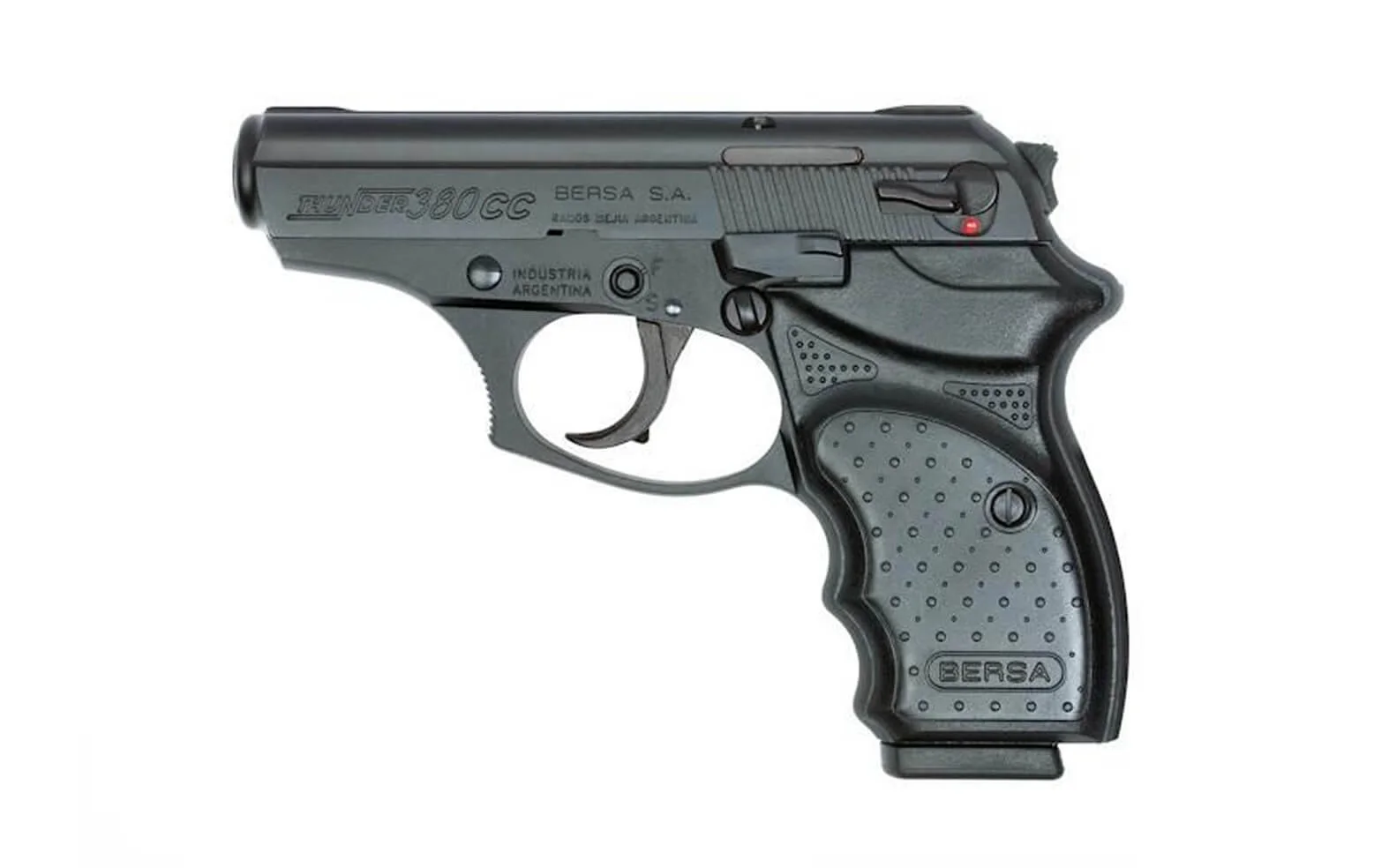
The CC barrel isn’t 3.5 inches
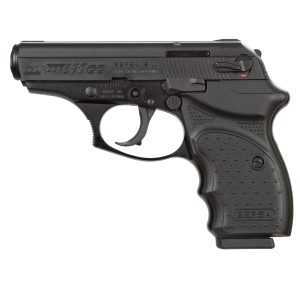
Here’s one thing the retail listings get wrong. Every CC listing we track calls it a 3.5 inch barrel, the same as the standard gun. Bersa’s own CC page lists an 81 mm barrel, which is 3.19 inches, against 90 mm for the standard Thunder. The CC is shorter everywhere: 6.00 inches long against 6.61, 4.53 inches tall against 4.88, and 17.60 ounces against 19.75. The biggest difference is the grip, which Bersa lists at 26 mm, 1.02 inches, against 33 mm on the standard gun. That’s why the CC carries so much better, and why it costs a little more. Bersa also gives the CC sights integrated into the slide, a loaded chamber indicator and a magazine safety, so it won’t fire with the magazine out.
The Plus is the one I’d buy
The Thunder 380 Plus holds 15 rounds against 8, and Bersa lists it at 603 grams against 560. That’s 1.52 ounces more for nearly double the capacity. The grip grows from 33 mm to 34 mm, about 0.04 inch, and every other dimension Bersa lists is the same. Palmetto State Armory had the Plus at $341.99 on September 25, about $64 more than the standard gun. The Combat Plus shares the same numbers on Bersa’s sheet. Bersa’s Plus page also lists a firing pin safety, an integral locking system and an aluminum alloy frame.
The 380X and the Thunder 22
The 380X stretches the barrel to 108 mm, or 4.25 inches, and retailers list it with a threaded barrel; PSA’s listing calls it 4.3 inches, and PSA had one at $297.99. The Thunder 22 uses the same 90 mm barrel length, height and grip in .22 LR, with a slightly narrower 22 mm slide, a 10-round magazine and 535 grams on Bersa’s sheet. It’s a cheap way to practice with the same manual of arms.
Color is almost free
At the trusted retailers we track, the standard 8-round gun ran $277.99 to $305.99 across matte, duo-tone, nickel and colored frames. Bass Pro had a dozen Thunder listings, black, pink, purple, FDE and duo-tone, all at $289.99. Pick the finish you like, because the price barely moves.
Competitor Comparison
I compared the Bersa Thunder 380 against four .380 pistols priced on September 25, 2026: the Ruger Security-380 at $299.99, the Glock 42 at $399.99, the Smith & Wesson Bodyguard 2.0 at $399 and the Walther PPK/S at $416.99.
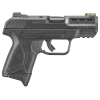
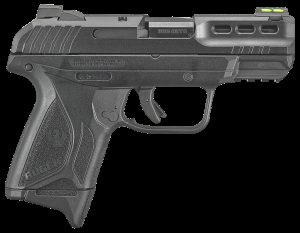
Ruger Security-380 (from $299.99)
Retail listings show a 3.42 inch barrel and 15+1 capacity for about $20 more than the Thunder. That’s the Thunder Plus’s capacity for less money than a Plus. I like the Bersa’s single-action trigger and decocking safety better. If capacity matters most, the Ruger wins on paper.
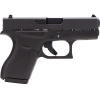
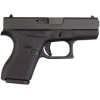
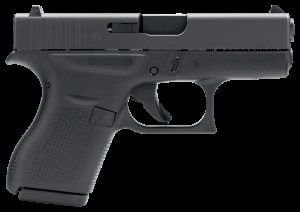
Glock 42 (from $399.99)
The G42 is the simpler gun, with a 3.25 inch barrel and 6+1 in retail listings. It costs about $120 more and holds two fewer rounds. It’s the better gun for pocket or deep carry, and the Bersa is the better gun to shoot a lot.
Smith & Wesson Bodyguard 2.0 (from $399)
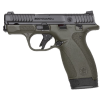
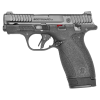
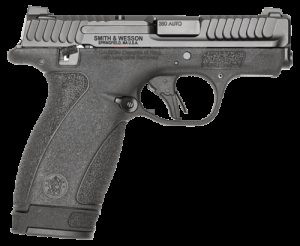
A modern micro .380 with a 2.75 inch barrel and 10 or 12 rounds in retail listings. It’s far smaller than the Thunder and holds more, but it costs about $120 more and the short barrel makes it snappier. For a pocket gun, it’s the pick.
Walther PPK/S (from $416.99)
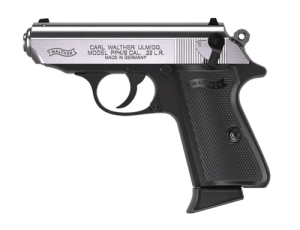
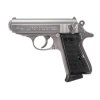
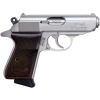
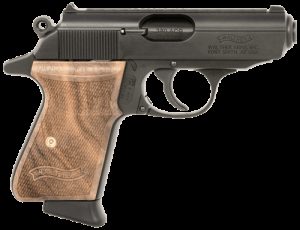
Bersa vs Walther PPK comes down to price. The Walther is the gun the Thunder takes its cues from. The only new PPK/S we tracked on September 25 was a single Guns.com listing at $416.99, about $140 more than the Bersa. You’re paying for the name and the history. For a working carry gun, the Bersa does the same job for less.
Verdict: For under $300, the Thunder 380 is still one of the best-shooting .380s you can buy. If you want more rounds, get the Plus or the Security-380. If you want the smallest gun, get the Bodyguard 2.0 or the G42.
Testing Protocol
I fired 600 rounds through a matte black Thunder 380 over two range trips, measured both trigger pulls with a Lyman gauge and shot groups at 7 and 15 yards.
Ammunition Log
- Blazer Brass 95 gr FMJ: 350 rounds
- Federal American Eagle 95 gr FMJ: 100 rounds
- Hornady Critical Defense 90 gr FTX: 75 rounds
- Federal HST Micro 99 gr JHP: 75 rounds
- Total: 600 rounds over two trips
Phase 1: Break-In
The first 250 rounds were all Blazer Brass on a warm, dry afternoon. No stoppages. The slide was stiff to rack at first, as blowback guns often are, and loosened slightly by the end of the session. I cleaned off the packing oil and lubed the rails before starting.
Phase 2: Reliability
Rounds 251 to 600 mixed the rest of the Blazer with American Eagle, Critical Defense and HST Micro. One stoppage: a failure to feed at round 384, the third Critical Defense round, where the flat polymer tip caught the ramp. It cleared with a tap and a rack, and the other 72 Critical Defense rounds fed fine. The HST Micro ran perfectly. No failures to eject, and the slide locked back on the last round every time.
Phase 3: Accuracy
Standing, two hands, five-shot groups, first shot double action. At 7 yards my groups averaged 1.9 inches, best 1.4 with Blazer Brass. At 15 yards they opened to 3.6 inches. Double action averaged 11 lb 12 oz on my Lyman gauge, long and heavy, while single action broke cleanly at 4 lb 10 oz. Almost every flyer was the first, double-action shot.
Tracking & Observations
After 600 rounds the frame rails showed normal wear marks and the finish had a little holster wear at the muzzle. Nothing loosened. The magazine, the part cheap guns often skimp on, fed every round it was given that wasn’t a flat-nosed defense load.
What This Means for You
- Upgrade Impact: Practice the double-action first shot more than anything else.
- Reliability: Ball and HST Micro ran clean; test any flat-nosed load first.
- Ammo Preference: Federal HST Micro 99 gr for carry.
- Maintenance: Basic cleaning, keep the rails lubed.
- Accuracy Expectation: About 2 inches at 7 yards, standing.
Performance Testing Results
The Bersa Thunder 380 ran 600 rounds with one stoppage, a flat-nosed defense load at round 384, and earned 9/10 for reliability and 7/10 for accuracy in my testing.
Reliability (9/10)
One hiccup in 600 rounds, and it came from the load most likely to cause one. With round-nose ball and HST Micro it never missed. That’s the reputation the Thunder has always had, and ours lived up to it.
Accuracy (7/10)
Once you’re in single action it shoots better than it has any right to at this price. The heavy double-action first shot is the limit, not the barrel. The front sight is dovetailed, so upgrading it is an option.
Ergonomics & Recoil (7/10)
At almost 20 ounces, the Thunder soaks up .380 recoil better than the micro guns do. The grip fills the hand, and I could shoot it all afternoon. The slide is stiff to rack, which matters if your hand strength is limited, and the safety takes a firm push.
Fit, Finish, and Quality Control (8/10)
The slide-to-frame fit is tight, the finish is even and the markings are clean. It doesn’t feel like a $280 gun, which is the whole point.
Technical Deep Dive
The Bersa Thunder 380 is a blowback .380 with an exposed hammer, a slide-mounted safety and decocker and an integral key lock, and Bersa’s sheets give it a 1:10 twist.
Safety Systems
Bersa’s CC page describes an automatic safety that engages when the magazine is removed, so the CC won’t fire with the magazine out, plus a key lock that blocks the trigger and prevents disassembly. On every Thunder, the slide safety decocks the hammer when you push it down. If you want a manual safety explained, our manual safety guide covers when it makes sense.
| Spec (Bersa’s figures) | Thunder 380 | Thunder 380 CC | Thunder 380 Plus | Thunder 380X |
| Barrel | 90 mm / 3.54 in. | 81 mm / 3.19 in. | 90 mm / 3.54 in. | 108 mm / 4.25 in. |
| Overall length | 168 mm / 6.61 in. | 152.4 mm / 6.00 in. | 168 mm / 6.61 in. | 187 mm / 7.36 in. |
| Height | 124 mm / 4.88 in. | 115 mm / 4.53 in. | 124 mm / 4.88 in. | 124 mm / 4.88 in. |
| Grip width | 33 mm / 1.30 in. | 26 mm / 1.02 in. | 34 mm / 1.34 in. | 33 mm / 1.30 in. |
| Weight | 560 g / 19.75 oz | 499 g / 17.60 oz | 603 g / 21.27 oz | 570 g / 20.11 oz |
| Capacity | 8 | 8 | 15 | 8 |
| Sight radius | 114 mm / 4.49 in. | 106 mm / 4.17 in. | 114 mm / 4.49 in. | 114 mm / 4.49 in. |
Parts, Accessories and Upgrades
The Bersa Thunder 380 needs very little. A spare magazine, a holster made for it and good carry ammo cover most owners. Our best concealed carry holsters guide and best .380 ammo for self-defense picks are the places to start.
| Upgrade Category | Recommended Component | Why It Matters | Cost Estimate |
| Spare magazine | Factory Bersa Thunder 380 magazine | A second magazine for carry and practice | Check current price |
| Holster | A molded IWB or OWB holster cut for the Thunder | Covers the trigger and holds the gun securely | $40 – $90 |
| Carry ammo | Federal HST Micro 99 gr | Fed perfectly in our test | $1 – $1.50 per round |
| Sights | Dovetail replacement front sight | Easier to see than the factory sights | Check fitment first |
Common Problems & Solutions
The Bersa Thunder 380 problems I’d plan for are a stiff slide and a heavy double-action first shot. In my 600 rounds the only real stoppage was one flat-nosed defense round, and the rest are about handling, not reliability.
- Stiff slide: Blowback guns use a strong recoil spring. Grip the slide firmly at the rear serrations and push the frame forward rather than pulling the slide back.
- Heavy first shot: The double-action pull is long. Dry fire at home to learn it.
- A CC won’t fire with the magazine out: That’s the magazine safety Bersa lists on the CC, working as designed.
- Flat-nosed defense loads: Test 50 rounds of any carry load before trusting it.
Who Should NOT Buy This Gun
- Pocket carriers: the Smith & Wesson Bodyguard 2.0 is much smaller and holds more.
- Anyone who wants 15 rounds for under $300: the Ruger Security-380 is listed with 15+1.
- Shooters with weak hands: the stiff blowback slide is hard to rack; look at an easy-rack .380 like the Smith & Wesson M&P380 Shield EZ.
- Anyone who hates a heavy first trigger pull: a striker gun like the Glock 42 has the same pull every time.
Final Verdict
The Bersa Thunder 380 is still one of the best values in carry guns. It shoots softer than most .380s, it runs, and at $277.99 from trusted sellers it costs a fraction of the Walther that inspired it. The heavy double-action first shot and the eight-round magazine are the only real knocks.
If I were buying one today, I’d spend the extra $64 on the Thunder 380 Plus for 15 rounds, or pick the CC if thin matters most. For more options, see our best .380 ACP pistols, our best .380s for concealed carry and our best concealed carry guns under $300.
Final Score: 7.8/10 – A cheap, soft-shooting PPK-style .380 that has earned its reputation.
Specs in this review come from Bersa’s own product pages for the Thunder 380 and Thunder 380 CC, converted from metric, and design and controls details from American Rifleman. Prices are what readers saw on our live price cards on September 25, 2026.
FAQ: Bersa Thunder 380
Is the Bersa Thunder 380 a good gun?
Yes, for the money. Ours ran 600 rounds with one stoppage, a flat-nosed defense load, and it shoots softer than most .380s because it weighs almost 20 ounces. The main knocks are the heavy double-action first shot and the 8-round magazine.
How much does a Bersa Thunder 380 cost?
On September 25, 2026, trusted retailers had the standard Thunder 380 from $277.99, and the standard gun ran $277.99 to $305.99 across finishes. The 15-round Thunder 380 Plus started at $341.99 and the CC at $293.99.
What is the difference between the Bersa Thunder 380 and the Thunder 380 CC?
The CC is smaller. Bersa lists it with an 81 mm (3.19 inch) barrel, 6.00 inches long, 17.60 oz and a 1.02 inch grip, against 90 mm (3.54 inches), 6.61 inches, 19.75 oz and a 1.30 inch grip on the standard gun. Both hold 8+1.
How many rounds does a Bersa Thunder 380 hold?
The standard Thunder 380 and the CC hold 8+1. The Thunder 380 Plus and Combat Plus hold 15+1.
Is the Bersa Thunder 380 a copy of the Walther PPK?
It's not a copy, but it follows the same idea. American Rifleman describes it as a blowback, double action/single action pistol that takes its design cues from the Walther PPK, with a slide-mounted safety that decocks the hammer.
Does the Bersa Thunder 380 have a safety?
Yes. It has a slide-mounted safety that also decocks the hammer and an integral key lock that blocks the trigger. Bersa also lists a magazine safety on the Thunder 380 CC, so the CC won't fire with the magazine out.
Where is the Bersa Thunder made?
In Argentina. The slide is marked BERSA S.A. and RAMOS MEJIA ARGENTINA, and the frame is marked MADE IN ARGENTINA.
Is the Bersa Thunder 380 Plus worth it?
We think so. Bersa lists it at 603 grams against 560 for the standard gun, about 1.5 ounces more, for 15 rounds instead of 8. It cost about $64 more at Palmetto State Armory on September 25, 2026.
5,718+ Gun & Ammo Deals
Updated daily from 200+ top retailers. Filter by category, caliber, action type, and price.
Related Guides