

Last updated October 24th 2026
Some of the links below are affiliate links, meaning at no additional cost to you, we may earn a commission if you click through and make a purchase.
A chronograph tells you how fast your bullet actually leaves your barrel, not how fast the number on the ammo box says it does. That matters the moment you start reloading, stretch out past 400 yards, or plug numbers into a ballistic app. The box velocity was measured from a test barrel that may be several inches longer than yours.
Five years ago the choice was a cheap optical chronograph with sky screens or a $600 radar. Now pocket-sized radar units sell for $400 to $500, and that changes the answer for most shooters. We set the six best chronographs side by side, checked each maker’s specs, and priced every one across the 200+ retailers we track on October 24, 2026.
Table of Contents
How we tested: Every pick here is ranked against our testing methodology. Minimum round counts, accuracy and reliability protocols, the failures that disqualify a gun.
Best Shooting Chronographs at a Glance
| Chronograph | Type | Works suppressed? | Price on October 24, 2026 |
|---|---|---|---|
| Garmin Xero C1 Pro | Doppler radar | Yes | $499.99 |
| Athlon Rangecraft Velocity Pro | Doppler radar | Yes | About $400 |
| LabRadar LX | Doppler radar | Yes | $599.99 |
| MagnetoSpeed Sporter | Barrel-mounted magnetic | No (V3 model only) | About $199 |
| Caldwell Ballistic Precision | Optical (sky screens) | Yes, if set back far enough | About $100 to $186 |
| ProChrono DLX | Optical (sky screens) | Yes, if set back far enough | About $165 |
Radar, Optical or Barrel-Mounted: Which Type Do You Need?
There are three ways to clock a bullet, and the type matters more than the brand.
| Doppler radar | Optical | Barrel-mounted | |
|---|---|---|---|
| How it works | Sits beside the muzzle and tracks the bullet with radar | Bullet passes over two light sensors downrange | Sensor strapped under the barrel reads the bullet passing |
| Price range | $400 to $600 | $100 to $200 | About $200 to $400 |
| Setup | Set it beside the gun and turn it on | Tripod downrange, line it up, shoot through it | Strap it on, run the cable |
| Light needed? | No | Yes, needs even daylight or an indoor light kit | No |
| Changes your point of impact? | No | No | It can, because it hangs off the barrel |
| Suppressors and brakes | Fine | Fine | Sporter no; V3 fits suppressors up to 2 inches wide |
| Pistols | Yes | Yes | Sporter fits revolvers only |
Our take: if you can afford $400, buy radar. It’s faster to set up, it doesn’t care about light, and there’s nothing downrange to shoot by accident. Optical units still make sense on a tight budget or for archery and airguns. Barrel-mounted units are the niche pick now that radar costs about the same as a MagnetoSpeed V3.
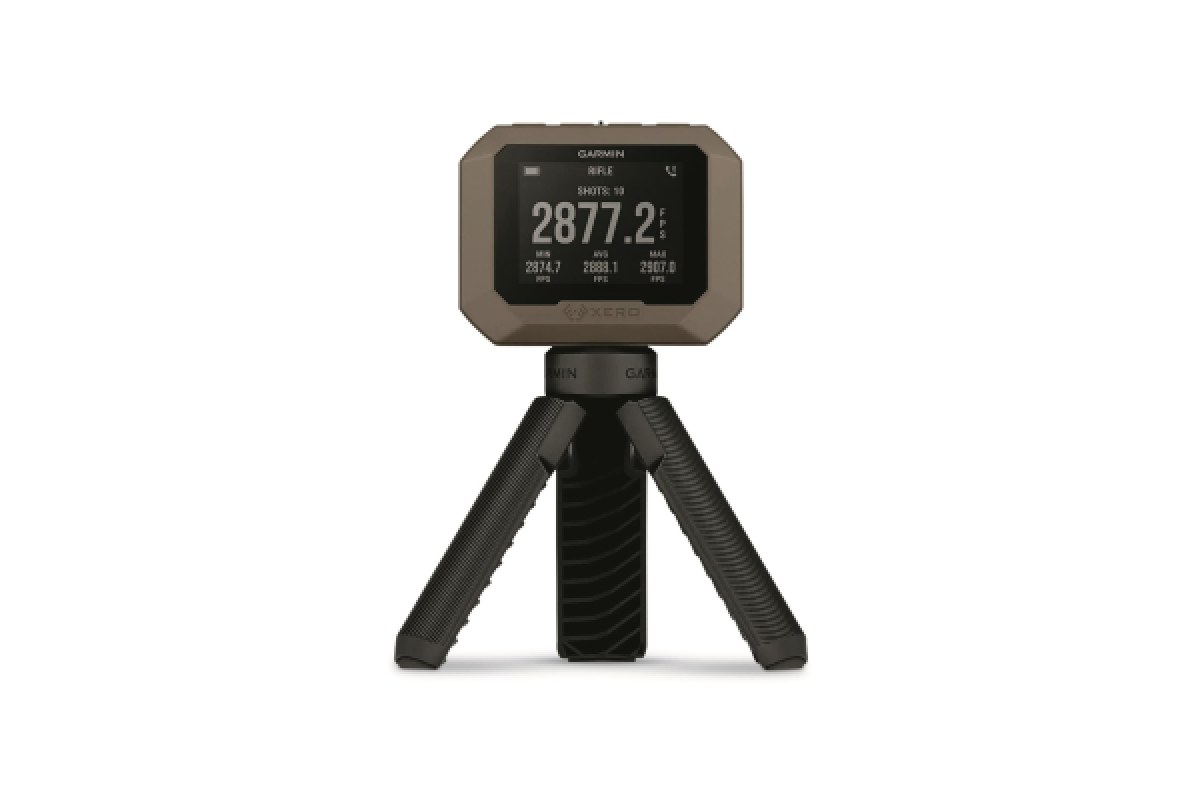
1. Garmin Xero C1 Pro: Best Chronograph Overall
- Type: Doppler radar
- Velocity range: 100 to 5,000 fps (as listed by retailers)
- Battery: Internal rechargeable, rated about 2,000 shots or 6 hours, USB-C
- Weight: About 3.7 oz without the tripod
- Water rating: IPX7
- App: Garmin ShotView, holds 50 sessions of up to 100 shots
- Price on October 24, 2026: $499.99
| Accuracy | 5 / 5 |
| Ease of use | 5 / 5 |
| Portability | 5 / 5 |
| Value | 4 / 5 |
| Battery | 4 / 5 |
Pros
- Pocket size, two-minute setup
- Works with suppressors and brakes
- ShotView app is genuinely good
Cons
- No discounts anywhere at $499.99
- Battery is sealed in
- Overkill for occasional shooters
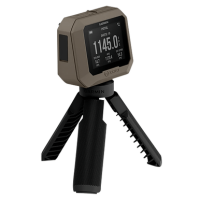
The Xero C1 Pro is the chronograph that made the old sky-screen setup feel like a chore. It’s about the size of a deck of cards, it sits on its little tripod a few inches beside the muzzle, and you point it roughly downrange. That’s the whole setup. There are no screens to align and nothing to shoot through, and since it isn’t triggered by muzzle blast, a suppressor or a big brake doesn’t confuse it.
We’ve run a C1 Pro through load development on a .308 bolt gun and with 9mm out of a carbine, and it picked up every shot. The ShotView app is what keeps people on it. Shot strings land on your phone with average, extreme spread and standard deviation already worked out, and the unit holds 50 sessions before you need to sync.
Price is the one sore spot. Every retailer in our feeds, from Palmetto State Armory to Sportsman’s Guide, had it at exactly $499.99 on October 24, 2026. That points to a price floor set by Garmin, so don’t wait around for a sale. Seeing it below that is rare.
Best For: Reloaders and long-range shooters who want the easiest, most reliable chronograph available.
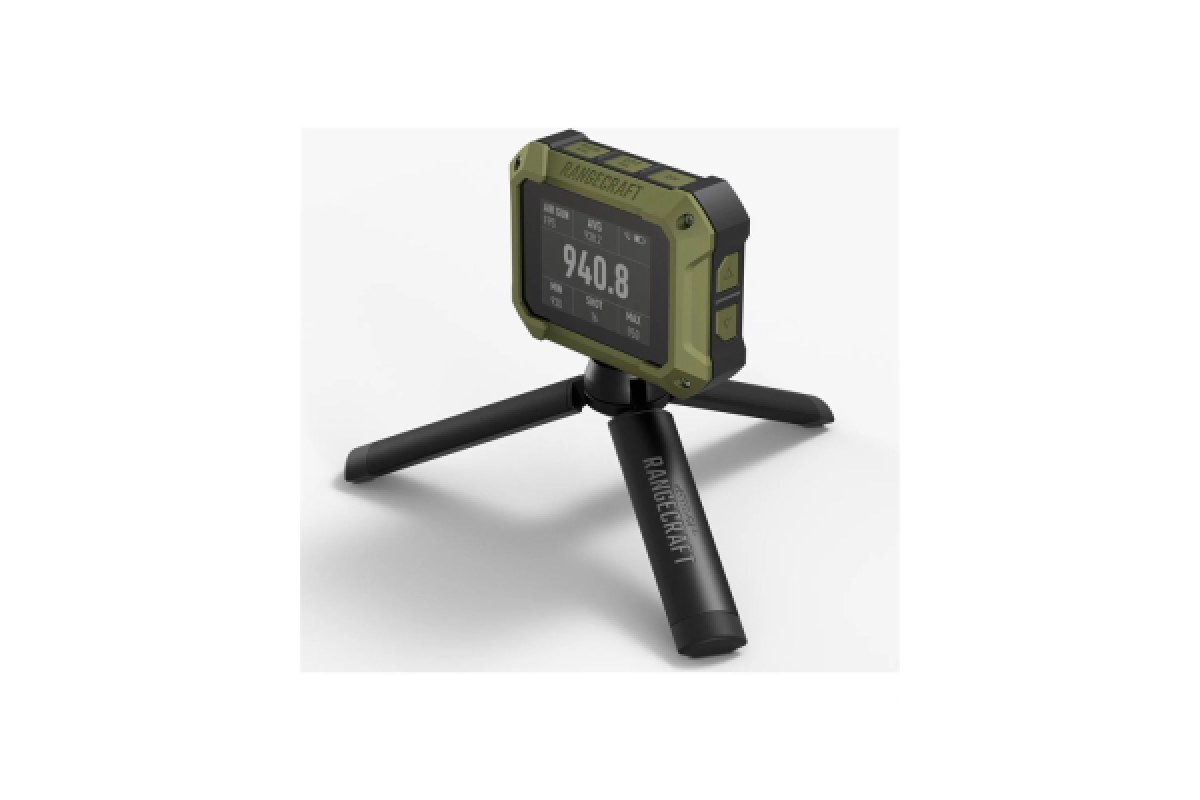
2. Athlon Rangecraft Velocity Pro: Best Value Radar Chronograph
- Type: Doppler radar
- Velocity range: 65 to 5,000 fps
- Display: 2.4-inch transflective LCD
- List price: $499.99 at Athlon
- Price on October 24, 2026: $399.99 at Brownells and Sportsman’s Warehouse
| Accuracy | 5 / 5 |
| Ease of use | 4 / 5 |
| Portability | 5 / 5 |
| Value | 5 / 5 |
| Battery | 4 / 5 |
Pros
- $100 under its list price
- Reads suppressed and braked guns
- Low 65 fps floor for airguns
Cons
- App is less polished than Garmin
- Thin data entry for handloaders
- Newer brand in the radar game
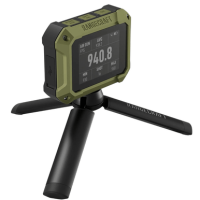
The Velocity Pro does what the Garmin does for about $100 less, at least where we’re seeing it. Athlon lists it at $499.99 on its own product page, but Brownells and Sportsman’s Warehouse both had it at $399.99 on October 24, 2026. At that price it’s the easiest radar chronograph to recommend.
Like the Garmin, it uses Doppler radar and doesn’t touch the barrel, so Athlon notes it won’t change your zero or barrel harmonics. Because it doesn’t trigger off muzzle blast, it reads suppressed rifles and guns with brakes and comps. Owners report setting it 4 to 10 inches from the muzzle. Its rated range starts at 65 fps, low enough for airguns and bows as well as rifles.
The weak point is software. One owner review on Athlon’s own page praises the hardware but says the app is built around factory ammo and lacks fields for powder charge, overall length and the other details a reloader logs. If you live in a reloading notebook anyway, that won’t matter much.
Best For: Anyone who wants radar accuracy and convenience for the least money.
3. LabRadar LX: Best for Detailed Load Development
- Type: Doppler radar
- Velocity range: About 65 to 5,000 fps (as listed by retailers)
- Projectiles: Rifle, handgun, shotgun slugs, airguns, bows and crossbows
- Battery: Internal rechargeable
- Stats: Max, min, average, extreme spread, standard deviation
- Price on October 24, 2026: $599.99 at MidwayUSA
| Accuracy | 5 / 5 |
| Ease of use | 4 / 5 |
| Portability | 4 / 5 |
| Value | 3 / 5 |
| Battery | 4 / 5 |
Pros
- From the radar chronograph pioneer
- Handles slugs, bows and airguns
- Full series statistics on board
Cons
- Most expensive pick here
- Bigger and heavier than Garmin
- Thin retail availability in our feeds
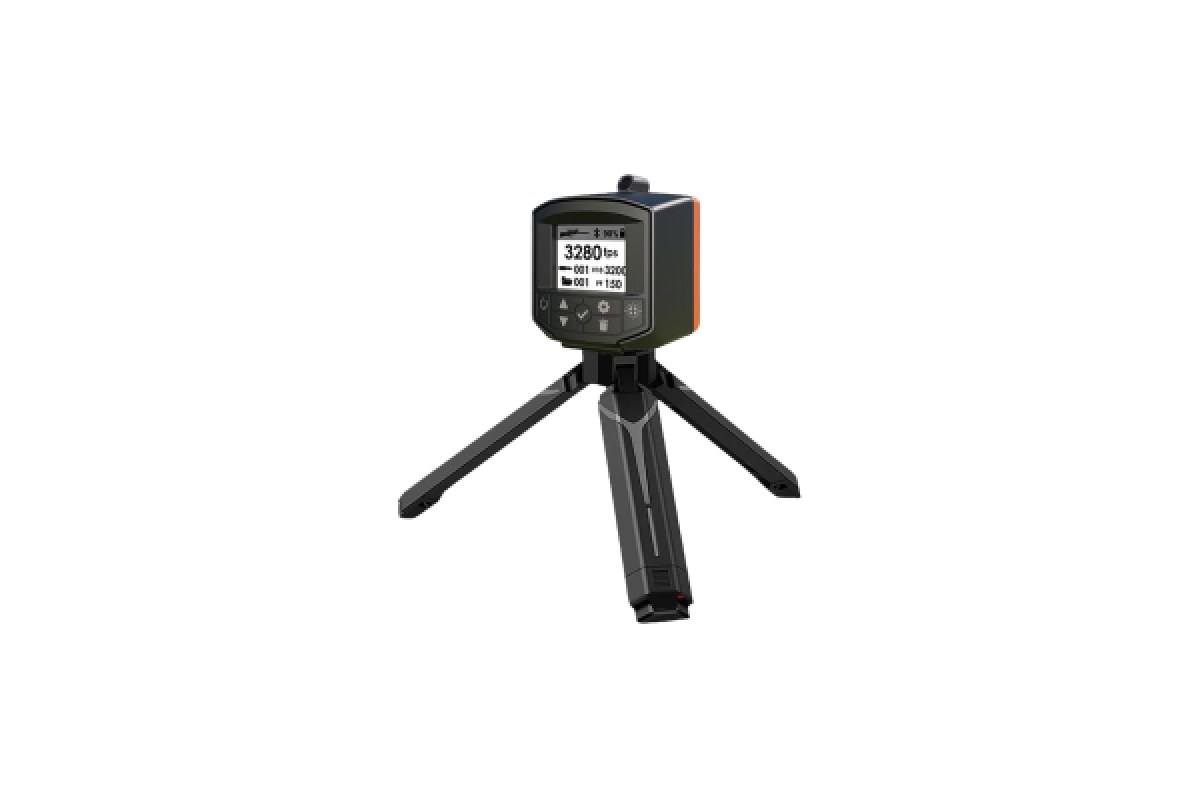
LabRadar brought Doppler radar chronographs to ordinary shooters with its original, much bigger unit, and the LX is its compact answer to the Garmin. The LabRadar LX page says it reads rifles, handguns, shotgun slugs, pellet and BB guns, bows and crossbows, and is precise with subsonic, transonic and supersonic projectiles.
It works the same way as the other radar units. It sits next to the gun, there’s nothing downrange, and it doesn’t need good light. On board it keeps full series statistics and talks to a phone app over Bluetooth.
At $599.99 it costs $100 more than the Garmin and $200 more than the Athlon, and only MidwayUSA carried it in our feeds on October 24, 2026. Buy it if you already run LabRadar’s ecosystem or specifically want its slug and archery support. Otherwise the two picks above give you the same core job for less.
Best For: Shooters loyal to LabRadar, and anyone clocking slugs and arrows as well as bullets.
4. MagnetoSpeed Sporter: Best Barrel-Mounted Chronograph
- Type: Barrel-mounted magnetic sensor
- Barrel fit: About 0.5 to 1 inch diameter, muzzle devices up to 2.7 inches long
- Power: 9-volt battery
- Works with: Centerfire rifles and revolvers, not rimfire or airguns
- Suppressors: Not recommended on the Sporter
- Price on October 24, 2026: About $199
| Accuracy | 4 / 5 |
| Ease of use | 3 / 5 |
| Portability | 4 / 5 |
| Value | 4 / 5 |
| Battery | 5 / 5 |
Pros
- Works in any light, anywhere
- Cheap 9-volt battery
- Nothing to place downrange
Cons
- Can shift your point of impact
- No suppressors on the Sporter
- Fiddly strap-on setup
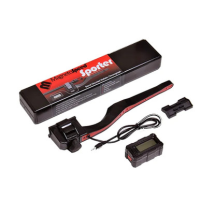
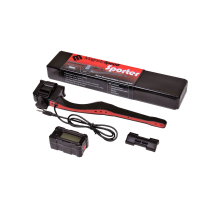
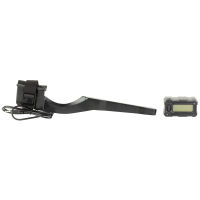
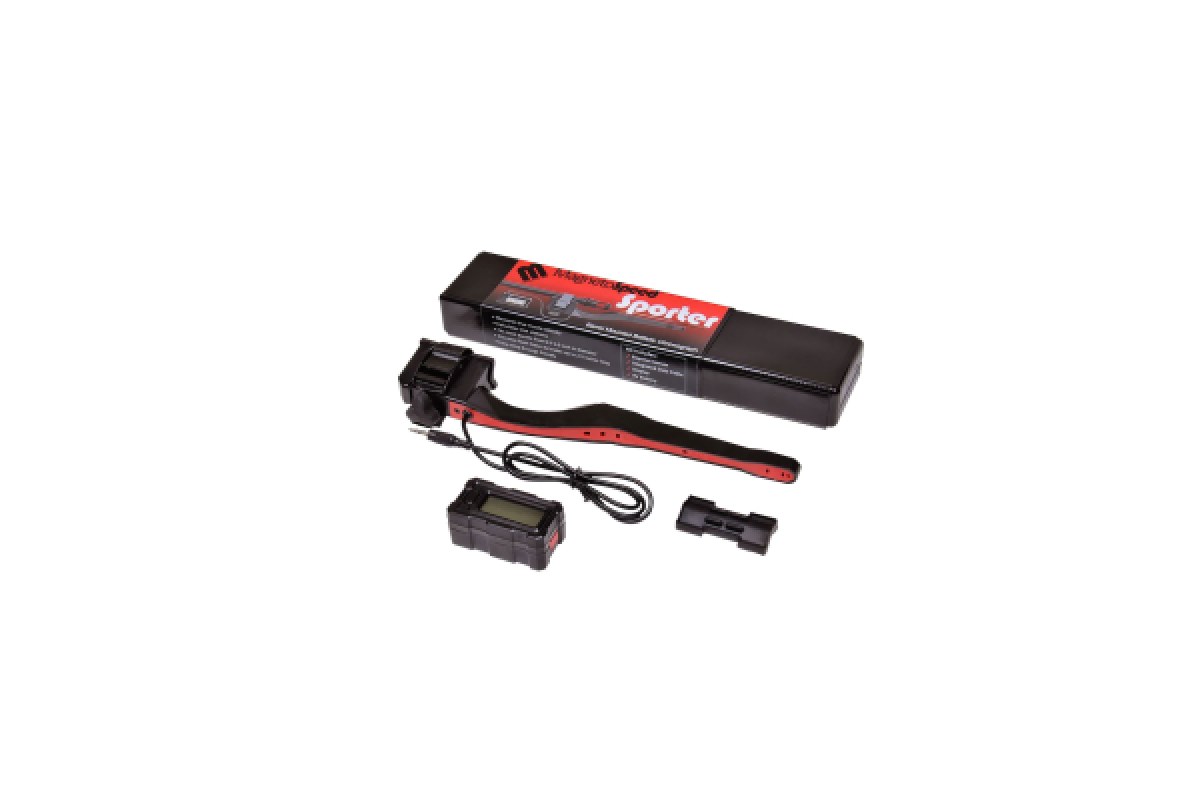
MagnetoSpeed was the go-to for competitive shooters before compact radar existed, because it doesn’t care where you are. A sensor “bayonet” straps under the barrel and reads the bullet as it passes over, so there’s nothing to set up downrange and no light to worry about.
The Sporter is the cheaper version, for barrels about half an inch to an inch across. Retailers list it for centerfire rifles and revolvers, not rimfire or airguns, and say it isn’t recommended for suppressors. A hot can can damage it. The bigger MagnetoSpeed V3 fits barrels and suppressors up to 2 inches.
The real catch is that anything hanging off the barrel can change how it vibrates. When we ran a Sporter on a .308, groups with it attached didn’t land in the same spot as groups without it. That’s fine for collecting velocity, but don’t confirm your zero with it on. It’s the reason radar makers advertise that their units don’t touch the barrel. At about $199 it still undercuts every radar unit by $200.
Best For: Rifle shooters on a budget who shoot in poor light or on crowded firing lines.
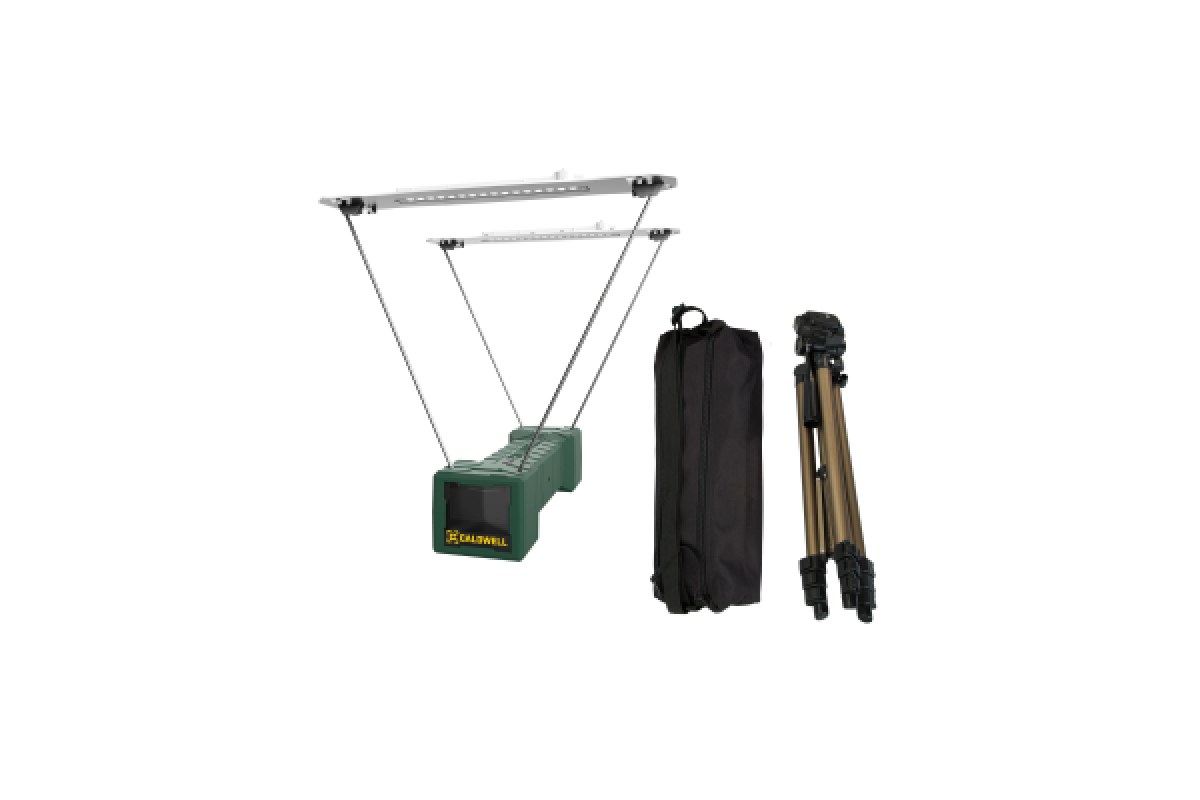
5. Caldwell Ballistic Precision: Best Budget Chronograph
- Type: Optical, with sky screens
- Velocity range: 5 to 9,999 fps
- Accuracy: Within 0.25%, as Caldwell rates it
- Connectivity: Bluetooth on the 2.0 version
- Price on October 24, 2026: About $100 to $136 for the unit, $170 to $186 for tripod kits
| Accuracy | 4 / 5 |
| Ease of use | 3 / 5 |
| Portability | 3 / 5 |
| Value | 5 / 5 |
| Battery | 4 / 5 |
Pros
- A third the price of radar
- Huge 5 to 9,999 fps range
- Bluetooth app on the 2.0
Cons
- Needs even daylight to read
- You shoot over it downrange
- Slower to set up than radar
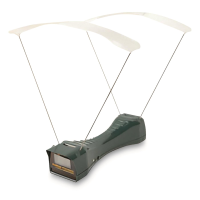
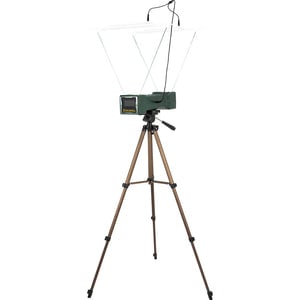
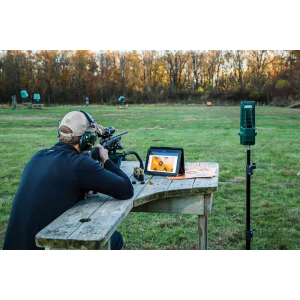
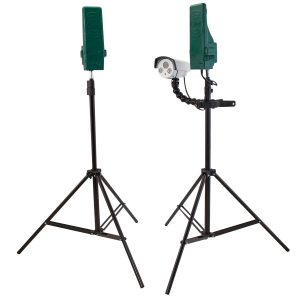
If $400 isn’t happening, this is the chronograph to buy. The Ballistic Precision is a classic optical unit: two light sensors under diffuser screens, set on a tripod a few feet in front of the muzzle, with the bullet fired over both. The time between the two readings gives the speed. Caldwell rates it from 5 to 9,999 fps within 0.25%.
Optical units have two weaknesses, and we hit both. Uneven light throws off readings, so bright sun with moving cloud gave us the odd error shot. And you’re shooting just a few inches over a box you paid for. Everyone who’s owned an optical chronograph long enough knows someone who shot theirs. Put it far enough out that muzzle blast doesn’t trigger it, and take your time aligning it.
On October 24, 2026 Brownells had the Bluetooth version at $135.99, with KYGUNCO lower at $99.99 and tripod kits around $170 to $186 elsewhere.
Best For: New reloaders and budget shooters who don’t mind a slower setup.
6. ProChrono DLX: Best Optical Chronograph for Data
- Type: Optical, with sky screens
- Velocity range: 20 to 9,999 fps
- Accuracy: About 0.5% or better
- Memory: 9 strings of up to 99 shots
- Power: One 9-volt, about 20 hours
- Price on October 24, 2026: $164.99 at Brownells
| Accuracy | 4 / 5 |
| Ease of use | 3 / 5 |
| Portability | 3 / 5 |
| Value | 4 / 5 |
| Battery | 5 / 5 |
Pros
- Built-in Bluetooth with free apps
- Stores 9 strings of 99 shots
- Long 20-hour battery life
Cons
- Optical light limits apply
- Indoor use needs a light kit
- Costs more than the Caldwell
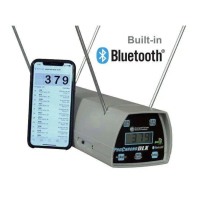
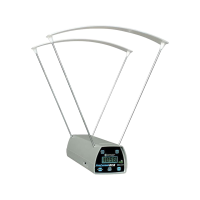
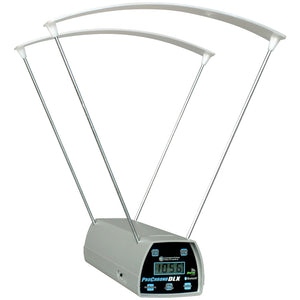
Competition Electronics has made the ProChrono for years, and the DLX is the version with Bluetooth built in. It’s an optical unit like the Caldwell, with a 20 to 9,999 fps range and accuracy listed at about 0.5% or better. What it adds is better data handling. It stores 9 strings of up to 99 shots, and free apps for iOS, Android, PC and Mac pull them off.
The same optical limits apply. It wants even daylight, and indoors Competition Electronics recommends its own lighting kit. A single 9-volt runs it for about 20 hours, so a spare battery in the range bag covers a season.
Best For: Budget reloaders who want to keep and export their shot strings.
How to Get Good Data From Any Chronograph
- Shoot at least 10 rounds. A 3-shot string tells you almost nothing about extreme spread or standard deviation.
- Let the barrel cool between strings. A hot barrel and hot ammo both push velocity up.
- Keep the ammo out of the sun. Rounds sitting on a hot bench read faster than rounds from a cool box.
- Record the conditions. Temperature and altitude change velocity and drop, and a ballistic app needs both.
- With radar, follow the placement guide. Too far back or angled off line and it misses shots.
- With optical, protect the screens. Set it far enough out that blast doesn’t trigger it, and line up carefully.
If you’re chronographing handloads, our guides to the best reloading press and the best reloading kits cover the rest of the bench, and is reloading worth it runs the numbers. Pair your velocities with a good rangefinder and the ballistic app finally has real data to work with.
Do You Actually Need a Chronograph?
If you shoot factory ammo at 100 yards, no. If you do any of these, yes:
- Reload. Velocity and its spread are how you tell a good load from a lucky group, and how you spot pressure creeping up.
- Shoot past 400 yards. A ballistic solver is only as good as the muzzle velocity you give it, and 50 fps of error turns into a miss at distance.
- Shoot suppressed. You need to know whether “subsonic” ammo really stays under the speed of sound from your barrel. See our best suppressors guide.
- Compete. Some divisions set power factor from measured velocity, and you want to know you’ll make it before match day.
Frequently Asked Questions
What is the best chronograph for shooting?
For most shooters the Garmin Xero C1 Pro, a pocket-size Doppler radar unit at $499.99. If you want radar for less, the Athlon Rangecraft Velocity Pro was $399.99 at Brownells and Sportsman's Warehouse on October 24, 2026.
Is a radar chronograph better than an optical one?
For most people, yes. Radar sits beside the gun, needs no light, has nothing downrange to shoot, and works with suppressors and brakes. Optical chronographs cost far less but need even daylight and careful alignment.
Do chronographs work with suppressors?
Radar units like the Garmin Xero C1 Pro and Athlon Velocity Pro do, because they do not trigger off muzzle blast. Optical units work if set far enough downrange. The MagnetoSpeed Sporter is not recommended with suppressors; the V3 fits suppressors up to 2 inches wide.
Does a MagnetoSpeed change point of impact?
It can. The sensor straps to the barrel and changes how it vibrates, so groups with it attached can land in a different spot. Use it to collect velocity, then remove it before confirming your zero.
How far from the muzzle should a chronograph be?
Radar units sit a few inches beside the muzzle; Athlon owners report 4 to 10 inches for the Velocity Pro. Optical units go several feet downrange so muzzle blast does not trigger the sensors. Follow your unit's manual.
How many shots do you need for a good velocity average?
At least 10. Three or five shots can show a misleadingly small extreme spread and standard deviation. Ten or more gives numbers you can trust for load development and ballistic apps.
Can a chronograph measure arrows and airguns?
Many can. The LabRadar LX lists bows, crossbows, pellet and BB guns, and the Athlon Velocity Pro reads from 65 fps. The MagnetoSpeed Sporter does not work with airguns or rimfire.
Why is my velocity lower than the ammo box?
Box velocities come from test barrels that are often longer than yours, and conditions differ. A shorter barrel, cold ammo or a different chamber can all read slower than the box, which is exactly why a chronograph is worth having.
4,070+ Gun & Ammo Deals
Updated daily from 200+ top retailers. Filter by category, caliber, action type, and price.
Related Guides