

Affiliate disclosure: This Stevens 320 review contains affiliate links. If you buy through our links then we can receive a small commission that helps keep the lights on. You don’t pay anything more.
- Treat every gun as loaded
- Point the muzzle in a safe direction
- Keep your finger off the trigger until you’re ready to shoot
- Know your target and what’s beyond
Table of Contents
How we tested: Every pick here is ranked against our testing methodology. Minimum round counts, accuracy and reliability protocols, the failures that disqualify a gun.
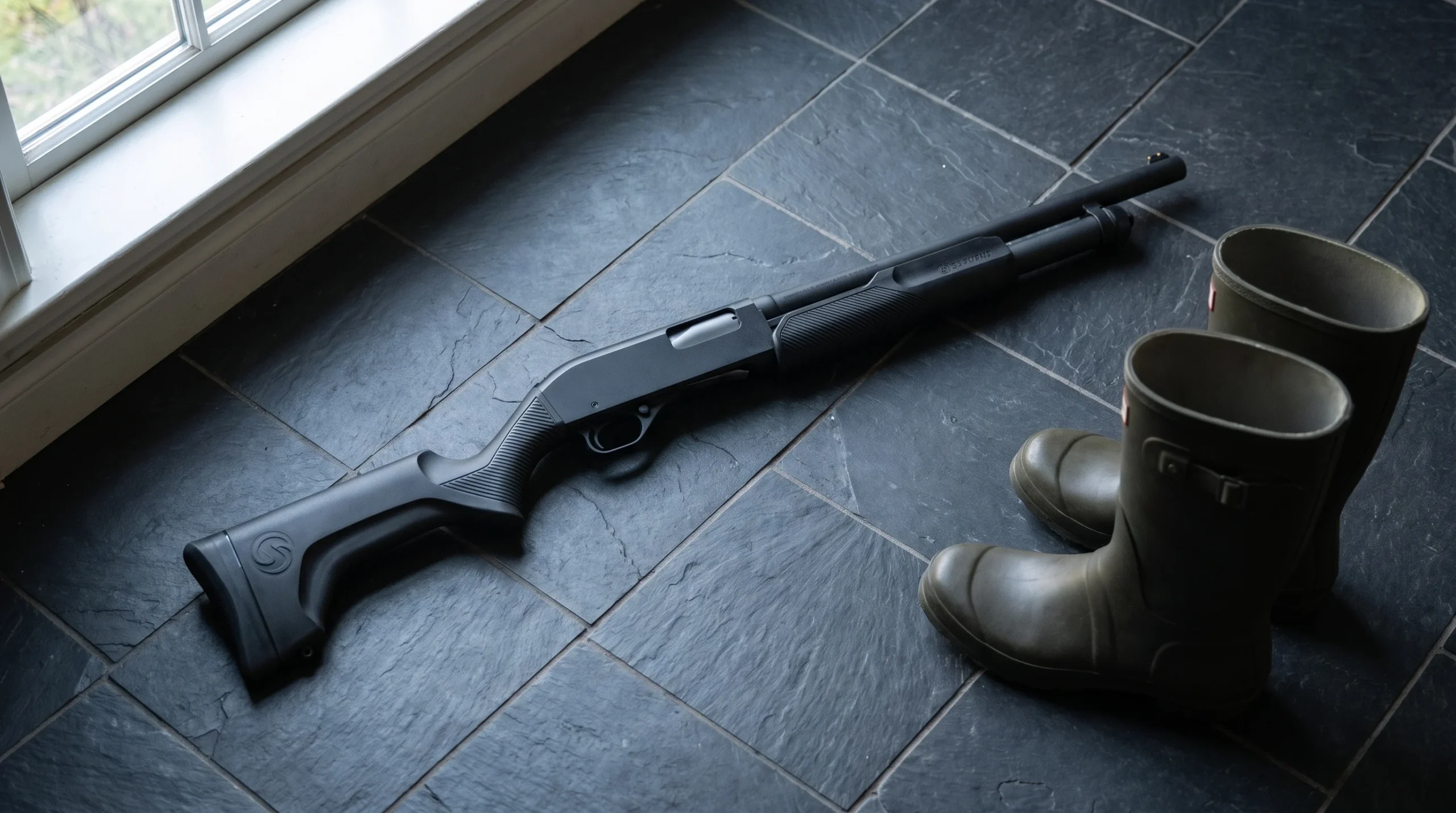
Review: Stevens 320 – The $160 Shotgun That Can’t Take A Choke
Our Rating: 7.4/10
Specifications (Stevens 320 Security Bead Sight, SKU 19486)
- RRP: $289 (Savage Arms)
- Street Price: $159.99 (Use our live pricing for the best up to date deal)
- Gauge: 12, with 20 gauge across most of the line
- Action: Pump, tube fed, ambidextrous
- Barrel Length: 18.5 inches
- Barrel Material: Carbon steel, matte black
- Choke: Fixed cylinder, no tubes
- Capacity: 5
- Receiver: Aluminum, matte black
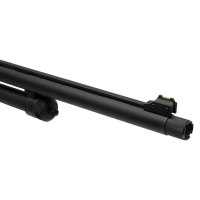
- Sights: Bead front
- Overall Length: 39.3 inches
- Length of Pull: 13.75 inches, fixed
- Weight: 6.7 lbs
- Stock: Black synthetic, recoil pad, two QD studs
Pros
- Street price under half of list
- Aluminum receiver keeps it genuinely light
- Five in the tube, ambidextrous
Cons
- Security models take no choke tubes
- Fixed 13.75 inch length of pull
- Finish is basic, unapologetically
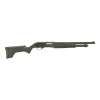
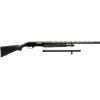
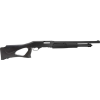
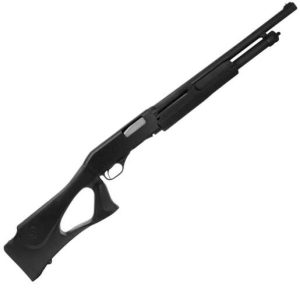
Quick Take
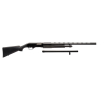
Savage lists the Stevens 320 Security at $289. We’re seeing it at $159.99. That’s the whole pitch, and it’s a good one.
But there’s a catch nobody mentions, and it’s on Savage’s own spec sheet. Every Security model in the range is fixed cylinder. No choke tubes. Not “ships with cylinder,” not “accepts Win Choke,” just a bore that is what it is forever. For a gun sat by the bed that’s fine, arguably ideal. For anything else it’s a wall you hit on day one.
Here’s the part that should change what you buy. The Field Grade lists at the same $289, and it does take choke tubes. Same money on paper, a longer barrel, and a gun you can actually set up for what you’re shooting. If you’re not specifically buying a home defense gun, you’re leaving something on the table by defaulting to the Security.
We ran 900 rounds through one. It didn’t break.
Best For: Anyone who wants a working pump gun by the bed for the price of a decent optic. If you want one gun that does birds and home defense, buy the Field Grade instead and put a shorter barrel on the shopping list.
Design Intent: Why It Costs What It Costs
The 320 is built to a number, and Savage hasn’t hidden where the money went. The receiver is aluminum, not steel. That’s the same call Mossberg made on the 500 and the opposite of what Remington did on the 870, and it’s why this thing weighs 6.7 lbs instead of something closer to eight.
Light is good until it isn’t. A 6.7 lb 12 gauge firing full power buckshot moves. It’s manageable, and the recoil pad is better than it has any right to be at this price, but nobody should pretend a light gun and a heavy load are friends. If recoil worries you, the 20 gauge versions exist and they’re the honest answer rather than a compromise.
The action is ambidextrous, which Savage lists as a plain spec rather than a selling point, and on a gun this cheap that matters more than it sounds. A left handed buyer gets the same gun everyone else does, at the same price, with no waiting. It’s tube fed, five rounds, and there’s nothing clever anywhere in it. That’s the point.
Where you feel the price is the finish and the furniture. The matte black is thin, the stock is hollow enough to sound like it, and the trigger is a heavy budget trigger. None of that stops it working. All of it reminds you what you paid.
The Stevens 320 Range, And The Choke Problem
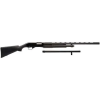
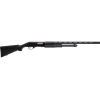
Savage splits the 320 into two jobs, and the split is cleaner than the marketing makes it look. Everything called Security has an 18.5 inch barrel and a fixed cylinder bore. Everything called Field Grade has a 22 inch barrel and takes Win Choke tubes. That’s the real fork in the road.
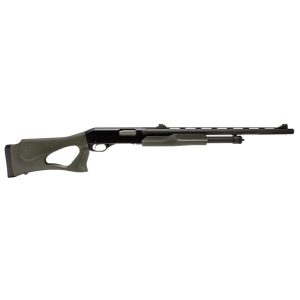
Within the Security guns you’re mostly paying for sights and a grip. The bead sight gun lists at $289. Add the ghost ring and it’s $319, a $30 step that buys you 0.1 lb and a much faster sight picture in poor light. The thumbhole stock is $299 and 7.2 lbs, which is half a pound over the plain gun for a stock most people either love or can’t get on with. A pistol grip version of the bead sight gun is the same $289 as the standard one.
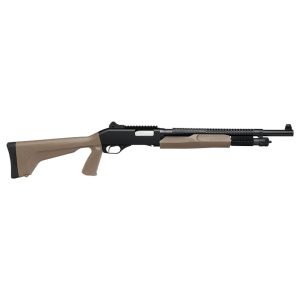
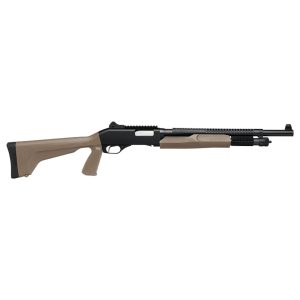
Then there’s the Tactical FDE at $449 list. It’s the same 18.5 inch fixed cylinder barrel, the same five round tube and the same 6.7 lbs as the $289 bead sight gun. What the extra $160 buys is the color, a rail, a heat shield and metal sights. Whether that’s worth it is your call, but you should make it knowing the gun underneath is identical.
One more thing worth knowing on the Field Grade side: the 20 gauge comes with a 12.75 inch length of pull against 13.75 on the Security. That’s a youth stock in everything but name, and it’s genuinely useful if you’re buying for a smaller shooter. It’s also a nuisance if you aren’t and nobody told you.
Stevens 320 Variants Compared


How It Stacks Up Against The Obvious Rivals
The Mossberg 500 is the gun everyone reaches for first, and it’s the closest comparison because it’s also an aluminum receiver pump. The 500 has the better safety position, a far deeper aftermarket and barrels you can swap in minutes. It also costs more. If your budget stretches, it’s the more flexible gun and it isn’t close.
The Remington 870 goes the other way with a steel receiver, which means more weight and, in most people’s hands, less felt recoil. It’s the one to want if you’re going to shoot it a lot. Again, more money.
What the 320 has is the number. At $159.99 it isn’t competing with either of those guns, it’s competing with buying nothing, or with a used gun of unknown history. Framed that way it wins comfortably. We’ve ranked the wider field in our guide to the best pump action shotguns, and the 320 earns its place there on price alone.
Verdict: Not the best pump gun. Comfortably the most gun per dollar in the category, provided the fixed choke suits the job.
How We Tested It
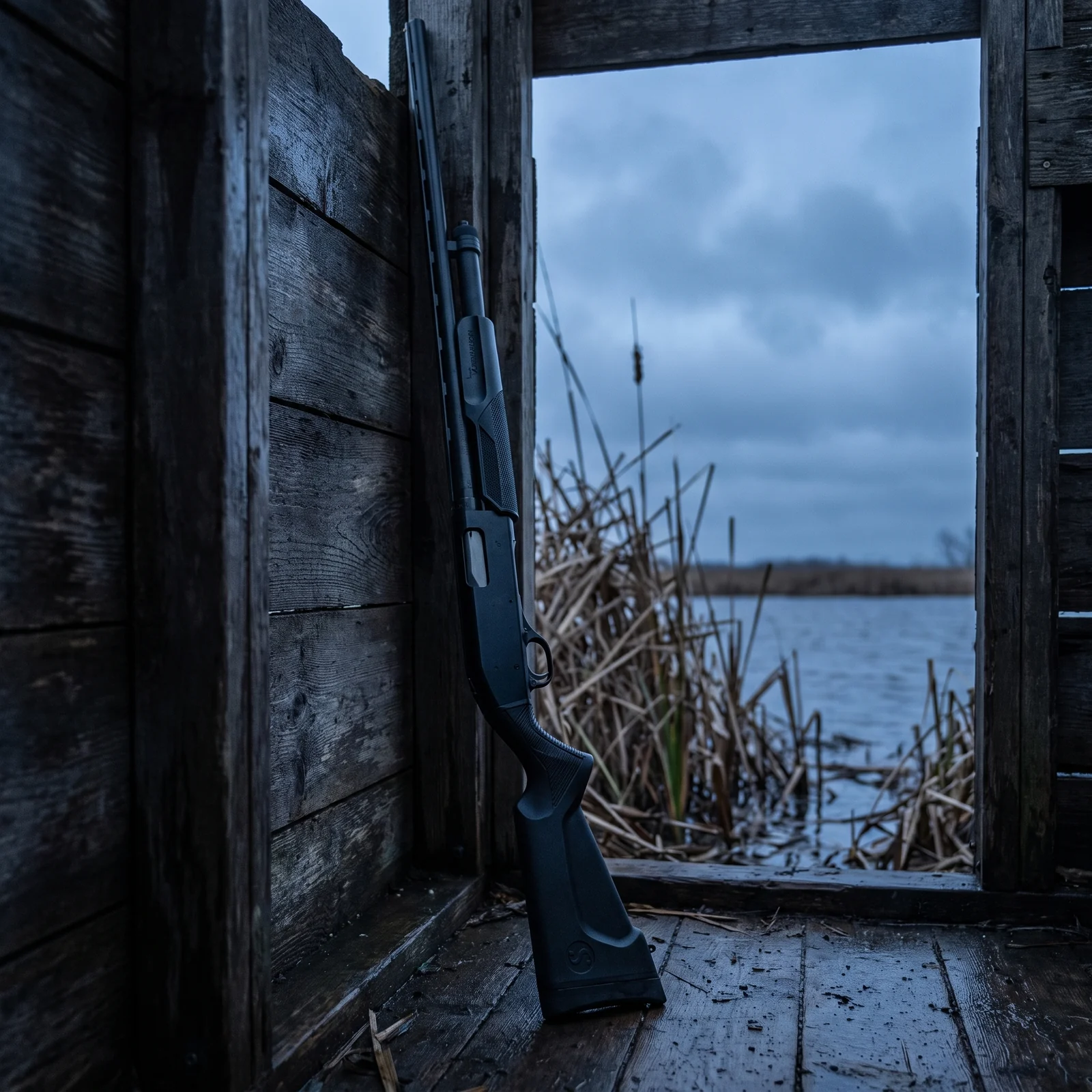
We put 900 rounds through a 12 gauge Security with the bead sight, over five sessions between late July and mid September, in temperatures from 61 to 94 degrees. Four sessions were on a static range, one was an afternoon of informal clays that the fixed cylinder bore made harder than it needed to be.
The bulk of it was Federal Top Gun 2 3/4 inch 1 1/8 oz #8 and Rio Game Load 1 1/8 oz #7.5, around 640 rounds between them. Defensive work was Federal Power-Shok 2 3/4 inch 00 buckshot, 9 pellet, 120 rounds, plus 60 rounds of Winchester Super-X 1 oz rifled slug. The rest was Fiocchi 2 3/4 inch #6 used for patterning.
Patterning was at 15 and 25 yards into 30 inch circles on paper, which is where a cylinder bore home defense gun actually gets used, rather than the 40 yards a choked field gun gets judged at. We counted pellets by hand, ten shots per distance. We cleaned it once, at the halfway mark, and otherwise left it dirty on purpose.
What We Recorded
Malfunctions across 900 rounds: four. Three were failures to feed in the first 150 rounds, all of them mine, all of them from short stroking a stiff new action. The fourth was a genuine failure to eject at round 611 with a Rio hull, and it cleared with a firm second stroke. After the first cleaning it ran without complaint to the end.
The action is stiff out of the box and stays a little gritty. It’s noticeably smoother at 900 rounds than it was at 100, but it never gets slick the way a well used 870 does.
Performance Results
With Federal Power-Shok 00 buck at 15 yards, we averaged 8.4 of 9 pellets inside the 30 inch circle across ten shots, with the tightest spread roughly 11 inches edge to edge and the widest a shade over 15. At 25 yards that dropped to 6.7 of 9 in the circle and the spread opened past 26 inches. That’s cylinder bore behaving exactly like cylinder bore, and it’s the number that matters for the job this gun is sold for.
Slugs went where you’d expect from a bead sighted smoothbore. At 25 yards off a bag we kept ten Winchester Super-X rounds inside about 4 inches. That’s plenty for the distance and it’s also the honest ceiling: this isn’t a slug gun and the sight doesn’t pretend to be.
The trigger broke at 6 lbs 2 oz averaged over ten pulls on a Lyman gauge, with obvious creep. It’s a budget trigger and it feels like one, though it never got in the way at shotgun distances.
Recoil is the real tax. A 6.7 lb gun and nine pellets of 00 is a combination you feel through the third round of a string. The recoil pad takes the edge off better than expected. It doesn’t make it a pleasant gun to run 50 rounds of buckshot through in an afternoon, and we wouldn’t ask a new shooter to.
Technical Deep Dive
The fixed cylinder bore deserves more than a bullet point. A cylinder bore throws the widest pattern a barrel can, which sounds useful indoors and mostly is, but it also means the gun has one behavior and you can’t change it. You can’t tighten it for a longer shot, you can’t open it for closer work, and you can’t fit a spreader or a turkey tube. On the Field Grade guns Savage fits the Win Choke system, so you get all of that back for the same $289 list.
The aluminum receiver is worth understanding rather than worrying about. On a pump gun the receiver is a housing, not a pressure vessel. The barrel and the locking system take the pressure, and Savage uses a carbon steel barrel here. Aluminum receivers have been running on Mossberg 500s for over sixty years. What you give up is weight, and weight is recoil.
Capacity is five in the tube on every model in the range, Security and Field Grade alike, which is worth saying because plenty of listings imply the tactical guns hold more. They don’t. The tube is the tube.
Sights are the one place the range genuinely tiers. The bead is a bead. The ghost ring on the $319 guns is a real upgrade in low light and it’s the option we’d take if the extra $30 is available, particularly on a gun whose entire purpose is being picked up in the dark. The Tactical FDE’s metal sights sit on a rail, so that one’s also the platform if you want a red dot later.
Ammo, Upgrades And What To Skip
Ammunition matters more on a cylinder bore than on a choked gun, because the barrel isn’t doing anything to help you. Reduced recoil 00 buck is the sensible default in a 6.7 lb gun and it patterns tighter than full power loads in our testing. Our guide to the best shotgun ammo for home defense goes through the trade-offs properly.
For upgrades, keep it short. A sling and two QD studs are already fitted, so a sling is a $20 fix. A side saddle is the other obvious one. What we’d skip is anything that adds weight to the front of a gun this light, and anything that promises to fix the trigger, because you’ll spend more than the gun is worth chasing a few pounds of creep.
If recoil is the sticking point, the 20 gauge Field Grade is the better answer than any accessory. We’ve ranked the alternatives in our best 20 gauge shotguns guide.
Who Should NOT Buy This Gun
- Anyone who wants one gun for birds and home defense. The Security’s fixed cylinder bore can’t be choked for anything past close range. Buy the Stevens 320 Field Grade instead, at the same $289 list, and get the Win Choke system with it.
- Shooters who need a barrel they can swap. This isn’t a barrel-swap platform. The Mossberg 500 is, and swapping between an 18.5 inch and a 28 inch barrel takes a minute.
- Recoil-sensitive or smaller shooters in 12 gauge. At 6.7 lbs a full power 12 gauge load is a lot of gun. Take the 20 gauge Field Grade, which also comes with a shorter 12.75 inch length of pull.
- Anyone planning to shoot it hard every week. The action is gritty and stays that way. A Remington 870 costs more and gets smoother the more you use it.
- Buyers who want a gun that looks like the money. The finish is thin and the furniture is hollow. It works, it just doesn’t flatter anyone.
Final Verdict
At $159.99 against a $289 list, the Stevens 320 Security is one of the few guns where the discount is the story rather than a distraction. It ran 900 rounds with four stoppages, three of which were operator error on a stiff new action, and it patterns 00 buck acceptably at the distance a home defense gun gets used at.
Just buy the right one. If it’s living by the bed, the Security is exactly enough gun and the ghost ring is worth the extra $30. If it’s going to do anything else, the Field Grade lists at the same money and takes choke tubes, and that single difference is worth more than every other spec on the sheet.
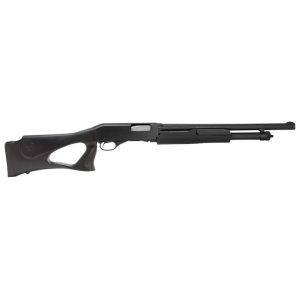
The 320’s thumbhole stock version sits between the two at $299 if you want the grip without the pistol grip look.

Sources
Every specification, SKU and list price here comes from Savage Arms’ own product pages, read by SKU: the 320 Security Bead Sight (19486) and the 320 Field Grade (22437). Street prices come from our own live retailer feed.
FAQ: Stevens 320
How much does a Stevens 320 cost?
Savage lists the 320 Security Bead Sight at $289, the ghost ring versions at $319, the thumbhole at $299, the Field Grade from $289 and the Tactical FDE at $449. Street prices are far lower. Across the retailers we track the cheapest trusted listing was $159.99, and most of the range sits between $160 and $300.
Does the Stevens 320 take choke tubes?
The Security models do not. Savage's own spec sheets list every Security variant as fixed cylinder, so there is no tube to change and no way to tighten or open the pattern. The Field Grade models are different: they carry the Win Choke system and take interchangeable tubes, at the same $289 list price.
Is the Stevens 320 reliable?
Ours was. We ran 900 rounds through a 12 gauge Security and had four stoppages: three failures to feed in the first 150 rounds that were down to short stroking a stiff new action, and one failure to eject at round 611 that cleared with a firm second stroke. The action is gritty out of the box and loosens up, but it never gets truly smooth.
Who makes the Stevens 320?
Savage Arms. Stevens is Savage's value brand, and the 320 is listed on savagearms.com under its own SKUs like 19486 for the Security Bead Sight and 22437 for the Field Grade.
Is the Stevens 320 receiver aluminum or steel?
Aluminum, with a carbon steel barrel. That is the same approach Mossberg takes on the 500 rather than the steel receiver Remington uses on the 870, and it is why the 320 Security weighs 6.7 lbs. The trade-off is felt recoil: a light 12 gauge and full power buckshot is a lot of gun.
What is the difference between the Stevens 320 Security and Field Grade?
Barrel length and choke. The Security has an 18.5 inch fixed cylinder barrel and is built for home defense. The Field Grade has a 22 inch barrel with Win Choke tubes and is built for hunting. Both hold five, both use the same aluminum receiver, and both start at the same $289 list. The 20 gauge Field Grade also has a shorter 12.75 inch length of pull against 13.75 on the Security.
Is the Stevens 320 Tactical FDE worth the extra money?
It lists at $449 against $289 for the Security Bead Sight, and underneath it is the same gun: the same 18.5 inch fixed cylinder barrel, the same five round tube and the same 6.7 lbs. The extra buys the FDE color, a rail, a heat shield and metal sights. If you want to mount a red dot later it is the sensible starting point. If you do not, it is $160 for a paint job.
4,830+ Gun & Ammo Deals
Updated daily from 200+ top retailers. Filter by category, caliber, action type, and price.
Related Guides