

Extraction is basically one long gunfight through Dhaka, and Sam Hargrave shot it like a stuntman rather than a director, which is exactly what he is. The hardware got the same treatment. Tyler Rake’s rifle isn’t “an AR.” It’s a specific build, right down to the offset laser.
Here’s every significant weapon in the film, who carries it, and what you’d buy to own the real thing.
Table of Contents
Tyler Rake’s BCM CQB-11
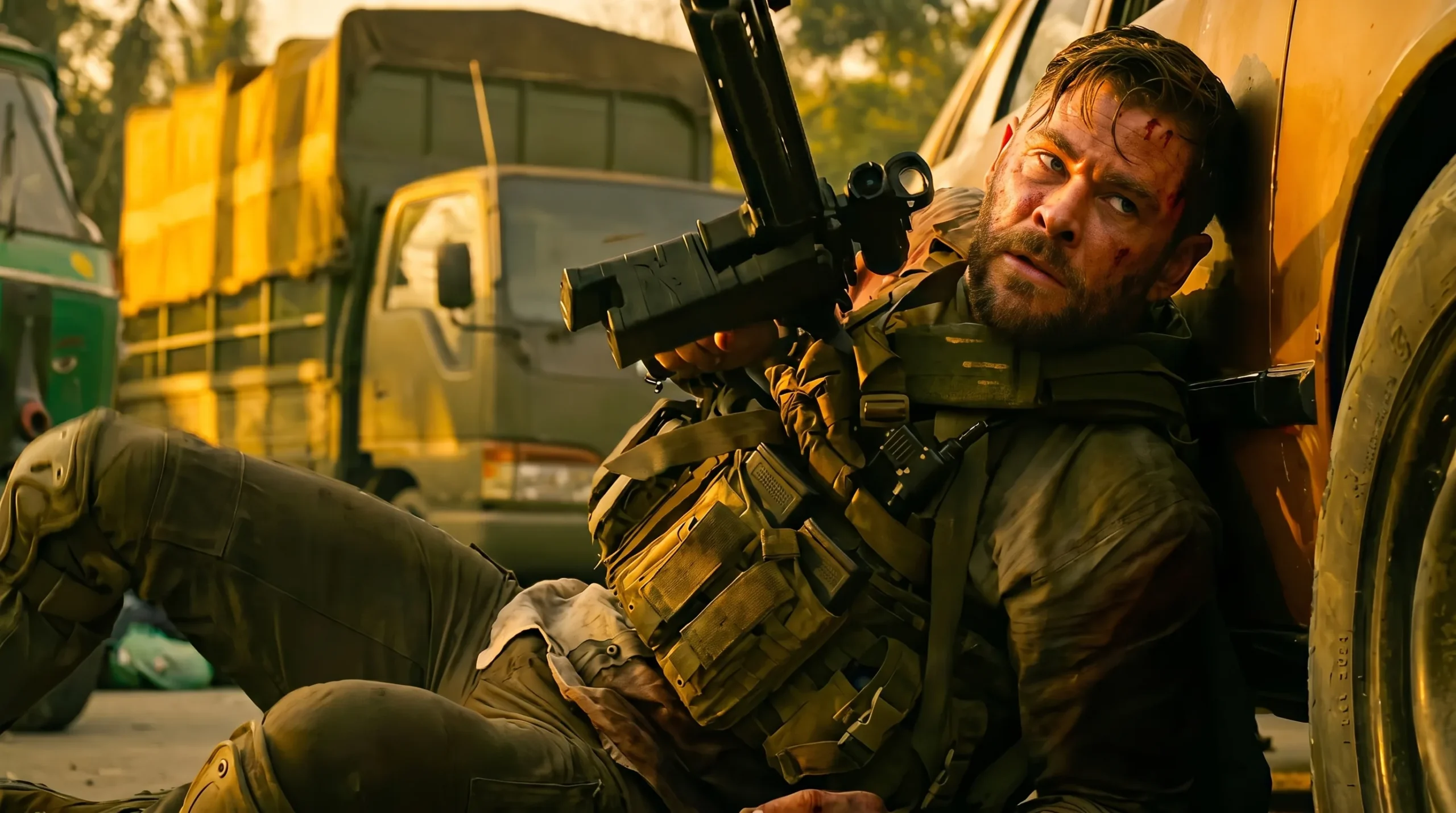
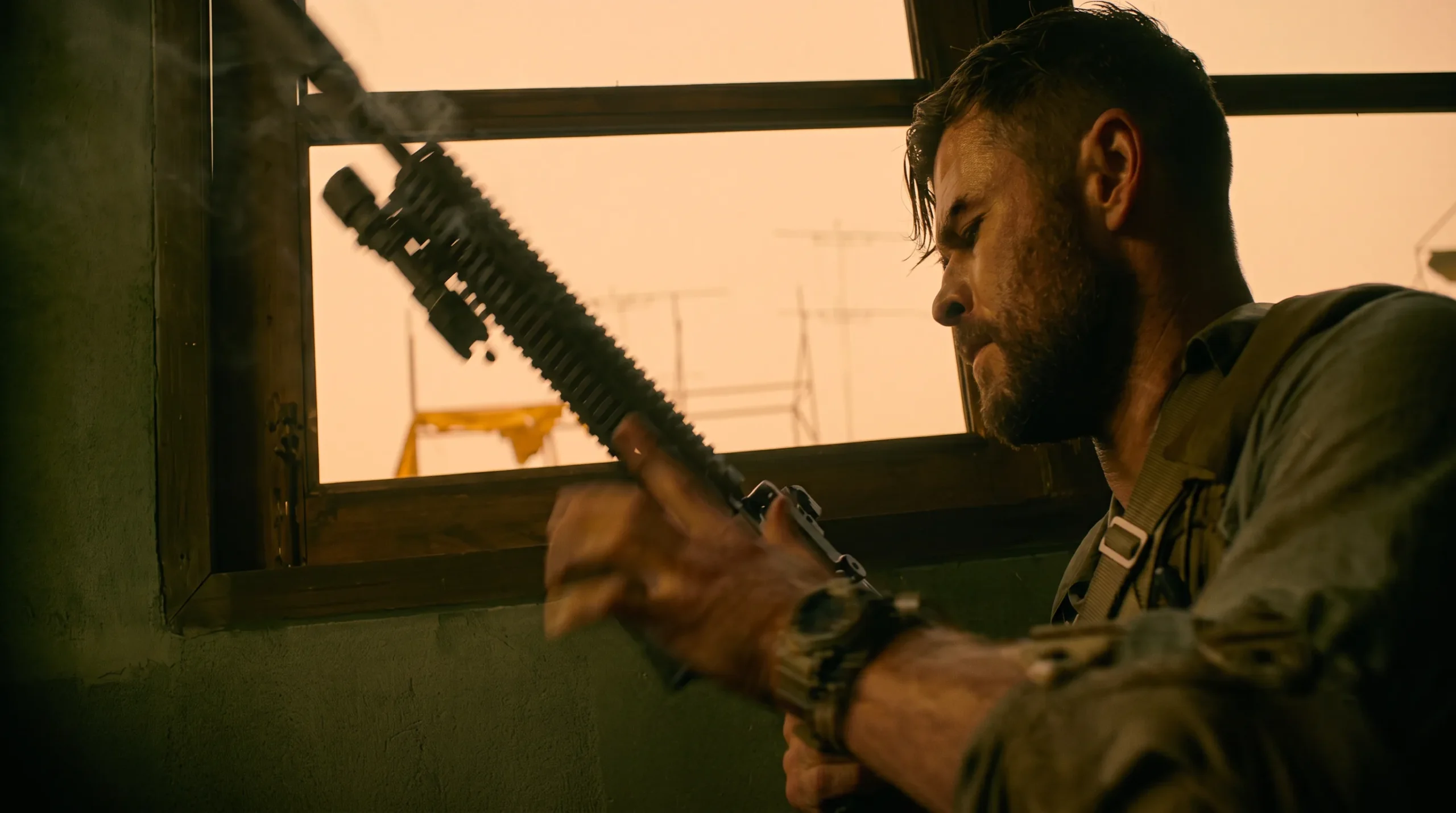
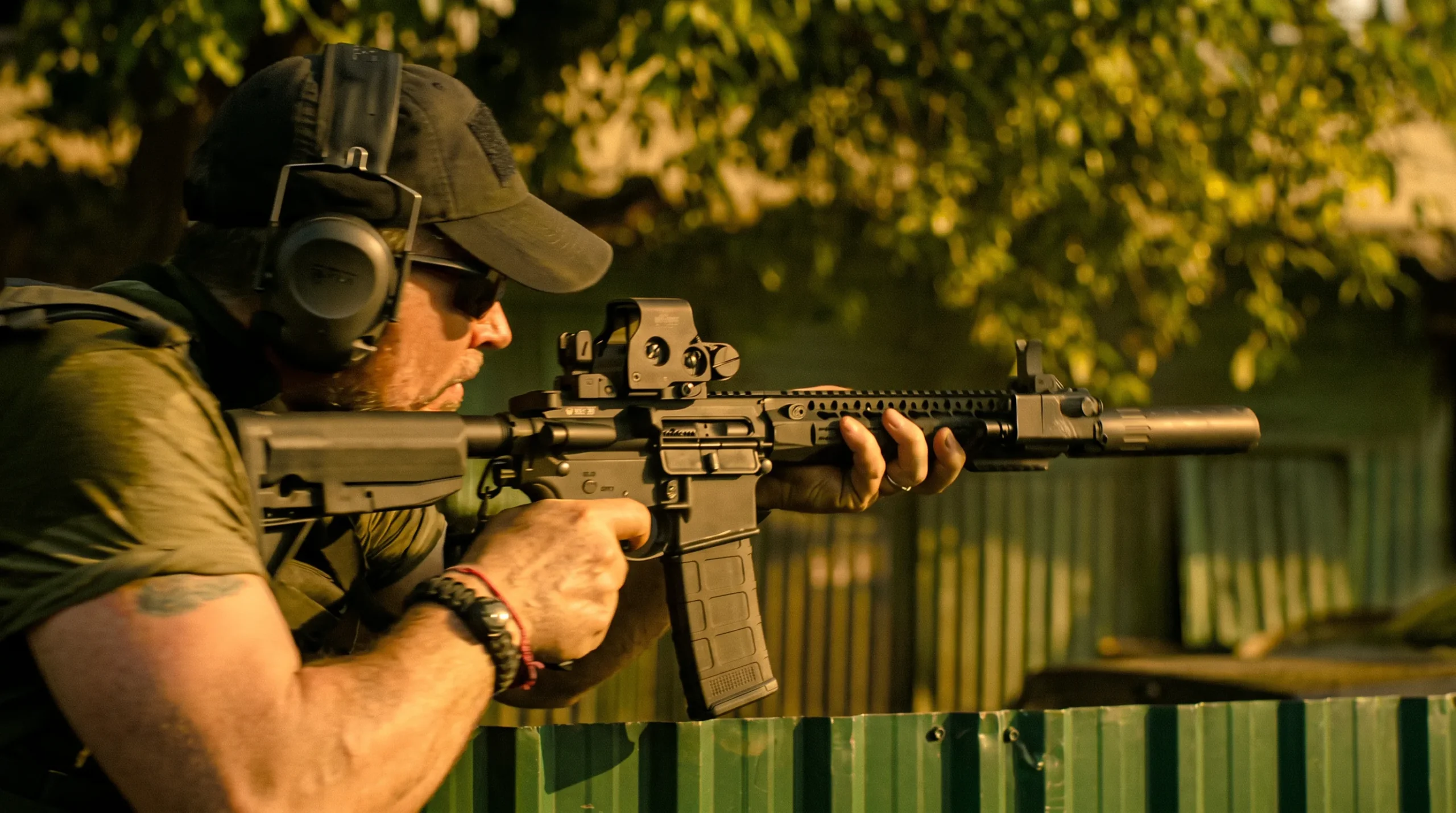
Rake’s primary rifle is a customized BCM CQB-11 KMR-A10, and the spec list is unusually complete for a film.
It runs a BCMGunfighter Mod 0 stock and Mod 3 vertical grip, an AAC M4-2000 suppressor, Magpul PMAGs, an EOTech EXPS2 holographic sight with a G33 magnifier behind it, and a Steiner offset tactical aiming laser mounted at an angle so it clears the optic.
Every one of those choices is what a working contractor would actually run. The EOTech and magnifier combination gives you close-quarters speed with the option to reach out. The offset laser exists because there’s no room left on top of the rail. Nothing on this gun is there to look cool, which is why it does.
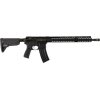
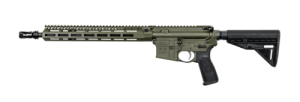
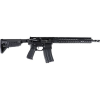
If the platform is what you’re after, start with our best AR-15 for the money guide.
The Daniel Defense M4A1 and the continuity error
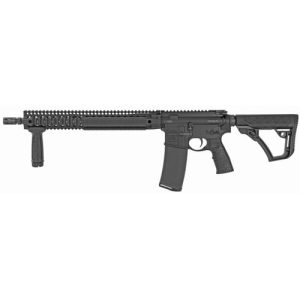
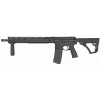
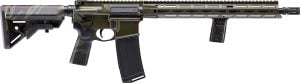
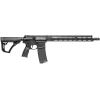
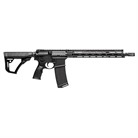
For the final shootout Rake switches to a Daniel Defense M4A1 with a suppressor and a Leupold HAMR optic. Good, sensible, expensive.
Watch closely though. In a handful of shots during that sequence the Daniel Defense is briefly replaced by a BCM rifle wearing a KMR handguard, most likely the CQB-11 from earlier in the film. It’s a straightforward continuity slip, the sort that happens when a production has two similar rifles on the truck and a tight schedule.
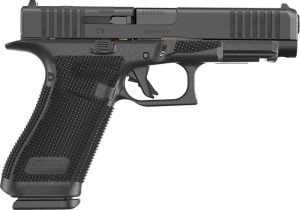
Rake’s Glock 17
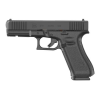
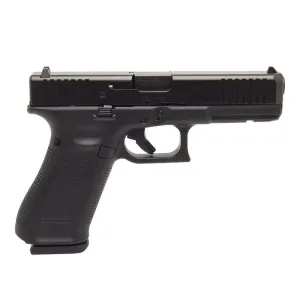
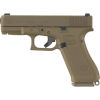
His sidearm is a Glock 17, which is the correct boring answer. A man doing this job in this part of the world carries the pistol that runs in dust and heat and that he can find magazines for anywhere.
The M79 at the end
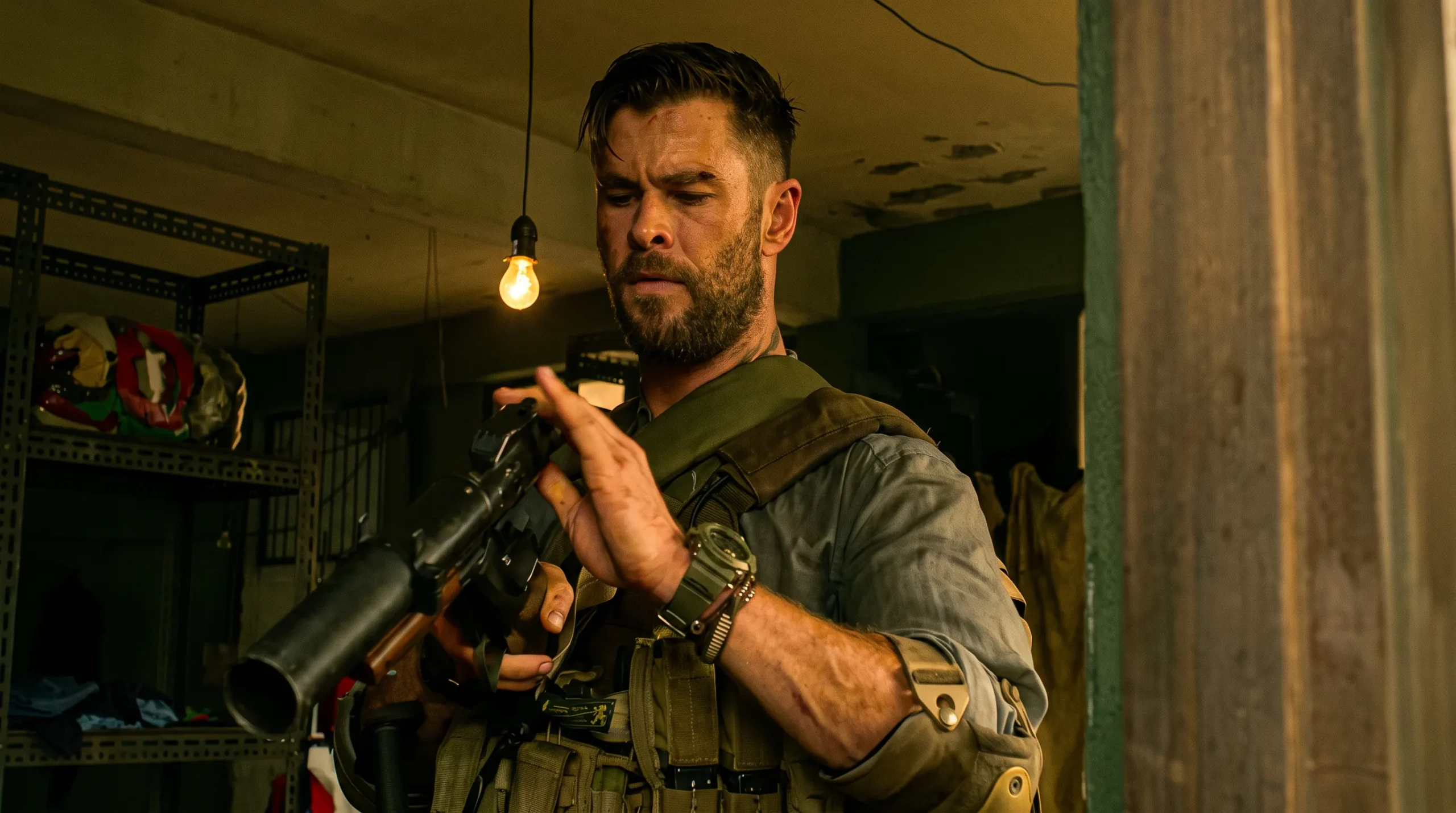
Near the finale Rake uses a customized M79 grenade launcher against Bangladeshi military and police. The M79 is the Vietnam-era break-action “blooper,” and seeing one cut down and run by a modern contractor is a nice touch. These things are still around in enormous numbers, and in a city where the hardware arrives from everywhere, it fits.
The AKs
AK-47s and AKMs are the wallpaper of this film, in the hands of gangsters, child soldiers and Rake himself when he runs out of better options. That’s honest. In Dhaka the AK is the gun that’s actually there, and a contractor who won’t pick one up off the floor is a contractor who runs dry.
The mercenary kit
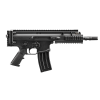
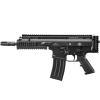
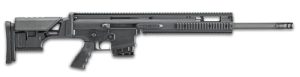
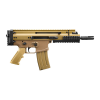
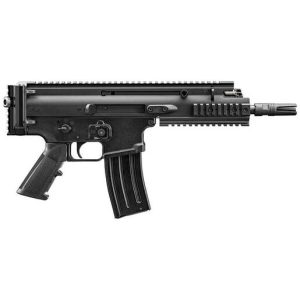
The opposing professionals carry European hardware, and it’s a good spread: a Heckler & Koch UMP, a G36C, an MP5SD with its integral suppressor, an FN SCAR-H and an IWI Tavor TAR-21 bullpup.
The MP5SD is the standout. Integrally suppressed, subsonic by design, and exactly what you’d want for quiet work in a stairwell. The Tavor is the other interesting one, an Israeli bullpup that reads instantly as “not American,” which is the point when you’re staging a fight between competing outfits.

The Dhaka police and military
State forces bring the belt-fed answer: a PKM, an M249 SAW Paratrooper, Beretta M12 submachine guns and a Chinese Type 69 RPG.
That mix is well researched. A South Asian force running Chinese and Soviet-pattern support weapons alongside Western small arms is precisely what the real procurement picture looks like, and it’s more thought than most action films give it.
The Lee-Enfield
My favorite gun in the film, and it’s over a century old.
A Lee-Enfield No.1 Mk III turns up in Dhaka, and it belongs there. The subcontinent absorbed enormous numbers of Enfields under British rule, Indian factories built them for decades afterwards, and they’re still in service with police and paramilitary units across the region. Putting one in a modern firefight isn’t an anachronism. It’s the single most regionally accurate gun in the movie.
The pistols and the rest
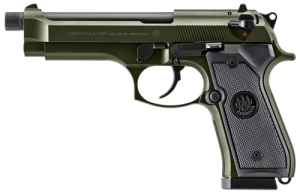
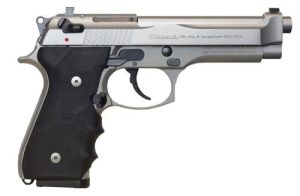
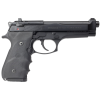
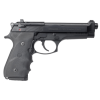
Beyond Rake’s Glock 17 there’s a Glock 19, a Beretta 92FS, a Browning Hi-Power, a Colt M1911A1 and a Heckler & Koch HK45 scattered across various hands. A Remington 700 AICS covers the precision work, an HK SL8 and an IMI Uzi appear, and somebody produces a sawed-off double-barrelled shotgun, because somebody always does.

Building Tyler Rake’s rifle
This is the question I get whenever the film comes up, so here’s the honest answer. You can get very close, and the parts are all current production.
| Component | On screen | What to buy |
|---|---|---|
| Rifle | BCM CQB-11 with KMR-A10 handguard | BCM builds the CQB-11 as a complete rifle. The KMR-A10 is a catalog handguard. |
| Optic | EOTech EXPS2 | Current production, unchanged |
| Magnifier | EOTech G33 | Current production, flip-to-side mount |
| Suppressor | AAC M4-2000 | Discontinued. Any modern 5.56 can does the same job. |
| Stock | BCMGunfighter Mod 0 | Current production |
| Grip | BCMGunfighter Mod 3 vertical | Current production |
| Laser | Steiner offset tactical laser | Steiner still makes offset-mount units |
| Magazines | Magpul PMAG | The default, and correctly so |
Two honest caveats. The AAC M4-2000 is out of production, so you’re buying used or picking a current equivalent, and suppressors mean a tax stamp and a wait regardless. And the offset laser is the piece most people skip, because it’s expensive and it only makes sense if you’re actually running night vision.
If you want the look without the bill, the rifle and the EOTech do most of the work. The rest is detail.
BCM or Daniel Defense?
Rake carries both across the film, which is a fair reflection of how close they are. Both are cold hammer-forged, properly staked, and built by companies that sell to people who use them for work.
My take: BCM tends to come in a little cheaper for equivalent spec and has the better reputation among builders who mix and match parts. Daniel Defense gives you a more finished rifle out of the box and a nicer handguard. Neither is a mistake, and anyone telling you there’s a clear winner is selling something.
How Extraction was actually armed
Here’s the thing almost nobody writing about this film mentions, and it changes how you watch it.
Most of what you see in Dhaka isn’t a gun. India has strict firearms laws, and the production couldn’t bring real weapons in. Armourer Ron Licari put it plainly: everything they shot in India was an airsoft or rubber weapon, because importing real guns wasn’t an option.
That’s a serious constraint on an action film built almost entirely around gunfights. And it explains a few things you might have half-noticed.
Rubber guns versus airsoft
The two aren’t equivalent, and the difference shows on screen. Rubber guns are solid casts, safe to throw around in a fight scene, useless for anything else. The rubber AK-pattern rifles used in some sequences have no working controls at all. No charging handle, no selector, no bolt.
Airsoft replicas are the better option when an actor has to manipulate the gun, because the controls actually move and the magazine actually comes out. Watch the reloads in the heavier sequences and you can usually tell which category the gun in frame belongs to.
This is also why the film leans so hard on the fight choreography during close-quarters work. When your rifle can’t cycle, you use it as a club, and Extraction does exactly that more than once.
Who taught Hemsworth to run a rifle
Sam Hargrave came up as a stunt coordinator and Chris Evans’ double, so he was never going to accept lazy gun work. He brought in Craig “Chili” Palmer, a former Delta Force operator and shooting instructor, to supervise weapon handling and choreograph the shooting.
You can see the result. Hemsworth’s transitions from rifle to pistol are clean rather than decorative. He works around cover instead of standing in the open. He reloads at sensible moments and not at dramatic ones. Muzzle discipline holds up in the long takes, which is where sloppy handling normally shows.
Getting an actual operator in to run that side of the production is not standard practice, and it’s the single biggest reason the gun work reads as credible even when the guns themselves are rubber.
Why the tactics hold up
The famous twelve-minute oner through the streets and stairwells is the part everyone talks about, and it’s also where the gun handling gets its hardest test. A cut lets you hide a fumbled reload. A continuous take doesn’t.
What holds up: Rake pieing corners rather than crossing them blind, using the vehicle as cover and moving when it stops being cover, dumping the rifle for the pistol in tight interior space instead of trying to swing a carbine round a doorframe. That last one is genuinely correct and almost every action film gets it wrong.
What doesn’t: he takes far more risks than any real contractor would, and the ammunition supply is generous. It’s still a film. But the grammar underneath it is right, which is more than most of the genre manages.
What changed in Extraction 2
The sequel moved production out of India, and the armory opens up accordingly. The hardware skews European and Eastern European to match the Georgian prison and Vienna settings, and the set pieces get considerably heavier.
If the first film’s constraint was “no real guns in country,” the second one’s is “how much can we put in a single take.” Worth watching the two back to back purely for how differently they solve the same problem.
Every weapon in Extraction
| Weapon | Who carries it |
|---|---|
| BCM CQB-11 KMR-A10 | Tyler Rake’s primary, fully customized |
| Daniel Defense M4A1 | Rake in the final shootout, suppressed with a Leupold HAMR |
| Glock 17 | Rake’s sidearm |
| M79 Grenade Launcher | Rake, customized, near the finale |
| AK-47 and AKM | Criminals, child soldiers, and Rake when improvising |
| Heckler & Koch UMP | Mercenaries |
| Heckler & Koch G36C | Mercenaries |
| Heckler & Koch MP5SD | Integrally suppressed, quiet work |
| FN SCAR-H | Mercenaries |
| IWI Tavor TAR-21 | Mercenaries |
| PKM | Bangladeshi forces |
| M249 SAW Paratrooper | Bangladeshi forces |
| Beretta M12 | Police submachine gun |
| Chinese Type 69 RPG | Bangladeshi forces |
| Lee-Enfield No.1 Mk III | Regionally accurate century-old bolt gun |
| Remington 700 AICS | Precision work |
| Beretta 92FS | Various |
| Browning Hi-Power | Various |
| Colt M1911A1 | Various |
| Glock 19 | Various |
| Heckler & Koch HK45 | Various |
| Heckler & Koch SL8 | Civilian-pattern G36 derivative |
| IMI Uzi | Various |
| Sawed-off double-barrelled shotgun | Street-level hands |
Frequently asked questions
What rifle does Tyler Rake use in Extraction?
A customized BCM CQB-11 KMR-A10 with a BCMGunfighter stock and grip, AAC M4-2000 suppressor, EOTech EXPS2 with G33 magnifier, and a Steiner offset laser. He switches to a suppressed Daniel Defense M4A1 for the final shootout.
What pistol does Tyler Rake carry?
A Glock 17.
Is there a continuity error with Rake’s rifle?
Yes. During the final shootout his Daniel Defense M4A1 is briefly replaced by a BCM rifle with a KMR handguard in a few shots, most likely the CQB-11 used earlier.
Why is there a Lee-Enfield in a modern film?
Because it belongs. Lee-Enfields were issued across the subcontinent under British rule, built in Indian factories for decades after, and remain in service with police and paramilitary units in the region today.
Were the guns in Extraction real?
Mostly not. India’s firearms laws meant the production could not import real weapons, so armourer Ron Licari confirmed everything shot in India was airsoft or rubber. Real firearms were used elsewhere in the production.
Who trained Chris Hemsworth for Extraction?
Craig “Chili” Palmer, a former Delta Force operator and shooting instructor, was brought in by director Sam Hargrave to supervise weapon handling and choreograph the shooting sequences.
Tyler’s rifles are BCM and Daniel Defense, which are about as real as film guns get. We track that end of the market on our AR-15 deals page, and his Glock 17 on Glock deals.
Keep exploring
More screen guns identified: Civil War, Saving Private Ryan and No Country for Old Men. On television, our guns of TV legends rundown covers eight decades of the same idea.
4,015+ Gun & Ammo Deals
Updated daily from 200+ top retailers. Filter by category, caliber, action type, and price.
Related Guides