

Django Unchained opens with a title card putting us in 1858, two years before the Civil War. Then it spends two and a half hours handing its characters guns that hadn’t been invented yet. The Henry rifle is two years early. The Sharps buffalo gun is thirteen. There’s a Confederate revolver in a film set three years before there was a Confederacy.
I say all that with affection, because once you know what you’re looking at, the guns of Django Unchained become the most interesting thing in it. This is not sloppiness. It’s what happens when you need forty shootable percussion revolvers on a working set and the rental house stocks what the Italian reproduction makers actually build. Here’s every significant gun in the film, who carries it, what’s wrong with it, and what you would buy to own the real version.
Table of Contents
The 1858 problem, in one table
Before the gun-by-gun rundown, here’s the scale of it. The film is set in 1858. These are the dates the hardware actually turned up.
| Gun | Actually introduced | Fits 1858? |
|---|---|---|
| Colt 1851 Navy | 1850 | Yes |
| Enfield Pattern 1856 Cavalry Carbine | 1856 | Yes |
| Double-barrel percussion shotgun | Long before 1858 | Yes |
| Colt 1860 Army | 1860 | Two years early |
| Henry 1860 | 1860 | Two years early |
| Spencer 1860 Carbine | 1860 | Two years early |
| Remington New Model Army (the “1858”) | 1860 at the earliest | No, see below |
| Griswold & Gunnison revolver | 1862 | Confederacy did not exist yet |
| Remington “Cattleman’s Carbine” | 1866 | Eight years early |
| Double-barrel derringer | 1866 | Eight years early |
| Sharps 1874 Buffalo | Early 1870s | Thirteen years early |
Two guns out of eleven. That’s the hit rate.
Django’s Colt 1851 Navy, the gun that belongs
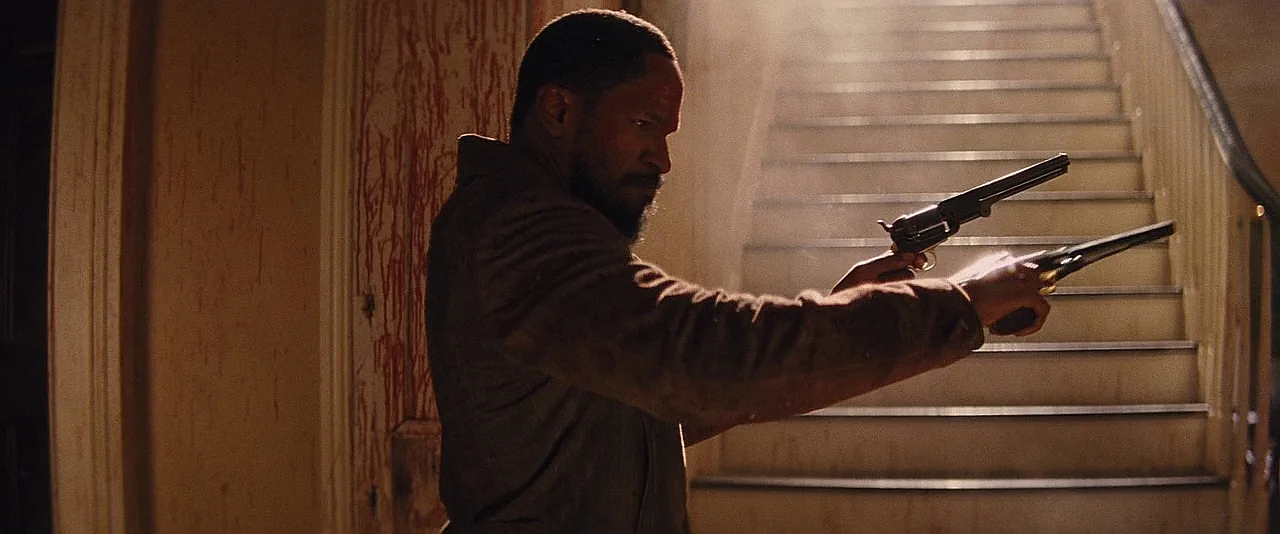
Nearly everyone in this film carries a Colt 1851 Navy at some point. Sheriff Bill Sharp, the Candyland riflemen, the LeQuint Dickey mining men including Tarantino’s own cameo, and Django himself, who runs one in his left hand and a Remington in his right through the Candyland shootout.
It’s also the one major sidearm in the film that genuinely belongs in 1858. Colt introduced the Navy in 1850 and it was everywhere by the mid-fifties. A .36-caliber open-top percussion revolver, six shots, loaded from the front of the cylinder with loose powder, ball and a percussion cap on each nipple at the back. It handled beautifully, which is why it stayed in production for two decades and why Colt himself kept giving engraved ones away as gifts.
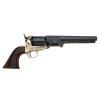
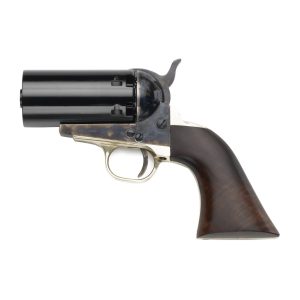
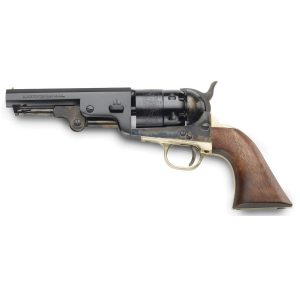
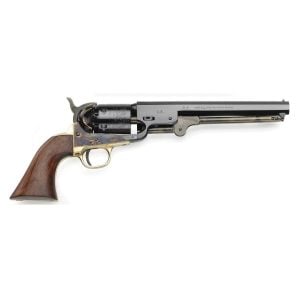
Pietta, Uberti and Cimarron all build them, and they are the cheapest way into black powder shooting by a mile. Three hundred dollars gets you a working .36 Navy. No background check in most states either, because federal law doesn’t treat a muzzle-loading percussion revolver as a firearm. Check your own state before you order, since several do regulate them.
The Remington “1858” that was not made in 1858
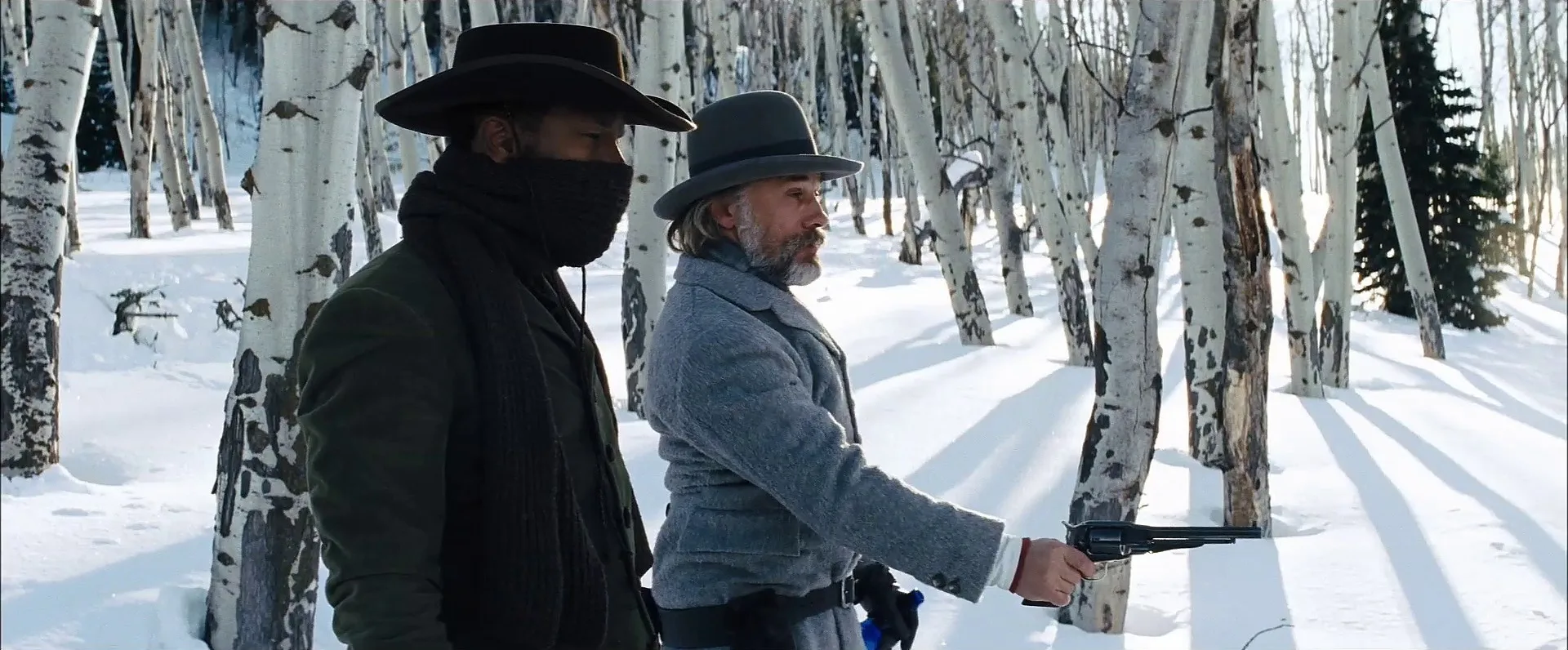
This is my favorite piece of trivia in the whole film, and it trips up almost everybody.
Schultz carries a Remington New Army. Django carries one too, and a short-barreled Sheriff’s model is arguably his signature gun. Billy Crash pulls a nickel one with ivory grips on Broomhilda. Everybody calls these the “1858 Remington,” including the companies that sell you the reproductions, so a revolver called the 1858 in a film set in 1858 looks like a rare win.
It is not. The 1858 is a patent date, not a production date. Fordyce Beals was granted a patent on 14 September 1858 covering the way the cylinder pin is retained by the loading lever, and Remington stamped that date on the barrels and cylinders of everything that followed. The guns themselves came later: the Remington-Beals Army from 1860, the 1861 Army after that, and the New Model Army, which is what these actually are, from 1863. The “1858” nickname was popularized by Navy Arms when it launched its reproduction in 1960, and it stuck. The Remington Society of America sets out the model progression in detail.
So the gun is stamped 1858, the film is set in 1858, and the revolver still wouldn’t exist for another two years at the very best. It’s the most convincing wrong answer in the movie.
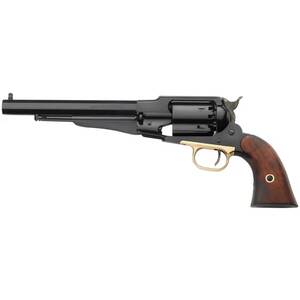
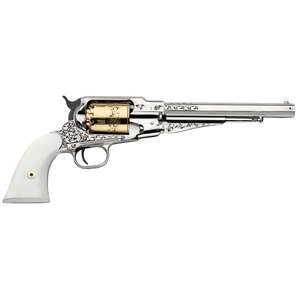
Mechanically it’s the better gun of the two, and that’s not nostalgia talking. The Remington has a solid top strap over the cylinder where the Colt is open-topped, so the frame is stiffer and the sights stay put. You can also drop the cylinder out and slot in a spare pre-loaded one, which is about as close to a fast reload as 1860s technology gets. More options in our best revolvers guide.
How to spot a modern replica on screen
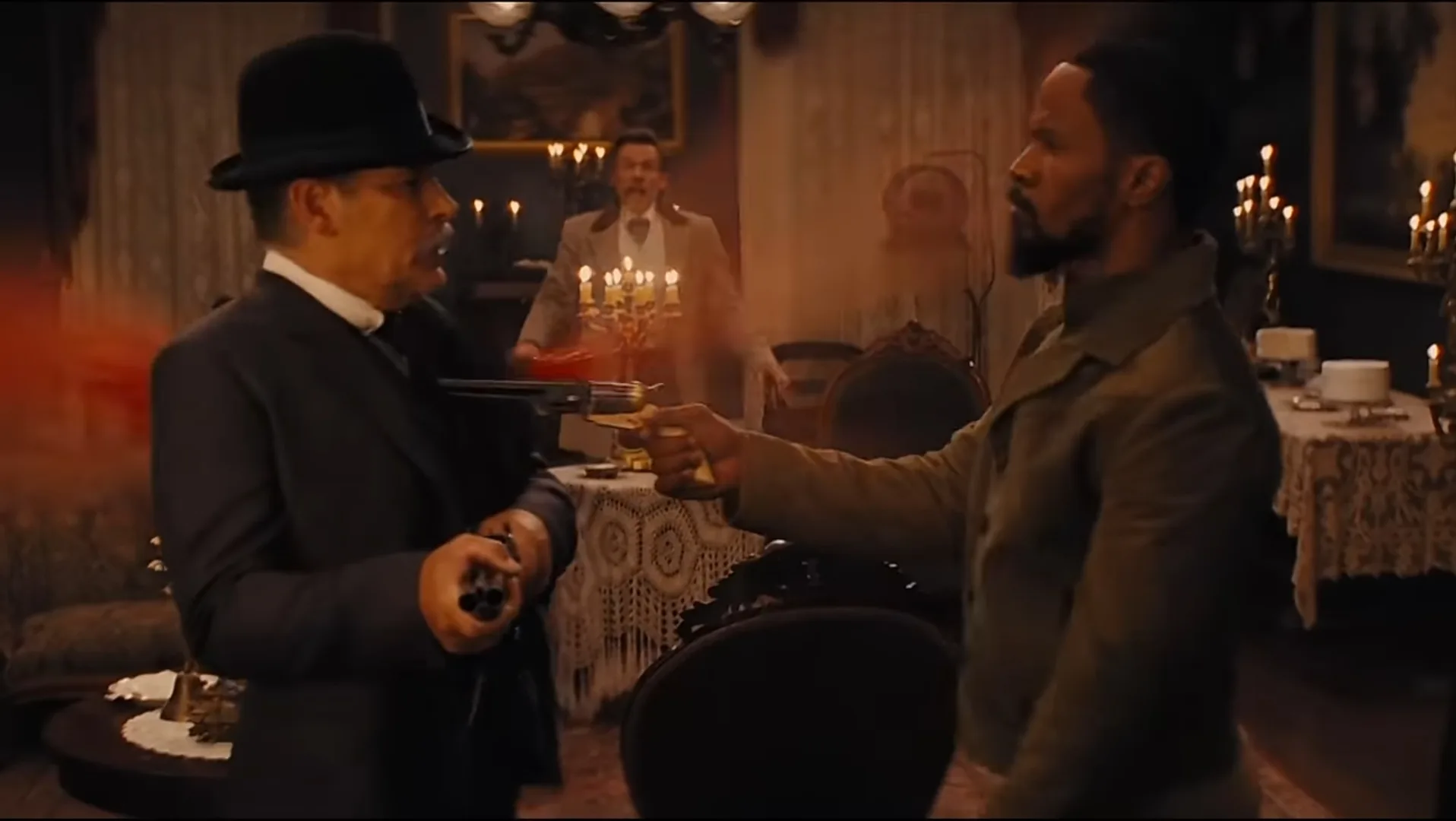
Look at the revolver Django is holding on Mr. Pooch. The grip frame is yellow.
That brass frame is the giveaway, and once you notice it you can’t stop seeing it. Colt never built a brass-framed Navy. Remington never built a brass-framed New Model Army. Brass frames on these patterns are purely a modern Italian reproduction thing, cheaper to machine than steel and sold at a lower price point, and the film is full of them. Look at a current Pietta catalog and the brass-framed models sit right next to the steel ones. Same story with the rebated cylinder on that gun, and with the caliber: original Navy Colts came in .36 only, so a .44 brass-framed “Navy” is a reproduction catalog item and nothing else.
There’s a subtler one too. In at least one shot, Django’s Colt has a loading gate at the back of the cylinder, which makes it a Thuer cartridge conversion rather than a percussion gun. Colt didn’t offer that conversion until the 1870s, and the .36 Thuer cartridge has been dead for well over a century, so that’s a modern replica of a conversion that itself postdates the film by two decades.
None of this is a criticism of the armorers. Larry Zanoff and Tony Didio Jr. had to arm a large cast with guns that fire blanks reliably, take abuse, and can be replaced when one breaks. Steel-framed originals worth five figures don’t go in an actor’s holster for a six-month shoot. The full screen-by-screen weapon breakdown is catalogued at IMFDB.
Schultz’s sleeve derringer
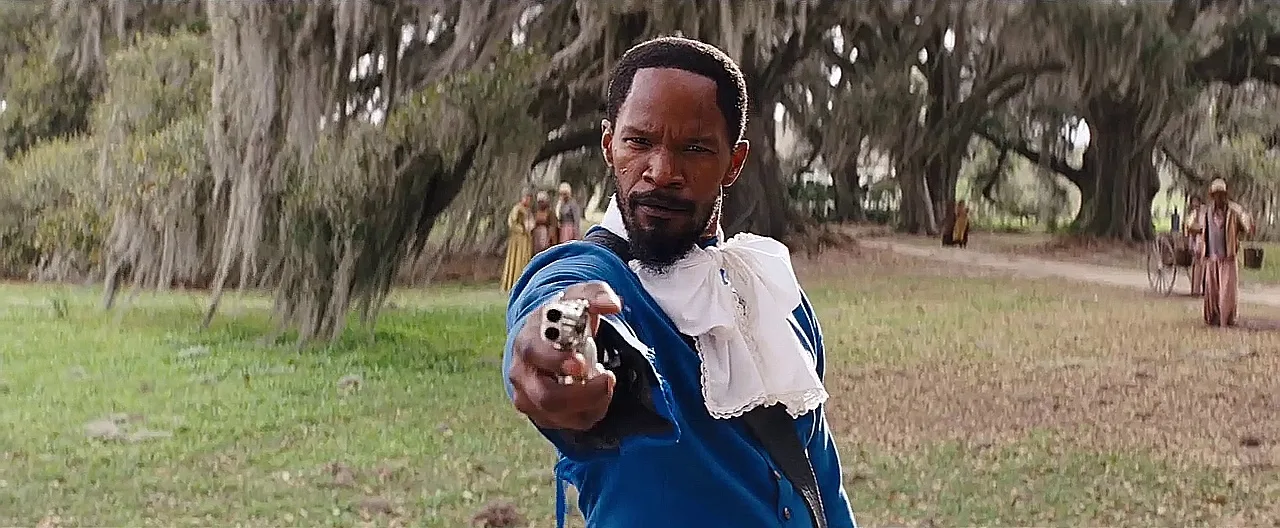
Schultz keeps a pearl-gripped double-barrel derringer on a spring-loaded slide rig up his forearm, the same gimmick Travis Bickle rigs up in Taxi Driver. Django borrows it to deal with the Brittle brothers. Schultz uses it one last time to shoot Calvin Candie, which is a direct nod to Franco Nero in Il Mercenario, and Nero appears in this film.
The gun is a modern Cobra “Big Bore,” identifiable by the ventilated rib along the top. The stacked double-barrel derringer in this shape is a Remington design from 1866, so it misses 1858 by eight years. The sleeve rig is pure invention and nobody involved was pretending otherwise.
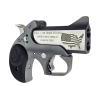
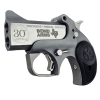
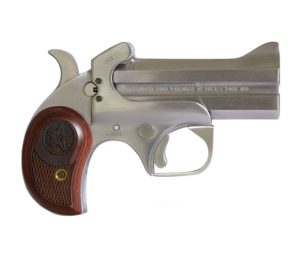
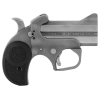
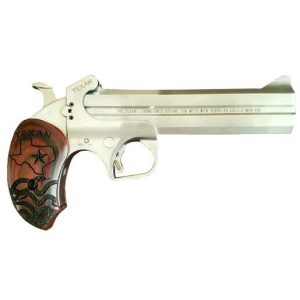
If you want the modern equivalent, Bond Arms owns this category now. Stainless, interchangeable barrel sets, and built to a standard the originals never met. Just be realistic about what a two-shot break-action is for. If the appeal is genuinely a small gun you can hide, a modern snub-nose revolver gives you five shots instead of two.
The Sharps 1874, thirteen years early
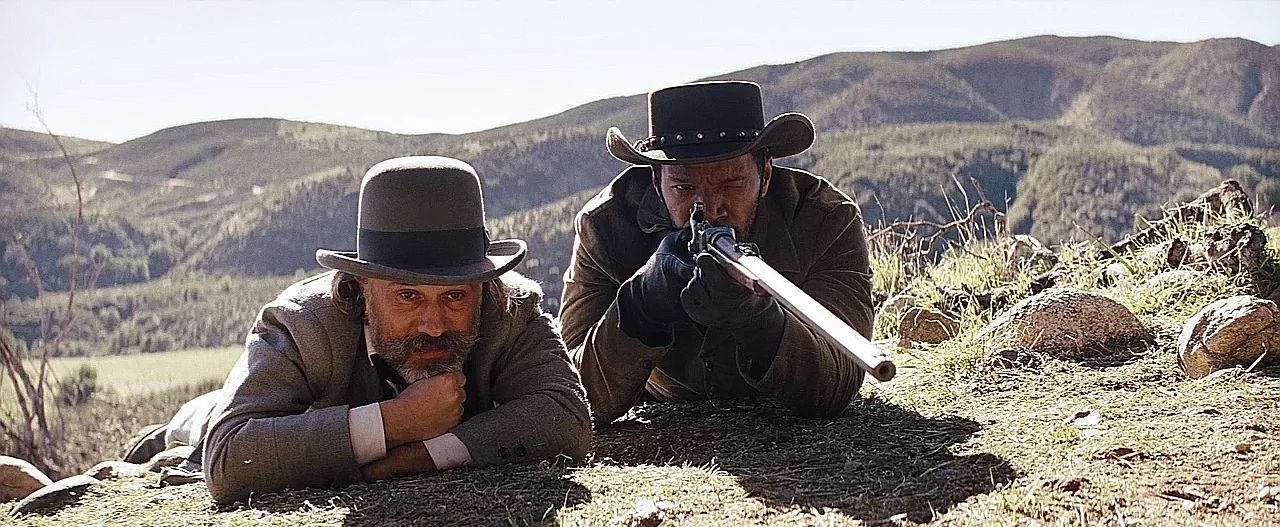
The rifle Schultz and Django use for most of their bounty work is a Sharps 1874 Buffalo, and it’s the biggest stretch in the film. Production started in the early 1870s. The film is set in 1858. Percussion Sharps rifles did exist by then, so a Sharps of some kind is defensible, but this is specifically the big cartridge buffalo gun and it’s thirteen years too young.
You can see why they wanted it. A single-shot falling block in .45-70 with a heavy octagon barrel and a tang sight is the rifle that lets a bounty hunter drop a man from a ridge, and it looks the part in a way nothing else from the period does.
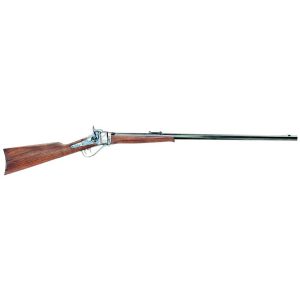
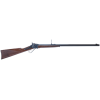
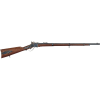
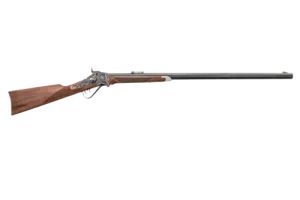
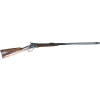
Pedersoli, Chiappa and Cimarron all build them, and they are not cheap, but people shoot them seriously at long range to this day. If .45-70 is the appeal rather than the falling block, our best .45-70 Government rifles guide covers the modern options.
Lil’ Raj’s Colt 1860, and the gun that changes between shots
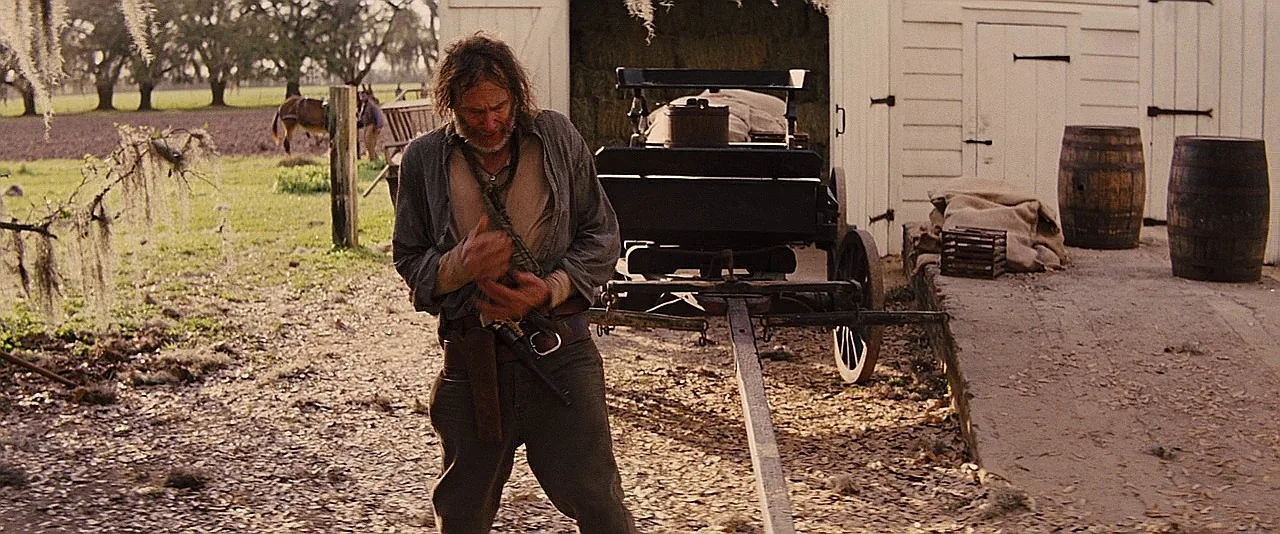
Lil’ Raj Brittle fumbles a Colt 1860 Army when Django confronts him, and Django takes it off him. The 1860 is the .44 that replaced the Navy as Colt’s service revolver, with a rebated cylinder and a sleeker barrel profile. It arrived in 1860. Two years late, and brass-framed on screen, so twice wrong.
Then it gets better. Watch the revolver after Lil’ Raj drops it and it has turned into a different gun: a non-firing Denix replica of a Griswold & Gunnison. That’s a Confederate copy of the Colt Navy, made in Georgia from 1862 because the South couldn’t get brass and steel in the right quantities. So a film set in 1858 briefly features a Confederate revolver from a Confederacy that wouldn’t exist for three more years, and it’s a display-only replica that can’t fire.
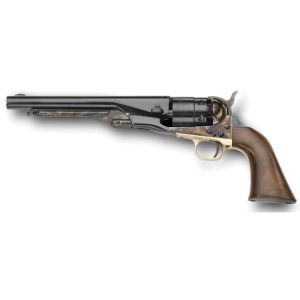
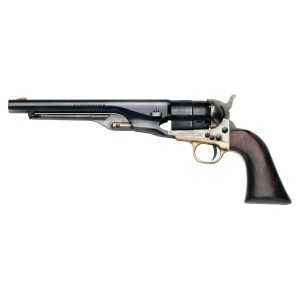
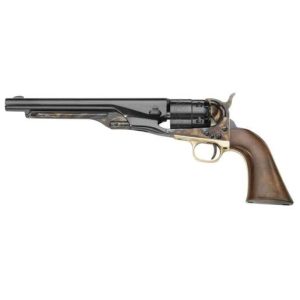
Pietta and Uberti both build the 1860, and it’s the one I’d point a first-time black powder buyer at over the Navy. The .44 ball hits harder, the creeping loading lever is easier to work, and the rebated cylinder gives you a bigger chamber in the same frame. Colt replaced it with the cartridge-firing Single Action Army a decade later, which is the gun that ends up in nearly every hand in our Tombstone breakdown.
Big Daddy’s Henry, and the Spencers behind him
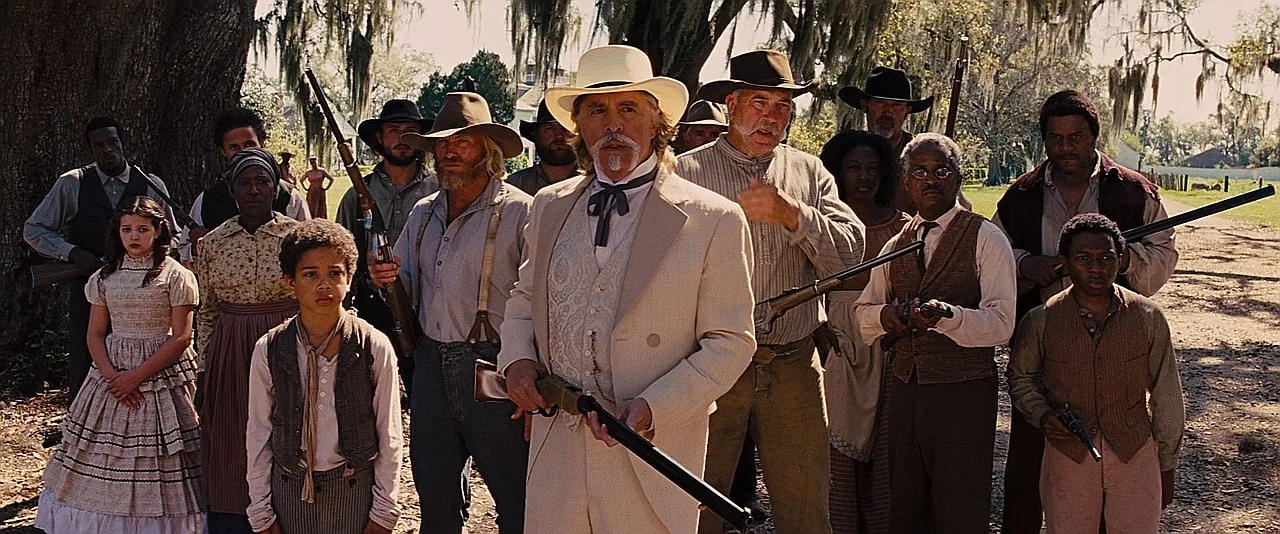
Spencer “Big Daddy” Bennett holds a Henry 1860 when he confronts Schultz and Django on his own land, and his men carry a mix of Henrys, Spencer 1860 carbines and period-correct Enfield Pattern 1856 cavalry carbines. Schultz and Django use Henrys later too.
Both repeaters are two years early. The Henry matters more than the date though, because it’s the gun that starts the whole lever-action story: sixteen rounds of .44 rimfire in a tube under the barrel at a time when everyone else was loading one round at a time. It became the Winchester 1866, and the line runs unbroken to the lever guns on the shelf today.
If the film wanted a repeater that actually existed in 1858, the honest answer was the Volcanic, the Henry’s clumsy predecessor. Nobody wants to look at a Volcanic.

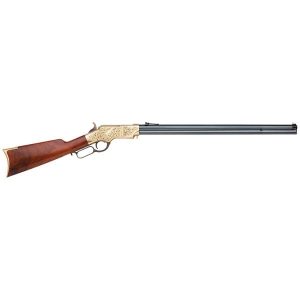
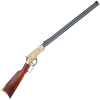
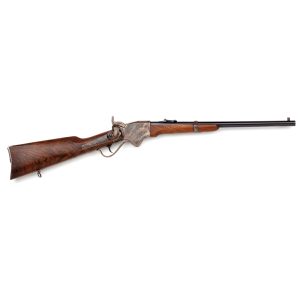
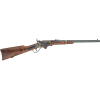
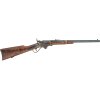
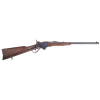
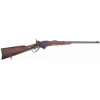
Chiappa builds the Spencer in modern chamberings and Taylor’s imports the Henry. Both are handsome and neither is cheap. Our best lever action rifles roundup covers where the breed went next, and the .30-30 guide covers the workhorse end.
Butch Pooch’s sawed-off, and the grip that costs him a hand
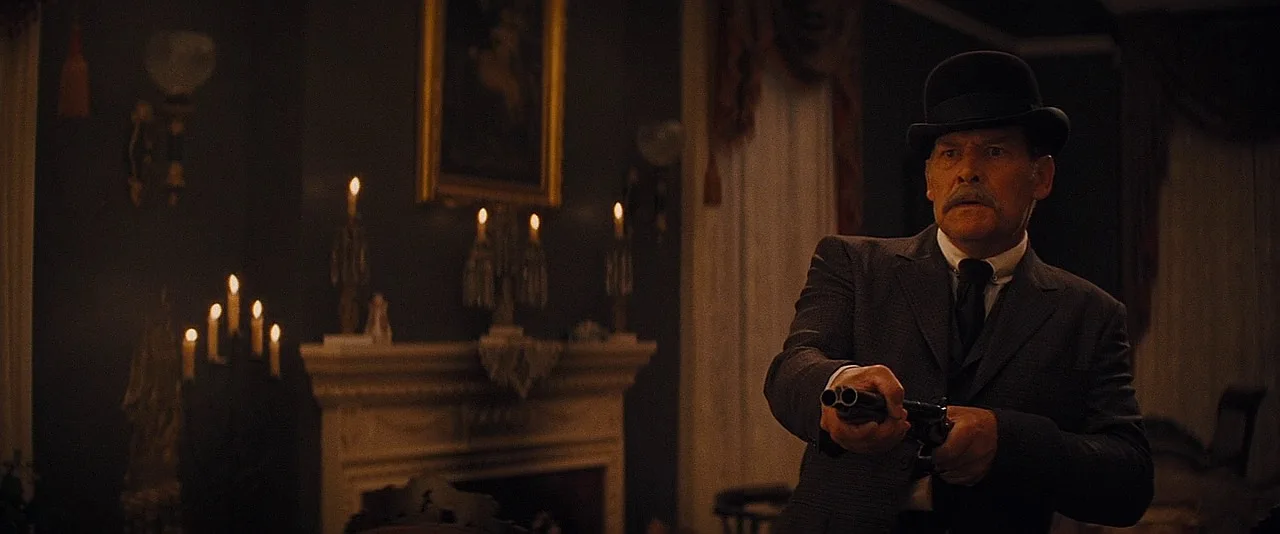
Double-barrel percussion shotguns are all over this film, and they’re the one category that’s completely period-correct. The Speck brothers have one in the opening. Schultz ends up with it. Sheriff Bill Sharp carries one. Calvin Candie’s bodyguard Butch Pooch has the sawed-off, and it is the gun that kills Schultz.
Look at how Pooch is holding it in that shot. His support hand is wrapped around the barrels right at the muzzle. Fire that and the muzzle blast comes out into his fingers. On a cut-down barrel there’s nothing to hold except the barrels themselves, which is exactly why sawed-off shotguns get held by the frame and fired one-handed by people who like their fingers.
The other liberty is the power. Schultz gets launched backward into a bookcase. Buckshot does not do that, to anybody, ever. Momentum works the same in both directions, and if a load could throw a grown man across a room it would break the shoulder of whoever fired it.
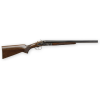
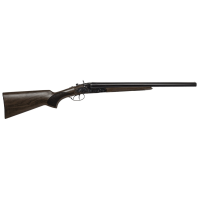
The modern stand-in is an exposed-hammer coach gun. Cowboy action shooters run them by the thousand, and they cost a fraction of what the period guns fetch. Our cowboy action shooting explainer covers the sport if the whole era appeals.
Every other weapon in Django Unchained
| Weapon | Who carries it | Note |
|---|---|---|
| Remington New Army Sheriff’s | Django, Billy Crash | Short-barreled; Crash’s is nickel with ivory grips |
| Remington “Cattleman’s Carbine” | Django, then Broomhilda | Taken from the mining company men; 1866 design |
| Double-barrel percussion shotgun | Speck brothers, Schultz, Sheriff Bill Sharp | Period-correct; Pooch’s is sawed off |
| Enfield Pattern 1856 Cavalry Carbine | Big Daddy’s henchmen | Genuinely period-correct |
| Griswold & Gunnison (Denix replica) | Continuity error | Non-firing display replica, Confederate 1862 design |
| Colt 1851 Navy Thuer conversion | Django, one shot | Loading gate visible; 1870s conversion |
| Brass-framed Remington New Army | Django | Brass frames are modern reproduction only |
So does any of it matter?
Not really, and I want to be clear about that after spending two thousand words counting the errors.
Tarantino isn’t making a documentary. He’s making a spaghetti western, and spaghetti westerns were never period-accurate either. The films this one is quoting were shot in Spain in the sixties with whatever the armorer had in the truck. Getting the guns wrong in a very specific 1960s Italian way is arguably more faithful to the genre than getting them right would have been.
There’s also a hard practical limit. Reproduction makers build what sells, which means 1851 Navies, 1858 Remingtons, 1860 Armies and 1874 Sharps in quantity. Nobody mass-produces a Colt revolving rifle any more and surviving originals are essentially unobtainable, which is why the film reaches for a Remington carbine instead. The armorer’s job is to put a working gun in an actor’s hand on schedule. The catalog decides the rest.
Knowing which ones are wrong just makes it a better watch.
Frequently asked questions
What gun does Django use in Django Unchained?
Mostly a Remington New Army, including a short-barreled Sheriff’s model that’s effectively his signature gun. In the Candyland shootout he dual-wields, running a Colt 1851 Navy in one hand and a Remington in the other. He also uses a Sharps 1874 for long-range work and borrows Schultz’s derringer.
Are the guns in Django Unchained historically accurate?
Mostly not. The film is set in 1858 and only the Colt 1851 Navy, the Enfield Pattern 1856 carbine and the percussion shotguns fit that date. The Henry, Spencer and Colt 1860 Army are two years early, the derringer and the Remington carbine are eight, and the Sharps 1874 is thirteen.
Why is the Remington called an 1858 if it was not made until later?
Because 1858 is the date of Fordyce Beals’ patent, stamped on the gun, not the year it was built. Remington’s actual production ran from 1860 with the Remington-Beals Army, and the New Model Army arrived in 1863. Navy Arms popularized the “1858” name with its 1960 reproduction and the industry never dropped it.
Can you buy the guns from Django Unchained?
Almost all of them, as reproductions. Pietta, Uberti, Cimarron and Traditions build the percussion revolvers from around $300, Pedersoli and Chiappa build the Sharps, Taylor’s imports the Henry and Chiappa makes the Spencer. Percussion revolvers are not classed as firearms under federal law, though some states regulate them, so check locally.
How can you tell the film’s revolvers are modern replicas?
The brass frames. Colt and Remington never built these patterns with brass frames, so any yellow-framed Navy, Army or New Model Army on screen is a modern Italian reproduction. A .44 “Navy” is another tell, since the original was .36 only.
What shotgun kills Dr. King Schultz?
A sawed-off double-barrel percussion shotgun carried by Calvin Candie’s bodyguard, Butch Pooch. The gun type is period-correct. The scene exaggerates its power considerably, since no shotgun load will throw a man backward across a room.
Most of this list is cap-and-ball reproduction territory, but the Bond Arms derringer Django palms is a current gun and a genuinely popular one. It shows up on our handgun deals page whenever the price moves.
Keep exploring
More screen guns identified: Tombstone, The Rifleman, Bullet Train and Civil War. For the same era in a game, our real guns of Red Dead Redemption 2 breakdown does the same job on Rockstar’s arsenal.
4,015+ Gun & Ammo Deals
Updated daily from 200+ top retailers. Filter by category, caliber, action type, and price.
Related Guides