

Last updated September 2026
Some of the links below are affiliate links, meaning at no additional cost to you, we may earn a commission if you click through and make a purchase.
- Treat every gun as loaded
- Point the muzzle in a safe direction
- Keep your finger off the trigger until you’re ready to shoot
- Know your target and what’s beyond
The Lee-Enfield is the fastest-handling bolt gun of the two world wars, and it’s still one of the best surplus rifles you can put in your hands. It’s also one of the most confusing to buy. The same word “Enfield” covers a 1916 SMLE, a 1943 No. 4, a post-war Indian rifle in 7.62 NATO, a jungle carbine that may or may not be real, and an American rifle in .30-06 that isn’t a Lee-Enfield at all.
This guide sorts that out. We tracked every Enfield listing across the retailers our price engine follows this month, split them by mark, and put the checks that matter in one place: which mark to buy first, what each one costs today, how to spot a fake jungle carbine, what the numbers on the bolt head mean, and whether a C&R license is worth it.
How we tested: Every pick here is ranked against our testing methodology. Minimum round counts, accuracy and reliability protocols, the failures that disqualify a gun. Where we have not shot a specific variant ourselves, we say so in that section.
Lee-Enfield Rifles You Can Buy in 2026 at a Glance
| Rifle | Model Details | Key Specs | Check Price |
|---|---|---|---|
 |
BEST FIRST ENFIELD
Rifle No. 4 Mk I
The WWII Enfield. Better sights and a heavier barrel than the SMLE, and the easiest to shoot well. |
Caliber: .303 British Barrel: 25.2 in Sights: Rear aperture |
Check Price ↓ |
 |
BEST FOR HISTORY
SMLE No. 1 Mk III
The Great War rifle with the blunt nose cap. The one most people picture. |
Caliber: .303 British Barrel: 25.2 in Adopted: 1907 |
Check Price ↓ |
 |
BEST FOR CHEAP AMMO
Ishapore 2A1
An Indian SMLE built new for 7.62x51mm NATO, with a 12-round magazine. |
Caliber: 7.62x51mm NATO Barrel: 25 in Magazine: 10 or 12 rounds |
Check Price ↓ |
 |
BEST .30-06 ENFIELD
M1917 Enfield
The American Enfield. Not a Lee-Enfield, but the rifle most Doughboys carried. |
Caliber: .30-06 Springfield Barrel: 26 in Magazine: 6 rounds |
Check Price ↓ |
Table of Contents
Introduction: Buying a Lee-Enfield Rifle in 2026
Total Lee-Enfield production is estimated at over 17 million rifles, and it was the standard British infantry rifle from 1895 until the L1A1 self-loader replaced it in 1957. That’s a huge pool, and for decades it meant a shootable .303 cost less than a new hunting rifle. It doesn’t anymore. The rifles still turning up in the US are the ones already here, and every year a few more end up in collections instead of on dealer racks.
What makes the Lee-Enfield worth chasing is the action. The bolt cocks on closing, the handle sits right by your hand, and the rifle feeds from a 10-round detachable magazine loaded with 5-round chargers. That combination is why a trained British rifleman could put 20 to 30 aimed rounds downrange in a minute. Run one for a few boxes and you’ll see why people get hooked. It’s slick in a way a Mauser isn’t.
If you’re weighing other surplus rifles too, our Mosin Nagant buying guide and best M1 carbines list cover the Soviet and American side, and our used rifles hub tracks surplus and pre-owned stock across the site.
What a Lee-Enfield Costs in 2026: The Listings We Tracked
These are real listings from the retailers our price engine follows, checked in September 2026. Surplus stock moves fast and many of these are one-of-a-kind rifles, so treat the list as a map of what each mark sells for rather than a shopping list.
| Rifle | Condition / Seller | Price |
|---|---|---|
| Lee-Enfield SMLE Mk III | Used, consignment at Guns.com | $349.99 |
| Lee-Enfield No. 4 Mk I | Used, consignment at Guns.com | $349.99 |
| Lithgow SMLE III, dated 1941 | Used, consignment at Guns.com | $399.99 |
| Lee-Enfield sporter | Used, consignment at Guns.com | $499.99 |
| Enfield No. 4 .303 | NRA surplus, Good, at Classic Firearms | $499.99 |
| Lee-Enfield SMLE Mk III | Used, consignment at Guns.com | $549.99 |
| Ishapore 2A1 7.62 NATO, dated 1968 | Collection rifle at Classic Firearms | $550.00 |
| Long Branch No. 4 Mk I, dated 1943 | Good to Very Good, Classic Firearms | $950.00 |
| Ishapore “jungle carbine” in .308 | Pre-owned conversion at Guns.com | $999.99 |
| No. 5 Mk I jungle carbine, .303 | Listed at Bass Pro Shops | $999.99 |
Two things jump out. A plain shootable SMLE or No. 4 starts around $350 to $500, and dated, matching, documented rifles like that 1943 Long Branch go for twice that. And look at the bottom two rows. A converted Ishapore sold as a “jungle carbine” is asking the same $999.99 as a real No. 5 Mk I. One of those is a collector’s rifle and the other is a cut-down 7.62 conversion. The jungle carbine section below shows you how to tell them apart.
1. Rifle No. 4 Mk I: Best First Lee-Enfield
- Caliber: .303 British
- Barrel Length: 25.2 in
- Overall Length: 44.45 in
- Weight: 9.06 lb
- Capacity: 10-round detachable magazine, charger-loaded
- Produced: Mass production from mid-1941, in Britain, Canada and the US
| Price | Accuracy | Sights | Collector Value | Availability |
| 4/5 | 4/5 | 5/5 | 3/5 | 4/5 |
Pros
- Aperture sight is fast and precise
- Heavier barrel shoots more consistently
- Most common mark, easy to find
Cons
- Less history appeal than the SMLE
- Plain wartime finish on many rifles
- Mixed-part rifles are common
If you only buy one Lee-Enfield, make it a No. 4. It was designed as a simpler, faster-to-build replacement for the SMLE, and the changes happen to make it the better shooter. The rear sight moved back to a receiver-mounted aperture right in front of your eye, the barrel got heavier, and the muzzle sticks out past the forend instead of hiding under a nose cap.
My 1943 No. 4 is a Fazakerley rifle with a mismatched but tight bolt. Off a sandbag at 100 yards with the battle aperture, it held about 3 inches with Prvi Partizan 174 grain FMJ and closed to 2.25 inches with Sellier & Bellot 180 grain FMJ once I flipped up the ladder sight. That was over two sessions and 120 rounds. The only hiccup was one round that failed to feed from a bent charger clip, which is a clip problem, not a rifle problem.
You’ll see No. 4s from several makers, and the maker changes the price. British rifles came from ROF Fazakerley, ROF Maltby and BSA Shirley. Canada built them at Small Arms Limited in Long Branch, Ontario. And Savage built them in the US under Lend-Lease, which is why every Savage No. 4 is stamped “US PROPERTY” even though none were ever issued to the US military. The simplified No. 4 Mk I*, with a notch in the receiver track instead of a bolt-release catch, was made only at Long Branch and by Stevens-Savage.
Long Branch rifles carry a collector premium, and a dated, good-condition example is where the No. 4 crosses into real money. The one we tracked, a 1943 Long Branch No. 4 Mk I in Good to Very Good condition, is listed at $950.00. The card below follows Long Branch stock separately so you can compare it with a plain No. 4.
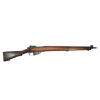
After the war Britain built the No. 4 Mk 2, introduced in 1949, with the trigger hung from the butt collar at the back of the receiver instead of from the trigger guard. Many wartime No. 4s were later upgraded to that standard and renamed No. 4 Mk I/2 and Mk I/3. If a listing says “Mk 2” and the price looks like a plain No. 4, it’s worth a close look.
Best For: A first Enfield, anyone who wants to shoot a .303 well with iron sights, and collectors starting on the Long Branch and Savage variants.
2. SMLE No. 1 Mk III: Best Lee-Enfield for History
- Caliber: .303 British
- Barrel Length: 25.2 in
- Overall Length: 44.57 in
- Weight: 8.73 lb
- Capacity: 10-round detachable magazine, charger-loaded
- Introduced: January 26, 1907 (Mk III), renamed No. 1 Mk III in 1926
| Price | Accuracy | Sights | Collector Value | Availability |
| 4/5 | 3/5 | 3/5 | 4/5 | 3/5 |
Pros
- The classic Great War rifle
- Slightly lighter than a No. 4
- Lithgow and Ishapore versions widen supply
Cons
- Open rear sight is slower
- Old barrels vary in accuracy
- Many were sporterized or rebuilt
The Short Magazine Lee-Enfield is the rifle of Ypres and Gallipoli, and it’s the one with the look everyone knows: the flat, blunt nose cap covering the muzzle. The Mk III came in on January 26, 1907, with a simplified rear sight and a fixed charger guide. In late 1915 wartime production brought the Mk III*, which dropped the magazine cut-off and the long-range volley sights to speed things up. In 1926 the British renamed it the Rifle No. 1 Mk III, which is why you’ll see both names on listings.
As a shooter, an SMLE is a step behind a No. 4. The rear sight sits out on the barrel, so the sight radius is shorter and the notch is harder to use than an aperture. My Lithgow SMLE, dated 1942, grouped about 3.5 inches at 100 yards with Prvi Partizan 174 grain FMJ across a 60-round session, and it was completely reliable doing it. Fine for plinking and history, not a match rifle.
Australia’s Lithgow Small Arms Factory kept building the Mk III* until 1953, and India built it at Ishapore too, so a lot of the SMLEs for sale aren’t British-made at all. That’s not a flaw. A clean Lithgow is a very good rifle. Just pay for what it actually is. The cheapest SMLE a trusted seller had this month was a used Mk III on consignment at Guns.com for $349.99.
Best For: Collectors and history buyers who want the classic WWI profile, and anyone putting together a Commonwealth rifle collection.
3. Ishapore 2A1: Best Lee-Enfield for Cheaper Ammo
- Caliber: 7.62x51mm NATO
- Barrel Length: 25 in
- Overall Length: 44.5 in
- Capacity: 12-round magazine (some 10-round)
- Rear Sight: Graduated to 800 meters
- Made: Rifle Factory Ishapore, India, 1960s into the 1970s
| Price | Accuracy | Ammo Cost | Collector Value | Availability |
| 4/5 | 4/5 | 5/5 | 2/5 | 3/5 |
Pros
- Shoots common 7.62x51mm NATO
- Twelve-round magazine
- Built new, not converted
Cons
- Heavier than an SMLE
- Less history than British marks
- Often sold under misleading names
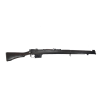
After the 1962 war with China, India’s Rifle Factory Ishapore started building an SMLE-pattern rifle for the 7.62x51mm NATO round. The first was the Rifle 7.62 mm 2A. The 2A1 changed the rear sight from 2,000 to 800 and became the version you’ll see most. From the outside it looks like a Mk III*, except for the square 12-round magazine (some 2A1s turn up with 10-rounders) and the buttplate borrowed from India’s 1A self-loading rifle.
Here’s the part sellers get wrong. A 2A1 is not a “.308 conversion” of an old .303 rifle. It’s a newly built rifle, with the receiver and bolt made from improved steel and heat treated for the higher-pressure NATO cartridge, and an extractor redesigned for rimless brass. Many owners shoot commercial .308 Winchester in theirs without trouble, but the two cartridges are measured on different pressure systems, so NATO-spec ammo is the safe default. If you want to run .308, have a gunsmith check the rifle first.
My 2A1 is the Enfield I shoot most, simply because 7.62 NATO is easy to find. With Prvi Partizan 145 grain FMJ it grouped 2.5 to 3 inches at 100 yards over 80 rounds, with no stoppages and the 12-round magazine feeding every time. The one we tracked, a 1968-dated 2A1 at Classic Firearms, is listed at $550.00.
Best For: Shooters who want the Lee-Enfield action on a cartridge that’s cheaper and easier to buy than .303 British.

4. No. 5 Mk I Jungle Carbine: Best for Collectors, If It’s Real
- Caliber: .303 British
- Barrel Length: 18.8 in
- Overall Length: 39.5 in
- Weight: About 2 lb lighter than a No. 4
- Features: Flash hider, lightening-cut receiver, rubber butt pad
- Made: 1944 to 1947, BSA Shirley (81,329) and ROF Fazakerley (169,807)
| Price | Accuracy | Recoil | Collector Value | Availability |
| 2/5 | 3/5 | 2/5 | 5/5 | 1/5 |
Pros
- Short and handy at 39.5 inches
- Genuine examples hold their value
- Distinctive flash hider and profile
Cons
- Sharp recoil from the short barrel
- Fakes and conversions are everywhere
- Rarely available from mainstream dealers
Late in WWII the British needed a shorter, lighter rifle, and the answer was the Rifle No. 5 Mk I. It took a No. 4 action, cut the barrel to 18.8 inches, added a big conical flash hider, machined “lightening cuts” into the receiver, and put a rubber pad on the butt. It came out about 2 pounds lighter and 5 inches shorter, and the soldiers liked it. The .303 still kicks hard out of a barrel that short, though, and production ended in 1947 over what the Army called an “inherent fault in the design,” often blamed on a wandering zero.
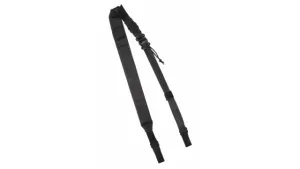
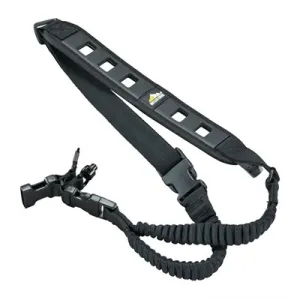
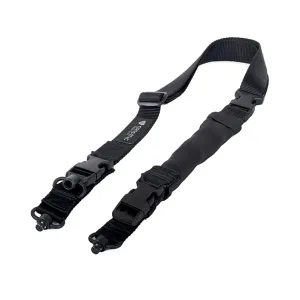
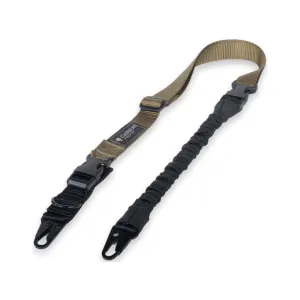
Slings for a Lee-Enfield
Best-scored accessories across 200+ retailers · Updated every 4 hours
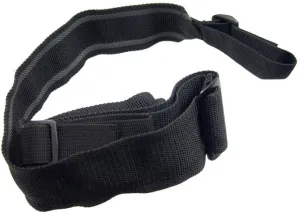
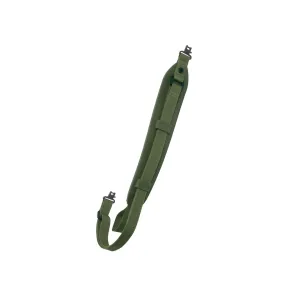
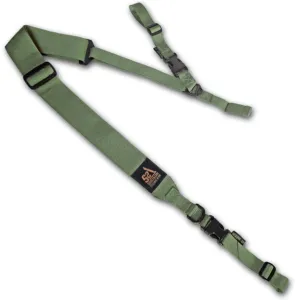
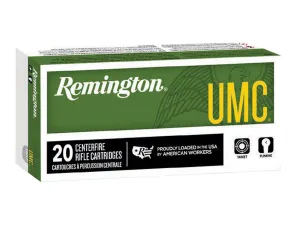
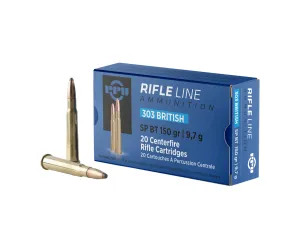
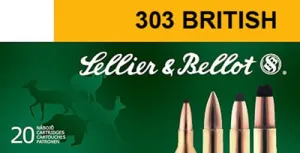
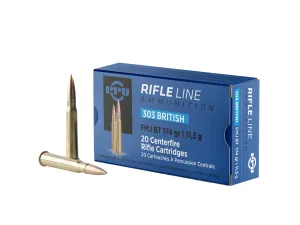
.303 British Ammo on Sale
On-sale 303 british from 200+ retailers · Updated every 4 hours
Whether the wandering zero is real is still argued. What I can tell you from shooting one is that mine held its zero over a 40-round afternoon, about 3.5 inches at 100 yards with Sellier & Bellot 180 grain, and my shoulder quit before the rifle did. The flash hider does its job and the muzzle blast is loud.
The name is the trap. “Jungle carbine” was never an official designation. It was made popular in the 1950s by Santa Fe Arms Corporation, a US importer that converted plenty of No. 4 rifles to look like No. 5s to boost sales. Other shops have done the same to Ishapores since, like the .308 “jungle carbine” we found asking $999.99. A real No. 5 has the lightening cuts machined into the receiver and a date in the 1944 to 1947 window from BSA Shirley or ROF Fazakerley. A cut-down No. 4 or Ishapore with a bolted-on flash hider doesn’t.
We don’t show a price card for the No. 5, because the retailers in our price engine rarely have a genuine one. The only real No. 5 in the listings we tracked this month was at Bass Pro Shops for $999.99. If you find one, check the receiver cuts and markings before you pay No. 5 money.
Best For: Collectors who know exactly what they’re looking at. Not a first Enfield, and not a practical shooter.
5. M1917 Enfield: The Other Enfield, in .30-06
- Caliber: .30-06 Springfield
- Barrel Length: 26 in
- Overall Length: 46.3 in
- Weight: 9.19 lb
- Capacity: 6-round internal magazine
- Made: 1917 to 1919 by Winchester, Remington and Eddystone, 2,193,429 total
| Price | Accuracy | Sights | Collector Value | Availability |
| 3/5 | 4/5 | 4/5 | 4/5 | 2/5 |
Pros
- Shoots .30-06, easy to feed
- Protected aperture rear sight
- Strong Mauser-style action
Cons
- Not a Lee-Enfield action
- Heavy and long
- Sporterized examples are common
Search “Enfield rifle” and half the results are this one, so it needs a place here. The M1917 is an American version of the British Pattern 1914 rifle, rechambered for .30-06 and built by Winchester, Remington and the Eddystone Arsenal. It uses a Mauser-type action with front locking lugs and a claw extractor, though it kept the British habit of cocking on closing. Past that, it shares little with the Lee bolt except the Enfield name. Numerically, it was the main rifle the American Expeditionary Forces carried in Europe in WWI.
It’s a strong, accurate rifle with a protected aperture sight, and it eats standard .30-06. The one we tracked is an Eddystone M1917 police trade-in with a sling at Sportsman’s Outdoor Superstore for $899.99. If you want to know more about the cartridge, our .30-06 buyer’s guide covers the load choices.
Best For: Buyers who want a WWI-era military rifle that shoots a cartridge they can buy anywhere.
How to Check a Lee-Enfield Before You Buy
Most bad Enfield purchases come down to the same handful of problems. Here’s what I look at, in order.
- Matching serial numbers. Compare the number on the bolt with the number on the receiver. A mismatched bolt isn’t a deal breaker for a shooter, but it lowers collector value and means headspace has to be checked.
- The bolt head number. Enfield bolt heads were made in numbered sizes, most of them 0 to 3, each slightly longer than the last, so armorers could set headspace by swapping heads. A high number isn’t bad by itself, but it tells you the easy adjustment may already be used up. Have a gunsmith check headspace with gauges before you shoot any surplus rifle.
- The bore. Shine a light down it. You want sharp rifling and no deep pitting, especially near the muzzle. Old corrosive ammo is the usual culprit when the bore is dark.
- The wood. Look for cracks at the wrist and at the forend, and for a stock that’s been cut down. A sporterized rifle sells for less and can’t easily go back to military form.
- The markings. Check the maker and date on the receiver, the “US PROPERTY” stamp on Savage rifles, and the importer mark. Federal rules at 27 CFR 478.92 require imported guns to carry the importer’s name and location, so a rifle brought in after the rule will show it.
One more thing on the Enfield action. It closes on helical, interrupted-thread locking surfaces, so final headspace isn’t reached until the bolt handle is all the way down. A bolt that feels sticky on the last bit of closing deserves a closer look before you buy.
.303 British Ammo: What It Costs to Shoot a Lee-Enfield
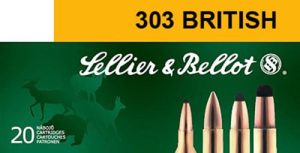
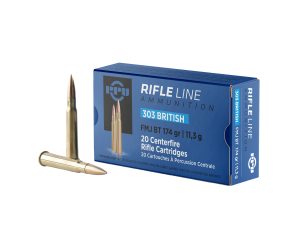
The .303 British is a rimmed cartridge that nobody builds new rifles for anymore, but it’s still loaded by several makers. The cheapest box from a trusted seller this month was Sellier & Bellot 180 grain FMJ at Palmetto State Armory for $24.69 per 20, about $1.23 a round. Prvi Partizan runs a little higher, and hunting soft points from Winchester cost more than double that per box.
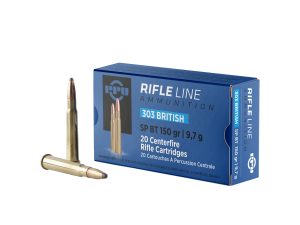

If you pick up old military .303, assume it has corrosive primers and clean the same day. Flush the bore and bolt face with hot water or a water-based cleaner, dry it, then clean and oil as usual. Our ammo buying guide explains how to read box labels, and the Ishapore 2A1 above is the way around .303 prices entirely.
Is a C&R License Worth It for Enfields?
A Curio and Relic license lets C&R-eligible guns ship straight to your door instead of through a dealer. Under 27 CFR 478.11, a firearm qualifies automatically once it was made at least 50 years before the current date. That covers every SMLE, No. 4, No. 5 and M1917, and it covers most Ishapore 2A1s too, since they were built in the 1960s and 1970s. Check the date on the rifle: in 2026, anything dated 1975 or earlier has cleared the line.
The license costs $10 a year and runs for three years, so $30 up front. If you’re planning to buy two or three surplus rifles, it can pay for itself in skipped transfer fees. It only covers curios and relics for your own collection, not dealing, and your state’s laws still apply.
Lee-Enfield vs Other Military Surplus Rifles
At $350 to $550 for a shootable rifle, an Enfield now sits right next to a Mosin in price. The Mosin is cheaper to feed and simpler, and our Mosin Nagant guide has current prices by model. The Enfield has the far better action and a 10-round magazine. If you’d rather have a semi-auto, our best SKS rifles guide and used M1 Garand guide cover the other classic choices.
For older and rarer pieces, our guide to where to buy vintage guns covers auction houses and collector dealers. For a first Enfield, though, keep it simple: buy a No. 4 with a good bore and a matching bolt, and spend what you saved on ammo.
FAQ
How much is a Lee-Enfield rifle worth in 2026?
In our September 2026 tracking, shootable SMLE and No. 4 rifles from dealers ran about $350 to $550. Dated, matching collector rifles cost more: a 1943 Long Branch No. 4 Mk I was listed at $950, and the one genuine No. 5 jungle carbine we found was $999.99.
Which Lee-Enfield should I buy first?
A Rifle No. 4 Mk I. It has a receiver-mounted aperture sight and a heavier barrel than the SMLE, so it is the easiest Enfield to shoot well, and it is the most common mark for sale. Look for a good bore and a bolt that matches the receiver.
Can an Ishapore 2A1 shoot .308 Winchester?
The 2A1 was built new for 7.62x51mm NATO, on a receiver and bolt made from improved, heat-treated steel. Many owners shoot commercial .308 Winchester in them, but the two cartridges use different pressure measurement systems, so NATO-spec ammo is the safe default. Have a gunsmith check the rifle before running .308.
How can I tell a real Lee-Enfield jungle carbine?
A genuine Rifle No. 5 Mk I has lightening cuts machined into the receiver, a conical flash hider, a rubber butt pad and an 18.8-inch barrel, and was made from 1944 to 1947 by BSA Shirley or ROF Fazakerley. The jungle carbine name was popularized by a US importer that converted No. 4 rifles, so many rifles sold under it are conversions.
Is the M1917 Enfield a Lee-Enfield?
No. The M1917 is an American version of the British Pattern 1914 rifle, chambered in .30-06 and built by Winchester, Remington and Eddystone. It uses a Mauser-type action with front locking lugs, not the Lee bolt, and shares only the Enfield name.
Do I need a C&R license to buy a Lee-Enfield?
No. You can buy one through any FFL dealer. A Curio and Relic license is optional and lets eligible guns ship to your door. Under federal rules a firearm qualifies once it is at least 50 years old, which covers nearly every Lee-Enfield, and the license costs $10 a year on a three-year term.
Is .303 British ammo still made?
Yes. Sellier and Bellot, Prvi Partizan, Remington and Winchester all load it. The cheapest box from a trusted seller in September 2026 was Sellier and Bellot 180 grain FMJ at $24.69 for 20, about $1.23 a round.
4,969+ Gun & Ammo Deals
Updated daily from 200+ top retailers. Filter by category, caliber, action type, and price.