
Last updated 20 May 2026, reviewed against the American Academy of Pediatrics 2022 policy statement on firearm injuries and deaths in children (Lee, Fleegler et al.), Grossman 2005 JAMA case-control data, CDC NVDRS 2003-2021 surveillance, and the RAND Corporation gun-policy review.
Some links below are affiliate links. We may earn a small commission at no extra cost if you buy through them. Affiliate cards are isolated to the gun + safe pick section near the bottom. The storage, safety, suicide-prevention, and family-planning sections are editorial only.
- Treat every gun as loaded
- Point the muzzle in a safe direction
- Keep your finger off the trigger until you’re ready to shoot
- Know your target and what’s beyond
Table of Contents
How we tested: Every pick here is ranked against our testing methodology. Minimum round counts, accuracy and reliability protocols, the failures that disqualify a gun.
The Two Jobs That Can’t Conflict
Every parent who owns a firearm lives with two responsibilities that have to coexist without compromise. The defensive gun must be accessible enough to be useful in an emergency. It must also be completely inaccessible to children when it is not in your hand. These are not in conflict if you set things up correctly. They absolutely are in conflict if you do not.
The data on what happens when families get this wrong is unambiguous. The CDC’s National Violent Death Reporting System recorded 1,262 unintentional firearm fatalities among children ages 0-17 between 2003 and 2021 (Wilson et al., MMWR 2023). Of those firearms involved, 76.2% were unlocked and 73.8% were loaded. Roughly 30% were accessed from a nightstand, mattress, or under a bed. Hiding a gun is not securing a gun. Children find things. The only thing that consistently works is physical containment in a locked container.
At the same time, a gun locked in a biometric safe in a closet across the house with magazines stored separately is not a defensive tool. It is a false sense of security. The goal is a setup that gives you reliable one-handed access in seconds and gives children zero access. This guide covers how to actually achieve both, plus how to build a complete family defense plan that accounts for where everyone is when something happens.
One framing rule before we start. The Be SMART framework from Everytown for Gun Safety is the cleanest single mental model for living with this trade-off as a parent. The acronym: Secure all guns in your home and vehicles, Model responsible behavior around guns, Ask about unsecured guns in other homes, Recognize the role of guns in suicide, Tell your peers to Be SMART. We will walk all five steps below. Be SMART for Kids has the full curriculum free.
Safe Storage Is Not Negotiable

A loaded home defense gun must be in a quick-access safe when you are not holding it. Not in a nightstand drawer. Not on the shelf in the closet. Not in a shoe box under the bed. In a locked container that your children cannot open. Every time you are not physically holding it.
The case-control evidence on locked storage is overwhelming. Grossman and colleagues’ 2005 JAMA case-control study compared 106 households where a child had been killed or injured by an unintentional firearm discharge against 480 control households. Each of four storage practices was independently protective (Grossman et al. JAMA 2005):
- Gun stored locked: odds ratio 0.27 (95% CI 0.17-0.45), roughly 73% lower risk
- Gun stored unloaded: odds ratio 0.30
- Ammunition stored locked: odds ratio 0.39
- Gun and ammunition stored separately: odds ratio 0.45
Stacking those practices compounds the protection. Monuteaux, Azrael, and Miller’s 2019 JAMA Pediatrics modeling study estimated that a 20% increase in households locking all firearms would prevent 72 to 135 youth firearm fatalities annually, and a 50% adoption rate would prevent roughly 251 deaths per year (Monuteaux JAMA Peds 2019). RAND Corporation’s most recent Science of Gun Policy review assigns its highest “supportive evidence” rating to the conclusion that Child Access Prevention laws reduce self-inflicted firearm injuries among youth (RAND CAP review). This is not a debate among experts. It is a settled question.
Quick-Access Safes: What Actually Works
Four quick-access safes have the longest track record of recommendation by defensive firearms instructors and pediatric-safety reviewers. Any of them is appropriate for a bedside or vehicle home defense application.
| Safe | Lock Type | Access | Capacity | Approx Street |
|---|---|---|---|---|
| Fort Knox PB1 Original | Simplex mechanical push-button (no batteries) | ~2 sec | 1-2 handguns | $299 |
| Hornady RAPiD Safe 4800KP | RFID + keypad + key backup | 1-2 sec | 1-2 handguns | $180-$234 |
| Hornady RAPiD Safe Night Guard | RFID + keypad, nightstand form-factor + clock + USB | 1-2 sec | 1-2 handguns + spare mag | ~$250 |
| Vaultek VT20i Biometric | Biometric + Bluetooth + keypad + key backup | 1-2 sec biometric | 1-2 handguns | $290-$410 |
| Liberty HD-200 Quick Vault | Electronic keypad + auto-open door | ~2 sec | 2 handguns + accessories | $199 |
The Fort Knox PB1 is the no-batteries pick. A 3-5 button mechanical Simplex combination, no electronics, no failure modes, no decay over time. In production since 1975 with minimal design changes because it works.
The Hornady RAPiD Safe Night Guard is the most-recommended electronic alternative if you want RFID quick-access (it reads a wristband or sticker on your phone) with keypad and key backups. The Vaultek VT20i adds biometric fingerprint reading, which is fast when it works but worth a real-world honesty disclosure: biometric scanners fail 1-3% of read attempts across major brands.
Always have a keypad or key backup option you have rehearsed, and replace the batteries annually whether they need it or not.
Whichever safe you pick, bolt it down. An unsecured safe can be taken and opened at leisure. Every quick-access safe ships with mounting hardware and the install takes about 10 minutes. Mount to the nightstand, the bedframe, or directly to the wall studs. Skip this step and you’ve spent $200 to $400 on a heavy box that does nothing.
Trigger and Cable Locks for Secondary Firearms
Any firearm in the home that is not your primary defensive gun should be locked separately with a cable or trigger lock and stored disassembled or with magazines removed. The NSSF’s Project ChildSafe program has distributed over 42 million free firearm safety kits through partnerships with 15,000+ law enforcement agencies in all 50 states. The kit includes a cable lock and a bilingual safety brochure. Request one through your local sheriff or police department or via the Project ChildSafe Safety Kit request page.
For full-size hunting rifles and shotguns, a Liberty or Cannon residential gun safe in the basement or a locked closet is the right answer. The defensive gun lives in the bedside quick-access safe. Everything else lives in primary storage. Two safes, two purposes, zero ambiguity for kids.
What “Hidden” Actually Means to Children
Parents who say they hide the gun where the kids will not find it are almost always wrong. Multiple published studies consistently show that children know where guns are in their homes at rates far higher than parents believe. Children explore everything. They check every drawer, every closet, every bag when you are not watching. The mattress. The shoebox. The top shelf. All of it. The research on this is sobering.
This is not a criticism of any individual child. It is a description of how children operate. They are curious, they explore, and they are very good at finding things. The only reliable solution is physical containment in a locked container, not a better hiding spot.
Teaching Kids Firearm Safety
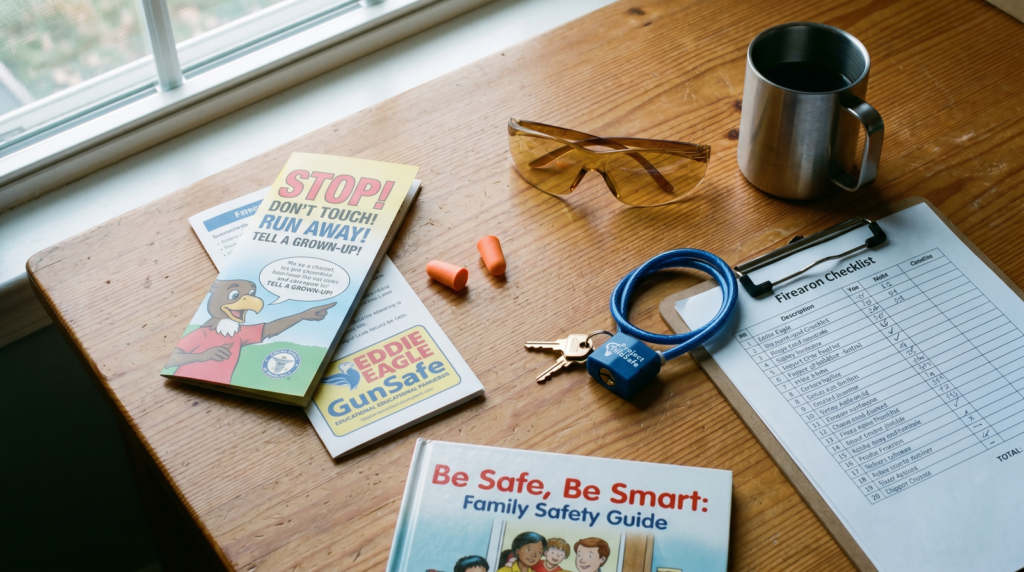
Safe storage prevents the bulk of pediatric firearm incidents inside your own home. Education prevents the incident that could happen at a friend’s house, a relative’s house, or anywhere else outside your control where storage protocols may not match yours. Both matter. Do both.
Eddie Eagle: Starting Young (Ages 4-10)
The NRA’s Eddie Eagle GunSafe Program is the standard for firearm safety education for young children. The slogan is the entire curriculum: “STOP! Don’t Touch! Run Away! Tell a Grown-Up!” No complex rules. No lectures about guns being dangerous. Just a clear behavioral response to finding a firearm. The program has been taught to over 32 million children since 1988 and the response protocol genuinely works because it has only four steps in plain language.
You can download all Eddie Eagle materials free from the Eddie Eagle for parents page. The age range is Pre-K through 4th grade, with the four-step lesson targeting Pre-K through 3rd and Wing Team materials extending through 4th. Teach the protocol once, then reinforce it as a verbal drill periodically. Young children need repetition. A single lesson at age 5 will not survive to age 8 without quarterly reinforcement.
The Four Universal Rules at Age-Appropriate Levels
As kids get older, teach the four universal firearm safety rules. Treat every gun as if it is loaded. Never point a gun at anything you are not willing to destroy. Keep your finger off the trigger until your sights are on the target. Know your target and what is beyond it. These are not just range rules. They are the framework that prevents accidental discharge even if a child accesses a firearm through a momentary lapse in storage.
Start with simplified versions for young children and build toward the full four rules as they mature. A 6-year-old needs “don’t touch, tell an adult.” A 12-year-old who is shooting with you at the range needs all four rules explained and enforced. Context matters.
Demystification: Removing the Forbidden Fruit Factor
Children who grow up in homes where firearms are normalized through responsible ownership, supervised handling, and clear safety education are statistically less likely to mishandle firearms than children who have never seen one and suddenly encounter one. The forbidden fruit effect is real. Taking your kids to the range under proper supervision, letting them handle firearms in a controlled educational context, and answering their questions honestly removes the mystery that drives dangerous curiosity.
The ASK Campaign (Asking Saves Kids) from Brady United and the American Academy of Pediatrics launched June 2000 and now reaches over 19 million households. It gives parents the single question to ask before their child visits another home: “Is there an unlocked gun where my child plays?”
ASK Day is observed annually on June 21, the first day of summer when kids start spending more time in other people’s houses. Building this question into your routine playdate prep is one of the highest-leverage safety moves available to a parent. The ASK Campaign page has parent resources.
Family Defense Plan by Kid Age
The plan that works for a family with a toddler is meaningfully different from one with teenagers. Here is how to structure it at each developmental stage.
Toddlers and Pre-K (Ages 1-4)
With very young children, your only job during a home defense event is to control the child and get both of you to the safe room. You cannot explain the plan to a 2-year-old. The plan has to work without their cooperation. In practice: keep the toddler in your bedroom at night if you are the only adult. Or know exactly how fast you can get from their room to yours. If your bedroom is your safe room, the child needs to be in it with you before you do anything else.
This is the age where the temptation to skip the quick-access safe is highest because you are exhausted and the baby monitor is going off and you just want the gun within reach. Do not. A toddler who can walk can also climb onto a nightstand and pick up a gun. The safe goes on the nightstand from day one. The minor inconvenience of a 2-second access is a fraction of the value of zero unintentional discharge risk.
Elementary Age (Ages 5-11)
This is the age where you start building the plan with the child as a participant. The family defense plan at this age is simple: if you hear a loud noise or the alarm goes off in the middle of the night, go to mom and dad’s room. Lock the door behind you. Get low. Wait. Do not try to investigate. Do not check on a sibling on your own. Come straight to the designated room.
Establish a rally point: your bedroom, a specific bathroom, wherever you have decided is the safe room. Every member of the family knows where to go. Walk through this drill with the kids occasionally, not in a scary way, as a matter-of-fact home safety protocol the same way you do fire drill protocols. “If the smoke alarm goes off, we go out the front door. If the house alarm goes off at night, we all meet in mom and dad’s room.” Simple, repeatable, age-appropriate.
Teenagers (Ages 12-17)
Teenagers can be incorporated as more active participants in the family defense plan. They are old enough to understand the full picture, operate a phone to call 911, and take meaningful protective action for younger siblings. A teenager who knows the plan and has practiced it is an asset, not just a dependent.
For families with teenage children who have received firearm safety education and supervised range experience, discuss the plan if something happens and you are not home. A 16-year-old who is home alone with younger siblings needs a specific protocol. That protocol is: barricade, call 911, protect the younger kids. Not “grab a gun.” Their job is to shelter in place and call for professional help. Teenagers should NOT have access to the defensive firearm, the safe stays locked. This is non-negotiable across every defensive firearms instructor recommendation and every pediatric safety guideline.
Setting Up the Safe Room with Kids
Your safe room works differently when there are children in it. A scared child who does not understand what is happening is going to make noise, move around, and potentially put themselves between you and a door you are covering. Walk through this in advance.
Designated Positions
Kids need to know their specific spot. “When we are in the safe room and something is happening, you stay in the closet.” Or behind the bed. Or in the corner furthest from the door. Something specific, somewhere away from the entry point and away from your line of fire. Walk them through it. Show them the spot. Make it feel like a game if they are young. “Our special spot if the alarm goes off.”
This matters because a child moving toward the door to see what is happening, or running between you and the entry point while you are covering it, creates catastrophic risk. The answer is preparation, not hoping they will figure it out under stress.
Communication in the Safe Room
Establish a code word, something simple and memorable that means “stay in your spot and do not move.” The word is only for genuine emergencies, never used in normal conversation. When you say it, the kids stop moving and stay put. Practice this until it is automatic. It sounds excessive until the moment it is not.
Shelter-in-Place vs Evacuate: Don’t Mix Them Up
Home invasion is a shelter-in-place scenario. Fire is an evacuation scenario. Your kids need to know the difference and which protocols apply to which alarm. Mixing them up in a panic leads to a family running out of the house into a home invasion, or barricading in a room during a fire. Be explicit: fire alarm means out of the house, security alarm at night means into the safe room.
Overpenetration and Kids’ Rooms
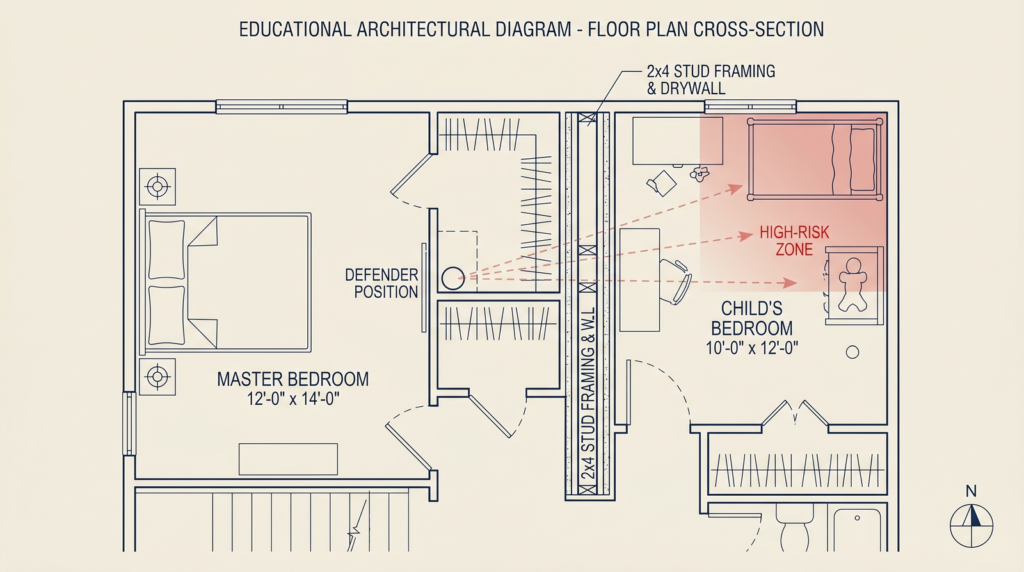
This deserves its own section. If a child sleeps in a room adjacent to yours, or behind a shared wall you might fire toward, your ammo choice and your defensive position both have real consequences. A 9mm round that misses the threat and hits your bedroom wall can kill a child on the other side. This is not theoretical. The CDC NVDRS data documents children killed by stray rounds from adjacent rooms among the 1,262 unintentional pediatric firearm deaths in its 2003-2021 surveillance window.
The solution is two layered decisions: ammunition selection and floor-plan awareness. For ammunition, load your defensive firearm with quality JHP, Federal HST 147gr subsonic, Speer Gold Dot, or Hornady Critical Defense. These expand on the first soft tissue or dense barrier they hit and lose energy faster than ball ammo.
Pew Pew Tactical’s controlled overpenetration testing found expanded 147gr HST drove through the first wall plus a 12-inch gel block and stopped at the rear wall in their test setup, meaningfully better than FMJ but not zero risk. Our Best Home Defense Guns That Won’t Over-Penetrate guide goes deeper on per-load drywall layer counts.
A note on frangible ammunition specifically for shared-wall layouts. Frangibles like SinterFire and Inceptor ARX are sometimes recommended for indoor defense because they fragment aggressively in drywall and lose energy faster than JHP.
The expert consensus from the International Wound Ballistics Association (IWBA) and Dr. Gary Roberts is more cautious: most frangibles fail the FBI Heavy Clothing Protocol, they under-penetrate calibrated ballistic gel below the 12-inch FBI minimum, which means they may not reach vital organs through clothing layers and may not stop a determined attacker.
Frangibles have a defensible role in steel-target training and refinery or aircraft environments. For general home defense with kids in adjacent bedrooms, the consensus pick is heavy-bullet subsonic JHP in a quality service caliber.
For floor-plan awareness, know where your children’s rooms are relative to where you will be positioned in the safe room. Do not orient your defensive shooting position so a missed shot path goes through their bedroom wall. If your house layout makes this unavoidable, consider that constraint when you designate which room is the safe room in the first place. A safe room on an outside corner of the house, with two exterior walls, is structurally safer than one with two shared interior walls.
The Full Defense Plan Walk-Through
Here is how a complete family home defense plan comes together when practiced and executed correctly.
You hear the alarm go off at 2 AM. Or a loud noise. You wake up. Your spouse or partner also wakes up. Without saying a word, one of you moves toward the kids’ rooms while the other opens the safe.
You have decided in advance who does which. The person with the firearm holds the bedroom door position while the other retrieves the children. Kids come into the master bedroom. The door is locked.
Kids go to their designated spot in the closet or behind the far side of the bed. Whoever has the gun positions themselves with a clear view of the door. Phone is out, 911 is called. You wait for professional response.
This plan has been walked through. Every person in the household knows their job. The kids know their spot. No one is improvising under panic. That is what makes it work.
The 911 Script
Have a 911 script rehearsed. The dispatcher needs to know: your address, the number of people in your household, where in the house you are, the nature of the threat (intruder, you have not seen them, you can hear them), that you have a firearm with you and that you are in defensive position with children, and that you are not going to come out until uniformed officers arrive. The script keeps you from improvising in adrenaline. Tape it inside the safe room door if you cannot trust yourself to recall it under stress.
Running the Drill Quarterly
Walk through this drill as a family, without loaded firearms, once every three months. Not as a scary exercise. As a matter-of-fact practice the same way you practice fire drills. Kids who have walked through it once are exponentially better prepared than kids who have never done it. The practice time investment is 15 minutes per quarter. The return on that investment is potentially everything.
Start the drill from actual sleeping positions. Middle of the night is when it matters. Everyone gets up from where they actually sleep, does their assigned role, assembles in the safe room, and confirms their spot. Time it. Discuss it. Run it again. Make it routine. The drill is not preparation for fear. It is preparation for competence.
Defensive Firearms Suited to Homes with Kids

For families with children in the house, the gun criteria are: reliable, easy to operate under stress, with a rail for a weapon light if applicable. The differentiator for kids-in-home is manual-of-arms simplicity, a revolver with no manual safety to forget or a striker-fired pistol with consistent trigger pull are both defensible choices, with different trade-offs. The one universal: every round of every gun lives in a quick-access safe when not in hand. No exceptions. With that constraint in place, four picks cover most family situations.
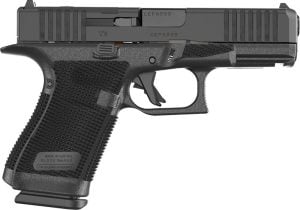
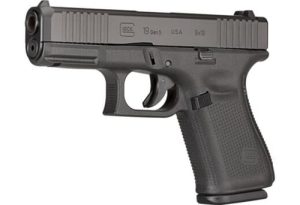
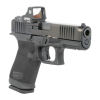
Glock 19 Gen 6, Most Versatile Pick
The Glock 19 Gen 6 in 9mm is the workhorse answer. Proven reliability across over 30 years of production, widely available defensive ammo in the right 147gr subsonic loadings, accessory rail for a weapon light, 15+1 capacity, and the consistent striker-fired trigger that is the same on every shot. The new Gen 6 brings updated RTF-6 hexagonal grip texture and optics-ready cuts over the still-available Gen 5. Pair with Federal HST 9mm 147gr subsonic for shared-wall homes. MSRP $745, street $599-$699.
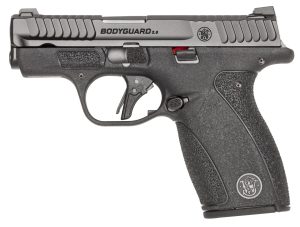
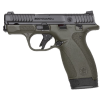
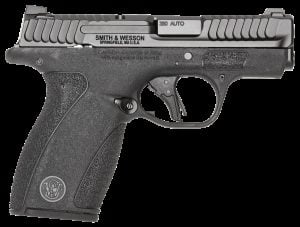
Smith & Wesson Bodyguard 2.0 .380 (Manual Safety), Apartment Pick
For apartment or condo families where overpenetration through shared walls is the dominant concern, the Bodyguard 2.0 .380 in the manual-safety configuration is the most defensible compromise. The manual thumb safety adds a deliberate step that reduces accidental discharge risk if a curious child briefly accesses the firearm between the safe and your hand. Federal HST .380 99gr (P380HST1S) is the ammo to pair with it. MSRP $449, street $349-$419.
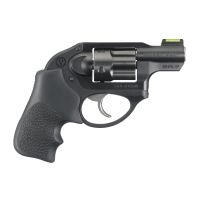
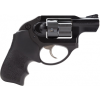
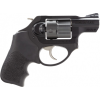
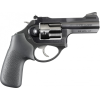
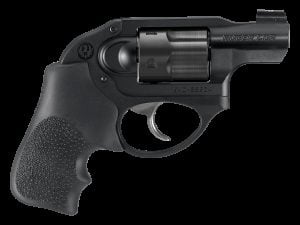
Ruger LCR .38 Special, Simplest Manual of Arms
The case for a revolver in a home with kids is manual-of-arms simplicity. No manual safety to forget under stress. No magazine to fumble. No slide to rack. Press the trigger and it goes. The Ruger LCR in .38 Special with a Hogue Tamer grip is the most-recommended pocket-revolver for defensive use and the lightest of the small-frame snub-nose options. The trade-off is 5-shot capacity and a heavy double-action trigger that requires practice. MSRP $749, street $499-$554.
Mossberg 500 Tactical 12ga, Shotgun for the Family Bedroom
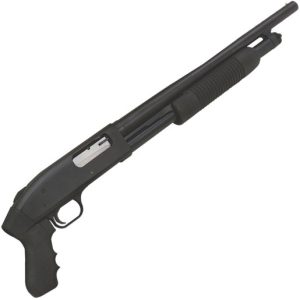
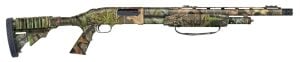
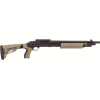
If your defensive preference is a long gun, the Mossberg 500 Tactical with Federal Premium 12 gauge #4 buckshot (F127 4B) is the consensus pick for shared-wall environments. The Flite Control wad keeps the pellet pattern tight at room distances and the #4 buckshot decelerates faster through drywall than 00 buck. The pump action is reliable and bombproof. Same storage rule applies, long gun lives in a locking long-gun cabinet bolted to the bedroom wall stud, key on your nightstand or your person. MSRP $560-$640, street $465-$515. Our Mossberg 500 vs 590 head-to-head covers the platform differences in depth.
Who Should NOT Keep a Defensive Firearm at Home (Yet or At All)
The AAP’s framing matters here: the safest home for a child is one without firearms. If any of the following apply to your household, the right answer is to defer the defensive firearm purchase until conditions change, or to find a different defensive strategy.
- A household member is in suicidal crisis or untreated severe depression. The firearm case-fatality rate is 89.6%. Means restriction, temporarily removing or securing firearms outside the home, is the highest-leverage suicide-prevention intervention available. Call 988 to talk through options. Many states allow temporary firearm storage with FFL dealers or trusted family members; some allow Extreme Risk Protection Orders (ERPOs) requested by household members.
- Children with severe behavioral, developmental, or impulse-control conditions that include risk of self-harm or harm to others. The standard storage protocol is not sufficient. Consider off-site storage or no firearm in the home until the situation is professionally re-evaluated.
- You will not commit to formal training. A defensive firearm without training is a hazard. Plan to take a Defensive Pistol 1 course from a USCCA, NRA, or Rangemaster-affiliated instructor before bringing a defensive gun home. Many ranges offer day-courses for $150.
- You will not commit to a quick-access safe. Without secure storage, the firearm is statistically more likely to harm a member of your household than to defend it. This is the single non-negotiable.
- You live in a state where the recommended platforms are illegal. Standard-capacity magazines (G19 15-rounders) are restricted in CA, NY, NJ, CT, MA, HI, and several others. Check your state restrictions before purchase.
What to Tell Your Pediatrician
Many pediatricians ask parents about firearm presence in the home as part of standard well-child visits. This is recommended practice under AAP guidance and is the right answer to volunteer if you are not asked.
The right honest answer: yes, there are firearms in the home; they are stored locked, unloaded for any firearm not in active defensive role, and ammunition is stored separately; the defensive firearm lives in a quick-access safe out of children’s reach at all times.
Pediatricians ask because pediatric injury prevention is part of their job, not because they intend judgment. The conversation is an opportunity to reinforce that you have a system and to receive any additional safety resources the practice distributes.
Legal Considerations
This is editorial information, not legal advice. Child Access Prevention laws exist in 26 states plus DC and create criminal liability when a child gains access to a negligently stored firearm. RAND Corporation’s Science of Gun Policy review finds CAP laws produce measurable reductions in youth firearm fatalities, particularly felony-level CAP statutes. Giffords Law Center maintains a current state-by-state breakdown at giffords.org.
Castle doctrine, stand-your-ground, and duty-to-retreat requirements also vary substantially by state and affect the legal analysis of defensive use of force in your home. The legality of specific platforms (semi-auto pistols with standard-capacity magazines, shotguns with extended magazine tubes, suppressors) also varies.
Before purchasing or deploying a defensive firearm, verify with a qualified attorney in your jurisdiction that your planned use is legal and that you understand your post-incident obligations. Self-defense liability insurance through USCCA, US LawShield, Right to Bear, or similar is a reasonable consideration for anyone keeping a defensive firearm in a home with children.
Related Guides
- Best Home Defense Guns That Won’t Over-Penetrate (2026)
- Home Defense for Apartments: Guns, Ammo and Tactics
- Home Defense on a Budget: Complete Setup Under $1,000
- 10 Best Shotguns for Home Defense (2026)
- Mossberg 500 vs 590: Which Pump Shotgun Should You Buy?
Frequently Asked Questions
How do I store a home defense gun safely with kids in the house?
In a quick-access safe bolted to your nightstand or bedframe. The Fort Knox PB1 (mechanical Simplex, no batteries, ~$299) and the Hornady RAPiD Safe Night Guard (RFID + keypad, ~$250 street) are the most-recommended models by defensive firearms instructors. The safe must be bolted down so it cannot be removed and opened at leisure. Never rely on hiding the gun, the CDC NVDRS 2003-2021 data shows 76.2% of firearms involved in pediatric injury cases were unlocked and 73.8% were loaded, with about 30% accessed from a nightstand, mattress, or under-bed location.
At what age should I teach my kids about gun safety?
Start at age 4-5 with the NRA Eddie Eagle GunSafe protocol: STOP! Don't Touch! Run Away! Tell a Grown-Up! This is a behavioral response program for Pre-K through 4th grade and has been taught to over 32 million children. Add the four universal firearm safety rules (treat every gun as loaded; never point at anything you're not willing to destroy; finger off trigger until sights on target; know your target and what's beyond it) as kids reach school age and begin supervised range experience. Reinforce quarterly, a single lesson at age 5 will not survive to age 8 without repetition.
What is the family defense plan for a home with young children?
On an alarm or loud noise, one parent retrieves children and brings them to the safe room (usually the master bedroom) while the other opens the quick-access safe. Lock the bedroom door. Children go to their designated spot away from the door and your line of fire. Call 911 with a rehearsed script (address, household count, threat description, your defensive position with children, that you are not coming out until uniformed officers arrive). Every person in the household practices this drill quarterly. Quarterly rehearsal is what makes it work in adrenaline.
Should I clear my house if I think there is an intruder?
No, and especially not with children in the house. Get everyone into the safe room, lock the door, call 911. Your job is to protect the people in the room with you, not to hunt a threat. Moving through a dark house looking for an intruder while your kids are in another room is the highest-risk thing you can do. Shelter in place. Wait for professional response. The legal calculus for justifiable defensive use of force is also dramatically cleaner when you are barricaded in a defensive position than when you initiated movement toward the threat.
What ammo should I use if I have children in adjacent bedrooms?
Quality JHP, Federal HST 9mm 147gr subsonic, Speer Gold Dot, or Hornady Critical Defense are the consensus picks. These expand on first soft tissue or dense barrier and lose energy faster than ball ammo. Pew Pew Tactical's controlled overpenetration testing found expanded 147gr HST drove through the first wall plus gel and stopped at the rear wall, meaningfully better than FMJ. Skip frangible loads (SinterFire, Inceptor ARX) for general HD: per Dr. Gary Roberts and IWBA, most frangibles under-penetrate calibrated gel below the FBI 12-inch minimum and may not stop a determined attacker through clothing barriers.
How do I talk to my kids about home defense without scaring them?
Frame it the same way you frame fire drills: as a practical safety protocol, not a source of fear. Use matter-of-fact language. Give them clear, simple jobs. Kids who have a role to play and understand the plan are less frightened than kids who have no idea what is happening. Normalize preparation as a responsible family habit, not a sign that danger is imminent. Run the drill from sleeping positions every three months. The investment is 15 minutes per quarter for potentially everything in return.
What is the best quick-access safe for a home with children?
Four options have the longest track record. The Fort Knox PB1 Original Pistol Box uses a 3-5 button mechanical Simplex combination with no batteries and has been in production since 1975 (~$299). The Hornady RAPiD Safe 4800KP and Night Guard use RFID + keypad + key backup with 1-2 second access ($180-$250 street). The Vaultek VT20i adds biometric fingerprint reading (~$290-$410). All must be bolted to the nightstand, bedframe, or wall stud. Note that biometric scanners fail 1-3% of read attempts across major brands, always rehearse the keypad or key backup option and replace batteries annually.
What if I am the only adult in the house with young children?
Single-adult households need a defense plan that allows the parent to physically retrieve the children before committing to a defensive position. Keep the toddler in your bedroom at night if possible. A baby monitor gives early warning of unusual sounds. The quick-access safe must be operable one-handed since you may be carrying a child with the other arm, biometric or RFID safes are particularly useful here. The rest of the plan is identical: get to the safe room with the kids, lock the door, call 911, hold a defensive position, wait.
4,659+ Gun & Ammo Deals
Updated daily from 200+ top retailers. Filter by category, caliber, action type, and price.
Related Guides