

Last updated August 25, 2026 · By Nick Hall. I have shot single-stack 1911s and double-stack 2011s across .45 ACP and 9mm. Every price on this page comes from our live retailer feed on the day of the update, and every spec comes from the manufacturer’s own product page.
Affiliate disclosure: some links below are affiliate links. If you buy through them you still get the best price and you help us keep tracking deals, at no extra cost to you.
Table of Contents
- Treat every gun as loaded
- Point the muzzle in a safe direction
- Keep your finger off the trigger until you’re ready to shoot
- Know your target and what’s beyond
How we tested: Every pick here is ranked against our testing methodology. Minimum round counts, accuracy and reliability protocols, the failures that disqualify a gun.
Quick Verdict
Buy a single-stack 1911 if you want the slim grip, the heritage and the lowest price of entry, which right now is about $300. Buy a double-stack 1911, the type of pistol most people call a 2011, if you want the same trigger with roughly twice the rounds. That used to cost a fortune. It doesn’t any more: the cheapest one we can actually find in stock is $663.99.
Here’s the longer version. The 1911 is John Browning’s design, a single-stack, single-action pistol that has defined the platform for over a century. The double-stack version keeps the 1911’s fire control, thumb safety and cocked-and-locked carry, but replaces the one-piece frame with a metal upper section bolted to a polymer grip module that houses a wide magazine.
Two things about that second gun surprise people. The first is that “2011” is a registered trademark owned by Staccato, not a generic model number, which is why Springfield sells a “1911 DS” and Girsan sells a “Witness2311”. The second is that the price gap has mostly closed. I’ll show you both with receipts.
1911 vs 2011: At a Glance
| Spec | Single-stack 1911 | Double-stack 1911 (2011) |
|---|---|---|
| Magazine | Single-stack | Double-stack |
| Typical capacity, 9mm | 9 to 10 | 15 to 20 |
| Typical capacity, .45 ACP | 7 to 8 | 11 to 14 |
| Frame | One piece, steel or alloy | Metal frame plus polymer grip module |
| Trigger | Single action | Single action, same fire control |
| Grip width | Slim single-stack, not published by the makers | 1.3in Staccato P, 1.33in Kimber KDS9c |
| Manual of arms | Thumb and grip safety, cocked and locked | Identical |
| Cheapest we can source today | $299.99 Tisas 1911A1 | $663.99 Tisas 1911 Duty DS |
| Street price range | $300 to $5,000+ | $664 to $2,538 |
Look at the last two rows, because they are the ones that have changed. For most of the last decade a double-stack 1911 meant spending north of two thousand dollars. Today the entry point is $663.99 against $569.99 for a Springfield Mil-Spec. That is a $94 difference for eight or nine extra rounds.
Look at the grip width row too. The double-stack grip is wider, but not by nearly as much as the internet suggests. A Staccato P measures 1.3in across and a Kimber KDS9c 1.33in, which are not big numbers for a handgun grip in absolute terms.
Why “2011” Is a Trademark, Not a Model Number

This is the part almost every comparison gets wrong, and it explains a lot of confusing product names. “2011” is a live, registered US trademark owned by Staccato. It is not a generic category the way “AR-15” has become.
The registration is public. US trademark serial 85556563, registration number 4267237, covers the mark “2011” in International Class 013 for “Firearms”. It was filed on February 29, 2012, registered on January 1, 2013, and the current owner is listed as STACCATO 2011, LLC of Florence, Texas. The USPTO record shows it as live, renewed and active, with first use in commerce recorded as September 27, 1993.
That single fact explains the naming mess in the gun shop. Springfield Armory does not sell a 2011. It sells the 1911 DS Prodigy, and its own product page writes “Staccato 2011®” with the registered symbol when it needs to name the other platform. EAA and Girsan sell the Witness2311. Tisas sells the 1911 Duty DS. Oracle Arms sells a 2311.
So when you compare a “1911” to a “2011”, you are really comparing single-stack to double-stack. Everyone building the second type has to call it something else. If you want the whole current field, we ranked it in the best 2011 pistols.
1911 vs 2011 vs 2311: what’s the difference?
A 1911 is a single-stack pistol on a one-piece frame. A 2011 is a double-stack pistol on a two-piece frame, built by Staccato, who own the name. A 2311 is the same two-piece idea built by somebody else, most commonly EAA and Girsan on the Witness2311.
Mechanically 2011 and 2311 describe the same architecture. The number changed for legal reasons, not engineering ones. Treat “2311”, “1911 DS” and “Duty DS” as the same category and judge them on build quality and price instead of the badge.
The Patent Story, and the Date Everyone Gets Wrong
You will read almost everywhere that the 2011 patent expired in 2016 and that this is why every manufacturer now builds one. I went and read the patent. That date is wrong, and the real story is more interesting.
The design is covered by US Patent 5,293,708, “Frame/handgrip assembly for autoloading handgun”, filed by Sandy L. Strayer and Virgil P. Tripp on July 8, 1992 and granted on March 15, 1994. The patent record lists its anticipated expiration as July 8, 2012 and its status as expired. Three companion design patents covering the gripless frame and the grip and trigger guard shapes were all filed in 1992, granted in 1994, and ran out around 2008.
Now hold those two dates next to each other. The patent lapsed in July 2012. The trademark application went in on February 29, 2012, about four months earlier. The design became free to copy at almost exactly the moment the name became locked down.
And the flood did not arrive in 2012. The Springfield Prodigy landed a decade later. What actually held the market back was not the patent, it was the cost of machining a two-piece frame to competition tolerances and the job of making double-stack magazines that feed. Those are manufacturing problems, and manufacturing got cheaper. That is the real reason you can buy one for $663.99 today.
What a Double-Stack 1911 Actually Is
Strayer and Tripp were building custom 1911s for competition shooters who loved the trigger but kept running dry. Their answer was to stop machining the grip as part of the frame. Instead the frame ends above the trigger guard, and a separate grip module bolts on underneath, wide enough to take a staggered magazine.
Everything above that joint stays 1911. Same slide, same barrel lockup, same sear and disconnector, same thumb safety and grip safety, same cocked-and-locked carry. If you have run a 1911, you already know how to run this gun.
The modular grip brought a second benefit nobody planned for. Because the grip is a separate part, you can change grip size, texture and angle without touching the serialised frame, and a broken grip module is a cheap part rather than a new gun.
Capacity: The Headline Difference
This is why the double-stack exists. A single-stack 1911 holds 7 or 8 rounds of .45 ACP, or 9 to 10 in 9mm. A double-stack holds 15 to 20 in 9mm and 11 to 14 in .45.
Springfield’s Prodigy line is a good illustration because the company publishes the whole ladder. The compact frame takes 15 rounds of 9mm, the full-size frame 17, and extended magazines run 20 and 26 rounds. The newest 3.5in model ships with two 18-round magazines in the box.
Whether that matters depends entirely on what you do with the gun. In a match where reloads cost seconds, it is decisive. For a range gun or a nightstand gun, the honest answer is that it is nice rather than necessary, and plenty of people prefer the slimmer gun.
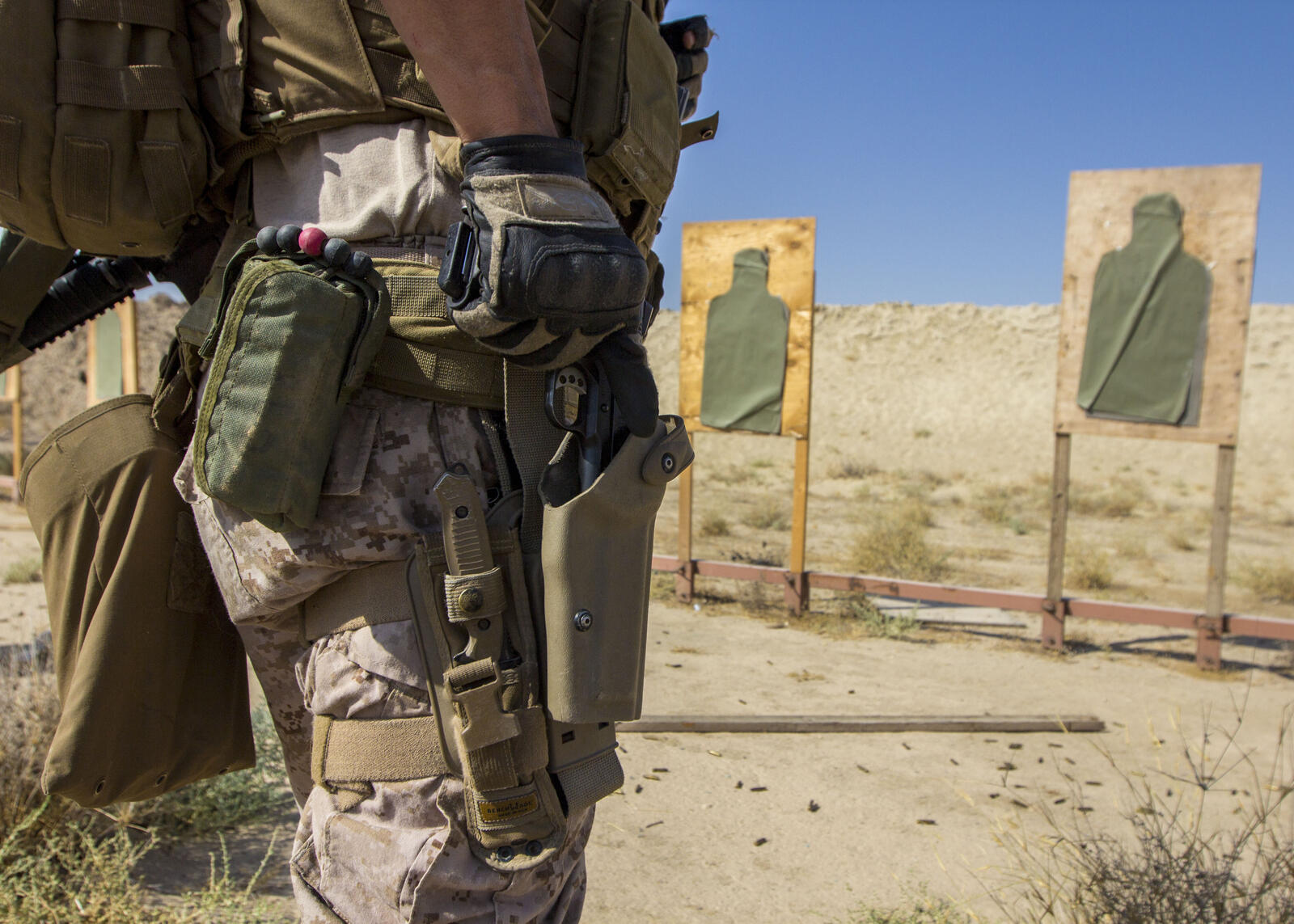
The Trigger and Shooting Feel
Both give you the 1911 trigger: a short single-action press with a clean break and a reset you can feel through a glove. It is still the standard other pistols get measured against, and it is the main reason people put up with everything else the platform asks of them.
There is no meaningful difference in the trigger itself, because it is the same fire control. Staccato quotes 4 to 4.5 lb on the P. A good single-stack 1911 lands in the same place.
What does differ is what happens after the shot. The double-stack grip fills more of your palm, and on a 33oz gun in 9mm that adds up to a flatter, faster second shot. The single-stack in .45 has a slower, heavier push that a lot of shooters genuinely prefer.
Grip Width and Concealment

Here is where the received wisdom needs correcting. People talk about the double-stack grip as if it were a Glock 21 club. Staccato lists the P at 1.3in wide and Kimber lists the KDS9c at 1.33in. Worth knowing: Springfield and Colt do not publish a width figure for their single-stack 1911s at all, so treat any exact single-stack number you read online as somebody else’s tape measure rather than a manufacturer spec.
The difference you feel is in the shape rather than the raw number. A single-stack grip is flat front to back with sharp corners, so it disappears against your body. The double-stack module is rounder and fuller, so it presses out rather than lying flat.
For daily carry the single-stack still wins, and the officer-size guns in our subcompact 1911 guide win harder. But a 25.3oz Kimber KDS9c with a 4.09in barrel is a genuinely carryable double-stack, and it did not exist five years ago. If you are open to leaving the platform entirely, our best 9mm concealed carry guns roundup covers the striker alternatives.
Price: What Each Actually Costs in 2026
Money used to be the whole argument. It isn’t any more, and this is the section most comparisons have not updated.
On the single-stack side, a Tisas 1911A1 Government in .45 is $299.99 and a Rock Island GI Standard is $344.99. Step up to a Springfield 1911 Mil-Spec and you are at $569.99. Above that the ladder runs all the way to five-figure customs.
On the double-stack side the floor is now $663.99 for a Tisas 1911 Duty DS Carry B9R, and $699.99 for a Girsan Witness2311. A Kimber KDS9c is $913.58. A Springfield Prodigy is $1,335.99. A Staccato P is $2,537.99 against a $2,499 manufacturer price, so the premium tier is still a premium tier.
The gap that mattered was never top to top, it was floor to floor. That gap is now $94. If somebody tells you a double-stack 1911 starts at fifteen hundred dollars, they are quoting 2022.
Magazines: The Cost Myth, Priced
The standard objection to the double-stack is that the magazines will bleed you. I went and priced them rather than repeating it.
A Springfield 1911 DS 20-round double-stack magazine is $33.59, and the 26-rounder is $32.59. A Wilson Combat Elite Tactical single-stack magazine is $32.99, and a Wilson 47OX Officer magazine is $34.00. Those are the same money.
The myth survives because people compare the double-stack magazine to a GI-spec single-stack, and a plain Springfield 7-round .45 magazine really is only $14.99. That is a fair comparison only if you were genuinely going to run cheap magazines, which nobody serious about a 1911 does.
One more thing worth knowing, straight from Springfield’s own page: “1911 DS magazines are cross compatible with Staccato 2011® platforms.” The magazine ecosystem is less closed than its reputation suggests.
The Single-Stack 1911s Worth Buying
Three guns cover the useful range. A budget gun that genuinely works, a mid-tier gun that most people should buy, and a premium gun for people who want the platform done properly.
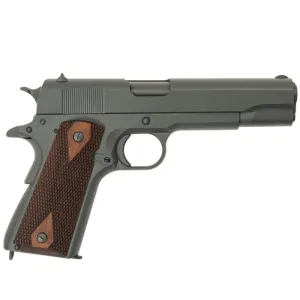

The cheapest way into a real 1911 that I am comfortable recommending. Turkish-made, GI-pattern, 7+1 of .45 ACP through a 5in barrel, and it runs. At three hundred dollars you are not getting a fitted match barrel, and you don’t need one.
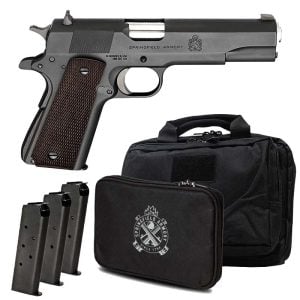


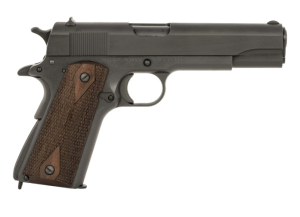
This is the one I point most people at. Springfield’s Mil-Spec is the classic done straight, with a forged frame and slide and none of the fussiness that makes cheap 1911s frustrating. It is the reference point the rest of this page keeps measuring against.

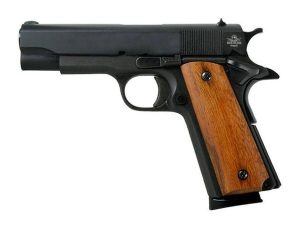
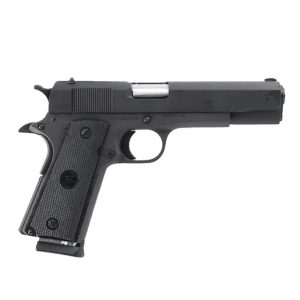
The other budget answer, and the one that comes both ways, since the GI Standard is catalogued in .45 ACP and in 9mm. It is heavy, plain and hard to break, which is exactly the brief. Check the caliber on the listing before you buy, because the cheapest offer is not always the chambering you want. If you want the full spread at this level, we ranked the best 1911s under $1,000.
The Double-Stacks Worth Buying

Same idea on the other side, from the cheapest one that actually works up to the one everything else gets compared to.


The gun that broke the price floor, at 17+1 of 9mm for under seven hundred dollars. It is heavier and rougher than a Staccato and the trigger needs a few hundred rounds to settle. It is also less than a third of the price. We put it through a full Tisas 1911 Duty DS review.
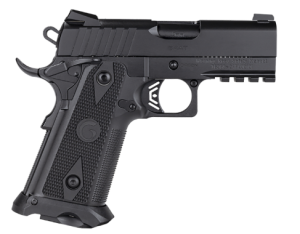


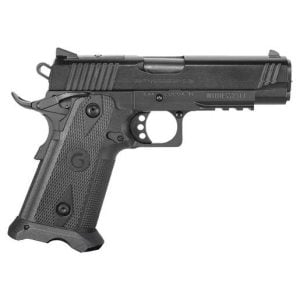
The other budget double-stack, and the one to look at if you want .45 rather than 9mm, where it holds 11+1. Girsan builds a lot of gun for the money and the 3.40in EDC trim is the most carryable thing at this price.
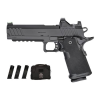
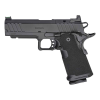

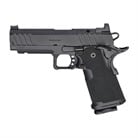
The gun that made this whole category normal. Forged steel frame and slide on the full-size, optics ready through Springfield’s AOS plates, and a choice of 3.5in, 4.25in or 5in bull barrels, all listed on Springfield’s own spec page. If you only look at one double-stack, look at this one.
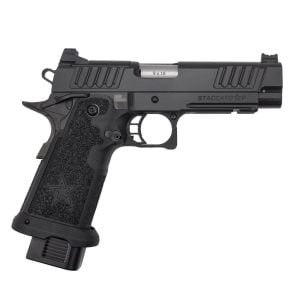
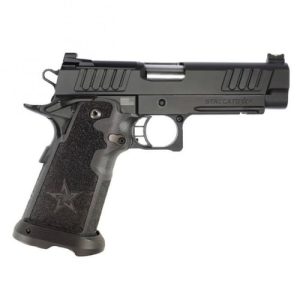
The benchmark, and the gun that owns the word. A 4.4in bull barrel, 33oz, 17+1 or 20+1, and a duty record that no budget rival can match yet. Staccato lists it at $2,499. The rest of the range is in our Staccato model guide.
Calibers
The single-stack is most itself in .45 ACP. That is what Browning designed it around and it is still where the platform feels right, though 9mm and 10mm versions are everywhere and 9mm is the cheaper way to shoot it a lot.
The double-stack is overwhelmingly a 9mm proposition, because capacity and mild recoil are the entire point. Springfield’s Prodigy line is 9mm only. .45 versions exist, like the Girsan Witness2311 at 11+1, but they give up the capacity advantage that justifies the gun.
If you are feeding either in the classic chambering, our best .45 ACP ammo guide covers what actually runs.
Beyond 9mm: 10mm and Glock-magazine double-stacks
Two variants come up often enough to be worth naming. EAA and Girsan build a 10mm version, the Witness2311 CMXX, which arrives factory compensated, and we covered it in our EAA Witness2311 CMXX writeup. It is the cheapest way into a comped 10mm double-stack.
The other is the double-stack that ducks the magazine question entirely by running Glock magazines instead of proprietary ones. That is the Stealth Arms Platypus, and it is worth a look purely on running costs, which we get into in the Stealth Arms Platypus review.
Competition and Duty Use
The double-stack was built for competition and it still owns the divisions where capacity and trigger decide matches. Walk a USPSA Limited or Carry Optics stage and count the grip modules.
It has also picked up real duty credibility, with police agencies issuing Staccatos. That is a meaningful signal, because departments run round counts and armourer reports before they sign anything off.
The single-stack is not out of the game. Single Stack division exists precisely for it, and it remains a serious carry and range gun. It is just no longer the tool you would pick to win a high-capacity match.
Reliability and Maintenance
Both reward a quality build and good magazines, and both punish neither. The 1911’s reputation for being finicky came from cheap guns and worse magazines, not from the design.
The double-stack adds one variable, which is the feed geometry of a staggered magazine into a single-stack-derived chamber. Get the magazine right and it disappears. Get it wrong and you will chase failures forever, which is why magazine choice matters more here than on almost any other platform.
Both want a break-in. Budget guns on either side want a longer one. Neither is a pistol you buy on Friday and carry on Saturday without putting a few hundred rounds through it first.
Are 2011s more reliable than 1911s?
No, and anybody who tells you otherwise is comparing a $2,500 gun to a $400 one. Build quality and magazines decide reliability on both platforms, and the double-stack actually has the harder feeding job because it has to stagger rounds into a chamber the single-stack feeds straight into.
What the double-stack does buy you is fewer reloads, and a reload is a moment where things go wrong. That is a different argument from mechanical reliability, and it is the honest version of the claim.
Can You Turn a 1911 into a 2011?
No. This comes up constantly and the answer is a clean no.
The frame is the serialised part, and it is the frame that differs. A 1911 frame is one piece with the grip machined into it. A double-stack frame stops above the trigger guard so a separate grip module can bolt on. You cannot cut a magazine well wider on a finished 1911 frame and get there, because the whole lower geometry, the magazine catch, the trigger bow and the feed angle all change with it.
What does carry over is everything above the frame. Slides, barrels, sights, hammers, sears and safeties from the 1911 parts bin will often work on a double-stack, which is why the aftermarket felt familiar so quickly. Buying a second gun is the only route, and at $663.99 that is a much smaller ask than it was.
Optics Mounting
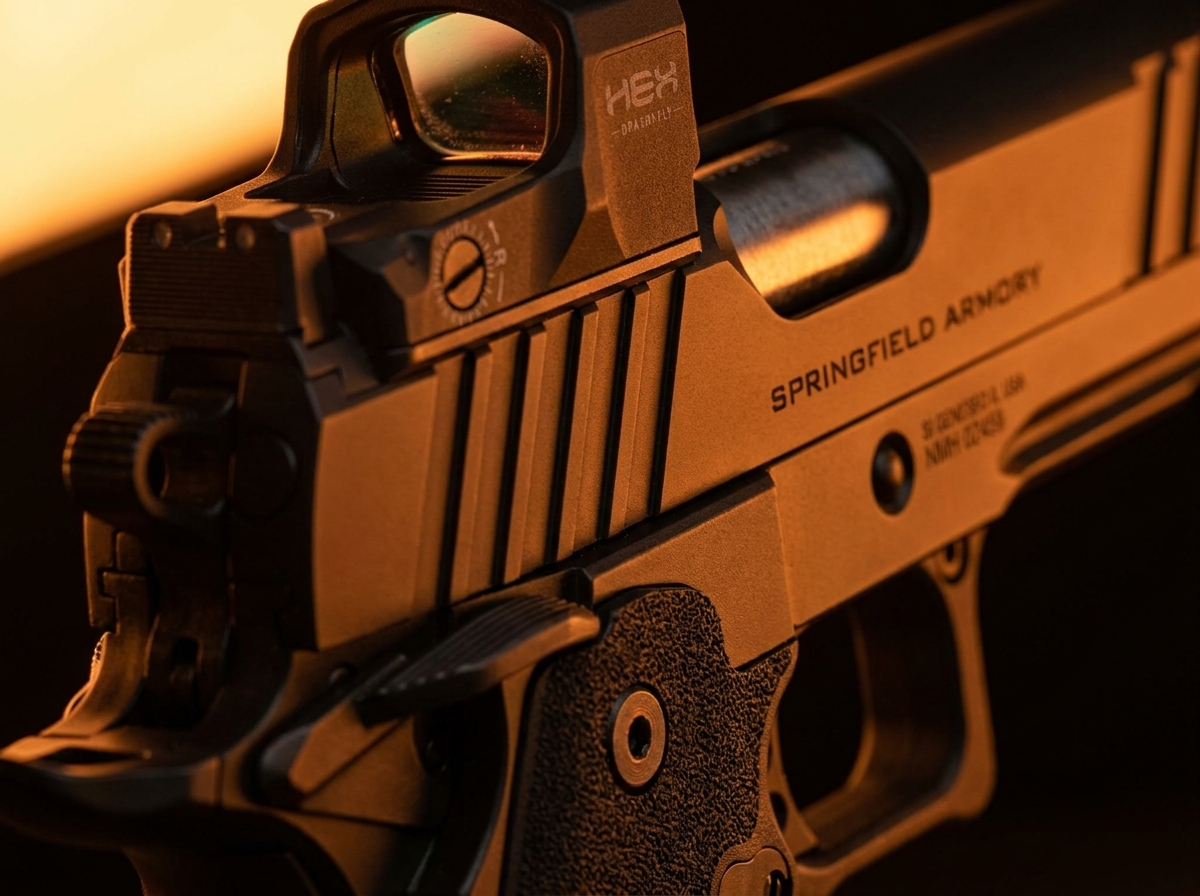
This one is a clean win for the double-stack. The competition crowd went to red dots early, so optics readiness was designed in rather than retrofitted. Springfield’s Prodigy uses Agency Optic System plates machined from billet steel, each with an integral rear sight.
A single-stack 1911 can absolutely wear a dot, but on most models it means sending the slide out to be milled. That is a few hundred dollars and a few weeks, and it is the main reason a classic 1911 still shows up with iron sights.
1911 Pros & Cons
Pros
- Iconic single-action trigger that set the standard
- Slim, flat grip that conceals well
- A century of proven design and parts
- Entry point about $300, ladder to custom
- GI-spec magazines from $14.99
Cons
- Low capacity, 7 to 10 rounds
- Heavy, especially all-steel models
- A red dot means milling the slide
- Requires thumb and grip safety training
2011 Pros & Cons
Pros
- Double-stack capacity, 15 to 20 rounds
- Keeps the 1911 trigger and controls
- Swappable grip module, frame left untouched
- Optics ready from the factory
- Entry point has fallen to $663.99
Cons
- Premium models still run $1,300 to $2,538
- Fuller grip presses out against the body
- Feeding depends heavily on magazine quality
- Mostly a 9mm platform for real capacity
Who Each Is For
Choose a single-stack 1911 if…
You want the classic. The heritage, the .45, the flat slim grip and the century of history behind it. You carry every day and want the shape that lies flattest. You want the lowest price of entry, which at $299.99 nothing else on this page touches.
Choose a double-stack 1911 if…
You want the trigger with more rounds behind it. You shoot competition, where the capacity is worth real seconds. You want a red dot without paying a gunsmith. The $94 gap at the bottom of the market means this is no longer a decision about whether you can afford it.
Common Myths
Myth: the 2011 patent expired in 2016. It expired on July 8, 2012. The patent record is public and says so.
Myth: any double-stack 1911 is a 2011. The word is a live Staccato trademark, which is why Springfield sells a 1911 DS and Girsan a Witness2311.
Myth: 2011 magazines will bankrupt you. A Springfield 1911 DS 20-rounder is $33.59. A Wilson Combat single-stack is $32.99.
Myth: 1911s are unreliable. A quality modern 1911 fed good magazines runs. The reputation came from cheap guns and cheap magazines.
Myth: you need a double-stack to compete. Single Stack division exists for exactly this gun, and it is fully competitive there.
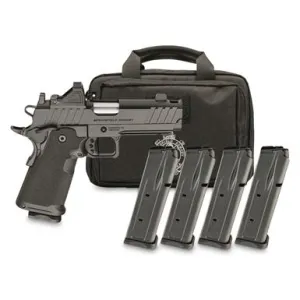
Live 1911 and 2011 Pistols on Sale
Best-priced firearms across 200+ retailers · Updated every 4 hours


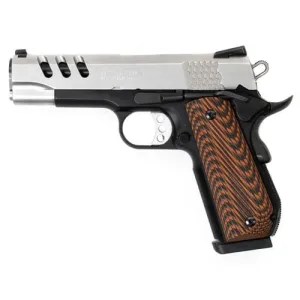
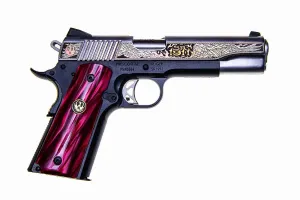
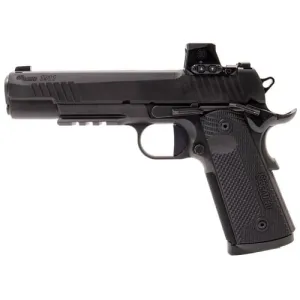
Best-priced firearms across 200+ retailers · Updated every 4 hours
How I Compared These Pistols
I have shot single-stack 1911s in .45 and 9mm and double-stack guns from the budget end up to a Staccato, and the comparison here focuses on the things that actually separate them: capacity, grip shape, price and the magazine economics.
Every spec on this page came from the manufacturer’s own product page rather than from another article. Staccato’s figures come from staccato2011.com, Springfield’s from springfield-armory.com, and the patent and trademark records from Google Patents and the USPTO’s public TSDR database.
Every price is the lowest live offer across the eleven retailers in our feed on August 25, 2026, checked against the card shown beside it. Prices move, so treat the cards as current and the prose as of that date.
Bottom Line
These are the same pistol in two formats, and the trigger you are buying is identical. The single-stack gives you a flatter gun, a deeper parts bin and a $299.99 entry point. The double-stack gives you eight or nine more rounds and a factory optic cut.
The old advice was to buy the 1911 unless you could justify a serious premium. That advice is out of date. With $94 between a Springfield Mil-Spec and a Tisas Duty DS, the question is no longer what you can afford. It is whether you want the slim grip or the extra rounds.
If you want the widest view of the double-stack field, start with the best 2011 pistols. If you want the same argument against a striker gun, we ran 1911 vs Glock. And the full double-stack field, ranked and priced, is in our double-stack 1911 roundup.
FAQ: 1911 vs 2011
What is the difference between a 1911 and a 2011?
A 1911 is a single-stack pistol built on a one-piece frame with the grip machined into it. A 2011 is a double-stack pistol built on a two-piece frame, where a metal upper section bolts to a polymer grip module holding a wide magazine. Everything above the frame stays 1911, including the single-action trigger, thumb safety and cocked-and-locked carry. The double-stack roughly doubles capacity.
Are 2011s more reliable than 1911s?
No. Build quality and magazine quality decide reliability on both platforms, and the double-stack has the harder feeding job because it staggers rounds into a chamber the single-stack feeds straight into. What the double-stack does buy you is fewer reloads, which is a different argument from mechanical reliability.
Can you turn a 1911 into a 2011?
No. The frame is the serialised part and it is the frame that differs, because a 1911 frame is one piece while a double-stack frame stops above the trigger guard to take a separate grip module. Slides, barrels, sights, hammers and safeties often carry over, but the frame does not. Buying a second gun is the only route.
Why is "2011" a trademark?
Because Staccato registered it. US trademark serial 85556563, registration 4267237, covers the mark "2011" for firearms and is recorded as live and renewed, owned by STACCATO 2011, LLC. That is why Springfield Armory sells a "1911 DS", EAA and Girsan sell a "Witness2311" and Tisas sells a "Duty DS". Mechanically they are all the same double-stack architecture.
How much does a 2011 cost in 2026?
Far less than it used to. The cheapest double-stack 1911 we can source is a Tisas 1911 Duty DS at $663.99, with a Girsan Witness2311 at $699.99 and a Kimber KDS9c at $913.58. A Springfield Prodigy is $1,335.99 and a Staccato P is $2,537.99. For comparison a Springfield 1911 Mil-Spec single-stack is $569.99, so the entry gap is about $94.
Are 2011 magazines expensive?
Not compared to good single-stack magazines. A Springfield 1911 DS 20-round double-stack magazine is $33.59 and the 26-round is $32.59, while a Wilson Combat single-stack Elite Tactical magazine is $32.99. The myth comes from comparing double-stack magazines to GI-spec single-stacks, which run about $14.99. Springfield also states its 1911 DS magazines are cross compatible with Staccato 2011 platforms.
Does a 2011 have the same trigger as a 1911?
Essentially yes, because it is the same single-action fire control. The short take-up, clean break and short reset carry over unchanged, and Staccato quotes 4 to 4.5 lb on the P, which is where a good single-stack 1911 lands too. The shared trigger is the main reason people buy either gun.
Which is better for concealed carry, a 1911 or a 2011?
The single-stack 1911 is easier to conceal, because its grip is flat front to back and lies against the body rather than pressing out. The raw width is closer than people assume, with a Staccato P at 1.3in and a Kimber KDS9c at 1.33in, but the shape differs. Officer and Commander size 1911s remain the easiest carry option on the platform.
3,979+ Gun & Ammo Deals
Updated daily from 200+ top retailers. Filter by category, caliber, action type, and price.