

Affiliate disclosure: This Tisas 1911 Duty DS review contains affiliate links. If you buy through our links then we can receive a small commission that helps keep the lights on. You don’t pay anything more.
- Treat every gun as loaded
- Point the muzzle in a safe direction
- Keep your finger off the trigger until you’re ready to shoot
- Know your target and what’s beyond
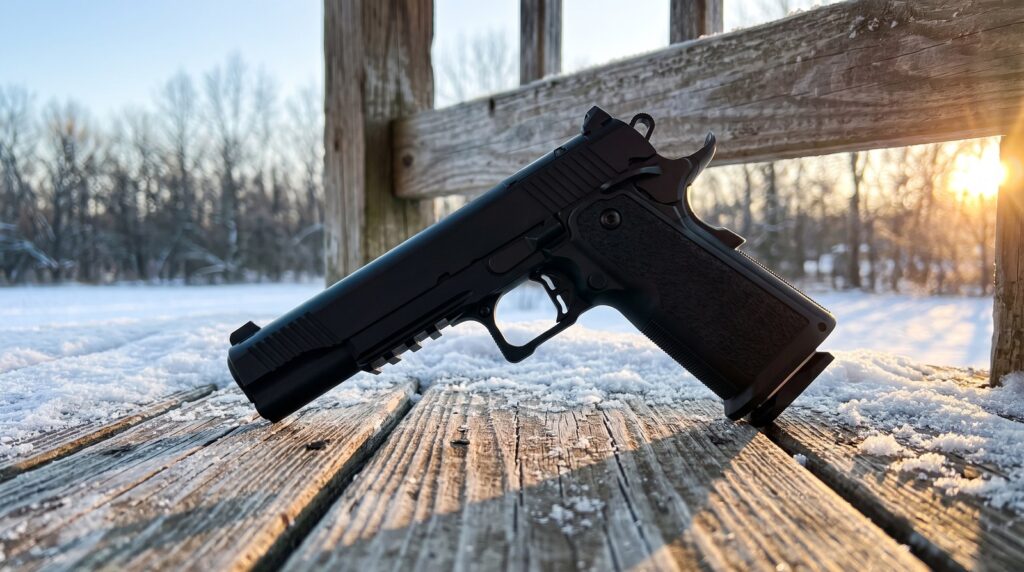
Table of Contents
How we tested: Every pick here is ranked against our testing methodology. Minimum round counts, accuracy and reliability protocols, the failures that disqualify a gun. Where we have not shot a specific variant ourselves, we say so in that section.
Review: Tisas 1911 Duty DS, The Cheapest Real 2011
Our Rating: 8.2/10
- RRP: $749
- Street Price: $663.99 (Use our live pricing for the best up to date deal)
- Caliber: 9mm Luger
- Action: Single action, double stack 1911
- Barrel Length: 5in on the Duty, 4.25in on the Carry
- Capacity: 17+1
- Frame and Slide: Forged 4140 carbon steel
- Finish: Cerakote over QPQ
- Internals: No MIM or cast parts
- Optic: Optics ready on the Duty DS OR
- Other features: Full-length accessory rail, skeletonised trigger, extended beavertail, flared magwell
- Origin: Turkey
Pros
- Cheapest genuine double stack 1911
- Forged steel, no MIM parts
- Takes standard 2011 accessories
Cons
- Trigger needs work
- Finish is functional not pretty
- Spare magazines cost real money



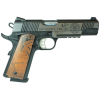
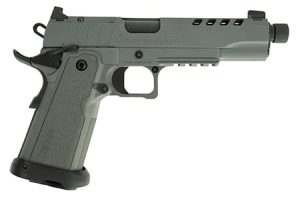
Quick Take
Six hundred and seventy four dollars. That is what a forged steel double stack 1911 costs now, and it still catches me out every time I check the price.
The spec sheet does not read like a budget gun. Frame and slide are forged 4140 carbon steel, finished with Cerakote over QPQ, and there is no MIM or cast metal in the fire control. Plenty of pistols at twice the money cannot say all three of those things. You get seventeen rounds, a full-length rail and a skeletonised trigger, and it takes standard 2011 pattern parts so the upgrade path is wide open.
Where the money shows is the trigger and the small parts. It arrives heavier and grittier than anything else in this article, and the Cerakote is applied for function rather than looks. Neither of those is a dealbreaker at this price. Both are exactly what you would expect them to trim.
Best For: anyone curious about the 2011 platform who is not ready to spend four figures, and anyone who wants a project gun they will not feel guilty modifying.
Why Tisas Can Sell It This Cheap
The obvious question is what got cut, and the answer is more interesting than most people assume. Tisas did not save money on the metallurgy. Forged 4140 for both frame and slide is what the expensive guns use, and skipping MIM in the fire control is a deliberate choice that costs them more, not less.
What they saved on is labor and finish. Turkish manufacturing costs a fraction of American, and the hand-fitting hours that go into a Staccato simply do not happen here. The Cerakote is sprayed to protect the steel rather than to look like jewelry. Edge breaks are functional. Nobody spent forty minutes polishing a feed ramp.
The second thing they did right was compatibility. Building to standard 2011 pattern dimensions means the aftermarket already exists. Triggers, grips, magazines and sights that were made for other guns drop straight in, so Tisas did not have to build an ecosystem from scratch and you do not have to wait for one.
Put those together and the pitch makes sense. Buy the metallurgy from Tisas and add the refinement yourself, if you want it. Or don’t, and shoot it as it comes.
Duty DS Variants: Which One to Get
Tisas sells this platform under a few names and the naming is genuinely confusing. These are the ones that matter.
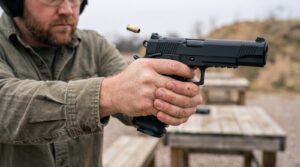
1911 Duty DS (5in, 17+1) $668-$750
The full size gun and the one reviewed here. Five inch barrel, full-length rail, and the optics ready version is the one to buy because a dot is the cheapest performance upgrade you can make. Best choice if the gun lives in a range bag or on a nightstand.
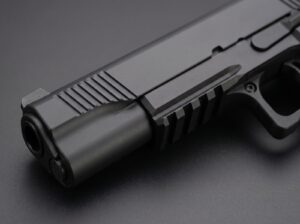
1911 Carry DS / B9R (4.25in, 17+1) $664-$825
Same gun, three quarters of an inch shorter, same seventeen rounds. If there is any chance you will carry it, buy this instead. The commander length loses almost nothing on the range and makes a real difference on a belt.
Night Stalker DS and DS Comp models $810-$985
The Night Stalker adds a threaded barrel in gray Cerakote if a can is in your future. The Comp versions add a compensator and push toward nine hundred dollars, at which point you are shopping against a used Prodigy and should think hard about it.
Shooting It
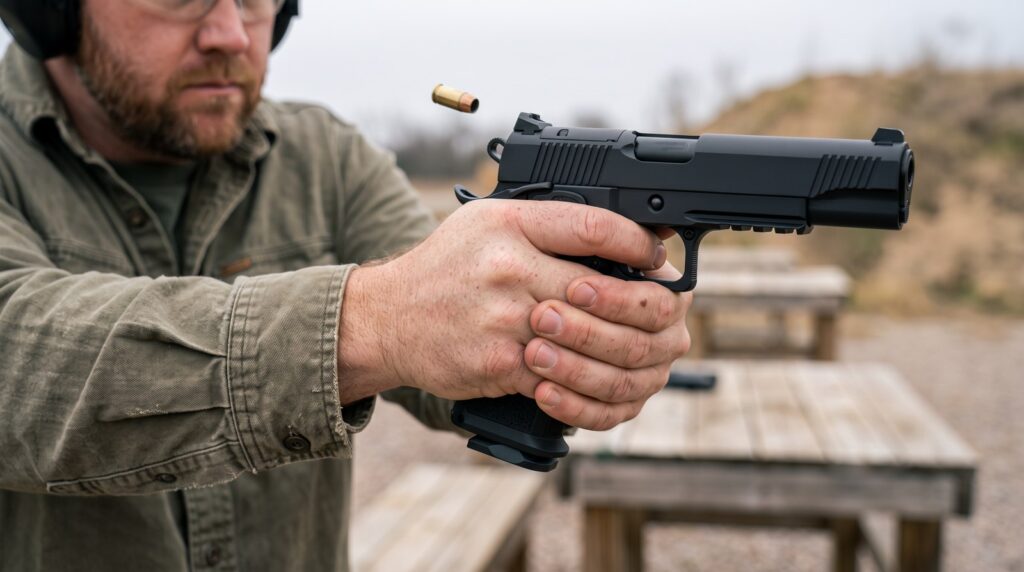
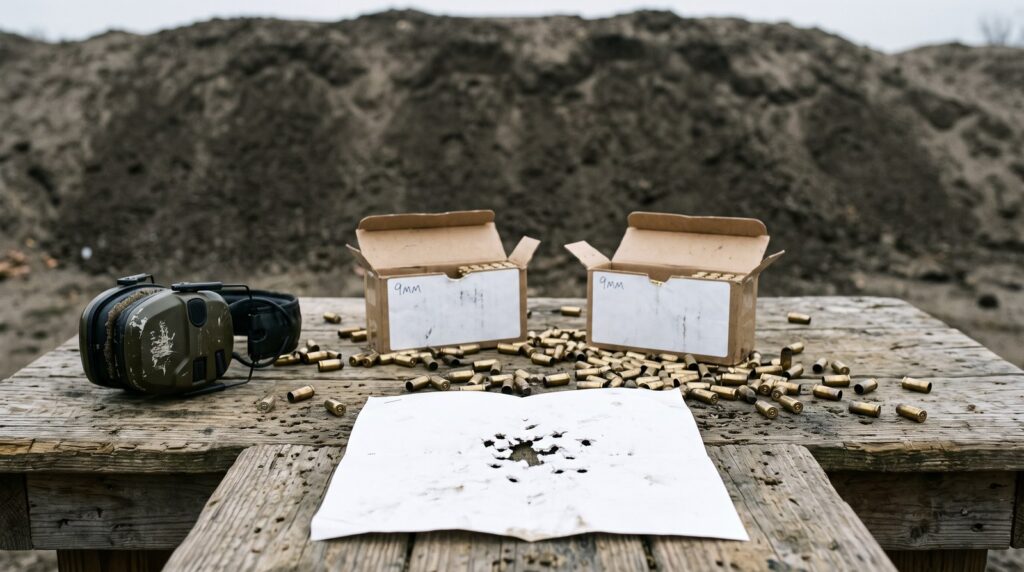
We ran 800 rounds through this one over three sessions, mostly on a cold gray afternoon with the occasional bit of drizzle. Ammunition was Blazer Brass 115 grain, Federal American Eagle 124 grain, Winchester white box 115 grain and a box of Speer Gold Dot 124 grain to see how it handled defensive loads.
Break-In and Reliability
It needed the break-in. Three stoppages inside the first two hundred rounds, all of them failures to go fully into battery, all cured with a light tap on the back of the slide. Two came in the first fifty. That is normal for a tightly fitted 1911 that has not been hand-lapped at the factory, and running it properly wet made a visible difference.
Past two hundred, nothing. The remaining 600 rounds ran clean, including the Gold Dot, and it did not get fussier as it got dirty. Ejection was a bit lazy compared to a more expensive gun, dropping brass at about three o’clock in a loose spread rather than a tight pile, but it never short-stroked.
Accuracy
Off a bag at 25 yards the Federal 124 grain gave the best groups at around 2.1in for five shots. Gold Dot 124 grain came in close behind at roughly 2.3in. The cheap Winchester white box opened out to nearly 3in, which is more about the ammunition than the gun.
That is a bit behind what a Bul or a Staccato will do, and the trigger is the reason rather than the barrel. Fit a better trigger and the groups tighten, which tells you where the accuracy is actually being lost.
Ammunition Log
- CCI Blazer Brass 115gr FMJ: 350 rounds
- Federal American Eagle 124gr FMJ: 250 rounds
- Winchester white box 115gr FMJ: 150 rounds
- Speer Gold Dot 124gr: 50 rounds
- Total: 800 rounds, 3 stoppages, all inside the first 200
The Trigger, Honestly
This is the part of the gun that tells you what you paid. There is noticeable creep before the break and a bit of grit through the travel, and the reset is longer than it needs to be. It smooths out considerably after a few hundred rounds, and it is still a single action trigger, so it beats any striker fired pistol on the shelf. It just is not close to the guns costing three times as much.
After 800 Rounds
Stripping it down at the end of the test, the wear pattern was exactly where you would want it. Bright rub marks on the slide rails and the barrel lugs, even on both sides, which says the fitting is square. No peening on the locking lugs and no unusual wear on the disconnector.
Carbon build-up around the breech face and under the extractor was heavier than a gun with a more generous chamber would show, and it wants cleaning at shorter intervals than a Glock. Nothing alarming, just a 1911 behaving like a 1911.
The Cerakote had already picked up a shiny edge along the top of the slide and around the muzzle where it met the bench. Six hundred and seventy four dollars buys protection, not jewelry, and this is what that looks like after three sessions.
What This Means for You
- Break-in: budget the first 200 rounds as part of buying the gun, not as a fault.
- Upgrade impact: a trigger is the one change that transforms it. Everything else is optional.
- Ammo preference: it liked 124 grain over 115 grain, both for grouping and for how it cycled.
- Maintenance: clean it more often than a striker gun and keep the rails wet.
- Accuracy expectation: around 2in at 25 yards with decent ammunition, better once the trigger is sorted.
Who This Gun Is Actually For
There are three buyers this makes obvious sense for, and it is worth working out whether you are one of them before you order.
The first is the curious shooter. You have read about 2011s for two years, you like the idea of a single action trigger and seventeen rounds, and you are not prepared to gamble two thousand dollars on finding out whether you actually enjoy the platform. Seven hundred is a sane price for that answer. If you love it, sell this and buy a Bul. If you don’t, you have lost very little.
The second is the project builder. Because it takes standard 2011 pattern parts, this is a chassis rather than a finished product. A trigger, a set of grips, a dot and a spring kit gets you a long way, and you will not wince while you do it the way you would drilling into a three thousand dollar gun. Our best 1911 pistols under $2,000 guide covers where that path leads.
The third is the practical owner who wants a metal framed nightstand or truck gun and does not care about badges. It has a rail for a light, it holds seventeen rounds, and it costs less than most polymer guns with an optic fitted. For that job it makes complete sense.
Who it is not for is the person who wants to open a box and have everything be right. That buyer exists in large numbers and there is nothing wrong with being one. They should spend the extra and skip the break-in, the trigger job and the finish wear. If you are weighing that up more broadly, our best full size 9mm pistols roundup is a wider view of the money.
How It Compares
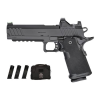
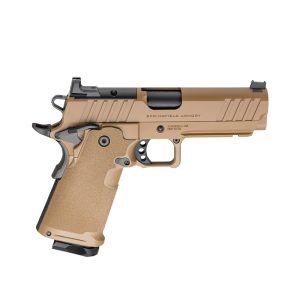
Springfield Prodigy ($1,335+)
The Prodigy costs nearly twice as much and the extra money buys a better trigger, a nicer finish and Springfield’s warranty network. It also uses a polymer grip module where the Tisas is all steel, which some buyers will count against it.
If your budget genuinely reaches twelve hundred, the Prodigy is the better gun. If it does not, the Tisas gets you the same platform and the same manual of arms for the price of the difference. Our Springfield Prodigy review has the detail.

Bul Armory SAS II (hard to find)
Different league on machining and trigger, and roughly three times the price. The Bul is the gun to buy if you want the platform done properly and you can afford it. Read our Bul Armory SAS II review for what that money actually gets you.
The Tisas is not trying to compete with it. It is trying to get you onto the platform at all.
No live card for this one, and that is the honest answer rather than an oversight. None of the eleven retailers we track has an SAS II in stock under any spelling, so we cannot quote you a price you could actually pay. Bul Armory itself is easy enough to buy, the Cherokee and the Commander are both in stock, but the SAS II is not.
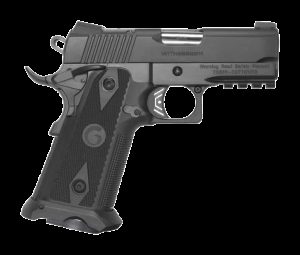
Girsan Witness2311 ($699+)
This is the comparison that actually matters at this money, and the page was missing it. The EAA/Girsan Witness2311 is the other genuinely cheap double-stack 1911, and at $699.99 it lands within about thirty-five dollars of the Tisas. Girsan runs a 3.40in compact and offers it in .45 ACP at 11+1 as well as 9mm, so it goes smaller than the Tisas Duty does.
The Tisas answers with a longer barrel, a forged steel frame and the Duty and Night Stalker variants. If you want the smallest cheap 2011-pattern gun, look at the Girsan. If you want the most gun for the money, the Tisas is still the pick. For Girsan’s single stack side of the range, see our Girsan MC1911 review.


Kimber 2K11 ($1,649+)
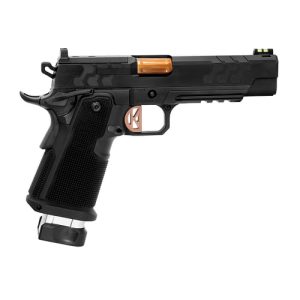
The Kimber is the finish-quality benchmark in the mid bracket and it is a genuinely handsome gun. It is also two and a half times the price of the Tisas and built for competition rather than for someone getting into the platform.
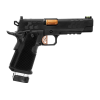
Staccato HD ($2,299+)
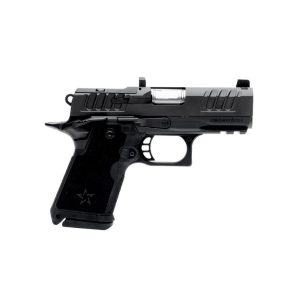
Worth naming even though the comparison is almost silly, because Staccato is the gun everyone measures the platform against. It costs nearly four times as much and it earns a good deal of that with a duty record, a support network and a trigger the Tisas cannot approach.
What it does not do is make the Tisas pointless. Very few people shoot well enough for the difference to show on paper, and the gap in raw capability is far smaller than the gap in price. Our best Staccato pistols guide covers the range if that is where you are heading.
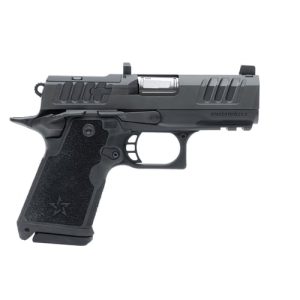

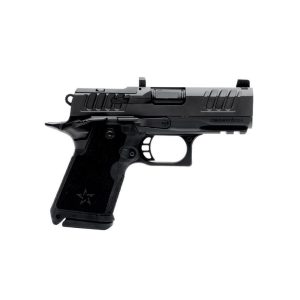
Verdict: nothing else gets you into a forged steel double stack 1911 for under seven hundred dollars. The Tisas wins its bracket by default because it created the bracket, and it happens to be a decent gun as well.
Technical Deep Dive
Frame and Slide
Both forged from 4140 carbon steel rather than cast or billet. Forging aligns the grain structure and is what the expensive guns use, so this is the single most important thing Tisas did not cheap out on. The QPQ treatment underneath the Cerakote adds surface hardness and corrosion resistance, which matters more on a working gun than on a safe queen.
Fire Control
No MIM and no cast parts, which is unusual at this price and is the other place Tisas spent money. MIM parts are not automatically bad, but machined parts wear more predictably and are easier to fit replacements to. The trigger itself is the weak point, not the metal it is made from.
Rail and Optic Cut
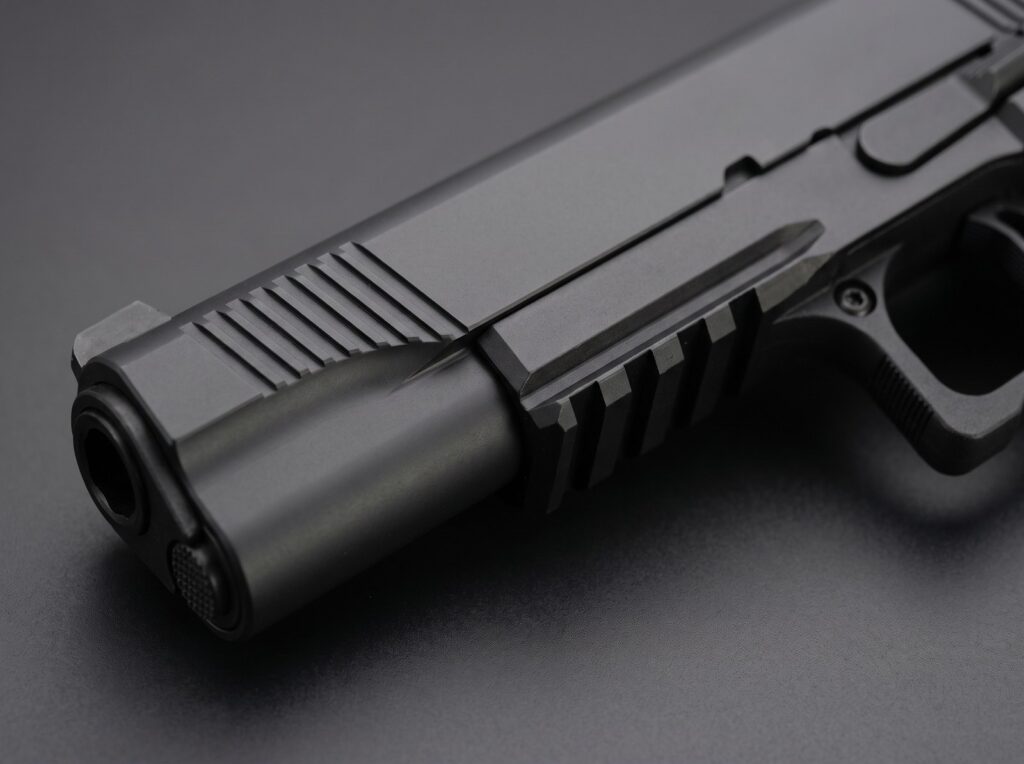
The full-length dust cover rail takes a standard light, and the optics ready versions cut the slide directly rather than making you buy a plate. On a gun at this price, having both is more than you should reasonably expect.
| Component | Specification | Benefit |
| Frame | Forged 4140 carbon steel | The metallurgy of guns costing triple |
| Slide | Forged 4140, QPQ under Cerakote | Hard wearing, corrosion resistant |
| Fire control | No MIM, no cast parts | Predictable wear, easy to upgrade |
| Dust cover | Full-length accessory rail | Takes a standard weapon light |
| Pattern | Standard 2011 dimensions | The whole aftermarket already fits |
| Capacity | 17+1 | Competitive with guns at triple the price |
Upgrades Worth Making
This is the rare gun where upgrading actually makes sense, because the expensive part is already right and the cheap parts are the ones holding it back. Spend two hundred dollars in the right places and it shoots close to guns costing three times as much.
| Upgrade | What to Get | Why | Cost |
| Trigger | Standard 2011 pattern trigger and sear | The single biggest improvement available | $90 to $180 |
| Red dot | Enclosed emitter on the OR slide | Cheapest real accuracy gain | $250 to $650 |
| Magazines | Two or three spares | One in the box is not enough | $45 to $70 each |
| Recoil spring | Fresh spring at 3,000 rounds | Cheap insurance on a working gun | $15 to $25 |
Known Issues and Things to Check
- Break-in is real: expect stoppages in the first couple of hundred rounds. Run it wet and shoot through it before judging.
- Trigger out of the box: gritty with noticeable creep. It improves with use and improves a lot more with a replacement.
- Magazine cost and supply: spares run forty five to seventy dollars and are not on every shelf. Order them with the gun.
- Finish wear: the Cerakote is applied for protection rather than looks and will show holster and edge wear early. Cosmetic only.
- Model naming: Duty, Carry, B9R and DS get used interchangeably by retailers. Check the barrel length in the listing rather than trusting the name.
Who Should NOT Buy This Gun
- The competition shooter: the trigger will cost you time on a stage. Buy a Kimber 2K11 or a Bul Armory SAS II TAC if you shoot on a timer.
- Anyone who wants it perfect out of the box: this gun expects a break-in and rewards a trigger job. If that sounds like homework, get a Springfield Prodigy.
- The buyer chasing fit and finish: nobody polished anything here. The Kimber 2K11 is the gun to look at if you want it to be beautiful.
- Someone who needs it for daily carry today: the 5in Duty is a lot of gun on a belt. Get the 4.25in Carry DS instead, or a compact striker fired pistol.
- Anyone new to single action carry: this rides cocked and locked. Get training on a thumb safety before you carry one, whatever the price tag says.
Final Verdict
The Tisas 1911 Duty DS is the most important gun in the 2011 segment right now, and it is not the best one. Those two things are both true. It dragged the entry price for a forged steel double stack down to under seven hundred dollars, and every other maker has had to answer for it since.
What you get is honest. Good steel, no MIM, a rail, an optics cut and seventeen rounds, wrapped in a finish and a trigger that tell you exactly where the savings came from. Shoot it through the break-in, put a trigger in it if you want, and you have a gun that does most of what the expensive ones do.
Buy it if you are curious about the platform, if you want a project, or if seven hundred dollars is simply where your budget stops. If you can stretch, the Bul Armory SAS II is the better gun by a clear margin. See where both sit in our best 2011 pistols guide, or start with 1911 vs 2011 if you are still deciding whether the platform suits you at all.
Final Score: 8.2/10. Not the best 2011, but the one that changed what a 2011 costs, and still the cheapest honest way in.
FAQ: Tisas 1911 Duty DS
Is the Tisas 1911 Duty DS any good?
For the money it is remarkable. Frame and slide are forged 4140 carbon steel with no MIM or cast parts, which is what guns costing three times as much use. The trigger and the finish are where the savings show, and both are fixable or liveable.
How much is a Tisas 1911 Duty DS?
Street price starts around $674, with the 5in Duty and the 4.25in Carry both in that region. The threaded-barrel Night Stalker and the compensated DS Comp models run $810 to $985. Use the live pricing on this page for current retailer prices.
Is the Tisas DS a real 2011?
Yes. It is a genuine double stack 1911 built to standard 2011 pattern dimensions, which means triggers, grips, sights and other parts made for the platform drop straight in. That compatibility is a big part of why it is worth buying.
Does the Tisas Duty DS need a break-in?
Yes, and you should plan for it. Expect a handful of failures to go fully into battery inside the first 200 rounds, then clean running after that. Run it wet early. Judging one on its first magazine is the most common mistake buyers make.
Tisas Duty DS or Springfield Prodigy?
If your budget genuinely reaches $1,235, the Prodigy is the better gun on trigger, finish and warranty support. If it does not, the Tisas gets you the same platform and manual of arms for roughly half. There is no wrong answer, only a budget.
5,743+ Gun & Ammo Deals
Updated daily from 200+ top retailers. Filter by category, caliber, action type, and price.
Related Guides