

Last updated and checked October 27, 2026 · By Nick Hall, home defense instructor who has set up and tested every gun category on this list
Some of the links below are affiliate links, meaning at no additional cost to you, we may earn a commission if you click through and make a purchase.
- Treat every gun as loaded
- Point the muzzle in a safe direction
- Keep your finger off the trigger until you’re ready to shoot
- Know your target and what’s beyond
Quick Answer: For most American homeowners, a 12-gauge pump shotgun like the Mossberg 500 or Winchester SXP Defender is the best home defense gun in 2026. It delivers devastating stopping power and simple operation, and both sell for under $350 in our feed.
If you can handle a long gun, the strongest alternative is an AR-15 in 5.56, which penetrates fewer interior walls than 9mm pistol rounds when loaded with defensive ammo like Hornady TAP. The pistol option for tight spaces is a compact 9mm like the Glock 19 Gen 6 with a weapon light.
The biggest mistake new owners make is staging their gun unloaded “for safety,” since a defensive gun that takes 30 seconds to load is useless under stress. Train transitions, light activation, and reloads with the gun you actually keep ready.
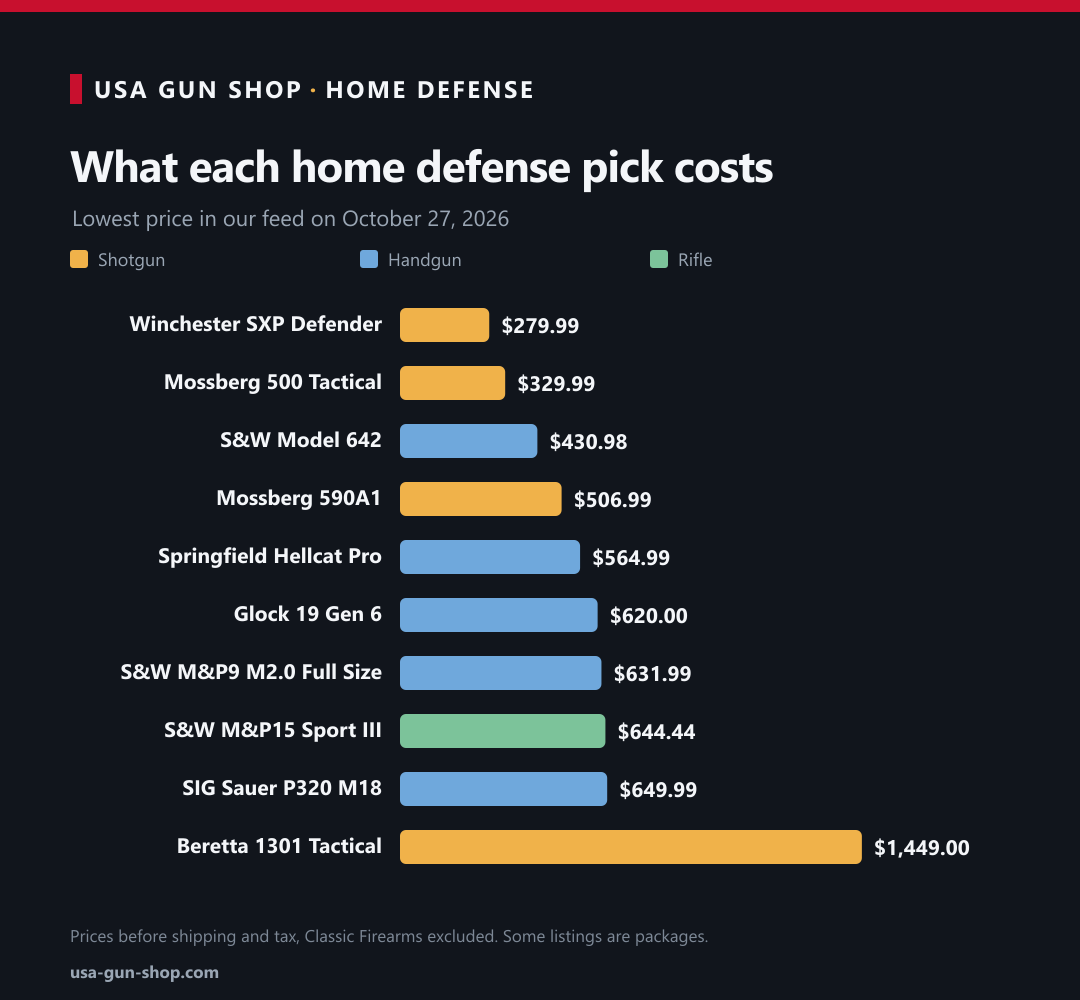
Table of Contents
How we tested: Every pick here is ranked against our testing methodology. Minimum round counts, accuracy and reliability protocols, the failures that disqualify a gun.
Mossberg 590A1
| Category | Rating |
|---|---|
| Reliability | 5/5 |
| Stopping Power | 5/5 |
| Capacity | 4/5 |
| Ease of Use | 3.5/5 |
| Value | 4.5/5 |
Pros
- Military-spec heavy-wall barrel and metal trigger guard
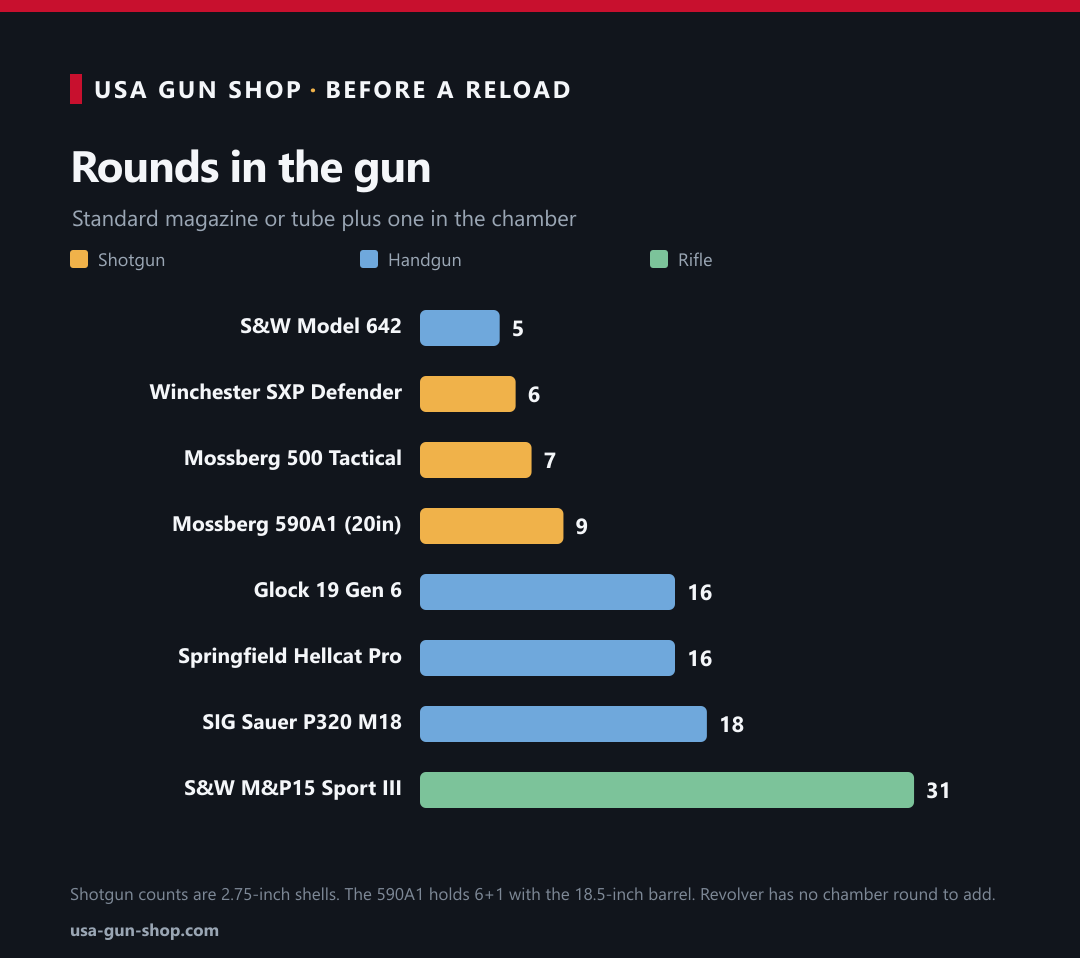
- Up to 8+1 with the 20in barrel
- Bayonet lug and ghost ring sights standard on many models
Cons
- Heavier than most pump shotguns at 7.25 lbs
- Recoil can be punishing for smaller shooters
- Requires practice to run the pump smoothly under stress
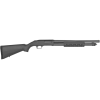
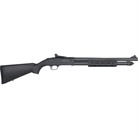
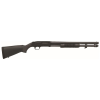
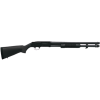
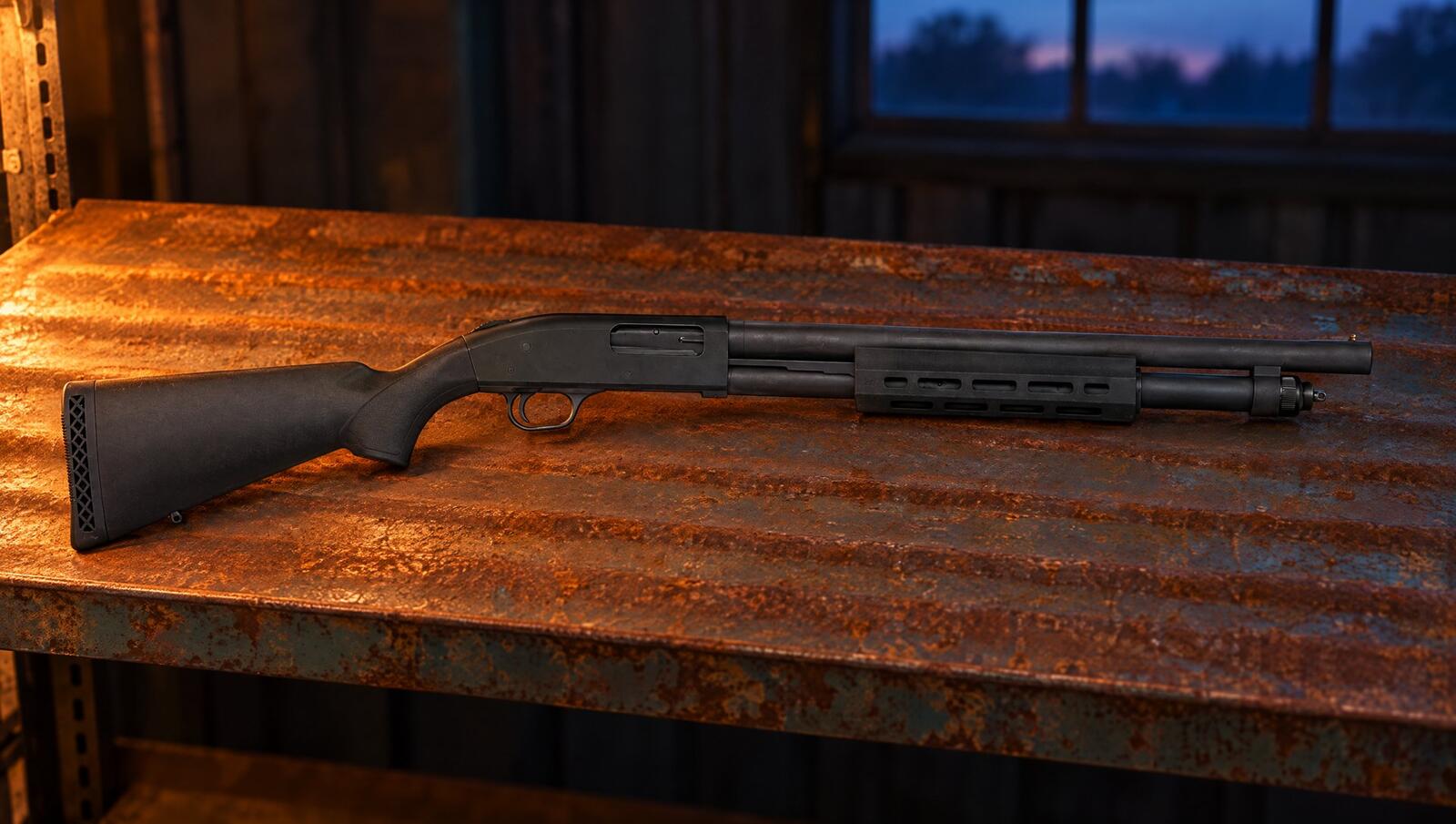
The Mossberg 590A1 is the only pump shotgun that passed U.S. military MIL-SPEC 3443 testing. That is not a marketing gimmick. The heavy-wall barrel, metal trigger guard, and metal safety button are all upgrades over the standard 500 series. I have run mine hard in shotgun courses and it eats everything from light birdshot to full-power slugs without complaint.
For home defense specifically, the 590A1 brings massive terminal performance. A load of 00 buckshot at indoor distances is about as effective as it gets. The top-mounted safety is intuitive and ambidextrous, and the 20-inch model holds 8+1 (6+1 on the 18.5-inch M-LOK version), plenty of rounds before needing to reload.
The downsides are weight and recoil. At 7.25 pounds unloaded (heavier with a full tube), it is not the easiest gun to maneuver in tight hallways. You also need to train the pump stroke until it is second nature. Short-stroking under stress is a real failure mode. But if you put the time in, this is the most capable home defense weapon on this list.
Best For: Experienced shooters who want maximum stopping power and military-proven reliability in a pump shotgun platform.
Glock 19 Gen 6
| Category | Rating |
|---|---|
| Reliability | 5/5 |
| Stopping Power | 3.5/5 |
| Capacity | 4/5 |
| Ease of Use | 5/5 |
| Value | 5/5 |
Pros
- Legendary reliability across millions of rounds worldwide
- Massive aftermarket for lights, sights, and holsters
- 15+1 capacity in a compact frame
Cons
- Grip ergonomics are polarizing (love it or hate it)
- Priciest of the striker pistols here
- Plastic sights from the factory need upgrading
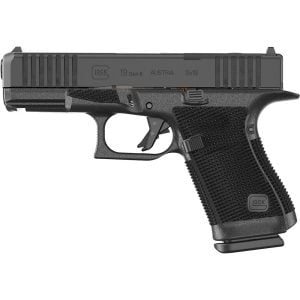
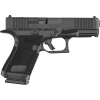
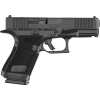
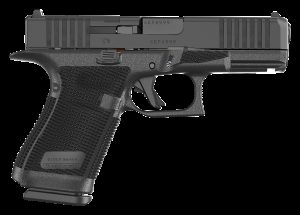
The Glock 19 barely needs an introduction. It is the most popular defensive handgun in the world for a reason. In my experience, the Gen 6 improvements (palm swell and new grip texture, a flat-faced trigger, and an optic-ready slide) make it the best version yet. I have personally put thousands of rounds through Gen 5 Glocks with zero malfunctions across multiple examples, and the Gen 6 is a step up.
For home defense, the G19 hits a sweet spot. It is small enough to store in a bedside safe but large enough to shoot well under stress. The 15-round magazine gives you solid capacity, and 9mm with modern hollow points like Federal HST is an excellent defensive round. The accessory rail accepts every major weapon light on the market.
If you only own one handgun, this is the one I would recommend. It does everything well and nothing poorly. The aftermarket support means you can upgrade sights, add a light, and find training holsters without any trouble. It is boring in the best possible way.
Best For: Anyone who wants one handgun that does everything. The default recommendation for first-time defensive handgun buyers.

Smith & Wesson M&P 2.0 Full Size
| Category | Rating |
|---|---|
| Reliability | 5/5 |
| Stopping Power | 3.5/5 |
| Capacity | 4.5/5 |
| Ease of Use | 4.5/5 |
| Value | 5/5 |
Pros
- Aggressive grip texture locks into your hand
- 17+1 capacity beats most competitors
- Optics-ready models available at no premium
Cons
- Trigger has a hinge that some shooters dislike
- Bigger grip than the Glock 19
- Aftermarket is large but still trails Glock

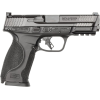
The M&P 2.0 is the gun that made me stop automatically recommending Glocks to everyone. The grip texture on the 2.0 is genuinely excellent. It is aggressive enough to lock into your hand even when wet, without being so rough that it tears up your clothing. For a home defense gun you might grab in a panic, that grip makes a real difference.
The 17+1 capacity in the full-size model gives you two extra rounds over the Glock 19 (some current optic-ready versions ship with 15-round magazines), and the flat-face trigger is a noticeable upgrade over the first-generation M&P. Smith & Wesson also offers optics-ready versions at essentially the same price point, so you can add a red dot without milling the slide.
I think this is the best value in full-size defensive handguns right now. You get a proven, reliable platform with excellent ergonomics and modern features from $631.99 in our feed. If the Glock 19 grip angle does not work for you, the M&P 2.0 should be your next stop.
Best For: Shooters who want a full-size, high-capacity defensive pistol with outstanding grip ergonomics and optics-ready capability.

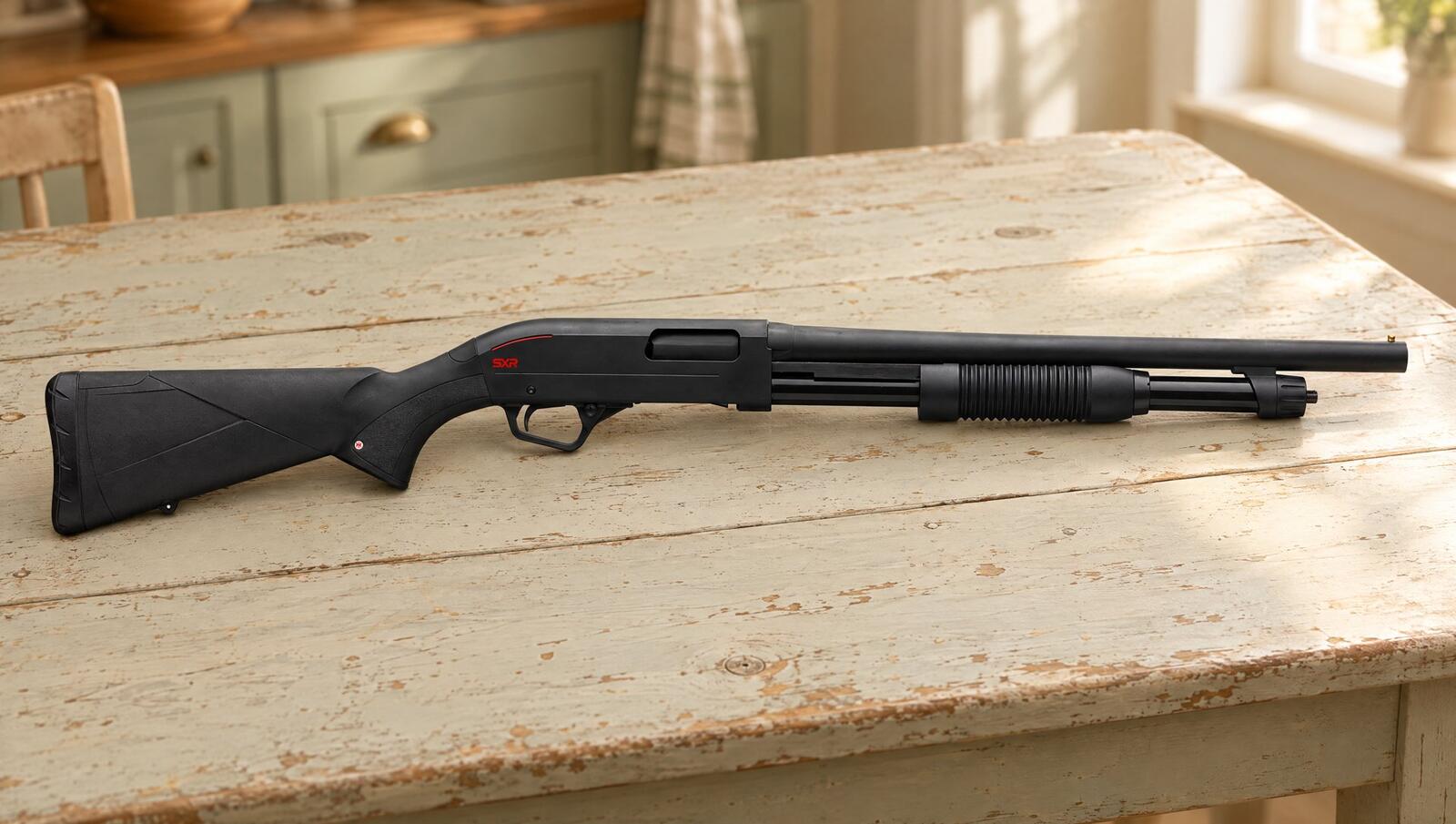
Winchester SXP Defender
| Category | Rating |
|---|---|
| Reliability | 4.5/5 |
| Stopping Power | 5/5 |
| Capacity | 3.5/5 |
| Ease of Use | 4/5 |
| Value | 5/5 |
Pros
- Fastest-cycling pump action we have run
- Under $300 at the lowest listing
- Chrome-plated chamber and bore
Cons
- 5+1 capacity is the lowest here
- Crossbolt safety, not a top tang
- Bead sight only

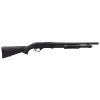
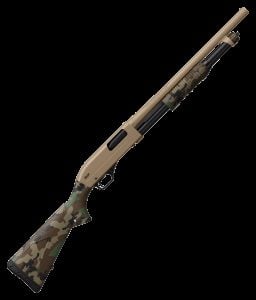
This slot used to be the Remington 870 Express. RemArms replaced the Express with the 870 Fieldmaster, a field gun, and our feed has one stray Express Tactical left, so I moved the budget pump spot to the gun I would actually buy today. If you find a clean used 870 Express, inspect the bore and chamber, and it is still a fine choice.
The Winchester SXP Defender is the budget pump that does not feel like one. Winchester calls it an inertia-assisted action, and in practice the slide snaps back faster than any other pump I have run, which makes fast follow-up shots easier for newer shooters. It has an 18-inch cylinder-bore barrel, a 5+1 magazine for 2.75-inch shells and weighs 6 lbs 8 oz, all from Winchester’s spec sheet.
The chamber and bore are hard chrome-plated, the trigger group drops out for cleaning, and the receiver is drilled and tapped. Winchester lists it at $389.99, and our feed has it from $279.99. Add a forend light and you have a serious home defense shotgun for well under $500.
What you give up is capacity and the control layout. Five in the tube is the lowest of the shotguns here, and the crossbolt safety behind the trigger is slower than the Mossberg top safety for most people. Train with it until the safety is automatic.
Best For: Budget buyers who want the smoothest, fastest pump action at the lowest price on this list.

SIG Sauer P320 M18
| Category | Rating |
|---|---|
| Reliability | 5/5 |
| Stopping Power | 3.5/5 |
| Capacity | 5/5 |
| Ease of Use | 4.5/5 |
| Value | 4/5 |
Pros
- Won the U.S. Military Modular Handgun System contract
- Modular chassis lets you swap grip modules and slide assemblies
- Optics-ready with SIGLITE night sights from the factory
Cons
- Higher price point than Glock 19 or M&P 2.0
- Early P320 models had drop-safety concerns (resolved in current production)
- Coyote Tan finish shows wear quickly
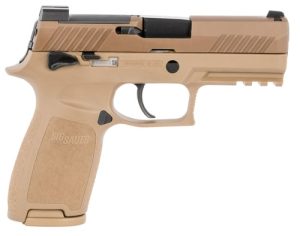
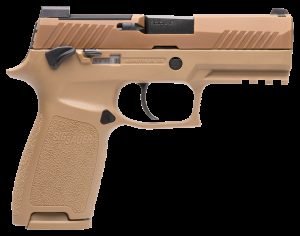
The SIG P320 M18 is the compact version of the gun that won the U.S. Army’s Modular Handgun System contract, replacing the Beretta M9 after decades of service. That contract win is not just a talking point. It means this pistol went through some of the most rigorous testing any handgun has ever faced. The M18 is the version issued to the Marine Corps, Navy, and Air Force.
The modular chassis system is the M18’s secret weapon for home defense. The serialized fire control unit pops out of the grip module, meaning you can swap to different frame sizes without buying a new gun. Start with the carry grip module and later switch to a full-size if you want. You can also swap slides, which is a level of versatility no other platform offers.
With 17+1 standard (or 21+1 with extended mags), optics-ready slide, and SIGLITE night sights from the factory, the M18 comes ready for defensive duty without needing upgrades. The price premium over the Glock 19 is justified by the included features alone.
Best For: Shooters who value military pedigree and want the most modular, adaptable handgun platform available.

Smith & Wesson M&P15 Sport III
| Category | Rating |
|---|---|
| Reliability | 4.5/5 |
| Stopping Power | 4.5/5 |
| Capacity | 5/5 |
| Ease of Use | 4/5 |
| Value | 5/5 |
Pros
- 30+1 capacity is unmatched in home defense
- 5.56 with proper ammo has less overpenetration than buckshot or pistol rounds
- Lightweight at 6.45 lbs, easy to accessorize
Cons
- Longer overall length is harder to maneuver indoors
- Muzzle blast and flash indoors without a suppressor is severe
- Legal restrictions in some states limit features or capacity
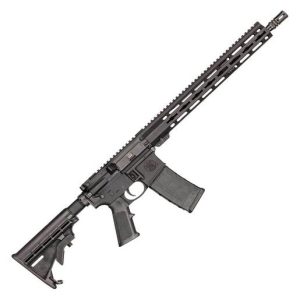
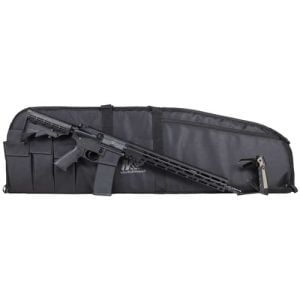
The AR-15 has become one of the most recommended home defense platforms, and for good reason. The M&P15 Sport III is the entry-level AR-15 that actually works. I have seen these rifles run reliably through thousands of rounds in training classes, keeping pace with guns costing twice as much. Smith & Wesson nailed the essentials and skipped the fluff.
There is a counterintuitive fact about 5.56 NATO for home defense: with proper ammunition like Hornady TAP, it actually penetrates fewer interior walls than 9mm or 00 buckshot. The lightweight, high-velocity projectile tends to fragment and lose energy faster after hitting barriers. Combined with 30+1 capacity and low recoil, the AR-15 is genuinely one of the most effective home defense tools available.
The trade-off is size. A 16-inch barreled rifle with a stock is harder to maneuver in hallways and around corners than a handgun. The muzzle blast indoors without a suppressor is also brutal, so ear protection in your bedside setup is worth considering. If you can work around the length, the Sport III is a lot of capability from $644.44 in our feed.
Best For: Homeowners with space to maneuver who want maximum capacity, low recoil, and excellent terminal performance with the right ammo.

Mossberg 500 Tactical
| Category | Rating |
|---|---|
| Reliability | 5/5 |
| Stopping Power | 5/5 |
| Capacity | 3.5/5 |
| Ease of Use | 4/5 |
| Value | 5/5 |
Pros
- Ambidextrous top-mounted safety is the best in the business
- Lighter than the 590A1 at 6.75 lbs
- Legendary reliability across millions of examples
Cons
- Plastic trigger guard and safety (vs. metal on 590A1)
- 6+1 capacity is adequate but not outstanding
- Bead sight only on most tactical models
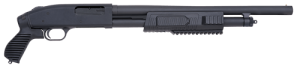
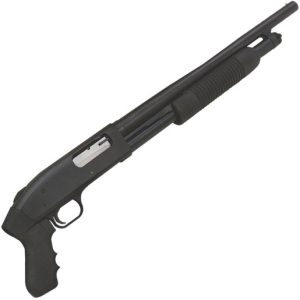
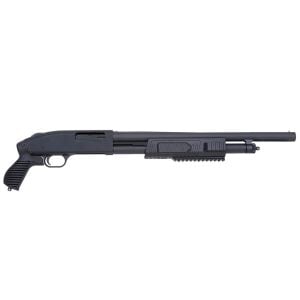
The Mossberg 500 is the 590A1’s little brother, and for most homeowners it is all the shotgun they will ever need. The action is identical, the top-mounted ambidextrous safety is the same, and the reliability is every bit as good. What you give up is the heavy-wall barrel and metal furniture of the 590A1. For home defense, that trade-off rarely matters.
I actually prefer the 500 Tactical over the 870 for most buyers. The Mossberg safety position (top of receiver, behind the bolt) is faster and more intuitive than the Remington’s cross-bolt safety. It also works equally well for left-handed shooters without any modifications. The slightly lighter weight compared to the 590A1 makes it easier to handle for a wider range of shooters.
From $329.99 in our feed, the 500 Tactical is one of the best values in home defense. Add a Streamlight or SureFire forend light and you have a serious defensive shotgun for well under $700. If the 590A1’s price tag gives you pause, the 500 Tactical delivers 90% of the performance for significantly less money.
Best For: Budget-minded buyers who want Mossberg’s excellent safety design and pump-action reliability without the 590A1’s price premium.

Springfield Armory Hellcat Pro
| Category | Rating |
|---|---|
| Reliability | 4.5/5 |
| Stopping Power | 3.5/5 |
| Capacity | 4/5 |
| Ease of Use | 4/5 |
| Value | 4/5 |
Pros
- 15-round capacity in a compact package is impressive
- Tritium/luminescent front sight standard
- Optics-ready with included cover plate
Cons
- Snappier recoil than larger pistols due to light weight
- Shorter sight radius makes precision shooting harder
- Smaller grip may not fit larger hands comfortably
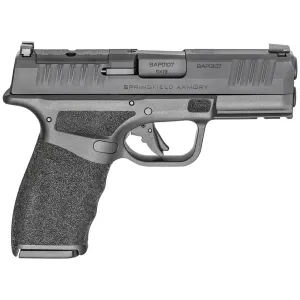
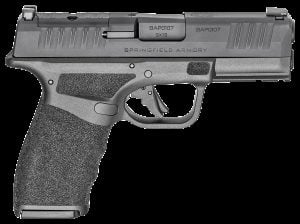
The Hellcat Pro fills an interesting niche for home defense. It packs 15 rounds into a frame that is noticeably smaller than the Glock 19, which means it fits easily in a compact bedside safe while still giving you serious capacity. The tritium and luminescent front sight is a nice touch for low-light scenarios, which is exactly when you are most likely to need a home defense gun.
I have found the Hellcat Pro to be surprisingly shootable for its size. The grip texture is good, the trigger is decent, and the recoil is manageable even with +P defensive loads. It is not as pleasant to shoot as a full-size pistol at the range, but for a gun that pulls double duty as a nightstand gun and a carry piece, that is a fair trade.
The real selling point here is versatility. You can keep the Hellcat Pro in your bedside safe at night and carry it concealed during the day. One gun, one set of training habits, one light and holster setup. For people who do not want to buy separate guns for home defense and concealed carry, this is a strong option.
Best For: Shooters who want one gun for both home defense and concealed carry, with maximum capacity in a compact frame.

Smith & Wesson Model 642
| Category | Rating |
|---|---|
| Reliability | 5/5 |
| Stopping Power | 3/5 |
| Capacity | 2/5 |
| Ease of Use | 5/5 |
| Value | 4/5 |
Pros
- Absolutely foolproof operation: point and pull the trigger
- Hammerless design eliminates snag risk
- Will fire even if pressed against a target (no slide to push out of battery)
Cons
- Only 5 rounds with no quick reload option
- Heavy double-action trigger requires practice
- Limited stopping power compared to 9mm options
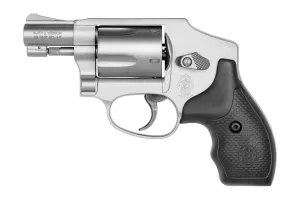

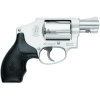
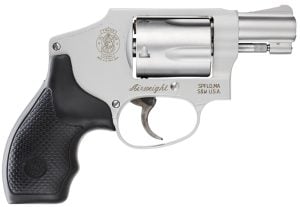
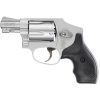
I know what you are thinking: five rounds of .38 Special in 2026? Hear me out. The Model 642 is on this list for one specific reason: it is the simplest defensive firearm you can buy. There is no safety to fumble, no slide to rack, no magazine to insert. You pick it up and pull the trigger. For someone who is not a gun enthusiast but wants reliable home protection, that simplicity has real value.
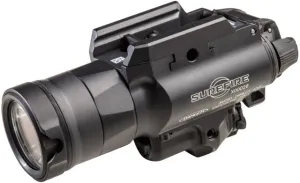
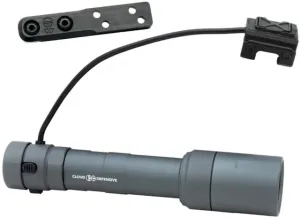
Lights for a Home Defense Gun
Best-scored accessories across 200+ retailers · Updated every 4 hours




The hammerless (technically shrouded hammer) design means there is nothing to snag. The double-action-only trigger is heavy, which some people see as a safety feature in a high-stress situation. A revolver also will not malfunction if you limp-wrist it under stress, which is a real concern with semi-automatics for inexperienced shooters.
The obvious downside is capacity. Five rounds of .38 Special +P is adequate but not generous. If you choose this route, load it with quality defensive ammo like Speer Gold Dot Short Barrel .38 Special +P and practice with that heavy trigger regularly. The 642 is not the most capable gun on this list, but it might be the most appropriate one for certain households.
Best For: Non-enthusiast shooters who prioritize simplicity and fool-proof operation above all else. Also excellent as a backup or secondary home defense gun.

Beretta 1301 Tactical
| Category | Rating |
|---|---|
| Reliability | 4.5/5 |
| Stopping Power | 5/5 |
| Capacity | 4/5 |
| Ease of Use | 5/5 |
| Value | 3/5 |
Pros
- BLINK gas system cycles 36% faster than competitors
- Significantly reduced felt recoil compared to pump shotguns
- Enlarged controls and oversized bolt release
Cons
- Costs more than twice a 590A1
- Requires proper break-in period for reliable cycling
- Fewer aftermarket options than Mossberg or Remington platforms
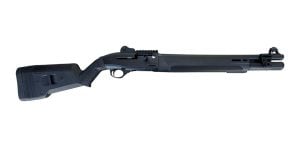
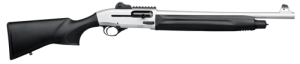
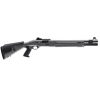
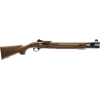
The Beretta 1301 Tactical is the premium pick on this list, and it earns every dollar of that price tag. Beretta’s BLINK gas operating system cycles 36% faster than competing semi-auto shotguns, which translates to faster follow-up shots and noticeably reduced felt recoil. If you have ever fired a pump shotgun and thought “I wish this kicked less,” the 1301 is the answer.
For home defense, a semi-auto shotgun eliminates the single biggest failure point of pump shotguns: short-stroking under stress. You pull the trigger and the gun cycles itself. The enlarged loading port, oversized bolt release, and aggressive controls are all designed for fast, intuitive operation in high-stress situations. I have run the 1301 in several shotgun courses and it consistently runs circles around pump guns in split times.
The price is the obvious barrier. From $1,449.00 in our feed for the current Mod 2, the 1301 costs more than four times what a Mossberg 500 Tactical runs. You also need to run 50 to 100 rounds through it for a proper break-in before trusting it for defense. But once broken in, this is the most capable shotgun on the list for fast, accurate follow-up shots with reduced fatigue and recoil.
Best For: Serious shooters who want the fastest, softest-shooting defensive shotgun available and are willing to pay a premium for it.
Handgun vs Shotgun vs Rifle for Home Defense
This is the debate that never ends in the firearms community, and honestly, there is no single right answer. Each platform brings genuine advantages and genuine trade-offs. The best choice depends on your home layout, your training level, who else lives in your house, and your local laws.
Handguns are the most practical option for most people. They are compact enough to store in a quick-access bedside safe, they leave one hand free to open doors or grab a phone, and they are the easiest platform to operate in tight spaces. The trade-off is reduced terminal performance compared to long guns. Modern 9mm hollow points like Federal HST are effective, but a handgun will never match the raw stopping power of a 12-gauge shotgun or a rifle. Handguns also require more training to shoot accurately under stress because the short sight radius amplifies every mistake.
Shotguns offer the most devastating terminal performance at home-defense distances. A load of 00 buckshot delivers roughly the equivalent of nine .33-caliber projectiles simultaneously. The pump-action racking sound is often cited as a deterrent, though I would never rely on that. The downsides are real: limited capacity (6 to 9 rounds on the pumps here), heavy recoil that can be punishing for smaller-framed shooters, and the length of a long gun makes navigating hallways and corners difficult.
The AR-15 has become a genuinely strong home defense contender in recent years. With 30-round capacity, minimal recoil, and excellent terminal performance, it checks a lot of boxes. The counterintuitive truth is that 5.56 NATO with proper defensive ammunition actually overpenetrates interior walls less than 9mm or buckshot. The downsides mirror the shotgun: overall length makes indoor maneuvering tough, and the muzzle blast inside a house without ear protection can cause permanent hearing damage.
My general recommendation: if you train regularly and are comfortable with long guns, a shotgun or AR-15 will give you more capability. If you want something practical that lives in a bedside safe and can be operated with one hand, go with a quality 9mm handgun and a good weapon light. There is no wrong answer among these three platforms as long as you train with whatever you choose.
Home Defense Ammo
Your gun is only as good as the ammo you load in it. For home defense, you need ammunition specifically designed to expand on impact and reduce overpenetration through walls. Range ammo (full metal jacket) is the wrong choice. FMJ punches clean holes and keeps going through drywall, studs, and into rooms you did not intend to shoot into.
For 9mm handguns, Federal HST 124gr or 147gr is the gold standard. Both weights offer consistent expansion, deep penetration within the FBI’s 12 to 18-inch window, and excellent barrier performance. The 147gr loads are slightly softer shooting and tend to be more accurate in most guns. Check our best 9mm ammo guide for a full breakdown.
For 12-gauge shotguns, Federal FliteControl 00 Buck is the clear winner. The FliteControl wad keeps the pellet pattern significantly tighter than standard buckshot at indoor distances, which means more pellets on target and better accountability for every projectile. You can find more shotgun ammo recommendations in our best shotgun ammo for home defense guide.
For 5.56 AR-15s, Hornady TAP 55gr or 75gr is purpose-built for defensive use. These loads are designed to fragment on impact, which delivers excellent terminal performance while reducing the risk of overpenetration through interior walls. Whatever platform you choose, buy at least 200 rounds of your defensive ammo and run it through your gun to confirm reliable feeding and function. Check our ammo buying guide for more on choosing the right ammunition.
Deals of the Day
Today's best discounts · Updated 3x daily
Gun Deals
See All →

Ammo Deals
See All →



Essential Accessories
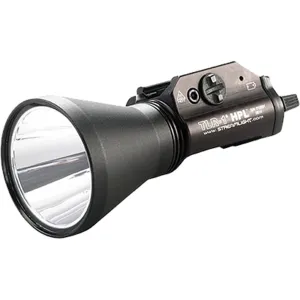
A weapon-mounted light is the single most important accessory for any home defense gun. You need to positively identify your target before pulling the trigger, and fumbling with a handheld flashlight while trying to operate a firearm is a recipe for disaster. For handguns, the Streamlight TLR-7A and SureFire X300U are the standards. For shotguns and rifles, the Streamlight HL-X and SureFire Scout series are proven options. Budget at least $100 to $150 for a quality weapon light. Do not cheap out on this.
For long guns, a sling is the second most important accessory. A properly set up two-point sling lets you retain the weapon while freeing both hands to open doors, call 911, or move family members. If you live in a state where suppressors are legal and you have the budget, a suppressor on a home defense gun is a genuine quality-of-life upgrade. Firing an unsuppressed gun indoors can cause permanent hearing damage, and in a real emergency you are not going to reach for ear protection first. A suppressed 9mm or 5.56 brings the report down to hearing-safe or near hearing-safe levels.
For lights and slings I shop Palmetto State Armory for fast delivery and good prices, and Optics Planet when I want the biggest range.
More Home Defense Guides
Facts and Figures: Home Defense Guns by the Numbers
- $279.99. The lowest price on this list, for the Winchester SXP Defender in our feed on October 27, 2026. The Beretta 1301 Tactical Mod 2 starts at $1,449.00, more than five SXPs.
- Nine pellets. A standard 2.75-inch 00 buckshot shell carries nine .33-caliber pellets, which is why a shotgun hits harder than any handgun here.
- 31 rounds. The M&P15 Sport III holds 30+1, more than five times the 5 rounds in the S&W Model 642.
- About 5.8 pounds. Glock lists the G19 Gen 6 trigger pull at 26 newtons. Heavy enough to be deliberate, light enough to shoot well under stress.
- 6 lbs 8 oz. Winchester’s listed weight for the 12-gauge SXP Defender, the lightest shotgun here.
- One discontinued. The Remington 870 Express held this list’s budget pump slot until RemArms replaced it with the 870 Fieldmaster.
Frequently Asked Questions
What is the best gun for home defense?
There is no single best gun for home defense because the right choice depends on your experience level, home layout, and who else lives in the house. For most people, a reliable 9mm handgun like the Glock 19 with a weapon light is the most practical option. Experienced shooters may prefer a shotgun like the Mossberg 590A1 or an AR-15 for their superior terminal performance and capacity.
Is a shotgun or handgun better for home defense?
Shotguns offer significantly more stopping power and do not require the same level of marksmanship accuracy at close range. However, handguns are easier to store securely, operate with one hand, and maneuver in tight spaces. If you train regularly with long guns, a shotgun gives you more capability. If practicality and ease of use are priorities, a handgun is the better choice.
What caliber is best for home defense?
9mm is the most popular and practical caliber for home defense handguns. Modern hollow point ammunition like Federal HST makes 9mm an effective defensive round with manageable recoil and high capacity. For shotguns, 12 gauge with 00 buckshot is the standard. For rifles, 5.56 NATO with defensive loads like Hornady TAP offers excellent performance with surprisingly low wall overpenetration.
Do I need a weapon light for home defense?
Yes. A weapon-mounted light is the most important accessory on any home defense gun. You must positively identify your target before firing, and most home defense situations happen in low light or darkness. A quality weapon light like the Streamlight TLR-7A (for handguns) or Streamlight HL-X (for long guns) lets you identify threats without tying up your support hand with a flashlight.
Is an AR-15 good for home defense?
Yes. The AR-15 is one of the most effective home defense platforms available. It offers 30-round capacity, very low recoil, and excellent terminal performance. With proper defensive ammunition like Hornady TAP, 5.56 NATO actually overpenetrates interior walls less than 9mm handgun rounds or 12-gauge buckshot. The main downsides are the overall length (harder to maneuver indoors) and severe muzzle blast without a suppressor.
What ammo should I use for home defense?
Use ammunition specifically designed for defensive use, not full metal jacket range ammo. For 9mm, Federal HST 124gr or 147gr is the industry standard. For 12-gauge shotguns, Federal FliteControl 00 Buck keeps the tightest patterns. For 5.56 AR-15s, Hornady TAP 55gr or 75gr is purpose-built for defensive scenarios. Always test-fire at least 200 rounds of your chosen defensive ammo to confirm reliable feeding in your specific gun.
Is a shotgun or an AR-15 better for home defense?
Each has an edge. A shotgun delivers devastating close-range power but holds fewer rounds and kicks harder; an AR-15 is easier to aim under stress, holds more rounds and, surprisingly, can over-penetrate less with the right load. For a trained defender the AR is more forgiving, while the shotgun maximizes per-shot stopping power.
What is the best caliber for home defense?
For a handgun, 9mm is the sweet spot of capacity, control and proven defensive performance. For a long gun, 5.56 from an AR or buckshot from a 12 or 20-gauge both work well. The best caliber is one you can shoot accurately and fast under stress, and 9mm fits most people best.
Related From UGS
4,718+ Gun & Ammo Deals
Updated daily from 200+ top retailers. Filter by category, caliber, action type, and price.