

Last updated September 2026 · By Nick Hall, who has bought a first gun safe, outgrown it, and helped a good few other people skip that step
Some of the links below are affiliate links, meaning at no additional cost to you, we may earn a commission if you click through and make a purchase.
Quick answer: if you own one handgun, buy the Hornady RAPiD Safe Night Guard. It opens with an RFID tag rather than a code or a fingerprint, the security cable is in the box, and it sits on a nightstand looking like a clock. If you already own rifles, skip the small safes and buy the Liberty Centurion 24. If you own rifles and cannot spend that yet, the Hornady 8-Gun Welded Cabinet locks them away today.
Table of Contents
| Safe | Access | Holds | Fire Rating | Check Price |
|---|---|---|---|---|
| BEST FIRST SAFE Hornady RAPiD Safe Night Guard |
RFID, code or key | 1 handgun | None | Lowest Price ↓ |
| BEST BIOMETRIC Vaultek Barikade Series 2 |
Keypad, optional biometric, key | 1 full-size or 2 compacts | None | Lowest Price ↓ |
| BEST BUDGET GunVault MultiVault GV2050-19 |
No-Eyes keypad or key | Up to 2 handguns | None | Lowest Price ↓ |
| BEST FIRE RATED Hornady Fireproof Keypad Safe |
Keypad or key | Handguns plus documents | 30 min at 1,400F | Lowest Price ↓ |
| BEST FULL SIZE Liberty Centurion 24 |
Electronic lock | 24 long guns | 40 min | Lowest Price ↓ |
| CHEAPEST LONG GUN OPTION Hornady 8-Gun Welded Cabinet |
Barrel key lock | 8 long guns | None | Lowest Price ↓ |
| BEST CONCEALED SnapSafe In-Wall Safe Tall |
Keypad or key | Long guns, vertical | None | Lowest Price ↓ |
| BEST FOR TRAVEL Vaultek LifePod 20 |
Touch keypad or key | 1 handgun up to 9.25in | None | Lowest Price ↓ |
How we tested: Every pick here is ranked against our testing methodology. Minimum round counts, accuracy and reliability protocols, the failures that disqualify a gun. Where we have not shot a specific variant ourselves, we say so in that section.
Your First Gun Safe, and Why It Matters
You bought a gun. Now it needs somewhere to live, and the top shelf of the wardrobe is not it. Neither is a shoebox, a sock drawer or between the mattresses. Every one of those is a hiding place, and a hiding place is something a determined eight-year-old defeats in an afternoon.
The reason to buy a safe is narrower and more useful than “security”. It is to make sure that the only person who can pick up that gun is you, at the moment you decide to. Children, guests, contractors, a teenager’s friends and an opportunist who has five minutes in your bedroom are all solved by the same steel box. Many states also require secure storage by law, and the rules differ enough that they are worth reading for your own.
The mistake almost everyone makes with the first one is buying on features. You do not need an app, a Wi-Fi connection or a fingerprint reader. You need to know how many guns you will own in two years, where the safe is going to sit, and whether you want it fast or hidden. Answer those three and the choice narrows to about two products.
This guide is written for someone starting from zero. If you already know the category, our main gun safe guide and the buyer’s guide go deeper on specifications.
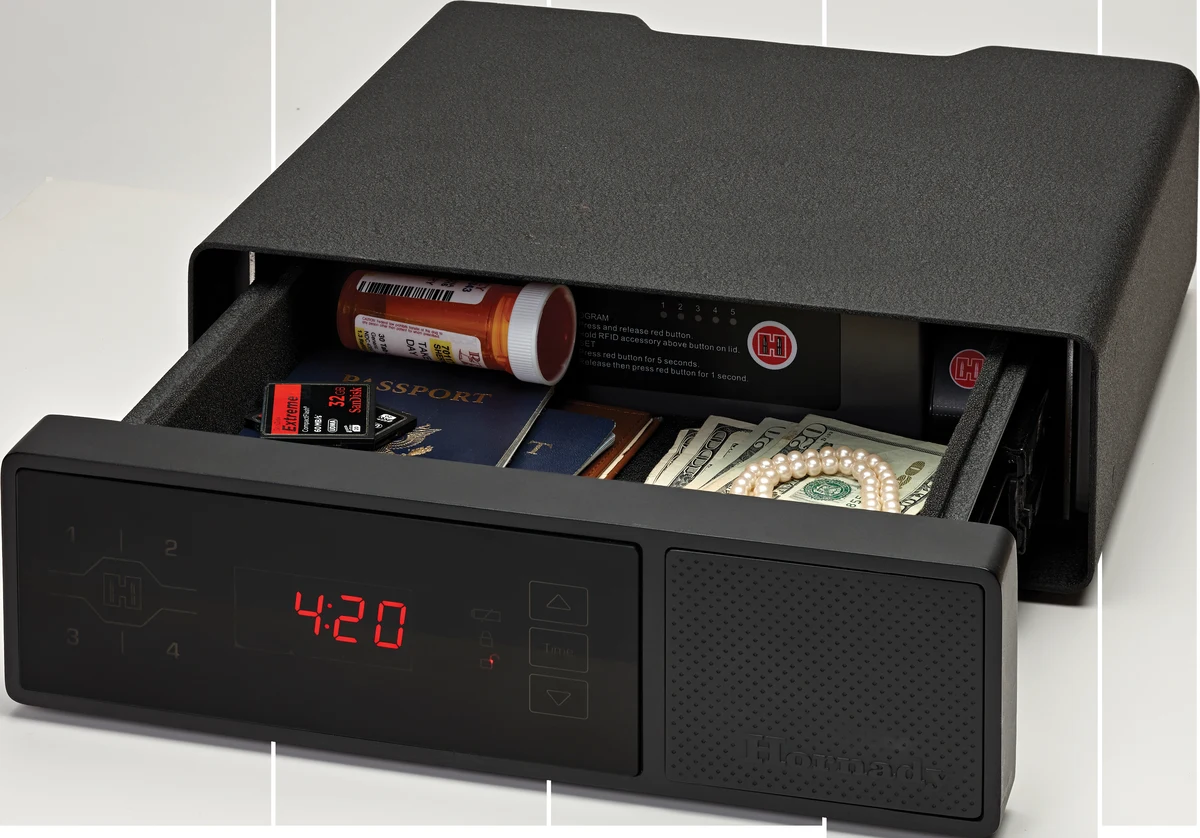
1. Hornady RAPiD Safe Night Guard, Best First Gun Safe
- Item number: 98215
- Type: bedside quick-access safe that reads as a clock
- Access: RFID tag, user-programmed code, mechanical key
- Exterior: 3in x 12in x 10.5in
- Interior: 2.2in x 9.2in x 6.9in
- Weight: 18 lbs
- Power: 12V adapter or four AAA batteries, not included
- In the box: four RFID tags and a 1,500 lb rated security cable
Pros
- Four RFID tags come in the box
- Opens without a code or fingerprint
- Security cable included, no drilling needed
- Two USB ports charge your phone
Cons
- Holds one handgun, no more
- No fire rating at all
- Batteries not included with it
- Reads as a clock, not a safe
Live prices from trusted retailers
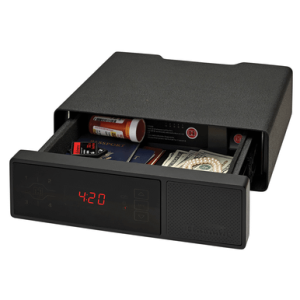
If you own one handgun and you want one safe, buy this one. It sits on a nightstand showing the time, and a visitor reads it as a clock radio rather than as the place the gun lives. In a category where concealment does a lot of the real work, that is worth more than it sounds.
The access method is what makes it a beginner’s safe. There is no code to memorize and no fingerprint to register. Hornady put four RFID tags in the box, in wristband, key fob and stick-on decal form, and any of them opens the drawer when you hold it over the panel. A code and a mechanical key are both there as backups.
The spec that matters most to a first-time buyer is the one nobody mentions: a 1,500 lb rated security cable is included. A safe this light is carried away by a thief who has thirty seconds, and the cable is what stops that, without you drilling into anything. Renters, note that.
Read the interior dimensions before you buy. At 2.2 inches deep it takes one handgun lying flat, and a full-size pistol with a mounted light will be a squeeze. It is a one-gun safe and it does not pretend otherwise. It also has no fire rating, so documents belong somewhere else.
Best For: the first-time owner with a single handgun who wants it secured beside the bed and reachable in the dark.
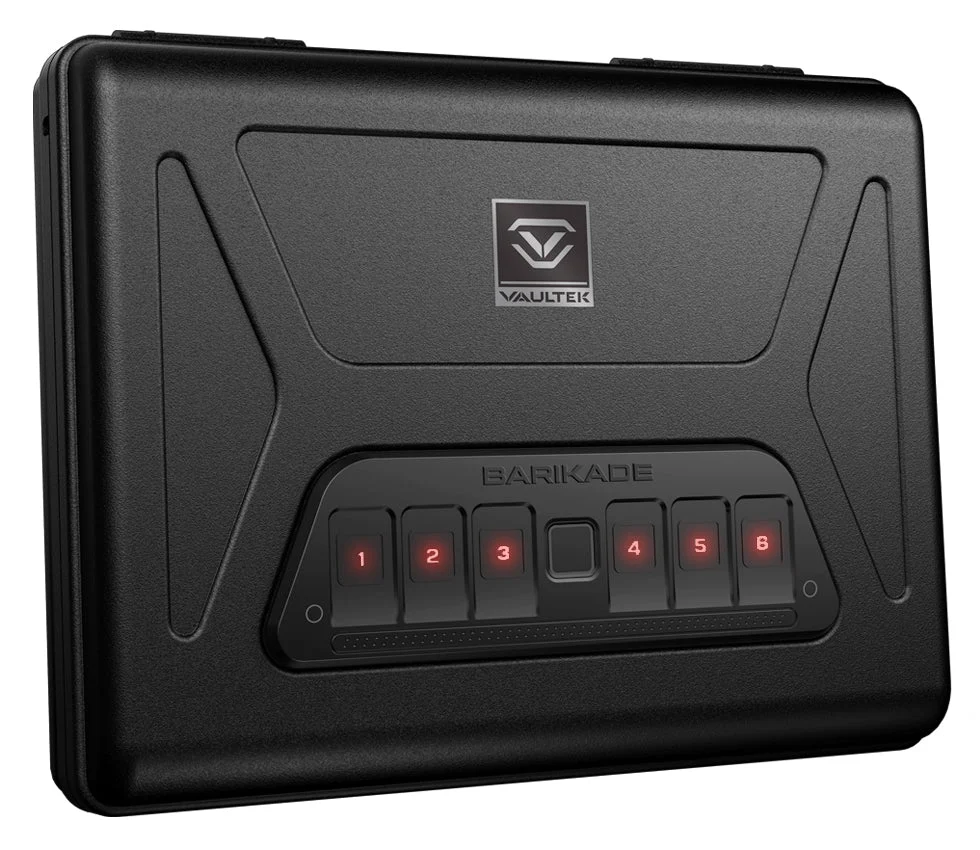
2. Vaultek Barikade Series 2, Best First Biometric Safe
- Type: compact pistol vault
- Access: Smart Sense keypad, optional biometric scanner, backup manual keys
- Biometric storage: up to 20 fingerprints
- Exterior: 11.25in x 9in x 2.5in
- Holds: one full-size or two compacts up to 10.75in overall length
- Construction: 14-gauge formed steel
- Battery: 9V alkaline, not included, about a year
- In the box: security cable and mounting hardware
Pros
- 14-gauge steel, thicker than most rivals
- Stores twenty separate fingerprints
- Anti-pry build with tamper detection
- Cable and mounting hardware included
Cons
- Biometric scanner is a paid option
- No fire rating at all
- 9V battery is not supplied
- Two compacts only if genuinely compact
Live prices from trusted retailers
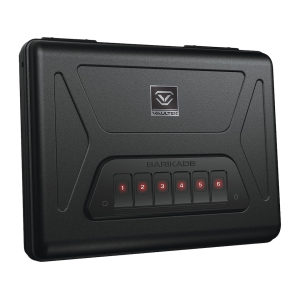
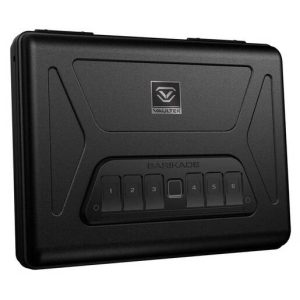
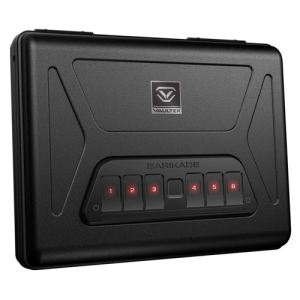
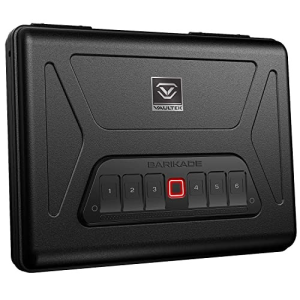
Vaultek sell the Barikade in two forms and the card below shows both: a keypad version, and the same vault with a fingerprint scanner added. The scanner is an option, not the default, which is Vaultek being honest about what a reader is for. It is a convenience layer on top of a keypad, not a replacement for one.
The build is the reason it is here rather than a cheaper reader. Vaultek publish 14-gauge formed steel with anti-pry reinforcement and tamper detection, and the security cable and mounting hardware are in the box. Most compact biometric safes at this money are 16 or 18-gauge and sell you the cable separately.
The scanner holds twenty prints, which sounds like marketing until you realise why it matters. Register the same finger three or four times at different angles and in different conditions, and the reader stops failing when your hand is cold or damp. That single habit is the difference between a biometric safe you trust and one you stop using.
Check the 10.75 inch length limit against your own pistol before you order. A full-size duty gun with a compensator or a weapon light will not go in, and the two-compacts claim assumes two genuinely compact guns rather than two full-size ones.
Best For: the beginner who wants fingerprint access from a maker that publishes its steel gauge and includes the cable.
3. GunVault MultiVault GV2050-19, Best Budget First Safe
- Type: multi-pistol quick-access safe
- Access: patented No-Eyes keypad with high-security backup key
- Holds: up to two handguns, per GunVault
- Construction: 16-gauge steel with anti-pry tabs and concealed hinges
- Door: spring-assisted slide-out drawer
- Extras: illuminated interior, silent mode, pre-drilled mounting holes
- Not biometric: there is no fingerprint reader on this model
Pros
- No-Eyes pad works in the dark
- 16-gauge steel at a budget price
- Silent mode kills the keypad beeps
- Concealed hinges and anti-pry tabs
Cons
- No fingerprint reader on this model
- No fire rating at all
- Battery powered, so diarise replacements
- Two handguns is the published limit
Live prices from trusted retailers
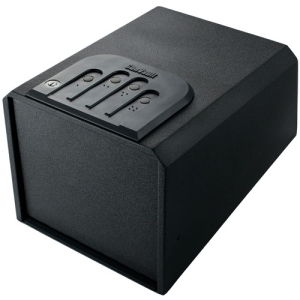
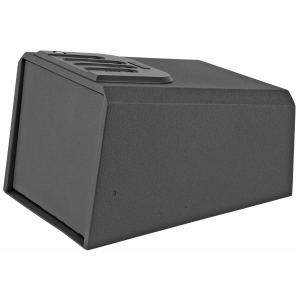
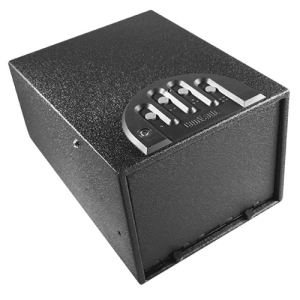
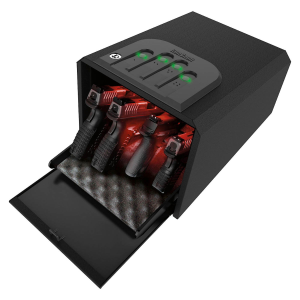
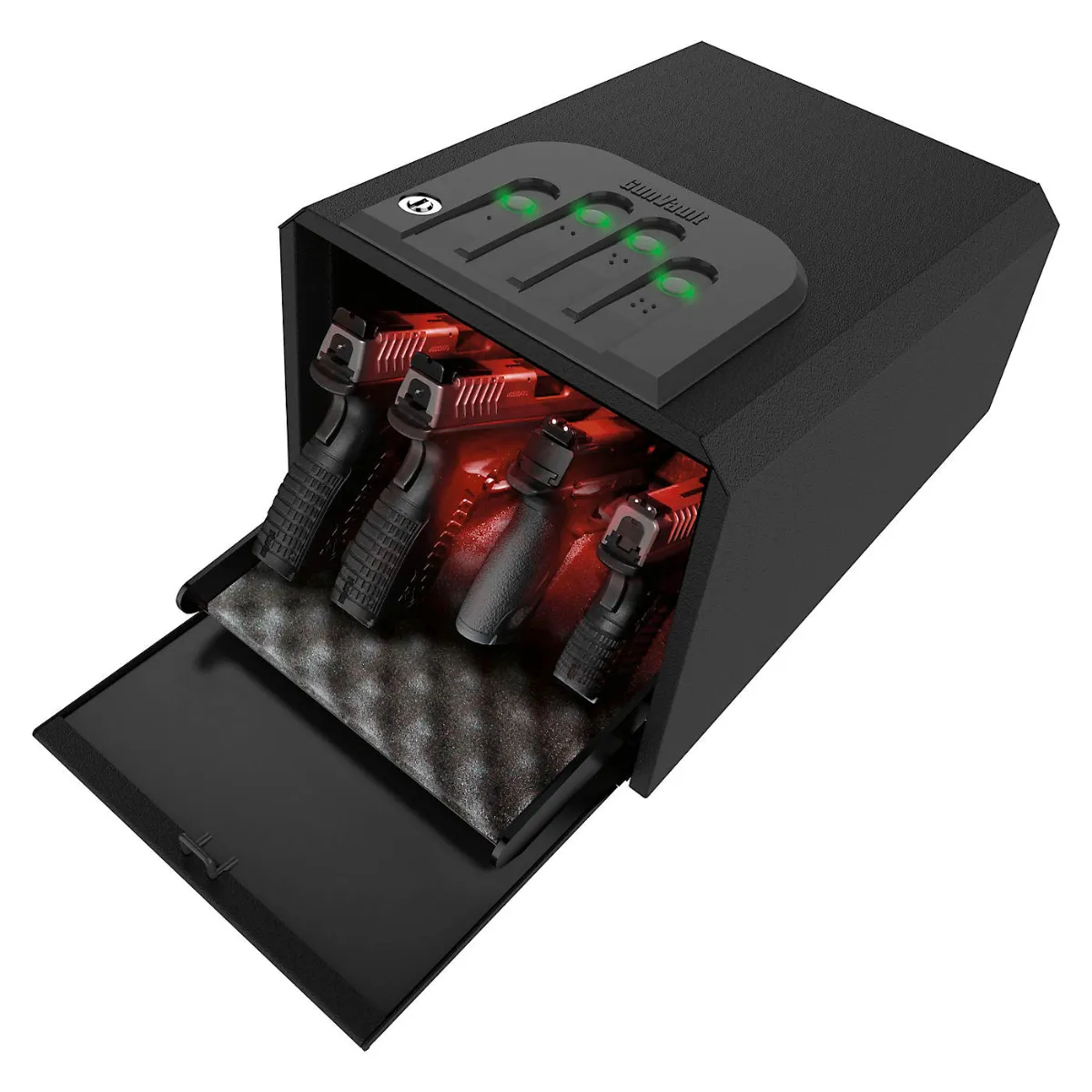
The MultiVault is the cheapest thing on this page that is still a proper safe rather than a lock box, and the reason is the keypad. GunVault’s patented No-Eyes pad is four finger-shaped channels moulded into the lid. You find them by feel and press a sequence, without looking.
That is worth understanding before you spend more on a fingerprint reader. In a dark bedroom at three in the morning, a pad you operate by touch beats a scanner that wants a clean, dry, correctly angled finger. Whether it beats RFID is a matter of taste, but it beats a cheap reader comfortably.
GunVault publish 16-gauge steel with anti-pry tabs, a reinforced U-lock and concealed hinges, which is a genuinely solid specification at this end of the market. They also publish a capacity of up to two handguns. Some retailer listings call it a four-pistol safe; the maker’s own figure is two, and that is the one to plan around.
It runs on batteries only, so put a reminder in your phone for every six months and keep the backup key somewhere secure and separate from the safe. A dead battery and a key locked inside the safe is the most common way a first-time owner gets shut out of their own gun.
Best For: the buyer whose budget is gone after the gun, the ammunition and the range time, and who still wants a steel safe.
4. Hornady Fireproof Keypad Safe, Best First Fireproof Safe
- Item number: 95407
- Type: fire-rated safe for handguns and documents
- Access: programmable electronic keypad with mechanical key backup
- Fire rating: 30 minutes up to 1,400F
- Construction: 16-gauge body with an 8-gauge door
- Exterior: 12in x 15in x 16.5in
- Interior: 10.2in x 13.2in x 15in
- Weight: 49 lbs
- In the box: concrete anchor bolts and a removable shelf
Pros
- Genuine 30 minute fire rating
- Anchor bolts included in the box
- Removable shelf splits guns from paperwork
- Interior light comes on automatically
Cons
- 49 lbs, so plan the location
- Thirty minutes is the entry tier
- Not a quick-access safe at all
- Takes four AA batteries, not supplied
Live prices from trusted retailers
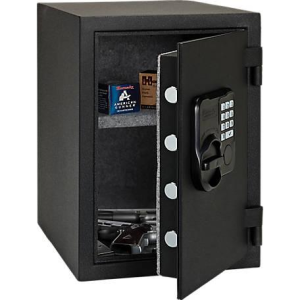
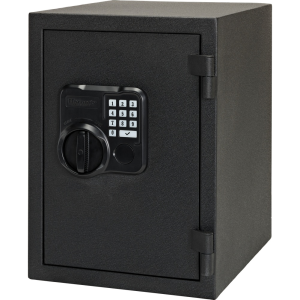
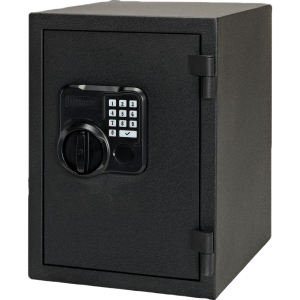
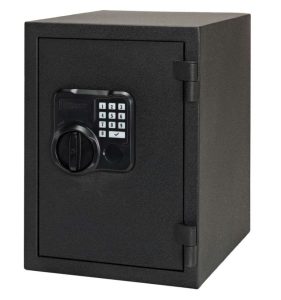
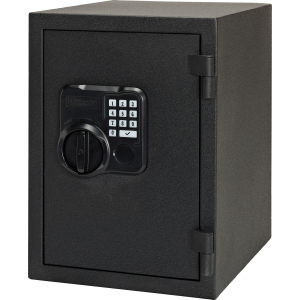
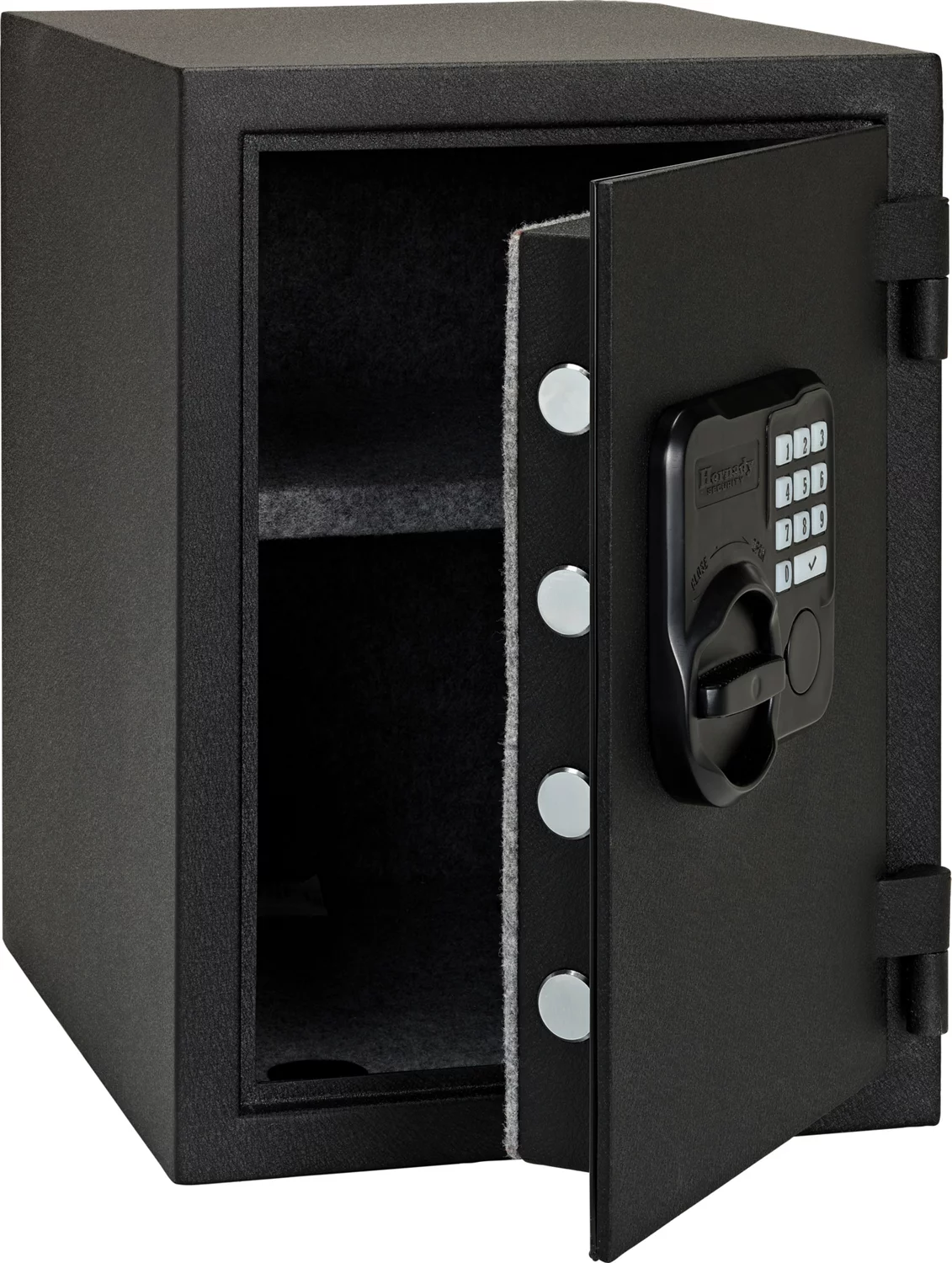
This is the pick that does two jobs, which is why it belongs on a beginner’s list. Your birth certificate, your passport, the deeds and a couple of handguns all go in the same box, and Hornady rate it for 30 minutes at up to 1,400F. Most first-time buyers own exactly one thing worth fire-rating and it is not the gun.
The removable shelf is what makes that work in practice. Documents go flat on the shelf, handguns go underneath on the carpeted floor, and nothing sits on top of anything else. Take the shelf out and you have a 15 inch tall cavity instead.
Thirty minutes is the entry level for fire protection and it is worth knowing what that means. It is enough for a contained room fire that the brigade reaches quickly. It is not enough for a house that burns through the night, and no safe at this price is. If fire is your main worry, our fireproof gun safe guide covers the longer ratings.
At 49 lbs it is portable enough for one determined person to walk out with, so use the concrete anchor bolts Hornady include. Bolting it down converts it from a heavy box into an actual security device, and it is a twenty minute job.
Best For: the first-time owner who needs one container for the handguns and the documents that cannot be replaced.
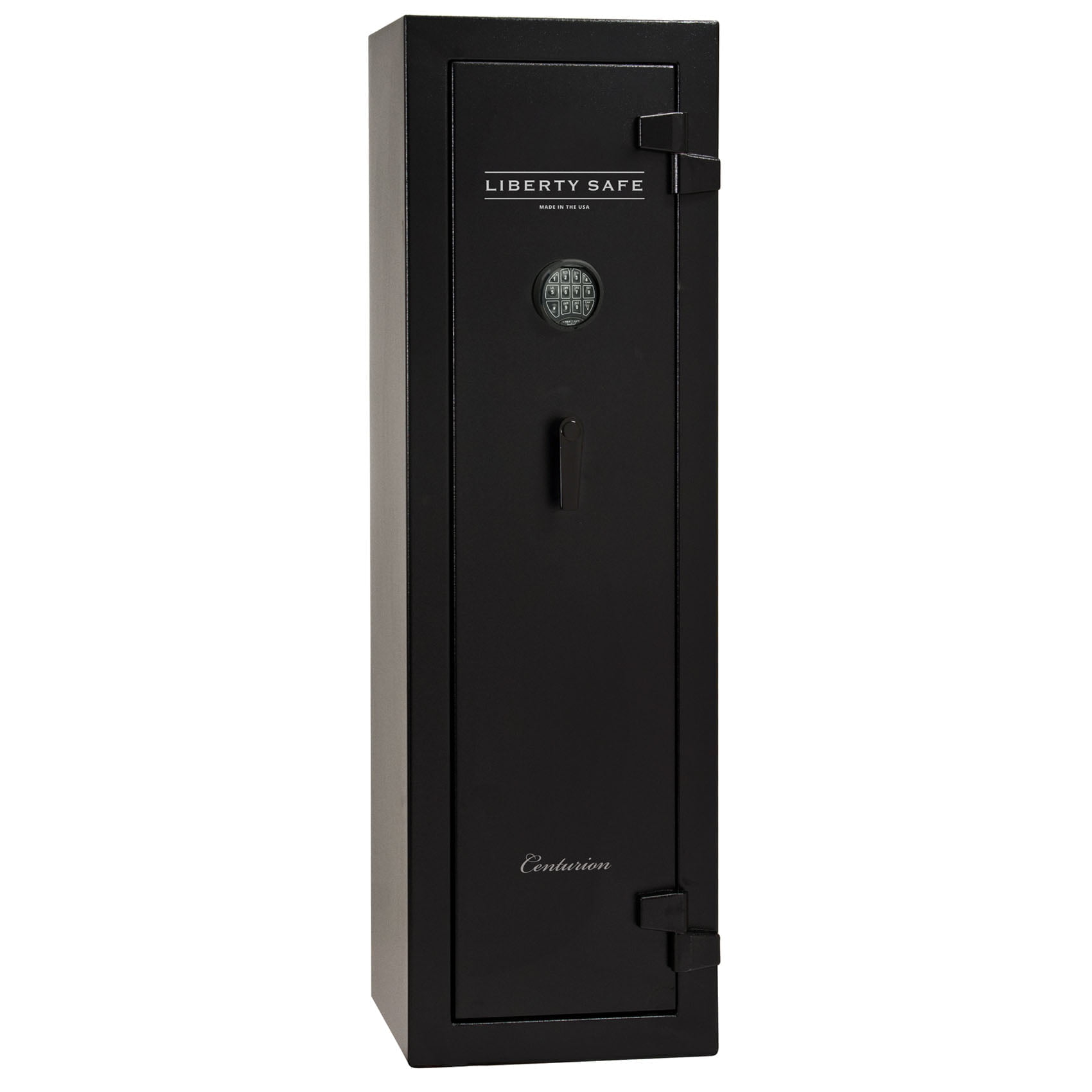
5. Liberty Centurion 24, Best First Full-Size Safe
- Type: full-size residential security container
- Access: electronic lock
- Fire rating: 40 minutes
- Construction: 14-gauge body with a Dual Fusion folded steel frame
- Locking: seven bars, 4in wide and 3/16in thick
- Door seal: Palusol heat-activated expanding seal
- Exterior: 59.5in x 28.25in x 20in
- Interior: 56in x 26.25in x 13.5in, 11.5 cubic feet
- Weight: 375 lbs, and it needs a 22in doorway
Pros
- Forty minutes of fire protection
- Seven locking bars, 14-gauge body
- Palusol seal expands against smoke
- Made in the USA
Cons
- 375 lbs needs a delivery plan
- Twenty-two inch doorway is the hard limit
- Twenty-four guns assumes slim bolt actions
- Far more safe than one pistol needs
Live prices from trusted retailers

If you already know you are going to own rifles, skip everything above and start here. The Centurion is Liberty’s entry line and the 24 is the size most first full-size buyers should take, because the step up from the 18 costs little and the step down is the purchase people regret.
The specification is honest for the money. Liberty publish a 14-gauge body, seven locking bars and 40 minutes of fire protection for the 24 and the 32, where the smaller 12 and 18 get 30 minutes. The Palusol door seal expands when it gets hot and closes the gap round the door against smoke, which is what actually ruins a collection.
Read the interior dimensions rather than the gun count. Twenty-four is a marketing figure derived from slim bolt-action rifles standing shoulder to shoulder. The number that decides what fits is 26.25 inches of interior width and 13.5 inches of depth, and scopes, thick stocks and anything with a wide handguard eat that quickly.
The logistics are the part beginners underestimate. It weighs 375 lbs, Liberty specify a 22 inch minimum doorway, and it wants to be bolted to the floor once it is in place. Work out the route from the curb to the final position before you order, because there is no easy second attempt.
Best For: the beginner who is buying rifles as well as a pistol and would rather buy the full-size safe once.
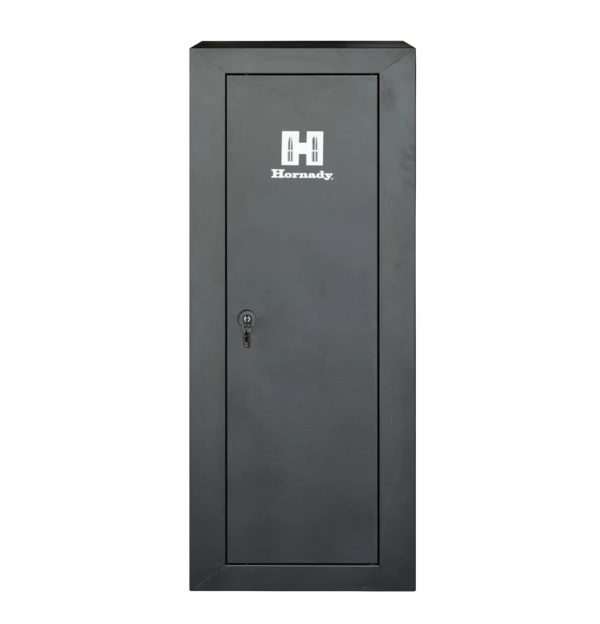
6. Hornady 8-Gun Welded Cabinet, Cheapest Way to Lock Up Long Guns
- Item number: 95102
- Type: welded steel gun cabinet, not a safe
- Access: barrel key lock with a three-point locking mechanism
- Exterior: 53in high, 17in wide, 11in deep
- Interior: one fixed shelf and three PVC-coated dual-purpose racks
- Fire rating: none, and Hornady do not claim one
- Steel gauge: not published
- Cheaper sibling: the knock-down 8-Gun Cabinet, item 95092, 55in x 18in x 10in
Pros
- Locks up eight long guns cheaply
- Fully welded, not bolt-together
- Racks take long guns and handguns
- Fits a wardrobe or a corner
Cons
- A cabinet, not a safe
- No fire rating whatsoever
- Hornady do not publish the gauge
- A key lock, so mind the key
Live prices from trusted retailers
Every other beginner guide jumps from a two-hundred dollar pistol box straight to a full-size safe and leaves out the person this pick is for: someone who has bought three rifles, has children in the house, and does not have full-size safe money this year. A locking cabinet is the right answer for them and pretending otherwise helps nobody.
Be clear about what you are buying, though. This is a cabinet, not a safe. It stops a child, a guest and an opportunist. It will not stop someone with a pry bar and time, and it has no fire rating at all. Hornady are straight about this and do not publish a steel gauge for it, which tells you where it sits.
Within that limit it is well made. The welded version, item 95102, is a single fabricated body with reinforced corners and a three-point locking mechanism, which is meaningfully stronger than the bolt-together cabinets sold at the same price. The three racks are moulded to take long guns and handguns, and a neoprene mat stops anything sliding.
Hornady also sell a knock-down version, item 95092, at 55 by 18 by 10 inches. It ships flat and assembles at home, which solves the doorway problem the Liberty creates, but a bolted-together box is easier to take apart than a welded one. If you can get the welded one in, get the welded one. Our gun cabinet guide compares the category properly.
Best For: the new owner with several long guns who needs them locked away now and cannot spend full-size safe money yet.
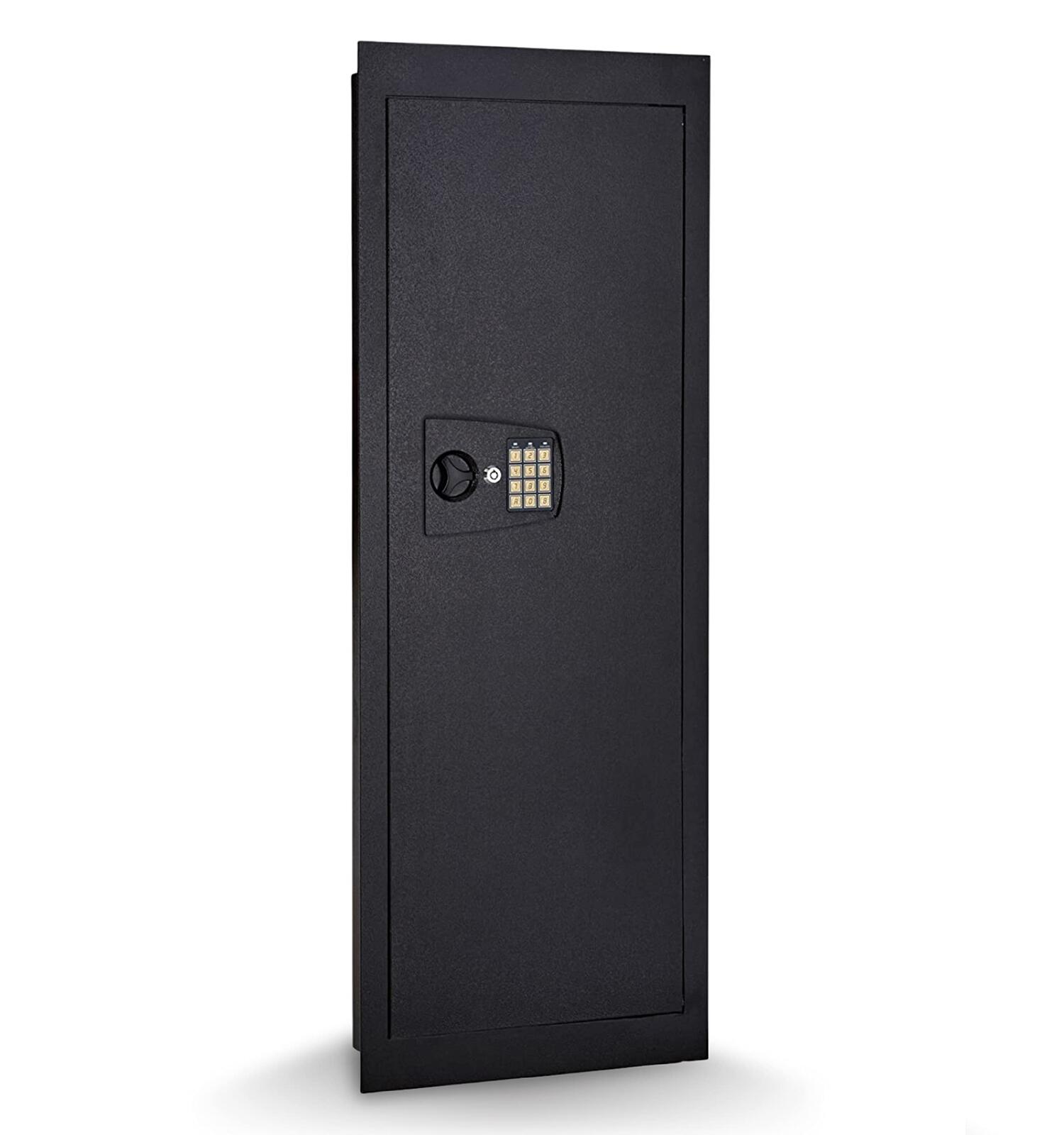
7. SnapSafe In-Wall Safe Tall, Best First Concealed Safe
- Item number: 75414
- Type: in-wall safe that fits between studs
- Access: electronic lock with key backup
- Exterior: 44in high, 16.25in wide, 4in deep
- Weight: 66 lbs
- Construction: 16-gauge steel body with an 8-gauge steel door
- Fitting: installs between studs using the included lag bolts
- Shorter option: item 75413 at 22in high, 35 lbs
Pros
- Disappears into the wall entirely
- Eight-gauge door on a concealed safe
- Lag bolts included for fitting
- Takes long guns standing upright
Cons
- Four inches deep is the limit
- Cutting into a wall is permanent
- No fire rating at all
- Landlords will not allow it
Live prices from trusted retailers
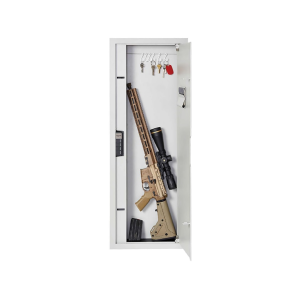
A safe nobody knows about is a safe nobody attacks, and that is the entire case for going into the wall. Put a picture or a mirror in front of it and the room contains no visible gun storage at all. For a first-time owner who does not want visitors knowing there are firearms in the house, this is the neatest answer on the page.
The dimensions are set by your house rather than by SnapSafe. American interior walls are framed with 2x4s on 16 inch centers, which leaves a cavity about four inches deep and a little over fourteen inches clear between studs. That is why this safe is 16.25 inches wide and four inches deep and why every competing in-wall safe is too. Nobody is designing around the gun.
SnapSafe publish a 16-gauge body with an 8-gauge door, which is a serious door for a concealed safe, and the tall version at 44 inches takes long guns standing upright. The 22 inch version, item 75413, is the same width and depth for handguns and documents if a rifle is not the point.
Two warnings. It is permanent, so choose the wall once: an interior partition, not an exterior wall with insulation and wiring in it, and check for pipes and cables before you cut. And if you rent, this is not your pick. Take the LifePod or the Barikade instead and cable it to something solid.
Best For: the homeowner who wants the safe to be invisible and is willing to cut a hole in a wall to get there.
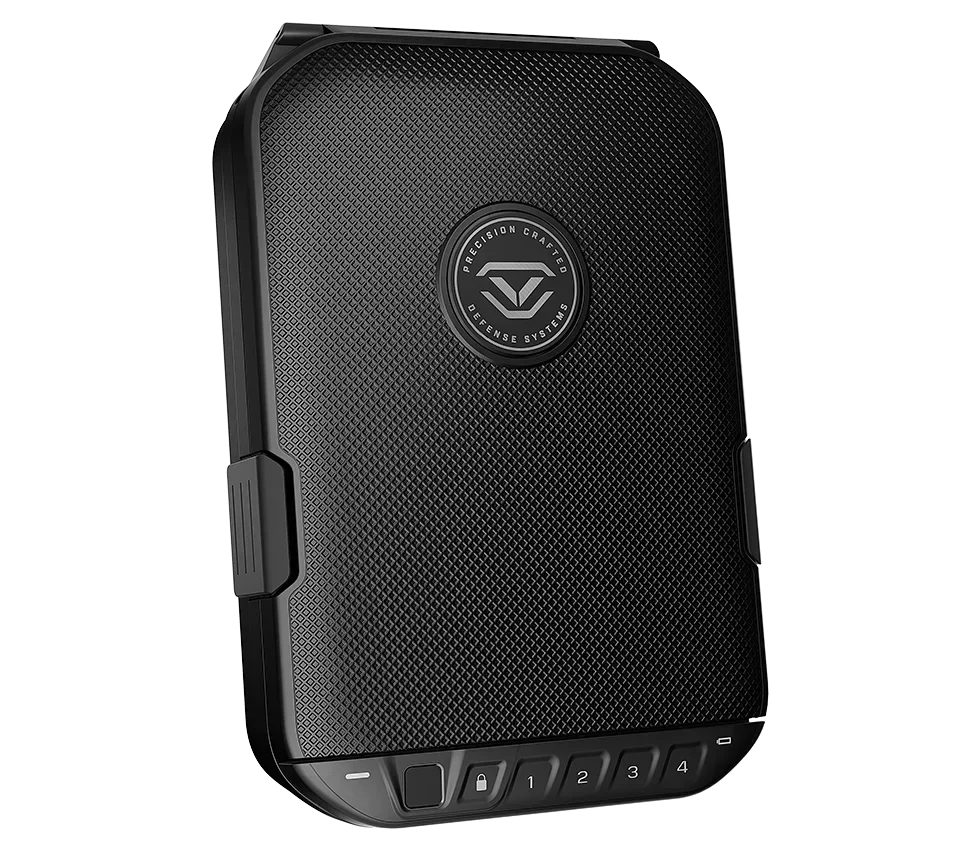
8. Vaultek LifePod 20, Best First Travel Safe
- Type: portable lockable case
- Access: capacitive touch keypad with two backup keys
- Combinations: more than 80,000
- Exterior: 12.25in x 8.5in x 2.875in
- Interior: 9.625in x 7.25in x 2.125in
- Fits: firearms up to 9.25in long
- Weight: 3.3 lbs
- Construction: impact-resistant polymer blend, not steel
- In the box: a 48in steel cable, foam, a removable tray and two keys
Pros
- Vaultek state it meets TSA guidelines
- Weighs 3.3 lbs with everything included
- Seal works with a dead battery
- Forty-eight inch steel cable supplied
Cons
- Polymer, so not a security container
- Nine and a quarter inches is short
- No fire rating at all
- Biometric version costs noticeably more
Live prices from trusted retailers
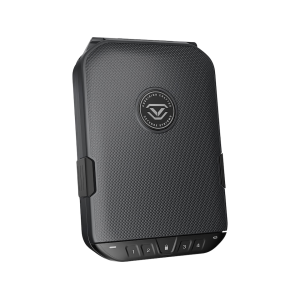
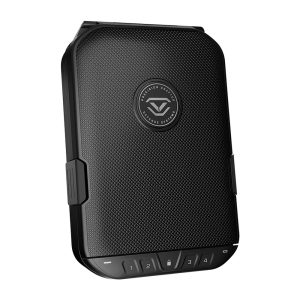
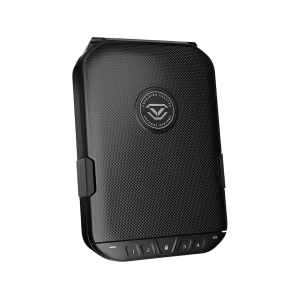
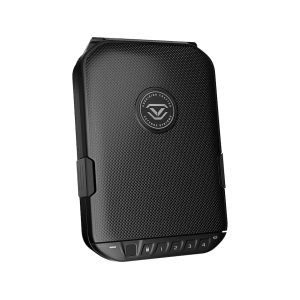
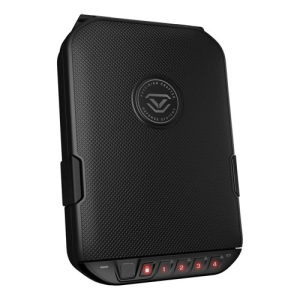
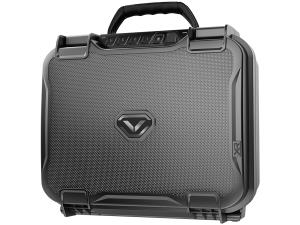
The moment a first-time owner discovers they need a second safe comes on the first drive to the range, or the first flight. A gun has to be locked in a hard-sided container that only you can open, and the nightstand safe is bolted to a nightstand.
The LifePod 20 is built for exactly that. Vaultek publish that it meets TSA guidelines, it weighs 3.3 lbs, and a 48 inch steel cable comes with it so you can secure it to a seat frame or a bed leg in a hotel. Always confirm the current rules with your airline before you fly, because they change and they vary.
One detail is smarter than it looks. The weather-resistant seal is made by side compression latches rather than by the lock, so it still seals when the battery is flat. There is also a micro USB port that powers the keypad from a power bank if the 9V dies on the road.
Understand what it is not. The shell is an impact-resistant polymer blend, not steel, so this is a container that satisfies transport rules and keeps a curious passenger out. It is not the safe your gun lives in at home, and the 9.25 inch limit rules out a full-size pistol with a light on it.
Best For: the new owner who has just realized the range trip and the flight both need a lockable case that travels.
Read This Before You Buy a Biometric Safe
Fingerprint readers are the feature every first-time buyer asks about, and they are the feature this page is most cautious about. Here is why, and it is not an opinion.
In June 2024, roughly 133,000 biometric gun safes were recalled in the United States because the fingerprint lock could be opened by people who were never programmed into it. The California Attorney General’s office published a notice about the recall because two of the recalled models were on California’s Roster of Firearm Safety Devices. It records 77 reports of the safes “being opened by unauthorized users”, and that the manufacturer acknowledged at least three of those reports involved children.
The fault was specific and instructive: the safes shipped with a biometric interface that would open to any finger until somebody programmed a print into it. Out of the box, unregistered, they were unlocked. Consumers were told to stop using the biometric feature, take the batteries out, and use the key.
That is one manufacturer and one design fault, and it does not make every fingerprint safe bad. What it should change is how you buy one. A reader is a piece of consumer electronics bolted to a security product, and the cheap ones are cheap because that electronics is cheap. Two of this page’s eight picks offer biometric access and both come from makers who publish their steel gauge, their fingerprint storage and their failure modes.
The practical rules for a first safe are simple. Buy the reader from a maker with a name to lose. Program the same finger several times at different angles. Test it cold, damp and half asleep before you rely on it. And make sure there is a mechanical key backup, kept somewhere secure that is not inside the safe.
Which Way Should Your First Safe Open?
There are five ways into a small gun safe and they fail in five different ways. This is the decision that matters most on a first purchase, more than steel gauge and much more than brand.
RFID tag
You hold a wristband, key fob or sticker over a panel and the safe opens. Nothing to remember and nothing to read. It fails if you cannot find the tag, which is why the Night Guard ships with four of them and why one of them is a decal you stick to your phone.
Fingerprint reader
Fastest when it works, and the section above covers when it does not. Wet, cold, dirty or cut fingers all reduce the read rate, and every reader has a rejection rate its maker does not publish. Treat it as the quick way in, with the keypad as the way in that always works.
Standard keypad
A numeric code on a lit pad. Reliable, cheap and slow in the dark, because you have to see the buttons or count them by position. The batteries are the only real failure point and they warn you first.
Shaped keypad
GunVault’s No-Eyes pad is four finger-shaped channels moulded into the lid, so your hand finds the right position by feel and you press a sequence without looking. It is the answer to the standard keypad’s one weakness and it needs no electronics to read your body.
Mechanical key or dial
No batteries, no electronics, nothing to go flat or fail. Also slow, and the key has to live somewhere that is neither obvious nor inside the safe. Every safe here has a mechanical backup, and that is the one you should test on day one rather than the day you need it.
For most first-time owners the honest ranking is RFID first, shaped keypad second, a good fingerprint reader third and a cheap one last. Speed only counts if it works every time.
The Types of Gun Safe, and Which One You Need First
Five categories cover almost everything sold, and a beginner needs exactly one of them to start with.
- Quick-access pistol safes. One or two handguns, beside the bed, open in a couple of seconds. This is the first safe most people should buy, because the gun you own now is probably a handgun.
- Fire-rated document safes. Heavier, slower, and rated for a number of minutes at a temperature. The right pick if the passports and the deeds need protecting as much as the gun does.
- Full-size gun safes. Hundreds of pounds, long guns standing upright, a real fire rating and bolted to the floor. Buy this when you own rifles, or when you are certain you shortly will.
- Gun cabinets. Locking steel, no fire rating, a fraction of the price. Not a safe, but a genuine answer for long guns when a full-size safe is out of reach.
- Portable cases. Small, light, lockable, built to satisfy transport rules rather than to resist attack. You will end up owning one of these whichever safe you start with.
If you own one handgun, buy a quick-access pistol safe and stop. If you own long guns, the decision is a full-size safe now or a cabinet now and a safe later. Everything else is an addition rather than a starting point.
What a Gun Safe Does Not Do
Four things are worth knowing before you spend, because the marketing does not lead with any of them.
Most gun safes are not safes. The industry term for a full-size unit like the Liberty is a residential security container, which is a lower standard than a true burglary-rated safe. It is a meaningful level of protection and it is not a bank vault. Our RSC versus true safe explainer sets out the difference.
A fire rating is a laboratory number. Thirty minutes at 1,400F describes a test, not your house. It is measured with the safe closed, cold, and heated on a defined curve. A real fire that reaches your safe after an hour has already exceeded it.
An unbolted safe is a heavy box. Two people and a trolley move 375 lbs. Anchoring is not optional on the small safes and it is not optional on the big ones either, and every pick here either includes the hardware or has holes drilled for it.
Steel gauge counts down, not up. A 14-gauge body is thicker than 16-gauge, which is thicker than 18. It is the one specification that is hard to fake and it is the one budget makers leave off the page.
First-Time Buyer Mistakes to Avoid
Buying for the guns you own today
Collections grow, and they grow faster than anyone expects in the first two years. The gap in price between a safe that holds your current guns and one that holds twice as many is small, and the gap between buying once and buying twice is not. Size for where you will be, not where you are.
Paying for a reader instead of a safe
A fingerprint scanner on an 18-gauge box is a worse purchase than a keypad on a 14-gauge one. Features are visible on a product page and steel gauge is not, which is exactly why budget brands sell the first and omit the second.
Leaving it unbolted
This is the one that turns a good purchase into a bad outcome. A small safe that is not cabled or bolted gets carried out of the house and opened at leisure somewhere else. Fitting the cable takes ten minutes and it is the highest-value ten minutes in this whole process.
Never testing the backup
Find the mechanical key, open the safe with it, and then decide where the key lives. Do it on the day the safe arrives. Discovering that the key is missing on the evening the battery dies is how people end up drilling their own safe.
Putting the only safe out of reach
A safe in the basement is a storage decision, not a defensive one. If part of the reason you own the gun is home defense, one of your safes has to be where you sleep, and that means owning two: a small fast one upstairs and a big slow one wherever it fits.
If You Are Buying in California
California adds a step that catches first-time buyers out. A firearm transferred in the state has to come with a firearm safety device from the state Department of Justice roster, and that roster lists individual models, not brands. A maker having several approved products does not make the one you are looking at approved.
So check the specific model against the roster rather than trusting a retailer badge, and note that the Department also publishes recall notices against devices already on it, which is how the biometric recall above reached California buyers. Our California gun safe guide covers the requirements in full.
How I Chose These Picks
Every product here was checked against its manufacturer’s own current catalogue before it went on the page, not against another review site. Three of the previous picks came off for that reason: two Vaultek models that the maker now sells only as refurbished stock, and a Sports Afield safe that has left both their website and their last two printed catalogues while retailers carry on listing it.
Specifications come from the maker rather than the retailer listing, which is why the capacity given for the MultiVault is two handguns and not the four that several shops print. Where a manufacturer does not publish a number, this page says so instead of borrowing one.
Prices are not written into the text anywhere. Every pick has a live pricing block underneath it that reads current stock from the retailers we work with, because a number typed into a paragraph is out of date within the month and a page that argues with its own prices is worse than a page with none.
FAQ: Gun Safes for Beginners
What is the best first gun safe to buy?
The Hornady RAPiD Safe Night Guard suits most first-time owners. It holds one handgun, opens with an RFID tag rather than a code or a fingerprint, includes a 1,500 lb rated security cable so you can secure it without drilling, and sits on a nightstand looking like a clock. If you already own rifles, start with the Liberty Centurion 24 instead.
Do I really need a safe for one pistol?
Yes. A single handgun is the one most likely to be left out, because there is nowhere obvious to put it. A safe stops children, guests and opportunists reaching it, and many states require secure storage by law. A quick-access pistol safe is the cheapest category on this page and it is the right place to start.
Should a beginner buy a biometric gun safe?
Only from a maker that publishes its specifications, and never as the only way in. About 133,000 biometric gun safes were recalled in the United States in June 2024 because the fingerprint lock could be opened by unauthorised users, with 77 reports and at least three involving children. A fingerprint reader is a convenience layer. The keypad and the mechanical key are what you actually rely on.
Is a fingerprint reader or a keypad better for a first safe?
A keypad, for reliability. A reader is faster when it reads and useless when your finger is wet, cold or cut, and no manufacturer publishes a rejection rate. GunVault's No-Eyes pad is a good middle answer: the buttons are shaped channels you find by feel, so it works in the dark without needing to read your body at all.
Does a beginner need a fireproof gun safe?
Only if you want one container for the guns and the documents. A fire-rated safe like the Hornady 95407 is rated for 30 minutes at up to 1,400F and has a removable shelf, so passports and deeds go on top and handguns underneath. If your documents already live somewhere else, put the money into steel and access speed instead.
Is a gun cabinet good enough for a beginner?
For long guns, on a tight budget, yes, as long as you know what you are buying. A welded steel cabinet stops children, guests and opportunists and costs a fraction of a full-size safe. It has no fire rating and it will not resist a pry bar for long. It is a real step up from a wardrobe and a real step down from a safe, and a cabinet today beats a safe next year.
What size gun safe should I buy first?
Bigger than your current collection. The advertised gun count assumes slim bolt-action rifles standing shoulder to shoulder, so a 24-gun safe holds nowhere near 24 scoped rifles with thick stocks. Read the interior width and depth instead: the Centurion 24 gives 26.25 inches of interior width and 13.5 inches of depth, and that is the figure that decides what fits.
Where should I put my first gun safe?
A small safe goes where you sleep, because reachability is most of its value. A full-size safe goes wherever the floor will take the weight and the doorway will pass it, which for the Centurion 24 means 375 lbs and a 22 inch minimum doorway. Keep either one out of sight of the front door and out of casual view from windows.
Do I have to bolt down a gun safe?
Anchor it one way or another, yes. Small safes are carried away and opened elsewhere, which is why the Night Guard, the Barikade and the LifePod all ship with a steel cable. Full-size safes have pre-drilled floor holes and Hornady include concrete anchor bolts with the 95407. It is a short job and it is the difference between a deterrent and a container.
The Bottom Line
If you own one handgun and want to stop researching, buy the Hornady RAPiD Safe Night Guard. Nothing to remember, four tags in the box, a cable so you can secure it without drilling, and it looks like a clock on a nightstand.
If you want a fingerprint reader, take the Vaultek Barikade Series 2 and read the recall section above first. If money is the constraint, the GunVault MultiVault gets you 16-gauge steel and a keypad you can work in the dark.
If you own long guns, the answer is the Liberty Centurion 24 if you can take the weight and the doorway, and the Hornady 8-Gun Welded Cabinet if you cannot. A cabinet today beats a safe next year with the rifles behind a wardrobe door in the meantime.
Whichever you buy, bolt or cable it on the day it arrives and open it once with the mechanical key. Those two jobs take half an hour and they are worth more than any upgrade on the spec sheet.
Top Accessories Deals
Best-scored accessories across 200+ retailers · Updated every 4 hours

Related Guides
- Best Gun Safes, the full round-up across every category
- Gun Safe Buyer’s Guide, how to read a specification sheet
- Best Gun Safes Under $500, if the budget sets the shortlist
- Best Biometric Gun Safes, if you want the fingerprint option done properly
- Best Gun Cabinets, the cheaper route for long guns
- How to Bolt Down a Gun Safe, the job most people skip
4,617+ Gun & Ammo Deals
Updated daily from 200+ top retailers. Filter by category, caliber, action type, and price.
Related Guides