
Last updated May 19, 2026
Some of the links below are affiliate links, meaning at no additional cost to you, we may earn a commission if you click through and make a purchase.
- Treat every gun as loaded
- Point the muzzle in a safe direction
- Keep your finger off the trigger until you’re ready to shoot
- Know your target and what’s beyond
| Load | Caliber | Bullet Weight | Velocity | Price |
|---|---|---|---|---|
| BEST 9MM Federal HST 124gr |
9mm | 124 gr | 1,150 fps | Lowest Price ↓ |
| BEST .45 ACP Federal HST 230gr |
.45 ACP | 230 gr | 890 fps | Lowest Price ↓ |
| BEST .38 SPL Hornady Critical Defense 110gr FTX |
.38 Spl | 110 gr | 1,010 fps | Lowest Price ↓ |
| BEST 5.56 Hornady TAP 55gr |
5.56 NATO | 55 gr | 3,240 fps | Lowest Price ↓ |
| BEST 12 GAUGE Federal FliteControl #1 Buck |
12 Gauge | 16 pellets | 1,350 fps | Lowest Price ↓ |
Table of Contents
| Caliber | Top Pick | Bullet Weight | Muzzle Velocity | Best For |
|---|---|---|---|---|
| 9mm Luger | Federal HST 124gr JHP | 124 gr | 1,150 fps | Most modern handguns, FBI standard, see best home defense handguns |
| .45 ACP | Federal HST 230gr JHP | 230 gr | 890 fps | Heavy-bullet stopping power |
| .38 Special | Hornady Critical Defense 110gr FTX | 110 gr | 1,090 fps | Snub-nose revolvers, low recoil |
| 5.56 NATO | Hornady TAP 5.56 55gr GMX | 55 gr | 3,240 fps | AR-15 home defense, reduced wall penetration, pair with our budget home defense lineup |
| 12 Gauge | Federal FliteControl 00 Buck | 9 pellets | 1,325 fps | Maximum stopping power at home distances, pair with a home defense shotgun |
| .300 Blackout | Hornady Sub-X 190gr subsonic | 190 gr | 1,050 fps | Suppressed AR pistols and SBRs, see our rifle-light picks for low-light pairing |
How we tested: Every pick here is ranked against our testing methodology. Minimum round counts, accuracy and reliability protocols, the failures that disqualify a gun.
The Best Home Defense Ammo in 2026: Every Caliber Ranked
Your gun is only as good as what you load in it. Most gun owners spend weeks agonizing over which pistol to buy, then load it with whatever bulk FMJ was on sale at Walmart. That’s backwards. The ammunition in your defensive firearm matters enormously.
The FBI ballistic standards have become the de facto benchmark for defensive ammunition: 12-18 inches of penetration in 10% ordnance gelatin after passing through four layers of denim. Loads that meet those standards expand reliably, penetrate enough to reach vital structures through clothing and body mass, and don’t over-penetrate into adjacent rooms or bystanders. That’s what you want.
I’ve looked at the actual gel test data for every load on this list. Not manufacturer marketing claims. Real independent testing from Ammunition To Go, Lucky Gunner, and other lab-tested sources. I’m only recommending loads that have demonstrated consistent performance across multiple test channels. The “best” ammo on this list isn’t based on brand loyalty or what your local gun shop pushes.
Best 9mm Home Defense Ammo
Nine millimeter is the dominant home defense caliber for pistols. Modern 9mm hollow points have closed the terminal performance gap with .40 S&W and .45 ACP significantly. The FBI switched to 9mm in 2015 for a reason. You should be running one of these three loads.
Pros
- Federal HST 124gr: Arguably the best-tested defensive 9mm load available. Consistent 14-16 inch penetration, reliable expansion to .62-.70 caliber. Widely available and usually priced around $25-30 per 50.
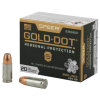
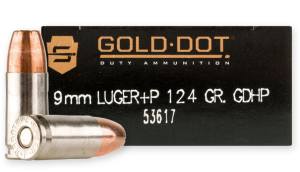
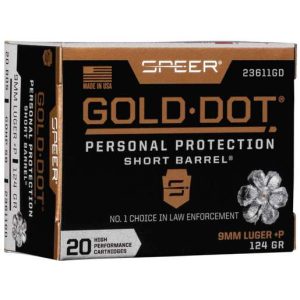
- Speer Gold Dot 124gr: The other gold standard. Nearly identical performance to HST. Law enforcement’s most widely used 9mm defensive round. If you can’t find HST, Gold Dot is a perfect substitute.
- Hornady Critical Duty 135gr: Designed specifically for barrier penetration. Heavier bullet, higher velocity, excellent performance through glass and auto body. Best choice if you might engage threats through vehicle windows or doors.
Cons
- All three run $25-35 per 50 rounds – significantly more than practice ammo. Buy enough to verify function (200+ rounds) then stock defensive loads.
- +P load runs hotter and may print sharper recoil on lighter pistols
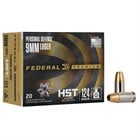
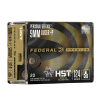
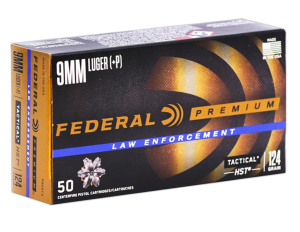
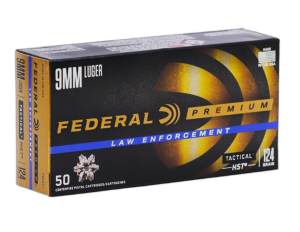
Between the HST and Gold Dot, you genuinely can’t go wrong. Run whichever one your gun cycles reliably and is easiest to find locally. Some guns prefer one over the other; test both if you can. The Critical Duty is the specialist choice if barrier penetration is a concern in your specific defensive scenario.
One thing that doesn’t get mentioned enough: velocity matters with hollow points. If your home defense gun has a short barrel (3 inches or less), run a lighter-for-caliber load. The Federal HST 147gr is sometimes recommended for short barrels, but I’ve seen consistent expansion from the 124gr out of barrels as short as 3.1 inches. Check the gel data for your specific barrel length.
Best .45 ACP Home Defense Ammo
The .45 ACP crowd knows what they like, and they’re not wrong. A 230-grain HST expanding to .80+ caliber is a legitimate wound channel. The caliber debate is largely settled in ballistic testing: both 9mm and .45 ACP are effective with proper defensive loads. If you’re running .45, run one of these.
Pros
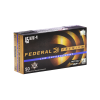
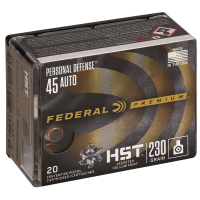
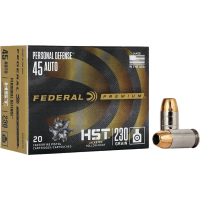
- Federal HST 230gr: The clear #1 choice. Standard pressure, but the bullet is big enough that standard pressure .45 doesn’t need to be +P. Expands to .80+ caliber consistently. Penetrates 14-16 inches.
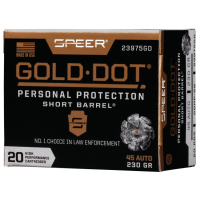
- Speer Gold Dot 230gr: The dead-heat competitor. Same story as 9mm – nearly identical performance to HST, same law enforcement pedigree, slightly different availability depending on your area.
- Available in 124gr and 147gr standard pressure and +P for any platform
Cons
- Both loads are heavier in price per round than 9mm defensive ammo. Budget accordingly.
- If you’re running a compact .45 (Glock 30, etc.), verify expansion at lower velocities from short barrels before trusting a load.
- +P load runs hotter and may print sharper recoil on lighter pistols
Best .38 Special Home Defense Ammo

The .38 Special is still an excellent home defense caliber in revolver form. The Ruger LCR and Smith & Wesson J-Frame are legitimate defensive platforms. Where people go wrong is loading them with old-school flat-nose or round-nose lead. Modern .38 Special defensive loads are dramatically better than what your grandfather carried.
Pros
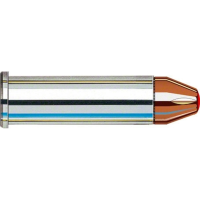
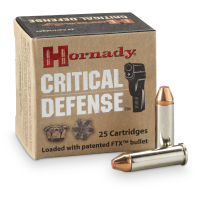
- Hornady Critical Defense 110gr FTX: The FTX bullet uses a rubber tip to initiate expansion even through heavy clothing. This solves the classic problem of standard hollow points plugging with denim and failing to expand. Consistent expansion at the lower velocities of short-barreled revolvers.
- Standard pressure (not +P) means it’s controllable in small, light revolvers like the LCR and 642.
Cons
- Lighter bullet at 110gr. Penetration is adequate (12-14 inches) but not deep. Larger framed threats in heavy clothing could be a concern.
- If you shoot a full-size revolver (4-inch barrel), consider the +P Gold Dot 125gr for more velocity and slightly deeper penetration.

Best 5.56 Home Defense Ammo
The AR-15 is an excellent home defense rifle, and 5.56 is more appropriate than many people realize. The fear is over-penetration. The reality, counterintuitively, is that many 5.56 defensive loads penetrate fewer walls than 9mm or .45 ACP because the thin, fast bullet fragments aggressively on soft tissue and drywall. Load selection matters enormously here.
Pros
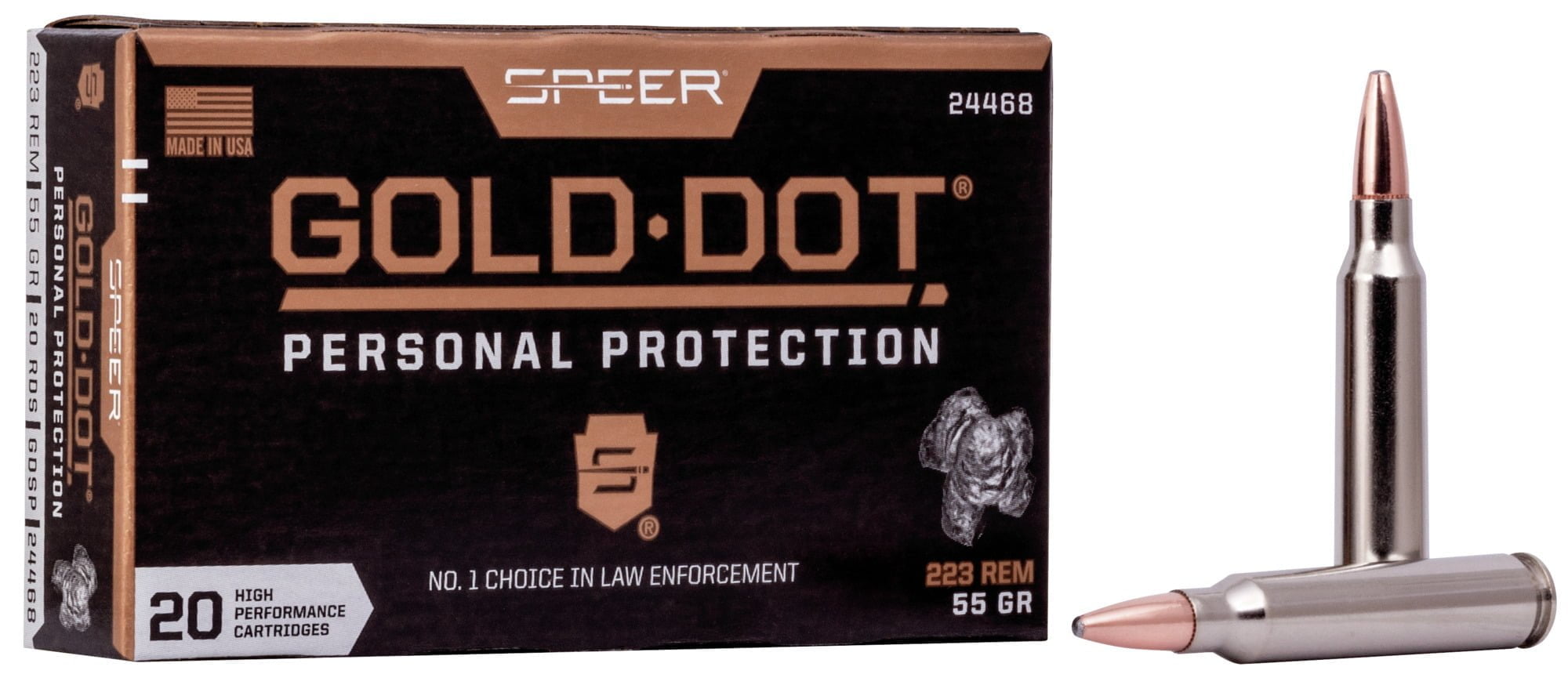
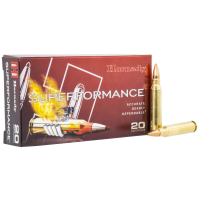
- Hornady TAP 55gr: Purpose-built for law enforcement defensive use. Fragments reliably, reduces over-penetration vs. FMJ, excellent terminal performance. The most common 5.56 defensive load in police use.
- Speer Gold Dot 64gr: Bonded bullet provides better barrier performance than TAP while still fragmenting in tissue. Better choice if your home has masonry, thick doors, or vehicle threats.
- Lightweight bullet fragments on impact, dumping energy in the first room
Cons
- 5.56 is loud. Significantly louder than pistol. Without hearing protection (and you won’t have it in a home defense scenario), a single indoor shot can cause temporary threshold shift. Suppressors are increasingly relevant here.
- Muzzle flash from short-barrel ARs (under 16 inches) with 5.56 is substantial. Flash hiders are not optional equipment on a home defense carbine.
- Muzzle blast indoors is significant, hearing protection mandatory
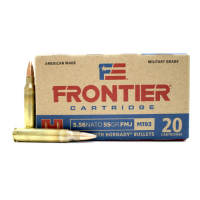
Do not run M193 55gr FMJ or M855 62gr steel-core for home defense. Both over-penetrate dramatically. M855 was never designed as a defensive round. Stick to the purpose-built options above.
Best 12 Gauge Home Defense Ammo
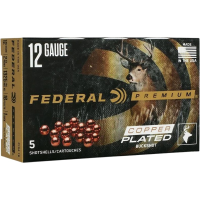
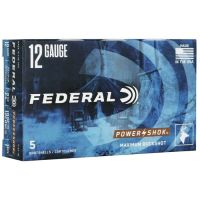
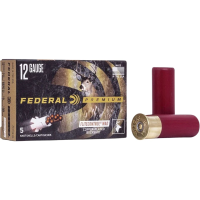
Shotgun buckshot selection changed dramatically when Federal introduced FliteControl wads. Before that, pattern spread at home defense distances was the primary issue: pellets spreading across the house and hitting things you didn’t intend to hit. FliteControl wads hold the pattern tight out to 25 yards. It’s genuinely a different animal.
Pros
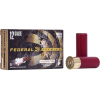
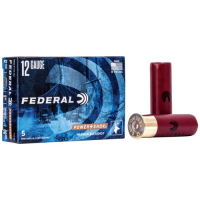
- Federal FliteControl #1 Buck (16 pellets of .30 caliber): My top pick. Sixteen pellets means more wound channels than 00 Buck’s 8-9 pellets. The FliteControl wad keeps the pattern tight. Each pellet hits FBI penetration standards. Total energy transfer is exceptional.
- Federal FliteControl 00 Buck: The more well-known option. Eight pellets of .33 caliber, tight pattern, proven performance. Slightly less total pellet count but larger individual pellet diameter.
- Hornady Critical Defense 00 Buck: Uses a FTX wad design that also controls pattern well. Good performance, slightly more widely available than FliteControl in some areas.
Cons
- 12 gauge is loud and has significant recoil. Reduced recoil loads are an acceptable compromise for lighter shooters; just verify they cycle your semi-auto reliably if that’s your platform.
- Over-penetrates drywall easily, verify wall behavior for your layout
Best .300 Blackout Home Defense Ammo
.300 Blackout is an increasingly popular home defense caliber, especially suppressed. The combination of a subsonic load and a suppressor brings the sound down to ranges that won’t cause immediate hearing damage indoors. That’s a significant advantage most pistol-caliber people don’t think about.
Pros
- Hornady Sub-X 190gr: Purpose-built for subsonic use. The Sub-X bullet expands at subsonic velocities (1,050 fps), which most expanding bullets don’t do reliably. It’s essentially the only properly engineered expanding subsonic .300 BLK load available at scale.
- Suppressed .300 BLK subsonic is genuinely hearing-safe indoors. No other rifle/carbine caliber comes close on this measure.
- Lightweight bullet fragments on impact, dumping energy in the first room
Cons
- Subsonic loads generate significantly less terminal energy than supersonic options. Deep penetration compensates somewhat, but it’s not a 5.56 TAP.
- If you’re running .300 BLK unsuppressed, just run 5.56 instead. The platform only makes sense with a suppressor from a terminal/noise tradeoff perspective.
- Muzzle blast indoors is significant, hearing protection mandatory
Who Should NOT Use These Defensive Loads
- Range-only shooters. Premium defensive loads run $1-2 per round vs $0.25-0.40 for quality FMJ practice ammo. If you do not carry or store the gun for defense, buy the cheap stuff and shoot more.
- Anyone who has not tested 100 rounds of the chosen load through their specific gun. JHP feed reliability varies between platforms. Skip the test, and you trust a defensive load that may fail on your one shot that matters.
- Households with thin interior walls and close neighbors. 5.56 frangible (Liberty Civil Defense) or .300 Blackout subsonic Sub-X are better choices than 12 gauge buckshot, which over-penetrates drywall easily. Run a wall-penetration test on your specific build before committing.
- Reloaders who hand-load practice ammo. Use commercial defensive loads for actual home defense. Court-tested ammunition with established forensic records protects you legally in a justified-shooting scenario. Hand-loaded defensive ammo is a prosecutor gift.
Frequently Asked Questions
What is the best home defense ammo overall?
For a 9mm pistol, Federal HST 124gr JHP is the single most-tested defensive load on the civilian market. Federal HST passes the FBI 12-to-18-inch penetration standard with reliable expansion through denim, sheetrock, and auto glass. The 124gr version is the FBI-issue weight. Speer Gold Dot 124gr and Hornady Critical Duty 135gr are equally valid alternatives in the same caliber.
Is 9mm or 45 ACP better for home defense?
Modern 9mm defensive loads close most of the gap with 45 ACP. The FBI returned to 9mm in 2014 after testing showed that quality 9mm hollowpoints meet the same penetration and expansion standards as 45 ACP rounds, with significantly less recoil and higher magazine capacity. For new shooters or anyone planning to share the gun across multiple household members, 9mm is the smarter pick. For experienced shooters who prefer the heavier 45 ACP recoil impulse, the older caliber still works.
Is FMJ ammo safe for home defense?
FMJ (full metal jacket) target ammo is NOT safe for home defense in most environments. FMJ does not expand on impact, so it over-penetrates the threat and continues through walls, doors, and into adjacent rooms or buildings. Quality jacketed hollow point loads expand within 12-18 inches of soft tissue and stop. Use FMJ only for range practice. Buy dedicated defensive ammo (HST, Gold Dot, Critical Defense, Critical Duty) for the loaded gun.
What is the FBI penetration standard for defensive ammunition?
The FBI ammunition test protocol requires defensive handgun and rifle ammunition to penetrate between 12 and 18 inches in calibrated 10 percent ordnance gelatin after passing through one of several intermediate barriers (heavy clothing, plywood, drywall, automotive glass, sheet steel). Penetration shallower than 12 inches risks failing to reach vital organs; deeper than 18 inches risks over-penetration through the threat. Every load on this guide passes the FBI standard.
Are hollow point bullets legal for home defense?
Yes, hollow point bullets are legal in all 50 states for civilian home defense, concealed carry, and target use. New Jersey previously restricted hollow point possession to limited circumstances but amended the law in 2022, civilians can now own and use hollow point ammunition for self-defense. Always verify your specific state and locality rules at oag.ca.gov, the New Jersey AG website, or your state-equivalent for current restrictions.
What is the difference between Critical Defense and Critical Duty Hornady?
Critical Defense is optimized for short-barrel concealed carry and personal defense pistols (3 to 4 inch barrels). Lower velocity, faster expansion at typical defensive distances. Critical Duty is optimized for service-length pistols and duty use through intermediate barriers like windshield glass and heavy clothing. Higher velocity, designed to retain integrity through tougher barriers. For most home defenders with a service-sized pistol, Critical Duty is the better choice. For pocket pistols, Critical Defense.
How much defensive ammo should I keep loaded for home defense?
Keep one or two boxes (20 to 40 rounds) of premium defensive ammunition loaded and cycled in the home defense magazine plus one or two spare magazines or speed loaders. Buy a fresh box every 3 to 5 years and rotate the loaded magazines to ensure spring tension and primer integrity. Hand-loaded or older-than-decade ammo is reliable but commercial defensive loads have shorter QC tolerance, fresh is safer.
Does 5.56 over-penetrate walls in home defense scenarios?
5.56 ammunition can over-penetrate residential walls but does so LESS than 9mm and 45 ACP defensive handgun ammunition in most testing. 5.56 lightweight bullets (55 to 64gr) fragment or tumble after the first impact, dumping energy in the first room. The myth that 5.56 punches through every wall in the house is largely incorrect. Premium 5.56 defensive loads like Hornady TAP 55gr GMX or Speer Gold Dot 64gr further reduce over-penetration. Frangible loads like Liberty Civil Defense are the lowest-wall-penetration option if neighbors are close.
4,659+ Gun & Ammo Deals
Updated daily from 200+ top retailers. Filter by category, caliber, action type, and price.