

Affiliate disclosure: This Extar EP9 review contains affiliate links. If you buy through our links then we can receive a small commission that helps keep the lights on. You don’t pay anything more.
- Treat every gun as loaded
- Point the muzzle in a safe direction
- Keep your finger off the trigger until you’re ready to shoot
- Know your target and what’s beyond
Last updated and checked October 29, 2026 · By Nick Hall, who put 500 rounds through the Extar EP9 for this review
Quick Answer: The Extar EP9 is the best cheap 9mm PCC for Glock-magazine owners in 2026: a 4 lb 2 oz, 6.5-inch blowback pistol with a polymer receiver and a threaded barrel, sold direct by Extar for $469 (it is not sold through retail stores). Ours ran 500 rounds of five loads without a malfunction and held 2.5 to 3 inches at 25 yards.
Extar builds it in Arizona and ships it with one 18-round Glock-pattern magazine (10 rounds for restricted states), with either the Extar stabilizer or an SB Tactical SBA3 brace. The trigger is heavy at nearly 7 pounds and the blowback recoil is snappy; for $469 the trade is fair. The 16-inch Carbine ($499) is listed but Extar says its production is paused.
Table of Contents
How we tested: Every pick here is ranked against our testing methodology. Minimum round counts, accuracy and reliability protocols, the failures that disqualify a gun.
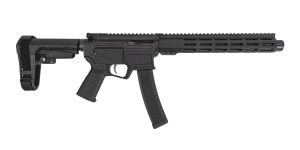
Review: Extar EP9 – The Budget PCC That Shouldn’t Be This Good
Our Rating: 7.8/10
- Price: $469 direct from Extar (6.5″ pistol); Carbine $499, production paused
- Where to Buy: Extar direct only, shipped to your FFL (no shipping to CA, CT, DE, HI, IL, MA, NJ, NY, WA, PR, GU or DC)
- Caliber: 9mm Luger
- Action: Direct blowback, semi-automatic
- Barrel Length: 6.5″
- Overall Length: 23.8″ (25.1″ with stabilizer)
- Height: 7.9″
- Width: 2″
- Weight (unloaded): 4 lb 2 oz (yes, really)
- Capacity: Glock 9mm magazines up to 33 rounds; ships with one 18-round (or 10-round) magazine
- Receiver Material: Glass-filled polymer
- Barrel: Black-nitrided steel, 1:10 twist, 1/2×28 threaded
- Sights: None (full-length Picatinny rail)
- Optics: Picatinny top rail, M-LOK handguard
- Safety: AR-style selector
- Brace: Extar stabilizer or SB Tactical SBA3 (your choice at purchase)
- Made in: USA (designed, machined and assembled in Arizona)
Pros
- $469 direct from Extar for a Glock-mag 9mm PCC
- Accepts all Glock 9mm magazines including 33-round sticks
- Threaded 1/2×28 barrel ready for suppressors out of the box
Cons
- Polymer construction feels cheap compared to aluminum receivers
- Blowback action is snappy with noticeable bolt slap
- Trigger is heavy at nearly 7 lbs and feels mushy
Quick Take
This Extar EP9 review starts with an honesty disclaimer. When I first pulled the Extar EP9 out of its box, I thought somebody had shipped me a toy. The thing weighs just over four pounds. My loaded Glock 19 weighs more. But 500 rounds later, I’m sitting here writing a review of a $469 pistol-caliber firearm that runs like it costs twice as much. That’s not something I expected.
The EP9 is Extar’s direct-to-consumer 9mm that takes Glock magazines, runs a simple blowback action, and costs less than most red dot sights. It’s not fancy. The polymer receiver will make AR snobs twitch. The trigger won’t win any awards. But it runs, and it runs reliably, and that’s what matters when you’re building a home defense PCC on a budget.
Catch? You can only buy it direct from Extar’s website. No fondling it at your local gun shop first. No comparing it side by side with a Scorpion on the rack. You pay your money, wait for shipping, and hope for the best. For most buyers, that gamble pays off.
Best For: Budget-conscious shooters who want a home defense PCC or range toy without breaking the bank, especially those already invested in the Glock magazine ecosystem.
Variants: EP9 Pistol vs EP9 Carbine
This Extar EP9 review covers both variants Extar has sold from the factory. The Pistol with the 6.5″ barrel and brace ($469) is the home defense and PDW-format option. The Carbine with the 16.25″ barrel and M4-style stock ($499) is the range option, but Extar has paused its production, so our best 9mm carbines list has the alternatives. Both take Glock magazines, share the same direct-blowback action, and come threaded for suppressor use.

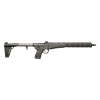
Shorter 6.5-inch threaded 1/2×28 barrel with the Extar stabilizer or an SBA3 brace. Overall length 23.8 inches (25.1 with the stabilizer), 4 lb 2 oz unloaded, among the lightest factory PCCs. Pistol classification avoids NFA SBR paperwork. Best for home defense and tight-space PDW use where overall length matters more than barrel velocity.
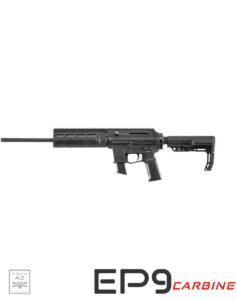
16.25-inch threaded 1/2×28 barrel and M4-style collapsible stock instead of a brace. Overall length 35 inches extended, 31.25 inches collapsed, 5 lbs 2 oz unloaded, with a side-charging reciprocating handle and last-round hold-open. Extar lists it at $499 but says production is paused with no restart date.
For most home defense use cases the 6.5″ Pistol variant is the right call. Shorter overall length matters more than barrel-length velocity gains inside a house, and the included arm brace keeps the gun in the “pistol” classification that avoids NFA SBR paperwork. The Carbine variant earns its place if you want the 16″ barrel velocity for longer-range work, an M4 stock instead of a brace, and a more conventional carbine handling profile. Everything below this section in the review is written against the 6.5″ Pistol unless I specifically note otherwise.
Why Extar Built the EP9 This Way
Extar is a small company that designs, machines and assembles the EP9 in Arizona, and it made a decision early on that shaped everything about the EP9: sell direct and cut the middleman. That’s why you won’t find this thing at Cabela’s or your local FFL’s rack. Extar ships it to your FFL for the transfer. That direct-sale model is how they keep the price at $469 while manufacturing in the USA.
The polymer receiver is the other big cost-cutting move, and the one that gets the most pushback. But here’s the thing. Polymer works. It’s been working in handguns since the Glock 17 showed up in 1982 and everyone said it was a toy too. The EP9 doesn’t need an aluminum lower because it’s a blowback 9mm, not a 5.56 rifle. The forces involved are manageable for reinforced polymer.
Glock magazine compatibility was the smartest call Extar made. If you own a Glock 17, Glock 19, or any of the dozens of aftermarket Glock-pattern mags out there, you already have magazines for the EP9. That 33-round Glock stick mag turns this thing into a seriously fun range toy. And a 33-round 9mm for home defense isn’t exactly a terrible idea either.
Blowback action keeps things simple. No rotating bolt, no gas system, no adjustable gas block to fiddle with. Rounds go in, rounds come out. The tradeoff is more felt recoil than a delayed blowback or roller system (Extar now sells a delayed-blowback EP9 MDB for $100 more), but Extar added what they call an “Advanced Recoil Impulse Damping System” to tame the bolt velocity. It helps. Sort of.
Competitor Comparison
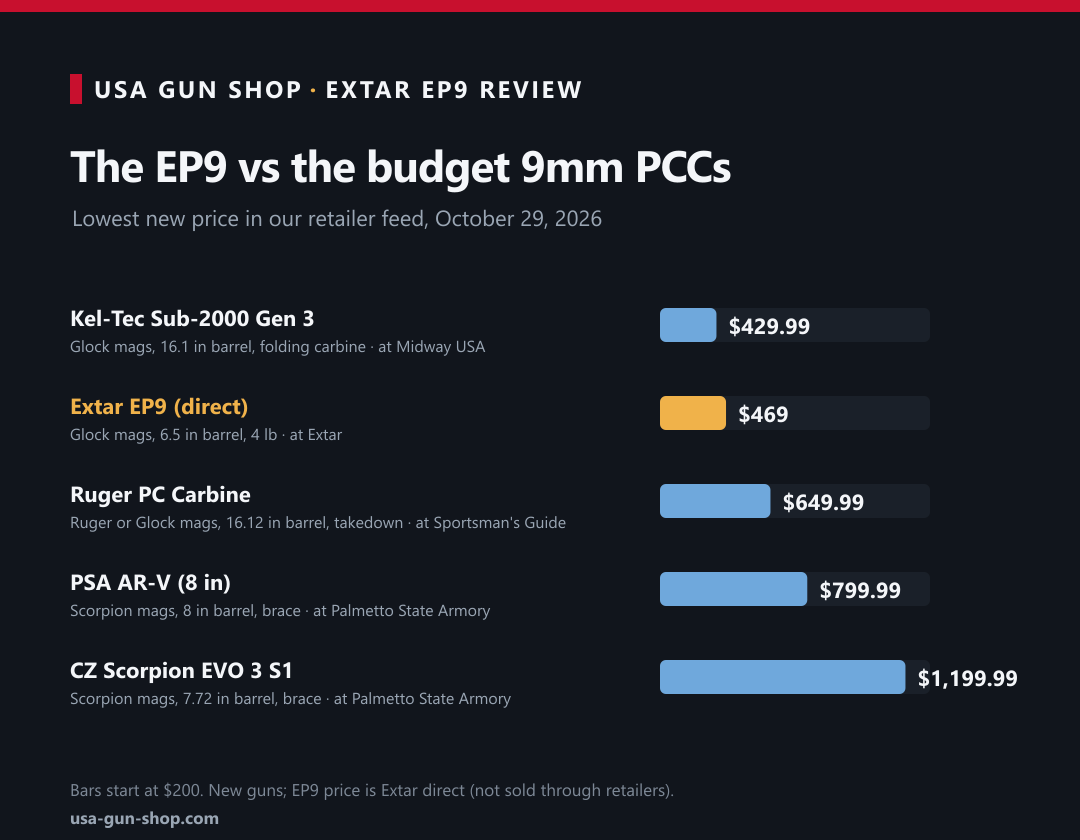
On October 29, 2026 the EP9 was $469 direct from Extar. The Kel-Tec Sub-2000 Gen 3 was $429.99 at Midway USA, the Ruger PC Carbine $649.99 at Sportsman’s Guide, the PSA AR-V 8-inch $799.99 at Palmetto State Armory, the CZ Scorpion EVO 3 S1 $1,199.99 at Palmetto State Armory and the Sig MPX Copperhead $1,948 at Palmetto State Armory.
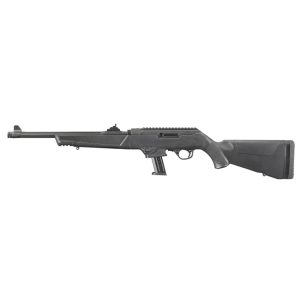
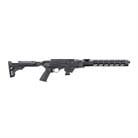
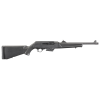
Ruger PC Carbine (from $649.99)
The Ruger PC Carbine is the obvious step up if you want something more substantial. You get a proper 16.12″ barrel, a takedown design that’s genuinely clever, and the ability to swap between Ruger and Glock magazine wells. Build quality is night-and-day better than the EP9. The aluminum receiver, the fit, the overall feel of a “real gun” instead of a “plastic fantastic.”
But the Ruger costs $181 more ($649.99 at Sportsman’s Guide on October 29, 2026) and weighs nearly 7 pounds. It’s a carbine, not a pistol/PDW. Different tool for a different job. If you want something compact that lives next to the bed, the EP9 makes more sense. If you want a proper PCC for competition or longer range work, the Ruger wins.
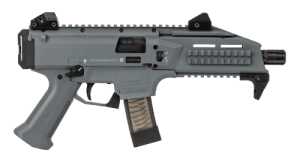
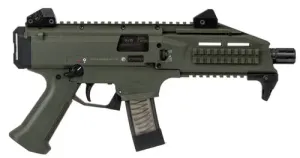
CZ Scorpion Evo 3 S1 (from $1,199.99)
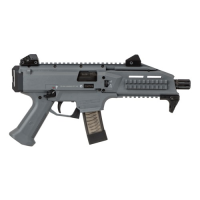
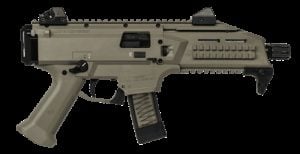
Scorpion is what you buy when you want the best sub-gun experience without going full NFA. The ergonomics are fantastic, the trigger is leagues better than the EP9’s, and CZ’s build quality is superb. I’ve shot Scorpions with thousands of rounds through them that still look and feel tight.
It’s also more than twice the price: $1,199.99 at Palmetto State Armory on October 29, 2026, $731 more. That’s the whole argument right there. The EP9 exists for people who looked at the Scorpion, winced at the price tag, and thought “is there anything cheaper that still works?” Yes. Yes there is.
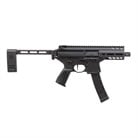
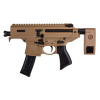
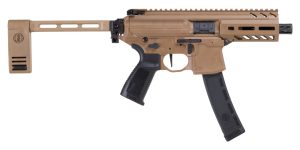
Sig Sauer MPX (from $1,948)
Comparing the MPX to the EP9 is almost unfair. The MPX uses a short-stroke gas piston system that makes it shoot like a 9mm AR should, not a clunky blowback. The recoil impulse is buttery. The build quality is military-grade. You can run it suppressed without any hiccups.
You’re also spending about four times what the EP9 costs: the MPX Copperhead was $1,948 at Palmetto State Armory on October 29, 2026. For that money, you could buy four EP9s. The MPX is the gold standard. The EP9 is the proof that you don’t always need gold.
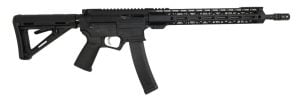
PSA AR-V (from $799.99)
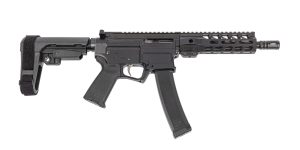
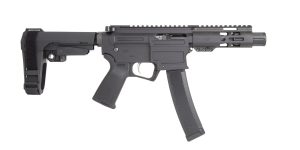
Palmetto State Armory’s AR-V is one of the EP9’s most direct competitors in the budget space. It takes Scorpion magazines, has an aluminum receiver, and the 8-inch pistol was $799.99 at Palmetto State Armory on October 29, 2026. Build quality is noticeably better than the EP9. The trigger is better. It feels like a “real” AR in your hands.
The catch is the $331 price gap and the CZ Scorpion mags instead of Glock mags. If you’re already running Glocks, the EP9’s magazine compatibility is a huge advantage. If you’re starting fresh, the AR-V is worth the extra cash.
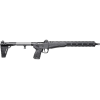
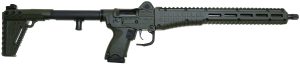
Kel-Tec Sub 2000 (from $429.99)
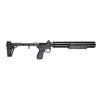
Sub 2000 folds in half. That’s its party trick, and it’s a good one. For a truck gun or bug-out bag, nothing beats shoving a folded 16″ carbine into a laptop case. It also takes Glock mags, just like the EP9.
Ergonomically, the Sub 2000 is weird. The charging handle location, the tube stock, the overall feel of shooting it. It works, but it’s not comfortable for extended range sessions. The EP9 handles more like a traditional AR, which most shooters will prefer. The Gen 3 Sub-2000 was $429.99 at Midway USA on October 29, 2026, $39 less, so this one comes down to whether you need that folding capability.

Features and Quirks
Polymer Construction: Love It or Hate It
Let’s address the elephant in the room. The EP9’s upper and lower receivers are glass-filled polymer. Not aluminum. Not steel. Plastic. And I can hear the collective groan from the peanut gallery already.
In practice, it holds up fine. After 500 rounds, I noticed some minor wear marks above the magazine well where the bolt carrier reciprocates, which is consistent with what other owners report. It’s cosmetic. The structural integrity hasn’t suffered. Extar warranties the receiver, and reports of actual cracking or failure are extremely rare in the current generation.
What the polymer does give you is weight savings that border on absurd. At just over four pounds unloaded, you can run this thing one-handed if you really want to. It’s lighter than a loaded AR magazine. For home defense scenarios where you might be holding a flashlight or opening doors, that weight advantage is genuinely useful.
The Trigger Situation
I’m not going to sugarcoat this. The EP9’s trigger is its weakest link. It pulls at nearly 7 pounds, which is heavy for a firearm with AR-style controls where your brain expects a 5-6 pound break. There’s noticeable mush in the takeup, and the break itself isn’t crisp. It’s more of a “roll” than a “snap.”
The good news is that Extar upgraded the fire control group in current production models. Earlier versions had a polymer hammer and trigger that could cause doubling issues. The current metal fire control group solved that problem and improved the trigger feel, even if it’s still not going to win any comparison tests. For a $469 blowback 9mm, it’s acceptable. Just don’t expect Geissele.
Controls and Ergonomics
Everything is close to where you’d expect it if you’ve ever held an AR-15: safety selector on the left, magazine release and bolt catch in familiar spots. The charging handle is non-reciprocating, so it stays put while you shoot. Your muscle memory transfers, which is a smart design choice from Extar.
M-LOK handguard gives you plenty of real estate for accessories. I ran a Streamlight on the left side and still had room for a handstop. The top Picatinny rail is long enough for any optic and a backup iron sight setup if you want it. Speaking of which, you absolutely need an optic. No iron sights are included, so budget an extra $50-$150 for a red dot.
You choose the brace when you order: Extar’s own fixed stabilizer, which is the cheapest option, or an adjustable SB Tactical SBA3. If compact storage matters to you, neither folds, and that’s a point for the Kel-Tec Sub 2000.
Glock Mag Compatibility
This is the EP9’s secret weapon. Any Glock 9mm magazine works. OEM Glock 17 mags. Glock 19 mags. Those fun 33-round sticks. Magpul GL9 PMAGs. ETS clear mags. KCI cheapies from the gun show. I tested all of them and every single one ran without issues.
If you already own a Glock, you literally have magazines for this gun sitting in your safe right now. That’s a bigger deal than people realize. Magazines are expensive, and having a PCC that shares mags with your carry pistol is incredibly practical.

At the Range: 500 Round Test
Break-In Period
Extar doesn’t specify a break-in period, and based on my experience, the EP9 doesn’t need one. It ran from the very first round. I loaded up a Glock 17 OEM mag with 115-grain Federal American Eagle, racked the charging handle, and it cycled like it had been doing this for years. No break-in hiccups, no stiff action, nothing to work through.
Reliability Testing
Five hundred rounds. Zero malfunctions. Not a single failure to feed, failure to eject, or failure to go bang. Here’s what went through the gun:
- 150 rounds Federal American Eagle 115gr FMJ
- 100 rounds Blazer Brass 115gr FMJ
- 100 rounds Winchester White Box 124gr FMJ
- 100 rounds Fiocchi 124gr FMJ
- 50 rounds Federal HST 147gr JHP (defense ammo test)
Blowback action doesn’t care about bullet weight or powder charge. It eats everything. That’s one of the genuine advantages of a simple blowback system: there’s no gas system to tune, no piston to adjust. If the primer goes bang, the gun cycles. Period.
Accuracy
Let’s set realistic expectations. This is a 6.5″ barrel blowback 9mm with a heavy trigger. It’s not going to shoot tiny groups. At 25 yards off a rest with the 124gr Winchester, I was getting groups around 2.5-3 inches. Perfectly adequate for defensive use. At 50 yards, groups opened up to about 5-6 inches, which is still center-mass on a silhouette.
Standing unsupported at 15 yards, which is a more realistic home defense distance, I could keep rapid fire strings inside a 4-inch circle. The red dot helps enormously here. If you try to shoot this thing fast with iron sights (aftermarket, since none come with it), you’ll struggle. Put a decent red dot on it and it becomes a very different animal.
Recoil and Felt Impulse
Here’s where I have to be real with you. The EP9 is snappy. That blowback bolt slamming back and forth creates a distinctive “thwack” that you feel in your hands and hear in the buffer. It’s not unpleasant exactly, but it’s not the smooth shooting experience you’d get from a Sig MPX or even a delayed blowback system.
Extar’s recoil damping system helps, but it doesn’t eliminate the fundamental physics of a blowback design. The bolt is heavy because it has to be, and you feel every ounce of it cycling. After a couple hundred rounds, your hands know they’ve been shooting something. It’s not punishing like a snappy .40 compact, but it’s more than you’d expect from 9mm in a platform this size.

Performance Testing Results
Reliability: 8/10
Five hundred rounds with zero failures is hard to argue with. I tested five different ammo types including hollow points, used six different magazines from four different manufacturers, and the EP9 never hiccupped once. The blowback system is inherently reliable because it’s inherently simple. Earlier production models had trigger group issues that caused doubling, but Extar fixed that with metal fire control components. Current production guns are tanks.
I’m docking two points because 500 rounds isn’t a torture test, and some owners have reported firing pin channel issues at higher round counts. The vast majority of EP9 owners report excellent reliability, but it’s not quite at the “I’d bet my life on it” level of a proven duty weapon. For home defense, I’m comfortable with it. For professional use, I’d want a bigger sample size.
Accuracy: 7/10
The 2.5-3 inch groups at 25 yards are respectable for a short-barreled blowback 9mm, but they’re not going to impress anyone who’s shot a CZ Scorpion or Sig MPX at the same distance. The heavy trigger is the main culprit. Every time you’re fighting through that 7-pound pull, you’re introducing movement. A trigger upgrade would likely tighten groups by half an inch or more.
For its intended purpose as a home defense or close-range carbine, accuracy is more than sufficient. You’ll hit what you’re aiming at inside 50 yards. Beyond that, you’re asking this gun to do something it was never designed for.
Ergonomics and Recoil: 7/10
AR-style controls are great. The weight is amazing. The handling is quick and natural. But that blowback recoil impulse drags the score down. After 200 rounds in a single session, I was ready for a break. The bolt slap is real, and it gets old. The non-folding brace also limits how compact you can store this thing.
On the positive side, the light weight means this gun is genuinely fun to swing around and transition between targets. It comes up fast, tracks well, and the balance point sits right where you want it. New shooters will appreciate how unthreatening just over 4 pounds of 9mm feels in their hands.
Fit and Finish: 6/10
It’s a polymer gun that costs $469. Set your expectations accordingly. The receiver halves fit together well and there’s no wobble, but the material itself looks and feels like what it is: plastic. You’ll see wear marks after a few hundred rounds. The barrel and bolt are properly finished with black nitride, but the overall aesthetic is “functional tool” not “safe queen.”
M-LOK handguard is decent, the controls are tight, and nothing rattles. For the price, the fit and finish are appropriate. Comparing it to a CZ or Sig is silly because those guns cost two to four times more. Within its price class, the EP9 is about average.
Known Issues and Common Problems
First-Gen Trigger Doubling
Some early EP9 owners reported the gun doubling (firing twice on one trigger pull), which was traced to the early fire control parts, and current guns use updated metal components. If you buy new today, this shouldn’t affect you. If you’re buying used, ask which generation you’re getting and whether the trigger group has been updated.
Firing Pin Channel Binding
Some owners have reported the firing pin sticking in the channel after extended use. It is a cleaning issue in most cases: the blowback action throws a lot of carbon and fouling back toward the firing pin, and if you don’t clean the channel regularly, things can get sticky. Keep it clean and this shouldn’t be a problem.
Receiver Wear Marks
Polymer receiver will show wear marks above the magazine well where the bolt carrier reciprocates. This is cosmetic and doesn’t affect function, but it bothers people who like their guns looking pristine. If that’s you, maybe a polymer PCC isn’t your thing.
Who Should NOT Buy the Extar EP9
The honest part of any Extar EP9 review is the disqualifier list. The EP9 is the right gun for a lot of people, but it is genuinely the wrong gun for some buyers. If any of the following describes you, save the $469 and buy something that fits better.
- The duty-grade buyer who needs life-bet-on-it reliability. The EP9 ran 500 rounds without a hiccup for me, but the sample size is what it is for a $469 polymer blowback PCC. If your home defense criteria starts with “documented across hundreds of thousands of rounds in police/military service,” buy the Sig MPX or a Daniel Defense DDM4. Pay the premium, get the reliability pedigree.
- The hands-on buyer who hates direct-to-consumer. Extar sells only through their website. You will never fondle this gun at your local FFL before paying. If you need to shoulder a gun before you commit, the CZ Scorpion Evo 3 sits on every gun store rack in America and costs roughly twice as much for the experience of touching it first.
- The competition shooter chasing low recoil and a clean trigger. EP9’s blowback action is snappy and the factory trigger pulls heavy. For USPSA PCC division or 3-gun, the Sig MPX‘s gas piston operation is a different class of recoil impulse and the factory trigger is competition-ready out of the box.
- The non-Glock-mag owner who wants to keep one magazine inventory. If you are already invested in CZ Scorpion mags, AR-9 mags, or Sig MPX mags, the Glock-only EP9 forces you to start a second magazine inventory. The PSA AR-V or AK-V take Scorpion mags and may fit your existing supply better.
- The pristine-safe-queen owner. The polymer receiver shows wear marks above the magazine well after 200-300 rounds. The pattern is cosmetic and not structural, but it bothers people who keep their guns visually perfect. Aluminum-receiver alternatives (Ruger PC Carbine, Sig MPX) hold their finish better.
Parts, Accessories and Upgrades
| Upgrade Category | Recommended Component | Why It Matters | Cost Estimate |
|---|---|---|---|
| Optic (Essential) | Sig Romeo 5 or Holosun 403B | No iron sights included, you literally need something to aim with | $100-$150 |
| Magazines | Glock OEM 33-round mags | One mag isn’t enough for anything; stock up on Glock 17 and 33-rounders | $25-$35 each |
| Light | Streamlight HLX or Protac | M-LOK mount makes it easy; essential for home defense use | $100-$150 |
| Muzzle Device | KAK Flash Can or Kaw Valley linear comp | Directs blast forward, huge improvement for indoor range and HD | $30-$50 |
| Trigger Spring Kit | Extar upgraded trigger components | Lightens the pull and cleans up the break; best bang-for-buck upgrade | $20-$40 |
| Brace Upgrade | SB Tactical SBA3 | Better cheek weld and folding capability over the stock brace | $80-$120 |
The beauty of the EP9’s AR-compatible platform is that most standard AR pistol-grip accessories work. Aftermarket grips, slings, buffer tubes, and handguard accessories all bolt right on. You can accessorize this thing for less than the gun itself cost and end up with a seriously capable little package.
For parts, EuroOptic carries a good selection of AR-compatible accessories, optics and Glock magazines.
Extar EP9 by the Numbers
- 500 rounds of 5 loads, 0 malfunctions
- 2.5 to 3 in at 25 yards; 5 to 6 in at 50
- 4 lb 2 oz unloaded, 6.5 in barrel, 23.8 in long, 2 in wide
- nearly 7 lb trigger
- $469 direct from Extar (October 29, 2026); $181 under a Ruger PC Carbine
The Verdict
My Extar EP9 review verdict is that this gun has no business being this good at this price. It’s a $469 9mm that takes Glock mags, ran 500 rounds without a malfunction, weighs just over four pounds, and comes suppressor-ready from the factory. The polymer construction won’t win any beauty contests, and the trigger needs work, but those are predictable compromises at this price point.
Is it as nice as a CZ Scorpion? No. Does it shoot as flat as a Sig MPX? Absolutely not. But it costs a fraction of what those guns cost, and it still puts rounds where you point it. For a first PCC, a budget home defense setup, or just a stupid-fun range toy that runs on the cheapest 9mm you can find, the EP9 delivers way more than its price tag suggests.
Buy it. Throw a red dot on it. Load up a 33-round Glock mag. And try not to grin. I dare you.
Final Score: 7.8/10
Best For: Budget-minded shooters who want a lightweight, Glock-mag-compatible PCC for home defense, range fun, or as a truck gun. Especially valuable if you’re already invested in the Glock ecosystem.
Related Guides
Looking for the most packable option? Read our full Kel-Tec Sub-2000 review.
Frequently Asked Questions
How much does the Extar EP9 cost?
Extar sells the 6.5-inch EP9 direct for $469. The 16-inch Carbine is listed at $499, but Extar says Carbine production is paused.
Where can I buy the Extar EP9?
Only from Extar's website, shipped to your FFL. Extar does not ship to California, Connecticut, Delaware, Hawaii, Illinois, Massachusetts, New Jersey, New York, Washington, Puerto Rico, Guam or DC.
Where is the Extar EP9 made?
Extar says the EP9 is designed, machined and assembled in Arizona.
What magazines does the Extar EP9 use?
Glock 9mm double-stack magazines, up to 33-round sticks. It ships with one 18-round magazine, or a 10-round magazine for restricted states.
How much does the Extar EP9 weigh?
4 pounds 2 ounces unloaded, or 4 pounds 4.5 ounces with the Extar stabilizer. It is 23.8 inches long (25.1 with the stabilizer) and 2 inches wide.
Is the Extar EP9 reliable?
Ours ran 500 rounds of five loads, including Federal HST 147-grain, with zero malfunctions. Some early guns had doubling issues that were traced to the original fire control parts.
Is the Extar EP9 barrel threaded?
Yes. The 6.5-inch barrel is threaded 1/2x28, so it takes common 9mm suppressors and muzzle devices.
What brace comes on the Extar EP9?
You choose at purchase: Extar's fixed stabilizer or an adjustable SB Tactical SBA3.
Extar EP9 vs Kel-Tec Sub-2000: which should I buy?
The Sub-2000 Gen 3 was $429.99 at Midway USA on October 29, 2026, $39 less, and folds in half. The EP9 handles more like an AR, weighs 4 pounds 2 ounces and takes a brace and M-LOK accessories.
How accurate is the Extar EP9?
From a rest with a red dot we shot 2.5 to 3-inch groups at 25 yards with 124-grain Winchester and about 5 to 6 inches at 50 yards.
3,378+ Gun & Ammo Deals
Updated daily from 200+ top retailers. Filter by category, caliber, action type, and price.