
Affiliate disclosure: This article contains affiliate links. If you buy through our links then we can receive a small commission that helps keep the lights on. You don’t pay anything more.
Last updated June 2026 · By Nick Hall, CCW instructor tracking constitutional carry across all 29 permitless-carry states, the 2024-2026 expansions in South Carolina, Louisiana, and Tennessee’s 18+ extension, the federal Gun-Free School Zones Act exception that still requires a permit, and the Bruen-era litigation that continues to reshape the framework
Disclaimer: This is an editorial round-up of constitutional carry across the United States. We do our best to make sure it’s correct, but do not rely on this as legal advice. Constitutional carry rules differ in meaningful ways state to state and have changed substantially through 2024-2026. Consult a licensed firearms attorney in your state for any specific question.
- Treat every gun as loaded
- Point the muzzle in a safe direction
- Keep your finger off the trigger until you’re ready to shoot
- Know your target and what’s beyond
Best-priced firearms across 200+ retailers · Updated every 4 hours
![FN 509 COMPACT [BLK] *10-ROUND*](https://www.usa-gun-shop.com/wp-content/uploads/ugs/img-cache/db4f97c202e578c705506c0de2da3203.webp)

Best-priced ammunition across 200+ retailers · Updated every 4 hours





Table of Contents
How we tested: Every pick here is ranked against our testing methodology. Minimum round counts, accuracy and reliability protocols, the failures that disqualify a gun.
Constitutional Carry in 2026: What You Need to Know
TL;DR: As of April 2026, 29 U.S. states have enacted constitutional carry (also called “permitless carry”), meaning a law-abiding adult may carry a concealed handgun without a state-issued permit. The 29 states are: Alabama, Alaska, Arizona, Arkansas, Florida, Georgia, Idaho, Indiana, Iowa, Kansas, Kentucky, Louisiana, Maine, Mississippi, Missouri, Montana, Nebraska, New Hampshire, North Dakota, Ohio, Oklahoma, South Carolina, South Dakota, Tennessee, Texas, Utah, Vermont, West Virginia, and Wyoming. Vermont is the original (Article 16 of the Vermont Constitution, 1777). Alaska adopted the modern form in 2003. The fastest growth came after Bruen (2022), with eight states added in 2021-2024. Constitutional carry is NOT travel reciprocity. Your home state’s permitless carry rule does not extend across state lines, and most carriers serious about reciprocity still hold an optional state permit. Federal sensitive locations (K-12 schools, courthouses, federal buildings) still apply. The Gun-Free School Zones Act of 1990 (18 U.S.C. § 922(q)) only carves out a state-licensed CCW holder, not a permitless carrier.
Constitutional carry has become the dominant carry framework in the United States. Twenty-nine states, representing roughly 58% of the country and just over half of the U.S. population, now allow concealed carry of a handgun without a permit for any law-abiding adult. The trend accelerated sharply after the U.S. Supreme Court’s 2022 decision in NYSRPA v. Bruen, which dismantled state may-issue permit regimes and gave constitutional carry advocates significant legal momentum. Eight states moved to the permitless framework in the 2021-2024 window alone.
What constitutional carry actually means in 2026 is more nuanced than the headline. Each of the 29 states sets its own age limits, defines whether the rule covers handguns only or includes long guns, decides whether to extend the right to non-residents, and retains a sensitive-location framework that still bars carry in K-12 schools, courthouses, and federal facilities. The federal Gun-Free School Zones Act (18 U.S.C. § 922(q)) carves out a state-licensed CCW holder for the 1,000-foot zone around schools, but does NOT carve out a permitless carrier, one of the most consequential reasons many constitutional-carry-state residents still get the optional state permit.
I hold an out-of-state CCW that travels in 30+ reciprocity states, and I’ve taught the live-fire portion of state-approved permit courses across multiple jurisdictions. Constitutional carry doesn’t make the optional permit obsolete, for serious carriers who travel out of state, who live near schools, or who want the federal GFSZ exception, the permit is still worth holding. The constitutional-carry framework simply removes the in-state legal barrier for adults who don’t want or need that permit infrastructure.
This page is the master index for constitutional carry across the country. Every individual state’s rules are covered in depth in our state-by-state series; this article gives you the comparative view, the historical context, and the federal-law nuances. State-specific rules sit within our broader U.S. gun laws by state hub.
The 29 Constitutional Carry States: Complete List
TL;DR: The 29 states with constitutional carry as of April 2026, in alphabetical order: Alabama, Alaska, Arizona, Arkansas, Florida, Georgia, Idaho, Indiana, Iowa, Kansas, Kentucky, Louisiana, Maine, Mississippi, Missouri, Montana, Nebraska, New Hampshire, North Dakota, Ohio, Oklahoma, South Carolina, South Dakota, Tennessee, Texas, Utah, Vermont, West Virginia, and Wyoming. Vermont is the original (1777). Alaska adopted the modern form (2003). The most recent additions are Louisiana (effective July 4, 2024), South Carolina (effective March 14, 2024), and Tennessee’s extension to 18+ (Beeler v. Long, 2024).
- Alabama, HB 272, effective January 1, 2023
- Alaska, HB 102, effective September 9, 2003
- Arizona, SB 1108, effective July 29, 2010
- Arkansas, Act 746 of 2013 (clarified by AG opinion 2018)
- Florida, HB 543, effective July 1, 2023
- Georgia, SB 319, effective April 12, 2022
- Idaho, SB 1389, effective July 1, 2016 (residents); expanded 2020
- Indiana, HB 1296, effective July 1, 2022
- Iowa, HF 756, effective July 1, 2021
- Kansas, HB 2578, effective July 1, 2015
- Kentucky, SB 150, effective July 14, 2019
- Louisiana, SB 1, effective July 4, 2024
- Maine, LD 652, effective October 15, 2015
- Mississippi, HB 786, effective July 1, 2016 (clarified)
- Missouri, SB 656, effective January 1, 2017
- Montana, HB 102, effective February 18, 2021
- Nebraska, LB 77, effective September 2, 2023
- New Hampshire, SB 12, effective February 22, 2017
- North Dakota, HB 1169, effective August 1, 2017 (residents); HB 1239 (2023, 18+ residents)
- Ohio, SB 215, effective June 13, 2022
- Oklahoma, HB 2597, effective November 1, 2019
- South Carolina, H.3594 / S.109, effective March 14, 2024
- South Dakota, SB 47, effective July 1, 2019
- Tennessee, HB 2671, effective July 1, 2021; extended to 18+ via Beeler v. Long (Sixth Cir., 2024)
- Texas, HB 1927, effective September 1, 2021
- Utah, HB 60, effective May 5, 2021
- Vermont, original “Vermont carry” under Article 16 of the Vermont Constitution (1777)
- West Virginia, SB 347, effective May 24, 2016
- Wyoming, SF 109, effective July 1, 2011 (residents); SF 0079, effective July 1, 2021 (non-residents)
The 21 states still requiring a permit for concealed carry are: California, Colorado, Connecticut, Delaware, Hawaii, Illinois, Maryland, Massachusetts, Michigan, Minnesota, Nevada, New Jersey, New Mexico, New York, North Carolina, Oregon, Pennsylvania, Rhode Island, Virginia, Washington, and Wisconsin. Each of these is shall-issue under Bruen except for limited proper-cause holdouts (NJ, NY, MA), which have narrowed substantially since 2022.
Constitutional Carry: At a Glance (2026)
29 Constitutional Carry States: Effective Date, Statute, Carry Age
Sorted alphabetically. Click any state for the full state guide.
| State | Effective | Statute / Bill | Carry Age |
|---|---|---|---|
| Alabama | Jan 1, 2023 | HB 272 | 21+ |
| Alaska | Sep 9, 2003 | HB 102 | 21+ |
| Arizona | Jul 29, 2010 | SB 1108 | 21+ |
| Arkansas | 2013 (AG op. 2018) | Act 746 | 18+ |
| Florida | Jul 1, 2023 | HB 543 | 21+ |
| Georgia | Apr 12, 2022 | SB 319 | 21+ |
| Idaho | Jul 1, 2016 | SB 1389 | 18+ |
| Indiana | Jul 1, 2022 | HB 1296 | 18+ |
| Iowa | Jul 1, 2021 | HF 756 | 21+ |
| Kansas | Jul 1, 2015 | HB 2578 | 21+ |
| Kentucky | Jul 14, 2019 | SB 150 | 21+ |
| Louisiana | Jul 4, 2024 | SB 1 | 18+ |
| Maine | Oct 15, 2015 | LD 652 | 21+ |
| Mississippi | Jul 1, 2016 | HB 786 | 18+ |
| Missouri | Jan 1, 2017 | SB 656 | 19+ |
| Montana | Feb 18, 2021 | HB 102 | 21+ |
| Nebraska | Sep 2, 2023 | LB 77 | 21+ |
| New Hampshire | Feb 22, 2017 | SB 12 | 18+ |
| North Dakota | Aug 1, 2017 | HB 1169 | 18+ (residents) |
| Ohio | Jun 13, 2022 | SB 215 | 21+ |
| Oklahoma | Nov 1, 2019 | HB 2597 | 21+ |
| South Carolina | Mar 14, 2024 | H.3594/S.109 | 18+ |
| South Dakota | Jul 1, 2019 | SB 47 | 18+ |
| Tennessee | Jul 1, 2021 | HB 2671 (18+ via Beeler 2024) | 18+ |
| Texas | Sep 1, 2021 | HB 1927 | 21+ |
| Utah | May 5, 2021 | HB 60 | 21+ |
| Vermont | 1777 (Article 16) | VT Constitution | 18+ |
| West Virginia | May 24, 2016 | SB 347 | 21+ |
| Wyoming | Jul 1, 2011 / 2021 | SF 109 / SF 0079 | 21+ |
“Vermont Carry”: The Original Permitless Model
TL;DR: The phrase “constitutional carry” describes the framework first established by Vermont through Article 16 of the Vermont Constitution in 1777. Vermont has never required a concealed carry permit and does not issue one. The state’s constitutional language, “the people have a right to bear arms for the defense of themselves and the state”, was read by 19th-century Vermont courts as protecting unrestricted lawful carry, and the modern statute has not departed from that reading. When Alaska adopted permitless carry in 2003, the framework was widely described as Vermont carry, and that’s the term that stuck.
For 226 years, Vermont stood alone. The state’s constitutional carry framework was a quirk of the Green Mountain tradition, not a movement. Other states required permits, and Vermont’s status was treated as historical rather than aspirational. That changed in 2003, when Alaska under Governor Frank Murkowski adopted HB 102, which struck down the state’s concealed weapons permit requirement for adults 21 and older. The phrase “Vermont carry” entered firearms vocabulary as a description of the policy.
Arizona followed in 2010. Wyoming in 2011 (residents only initially). Then a slow drip became a flood. Mississippi, Maine, Kansas, and West Virginia between 2013 and 2016. The 2017-2019 wave added New Hampshire, North Dakota, Missouri, Kentucky, Oklahoma, and South Dakota. The Bruen decision in 2022 accelerated the trend further: Alabama, Georgia, Indiana, Iowa, Montana, Ohio, Tennessee, Texas, and Utah all adopted permitless carry in 2021-2022, with Florida and Nebraska following in 2023, and South Carolina and Louisiana in 2024.
Today the framework Vermont established almost a quarter-millennium ago is the law in 29 states. The Vermont version remains distinct in one important respect: Vermont retains universal background checks, a 72-hour waiting period (Act 14 of 2023), and a 10-round magazine cap. Most other constitutional-carry states do not stack those restrictions on top of the permitless rule. Vermont demonstrates that “constitutional carry” describes the carry framework, not the broader regulatory environment.
How Constitutional Carry Differs Between States
TL;DR: Constitutional carry is not a uniform standard. The 29 states differ on five major axes: (1) age (most are 21+, but Arkansas, Idaho, Indiana, Louisiana, Mississippi, New Hampshire, North Dakota, South Carolina, South Dakota, Tennessee, Vermont, and Missouri permit 18-20 year olds in various forms); (2) handgun-only vs all-firearm coverage; (3) residents-only vs residents-and-non-residents (the most permissive states extend to non-residents like TX, TN, WY, SD, UT, while ND and a few others limit to residents only); (4) sensitive-location enforcement (some states extend permitless carry into more public spaces than others); (5) interaction with the federal Gun-Free School Zones Act (only state-licensed CCW holders qualify for the federal exception, not permitless carriers).
- Age limits. Most constitutional-carry states require 21+ for handguns to align with the federal FFL handgun-purchase floor. Several states (Arkansas, Idaho, Indiana, Louisiana, Mississippi, New Hampshire, North Dakota residents, Missouri 19+, South Carolina, South Dakota, Tennessee post-Beeler, Vermont) permit 18-20 year olds with lawfully-acquired handguns to carry. Tennessee’s extension to 18+ came specifically through the Sixth Circuit’s 2024 ruling in Beeler v. Long, which held the age-21 floor unconstitutional under Bruen.
- Handgun-only vs all-firearm. Most constitutional-carry statutes specifically address handguns. Long-gun open carry has separate rules in most states. Tennessee restricts long-gun open carry on public roads, Pennsylvania limits open carry of long guns at public events, and several states require long guns to be transported in a case or unloaded.
- Residents vs non-residents. Texas, Tennessee, Wyoming (since 2021), South Dakota, Utah, and South Carolina extend permitless carry to non-residents 21+. North Dakota originally limited it to residents but has expanded; check the latest. New Hampshire and Vermont are non-resident-friendly. Missouri, Mississippi, and a few others have residency-tied frameworks.
- Sensitive locations. Constitutional carry doesn’t override sensitive-location prohibitions. K-12 schools, courthouses, federal buildings, polling places, and posted private property all remain off-limits in every state. Some states add specific sensitive locations (Tennessee’s § 39-17-1311 long-gun event restrictions, South Carolina’s 51%-alcohol-revenue bars under § 46.035, Vermont’s Act 14 of 2023 expansions).
- Federal Gun-Free School Zones Act. 18 U.S.C. § 922(q) prohibits possession of a firearm in a “school zone” (1,000 feet around any K-12 school) except where the carrier holds a state-issued concealed carry license valid in the state where the zone is located. Permitless carriers do NOT get this exception. This is the single most important reason serious carriers in constitutional-carry states still hold the optional state permit.
Constitutional Carry Is NOT Reciprocity
TL;DR: Your home state’s constitutional carry rule does NOT travel. If you live in Texas (a constitutional-carry state) and drive to Louisiana (also constitutional carry), Louisiana’s rule covers you while you’re in Louisiana, not Texas’s rule. If you drive to Illinois (permit required, no recognition of TX permitless), you cannot lawfully carry concealed in Illinois unless you hold a CCW that Illinois recognizes. Travel reciprocity is governed by a separate framework: state-issued permits and bilateral reciprocity agreements administered by each state’s attorney general or DPS. The Utah CFP, for example, is honored in 36+ states; the Florida CWFL in 30+; the Texas LTC in 36+. Bare permitless carriers cannot rely on this network.
This is the most-misunderstood aspect of constitutional carry. The phrase suggests an unrestricted right that travels with the person, but legally the framework is jurisdictional, you’re subject to the carry rules of whichever state you’re physically in at the moment, not the rules of the state that issued your permit (or the state you live in). Permitless carry is a state policy, not a federal right.
If you travel from Texas to California, you cannot carry concealed in California regardless of your Texas permitless-carry status. If you travel from Texas to Wyoming (also permitless), Wyoming’s framework covers you because Wyoming extends to non-residents 21+. If you travel from Texas to North Dakota, ND’s residents-only rule does NOT cover you and you’d need either an ND permit or a recognized reciprocal permit.
The practical consequence: if you travel out of your state regularly, you almost certainly want the optional state-issued CCW even if your home state is permitless. The Utah, Texas, Florida, Tennessee, and Wyoming permits all travel well in 30+ reciprocity states. For our complete state-by-state reciprocity breakdown, see the U.S. concealed carry reciprocity map.
Why You Might Still Want the Optional Permit
TL;DR: Even in a constitutional-carry state, a state-issued concealed carry permit is worth holding for four reasons: (1) reciprocity in 30+ other states, (2) federal Gun-Free School Zones Act exception under 18 U.S.C. § 922(q), (3) NICS-exempt purchases at FFLs in many states, and (4) insurance and legal-defense plan pricing. The fee is typically $40-$100, the validity is 4-5 years, and the training is 4-8 hours.
- Reciprocity. A Utah CFP travels in 36+ states. A Texas LTC, Florida CWFL, Wyoming CFP, Tennessee Enhanced HCP, and SC CWP all travel in 30+ states. Bare permitless carry doesn’t.
- Federal GFSZ exception. 18 U.S.C. § 922(q)(2)(B)(ii) carves out a state-licensed concealed carry permit holder from the 1,000-foot federal school zone prohibition. Permitless carriers cross that zone illegally any time they drive past a school.
- NICS-exempt purchases. Most state permits act as a federal “alternative qualifying” credential under 27 CFR § 478.102 and let the holder skip the per-transaction NICS check at FFLs. Texas LTC, Utah CFP, and South Dakota Gold Card Permit all qualify.
- Insurance and legal-defense plans. USCCA, CCW Safe, FPC, and similar legal-defense plans frequently price differently for licensed vs unlicensed carriers and may exclude permitless-only carry from coverage in states where a permit is available.
Sensitive Locations Still Apply
TL;DR: Constitutional carry does not unlock sensitive locations. K-12 schools, courthouses, federal buildings (18 U.S.C. § 930), polling places, secured airport areas, and posted private property remain off-limits in every state. Many states also restrict carry in licensed liquor establishments, mental-health facilities, and certain government buildings. Permitless carriers face the same prohibitions as permit holders, except for the federal GFSZ exception which only carves out state-licensed CCW holders.
The single biggest legal trap for permitless carriers is the federal Gun-Free School Zones Act. 18 U.S.C. § 922(q) prohibits possession of a firearm in any “school zone”, defined as on K-12 school grounds OR within 1,000 feet of school grounds. The federal exception under § 922(q)(2)(B)(ii) applies only to a person who has a state-issued concealed carry license. A permitless carrier driving past a school in their own state, even on a public road they’re lawfully traveling, has technically committed a federal felony. Enforcement has been historically limited, but the legal exposure is real.
State-level sensitive locations also vary. Tennessee’s § 39-17-1311 covers public events with limited exceptions. South Carolina’s § 16-23-420 covers all K-12 plus colleges with narrow CWP exceptions. Florida’s § 790.06(12) covers schools, courthouses, polling places, and certain other areas. Each state’s individual rules are detailed in our state-by-state guides linked above.
Recent Bruen-Era Litigation
TL;DR: NYSRPA v. Bruen (2022) eliminated may-issue concealed carry permitting in the U.S. and required courts to evaluate firearm regulations under a history-and-tradition test. The decision accelerated constitutional-carry adoption across the South and Midwest. Subsequent Bruen-era cases have continued to reshape the framework: Beeler v. Long (Sixth Cir., 2024) struck down Tennessee’s age-21 floor for permitless carry; Ortega v. Grisham (Tenth Cir., 2025) struck down New Mexico’s 7-day waiting period; Brumback v. Ferguson (Wash. fed. court) is testing the Washington AWB. The Supreme Court’s 2024 decision in Rahimi (domestic-violence prohibitor) clarified Bruen but did not overturn it.
The 2022 Bruen decision was the catalyst for the modern constitutional-carry expansion. By eliminating may-issue permitting, the Court signaled that broad firearm-carry regulation faced a high constitutional hurdle. State legislatures in red states accelerated permitless-carry bills that had been stalled, and several blue states tightened the remaining shall-issue framework to satisfy Bruen.
The follow-on litigation has continued to shape the cluster. Beeler v. Long, decided by the Sixth Circuit in 2024, held that Tennessee’s age-21 floor for permitless carry was unconstitutional under Bruen. The Tennessee Legislature codified the 18+ extension shortly after. Several other states are watching for similar age-floor challenges. Ortega v. Grisham, decided by the Tenth Circuit in late 2025, held that New Mexico’s 7-day waiting period was unconstitutional, with the federal district court issuing a preliminary injunction in February 2026.
For more on the Bruen framework and its implications for state firearm regulation, see our Bruen decision explainer.
States That Might Adopt Constitutional Carry Next
TL;DR: As of April 2026, no state has constitutional-carry legislation actively advancing through a 2026 session. The remaining 21 permit-required states are split between deep-blue jurisdictions (CA, NY, NJ, MA, IL, etc.) where constitutional carry is politically unviable, and divided-government states (NV, NC, MI, MN, PA, VA, WI) where bills have been introduced but stalled. The most likely near-term additions, if any, are North Carolina (HB 5 has been considered repeatedly) and Pennsylvania (where the 2024 Crawford preemption ruling tilted the political balance, though no permitless bill has advanced).
The 21 remaining permit-required states fall into three rough groups:
- Deep-blue states unlikely to adopt: California, New York, New Jersey, Massachusetts, Illinois, Connecticut, Hawaii, Maryland, Rhode Island, Oregon, Washington. Constitutional carry is politically unviable in these jurisdictions and would face immediate state-court challenges under state constitutional analogs to the Second Amendment.
- Purple-state holdouts: Pennsylvania, Virginia, Michigan, Minnesota, Wisconsin, Nevada, Colorado, New Mexico. These states have shall-issue permits with reasonable training requirements, and divided government has prevented constitutional-carry bills from advancing despite repeated introductions.
- Possible near-term additions: North Carolina (HB 5 of 2023 came close), Delaware (small state with limited legislative attention), and possibly Pennsylvania if the 2024 Crawford preemption momentum extends.
Our Take on Constitutional Carry
For practical everyday purposes, constitutional carry has become the dominant carry framework in the country, covering 29 states and roughly 50% of the U.S. adult population. The framework removes a meaningful barrier for adults who want to lawfully carry concealed without engaging the state permit infrastructure. For many rural and Southern carriers, it’s a return to the framework Vermont has used since 1777.
The biggest practical caveat for anyone considering relying on constitutional carry alone: get the optional state permit anyway if you travel out of state, drive past schools regularly, want NICS-exempt FFL purchases, or care about the federal Gun-Free School Zones Act exception. The fee is modest, the training is meaningful, and the permit is a credential that travels well in 30+ states. Constitutional carry is the floor; the optional permit is the ceiling.
The legal landscape is still moving. Bruen continues to generate follow-on cases. The age-floor question (raised by Beeler) is unresolved in many states. Travel between constitutional-carry states is straightforward; travel into permit-required states still requires a recognized credential. For the full state-by-state breakdown, see our complete state gun law index.
Permitless Carry Questions Across State Lines
If I live in a permitless state, do I still need a permit for road trips?
Often yes. Permitless carry in your home state does not automatically authorize carry in a non-permitless state. If your travel route crosses into a state that requires a permit and does not honor your home-state permitless framework, you cannot carry there. The cleanest fix is to obtain your home-state’s separate carry permit, which most permitless states continue to issue, so reciprocity matrices apply to your travel.
Why do some states honor my permit but not my permitless carry status?
Reciprocity agreements between states historically formed around permit frameworks, with each state’s permit serving as proof of background-check vetting and training. Permitless carry frameworks bypass that pre-vetting, so receiving states often distinguish between an out-of-state visitor who holds an issued permit and one who does not. The permit is the cleaner travel document.
Can a non-resident carry permitlessly in a permitless state?
Most permitless states extend their framework to non-residents who are at least the minimum age and not federally prohibited from possessing a firearm. Verify the specific state, a small number require state residency or limit non-resident permitless carry to neighboring states. The list of permitless states grew rapidly between 2010 and 2024 and now includes a majority of US states; the non-resident treatment varies more than the resident-carry rules.
How do permitless states handle private property and sensitive locations?
Permitless carry does not override private property rights or sensitive-location restrictions. Schools, courthouses, polling places, government buildings, and posted no-carry properties remain off-limits regardless of permitless framework. The constitutional-carry status changes only the permit-requirement question; the prohibited-places list is unchanged from the permit-required era in most permitless states.
What to Carry
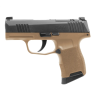
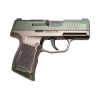
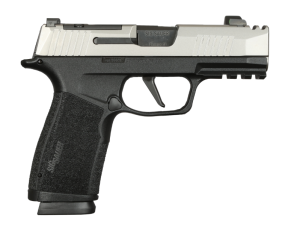
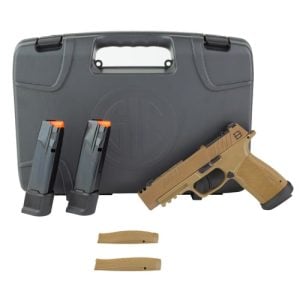
Now that you have the carry rules down, here is the gun most people reach for. The Sig Sauer P365 is the best-selling concealed-carry pistol in the country, slim enough to disappear under a t-shirt yet holding 10+1 or more.
Frequently Asked Questions: Constitutional Carry
How many constitutional carry states are there in 2026?
29 states have constitutional carry (also called permitless carry) as of April 2026, representing roughly 58% of U.S. states and just over half the U.S. adult population. The 29 are: Alabama, Alaska, Arizona, Arkansas, Florida, Georgia, Idaho, Indiana, Iowa, Kansas, Kentucky, Louisiana, Maine, Mississippi, Missouri, Montana, Nebraska, New Hampshire, North Dakota, Ohio, Oklahoma, South Carolina, South Dakota, Tennessee, Texas, Utah, Vermont, West Virginia, and Wyoming. The most recent additions are Louisiana (effective July 4, 2024) and South Carolina (effective March 14, 2024).
What does constitutional carry mean?
Constitutional carry, also called permitless carry, means a state allows law-abiding adults to carry a concealed handgun without obtaining a state-issued concealed carry permit. The carrier must still be eligible to possess a firearm under federal law (18 U.S.C. § 922(g)) and state law, and sensitive locations (K-12 schools, courthouses, federal buildings) still apply. The carrier does not need to apply, pay a fee, complete training, or receive any government credential to carry concealed.
Does constitutional carry mean I can carry in any state?
No. Constitutional carry is a state-level policy, not a federal right or interstate reciprocity framework. Your home state's permitless carry rule does NOT travel with you across state lines. If you live in Texas (constitutional carry) and travel to California (permit required), you cannot lawfully carry concealed in California regardless of your Texas permitless-carry status. For interstate carry, you need a state-issued permit honored under reciprocity. The Utah CFP, Texas LTC, and Florida CWFL all travel in 30+ states.
What is "Vermont carry"?
Vermont carry is the original constitutional-carry framework, established by Article 16 of the Vermont Constitution in 1777. Vermont has never required a concealed carry permit and does not issue one. The phrase "Vermont carry" entered firearms vocabulary as a description of the policy when Alaska adopted permitless carry in 2003, Alaska's framework was widely described as adopting Vermont carry. The 28 other states that have followed since 2003 all trace their constitutional-carry framework back to the Vermont model.
Do I need to be 21 to carry under constitutional carry?
It depends on the state. Most constitutional-carry states require age 21+ for concealed carry, aligning with the federal FFL handgun-purchase floor. Several states permit 18-20 year olds to carry under permitless carry: Arkansas, Idaho, Indiana, Louisiana, Mississippi, New Hampshire, North Dakota residents, Missouri (19+), South Carolina, South Dakota, Tennessee (post-Beeler v. Long, 2024), and Vermont. Tennessee's extension to 18+ came specifically through the Sixth Circuit's 2024 ruling in Beeler v. Long, which struck down the age-21 floor as unconstitutional under Bruen.
Should I still get a concealed carry permit in a constitutional carry state?
Yes, for most serious carriers. The optional state-issued permit is worth holding for four reasons: (1) reciprocity in 30+ other states (the Utah, Texas, Florida, Wyoming, and Tennessee permits are widely honored); (2) the federal Gun-Free School Zones Act exception under 18 U.S.C. § 922(q)(2)(B)(ii), which only carves out state-licensed CCW holders, not permitless carriers; (3) NICS-exempt purchases at FFLs in many states; and (4) insurance and legal-defense plan pricing. The fee is typically $40-$100, the validity is 4-5 years, and the training is 4-8 hours.
Does constitutional carry let me carry in schools?
No. Constitutional carry does not unlock sensitive locations. K-12 schools, courthouses, federal buildings (18 U.S.C. § 930), polling places, secured airport areas, and posted private property all remain off-limits in every constitutional-carry state. The federal Gun-Free School Zones Act (18 U.S.C. § 922(q)) prohibits possession of a firearm in a "school zone" (1,000 feet around any K-12 school) and only carves out state-licensed CCW holders, not permitless carriers. This is the single most important reason serious permitless-carry-state residents still hold the optional state permit.
What states might adopt constitutional carry next?
As of April 2026, no state has constitutional-carry legislation actively advancing through a 2026 session. The most likely near-term additions, if any, are North Carolina (HB 5 has been considered repeatedly) and possibly Pennsylvania (where the 2024 Crawford preemption ruling tilted the political balance, though no permitless bill has advanced). Deep-blue states like California, New York, New Jersey, Massachusetts, and Illinois are politically unviable for constitutional carry. Purple-state holdouts like Pennsylvania, Virginia, Michigan, Minnesota, Wisconsin, Nevada, Colorado, and New Mexico have shall-issue permits and divided government that prevents permitless bills from advancing.
For context on national ownership rates and trends, see our US gun statistics page.
Explore More States
Alabama Gun Laws (2026): Constitutional Carry, Stand Your Ground & Full Freedom, Alaska Gun Laws, Arizona Gun Laws (2026): Constitutional Carry, No Limits & Stand Your Ground, Arkansas Gun Laws (2026): Constitutional Carry, No Limits & Stand Your Ground, Bruen Decision Explained (2026): NYSRPA v. Bruen, History-and-Tradition Test & Downstream Litigation, California Gun Laws (2026): CCW, AWB, Roster & Everything You Need to Know, Castle Doctrine Explained (2026): All 50 States, Civil Immunity & Presumption of Reasonable Fear, Colorado Gun Laws (2026): 15-Round Cap, SB25-003 Semi-Auto Ban & Red Flag Law, Connecticut Gun Laws (2026): Permits, Carry Rules & Restrictions, Florida Gun Laws (2026): Constitutional Carry, Open Carry & Stand Your Ground, Georgia Gun Laws (2026): Constitutional Carry, No Limits & Full Freedom, Hawaii Gun Laws (2026): Registration, Permits & The Strictest State, Idaho Gun Laws (2026): Constitutional Carry, Stand Your Ground & Full Freedom, Illinois Gun Laws (2026): FOID Card, CCL, AWB & What You Need to Know, Indiana Gun Laws (2026): Constitutional Carry, Free Lifetime License & Stand Your Ground, Iowa Gun Laws (2026): Constitutional Carry, Strict Scrutiny & Full Freedom, Kansas Gun Laws (2026): Constitutional Carry, Stand Your Ground & Full Immunity, Kentucky Gun Laws (2026): Constitutional Carry, CDWL & Stand Your Ground, Louisiana Gun Laws (2026): Constitutional Carry at 18, CHP & Stand Your Ground, Louisiana Lets 18-Year-Olds Carry, Then Won’t Issue Them a Permit, Maine Gun Laws (2026): Constitutional Carry, 72-Hour Wait & Red Flag Law, Maryland Gun Laws (2026): HQL, Wear and Carry Permit, AWB & Sensitive Places, Massachusetts Gun Laws (2026): Chapter 135, LTC, FID & AWB, Michigan Gun Laws (2026): CPL, License to Purchase, Red Flag & Safe Storage, Minnesota Gun Laws (2026): Permit to Carry, Permit to Purchase & Red Flag, Mississippi Gun Laws (2026): Constitutional Carry, Enhanced Permit & Stand Your Ground, Missouri Gun Laws (2026): Constitutional Carry, Lifetime CCW & Stand Your Ground, Montana Gun Laws (2026): Constitutional Carry (HB 102), MCWP & Stand Your Ground, Nebraska Gun Laws (2026): Constitutional Carry (LB 77), CHP, HPC & Castle Doctrine, Nevada Gun Laws (2026): CCW, Universal Background Checks, Red Flag & Ghost Gun Ban, New Hampshire Gun Laws (2026): Constitutional Carry, PRL & Stand Your Ground, New Jersey Gun Laws (2026): FPIC, PPH, Chapter 131 CCP & Sensitive Places, New Mexico Gun Laws (2026): CHL, Universal Background Checks, HB 129 Status & Article 2 Section 6, New Mexico’s Waiting Period Lost in Court and Still Applies to You, New York Gun Laws (2026): CCIA, Pistol License, SAFE Act & Sensitive Locations, North Carolina Gun Laws (2026): CHP, SB 41 Repeal & Stand Your Ground, North Dakota Gun Laws (2026): Constitutional Carry, Class 1 & Class 2 CWL, Ohio Gun Laws (2026): Constitutional Carry (SB 215), CHL & Stand Your Ground, Oklahoma Gun Laws (2026): Constitutional Carry (HB 2597), SDA License & Make My Day, Oregon Gun Laws (2026): CHL, Measure 114 Status, SB 243 & Sandoval, Pennsylvania Gun Laws (2026): LTCF, PICS, Crawford & 18 Pa.C.S. § 6109, Red Flag Laws by State (2026): Complete List of 21 ERPO States, Rhode Island Gun Laws (2026): Blue Card, Dual Permits, 10-Round Cap & 2026 AWB, South Carolina Gun Laws (2026): Constitutional Carry, CWP & Stand Your Ground, South Dakota Gun Laws (2026): Constitutional Carry, Three-Tier Permits & Stand Your Ground, Stand Your Ground States (2026): Complete List of 38 SYG States, Tennessee Gun Laws (2026): Constitutional Carry, Enhanced HCP & Stand Your Ground, Texas Gun Laws (2026): Constitutional Carry, LTC, Castle Doctrine & Civil Immunity, Universal Background Check States (2026): Complete List of 22 UBC States, Utah Gun Laws (2026): Constitutional Carry, CFP, Stand Your Ground & Reciprocity, Vermont Gun Laws (2026): “Vermont Carry,” Universal Background Check & Magazine Cap, Virginia Gun Laws (2026): CHP, Universal Background Checks & Substantial Risk Order, Virginia Halts Private-Sale Background Checks Again (2026), Washington Gun Laws (2026): CPL, Universal Background Checks, Magazine Cap & 2023 AWB, West Virginia Gun Laws (2026): Constitutional Carry, CHL & Stand Your Ground, Wisconsin Gun Laws (2026): CCL, Castle Doctrine & Reciprocity, Wyoming Gun Laws (2026): Constitutional Carry, CFP, Stand Your Ground & 2A Sanctuary
3,979+ Gun & Ammo Deals
Updated daily from 200+ top retailers. Filter by category, caliber, action type, and price.