

Affiliate disclosure: This article contains affiliate links. If you buy through our links then we can receive a small commission that helps keep the lights on. You don’t pay anything more.
Last updated July 2026 · By Nick Hall, CCW instructor tracking Rhode Island’s dual-track concealed carry system under R.I.G.L. § 11-47-11 (chief of police, shall-issue) and § 11-47-18 (Attorney General, may-issue), the Blue Card requirement at § 11-47-35.2, the 10-round magazine cap, the 21-plus purchase age, the 7-day waiting period at § 11-47-35, and the 2025 assault weapons purchase ban (S 0359A) taking effect July 1, 2026
Disclaimer: This is an editorial round-up of Rhode Island gun laws. We do our best to make sure it’s correct, but do not rely on this as legal advice. Rhode Island firearms law has shifted in 2022-2026 with the 10-round magazine cap, the 21-plus purchase age, the 2025 assault weapons purchase ban, and ongoing changes to the carry-permit system. Consult a Rhode Island-licensed firearms attorney for any specific question.
- Treat every gun as loaded
- Point the muzzle in a safe direction
- Keep your finger off the trigger until you’re ready to shoot
- Know your target and what’s beyond
Best-priced firearms across 200+ retailers · Updated every 4 hours
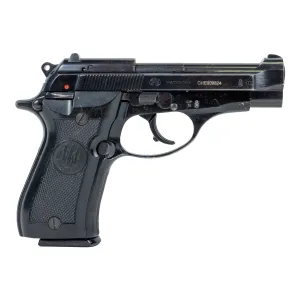
![FN 509 COMPACT [BLK] *10-ROUND*](https://www.usa-gun-shop.com/wp-content/uploads/ugs/img-cache/db4f97c202e578c705506c0de2da3203.webp)


Looking for a brick-and-mortar shop in Rhode Island? See our best gun stores in Rhode Island guide for verified FFL dealers, ranges, and gunsmiths near you.
Best-priced ammunition across 200+ retailers · Updated every 4 hours








Table of Contents
Rhode Island Gun Laws in 2026: What You Need to Know
TL;DR: Rhode Island gun laws sit in the most restrictive tier of the country. There is no constitutional carry. The state runs a dual-track concealed carry system under R.I.G.L. § 11-47-11 (chief of police, shall-issue after the 2015 RI Supreme Court ruling in Mosby v. Devine) and § 11-47-18 (Attorney General, may-issue with proper-cause showing). Open carry of a handgun requires a valid RI pistol permit. Buyers must complete the RI DEM Blue Card safety course before purchasing a handgun (R.I.G.L. § 11-47-35.2), purchase age is 21+ for all firearms (effective 2022), there is a 7-day waiting period at § 11-47-35, a 10-round magazine capacity cap (effective 2023), an Extreme Risk Protection Order law at § 8-8.3, Castle Doctrine inside the home (§ 11-8-8) with no broader Stand Your Ground, state preemption at § 11-47-58 with limited local-rule carve-outs, and a 2025 Assault Weapons Purchase Ban (S 0359A) taking effect July 1, 2026 covering sale, transfer, and manufacture but not possession of legally-owned items. Rhode Island does NOT recognize any out-of-state concealed carry permit.
Rhode Island gun laws compress more regulation into a small geography than any state in the country except Massachusetts and New Jersey. The state covers 1,545 square miles and has been on a sustained legislative push since 2018: ERPO law in 2018, 21-plus purchase age in 2022, 10-round magazine cap in 2022 (effective 2023), safe storage in 2023, ghost gun regulation in 2024, and the 2025 assault weapons purchase ban taking effect this summer. The 2015 Mosby v. Devine decision pushed the local chief of police track from de-facto may-issue toward genuine shall-issue, but the AG-issued statewide carry permit at § 11-47-18 remains may-issue and Attorney General Peter Neronha has been historically conservative on issuance.
The 2025 AWB is the live legal fight. S 0359A, signed by Governor Daniel McKee in June 2025, takes effect July 1, 2026 and bans the sale, transfer, and manufacture of feature-test “assault weapons” within the state. Existing legally-owned rifles are grandfathered, but you cannot buy or trade one inside Rhode Island after the effective date. The Federal Firearms Council, FPC, and Second Amendment Foundation have signaled litigation. Whether the law survives Bruen analysis at the First Circuit is the open question.
I hold an out-of-state CCW that Rhode Island does NOT recognize, and that’s the single most important practical fact for any visiting carrier. Rhode Island is non-reciprocal. Your Florida, Utah, Texas, or any other state’s permit does nothing across the RI line. The only legal carry inside Rhode Island is a Rhode Island chief of police permit or AG permit, both of which require a Rhode Island residency or specific employment connection.
Whether you live in Rhode Island, are moving here, or are just passing through, this page covers the 2026 rules with statute citations and official sources. RI gun laws sit within our broader U.S. gun laws by state hub.
Rhode Island Gun Laws: The Highlights
TL;DR: Rhode Island gun laws require a dual-track carry permit (R.I.G.L. § 11-47-11 chief shall-issue or § 11-47-18 AG may-issue), require the DEM Blue Card under § 11-47-35.2 to purchase a handgun, set the minimum purchase age at 21 (2022), impose a 7-day waiting period under § 11-47-35, cap detachable magazines at 10 rounds (effective 2023), enforce a 2025 assault weapons purchase ban (S 0359A) effective July 1, 2026, codify Castle Doctrine inside the home at § 11-8-8 with no broader SYG, run an Extreme Risk Protection Order law at § 8-8.3, and do NOT honor out-of-state concealed carry permits.
- Dual-track concealed carry licensing. Local chief of police permit under R.I.G.L. § 11-47-11 (shall-issue under Mosby v. Devine, 2015), age 21+, valid four years, $40 fee. Attorney General permit under R.I.G.L. § 11-47-18 (may-issue with proper-cause showing), age 21+, valid four years, $40 fee, statewide validity. Both require Army L target qualification at 25 yards through a certified instructor.
- Open carry of a handgun is permit-required (RI does not allow open carry without one of the two RI permits). Open carry of loaded long guns along public roadways is prohibited under § 11-47-51.1.
- Blue Card under R.I.G.L. § 11-47-35.2: All handgun purchasers must complete a Rhode Island Department of Environmental Management (DEM) firearms safety course and pass the written safety exam to receive a “blue card” before any handgun purchase. Exemptions for active military, active or retired law enforcement, correctional officers, and current concealed carry permit holders.
- 7-day waiting period under R.I.G.L. § 11-47-35. After NICS approval, the buyer cannot take possession until seven days have elapsed. Exempt: law enforcement, retired law enforcement, and concealed carry permit holders.
- 21+ minimum age for all firearm purchases (R.I.G.L. § 11-47-37 as amended in 2022). Federal floor for FFL handgun sales is 21+; Rhode Island extends 21+ to long guns and to all private transfers as well.
- 10-round magazine capacity cap (R.I.G.L. § 11-47.1, 2022 act, effective June 18, 2023). Possession of magazines holding more than 10 rounds is unlawful. The original act provided a 180-day amnesty window for surrender, modification, or out-of-state transfer; that window has closed.
- Safe storage required where minors are reasonably likely to access firearms (R.I.G.L. § 11-47-60.1, expanded 2023). Negligent storage that results in a minor accessing a firearm is a misdemeanor; injury to a minor is a felony.
- Ghost gun statute (R.I.G.L. § 11-47-2.4, 2024 act). Prohibits the manufacture, sale, possession, or transfer of unserialized firearms and 80% receivers without a serial number applied through an FFL.
- Extreme Risk Protection Order Act at R.I.G.L. § 8-8.3 (2018). Police petition, ex parte temporary order possible, hearing required within 14 days, one-year order if granted.
- 2025 Assault Weapons Purchase Ban (S 0359A, signed June 2025, effective July 1, 2026). Bans the sale, transfer, manufacture, and importation of feature-test assault weapons within Rhode Island. Possession of pre-effective-date legally-owned weapons is grandfathered.
- Castle Doctrine inside the dwelling (R.I.G.L. § 11-8-8). Limited to the home; outside the home, Rhode Island retains a duty to retreat. No statutory civil immunity.
- State preemption at R.I.G.L. § 11-47-58 with carve-outs. Local jurisdictions cannot regulate firearm sales beyond state law, but historically the statute has been read to allow some local discretion that NJ and PA-style preemption would not.
- Rhode Island does NOT honor any out-of-state concealed carry permit. Visiting permit holders cannot carry concealed in Rhode Island.
- NFA items (suppressors, SBRs, SBSs, machine guns registered before May 1986) legal with federal ATF approval. Rhode Island does not add a state NFA layer.
For the official state resource, see the Rhode Island Attorney General Firearms page and the RI DEM Blue Card / Firearms Safety page.
Key Information at a Glance
Key Information: Rhode Island Gun Laws at a Glance (2026)
Fast answers first, with official sources at the bottom.
| Permitless Carry | No, permit required for both open and concealed |
|---|---|
| Open Carry | Permit required (handgun); long-gun open carry on roads prohibited |
| Concealed Carry | Dual track: chief permit (shall-issue) or AG permit (may-issue), 21+, $40, 4 years |
| Purchase Permit | Yes, DEM Blue Card required for handgun purchases (§ 11-47-35.2) |
| Background Checks | Universal (NICS through FFL on all transfers) |
| Waiting Period | 7 days (§ 11-47-35), CCW holders + LEO exempt |
| Minimum Purchase Age | 21 for all firearms (2022 amendment to § 11-47-37) |
| Magazine Capacity Limits | 10 rounds (§ 11-47.1, effective Jun 18, 2023) |
| Assault Weapon Purchase Ban | S 0359A, effective July 1, 2026 (sale/transfer/manufacture; possession grandfathered) |
| Red Flag Law | Yes (§ 8-8.3, ERPO Act 2018) |
| Stand Your Ground | No, duty to retreat outside the home |
| Castle Doctrine | Inside dwelling only (§ 11-8-8) |
| State Preemption | Yes with carve-outs (§ 11-47-58) |
| Reciprocity | None, RI does NOT honor out-of-state permits |
| NFA Items (Suppressors/SBRs) | Legal with federal ATF approval |
Concealed Carry: The Dual-Track System (§ 11-47-11 vs § 11-47-18)
TL;DR: Rhode Island operates two parallel concealed carry permits. R.I.G.L. § 11-47-11 is the chief of police permit, shall-issue under the 2015 Mosby v. Devine ruling, valid in the issuing town only unless the chief grants statewide privileges. R.I.G.L. § 11-47-18 is the Attorney General permit, may-issue with a “proper showing of need” requirement, and provides statewide carry authority. Both require age 21+, fingerprints, NICS check, and Army L target qualification at 25 yards through a certified instructor.
R.I.G.L. § 11-47-11 Rhode Island Concealed Carry — Chief of Police License(a) The licensing authorities of any city or town shall, upon application of any person twenty-one (21) years of age or over having a bona fide residence or place of business within the city or town, or of any person twenty-one (21) years of age or over having a bona fide residence within the United States and a license or permit to carry a pistol or revolver concealed upon his or her person issued by the authorities of any other state or subdivision of the United States, issue a license or permit to the person to carry concealed upon his or her person a pistol or revolver everywhere within this state for four (4) years from date of issue, if it appears that the applicant has good reason to fear an injury to his or her person or property or has any other proper reason for carrying a pistol or revolver, and that he or she is a suitable person to be so licensed. — Mosby v. Devine, 851 A.2d 1031 (R.I. 2004) and the line of cases following it transformed the chief of police track from de-facto may-issue to substantive shall-issue, requiring written justification for any denial.
Eligibility under both tracks:
- Age 21 or older
- Rhode Island resident, OR a non-resident with a specific employment connection (most non-residents are not eligible)
- U.S. citizen or legal resident
- No felony convictions
- No misdemeanor convictions for domestic violence, drug offenses, or violent offenses within the disabling window
- Not subject to a current restraining order or ERPO
- Not adjudicated mentally incompetent or involuntarily committed
- Has completed a Rhode Island-recognized firearms training course and passed the Army L target qualification at 25 yards
- For § 11-47-18 (AG permit): demonstrated a “proper showing of need” beyond general self-defense (employment threat, prior victimization, security work, prosecutor or judge, retired law enforcement)
Mosby v. Devine, 851 A.2d 1031 (R.I. 2004) and the line of cases following (including the 2015 ruling that mandated chiefs use a substantive standard for denials) pushed the chief of police track from de-facto may-issue toward shall-issue. Rhode Island chiefs must now provide written substantive justification for any denial, and denials are appealable to the Rhode Island Superior Court.
The AG track at § 11-47-18 has not been similarly transformed by court ruling. Attorney General permits remain may-issue and historically Rhode Island AGs have been conservative on issuance. The current Attorney General’s office publishes guidance on what constitutes a “proper showing of need” and the threshold is meaningful: routine concealed carry for self-defense, by itself, has not been treated as sufficient cause. Bruen has put pressure on the proper-cause requirement, but as of April 2026 the AG framework remains in place pending litigation.
The fee is $40 for either permit. Validity is four years. Renewal requires re-submission, fingerprints, and a fresh range qualification. Allow 90 to 180 days from application to issuance; the chief track is generally faster than the AG track.
The DEM Blue Card: § 11-47-35.2
TL;DR: Rhode Island gun laws require any handgun purchaser to first complete the Rhode Island Department of Environmental Management firearms safety course and pass the written safety exam to receive a “blue card” before purchasing a handgun. The course covers state and federal firearms law, safe handling, ammunition, and storage. The exam is administered by DEM. Active military, active or retired law enforcement, correctional officers, and current Rhode Island concealed carry permit holders are exempt.
R.I.G.L. § 11-47-35.2 Rhode Island Blue Card Safety Certificate RequirementNo person may purchase a pistol or revolver in this state who has not obtained a permit from the Department of Environmental Management documenting that the person has met the requirements of this section. The DEM issues the safety certificate (commonly called the "Blue Card") after the applicant completes a state-approved firearms safety course and passes a written examination on the safe handling of handguns and Rhode Island law. — Exemptions: active military, active or retired law enforcement, correctional officers, and current Rhode Island concealed carry permit holders. The Blue Card is valid indefinitely once issued.
The Blue Card process:
- Take the DEM safety course. The course can be self-study from the DEM-published handbook or completed in-person through a DEM-certified instructor. Most buyers self-study the handbook.
- Schedule the exam. The written exam is administered by RI DEM at scheduled testing locations. Some FFLs administer the exam on-site as a courtesy to customers.
- Pass the exam. 30 multiple-choice questions on Rhode Island law and safe handgun practice. Passing score is required.
- Receive the Blue Card. DEM issues the certificate (“blue card”) to the buyer. The card is valid indefinitely once issued.
- Present the card at purchase. The FFL records the Blue Card number on the federal Form 4473 and Rhode Island state purchase paperwork.
The Blue Card requirement is unique to Rhode Island and is one of the most distinctive elements of Rhode Island gun laws. It functions as a permit-to-purchase for handguns specifically: long-gun purchasers do not need a Blue Card. Hunting safety certification (Hunter Education or DEM Hunting and Trapping Education Course) does not substitute for the Blue Card. The exam is meaningful but achievable through self-study with the published handbook.
Buying a Firearm in Rhode Island (Universal Background Check + 7-Day Wait)
TL;DR: Rhode Island gun laws send all firearm transfers (handgun and long gun, dealer and private) through an FFL with a NICS background check. After NICS approval, a 7-day waiting period under R.I.G.L. § 11-47-35 applies before the buyer can take possession. Rhode Island concealed carry permit holders, active law enforcement, and retired law enforcement are exempt from the 7-day wait. The minimum purchase age is 21 for all firearms (2022 amendment).
Step-by-step for a first-time RI buyer:
- Verify eligibility. Age 21+ for any firearm purchase (handgun or long gun). Not a prohibited person under 18 U.S.C. § 922(g) or R.I.G.L. § 11-47-5 et seq.
- For handguns: get the Blue Card first. Without the DEM Blue Card, no FFL can sell you a handgun (unless you fall in an exempted category).
- Pick a dealer or seller. All sales (FFL or private) must be processed through an FFL for the NICS check.
- Complete the paperwork. ATF Form 4473 plus the Rhode Island Application to Purchase Firearm form. The state form goes to the issuing town clerk for record-keeping under § 11-47-35.
- NICS check. The FFL submits the buyer to the FBI’s National Instant Criminal Background Check System.
- Wait seven days. Even with NICS proceed, Rhode Island requires a seven-day waiting period before the buyer can take possession. Concealed carry permit holders, LEO, and retired LEO are exempt.
- Take possession on day eight. Pay any FFL transfer fees ($25 to $50 typical) and complete the transfer.
The 7-day waiting period applies on top of NICS, not in place of NICS. If NICS returns Delayed and the FFL chooses to proceed at the federal three-business-day default, Rhode Island’s seven-day clock still runs and the FFL still cannot transfer until day seven of state law. NICS Proceed plus seven calendar days from the application is the absolute floor.
Rhode Island town clerks retain the state purchase application paperwork. Privacy advocates have argued this functions as a de-facto handgun registry; the state’s position is that the records are administrative and not a registry. The records do exist and are searchable by law enforcement.
10-Round Magazine Cap and the 2025 Assault Weapons Purchase Ban
TL;DR: Rhode Island gun laws cap detachable magazine capacity at 10 rounds under R.I.G.L. § 11-47.1 (effective June 18, 2023). The 180-day grandfather window has closed. Possession of magazines holding more than 10 rounds is a felony. The 2025 Assault Weapons Purchase Ban (S 0359A), signed by Governor McKee in June 2025, takes effect July 1, 2026 and bans the sale, transfer, manufacture, and importation of feature-test “assault weapons” within Rhode Island. Possession of pre-effective-date legally-owned firearms is grandfathered; new acquisitions in-state are not.
- Magazine cap (R.I.G.L. § 11-47.1). Effective June 18, 2023. Possession, sale, manufacture, transport, and import of magazines holding more than 10 rounds is unlawful. The original act provided a 180-day amnesty window to surrender, modify (permanently pinned to 10 or fewer), or transfer out of state. That window closed in December 2023.
- Assault Weapons Purchase Ban (S 0359A, 2025). Signed by Governor McKee June 2025. Effective July 1, 2026. Bans the sale, transfer, manufacture, and importation of feature-test assault weapons within Rhode Island. Standard feature test: detachable magazine plus pistol grip, telescoping stock, forward grip, threaded barrel, or flash suppressor.
- Possession grandfather. Rhode Islanders who legally owned a feature-test firearm before July 1, 2026 may continue to possess it. They may NOT sell, transfer, or buy another inside Rhode Island after the effective date. Out-of-state transfers and inheritances are constrained.
- Litigation pending. Federal Firearms Council, FPC, and SAF have signaled intent to challenge S 0359A under Bruen. Whether the law survives First Circuit analysis is unsettled. As of April 2026, the law is on the books and effective July 1, 2026 absent injunction.
Practical takeaway on Rhode Island gun laws around magazines and rifles: if you own a standard-capacity magazine in Rhode Island today, it must already be modified, surrendered, or out of state. The amnesty window closed in 2023. If you own a feature-test rifle today, you can keep it indefinitely as long as it stays in your hands. You cannot legally sell or trade it inside Rhode Island after July 1, 2026 and you cannot acquire a new one in-state. Cross-state acquisition is constrained by federal interstate transfer rules through your home FFL.
Self-Defense: Castle Doctrine, Not Stand Your Ground
TL;DR: Rhode Island has Castle Doctrine inside the dwelling under R.I.G.L. § 11-8-8, with no duty to retreat inside the home and a presumption that an unlawful entry indicates intent to inflict harm. Outside the home, Rhode Island retains the common-law duty to retreat to a place of safety before using deadly force. Rhode Island has no statutory Stand Your Ground and no statutory civil immunity for justified force.
R.I.G.L. § 11-8-8 Rhode Island Castle Doctrine (Defense of Habitation)In the event that any person shall die or shall sustain a personal injury in any way or for any cause while in the commission of any criminal offense enumerated in sections 11-8-2 (breaking and entering of dwelling), 11-8-3 (breaking and entering business), 11-8-4 (breaking and entering with intent to commit murder), 11-8-5 (entering dwelling with intent to commit murder, robbery, sexual assault, or larceny), 11-8-5.1 (unlawful breaking and entering), 11-8-6 (entering with intent to commit larceny), or 11-8-7 (breaking and entering with intent to commit assault), it shall be rebuttably presumed as a matter of law in any civil or criminal proceeding that the owner, tenant, or occupier of the place where the offense was committed acted by reasonable means in self-defense and in the reasonable belief that the person engaged in the criminal offense was about to inflict great bodily harm or death upon him or her or any other individual lawfully on the premises. — Rhode Island recognizes Castle Doctrine inside the dwelling but retains the common-law duty to retreat outside the home. No statutory civil immunity.
Key features of Rhode Island self-defense law:
- No duty to retreat inside the dwelling. R.I.G.L. § 11-8-8 explicitly removes the duty to retreat inside the home. The dwelling occupant may use deadly force against an intruder unlawfully entering or attempting to enter when the occupant reasonably believes the intruder intends harm.
- Duty to retreat outside the dwelling. Rhode Island common law retains the duty to retreat. Before using deadly force outside the home, the actor must (when possible without sacrificing safety) retreat. This puts Rhode Island in a small minority of states with no statutory or case-law SYG outside the home.
- No civil immunity. Unlike Florida, Texas, Georgia, or other SYG states, Rhode Island does not bar a civil suit by an aggressor or their estate even if the use of force was criminally justified.
- Reasonable belief standard. The use of deadly force must be objectively reasonable given the circumstances. Mere insult, trespass, or property crime without immediate threat to a person does not justify deadly force.
- Defense of others and property. Defense of another person follows the self-defense framework. Defense of property alone (without threat to a person) does not justify deadly force under Rhode Island law.
Compared to states with codified Stand Your Ground statutes, Rhode Island’s narrow Castle Doctrine and duty-to-retreat outside the home are meaningfully more restrictive at trial. The criminal-law analysis turns on whether retreat was reasonably available in the moment. The civil exposure is also higher because there is no statutory immunity. Carriers serious about Rhode Island concealed carry frequently maintain umbrella insurance and a USCCA or similar legal-defense plan in addition to the permit and training itself.
Reciprocity: Rhode Island Recognizes No Out-of-State Permits
Rhode Island Concealed Carry at a Glance
Constitutional carry: No
Honors non-resident permits: No — out-of-state permits not honored
Classification: No reciprocity
Map base: Wikimedia Commons (CC BY-SA). Color overlay and reciprocity data by USA Gun Shop.
Can I Carry in Rhode Island?
Select your home state to see if your permit authorizes carry in Rhode Island.
TL;DR: Rhode Island gun laws recognize NO out-of-state concealed carry permits. The state is one of a handful of true non-reciprocal jurisdictions. Visiting permit holders (Florida, Utah, Texas, any state) cannot carry concealed in Rhode Island under their home permit. The only legal carry inside Rhode Island is a Rhode Island chief of police permit (§ 11-47-11) or AG permit (§ 11-47-18). Limited transit-through protections exist under federal FOPA (18 U.S.C. § 926A) for unloaded, locked transport.
What out-of-state permit holders should know before entering Rhode Island:
- Your home-state permit does NOT authorize concealed carry in Rhode Island. There is no negotiation here. The state has not entered formal reciprocity agreements with any other state.
- FOPA transit protections (18 U.S.C. § 926A) allow unloaded, locked transport of firearms through Rhode Island en route to a destination where you can lawfully possess them. The firearm must be unloaded, in a locked container, and not accessible from the passenger compartment. Ammunition stored separately. FOPA does not authorize stops longer than what is reasonably necessary for the journey.
- Visiting Rhode Island for an extended stay (vacation, family visit, work) does NOT trigger any visiting-permit-holder exception. You cannot lawfully carry concealed during the stay.
- The Rhode Island AG permit (§ 11-47-18) is theoretically available to non-residents with a specific qualifying connection (employment in RI, retired RI law enforcement, etc.) but the threshold for non-resident issuance is high.
Rhode Island Gun Laws for Out-of-State Visitors
If you’re driving through Rhode Island with firearms, FOPA (18 U.S.C. § 926A) is your only legal path. Long guns and handguns can be transported through the state to a destination where you can legally possess them, provided the firearms are unloaded and in a locked container that is not accessible from the passenger compartment, and ammunition is stored separately. FOPA does not authorize stops longer than what’s reasonably necessary for the journey (gas, food, sleep). Case law has been hostile to “transit” stops that look like residence.
If you arrive in Rhode Island and discover you have a firearm in your possession that you didn’t realize was constrained, the safest immediate action is to secure it (unloaded, locked container, not accessible) and exit the state to a jurisdiction where you can lawfully possess it. Carrying loaded or accessible without a Rhode Island permit is a felony.
Moving to Rhode Island with Firearms
The biggest catches on moving to Rhode Island: the 10-round magazine cap and the looming 2026 Assault Weapons Purchase Ban. Standard-capacity magazines that are legal in Connecticut, Massachusetts (10-round cap there too as of 2023), or any New England state with a higher cap must be modified, surrendered, or transferred out of state before establishing Rhode Island residency. Feature-test rifles can be brought in for grandfathering before July 1, 2026 but cannot be sold or transferred inside Rhode Island after the effective date.
Your home-state concealed carry permit stops being honored the moment you become a Rhode Island resident. You’ll need to apply for a Rhode Island chief of police permit (§ 11-47-11) or AG permit (§ 11-47-18). Either requires the Army L target qualification at 25 yards and a fresh in-state application. Allow three to six months from application to issuance.
Where You Can’t Carry: Sensitive Locations
TL;DR: Even with a Rhode Island carry permit, carry is prohibited in K-12 schools (R.I.G.L. § 11-47-60), courthouses, public buildings posted as gun-free zones, federal facilities (18 U.S.C. § 930), licensed liquor establishments where alcohol service is the primary business, and posted private property. State preemption under § 11-47-58 limits but does not eliminate municipal authority on sensitive-location additions.
Prohibited Places in Rhode Island
Rhode Island gun laws prohibit firearms in K-12 schools, courthouses, government buildings, federal facilities, and licensed liquor establishments even for valid permit holders. State preemption under R.I.G.L. § 11-47-58 limits but does not eliminate municipal authority to post no-firearms notices on city property.
- K-12 public and private schools, school grounds
- School-sponsored events
- School buses
- 2024 amendments narrowed the exception list further; only school resource officers, on-duty law enforcement, and persons with explicit written authorization may carry
- Brown University, University of Rhode Island, Rhode Island College, Roger Williams University, Providence College: institutional firearm prohibitions
- Most RI campuses prohibit firearms by policy
- Courthouses and courtrooms
- Judicial chambers and offices
- Most RI courthouses provide secure lockers at the entrance
- Rhode Island State House and posted state government buildings
- Specific posted city and town buildings (city halls, libraries where posted)
- Bars and taverns where the primary business is on-premises alcohol consumption
- Restaurants where alcohol service is incidental to food service are generally permitted
- Polling locations on election day
- Public demonstrations and rallies that have posted no-firearms notice
- Federal courthouses, post offices, federal agency offices
- Veterans Affairs facilities posted as no-firearm zones
- Property owner can prohibit firearms by posting or by personal request
- Refusal to leave with a firearm after notice is criminal trespass
A few specific places worth highlighting:
- K-12 schools. R.I.G.L. § 11-47-60 prohibits possession of a firearm on K-12 school property by any person except school resource officers, on-duty law enforcement, and persons with explicit written authorization from the school administration. The 2024 amendments narrowed the exception list further.
- Universities and colleges. Most Rhode Island colleges and universities prohibit firearms on campus by institutional policy. Brown University, the University of Rhode Island, RIC, RWU, Providence College, and other campuses have explicit firearms-prohibited policies.
- Courthouses. Carry is prohibited in any Rhode Island courthouse. Most courthouses provide secure lockers at the entrance.
- Government buildings. The Rhode Island State House and posted state government buildings prohibit firearms. Specific city and town buildings may post no-firearms notices.
- Licensed liquor establishments. Bars and taverns where on-premises alcohol consumption is the primary business prohibit firearms. Restaurants where alcohol is incidental to food service are generally permitted.
- Federal buildings. 18 U.S.C. § 930 prohibits firearms in federal facilities except where specifically authorized.
- Polling places and demonstrations. Polling places on election day prohibit firearms. Public demonstrations and rallies may post no-firearms notice and that notice is enforceable.
- Posted private property. Rhode Island enforces “no guns” signage and verbal notice. A property owner can require the firearm to leave; refusing to comply becomes criminal trespass.
State Preemption: § 11-47-58
TL;DR: Rhode Island gun laws are preempted under R.I.G.L. § 11-47-58, which bars municipalities from regulating firearm sales beyond state law, but the statute has historically been read with carve-outs that allow more local discretion than Pennsylvania-style or New Mexico-style preemption. Cities and towns can enforce sensitive-location postings on their own buildings, set discharge ordinances, and impose hunting and target-shooting restrictions on local property.
The practical effects:
- Rhode Island municipalities cannot ban handgun sales, mandate registration, or impose magazine restrictions beyond state law (which is already 10 rounds).
- Cities and towns can post no-firearms signage on municipal property (city halls, libraries, parks, recreation centers) and that signage is enforceable.
- Discharge ordinances and target-shooting restrictions on city property are enforceable as long as they do not conflict with state shall-issue licensing.
- Local police chiefs retain meaningful discretion under § 11-47-11 in setting application processing standards, even within the shall-issue framework.
For Rhode Island residents, the practical takeaway on Rhode Island gun laws is that state law is the dominant framework but municipalities retain real authority on local property and sensitive-location postings. Carriers should review the chief of police office’s application process for their town and check city websites for any posted-firearms-prohibited notice on municipal facilities.
NFA Items in Rhode Island (Suppressors, SBRs, Machine Guns)
TL;DR: Rhode Island is one of the most restrictive NFA states in the country. Suppressors are flatly illegal for civilians (R.I. Gen. Laws § 11-47-42), no ATF tax stamp, hunting, or recreational exception, and you cannot even bring one into the state in transit. Machine guns and short-barreled (“sawed-off”) rifles and shotguns are likewise prohibited for civilians under R.I. Gen. Laws § 11-47-8; only licensed Class III/SOT dealers and law enforcement are exempt. The 2026 federal $0 tax stamp does not override any of this.
Rhode Island Suppressor Facts & Figures
| Suppressor ownership | Illegal for civilians. R.I. Gen. Laws § 11-47-42 classifies silencers as prohibited weapons, with no exception for a federal ATF tax stamp or NFA approval. |
| Hunting with a suppressor | Prohibited, ownership itself is illegal, so there is no lawful hunting use. |
| Bringing one in from out of state | Not allowed, even in transit. Possession inside Rhode Island can be a felony. |
| 2026 federal $0 tax stamp | Does not apply here. The federal change removed only the $200 federal tax; it does not touch Rhode Island’s state ban. |
Do not attempt to buy, build, transport, or possess a suppressor in Rhode Island. Even a fully ATF-registered, tax-stamped suppressor is illegal to possess here. To see where suppressors are and are not legal, see our suppressor laws by state guide. This page is general information, not legal advice, consult a Rhode Island firearms attorney about your specific situation.
For background on the federal regime itself, see our National Firearms Act explainer or the ATF National Firearms Act page. Note that Rhode Island layers a near-total state prohibition on top of the federal rules: even NFA items that are legal federally with an ATF stamp, suppressors, machine guns, and short-barreled rifles and shotguns, remain off-limits to civilians in Rhode Island.
Recent Changes (2022-2026)
TL;DR: Rhode Island has passed the most concentrated firearms legislation in New England outside of Massachusetts and New York during the 2022-2025 sessions: 21+ purchase age (2022), 10-round magazine cap (2022, effective 2023), safe storage expansion (2023), ghost gun statute (2024), and the 2025 Assault Weapons Purchase Ban (S 0359A) effective July 1, 2026. The 2018 ERPO law remains the foundation. The 2015 Mosby v. Devine ruling continues to reshape the chief of police permit framework.
- 2018 ERPO Act (R.I.G.L. § 8-8.3). Established Extreme Risk Protection Order law. Police petition, judicial process, one-year orders.
- 2022 21+ Purchase Age (R.I.G.L. § 11-47-37 amendment). Extended the federal 21+ FFL handgun age to all firearms purchases in Rhode Island, including long guns and private transfers.
- 2022 Magazine Capacity Limit (R.I.G.L. § 11-47.1). 10-round cap on detachable magazines. Effective June 18, 2023. 180-day grandfather window closed December 2023.
- 2023 Safe Storage Expansion (R.I.G.L. § 11-47-60.1). Strengthened safe storage requirements where minors are reasonably likely to access firearms.
- 2024 Ghost Gun Statute (R.I.G.L. § 11-47-2.4). Prohibits unserialized firearms and 80% receivers without serial numbers applied through an FFL.
- 2024 K-12 Carry Restriction Tightening (R.I.G.L. § 11-47-60). Narrowed the exception list for school carry.
- 2025 Assault Weapons Purchase Ban (S 0359A, signed June 2025). Effective July 1, 2026. Bans the sale, transfer, manufacture, and importation of feature-test assault weapons within Rhode Island. Possession of pre-effective-date legally-owned firearms is grandfathered. Federal Firearms Council, FPC, and SAF have signaled litigation.
- 2026 session. The Rhode Island General Assembly convened January 7, 2026. Multiple firearms bills on both sides have been introduced. None have advanced as of April 2026. The summer session timeline interacts with the AWB effective date of July 1, 2026.
Our Take on Rhode Island Gun Laws
For practical everyday purposes, Rhode Island gun laws are among the most restrictive in the country. The dual-track permit system is workable for residents under the post-Mosby framework but the AG-issued statewide permit remains genuinely may-issue. The Blue Card requirement adds a permit-to-purchase step on every handgun sale that no other state east of New Jersey replicates exactly. The 7-day waiting period stacks on top of the Blue Card and the universal background check. The 10-round magazine cap is hard, the AWB is coming, and there is no reciprocity at all.
The Castle Doctrine inside the home is meaningful but the duty to retreat outside the home puts Rhode Island in a small minority of states without broader Stand Your Ground protection. Civil exposure is real because there is no statutory immunity. Rhode Island concealed carriers serious about the responsibility frequently maintain umbrella insurance and a USCCA or similar legal-defense plan, and the training quality at certified RI instructors is generally high.
The hardest part of Rhode Island gun laws in 2026 is the layering. Each individual rule is defensible on its own; the cumulative weight is what makes Rhode Island feel like a permission-required state rather than a rights-based one. Whether the 2026 AWB survives First Circuit review under Bruen will be the most important test of where the state’s framework can go. For our broader state-by-state comparison, see the the full state-by-state breakdown hub.
Rhode Island-Specific Carry Questions
What is the difference between a Rhode Island Attorney General permit and a local police permit?
Rhode Island issues concealed carry permits through two paths. The local police chief permit is may-issue at the chief’s discretion. The Attorney General permit is treated as shall-issue under a different statutory standard. Most carriers who are denied a local permit apply through the Attorney General pathway. Both permits authorize carry under the same in-state rules; they differ only in the issuing authority and the standard of review.
What does the Rhode Island Red Flag law allow?
The Rhode Island Extreme Risk Protection Order, enacted in 2018, allows a law enforcement officer to petition a court for an order temporarily removing firearms from a person believed to pose a significant risk of harm. The order can be issued ex parte for up to 14 days, with a hearing required for any longer-term order. Family-member petitions are not currently authorized under Rhode Island’s statute.
Does Rhode Island restrict magazine capacity?
Yes. Rhode Island caps magazine capacity at 10 rounds under a 2022 law. Magazines lawfully owned before the effective date were given a compliance period to surrender, sell out of state, or modify. Continued possession of a non-compliant magazine after the compliance period is a felony offense.
Can I open carry in Rhode Island?
Open carry of a handgun in Rhode Island requires either a concealed carry permit or a separate open-carry license, and most Rhode Island carriers rely on the concealed permit. Long-gun open carry has fewer statutory restrictions but is uncommon outside of hunting and ranges. Posted no-carry signage from a property owner applies to open and concealed carry equally.
Frequently Asked Questions: Rhode Island Gun Laws
Is Rhode Island a constitutional carry state?
No. Rhode Island requires a permit for both open and concealed carry of a handgun. The state operates a dual-track licensing system: the local chief of police permit under R.I.G.L. § 11-47-11 (shall-issue under the 2015 Mosby v. Devine ruling) and the Attorney General permit under R.I.G.L. § 11-47-18 (may-issue with proper-cause showing). Both require age 21+, fingerprints, NICS, and Army L target qualification at 25 yards.
What is the Rhode Island Blue Card?
The Blue Card is a Rhode Island Department of Environmental Management firearms safety certificate required under R.I.G.L. § 11-47-35.2 before any handgun purchase. The applicant studies the DEM-published handbook, takes a 30-question written exam, and receives the Blue Card certificate. Active military, active or retired law enforcement, correctional officers, and current Rhode Island concealed carry permit holders are exempt. The card is valid indefinitely once issued.
Does Rhode Island have universal background checks?
Yes. All firearm transfers in Rhode Island (handgun and long gun, dealer and private) must be processed through a federally licensed dealer with a NICS background check. Rhode Island also retains a state purchase application that goes to the issuing town clerk for record-keeping under R.I.G.L. § 11-47-35. Privacy advocates have argued this functions as a de-facto handgun registry; the state position is that the records are administrative.
Is there a waiting period for firearm purchases in Rhode Island?
Yes. Rhode Island imposes a 7-day waiting period under R.I.G.L. § 11-47-35. After NICS approval, the buyer cannot take possession until seven days have elapsed. Rhode Island concealed carry permit holders, active law enforcement, and retired law enforcement are exempt from the wait. The waiting period applies on top of the Blue Card and the universal background check, not in place of them.
Does Rhode Island honor out-of-state concealed carry permits?
No. Rhode Island is one of a small number of fully non-reciprocal states. The state does NOT recognize any out-of-state concealed carry permit. Florida, Utah, Texas, Pennsylvania, or any other state's permit does not authorize concealed carry inside Rhode Island. The only legal carry inside the state is a Rhode Island chief of police permit (§ 11-47-11) or AG permit (§ 11-47-18). Limited transit-through protections exist under federal FOPA (18 U.S.C. § 926A) for unloaded, locked transport.
What is the Rhode Island magazine capacity limit?
Rhode Island caps detachable magazine capacity at 10 rounds under R.I.G.L. § 11-47.1, effective June 18, 2023. The original act provided a 180-day amnesty window to surrender, modify (permanently pinned), or transfer out of state. That window closed in December 2023. Possession of magazines holding more than 10 rounds is now a felony.
When does the Rhode Island Assault Weapons Ban take effect?
July 1, 2026. The 2025 Assault Weapons Purchase Ban (S 0359A), signed by Governor Daniel McKee in June 2025, takes effect July 1, 2026 and bans the sale, transfer, manufacture, and importation of feature-test "assault weapons" within Rhode Island. Possession of pre-effective-date legally-owned firearms is grandfathered. The Federal Firearms Council, FPC, and Second Amendment Foundation have signaled litigation. Whether the law survives First Circuit Bruen analysis is unsettled.
Does Rhode Island have Stand Your Ground or Castle Doctrine?
Castle Doctrine inside the home only. R.I.G.L. § 11-8-8 establishes a rebuttable presumption that an occupant defending against an unlawful entry acted reasonably in self-defense. Outside the home, Rhode Island retains the common-law duty to retreat to a place of safety before using deadly force. There is no statutory Stand Your Ground and no statutory civil immunity. This puts Rhode Island in a small minority of states where the duty to retreat outside the home remains fully in force.
Explore More States
Alabama Gun Laws (2026): Constitutional Carry, Stand Your Ground & Full Freedom, Alaska Gun Laws, Arizona Gun Laws (2026): Constitutional Carry, No Limits & Stand Your Ground, Arkansas Gun Laws (2026): Constitutional Carry, No Limits & Stand Your Ground, Bruen Decision Explained (2026): NYSRPA v. Bruen, History-and-Tradition Test & Downstream Litigation, California Gun Laws (2026): CCW, AWB, Roster & Everything You Need to Know, Castle Doctrine Explained (2026): All 50 States, Civil Immunity & Presumption of Reasonable Fear, Colorado Gun Laws (2026): 15-Round Cap, SB25-003 Semi-Auto Ban & Red Flag Law, Connecticut Gun Laws (2026): Permits, Carry Rules & Restrictions, Constitutional Carry States (2026): Complete List of 29 Permitless Carry States, Florida Gun Laws (2026): Constitutional Carry, Open Carry & Stand Your Ground, Georgia Gun Laws (2026): Constitutional Carry, No Limits & Full Freedom, Hawaii Gun Laws (2026): Registration, Permits & The Strictest State, Idaho Gun Laws (2026): Constitutional Carry, Stand Your Ground & Full Freedom, Illinois Gun Laws (2026): FOID Card, CCL, AWB & What You Need to Know, Indiana Gun Laws (2026): Constitutional Carry, Free Lifetime License & Stand Your Ground, Iowa Gun Laws (2026): Constitutional Carry, Strict Scrutiny & Full Freedom, Kansas Gun Laws (2026): Constitutional Carry, Stand Your Ground & Full Immunity, Kentucky Gun Laws (2026): Constitutional Carry, CDWL & Stand Your Ground, Louisiana Gun Laws (2026): Constitutional Carry at 18, CHP & Stand Your Ground, Louisiana Lets 18-Year-Olds Carry, Then Won’t Issue Them a Permit, Maine Gun Laws (2026): Constitutional Carry, 72-Hour Wait & Red Flag Law, Maryland Gun Laws (2026): HQL, Wear and Carry Permit, AWB & Sensitive Places, Massachusetts Gun Laws (2026): Chapter 135, LTC, FID & AWB, Michigan Gun Laws (2026): CPL, License to Purchase, Red Flag & Safe Storage, Minnesota Gun Laws (2026): Permit to Carry, Permit to Purchase & Red Flag, Mississippi Gun Laws (2026): Constitutional Carry, Enhanced Permit & Stand Your Ground, Missouri Gun Laws (2026): Constitutional Carry, Lifetime CCW & Stand Your Ground, Montana Gun Laws (2026): Constitutional Carry (HB 102), MCWP & Stand Your Ground, Nebraska Gun Laws (2026): Constitutional Carry (LB 77), CHP, HPC & Castle Doctrine, Nevada Gun Laws (2026): CCW, Universal Background Checks, Red Flag & Ghost Gun Ban, New Hampshire Gun Laws (2026): Constitutional Carry, PRL & Stand Your Ground, New Jersey Gun Laws (2026): FPIC, PPH, Chapter 131 CCP & Sensitive Places, New Mexico Gun Laws (2026): CHL, Universal Background Checks, HB 129 Status & Article 2 Section 6, New Mexico’s Waiting Period Lost in Court and Still Applies to You, New York Gun Laws (2026): CCIA, Pistol License, SAFE Act & Sensitive Locations, North Carolina Gun Laws (2026): CHP, SB 41 Repeal & Stand Your Ground, North Dakota Gun Laws (2026): Constitutional Carry, Class 1 & Class 2 CWL, Ohio Gun Laws (2026): Constitutional Carry (SB 215), CHL & Stand Your Ground, Oklahoma Gun Laws (2026): Constitutional Carry (HB 2597), SDA License & Make My Day, Oregon Gun Laws (2026): CHL, Measure 114 Status, SB 243 & Sandoval, Pennsylvania Gun Laws (2026): LTCF, PICS, Crawford & 18 Pa.C.S. § 6109, Red Flag Laws by State (2026): Complete List of 21 ERPO States, South Carolina Gun Laws (2026): Constitutional Carry, CWP & Stand Your Ground, South Dakota Gun Laws (2026): Constitutional Carry, Three-Tier Permits & Stand Your Ground, Stand Your Ground States (2026): Complete List of 38 SYG States, Tennessee Gun Laws (2026): Constitutional Carry, Enhanced HCP & Stand Your Ground, Texas Gun Laws (2026): Constitutional Carry, LTC, Castle Doctrine & Civil Immunity, Universal Background Check States (2026): Complete List of 22 UBC States, Utah Gun Laws (2026): Constitutional Carry, CFP, Stand Your Ground & Reciprocity, Vermont Gun Laws (2026): “Vermont Carry,” Universal Background Check & Magazine Cap, Virginia Gun Laws (2026): CHP, Universal Background Checks & Substantial Risk Order, Virginia Halts Private-Sale Background Checks Again (2026), Washington Gun Laws (2026): CPL, Universal Background Checks, Magazine Cap & 2023 AWB, West Virginia Gun Laws (2026): Constitutional Carry, CHL & Stand Your Ground, Wisconsin Gun Laws (2026): CCL, Castle Doctrine & Reciprocity, Wyoming Gun Laws (2026): Constitutional Carry, CFP, Stand Your Ground & 2A Sanctuary
3,979+ Gun & Ammo Deals
Updated daily from 200+ top retailers. Filter by category, caliber, action type, and price.