

Last updated September 23, 2026 · By Nick Hall, who has owned three M1 Garands: a 2012 CMP Service Grade Springfield Armory with mixed parts, a Greek-return rifle bought private-party in 2018, and a Korean War H&R inherited from his grandfather
Affiliate disclosure: USA Gun Shop is reader-supported. When you buy through links on our site, we may earn a small commission at no extra cost to you. Full disclaimer.
- Treat every gun as loaded
- Point the muzzle in a safe direction
- Keep your finger off the trigger until you’re ready to shoot
- Know your target and what’s beyond

I’ve shot all three of my Garands a lot, and the one thing they have in common is that each one taught me something the others didn’t. The CMP Springfield taught me about gauges and grades. The Greek return taught me how much a refinish changes a price. My grandfather’s H&R taught me that the right ammo matters more than anything else you do to the rifle.
This is the guide I wish I’d had before the first one: what the M1 Garand is, how it works, who made it and what each maker is worth, how to decode a serial number, which ammo is safe, and every realistic way to buy one in 2026, from the CMP to the retail surplus market.
Table of Contents
How we tested: Every pick here is ranked against our testing methodology. Minimum round counts, accuracy and reliability protocols, the failures that disqualify a gun.
M1 Garand at a Glance
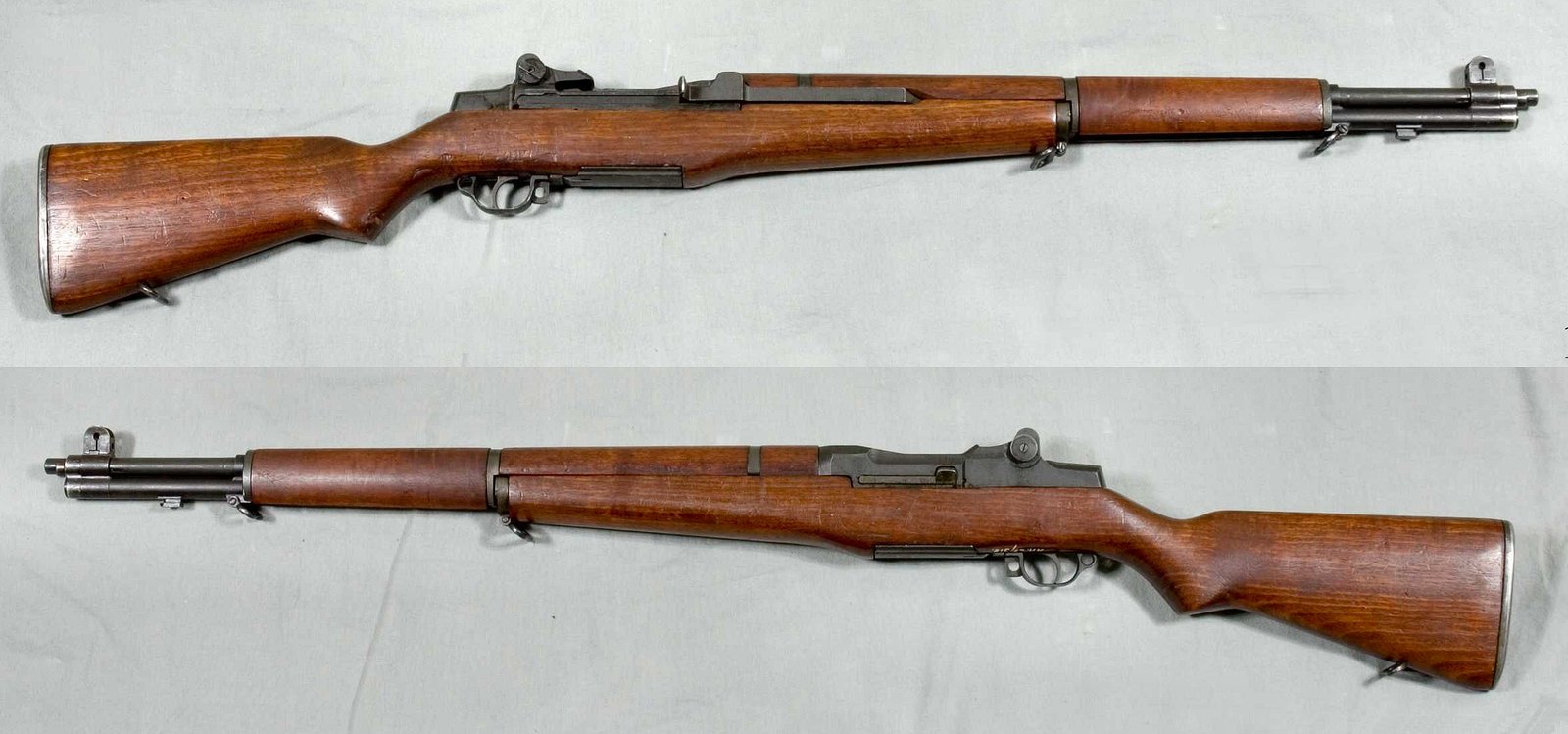
| Spec | M1 Garand (U.S. Rifle, Caliber .30, M1) |
|---|---|
| Caliber | .30-06 Springfield (some postwar rifles and new CMP rifles in .308 / 7.62 NATO) |
| Action | Gas-operated semi-automatic, rotating bolt |
| Capacity | 8 rounds in an en-bloc clip |
| Barrel length | 24 inches |
| Overall length | 43.6 inches |
| Weight | About 9.5 pounds unloaded |
| Standardized | January 9, 1936 |
| Replaced by | M14, March 26, 1958 |
| Total built | 5,468,772 (1937 to 1957) |
| US makers | Springfield Armory, Winchester, International Harvester, Harrington & Richardson (Beretta built them under license in Italy) |
On paper it’s a heavy rifle with a fixed eight-round magazine. In the hands it feels different. The weight sits between your hands, the aperture sights are some of the best iron sights ever put on a service rifle, and the recoil from a proper Garand load is a firm push rather than a slap. My H&R shoots about 3 inches at 100 yards off sandbags with iron sights and Prvi Partizan M1 Garand ammo, which is about what a sound service rifle should do.
A Short History of the M1 Garand
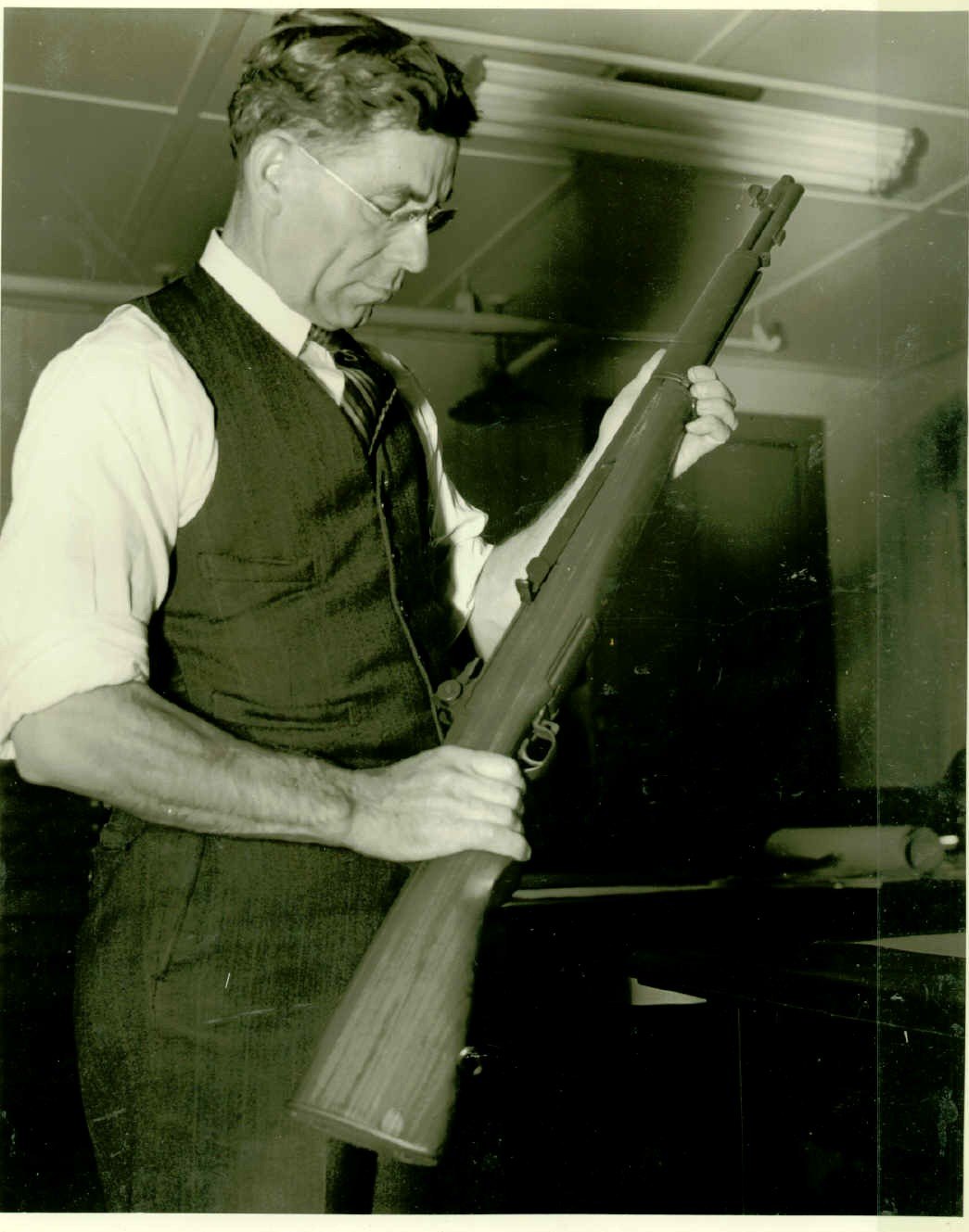
John C. Garand, a Quebec-born engineer, went to work at the Army’s Springfield Armory and spent the 1920s and early 1930s turning a series of semi-automatic prototypes into a rifle the Army would actually adopt. It was cleared for procurement on November 7, 1935 and standardized on January 9, 1936. The first production rifle was proof-fired on July 21, 1937.
The early rifles used a “gas trap” at the muzzle to catch gas and drive the operating rod. It worked poorly, and in 1940 Springfield switched to a simple gas port drilled into the barrel. Most gas-trap rifles were rebuilt, which is why an original gas-trap M1 is one of the most valuable Garands a collector can find today.
The US went into World War II as the only major army with a semi-automatic rifle as standard issue. The Garand served through Korea, was replaced by the M14 on March 26, 1958, and stayed in reserve and National Guard hands into the 1970s. Surplus rifles went to allies all over the world, and a lot of those rifles later came home. For where the Garand fits in the longer story, see our history of firearms in warfare.
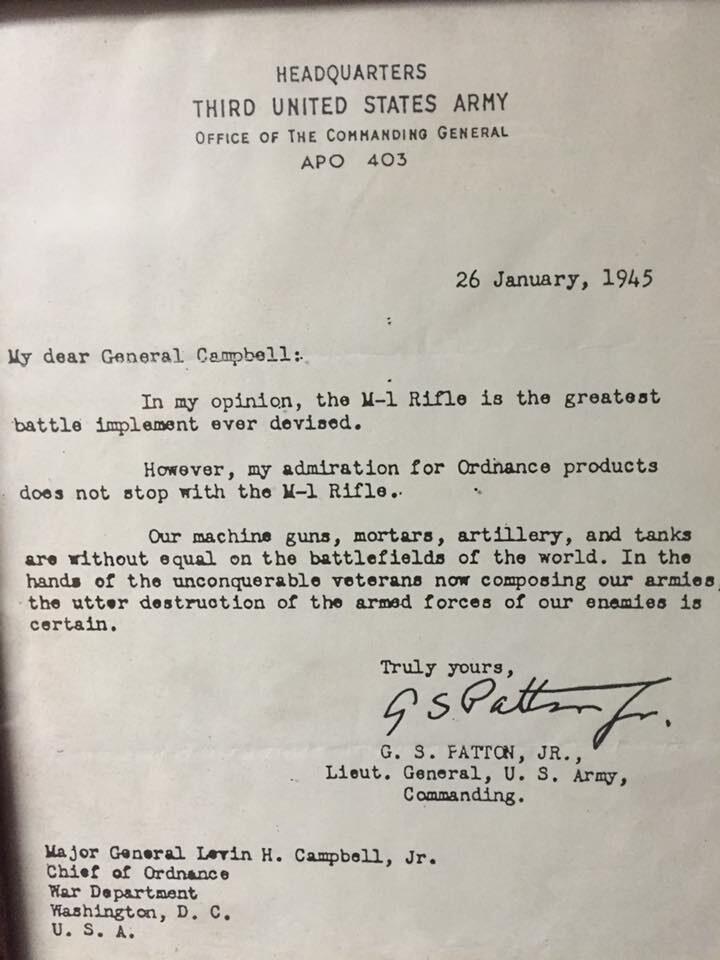
The famous quote is real and dated. On January 26, 1945, Lt. Gen. George S. Patton wrote to Maj. Gen. Levin H. Campbell Jr., Chief of Ordnance: “In my opinion, the M-1 Rifle is the greatest battle implement ever devised.” He was writing with Third Army deep in Europe against infantry still carrying bolt-action Kar98ks, so it wasn’t flattery. Eight fast shots against five slow ones is a real difference, and for more on the rifle it was up against, see our Mauser rifle guide.
How the M1 Garand Works: Gas, Op Rod and the En-Bloc Clip
When a round fires, a little gas bleeds through a port near the muzzle into the gas cylinder. That gas shoves the operating rod back, the op rod turns and unlocks the bolt, and the spring drives everything forward again to chamber the next round. The op rod is the part that takes the beating, which is why the ammo you feed a Garand matters so much.
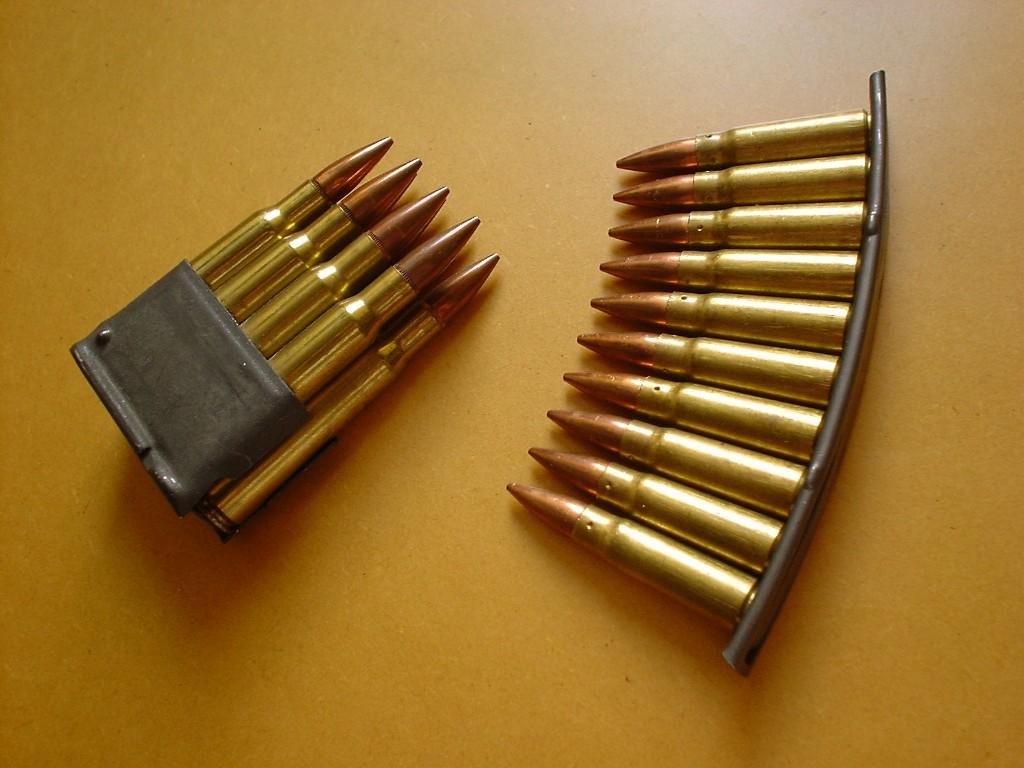
The rifle feeds from an eight-round en-bloc clip. You push the whole clip, cartridges and all, down into the fixed magazine, and the clip stays in the rifle while you shoot. After the last round the rifle throws the empty clip out the top with that famous “ping” and locks the bolt open. The clip is reversible, so you can load it either way up. A stripper clip like the SKS one in the photo is different: it only guides rounds into the magazine and never goes in with them.
Clips are cheap and they do wear out. Buy more than you think you need, because a loose, sprung clip is the most common cause of a Garand that won’t feed right.

M1 Garand Ammo: What’s Safe to Shoot
This is the part people get wrong, and it’s also where a lot of older advice gets its numbers wrong. The CMP’s own warning is short and clear: don’t shoot .30-06 in an M1 Garand, 1903 or 1903A3 “that is loaded beyond 50,000 CUP and has a bullet weight more than 172-174gr.”
Here’s the part the forums muddle. SAAMI’s maximum for .30-06 is 50,000 CUP on the old copper-crusher test and 60,000 psi on the modern transducer test. Those are the same ceiling measured two different ways, not two different loads. So “M2 Ball is 50,000 and hunting ammo is 60,000” isn’t a real comparison. The real problem is how the powder burns.
Hornady’s chief ballistic scientist Dave Emary put it plainly when Hornady launched its Garand load: “Typical factory loads contain propellants that when fired, result in port pressures and gas volumes that are too high, causing violent stress to the rifle’s operating rod, bolt, and receiver.” Slow powders and heavy bullets keep pressure high when the bullet passes the gas port, and that slams the op rod back harder than the rifle was built for. Do it for a few thousand rounds and you get a bent op rod.
You’ve got two safe paths. Shoot ammo labeled for the Garand (Hornady M1 Garand, Federal American Eagle M1 Garand, Prvi Partizan M1 Garand and Sellier & Bellot M1 Garand are all loaded for it), or fit an adjustable gas plug such as the Schuster and tune it down so you can shoot normal .30-06. I run Prvi Partizan 150-grain FMJ through the H&R. Over my last 240 rounds it hasn’t had a single failure, and the clips eject with a clean, even ping.
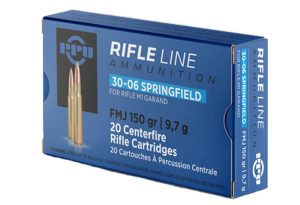
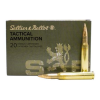
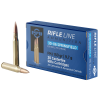

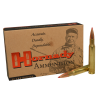
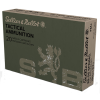
For shooting ammo in bulk and more cartridge background, see our best .30-06 rifles guide. If you reload, stick to published Garand data and powders in the IMR 4895 burn range, and treat the 172 to 174-grain ceiling as a hard stop.
Shooting and Caring for an M1 Garand
Loading a Garand the first time is where people earn “M1 thumb”. You press the clip straight down with your thumb until it catches, and the bolt wants to slam home the moment it does. Keep the edge of your right hand against the op rod handle while you push, then sweep your thumb out to the side as the clip seats. Do that and the bolt closes on nothing but the cartridge.
On my last range day with the H&R I put 96 rounds through it, twelve full clips, shooting offhand and prone at 100 yards. It ran every round. The rifle likes a steady cheek weld on the comb and a firm grip; get lazy and your groups open up fast, because 9.5 pounds of rifle moves around more than you’d think once you get tired.
A Garand wants grease, not just oil. The sliding steel on steel points take the most wear: the bolt’s locking lugs and the grooves they ride in, the op rod’s camming surface where it turns the bolt, and the op rod’s guide track on the receiver. A thin coat of rifle grease on those spots keeps the action smooth and slows wear. Light oil goes on the other moving parts.
If you shoot old military surplus ammo, assume it’s corrosive and clean the same day. That means the bore and the gas cylinder, since the gas port pushes that residue straight into the cylinder and onto the piston end of the op rod. Hot soapy water or a dedicated corrosive-ammo cleaner followed by a normal clean and oil will do it. Leave it for a week and you’ll find rust.
M1 Garand Prices in 2026
An original M1 Garand runs about $1,400 to $2,500 in 2026, and rare makers and all-original rifles go higher. TrueGunValue’s 12-month average for a used Garand is $1,383.04, and the CMP rifles that are still for sale sit right around that band. The table below is what I tracked on September 23, 2026, straight from the CMP and from the retail listings in our price database.
| Source / Grade | Price (Sept 2026) | Status | What You Get |
|---|---|---|---|
| CMP Expert Grade (.30-06 or .308) | $1,150 | AVAILABLE | Reclaimed USGI receiver with a new commercial barrel and a new stock set. |
| CMP Custom Shop Special | $1,650 | AVAILABLE | Hand-built, competition-ready rifle meeting the CMP’s “as-issued” standard. |
| M1 Garand by CMP (new production) | $1,900 + $40 S&H | ORDERS OPEN | New forged receiver from Heritage Arms with a CMP crest and serial, .30-06 or .308. |
| CMP Service / Field / Rack Grade | n/a | SOLD OUT | Service Grade sold out October 22, 2024; Rack Grade January 7, 2025; Field Grade December 2, 2025. |
| CMP IHC and WRA Expert Grade | n/a | SOLD OUT | All four IHC and Winchester Expert variants sold out December 6, 2025. |
| Springfield Armory, retail | $1,499.99 to $2,000 | RETAIL | Arsenal-refurbished rifles up to original WWII-production examples. |
| Harrington & Richardson, retail | $1,700.99 to $1,999.99 | RETAIL | Korean War production, 1953 to 1956. |
| International Harvester, retail | $1,900 to $2,399.99 | RETAIL | The rarest US maker, 1953 to 1957. |
| Winchester, retail | $2,399.99 to $3,499.99 | RETAIL | WWII only; a dated May 1944 rifle sat at the top of the range. |
Notice what’s missing: the cheap CMP grades. The old “$700 Rack Grade from the CMP” days are over, and every buyer’s guide that still sends you there is out of date. The CMP’s remaining surplus rifles are now built on reclaimed receivers, and the non-reclaimed legacy rifles it still has go to its auction store instead of the order form.
Who Made the M1 Garand (And Why It Changes the Price)
Four American makers built the M1. Springfield Armory built the bulk of them in WWII with Winchester as the second source, then Springfield, Harrington & Richardson and International Harvester built the Korean War rifles. Beretta built them under license in Italy after the war. The maker stamped on the receiver heel is the single biggest thing that moves the price.
Springfield Armory (the bulk of all M1s)
The Army’s own arsenal in Springfield, Massachusetts built roughly 3.5 million Garands in WWII and another 637,420 from 1952 to 1957. Because there are so many, a Springfield is the entry point, and a clean shooter-grade rifle is the cheapest real Garand you’ll find. Don’t confuse the arsenal with today’s Springfield Armory Inc., the commercial company that licensed the name and makes the M1A. The arsenal closed in 1968.
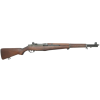
Winchester Repeating Arms (WRA, WWII only)
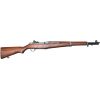
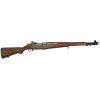
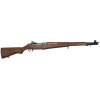
Winchester built Garands from 1941 to 1945 and never made one after the war, so every WRA rifle is a WWII rifle. Going by the serial blocks the National Park Service lists, that’s roughly 514,000 rifles, including the “WIN-13” run in the 1.6 million range from early 1945. That wartime-only story is why a Winchester costs more than a Springfield in the same condition.
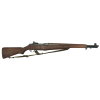
Harrington & Richardson (HRA, Korean War)
H&R built 428,600 rifles from 1953 to 1956. The receiver heel reads “HRA”. My grandfather’s rifle is one of them, and it’s the best-fitted Garand I own: tight wood, even finish, a trigger that breaks cleanly. H&Rs are a good middle ground if you want a rifle with a story that doesn’t cost Winchester money.
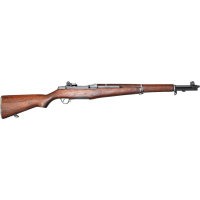
International Harvester (IHC, the rarest US maker)
Yes, the tractor company. International Harvester built 337,623 Garands from 1953 to 1957, the fewest of the four US makers, and a lot of them went overseas as military aid. That scarcity is why IHC rifles cost more than a Springfield or H&R, and why an all-original IHC is a collector’s rifle, not a range beater.
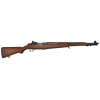
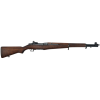
Beretta (Italian License-Built)
In the 1950s the US shipped Winchester’s wartime tooling to Italy, and Beretta used it to build about 100,000 Garands, called the Model 1952 in Italian service, until Italy adopted the BM59 in 1959. The BM59 itself is a rechambered 7.62 NATO rifle on the Garand pattern with a 20-round detachable magazine. It’s a relative, not a Garand you’d buy for M1 history.
Decoding the Serial Number
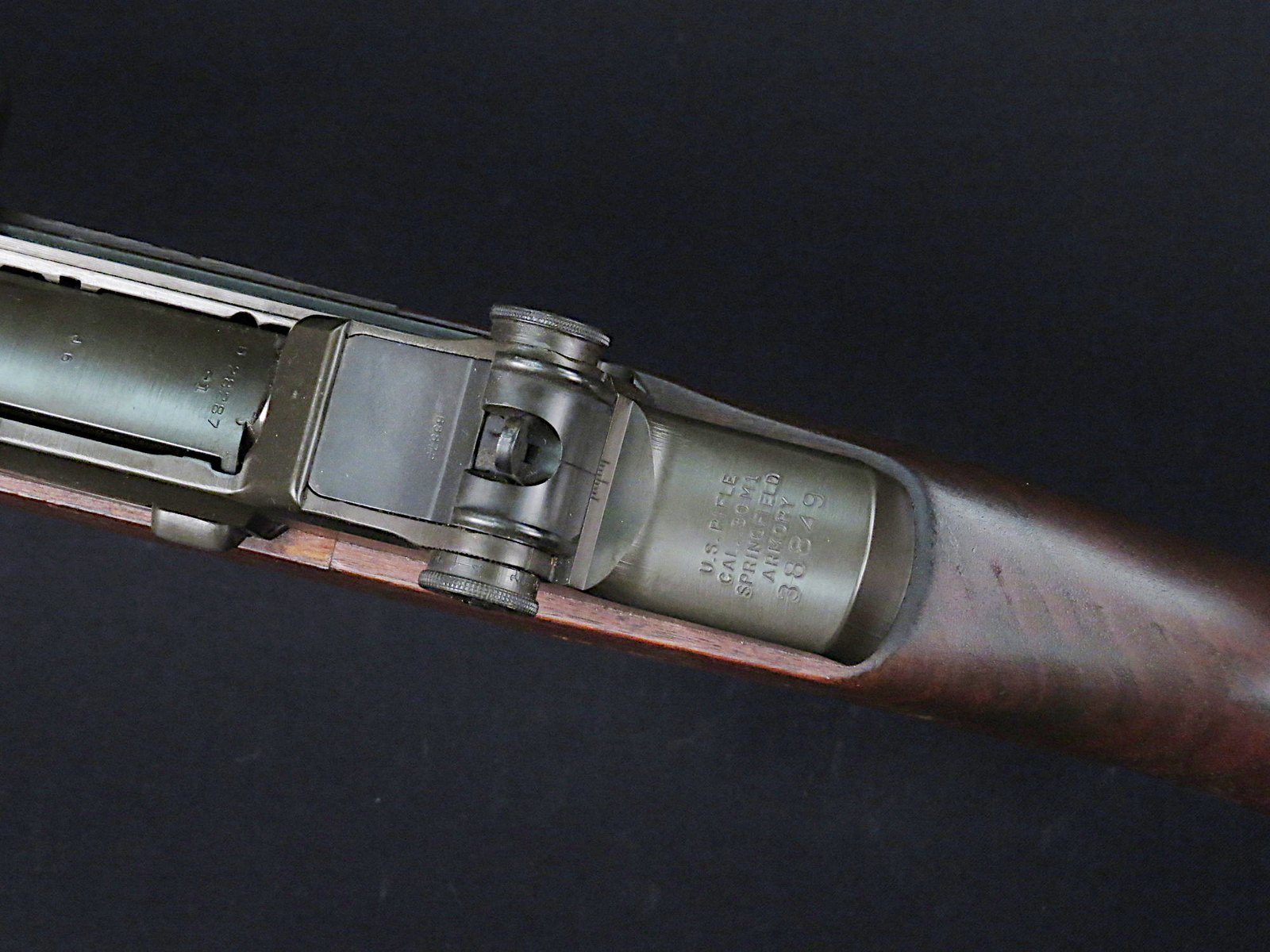
The serial number on the receiver heel tells you who made the rifle and roughly when. Makers were given serial blocks, and the blocks overlap and jump around as wartime demand rose, so check the whole table rather than assuming a low number means an early Springfield. These are the blocks the National Park Service’s Springfield Armory National Historic Site lists:
| Maker | Serial Blocks |
|---|---|
| Springfield Armory | 1 to 100,000 · 165,501 to 1,200,000 · 1,357,474 to 2,305,849 · 2,656,149 to 4,399,999 · 5,000,000 to 5,000,500 · 5,278,246 to 5,488,246 · 5,793,848 to 6,099,905 |
| Winchester | 100,001 to 165,500 · 1,200,001 to 1,357,473 · 2,305,850 to about 2,536,600 · 1,600,000 to 1,640,000 (“WIN-13”, early 1945) |
| International Harvester | 4,400,000 to 4,660,000 · 5,000,501 to 5,278,245 |
| Harrington & Richardson | 4,660,001 to 4,800,000 · 5,488,847 to 5,793,847 |
| Rock Island Arsenal | X2,655,982 to X2,656,148 (a tiny rebuild block) |
For the month a Springfield or Winchester was made, the NPS page lists the last serial produced each month through the war. Barrels carry their own month-and-year date stamp under the handguard. A barrel dated a few months after the receiver is what you expect on an untouched rifle; a 1950s barrel in a 1943 receiver just tells you the rifle went through an arsenal rebuild, which most did.
“Correct” means the parts are right for the rifle’s era, not that they all started life on that rifle. “Mixed” means whatever the rebuild bench grabbed. Most Garands on the market are mixed, and for a shooter that’s fine. For a collector, correct parts and original finish are where the money is.
M1 Garand Variants: M1C, M1D and the “Tanker” Myth
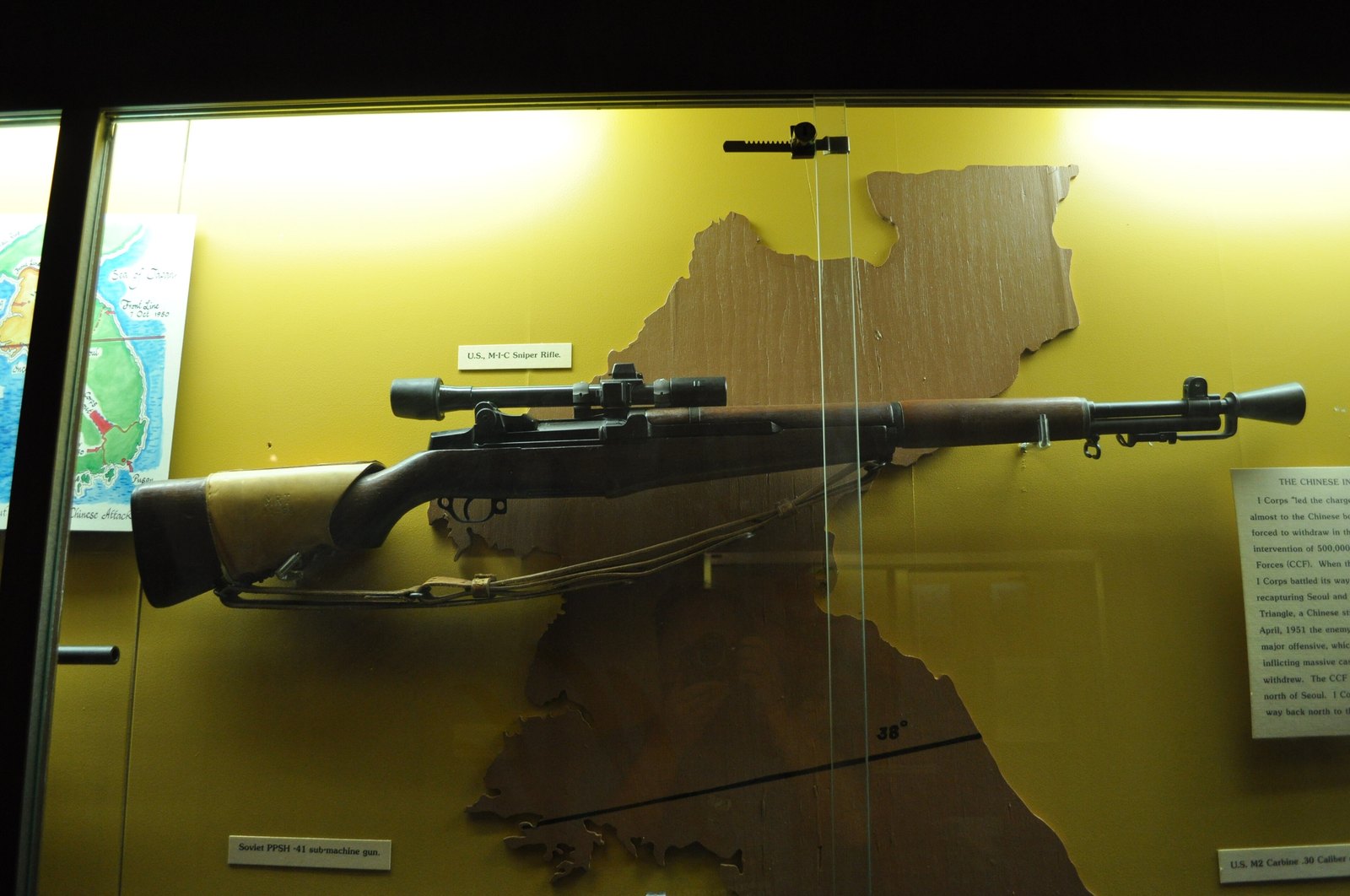
The only Garand variants that saw real service were the sniper rifles. The M1C was adopted in June 1944 with a scope mount drilled and tapped into the receiver; 7,971 were made in the war and 4,796 more during Korea. Drilling the hardened receiver could warp it, so the M1D used a simpler single-ring mount on the barrel instead, and 21,380 were built during Korea. Genuine M1Cs and M1Ds are expensive and heavily faked, so buy one only with documentation you can check.
The “Tanker” Garand is a different story. The name was invented after the war as a marketing tag for commercial rifles built on welded, demilled receivers. There were real 18-inch experiments, the M1E5 and T26, but neither went into service. If a seller tells you his short Garand is a WWII tanker’s rifle, he’s wrong, and the receiver underneath may be a welded one.
Foreign Returns: Greek, Danish and Italian
Garands went out as military aid and many came back through importers, so a lot of rifles on the market have a second history.
- Greek returns. Greece received 186,090 M1s plus 1,880 M1C and M1D rifles, and still uses Garands for ceremonial guard duty. Greek rifles often show a dark refinish and hard use. My 2018 Greek rifle cost me $1,150 at a Pennsylvania show and shoots fine; the refinish is what kept the price down.
- Danish returns. Denmark received 69,810 M1s and called them the Gevær m/50. Some were converted to 7.62 NATO, so check the chamber marking before you buy ammo.
- Italian rifles. Italy received about 232,000 US-made M1s and Beretta built around 100,000 more. An Italian receiver is a real Garand, just not a US-made one, and it’s priced that way.
Whatever the country, an import mark on the receiver or barrel lowers collector value but doesn’t hurt a shooter at all. If you want a rifle to shoot, a foreign return is often the best value on the table.
What to Inspect Before You Buy
When I bought the CMP Springfield, the paperwork gauged the muzzle and throat for me, but the op rod still showed wear I hadn’t spotted in the photos. These are the checks I run now on any Garand before I pay for it:
- 1. Muzzle and throat gauges. A muzzle gauge and a throat erosion gauge tell you how much barrel life is left. For reference, the CMP’s Service Grade standard was a muzzle reading of 3 or less and throat erosion under 5; Field Grade allowed a muzzle of 3 or more and throat under 6. A seller who won’t let you gauge the rifle is telling you something.
- 2. Operating rod. Pull the op rod and check that it’s straight and not rubbing the stock. A bent op rod is the classic sign of years of the wrong ammo, and a rifle that’s short-stroking or throwing brass weakly often has one.
- 3. Receiver. Look hard at the heel and around the rear sight for cracks and for weld lines. A crack or a weld is a walk-away, and a weld can mean a demilled receiver put back together.
- 4. Bolt. Check the bolt face and the locking lugs for peening or galling. They should look even and sharp-edged.
- 5. Gas cylinder. It should sit snug on the barrel splines and not rotate. A loose one hurts accuracy.
- 6. Clip function. Cycle an empty clip through the rifle. It should seat, and after the bolt locks back the clip should kick out cleanly.
- 7. Stock and cartouche. Look for cracks at the wrist and behind the receiver, and for original inspector cartouches. A cracked wrist can be fixed but costs you value.
- 8. Headspace. On any rifle with an unknown history, have a gunsmith check headspace before you shoot it.
Buying an M1 Garand From the CMP in 2026
The Civilian Marksmanship Program is still the only place selling surplus Garands straight from the government pipeline, and it’s still worth checking first. By law the CMP can only sell to US citizens over 18 (21 in some states) who are members of a CMP-affiliated club and legally able to buy a firearm. You’ll need four things: proof of citizenship, proof of age, proof of club membership (the Garand Collectors Association is an affiliated club), and proof of a marksmanship-related activity such as a carry license, a hunter safety course with live fire, or competition. Buyers over 60 don’t need the marksmanship proof for surplus rifles.
Surplus rifles ship to your door in most states, with an adult signature required on delivery. Buyers in California, Connecticut, Illinois, New Jersey, New York, Oregon and Washington must ship to an FFL, and Florida orders are routed through an FFL for the waiting period. There’s a twelve-rifle yearly limit on surplus rifles; the new commercial M1 Garand by CMP doesn’t count against it. The CMP also sells in person at its stores, which lets you pick a rifle rather than take the luck of the draw.
The New M1 Garand by CMP
In May 2025 the CMP announced its first new-production Garand, the M1 Garand by CMP. Heritage Arms makes a newly forged receiver to the original Springfield drawings, marked with a CMP crest and a CMP serial number in the classic font, and the CMP builds it up from new and surplus parts in .30-06 or .308. It costs $1,900 plus $40 shipping, and regular production started with serial number 1001 in January 2026. It’s a real, shootable Garand with a warranty. It is not a USGI rifle, and the price reflects that.
CMP Expert Grade $1,150 + S&H
CMP Custom Shop Special $1,650 + S&H
M1 Garand by CMP $1,900 + $40 S&H
Where to Buy an M1 Garand
With the cheap CMP grades gone, most buyers end up in the retail and private market. Here’s how I’d rank the options:
- CMP (thecmp.org and the stores): Expert Grade at $1,150, the Custom Shop Special at $1,650, and the new M1 Garand by CMP at $1,900. The cleanest paperwork you’ll get.
- Retail surplus dealers: Guns.com and Classic Firearms both carry graded Garands, and the price cards above pull their current listings by maker.
- Auction houses: Rock Island Auction and similar houses are where the matching, all-original and rare-maker rifles sell, with the documentation to back them.
- GunBroker and private sales: the biggest pool of rifles, and the one where the inspection list above matters most. Ask for muzzle and throat readings, bore photos and a clear shot of the receiver heel.
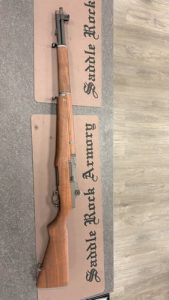
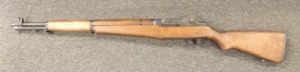

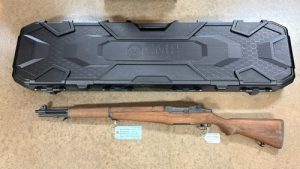
A good leather or web sling finishes the rifle and it’s the first thing I’d add. The GI-pattern M1907 leather sling is the correct one for a WWII rifle.
The .308 Question
You can have a Garand in .308, but go carefully. The CMP’s Expert Grade and its new-production rifle both come in .308 Winchester from the factory, which is the simplest way to get one. The CMP’s old Navy MK2 MOD1 rifles were built for 7.62 NATO, and the CMP itself says they “should not be assumed safe for use with commercial spec, .308 WIN ammunition.” Mil-spec 7.62 NATO and commercial .308 aren’t the same thing in an old action.
If you want .308 with a detachable magazine and modern mounting, you’re really shopping for an M1A. See our best .308 rifles guide for the modern options.
M1 Garand vs M1A vs M14
The M14 replaced the Garand in 1958: a select-fire 7.62 NATO rifle with a 20-round detachable magazine, built on a receiver descended from the Garand’s. The M1A is the civilian semi-auto version made by today’s Springfield Armory Inc. Buy a Garand for the WWII history, the en-bloc clip and the .30-06. Buy an M1A if you want a detachable magazine, easier scope mounting and cheaper .308 ammo. For the CMP’s upcoming surplus M14 sales, see our CMP M14 update.
If you’re building a WWII collection, the Garand’s natural companions are the M1 Carbine, the rifles it fought against like the Mauser K98k, and the Allied bolt guns: the British Lee-Enfield and the Soviet Mosin-Nagant.
The “Ping”: Myth vs Reality
The story goes that German and Japanese soldiers listened for the ping and charged when an American’s rifle was empty. It was a rumor in the war, and nobody has turned up a documented case of it working. On a real battlefield the ping disappears into everything else, and plenty of veterans said they liked it as a reload cue. On the range it’s just the best sound in shooting.
Who Should NOT Buy an M1 Garand
- Shooters who want to feed it cheap hunting ammo. If you won’t buy Garand-labeled ammo or fit an adjustable gas plug, you’ll bend an op rod. An AR-15 or an M1A is a better fit.
- Anyone who wants a scope out of the box. The receiver isn’t built for modern mounts, and the M1C and M1D mounts are collector items. Buy an M1A or a modern .308.
- Buyers who hate topping off. You can’t easily top off a partly fired clip. If that bugs you, the M1A’s detachable magazine is the answer.
- Anyone expecting a cheap CMP rifle. The sub-$1,000 grades are gone. Budget $1,150 for the least expensive CMP rifle and more on the retail market.
M1 Garand Buyer Glossary
- En-bloc clip: the eight-round clip that goes into the rifle with the cartridges and is ejected with a ping after the last shot.
- Operating rod: the rod along the right side that the gas drives back to cycle the bolt. The part the wrong ammo damages.
- Gas trap: the original muzzle gas system, replaced by a drilled gas port in 1940. Surviving gas-trap rifles are rare and valuable.
- CUP and psi: two ways of measuring chamber pressure. SAAMI’s .30-06 limit is 50,000 CUP or 60,000 psi, the same ceiling on two different tests.
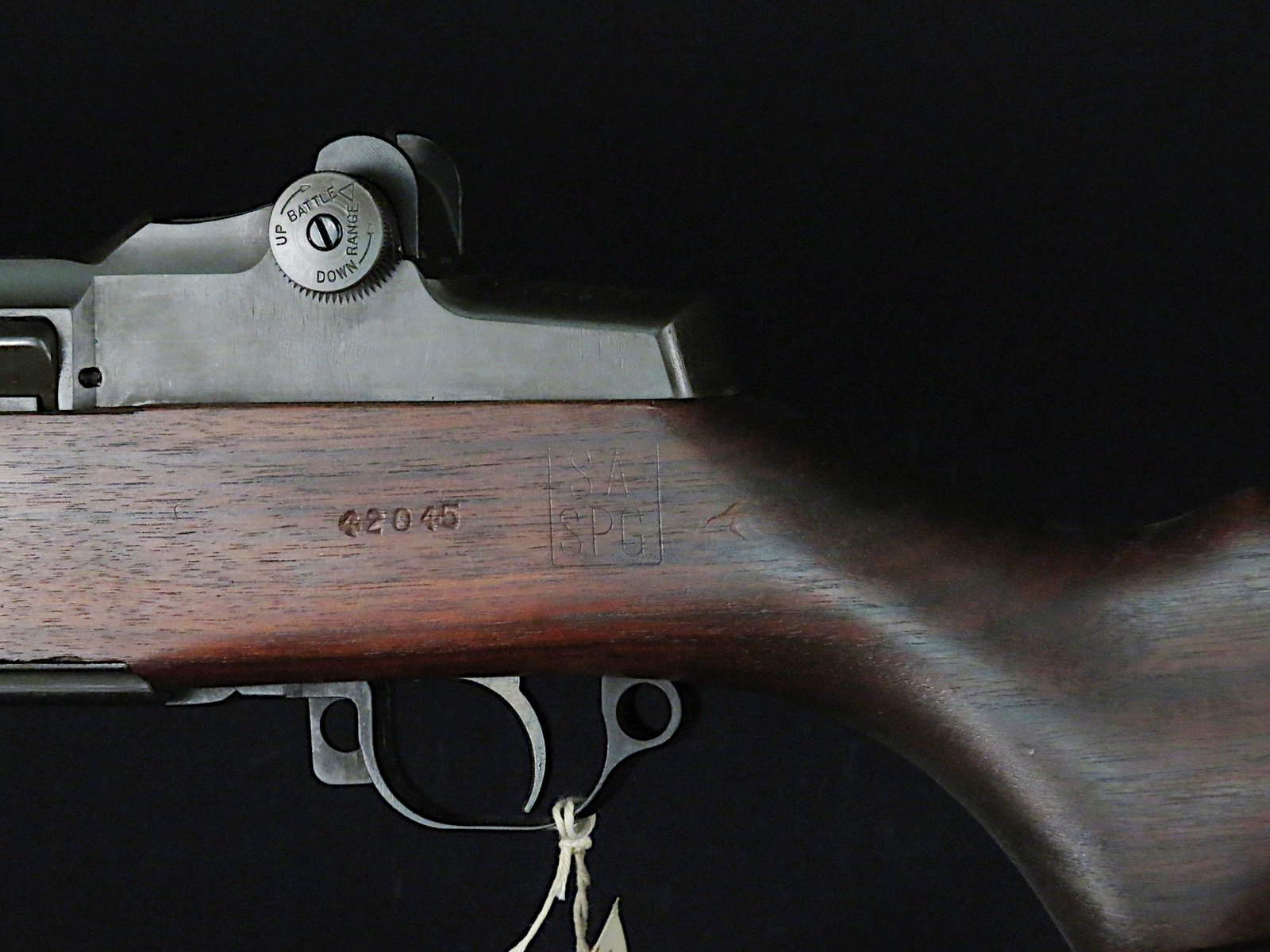
- Cartouche: the inspector’s stamp on the stock behind the receiver, such as SA/SPG on a Springfield.
- Muzzle and throat gauges: tools that measure barrel wear at the muzzle and just ahead of the chamber. Lower numbers mean more barrel life left.
- Reclaimed receiver: a USGI receiver the CMP has recovered and rebuilt into a rifle; all of its current surplus grades use them.
- Tanker: a commercial short Garand, often built on a welded receiver. Not a WWII variant.
Related Reading
- Best M1 Carbines: the Garand’s little brother, new production and GI originals.
- Used rifles buyer guide: the full used-rifle hub, surplus included.
- Used guns hub: handguns, rifles and shotguns on the used market.
- Used 1911 buyer guide: the other great WWII US service arm.
- Most popular military small arms in the world: where the Garand sits in the bigger picture.
Frequently Asked Questions
How much is an M1 Garand worth in 2026?
An original M1 Garand runs about $1,400 to $2,500 in 2026. On September 23, 2026 we tracked retail asking prices of $1,499.99 to $2,000 for Springfield Armory rifles, $1,700.99 to $1,999.99 for H&R, $1,900 to $2,399.99 for International Harvester and $2,399.99 to $3,499.99 for Winchester. TrueGunValue's 12-month average for a used Garand is $1,383.04.
Can you still buy an M1 Garand from the CMP?
Yes. The CMP still sells Expert Grade rifles at $1,150 in .30-06 or .308 (a reclaimed USGI receiver with a new barrel and stock), the Custom Shop Special at $1,650, and the new-production M1 Garand by CMP at $1,900 plus $40 shipping. Service Grade sold out October 22, 2024, Rack Grade January 7, 2025 and Field Grade December 2, 2025.
What ammo is safe to shoot in an M1 Garand?
The CMP says not to use .30-06 loaded beyond 50,000 CUP or with bullets heavier than 172 to 174 grains. Ammo labeled for the Garand (Hornady M1 Garand, Federal American Eagle M1 Garand, Prvi Partizan M1 Garand, Sellier & Bellot M1 Garand) is loaded for its gas system. To shoot normal .30-06, fit an adjustable gas plug and tune it down.
How many rounds does an M1 Garand hold?
Eight. The M1 Garand feeds from an eight-round en-bloc clip that goes into the rifle with the cartridges. After the last shot the rifle ejects the empty clip with its famous ping and locks the bolt open.
How can I tell who made my M1 Garand and when?
The maker is stamped on the receiver heel above the serial number: Springfield Armory, Winchester, International Harvester or H&R. Each maker was given serial blocks, and the National Park Service's Springfield Armory site lists those blocks and the last serial produced each month, so the serial tells you the maker and roughly when the receiver was made.
What is the M1 Garand by CMP?
It is the CMP's new-production Garand, announced in May 2025. Heritage Arms forges a new receiver to the original Springfield drawings, marked with a CMP crest and a CMP serial number, and the CMP builds it in .30-06 or .308. It costs $1,900 plus $40 shipping, and regular production began with serial number 1001 in January 2026. It is a new rifle, not USGI surplus.
Is a Winchester M1 Garand worth more than a Springfield?
Yes. Winchester built Garands only during World War II, roughly 514,000 by the National Park Service serial blocks, against millions from Springfield Armory. On September 23, 2026 we tracked Winchester rifles at $2,399.99 to $3,499.99 against $1,499.99 to $2,000 for Springfield rifles.
Does the CMP ship M1 Garands to your house?
In most states, yes, with an adult signature required on delivery. Buyers in California, Connecticut, Illinois, New Jersey, New York, Oregon and Washington must ship to an FFL, and Florida orders are routed through an FFL for the waiting period.
Is the Tanker Garand a real World War II variant?
No. The Tanker name was invented after the war to market commercial short Garands, often built on welded, demilled receivers. The real 18-inch experiments, the M1E5 and T26, never went into service.
4,632+ Gun & Ammo Deals
Updated daily from 200+ top retailers. Filter by category, caliber, action type, and price.