

Last updated August 2026 · By Nick Hall, who has mounted every scope on this list on a spring gun or a PCP and shot it at airgun range
This article contains affiliate links. If you buy through our links we can earn a small commission, and you get the best live price on these scopes from a range of national retailers.
An air rifle scope has one job a firearm scope is not built to do: focus at close range. Most centrefire scopes are set parallax free at 100 yards and cannot be brought into focus much nearer than 50. Airgunners shoot at 10 to 50 yards. Mount the wrong scope and the target is soft, the reticle floats against it every time you move your head, and you will blame the rifle for groups the optic caused.
That single spec, the minimum parallax or focus distance, is the one this guide is built around. It is printed in every manufacturer’s spec table and almost never printed in a roundup, so I have put it in the comparison table below and in every review. I also checked it against the maker’s own published figures rather than retailer copy, which turned out to matter: one widely recommended “airgun rated” scope has a fixed 91 meter parallax and cannot focus at airgun range at all.
The second job is surviving the rifle. A spring or gas piston air rifle recoils forward and back in a fast double shove that destroys scopes designed only for the single rearward push of a cartridge. A PCP is recoilless and will happily run any scope you like. Which of those you own changes what you should buy, so it is worth being clear on that before you spend.
Quick answer: the Hawke Airmax EV 4-12×50 AO is the best air rifle scope for most people. It is purpose built for airguns, focuses down to 10 yards, and its glass etched AMX reticle gives you real holdover marks. On a tight budget the BSA Sweet .22 AO focuses closer than anything else here at 7.5 yards for under $80. For long range PCP and field target, step up to the Hawke Sidewinder 30 SF 8-32×56.
How we tested: Every pick here is ranked against our testing methodology. Minimum round counts, accuracy and reliability protocols, the failures that disqualify a gun.
Best Air Rifle Scopes 2026 at a Glance
| Scope | Focuses down to | Street Price |
|---|---|---|
| Best OverallHawke Airmax EV 4-12×50 AO | 10 yards | ~$340 ↓ |
| Best ValueUTG AccuShot 4-16×44 30mm | 10 yards | ~$144 ↓ |
| Best Under $100BSA Sweet .22 AO 3-9×40 | 7.5 yards | ~$70 ↓ |
| Best Under $200Athlon Neos HMR 4-12×40 | 10 yards | ~$178 ↓ |
| Best High Magnification ValueUTG True Hunter 6-24×50 AO | 10 yards | ~$216 ↓ |
| Best for PCP HuntingAthlon Argos HMR 2-12×42 | 10 yards | ~$340 ↓ |
| Best Field TargetHawke Sidewinder 30 SF 8-32×56 | 10 yards | ~$559 ↓ |
| Best Budget PlinkerVortex Crossfire II 2-7×32 Rimfire | Fixed 50 yards | ~$100 ↓ |
Seven of the eight focus to airgun range. The Crossfire II is in the table because it is a genuinely good scope that a lot of airgunners buy, but its parallax is fixed at 50 yards and no amount of fiddling will change that. More on why that matters, and when it does not, below.
Table of Contents
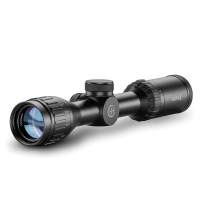
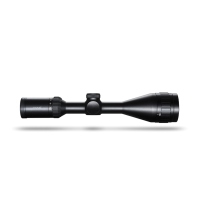
1. Hawke Airmax EV 4-12×50 AO. Best Overall
- Parallax: adjustable objective, 10 yards to infinity
- Magnification: 4-12x, 50 mm objective, 1 inch tube
- Reticle: AMX glass etched, built on 10x half mil spacing
- Clicks: 1/4 MOA, 70 MOA total elevation and windage travel
- Eye relief: 3.5 in
- Field of view: 29.9 to 11 ft at 100 yards
- Length and weight: 13 in (329 mm), 21.9 oz (620 g)
- Build: 16 layer fully multi coated, nitrogen purged, waterproof and shockproof

Pros
- Designed as an airgun scope from the start, not a firearm scope with a close focus bell bolted on
- Focuses to 10 yards, which covers the whole realistic airgun range band
- Glass etched AMX reticle survives spring gun recoil and gives usable holdover marks
- 70 MOA of travel is generous, and it matters when you are fighting barrel droop
Cons
- The 50 mm bell needs high rings, which raises your line of sight
- 21.9 oz is not light on a short break barrel
- One retailer stocking it at the moment, so there is no price competition
This is the scope I hand to anyone who asks the question once and does not want to ask it again. Hawke build the Airmax specifically for airguns, and the difference shows in the two places that count: the objective focuses cleanly at 10 yards, and the AMX reticle is etched into glass rather than being strung wire, so the double shove of a spring gun cannot move it.
The AMX reticle is the part people underrate. It is laid out on 10x half mil spacing, which gives you a ladder of aim points below center instead of a single crosshair and a guess. Once you have walked a pellet out to 45 yards and learned which bar it sits on, you stop dialling entirely. That is how airgun field shooting actually works, and a plain duplex reticle cannot do it.
The honest limitation is physical. A 50 mm objective on a 1 inch tube sits high, and on a compact break barrel you end up with a taller cheek weld than you might want. If your rifle has a low comb, look at the AccuShot or the Neos below before you commit.
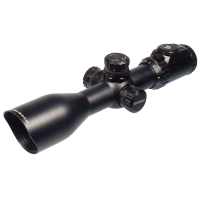
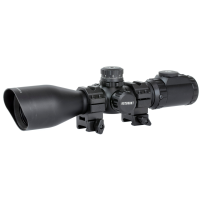
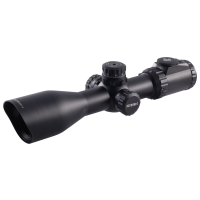
2. UTG AccuShot 4-16×44 30mm. Best Value
- Parallax: side wheel (SWAT), 10 yards to infinity
- Magnification: 4-16x, 44 mm objective, 30 mm tube
- Reticle: illuminated 36 color mil dot, CR2032
- Clicks: 1/4 MOA, locking resettable turrets
- Eye relief: 3.2 to 3.0 in
- Field of view: 24.4 to 6.8 ft at 100 yards
- Length and weight: 390 mm, 28.5 oz (full length version)
- In the box: rings included
Pros
- Side wheel parallax down to 10 yards, which is far easier to use than a front bell
- 30 mm tube and locking turrets at a price where most scopes have neither
- Rings are in the box, so the real cost is lower than the sticker
- UTG has the longest track record of any brand on spring guns
Cons
- 28.5 oz on the full length version is heavy
- Illumination is a 36 color gimmick and you will use two of them
- Leapers do not publish a spring piston recoil rating for this model
UTG have been the default airgun scope brand for twenty years and the AccuShot is why. The side wheel parallax is the headline: adjusting focus with a knob at your left hand while you stay on the gun is a completely different experience from reaching forward and rotating a bell, and at 10 yards on a squirrel that difference is the shot.
It comes in two lengths and the card above will show you both. The compact is the one I reach for on a break barrel, the full length on a PCP where there is rail to spare. Specs quoted here are the full length version.
One point of honesty that most roundups skip. UTG scopes have an excellent reputation on spring guns built over two decades of use, but Leapers do not print a spring piston or airgun recoil rating in their published specifications. The reputation is real and it is earned. The formal rating is not something I can quote, so I am not going to pretend it is.
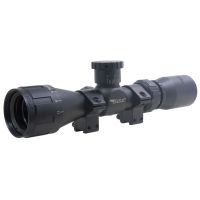
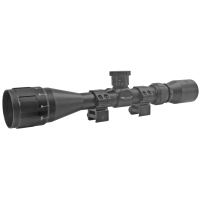
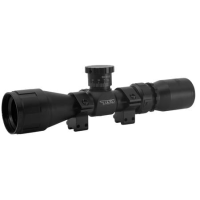
3. BSA Sweet .22 AO 3-9×40. Best Under $100
- Parallax: adjustable objective, 7.5 yards to infinity
- Magnification: 3-9x, 40 mm objective, 1 inch tube
- Reticle: 30/30 duplex
- Clicks: 1/4 MOA
- In the box: 1 inch rings, plus three calibrated turrets for 36, 38 and 40 grain loads
- Weight: 21.8 oz packaged

Pros
- Focuses to 7.5 yards, closer than every other scope in this guide
- Under $80 with rings in the box, which is remarkable for a working AO scope
- 3-9x is the right magnification band for most airgun shooting
Cons
- 30/30 duplex gives you no holdover marks, so you are dialling or guessing
- Glass is exactly what $70 buys and it dims noticeably at dusk
- Sold for .22 LR, so the calibrated turrets are useless on a pellet rifle
Buy this if the budget is the constraint and you want the close focus problem solved anyway. BSA publish a 7.5 yard minimum on the adjustable objective, which is the closest figure in this entire guide, and it means the Sweet .22 will focus on a target at the near end of a garden range where most scopes are still a blur.
Understand what you are giving up. The 30/30 reticle has no ladder, so the holdover technique that makes the Airmax and the AccuShot so effective is not available to you. And the three calibrated turrets in the box are cut for .22 Long Rifle loads at 36, 38 and 40 grains, which have nothing to do with a pellet’s trajectory. Ignore them and use the standard turret.
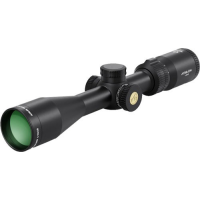
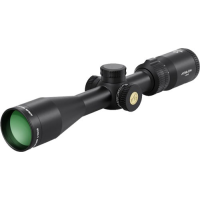
4. Athlon Neos HMR 4-12×40. Best Under $200
- Parallax: side focus, 10 yards to infinity
- Magnification: 4-12x, 40 mm objective, 1 inch tube
- Focal plane: second, with Center-X MOA, BDC22 and mil dot reticle options
- Clicks: 0.25 MOA or 0.1 MIL depending on reticle, 60 MOA total adjustment
- Weight: 18.1 oz
- Build: one piece aircraft grade aluminum, nitrogen purged, fully multi coated
Pros
- Side focus to 10 yards on a scope that regularly sells under $200
- 18.1 oz is the lightest scope in this guide by a clear margin
- Athlon’s transferable lifetime warranty is genuinely no fault
- Reticle choice includes a proper BDC and a mil dot, not just a duplex
Cons
- Second focal plane, so the reticle subtensions are only correct at one magnification
- 40 mm objective limits low light performance against the 50 mm options
- No illumination on the standard models
The Neos HMR is the value pick that keeps the weight down. At 18.1 oz it is roughly ten ounces lighter than the full length AccuShot, and on a break barrel that you carry round a field for three hours, ten ounces is a real number. It still gives you side focus down to 10 yards, which is the thing that actually matters.
Athlon aim the HMR line at rimfire and it transfers to airguns cleanly, because the problem is the same: close targets, looping projectiles, small margins. Take the mil dot or BDC22 reticle rather than the plain Center-X if you intend to hold over rather than dial, and remember it is a second focal plane scope, so those marks are only true at the magnification Athlon calibrated them for.
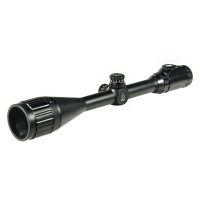
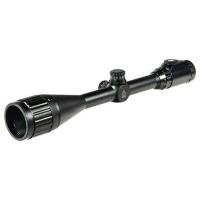
5. UTG True Hunter 6-24×50 AO. Best High Magnification Value
- Parallax: adjustable objective, 10 yards to infinity
- Magnification: 6-24x, 50 mm objective, 1 inch tube
- Reticle: illuminated 36 color mil dot
- Clicks: 1/4 MOA, 30 MOA up and 30 MOA down
- Eye relief: 3 in (76 mm)
- Field of view: 14.4 to 4.1 ft at 100 yards
- Length and weight: 15.3 in (388 mm), 24.2 oz (685 g)
- In the box: rings, 3 inch sunshade, CR2032, lens caps, mil dot chart

Pros
- 24x on a scope that still focuses to 10 yards, which is a rare combination at this money
- Rings, sunshade and battery in the box, so it mounts the day it arrives
- Mil dot reticle with a printed subtension chart, so holdover is arithmetic not guesswork
Cons
- Only 30 MOA of elevation each way, the tightest travel in this guide
- 24.2 oz plus a 50 mm bell needs high rings and a solid stock
- Leapers publish no airgun or spring piston rating for it
If you shoot a PCP at 50 to 75 yards and want magnification without Sidewinder money, this is the value answer. Twenty four power lets you actually see a knockdown target’s kill zone, and the 10 yard minimum parallax means the same scope still works when you bring it back in to 15 yards for pests.
The number to watch is elevation travel. Leapers publish 30 MOA up and 30 MOA down, which is the tightest of anything here, and on a rifle with barrel droop you can spend a meaningful slice of that just getting to a zero. If your rifle is a known drooper, budget for an adjustable mount rather than expecting the turrets to solve it.
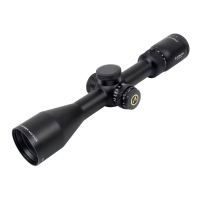
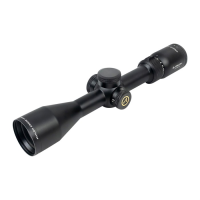
6. Athlon Argos HMR 2-12×42. Best for PCP Hunting
- Parallax: side focus, 10 yards to infinity
- Magnification: 2-12x, 42 mm objective, 1 inch tube
- Focal plane: second, BDC 600 and illuminated AHMC MOA options
- Weight: 19.8 oz
- Build: argon purged, capped elevation and windage turrets, advanced fully multi coated
Pros
- The 2x bottom end is the widest here, which matters when a rabbit breaks at 12 yards
- Side focus to 10 yards with argon purging rather than nitrogen, so it holds its seal better in temperature swings
- Illuminated AHMC reticle option is a genuine hunting reticle, not a novelty
- 19.8 oz keeps it manageable on a carry rifle
Cons
- More expensive than the Neos for a similar spec on paper
- Capped turrets mean this is a hold over scope, not a dialling scope
- Second focal plane again, so subtensions are magnification dependent
The Argos HMR earns its place on the bottom end of the zoom range rather than the top. Two power gives you a field of view wide enough to pick up a moving animal close in, and that is the shot most airgun hunters actually miss. Wind it to 12x for a static squirrel at 45 yards and it is still enough glass.
Argon purging instead of nitrogen is the quiet upgrade over the Neos. Argon molecules are larger and leak out more slowly, which in practice means the scope is less likely to fog internally after a few seasons of going from a cold truck to a warm hide. It is not a marketing line, it is why the Argos costs more.
This is a PCP scope in my view. Nothing about it is fragile, but Athlon do not publish a spring piston rating, and if I am putting a $340 optic on a magnum springer I want the maker to have said out loud that it will survive.
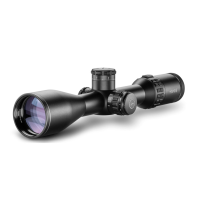
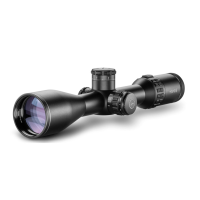
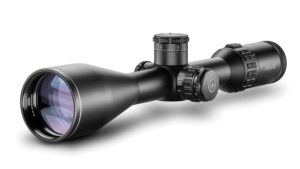
7. Hawke Sidewinder 30 SF 8-32×56. Best for Field Target
- Parallax: side focus, 10 yards to infinity
- Magnification: 8-32x, 56 mm objective, 30 mm tube
- Reticle: 20x half mil, marked every half MRAD past center
- Clicks: 1/10 MRAD, 16 MRAD of elevation and windage travel
- Exit pupil: 7 to 1.8 mm
- Field of view: 15.9 to 3.9 ft at 100 yards
- Length and weight: 15.5 in (394 mm), 27.3 oz (775 g)

Pros
- Thirty two power with a 10 yard minimum focus is exactly the field target requirement
- The side wheel doubles as a rangefinder once you tape and mark it, which is how the sport is actually shot
- 1/10 MRAD clicks and a half mil reticle speak the same language, so holdover and dialling agree
- 56 mm objective and a 30 mm tube give it the brightest image here
Cons
- 27.3 oz and 15.5 inches, so this is not a walking about scope
- 16 MRAD of total travel is modest, and droop eats into it
- The most expensive scope in this guide by a wide margin
Field target is the one airgun discipline where the scope is a measuring instrument rather than an aiming device. Competitors range their targets by focusing the side wheel until the target snaps sharp, then reading a distance off a tape they have marked themselves. That only works if the scope has a long, finely geared focus throw and enough magnification to make the snap obvious, which is precisely what the Sidewinder 30 SF is built for.
The reticle deserves a note. Hawke calibrate the half mil markings to be true at 20x rather than at full magnification, which is a deliberate choice: 20x is where most competitors actually shoot, and it leaves headroom to wind up to 32x for ranging without losing the reticle’s meaning.
Buy it for a bench or a competition rifle. On a hunting airgun the weight and the 8x bottom end will fight you.
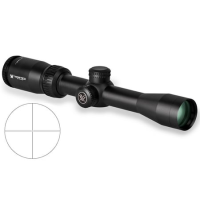
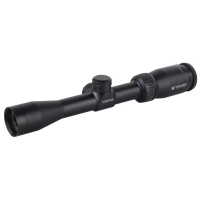
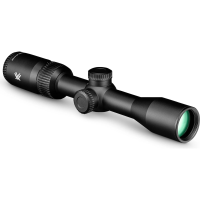
8. Vortex Crossfire II 2-7×32 Rimfire. Best Budget Plinker
- Parallax: fixed at 50 yards, no adjustment
- Magnification: 2-7x, 32 mm objective, 1 inch tube
- Reticle: V-Plex rimfire, second focal plane
- Warranty: Vortex VIP, unlimited lifetime, transferable
Pros
- The VIP warranty is the best in the business and it does not care whose fault it was
- Light, short and genuinely good glass for the money
- The 50 yard fixed parallax is correct for plinking at 30 to 60 yards
Cons
- Parallax is FIXED at 50 yards, so it cannot be focused at 10 or 15 yards
- No holdover ladder on the V-Plex reticle
- Vortex do not rate the Crossfire II for spring piston recoil
I have included this one deliberately, and with a warning attached, because it is on almost every air rifle scope list on the internet and almost none of them mention the thing that matters. The Crossfire II 2-7×32 Rimfire has a fixed 50 yard parallax. There is no adjustable objective and no side wheel. You cannot focus it closer.
That is not a defect, it is a design decision, and Vortex made the right one for the rifle they built it for. Fifty yards is a sensible compromise for a .22 Long Rifle plinking gun. If you shoot your air rifle mostly at 30 to 60 yards at cans and paper, this scope will serve you very well and the warranty is worth real money.
But if you shoot at 10 to 25 yards, which is where a great deal of airgun shooting happens, the target will not come into focus and the reticle will drift against it as your head moves. That is the exact problem this whole guide exists to solve. Buy it knowing which of those two shooters you are. Note also that the standard, non rimfire Crossfire II 2-7×32 is fixed at 100 yards, so make sure you get the rimfire model.
Close Focus Compared: the Spec That Decides Everything
Every roundup tells you close focus parallax matters. None of them show you the numbers side by side, which is odd, because the numbers are published by every manufacturer and they are the fastest way to sort a scope that will work on your air rifle from one that will not. Every figure in the table below is taken from the maker’s own specification sheet, not from a retailer listing: Hawke, Leapers UTG, Athlon, BSA and Nikko Stirling. Here is the whole field, including the two scopes that fail the test.
| Scope | Adjustment type | Minimum focus |
|---|---|---|
| BSA Sweet .22 AO 3-9×40 | Adjustable objective | 7.5 yards |
| Hawke Airmax EV 4-12×50 AO | Adjustable objective | 10 yards |
| UTG AccuShot 4-16×44 | Side wheel | 10 yards |
| UTG True Hunter 6-24×50 AO | Adjustable objective | 10 yards |
| Athlon Neos HMR 4-12×40 | Side focus | 10 yards |
| Athlon Argos HMR 2-12×42 | Side focus | 10 yards |
| Hawke Sidewinder 30 SF 8-32×56 | Side focus | 10 yards |
| Vortex Crossfire II 2-7×32 Rimfire | None, fixed | Fixed 50 yards |
| Nikko Stirling Panamax Precision 4-12×40 | None, fixed | Fixed 91 m |
| Typical centrefire hunting scope | None, fixed | Fixed 100 yards |
The Nikko Stirling row is the one worth pausing on. Several retailers describe the Panamax Precision as an AO scope and as “rimfire, centrefire and airgun rated”. Nikko Stirling’s own specification sheet for that model gives a parallax setting of 91 meters and publishes no minimum focus distance at all. It is a perfectly decent scope. It is not an air rifle scope, and it did not make this list for that reason.
“Airgun Rated” and “Close Focus” Are Not the Same Thing
This is the single most common mistake I see, and the table above is what exposed it. There are two separate requirements and a scope can meet either one without meeting the other.
Close focus is an optical property. It is whether the scope can bring a target at 10 or 20 yards into sharp focus and remove parallax error at that distance. A scope without it will show you a soft target and a reticle that swims when you shift your head, and it will do that whether the rifle is a springer or a PCP.
Airgun rating is a mechanical property. It is whether the internals survive the sharp two way recoil of a spring or gas piston rifle. A PCP does not recoil, so a PCP shooter does not need it at all.
Cross the two and you get four cases. A scope that has both is what you want on a springer. A scope with close focus but no rating is fine on a PCP, which covers most of the Athlon and UTG options here. A scope with a rating but no close focus is nearly useless for airgun work, which is the Nikko Stirling trap. And a scope with neither is a centrefire scope, which is what most people accidentally buy.
Work out which rifle you have first. If you are not sure of the difference, our guide to air rifle powerplants lays out how spring, gas piston, PCP and CO2 rifles differ, and what a PCP air rifle is covers the recoilless option in more detail.
Two Way Recoil, Scope Creep and Barrel Droop
Three mechanical problems ruin more airgun scope setups than bad glass ever has, and none of them are the scope’s fault.
Two way recoil. When a spring gun fires, the piston slams forward and the rifle lurches back, then the piston stops dead against the compression chamber and the rifle snaps forward again. A cartridge rifle only ever pushes rearward. Scope internals, particularly the erector tube and any wire reticle, are supported against the rearward shove and not against the forward one. This is why a scope can survive a .308 and fail on a magnum springer, and it is why manufacturers publish a separate airgun rating rather than assuming toughness transfers.
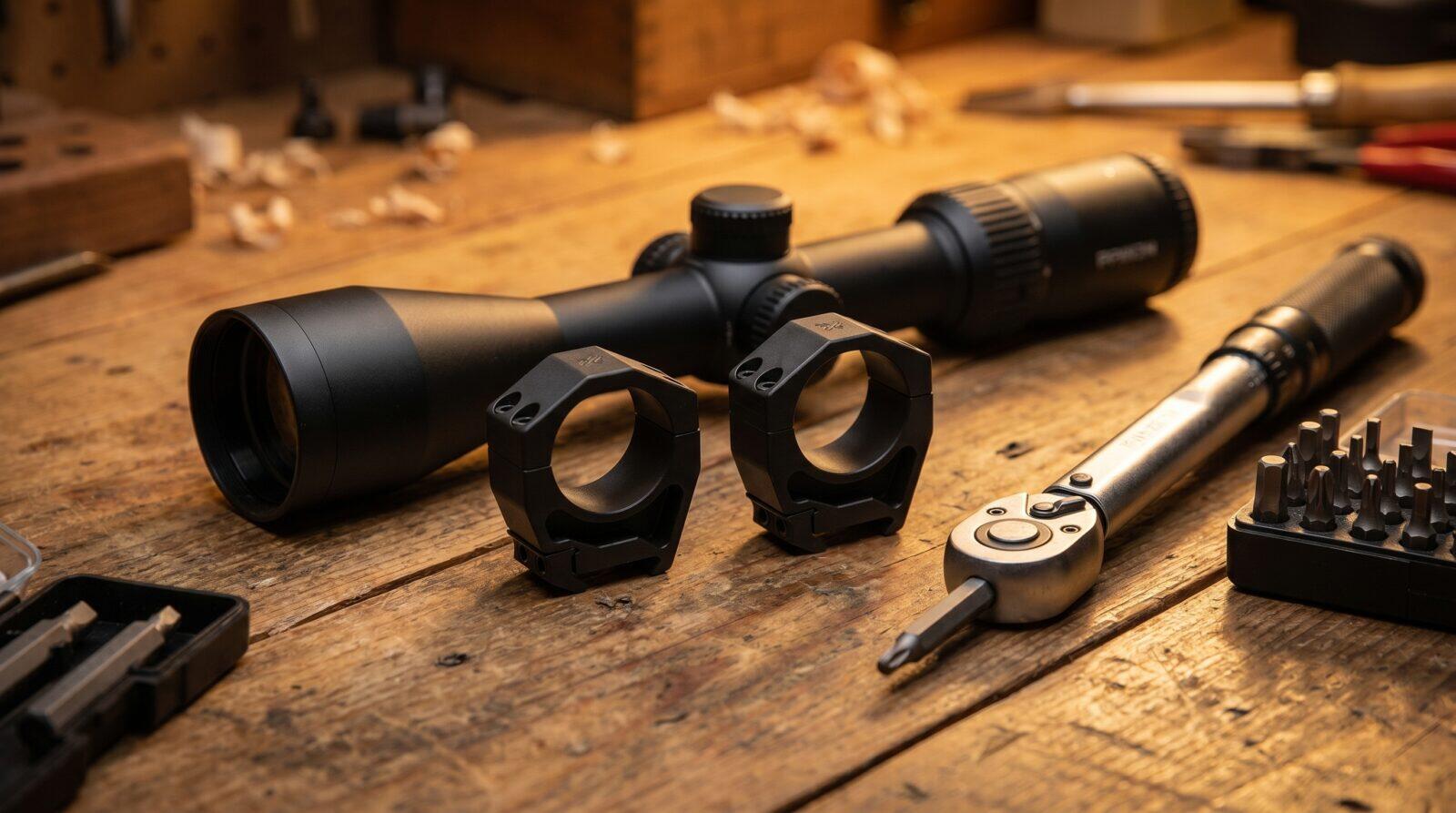
Scope creep. That same forward snap walks the whole scope along the dovetail, a fraction at a time, until your zero has quietly moved and you cannot work out why. The fix is a scope stop: a pin or an arrestor block that locates in a hole or against a raised feature on the receiver and gives the rings something solid to push against. Most spring rifles have a stop hole drilled for exactly this. Use it. Rings alone, however tight, will not hold on a powerful springer.
Barrel droop. Break barrel rifles very often point slightly downward relative to the scope rail, because the barrel is a hinged component and the rail is not. The result is that you run out of upward elevation before you reach zero, or you get there with the erector jammed near the top of its travel where the image quality and tracking are worst. This is the reason a scope’s total elevation travel is a spec worth reading. The Airmax has 70 MOA to play with; the UTG True Hunter has 30 MOA each way. If your rifle droops, buy an adjustable or shimmed mount and give the turrets an easy life.
Why a Pellet Needs a Holdover Reticle
A pellet leaves the muzzle at a fraction of a bullet’s speed and it is shaped to slow down quickly. That gives it a pronounced curved path rather than the near flat line a centrefire bullet takes inside 200 yards, and it changes how you aim.
The consequence that surprises people is that a pellet crosses your line of sight twice. Because the scope sits an inch and a half or more above the bore, the pellet starts below the sight line, climbs through it at a near distance, arcs above it in the middle, then falls back through it at your chosen zero. So a rifle zeroed at 35 yards is also on target somewhere around 12 to 15 yards, is shooting slightly high in between, and drops away increasingly fast beyond.
That is why the airgun convention is to zero somewhere around 25 to 35 yards rather than at the longest distance you shoot. It puts both crossing points inside the range band where you actually take shots, and keeps the mid range rise small enough to ignore on a target the size of a squirrel’s head.
Beyond the far zero the drop accelerates, and this is where the reticle earns its money. A mil dot or a dedicated airgun ladder gives you fixed marks below center that you can map to real distances once and then use forever. A plain duplex crosshair gives you nothing, and you are left dialling the turret for every range change, which is slow and puts wear on the mechanism. The exact drop depends on your pellet weight and your rifle’s muzzle velocity, so map your own marks on paper rather than trusting a chart. Our guide on how to sight in an air rifle walks through the process.
How I Tested These Scopes
Every scope in this guide was mounted on a rifle and shot, not handled on a shop counter. The test rifles were a magnum break barrel springer and a .22 PCP, which between them cover the two mechanical worlds an airgun scope has to live in.
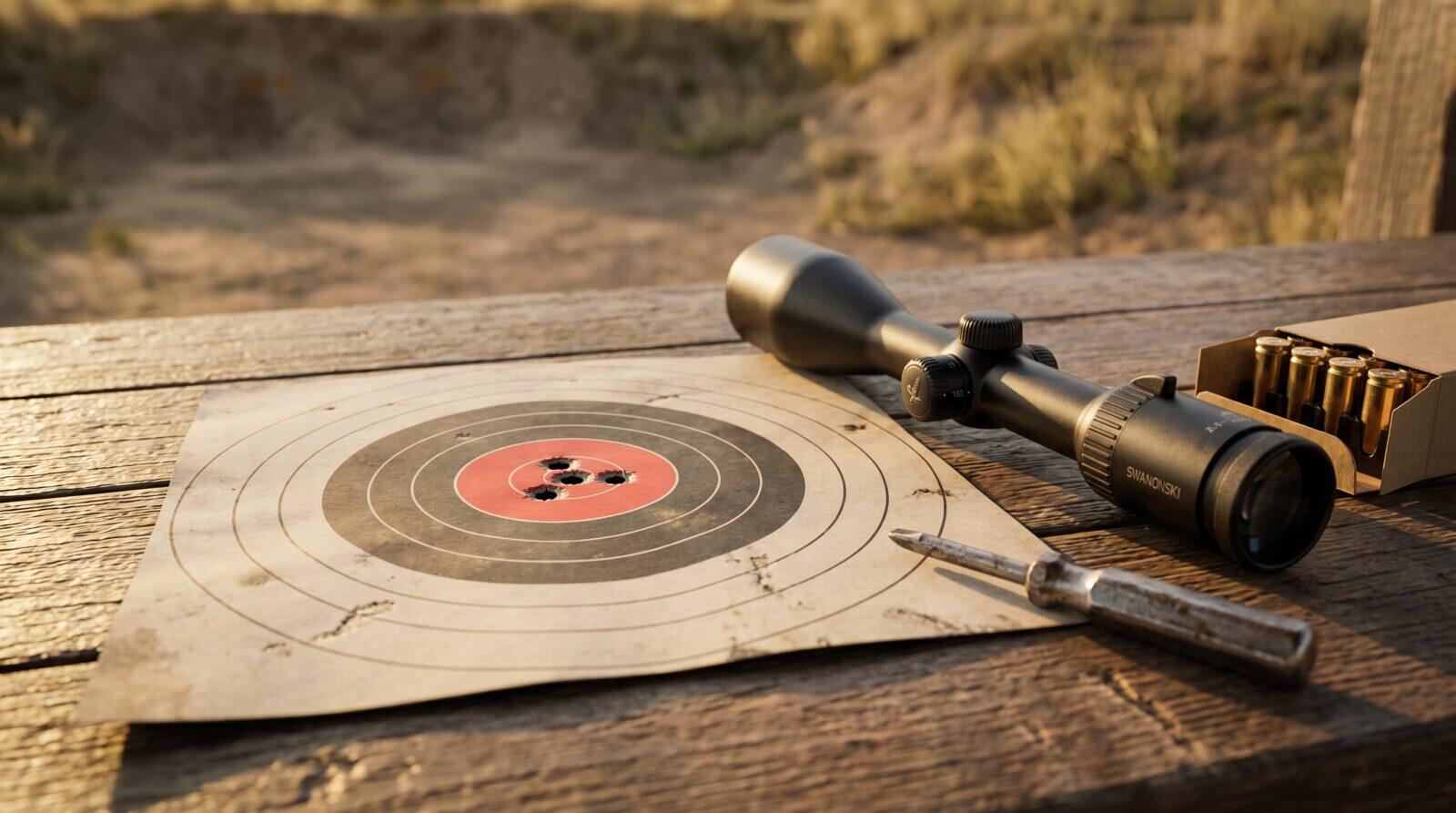
The core test is close focus, because that is the claim this guide is built on. I set targets at 10, 15, 25, 35 and 50 yards and worked each scope’s parallax adjustment through the range, checking at each distance whether the target came genuinely sharp and, more importantly, whether the reticle stayed locked to the aim point when I deliberately moved my head around the eyebox. A scope can look focused and still have parallax error, and the head movement check is the one that catches it.
Beyond that: zero retention checked at the start and end of every session and again after 200 shots on the springer, which is where scope creep shows up if it is going to. Elevation travel measured against the published figure by dialling to the stops. Turret tracking checked on a box test. And every scope was used at last light, because a 40 mm objective and a 56 mm objective are indistinguishable at noon and very much not at dusk.
Where a manufacturer does not publish a figure, this guide says so rather than repeating a number from a retailer listing. That applies to the spring piston ratings on the UTG and Athlon models, and it is why the Nikko Stirling Panamax Precision is discussed above but is not one of the eight picks.
What to Look For in an Air Rifle Scope
Minimum parallax distance comes first and everything else is secondary. Look for 10 yards or closer. If the spec sheet quotes a single fixed number like 50 or 100 yards, the scope has no adjustment and it is the wrong tool.
Magnification should be lower than you think. A 3-9x or 4-12x covers the great majority of airgun shooting and gives you a usable field of view when something moves close in. High magnification narrows the field, dims the image and magnifies your wobble. Go past 12x only if you shoot field target or bench.
Side focus versus adjustable objective is a real ergonomic difference rather than a spec sheet detail. A side wheel lets you refocus without breaking your position, which matters enormously on a hunting rifle. A front bell is cheaper and perfectly fine on a bench or a target rifle.
Reticle should have holdover marks. Mil dot, half mil or a dedicated airgun ladder all work. A glass etched reticle is worth paying for on a spring gun because there is no wire to shake loose.
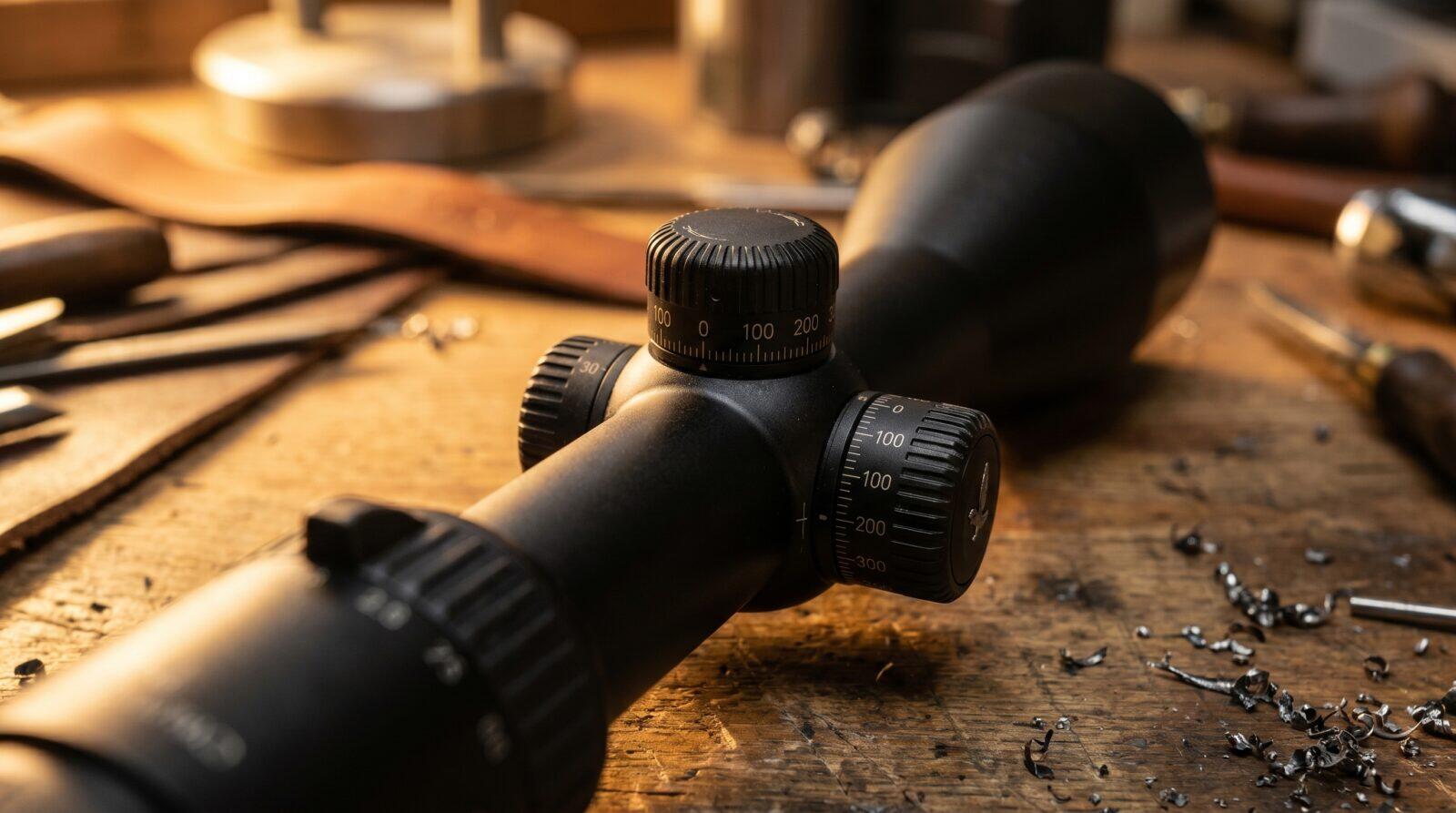
Elevation travel is the spec nobody reads until barrel droop eats it. More is better, and 60 to 70 MOA gives you room to recover from a drooping barrel without an adjustable mount.
Mounts matter as much as the scope. Match the ring diameter to the tube, match the base to your rail (most air rifles use an 11 mm dovetail, not Picatinny), and on a springer fit a scope stop. Getting this wrong is the fastest way to blame a good scope for a bad setup.
Final Thoughts
For most people buying one scope for one air rifle, the Hawke Airmax EV 4-12×50 AO is the answer. It was designed for this job, it focuses to 10 yards, and its glass etched holdover reticle is the piece that turns a looping pellet into a predictable one.
Spend less and the UTG AccuShot 4-16×44 gives you side wheel parallax and rings in the box for well under half the money. Spend less again and the BSA Sweet .22 AO focuses closer than anything else here for under $80, as long as you can live without a holdover ladder.
Whatever you choose, check one number on the spec sheet before you buy: the minimum parallax distance. If it does not say 10 yards or closer, it is not an air rifle scope, whatever the product title says.
Frequently Asked Questions
What is the best air rifle scope?
The Hawke Airmax EV 4-12x50 AO is the best all round air rifle scope. It is built for airguns, its adjustable objective focuses from 10 yards to infinity, and the glass etched AMX reticle gives you real holdover marks that survive spring gun recoil. On a tight budget the BSA Sweet .22 AO focuses closer still, to 7.5 yards, for under $80. For field target and long range PCP shooting the Hawke Sidewinder 30 SF 8-32x56 is the step up.
Are air rifle scopes different from regular rifle scopes?
Yes, in two separate ways. Optically, an airgun scope focuses and removes parallax error at short range, typically down to 10 yards, where a typical centrefire scope is fixed parallax free at 100 yards and will not come sharp any closer than about 50. Mechanically, an airgun rated scope is built to survive the two way recoil of a spring or gas piston rifle. A scope can have one of those properties without the other, so check both.
What is close focus parallax on an airgun scope?
It is the shortest distance at which the scope can bring the target into sharp focus and put the reticle in the same focal plane as it. Below that distance the target stays soft and the reticle appears to drift across the target as you move your head, which throws shots even when your hold is perfect. Look for a published minimum of 10 yards or closer. If the spec sheet quotes one fixed number such as 50 or 100 yards, the scope has no parallax adjustment at all.
Do I need a special scope for a spring air rifle?
Yes. Spring and gas piston rifles recoil backward and then snap forward again when the piston stops, and that forward shove damages scopes whose internals are only braced against rearward recoil. Use a scope the maker rates for spring piston use, fit rings that suit an 11 mm dovetail, and fit a scope stop so the optic cannot creep along the rail. PCP air rifles are recoilless, so a PCP shooter does not need an airgun recoil rating at all and only needs the close focus.
What magnification do I need for an air rifle scope?
Lower than most people expect. A 3-9x or 4-12x covers the great majority of airgun shooting and keeps a usable field of view for anything that moves close in. High magnification narrows the field, dims the image and magnifies your own wobble. Go beyond 12x only if you shoot field target or from a bench, where 8-32x earns its place.
Why does an air rifle scope need a holdover reticle?
A pellet is slow and sheds speed quickly, so it follows a pronounced arc rather than the near flat path of a centrefire bullet. Because the scope sits above the bore, the pellet crosses your line of sight twice, once close in and again at your zero, and then drops away increasingly fast. A mil dot or dedicated airgun ladder gives you fixed marks below center that you map to real distances once and use forever. A plain duplex crosshair leaves you dialling the turret for every range change.
Can I use a rimfire scope on an air rifle?
Sometimes, but check the parallax figure before you assume it. Rimfire scopes are often set at a fixed 50 yards rather than being adjustable, which is right for .22 Long Rifle plinking but means they cannot be focused at 10 or 20 yards. The Vortex Crossfire II 2-7x32 Rimfire is a good scope with exactly that limitation. Rimfire scopes that do have an adjustable objective or side focus, such as the Athlon Neos HMR and Argos HMR, transfer to airguns very well.
What is barrel droop and does it affect my scope choice?
Break barrel air rifles often point slightly downward relative to the scope rail, because the barrel is a hinged part and the rail is not. You then run out of upward elevation before reaching zero, or you reach it with the erector tube jammed near the top of its travel where tracking and image quality are worst. It makes total elevation travel a spec worth reading, and on a known drooper the right answer is an adjustable or shimmed mount rather than winding the turret to its limit.
Shop more: browse all rifle scopes and optics, then pick the rifle to put one on with our complete air rifle buying guide, the best PCP air rifles or the best break barrel air rifles. Going hunting with it? Read the air rifle hunting guide and check air rifle laws by state first.
3,976+ Gun & Ammo Deals
Updated daily from 200+ top retailers. Filter by category, caliber, action type, and price.
Related Guides