

Last updated July 26, 2026 · By Nick Hall. For the big picture, start with our complete air rifle buying guide.
For rats in the barn, pigeons in the rafters, or squirrels in the garden, an air rifle is the perfect tool: quiet enough not to alarm the neighbors, accurate enough for humane kills, and with limited range so it is safer in tight spaces than a firearm. Here are the best air rifles for pest control in 2026.
Some of the links below are affiliate links, meaning at no additional cost to you, we may earn a commission if you click through and make a purchase.
Quick Answer: The best pest-control air rifle is the Benjamin Marauder, a quiet, accurate .22 PCP with a shrouded barrel that keeps things neighbor-friendly. The best value is the Umarex Gauntlet 2, the best no-tank option is the Gamo Swarm, and for the quietest possible setup, add a moderator to any .22 PCP. Accuracy matters more than raw power for humane pest control.
Table of Contents
How we tested: Every pick here is ranked against our testing methodology. Minimum round counts, accuracy and reliability protocols, the failures that disqualify a gun.
The Six I Would Use for Pest Control
Every rifle below was checked against our own live pricing before it went on the page. The Hatsan Flash has come off: it returns one row on our own catalog and no retailer we track has it at a sensible price, and there is no point recommending something you cannot buy.
| Air rifle | Best for | Caliber and power plant | Street price |
|---|---|---|---|
| Benjamin Marauder | Best overall | .22 and .25, PCP | around $795 |
| Umarex Gauntlet 2 | Best value | .22 and .25, Regulated PCP | around $350 |
| Gamo Swarm Whisper | Quietest without a tank | .177 and .22, Gas piston, sound dampened | around $150 |
| Crosman 362 | Best for close work | .22, Multi-pump pneumatic | around $130 |
| Umarex Origin | Best first pest PCP | .22, PCP | around $350 |
| Diana 34 | Best traditional springer | .177 and .22, Spring piston | around $300 |
1. Benjamin Marauder: Best overall
- Caliber: .22 and .25
- Power plant: PCP
- Street price: around $795
Pros
- Shroud makes it genuinely quiet
- Multi-shot for follow ups
- Rimfire-grade accuracy
Cons
- Needs a tank or pump
- Heavy for long sessions
- Expensive to start
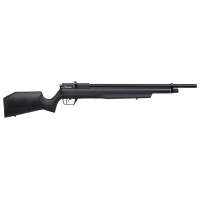
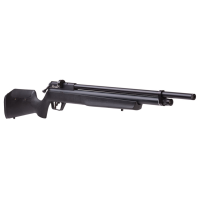
Shrouded, multi-shot and quiet enough to work a barn at seven in the morning without anybody looking up. That last part is the whole job. A pest rifle that annoys the neighbors stops getting used, and the Marauder has been the default answer for years because it solves noise and accuracy at the same time.
2. Umarex Gauntlet 2: Best value
- Caliber: .22 and .25
- Power plant: Regulated PCP
- Street price: around $350
Pros
- Regulated point of impact
- Shrouded barrel
- Big shot count per fill
Cons
- Bulky bottle up front
- Heavier than it looks
- Stock is plain
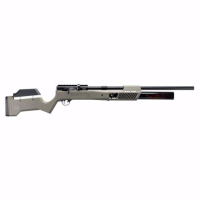
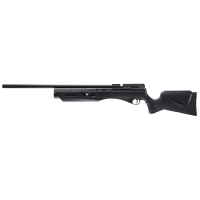
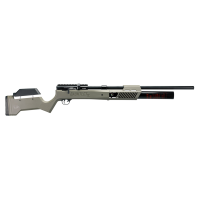
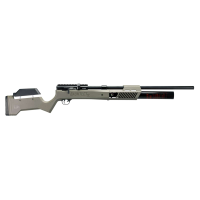
Regulated, shrouded and three hundred and fifty dollars. The regulator matters more for pest work than for anything else, because the shots that count come at the end of a long session when the bottle is half empty and an unregulated rifle has quietly changed its point of impact.
3. Gamo Swarm Whisper: Quietest without a tank
- Caliber: .177 and .22
- Power plant: Gas piston, sound dampened
- Street price: around $150
Pros
- Sound dampened muzzle
- Ten-shot magazine
- Nothing to fill
Cons
- Louder than a shrouded PCP
- Hold sensitive
- Cocking effort each shot
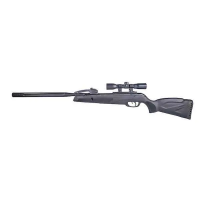
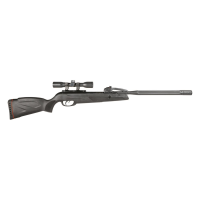
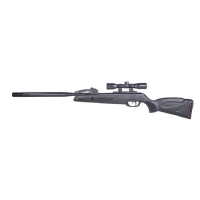
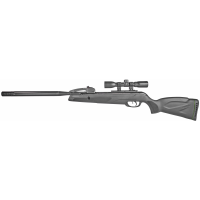
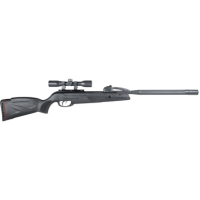
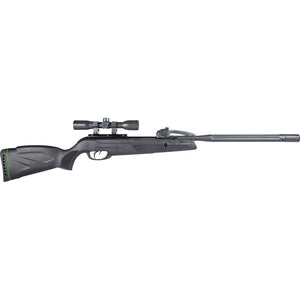
If the fill gear is the reason you have not bought a pest rifle, this is the one. Sound dampened muzzle, ten shot magazine, nothing to charge, and a hundred and fifty dollars. It will not match a shrouded PCP for quiet, and it is far closer than any other break barrel here.
4. Crosman 362: Best for close work
- Caliber: .22
- Power plant: Multi-pump pneumatic
- Street price: around $130
Pros
- Power you can dial down
- Very quiet on low pumps
- Cheap and simple
Cons
- Pumping between shots
- Single shot only
- Slow for multiple targets
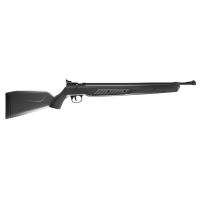
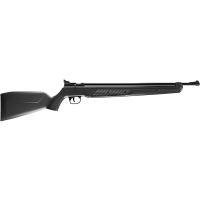
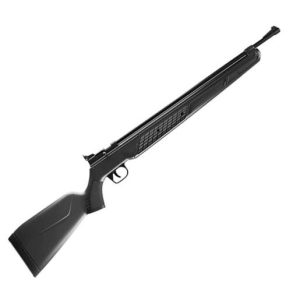
The multi-pump is the quiet one nobody thinks of. Three pumps is genuinely soft, which is exactly what you want for a rat inside a shed at ten yards where a magnum springer would be absurd and deafening. Pump it up to eight when something needs more. One hundred and thirty dollars.
5. Umarex Origin: Best first pest PCP
- Caliber: .22
- Power plant: PCP
- Street price: around $350
Pros
- Hand pump included
- Shrouded and quiet
- Rotary magazine
Cons
- Pumping is real work
- Fewer shots per fill
- Needs an optic
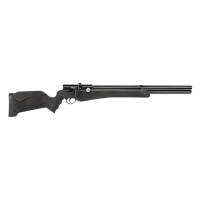
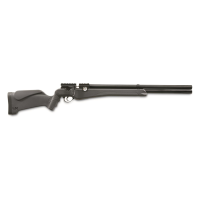
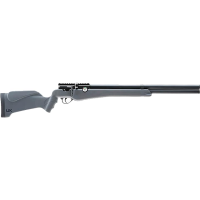
A shrouded PCP that comes with its own hand pump, which removes the single biggest obstacle to owning one. Umarex put a full power shot at thirteen pumps. For somebody who wants PCP quiet for the garden without buying a tank first, this is the sensible way in.
6. Diana 34: Best traditional springer
- Caliber: .177 and .22
- Power plant: Spring piston
- Street price: around $300
Pros
- German build and trigger
- Superb accuracy
- Will last decades
Cons
- Coil spring is not quiet
- Single shot
- Demands proper technique
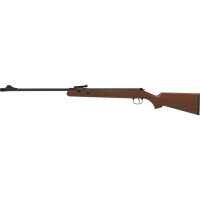

The German springer that people who shoot a lot keep coming back to. It is not the quietest thing here and it is the most accurate in the right hands, and for a garden where you get one considered shot rather than a running battle, that trade is the right way round. It will outlast everything else on this page.
Where the Noise Actually Comes From
Quiet is the specification that decides a pest control rifle, and it is the one nobody measures. You will not find comparable decibel figures for these rifles anywhere, because nobody tests them the same way, so I am not going to invent any. What is worth understanding is where the sound comes from, because then you can judge a rifle yourself.
An air rifle makes noise in three separate places. The muzzle blast is compressed air escaping behind the pellet, and that is what a shroud or moderator addresses. The mechanical noise is the powerplant itself: a coil spring rings and a piston slams, which is why a springer is audible from the side even with a moderator fitted, while a PCP has almost no mechanical noise at all. And the third is the pellet, which past roughly 1,100 feet per second goes supersonic and makes a genuine crack downrange that no moderator can touch because it happens after the pellet has left.
Two useful conclusions fall out of that. A shrouded PCP beats a moderated springer of the same power, every time, because it fixes two of the three sources rather than one. And a .22 is quieter than a .177 at the same energy, which sounds backwards until you run the numbers: energy is grains times velocity squared divided by 450,240, so the heavier .22 pellet reaches the same energy at a much lower speed and stays well under the sound barrier, while a light .177 pushed to the same figure is the one going supersonic and cracking. That is the real reason pest shooters buy .22.
The practical version: buy a shrouded PCP in .22 if the budget stretches, a sound dampened break barrel if it does not, and a heavier pellet rather than a faster one either way. Our airgun pellet guide covers weights, and the full velocity arithmetic is on our air rifle guide.
Check Before You Shoot in the Garden
Pest control is the airgun use most likely to put you on the wrong side of a local ordinance, because it happens where people live rather than out on land. Federal law is not the problem: an air rifle is not a firearm under Title 18, section 921(a)(3), which defines one as expelling a projectile by the action of an explosive. Compressed air is not an explosive.
One more thing that is worth more than any of the above: know what is behind the target. A pellet that misses a rat on a fence rail carries a long way, and in a garden the things behind it are sheds, windows, pets and other people’s property. Shoot downwards into soil or against a solid backstop, never level along a boundary, and never at anything on a skyline. That one habit prevents almost every airgun accident that makes the local paper.
Cities are where it bites. Plenty of them prohibit discharging any projectile weapon inside the limits regardless of what powers it, and a few states fold air guns into their firearm definitions outright. Beyond that, the species matters: rats and pigeons are treated very differently from squirrels, and some of what people shoot in gardens is protected. Read your city ordinance and your state wildlife rules before the first shot, start from our air rifle laws guide, and treat none of this as legal advice.
What Makes a Good Pest-Control Air Rifle
- Quiet operation: a shrouded barrel or added moderator keeps the report low so you do not alarm neighbors, livestock, or the rest of the flock.
- Accuracy over power: humane pest control is about precise head shots, so pick a rifle you can group tightly. A .22 with 12-25 FPE is plenty for rats, pigeons and squirrels.
- Multi-shot capability: a magazine-fed PCP lets you take a quick follow-up on a second pest before it bolts.
- Check local rules: many cities restrict discharging an airgun within limits, so confirm your local laws before shooting in the backyard.
Pest-Control Air Rifle FAQ
What is the best air rifle for pest control?
The Benjamin Marauder is the best pest-control air rifle for most people, a quiet, accurate .22 PCP with a shrouded barrel that keeps noise low for backyard and barn use. The Umarex Gauntlet 2 is the best value and the Gamo Swarm the best no-tank option.
What caliber air rifle is best for pest control?
.22 is the best all-around pest-control caliber, offering enough energy for humane kills on rats, pigeons and squirrels with a manageable trajectory. .177 works for smaller pests, and .25 adds knockdown for bigger targets at close range.
How quiet are pest-control air rifles?
Modern PCPs with shrouded barrels are very quiet, and adding a moderator makes them quieter still, often no louder than a hand clap. That low report is what makes air rifles ideal for pest control near homes and livestock.
How much power do you need for pest control?
About 12 foot-pounds of energy is the minimum for humane kills on small pests, and 20-25 FPE from a .22 PCP is comfortable pest-control power. Accuracy for precise head shots matters more than raw power.
Can I shoot pests with an air rifle in my backyard?
It depends on local law. Many cities and counties restrict discharging any airgun within limits, so a legal-to-own airgun may be illegal to shoot in your yard. Always check your local ordinances before backyard pest control.
Is a PCP or break-barrel better for pest control?
A PCP is better for pest control thanks to its accuracy, quiet shrouded barrel and multi-shot follow-ups. A break-barrel is a fine budget option for occasional pest work where you would rather not own a tank or pump.
For the full field, see our best PCP air rifles and best air rifles for hunting guides, and dial in humane head shots with our sighting-in guide.
Want the details on our top pick? Read our full Benjamin Marauder review.
3,976+ Gun & Ammo Deals
Updated daily from 200+ top retailers. Filter by category, caliber, action type, and price.
Related Guides