

Last updated July 26, 2026 · By Nick Hall. For the big picture, start with our complete air rifle buying guide.
Break-barrel air rifles are the classic airgun: fully self-contained, no tanks or pumps, just cock the barrel and shoot. They are the cheapest way into serious airgunning and still the best choice for grab-and-go pest control and backyard practice. Here are the best break-barrel air rifles in 2026.
Some of the links below are affiliate links, meaning at no additional cost to you, we may earn a commission if you click through and make a purchase.
Quick Answer: The Gamo Swarm Magnum is the best break-barrel air rifle for most people thanks to its clever 10-shot magazine and hard-hitting gas-piston power plant. The best traditional spring rifle is the Diana 34 EMS, the best budget pick is the Ruger Air Hawk, and the Hatsan 95 is the best value magnum. Choose .22 for hunting and pest control.
Table of Contents
How we tested: Every pick here is ranked against our testing methodology. Minimum round counts, accuracy and reliability protocols, the failures that disqualify a gun.
The Seven Break Barrels Worth Buying
Every rifle below was checked against our own live pricing first, so these are prices a retailer we track is asking today. Two rifles that used to be on this page are not any more: the Ruger Air Hawk, because no query we have returns the rifle rather than an accessory or a Ruger air pistol, and the Benjamin Trail NP2, because nobody we can price stocks it.
| Air rifle | Best for | Caliber and power plant | Street price |
|---|---|---|---|
| Gamo Swarm Magnum | Best overall | .177 and .22, Gas piston | around $280 |
| Gamo Swarm Whisper | Quietest | .177 and .22, Gas piston | around $150 |
| Crosman Mag-Fire | Most shots per load | .177 and .22, Nitro piston | around $175 |
| Benjamin Prowler NP | Best budget | .177 and .22, Nitro piston | around $121 |
| Hatsan Mod 95 | Best magnum single shot | .177, .22 and .25, Spring piston | around $170 |
| Diana 34 | Best spring piston | .177 and .22, Spring piston | around $300 |
| Umarex Canex | Cheapest worth buying | .177, Spring piston | around $50 |
1. Gamo Swarm Magnum: Best overall
- Caliber: .177 and .22
- Power plant: Gas piston
- Street price: around $280
Pros
- Ten-shot magazine
- Full magnum power
- No fill gear ever
Cons
- Heavy cocking stroke
- Hold sensitive
- Loud in .22
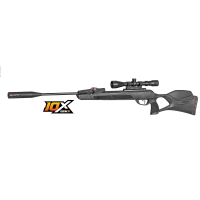
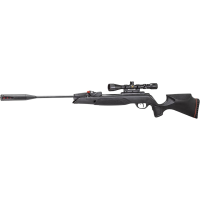
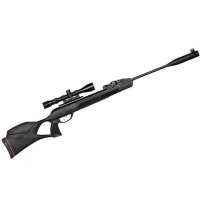
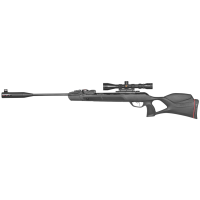
The full-power Swarm, and the one to buy if you want a break barrel that does everything. Ten-shot magazine indexed by the cocking stroke, gas piston rather than a coil spring, and enough energy in .22 for pests at sensible range. It is the most rifle you can get without ever thinking about air.
2. Gamo Swarm Whisper: Quietest
- Caliber: .177 and .22
- Power plant: Gas piston
- Street price: around $150
Pros
- Sound dampened muzzle
- Ten-shot magazine
- Cheapest Swarm here
Cons
- Less power than the Magnum
- Still not silent
- Springer technique needed
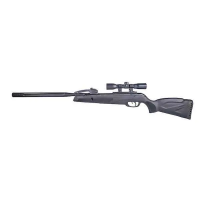
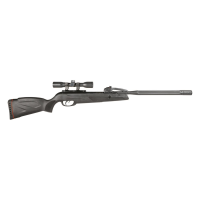
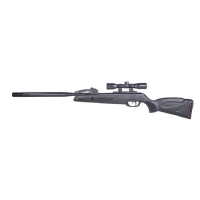
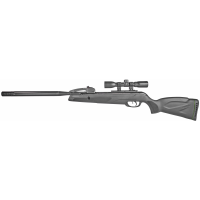
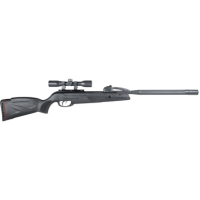
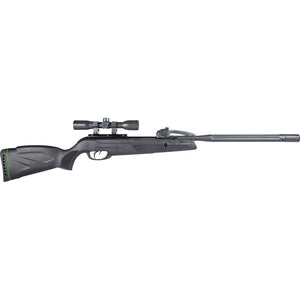
The same ten-shot mechanism with a sound-dampened muzzle, and for back garden work quiet beats power every time. If the shooting you do happens where other people can hear it, this is the one on the list to buy, and at a hundred and fifty dollars it is not even the expensive choice.
3. Crosman Mag-Fire: Most shots per load
- Caliber: .177 and .22
- Power plant: Nitro piston
- Street price: around $175
Pros
- Twelve-round magazine
- Nitro piston, less buzz
- Several versions available
Cons
- Plasticky furniture
- Trigger takes learning
- Bundled scope is poor
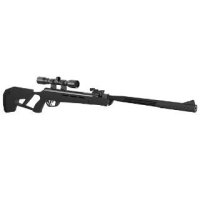
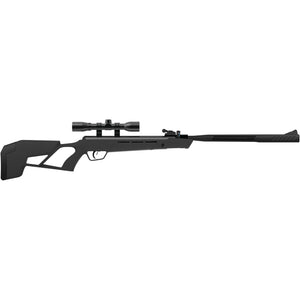
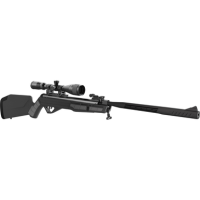
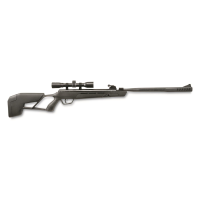
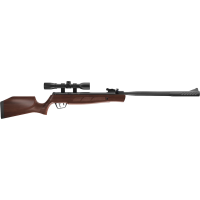
Twelve rounds in the magazine, two more than the Gamos, and a nitro piston that holds its power sitting cocked. The Diamondback and Xtreme versions sit either side of this price and both come up on the card below. Crosman furniture is plasticky and the trigger needs learning, and neither stops it being a lot of rifle for the money.
4. Benjamin Prowler NP: Best budget
- Caliber: .177 and .22
- Power plant: Nitro piston
- Street price: around $121
Pros
- Nitro piston at a low price
- Enough for small game
- Simple and reliable
Cons
- Single shot only
- Bundled scope is basic
- Crude two-stage trigger
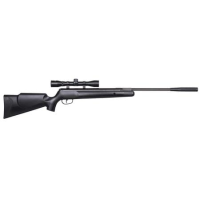
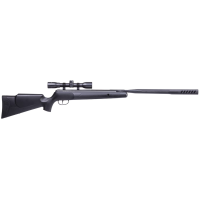
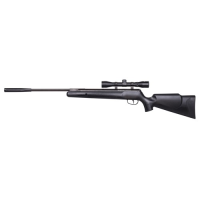
A nitro piston rifle for a hundred and twenty dollars, which is the cheapest honest recommendation on this page. Single shot, and the scope in the box is the scope in the box, but the powerplant is the right kind and it will take small game in .22. Put the money you saved into pellets and a scope that survives a springer.
5. Hatsan Mod 95: Best magnum single shot
- Caliber: .177, .22 and .25
- Power plant: Spring piston
- Street price: around $170
Pros
- Real wood stock
- Good adjustable trigger
- Three calibers offered
Cons
- Heavy to carry and cock
- Very hold sensitive
- Coil spring buzz
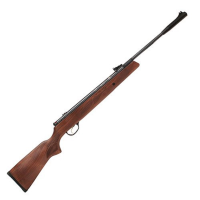
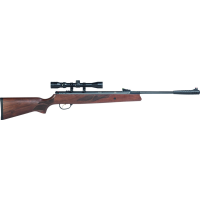
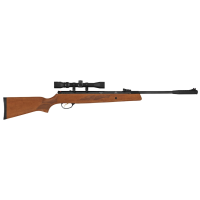
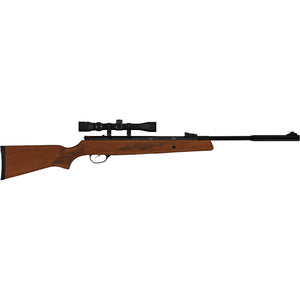
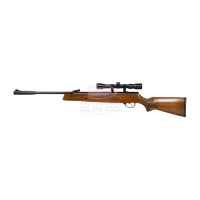
Turkish, heavy, and considerably more powerful than the price suggests. The Mod 95 is a proper magnum springer with a real wood stock and a Quattro trigger that is better than anything else here at the money. It is a two-handed rifle to cock and it rewards a shooter who has learned to hold a springer properly.
6. Diana 34: Best spring piston
- Caliber: .177 and .22
- Power plant: Spring piston
- Street price: around $300
Pros
- German build quality
- Excellent trigger
- Will last decades
Cons
- Most expensive here
- Single shot
- Demands proper technique
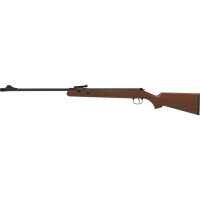

The German one, and the reason people who shoot springers seriously still buy coil springs. The 34 has been made for decades, the trigger is excellent, and it is the most accurate thing on this page in the hands of somebody who can shoot it. It costs twice what the Prowler does and it will outlive you.
7. Umarex Canex: Cheapest worth buying
- Caliber: .177
- Power plant: Spring piston
- Street price: around $50
Pros
- Under sixty dollars
- Shoots proper pellets
- Light enough for anyone
Cons
- Basic trigger
- No optic fitted
- Lowest power here
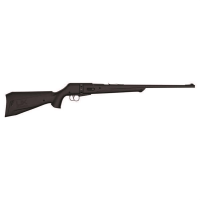
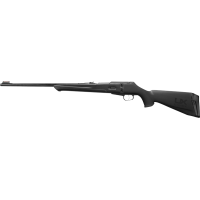
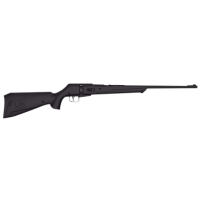
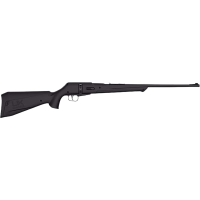
Fifty dollars, and it shoots real pellets rather than BBs, which is the line that matters. It is a basic rifle with a basic trigger and it will not group like the Diana, but nothing else at this price is worth owning and plenty of things at twice the price are worse.
The Reason Break-Barrel Scopes Keep Dying
Buy any rifle on this page, put a normal scope on it, and there is a good chance the scope is finished inside a few hundred shots. People blame the scope, or assume they got a bad one. They did not. A spring piston rifle does something no firearm does, and almost nothing written about these rifles explains it properly.
When you pull the trigger on a springer, the piston is thrown forward before the pellet has left the barrel. The rifle lurches forward against your shoulder, then the pellet leaves and it comes back. So the whole rifle, and everything bolted to it, gets snapped in one direction and then the other inside a few thousandths of a second. A scope is built to survive recoil in one direction, because that is all a firearm does to it. The forward jolt is what shears the internals, and it is why a scope that has lived on a magnum centerfire for years can fail on a two hundred dollar air rifle.
Two things follow. Buy a scope that says it is rated for spring piston airguns, not just for rifles, and see our air rifle scope guide for what that means. And hold the rifle loosely, resting it on your open palm rather than gripping it into your shoulder, because a springer that is clamped tight fights the movement and throws the pellet. That loose hold is the single technique that separates people who think break barrels are inaccurate from people who do not.
The other thing worth ignoring is the velocity on the box. Those figures come from ultra-light alloy pellets, and the arithmetic showing why a heavier lead pellet leaves the muzzle with more energy is set out in our air rifle guide.
Pellets Matter More Than the Rifle
Spring piston rifles are the pickiest airguns there are about ammunition, and it is the first thing to change when one will not group. The same rifle can put an inch at thirty yards with one tin and a quarter of that with another, and there is no way to predict which without shooting them. Buy three or four tins from different makers in the eight to ten grain range for a .177, shoot them over one session at one distance, and let the target pick. It costs about twenty dollars to find out and it is the cheapest accuracy you will ever buy.
Steer clear of the lead-free alloy pellets sold on speed, at least for anything that matters. Gamo’s PBA Platinum is the best known, a 5.1 grain lead-free pellet sold on reaching velocities up to 30 percent faster than conventional lead. It does, and it is also the reason the number on the rifle box is so high. A heavier lead pellet leaves the muzzle with more energy and holds it better downrange, which is the whole argument, and the arithmetic is on our air rifle guide. Our airgun pellet guide covers what to start with.
Spring vs Gas Piston: Which Break-Barrel?
Break-barrels come in two flavors. Traditional spring-piston rifles are simple and easy to service but can feel a little buzzy on firing. Gas-piston (also called nitro-piston) rifles use a sealed gas strut instead of a coiled spring, which means smoother cocking, quieter firing, and no spring to weaken if left cocked. We break down every power plant in our spring vs gas-piston vs PCP vs CO2 guide. Whichever you choose, mastering the “artillery hold” (letting the rifle recoil freely on an open palm) is the key to accuracy with a break-barrel.
Break-Barrel Air Rifle FAQ
What is the best break-barrel air rifle?
The Gamo Swarm Magnum is the best break-barrel for most people thanks to its 10-shot magazine and hard-hitting gas-piston power plant. The best traditional spring rifle is the Diana 34 EMS, and the best budget pick is the Ruger Air Hawk.
Are break-barrel or PCP air rifles better?
Break-barrels are cheaper and fully self-contained (no tank or pump needed) but are single-shot and more sensitive to hold. PCPs are more accurate with multi-shot magazines but need fill equipment. For grab-and-go simplicity choose a break-barrel; for the best accuracy choose a PCP.
What is the artillery hold?
The artillery hold is a loose shooting technique for break-barrels where you rest the rifle on an open palm and hold it lightly, letting it recoil freely and consistently. Because spring and gas-piston rifles move during the shot, a loose, repeatable hold is the key to accuracy.
What is the difference between spring and gas-piston break-barrels?
A spring-piston rifle uses a coiled spring, which is simple and serviceable but a little buzzy. A gas-piston (nitro-piston) rifle uses a sealed gas strut for smoother cocking, quieter firing, better cold-weather performance, and the ability to be left cocked without harming it.
What caliber break-barrel should I buy?
Choose .22 for hunting and pest control, .177 for target shooting and flatter trajectory, or .25 from a powerful magnum for more knockdown. For a do-everything break-barrel, .22 is the best choice.
Can you leave a break-barrel air rifle cocked?
You should not leave a spring-piston rifle cocked for long periods, as it can weaken the spring over time. Gas-piston (nitro-piston) rifles can be left cocked without harm, which is one of their advantages.
Want more accuracy and multi-shot convenience? Step up to a PCP air rifle. Hunting small game? See our best air rifles for hunting, and settle the caliber question in our .177 vs .22 vs .25 guide.
Want the details on our top pick? Read our full Gamo Swarm review.
Read our full Diana 34 review for the German-built accuracy benchmark.
3,976+ Gun & Ammo Deals
Updated daily from 200+ top retailers. Filter by category, caliber, action type, and price.
Related Guides