

Affiliate disclosure: This Kimber 2K11 review contains affiliate links. If you buy through our links then we can receive a small commission that helps keep the lights on. You don’t pay anything more.
- Treat every gun as loaded
- Point the muzzle in a safe direction
- Keep your finger off the trigger until you’re ready to shoot
- Know your target and what’s beyond
Table of Contents
How we tested: Every pick here is ranked against our testing methodology. Minimum round counts, accuracy and reliability protocols, the failures that disqualify a gun.
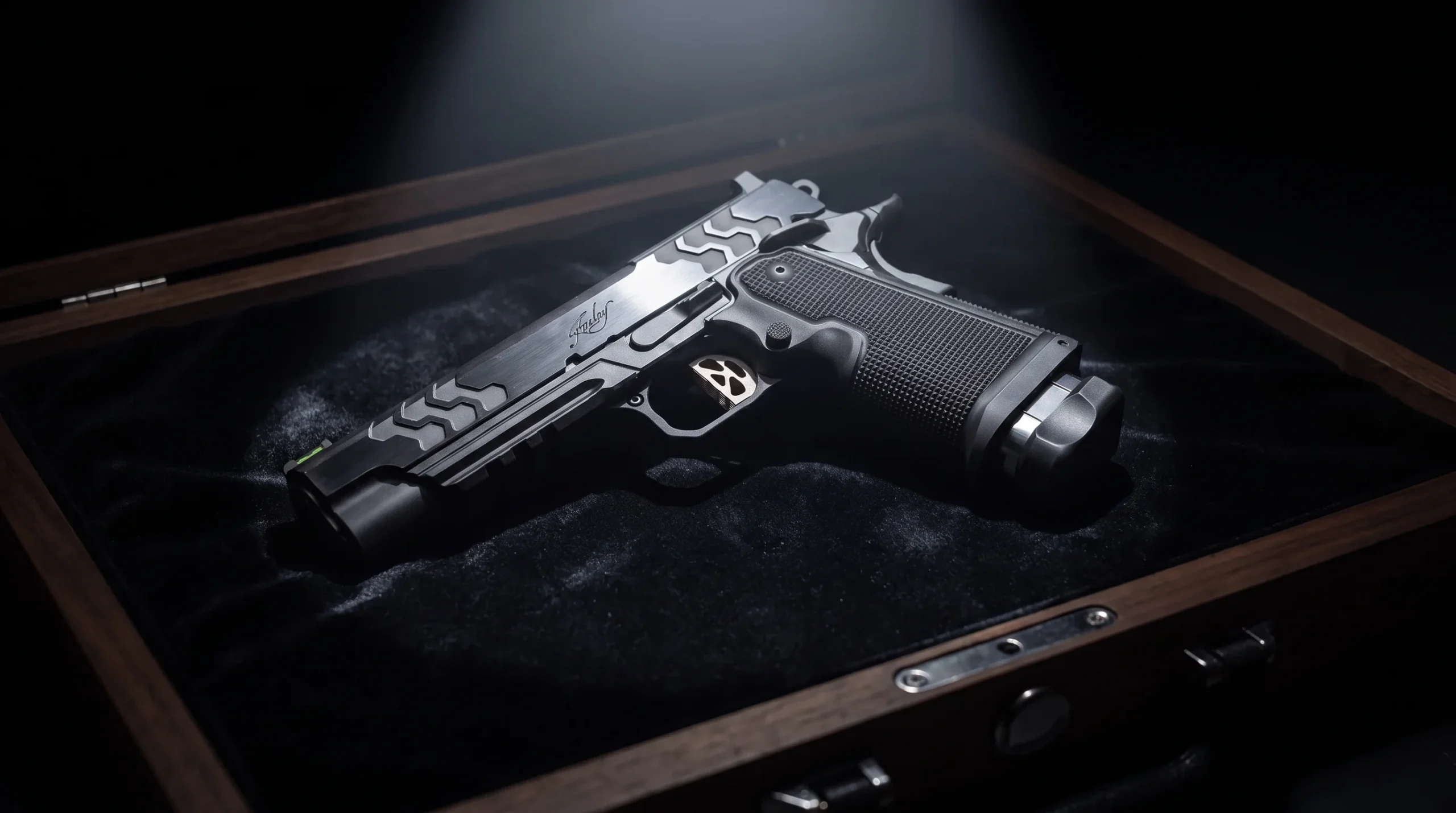
Review: Kimber 2K11 – A Staccato Fight at a Prodigy Price
Our Rating: 8.3/10
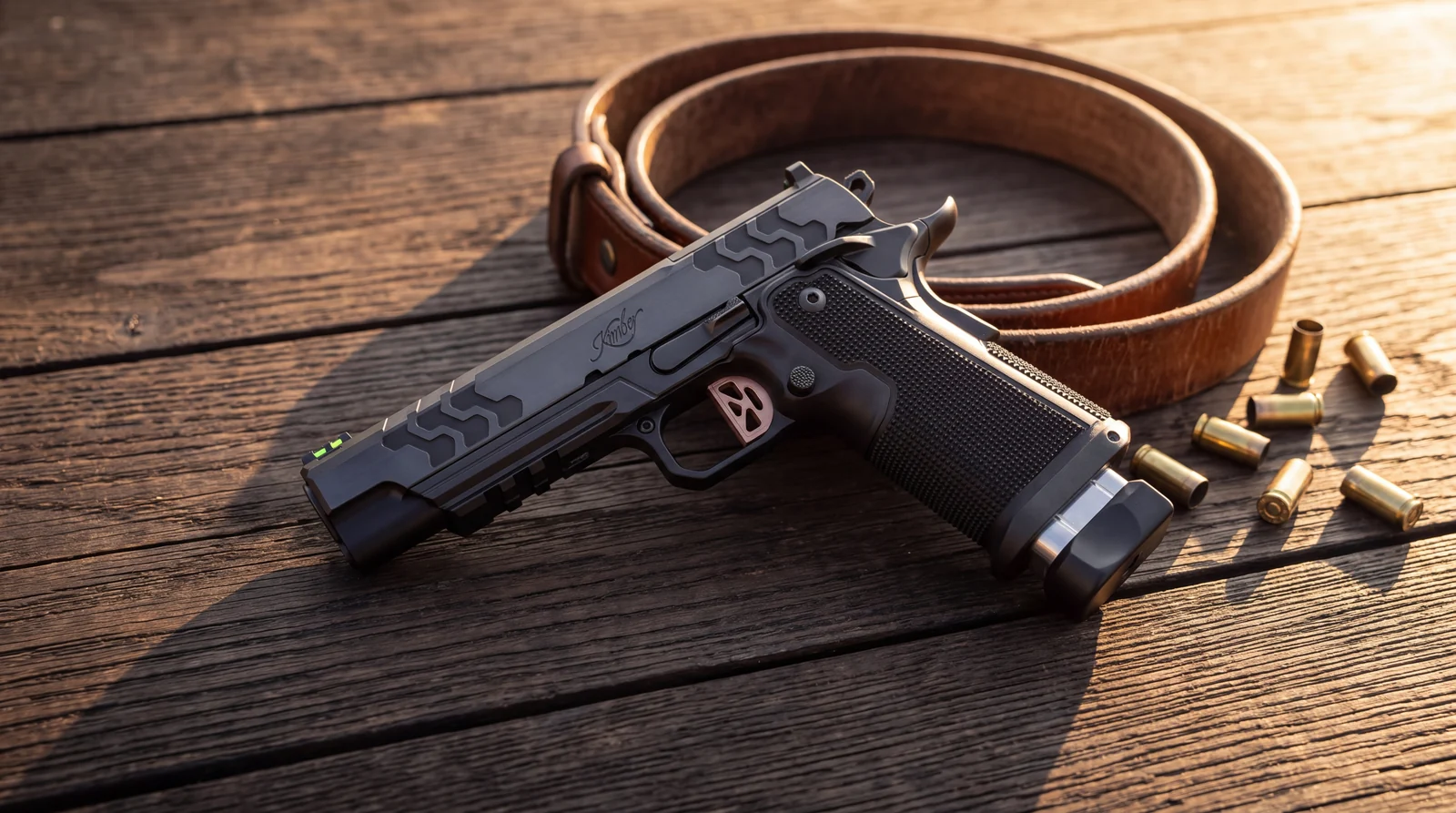
Kimber came late to the double stack 1911 and arrived with a gun aimed squarely between the two everybody already argues about. The 2K11 costs roughly $525 more than a Springfield Prodigy and around $625 less than a Staccato, and it brings a 3 to 4 pound match trigger, an aluminum grip module and three magazines in the box. Reading Kimber’s own spec sheets for the two chamberings also turned up something nobody mentions: the 9mm is the heavier gun.
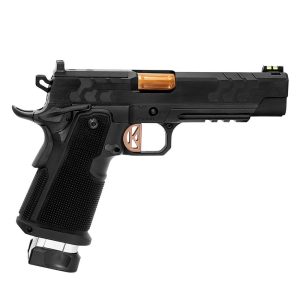
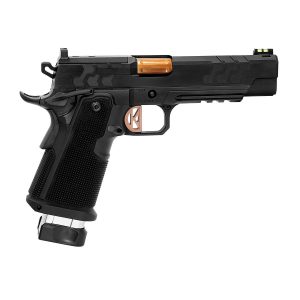
Specifications: 2K11 (OR), SKU 3500051 in 9mm
- MSRP: $2,395.00 (Kimber sells it direct at $2,245.00)
- Street Price: from about $1,675 (Use our live pricing for the best up to date deal)
- Caliber: 9mm, with .45 ACP as SKU 3500050
- Magazines: Three included, one 17 round and two 20 round
- Barrel: 5 inches, stainless, 5R rifling, 1:10 twist, fluted and ramped
- Barrel Finish: Highly polished with Coyote PVD
- Overall Length: 8.56 inches
- Height: 5.74 inches
- Width: 1.4 inches
- Weight: 40.9 oz with empty magazine
- Recoil Spring: 10 lb, with a toolless guide rod
- Slide: Stainless steel, external extractor, brush polished flats with DLC
- Frame: Stainless with a steel sub-frame in matte DLC, tapered magwell
- Grip Module: Aluminum, Type III hardcoat anodized
- Trigger: GT Match Grade, aluminum, 3 to 4 lb pull
- Sights: TAG FiberLok 2 green front, rear sight built into the optic cover plate, RMR adapter plate included
- Safety: Ambidextrous
- UPC: 669278350516
Pros
- Three magazines in the box
- Match trigger breaks at three pounds
- Optic plate and fiber front included
Cons
- Forty ounces is a lot
- Removing the plate loses the rear sight
- Aftermarket support barely exists yet
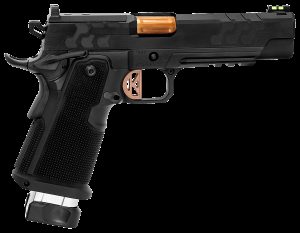
Quick Take
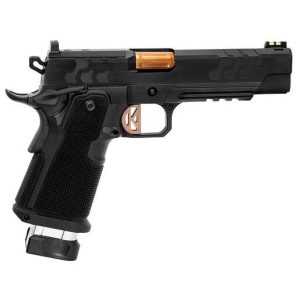
Kimber has built a lot of gun here and priced it into the gap that everybody complains about. A Prodigy is the value pick and feels like it in the hand. A Staccato is the standard and charges accordingly. The 2K11 gives you a genuinely good trigger, a fully machined aluminum grip module, three magazines, and an optic plate already in the box, and it lands closer to the Springfield on price than to the Staccato.
What it does not give you is weight relief. At 40.9 ounces empty this is a heavy pistol, and that is a deliberate choice rather than an oversight. It is also brand new, which means the holster and parts ecosystem that makes a Staccato easy to live with does not exist for this gun yet.
Best For: Competition, range shooting and duty use where weight is not the constraint, and anybody who wants 2011 performance without Staccato money. A poor choice for daily concealed carry, and a poor choice if you want to start swapping parts on day one.
The 9mm Is the Heavier Gun
Put Kimber’s two spec sheets side by side and one number is the wrong way round from what anybody expects.
| Spec | 3500050, .45 ACP | 3500051, 9mm |
| Weight, empty mag | 40.1 oz | 40.9 oz |
| Recoil spring | 16 lb | 10 lb |
| Capacity | 13 rounds, 3 magazines | One 17 and two 20 round |
| Twist rate | 5R, 1:16 | 5R, 1:10 |
| Barrel | 5 in, fluted, ramped | 5 in, fluted, ramped |
| Height / Length / Width | 5.74 / 8.56 / 1.4 in | 5.74 / 8.56 / 1.4 in |
| UPC | 669278350509 | 669278350516 |
The 9mm is 0.8 ounces heavier than the .45, which reads like a typo until you think about what a 9mm barrel is. Same outside diameter, smaller hole through the middle, so there is more steel left in it. The magazine well is packed tighter too. It is a small number and it points at something real: this pistol is not built light and Kimber did not try to make it light. The single stack Kimber Custom LW is the opposite case: Kimber’s sheets give its aluminum framed 9mm and .45 the same 31.2 ounces.
The bigger number on that table is the recoil spring. Sixteen pounds in the .45 against ten in the 9mm is a very wide gap, and it matters the moment you start buying spares. A 2K11 spring is not a 2K11 spring. Order by chambering, not by model, and if you buy a used one, find out which spring is actually in it before you decide it is over sprung or under sprung.
Three Magazines, But Only Two Are Twenties
Kimber ships three magazines with the 9mm and that is genuinely generous, because 2011 magazines are expensive and most guns in this class ship with fewer. Read the spec line carefully though: it is one 17 round and two 20 round. The 20+1 on the box is real, but a third of what you get in the case is a 17. If you are shooting a match where every magazine needs to hold the same number, that is a purchase you need to make on day one.
What It Actually Costs
Kimber lists the 2K11 (OR) at $2,395.00, then sells it on its own website for $2,245.00, which is a manufacturer undercutting its own sticker by $150 before anybody else gets a look in.
The channel goes further. The cheapest example at a major retailer we track was $1,673.99, with listings running down to $1,649 elsewhere and up past $2,900 for the dressier versions. Call it $721 under list at the trusted floor, which is a big enough gap to change what this gun competes with. At $2,395 the 2K11 is arguing with a Staccato. At $1,673.99 it is arguing with a Springfield Prodigy and winning on features.
The Whole 2K11 Family
Kimber publishes eight versions and the channel carries two more, a 4.25 inch Pro and a compensated Comp. These are the live in-stock street bands for new guns across the retailers we track.
If you are cross shopping inside the family, the thing to notice is that the Target commands a premium the base gun does not justify at every retailer. We found a Target for $1,928.53 at one shop and $2,526.66 at another, a $598 spread on the same configuration. That is a wider gap than the difference between the base gun and the Target in the first place, so shop the SKU rather than the model name.
Range Testing: 900 Rounds of 9mm
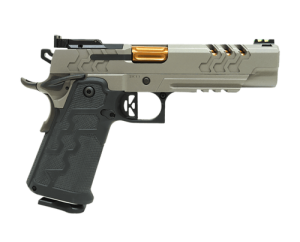
Our test gun was the 9mm 2K11 (OR), SKU 3500051, shot across six sessions between April and July at 7, 15 and 25 yards, in temperatures from 58 to 91 degrees. The first 250 rounds went on the factory fiber front and cover plate rear, then we fitted a red dot on the supplied adapter plate for the rest. Nine hundred rounds total.
Break-In and Reliability
Four stoppages in 900, and all four landed in the first 200 rounds. Three were failures to go fully into battery with the slide sitting about a sixteenth of an inch short, and one was a failure to feed off the 17 round magazine. Every one of them cleared with a tap. After round 200 the gun did not miss a beat for the remaining 700, including 120 rounds of 147 grain subsonic, which is where a tightly fitted 1911 often gets fussy.
That is a normal break-in profile for a hand fitted double stack and it is worth knowing before you take a brand new one to a match. Shoot two boxes through it first. The slide to frame fit out of the box is tight enough that you can feel it racking, and it loosens into the right place rather than staying gritty.
Accuracy
Off a bag at 25 yards with a dot fitted, our best five shot group measured 1.1 inches with Federal Syntech 124 grain, and the average across five groups was 1.4. On the irons the same load gave us about 2.1 inches. That is very good shooting for a production pistol and the 5 inch fluted barrel with 5R rifling is doing real work. Speer Lawman 115 grain ran a little wider at 1.7 inches, and the 147 grain subsonic sat between the two.
The Trigger
Kimber specifies the GT Match Grade unit at 3 to 4 pounds and ours measured 3 pounds 5 ounces on the gauge. It is a flat faced aluminum blade with a short, positive reset and almost no take up before the wall. This is the single best thing about the pistol and it is the thing that most separates it from a Prodigy at four hundred dollars less. A good 1911 trigger is a real advantage and this is a good 1911 trigger.
Weight and Recoil
Forty point nine ounces of 9mm pistol barely moves. The dot stays in the glass through a string, the gun tracks flat, and splits come down quickly once you stop fighting it. That is the whole argument for a heavy 2011 and the 2K11 delivers it properly. Carrying it is a different conversation, which is covered further down, and our best 1911 pistols under $2,000 guide has the lighter options.
Ammunition Log
- Federal Syntech Range 124 gr: 350 rounds
- Speer Lawman 115 gr FMJ: 280 rounds
- Blazer Brass 115 gr: 150 rounds
- Federal American Eagle 147 gr subsonic: 120 rounds
What This Means for You
- Break it in: shoot 200 rounds before you trust it. All four of our stoppages happened inside that window and none after.
- Optic plate: the RMR adapter is in the box, but the rear sight lives on the cover plate. Plan your sight picture before you order an optic.
- Springs: order by chambering. Sixteen pounds for the .45, ten for the 9mm, and they are not interchangeable.
- Magazines: you get one 17 and two 20s. Buy a matching pair early if you shoot matches.
- Holsters: check availability before you buy the gun. This is a new pattern and the options are thin.
Technical Deep Dive
The Aluminum Grip Module
This is the decision that defines the gun. Kimber machines the module from aluminum and finishes it in Type III hardcoat anodizing, and fits an aluminum main spring housing to match. Aluminum feels different in the hand: colder, denser, and it transmits the gun to you rather than damping it. It is also a large part of why this pistol weighs what it does, and why it costs more than the Springfield.
The Steel Sub-Frame
Kimber lists a stainless steel sub-frame with a matte DLC coating sitting inside the aluminum module. That is the load bearing part, and it is the correct way to build a modular 2011: the rails and the lockup live in steel, the thing your hand touches is aluminum. It also means the grip module is a wear part you could in principle replace without the gun becoming a different gun, which matters for a platform this new.
The Optic Cut and the Rear Sight
Kimber includes an RMR footprint adapter plate, which is the right choice given how many optics share that pattern. The detail that catches people is that the rear sight is built into the cover plate. Take the plate off to mount a dot and your iron rear sight leaves with it. That is common enough on optics ready pistols and it is not a fault, but it does mean you need to decide up front whether you want co-witnessed irons, because solving it afterwards means buying a different plate.
The Toolless Guide Rod
Kimber describes this as patent pending, and it addresses the single most annoying thing about stripping a full length guide rod 1911, which is needing a paperclip and a spare hand. On ours the gun comes apart without tools and goes back together without swearing. It is a small thing that you will appreciate every time you clean it.
| Component | Specification | Why it matters |
| Grip module | Aluminum, Type III hardcoat | Machined metal, hardcoat anodized |
| Sub-frame | Stainless with matte DLC | Steel carries the load, aluminum carries your hand |
| Trigger | GT Match Grade, 3 to 4 lb | Measured 3 lb 5 oz, the best thing on the gun |
| Barrel | 5 in, 5R, fluted and ramped | 1.4 inch average groups at 25 yards |
| Guide rod | Toolless, patent pending | No paperclip needed to strip it |
| Optic | RMR plate included, rear sight on the plate | Decide about co-witness before you buy a dot |
How It Compares
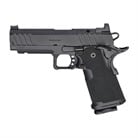
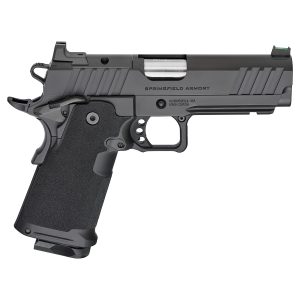
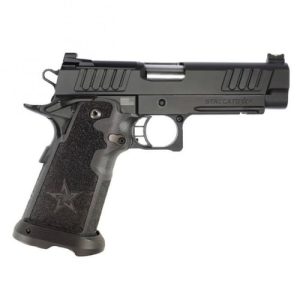
Springfield 1911 DS Prodigy (about $1,150 to $1,400)
The value benchmark, and around $525 less. The Prodigy gets you into a double stack 1911 for the least money anybody currently asks, and it shoots well. What you give up against the Kimber is the grip module and the trigger. Kimber machines its module from aluminum and hardcoat anodizes it, and specifies the trigger at 3 to 4 pounds, which ours met at 3 pounds 5 ounces. If the budget is the deciding factor the Prodigy is the honest answer, and nobody should feel short changed by one.
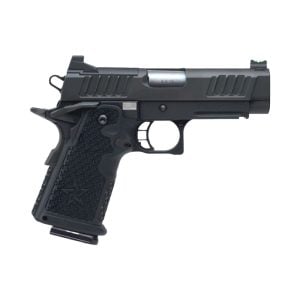
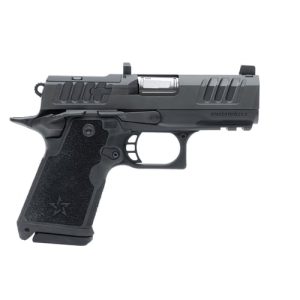
Staccato (about $2,300 to $2,700)
The gun that made this category and still the reference point. A Staccato costs roughly $625 to $1,000 more than a street priced 2K11 and buys you a deeper parts ecosystem, a longer track record and a resale value that holds. Where the Kimber closes the gap is on the sheet: the aluminum module, the match trigger, three magazines and an optic plate included. Where it does not is on everything that comes after the sale. Buy the Staccato if you want the safe answer, the Kimber if you want most of it for meaningfully less.
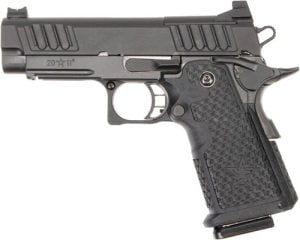
Kimber KDS9c (about $850 to $1,475)
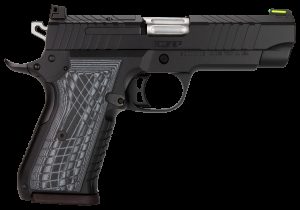
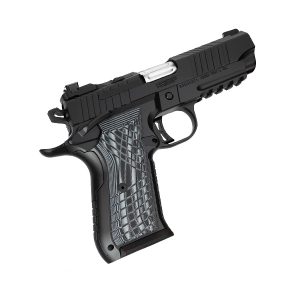
Kimber’s own smaller double stack, and the one most 2K11 shoppers should look at before committing. The KDS9c runs a 4.09 inch barrel and is built to be carried rather than shot on a timer, and it costs several hundred less. If the honest use case is a belt gun rather than a match gun, the KDS9c is the better buy and the 2K11 is forty ounces of pistol you will end up leaving at home.
![KIMBER KDS9C [BLK]](https://www.usa-gun-shop.com/wp-content/uploads/ugs-pc-img/e129c7ddee19ea4bd732e65a9d210fe9.jpg)
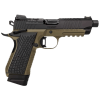
Verdict: the Prodigy is the cheapest way in, the Staccato is the safest, and the Kimber is the one that brings the most gun per dollar if you are buying on the spec sheet. For the wider field see our best double stack 1911 pistols and best Kimber 1911 pistols guides.
Upgrades Worth Making
| Upgrade | Recommended | Why it matters | Cost |
| Red dot | Any RMR footprint optic | The adapter plate is already in the box | $300 – $700 |
| Matching magazines | Factory 20 round 2K11 magazines | You get one 17 and two 20s, so even them up | $60 – $100 each |
| Spare recoil spring | 10 lb for 9mm, 16 lb for .45 | Order by chambering, they are not the same | $15 – $30 |
| Competition belt and holster | Anything cut for a 2011 with a rail | Options are thin, so check fit before you buy | $90 – $220 |
Common Problems and Fixes
- Failures to go into battery when new: three of our four stoppages were this, all inside the first 200 rounds. It is a tight hand fitted gun bedding in. Shoot it before you judge it.
- No rear sight after fitting an optic: the rear sight is part of the cover plate. If you want irons alongside a dot you need a plate that carries them, so decide before you order.
- Bought the wrong recoil spring: the .45 uses 16 lb and the 9mm uses 10. Ordering by model name rather than chambering gets you the wrong one.
- Magazines do not all hold the same: the box contains one 17 and two 20 round magazines. That is what Kimber ships, not a packing error.
- Cannot find a holster: the platform is new. Check what is actually available for a 2K11 with a rail before you commit, rather than assuming a Staccato holster fits.
Who Should NOT Buy This Gun
- The concealed carrier: 40.9 ounces and 8.56 inches is a match gun, not a belt gun. Kimber’s own KDS9c does that job for several hundred less.
- The buyer on a budget: a Springfield Prodigy is around $525 cheaper and gets you into the same category. Put the difference into ammunition and a timer.
- Anyone who customises immediately: the aftermarket for this pattern barely exists yet. A Staccato has parts, holsters and grips available today.
- The shooter who wants co-witnessed irons: the rear sight comes off with the cover plate. A SIG P320 AXG or a Staccato handles that more gracefully out of the box.
- Anybody buying for resale value: Staccato holds its money and this platform has no track record yet. Buy it to shoot, not to flip.
Final Verdict
The 2K11 is the most gun anybody is currently selling for around $1,750. A machined aluminum grip module, a steel sub-frame, a match trigger that measured 3 pounds 5 ounces, three magazines, an optic plate and a fiber front sight all come in the box, and 1.4 inch average groups at 25 yards say the barrel is doing its job. Nine hundred rounds produced four stoppages and every one of them happened before round 200.
Buy it to shoot rather than to carry, and buy it knowing what the spec sheet actually says. The 9mm is the heavier of the two chamberings, the recoil springs differ by six pounds so order spares by cartridge, and only two of your three magazines hold twenty. The list price is $2,395.00, Kimber itself charges $2,245.00, and the street is $1,673.99, so the number that matters is the last one.
Specifications, SKUs, weights and MSRP come from Kimber’s own product page for the 2K11 (OR) and the 2K11 family page. Street prices are the live in-stock range for new guns across the retailers we track and will move.
Final Score: 8.3/10 – Staccato construction and a genuinely excellent trigger, at a street price that lands much closer to the Springfield.
FAQ: Kimber 2K11
Is the Kimber 2K11 a good pistol?
Yes. Ours averaged 1.4 inch five shot groups at 25 yards with a dot fitted, best of 1.1, and the GT Match Grade trigger measured 3 pounds 5 ounces. We had four stoppages in 900 rounds and every one landed inside the first 200 while the gun was bedding in. After that it ran 700 rounds clean, including 147 grain subsonic.
How much does a Kimber 2K11 cost?
Kimber lists the 2K11 (OR) at $2,395.00 and sells it on its own website for $2,245.00. The cheapest example at a major retailer we track was $1,673.99, with listings down to $1,649 elsewhere and up past $2,900 for the dressier versions. That is roughly $721 under list at the trusted floor.
Is the Kimber 2K11 heavier in 9mm or .45 ACP?
In 9mm, which surprises people. Kimber's own spec sheets give the 9mm (SKU 3500051) 40.9 oz and the .45 ACP (SKU 3500050) 40.1 oz, both with an empty magazine. A 9mm barrel is the same outside diameter with a smaller hole through it, so there is simply more steel left in it.
What recoil spring does the Kimber 2K11 use?
It depends entirely on the chambering, and the gap is wide. Kimber specifies 16 pounds for the .45 ACP and 10 pounds for the 9mm. Order spares by cartridge rather than by model name, and if you buy a used one, find out which spring is actually fitted before deciding it is over or under sprung.
How many magazines come with a Kimber 2K11?
Three, which is generous for this class. Read the detail though: in 9mm you get one 17 round and two 20 round magazines. The 20+1 on the box is real, but only two of your three magazines hold twenty, which matters if you shoot matches where every magazine needs the same count.
Does the Kimber 2K11 come optics ready?
Yes, and an RMR footprint adapter plate is included. The detail that catches people is that the rear sight is built into the cover plate, so taking the plate off to mount a dot removes your iron rear sight with it. Decide whether you want co-witnessed irons before you order an optic.
Kimber 2K11 or Springfield Prodigy?
The Prodigy is roughly $525 cheaper and is the honest answer if budget decides it. The Kimber brings a machined aluminum grip module in Type III hardcoat anodizing, a trigger specified at 3 to 4 pounds, three magazines and an optic plate in the box. Buy the Springfield to get into the category, the Kimber if you are buying on the spec sheet.
Can you carry a Kimber 2K11?
You can, but you probably should not. At 40.9 ounces and 8.56 inches it is a match and range pistol rather than a belt gun, and the holster ecosystem for this new pattern is thin. Kimber's own KDS9c runs a 4.09 inch barrel, costs several hundred less and is built for exactly that job.
4,021+ Gun & Ammo Deals
Updated daily from 200+ top retailers. Filter by category, caliber, action type, and price.
Related Guides