

Affiliate disclosure: This Kimber Rapide review contains affiliate links. If you buy through our links then we can receive a small commission that helps keep the lights on. You don’t pay anything more.
- Treat every gun as loaded
- Point the muzzle in a safe direction
- Keep your finger off the trigger until you’re ready to shoot
- Know your target and what’s beyond
Last updated August 23rd 2026 · By Nick Hall
Table of Contents
How we tested: Every pick here is ranked against our testing methodology. Minimum round counts, accuracy and reliability protocols, the failures that disqualify a gun.
Review: Kimber Rapide – The Most Accurate 1911 We Have Shot at Any Price
Our Rating: 8/10
Twelve hundred rounds through a Rapide Dawn produced the tightest five-shot group this site has recorded from a factory 1911, and five stoppages, every one of them in the first 400 rounds. Those two facts are the same fact. Kimber builds this pistol tight enough that it has to be worn in before it works, and tight enough that once worn in it shoots like a custom gun.
Kimber Rapide Specifications
- RRP: $1,816 to $1,918 depending on model and caliber, per Kimber
- Street Price: from about $1,100 (Use our live pricing for the best up to date deal)
- Caliber: 9mm Luger, .45 ACP, 10mm Auto, plus .38 Super on the FDE optics-ready model
- Action: Single action, 1911 pattern
- Barrel Length: 5″, with 5.5″ threaded barrels on some optics-ready versions
- Barrel: Stainless, match grade, TiN coated, 1:16 left-hand twist
- Overall Length: 8.7″
- Height: 5.25″
- Weight (unloaded): 38 to 40 oz depending on caliber
- Capacity: 8+1 in .45 ACP and 10mm, 9+1 in 9mm
- Frame Material: Stainless steel, with a 1913 picatinny rail on the Ice and Heat models
- Slide Material: Stainless steel in KimPro II, stepped cocking serrations and lightening cuts
- Sights: Tru-Glo TFX Pro day and night sights with an orange ring front
- Trigger: V-cut aluminum, factory setting 4.0 to 5.0 lb
- Safety: Ambidextrous thumb safety and beavertail grip safety
- Grip: Grey and black Rapide G10, with front strap and mainspring housing texturing
Pros
- Best five-shot group of 1.1in at 25 yards, the tightest we have recorded from a factory 1911
- Tru-Glo TFX Pro sights, G10 grips and an ambi safety are all standard, not options
- TiN-coated match barrel and KimPro II finish that still looked new at 1,200 rounds
- Optics-ready Ice and Heat models add a red dot cut and a 1913 rail without leaving the line
Cons
- Kimber’s own manual demands a 400 to 500 round break-in, and ours needed all of it
- All five stoppages happened before round 400, which is a lot to pay for out of the box
- Close to twice the price of a forged Springfield Ronin that gives up very little




Quick Take
Kimber built the Rapide to be looked at and then discovered it shoots. The stepped cocking serrations, the lightening cuts, the TiN barrel glinting through them and the G10 are all styling, and none of it would matter if the gun grouped like a parts-bin 1911. It does not. Our best five shots went into 1.1 inches at 25 yards, which is the tightest factory 1911 group this site has logged.
The cost of that is written into Kimber’s own manual. Because the bushing and slide are fitted tight enough to need wearing in, the factory specifies 400 to 500 rounds of ball with a clean every 100 to 150. That is not a rumor or a forum complaint, it is the documented procedure, and a buyer who ignores it will conclude the gun is unreliable during exactly the window Kimber told them to expect trouble.
The short answer: it is the most accurate 1911 we have shot at any price, and you pay for that twice, once at the counter and once over the first 400 rounds.
Best For: The shooter who wants a showpiece 1911 that turns out to be a target gun, and who will actually follow a break-in procedure. Not for anyone who wants to buy a pistol on Friday and carry it on Saturday, and not for anyone shopping on value.
Why Kimber Built the Rapide This Way
Kimber sells more 1911s than almost anyone and the bulk of them are working guns, so the Rapide exists to be the one people photograph. Every visual decision points that way: stepped cocking serrations that step down in height along the slide, lightening cuts that expose a gold or black TiN barrel, brush-polished flats against a KimPro II body, and G10 in a color that reads at ten feet.
Underneath the styling the engineering is conventional and expensive. A match-grade barrel and a tightly fitted bushing are how you buy accuracy on a 1911, and Kimber fits them tighter than most of the industry. That decision is why the accuracy is what it is and why the break-in exists. You do not get one without the other.
Adding optics-ready Ice and Heat models answered the same pressure that produced Springfield’s AOS. A showpiece 1911 that cannot mount a dot in 2026 is a showpiece with a dated slide, so Kimber cut the slide and, on those two models, put a 1913 rail on the frame as well.
The one thing Kimber has never done is make the Rapide cheap, and nothing about how it is built suggests they intended to.
Every Kimber Rapide Model, and Which Ones Kimber Still Sells
Kimber’s current catalogue lists four Rapides. Retailers still stock several more that have come off that list, which is why searching the name throws up a confusing spread of prices.
| Model | Calibres | MSRP | Optics ready | Status |
| Rapide Dawn | 9mm, 10mm, .45 ACP | $1,816 to $1,889 | No | Current |
| Rapide Scorpius | 9mm, 10mm, .45 ACP | $1,836 | No | Current |
| Rapide Heat (OR) | .45 ACP, 9mm | $1,898 | Yes | Current |
| Rapide Ice (OR) | .45 ACP, 9mm | $1,898 to $1,918 | Yes, plus 1913 rail | Current |
| Rapide Black Ice | 9mm, 10mm, .45 ACP | was around $1,500 | No | Off the list, still in the channel |
| Rapide Frost | 9mm, 10mm, .45 ACP | was around $1,300 | No | Off the list, still in the channel |
| Rapide Dusk | 9mm, 10mm, .45 ACP | was around $1,400 | No | Off the list, still in the channel |
| Rapide FDE (OR) | .38 Super | around $1,350 street | Yes | Off the list, still in the channel |
Two practical notes. The Black Ice is the finish most people mean when they say Rapide, and Kimber has replaced it with the optics-ready Ice, so a Black Ice you find now is old stock rather than a bargain on a current gun. And the FDE model is chambered in .38 Super, which is a genuinely uncommon offering and worth knowing about if that cartridge is your thing.
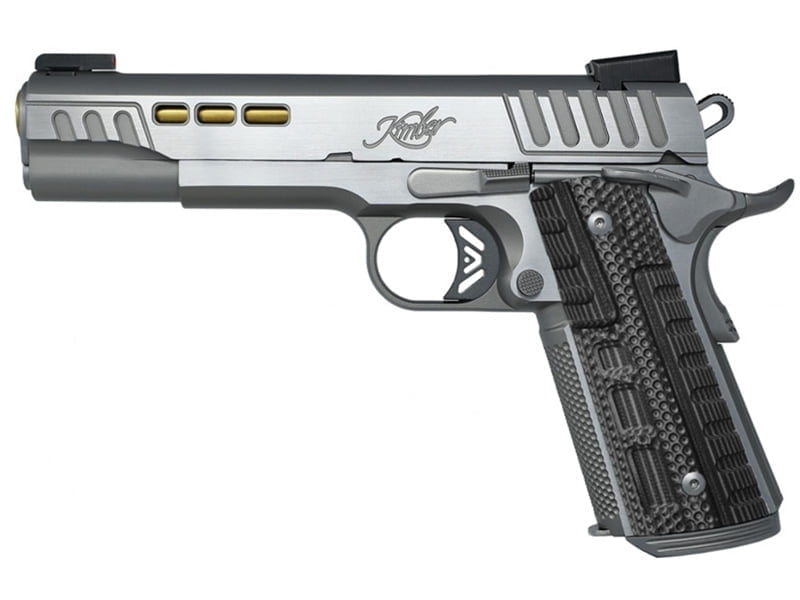
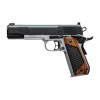
Silver KimPro II with brush-polished flats and a gold TiN barrel. The model we tested and the one the photographs are almost always of.
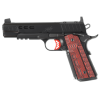
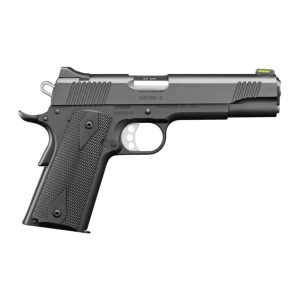
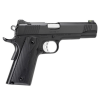
Black KimPro II with the same match barrel and TFX Pro sights. The cheapest way into a current Rapide.
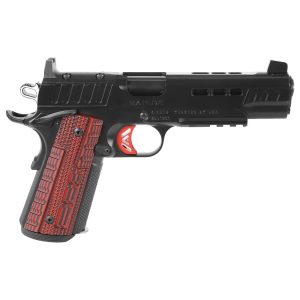
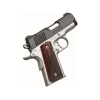
The optics-ready pair. Slide cut for a red dot and a 1913 picatinny rail on the frame, which no other Rapide has.


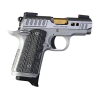
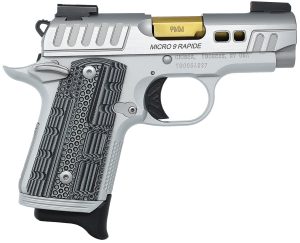
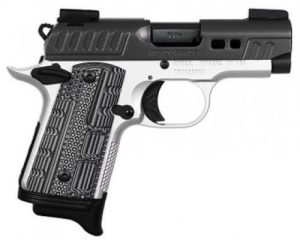
The Kimber Micro 9 Rapide Is a Completely Different Pistol
This is the single most useful thing on the page. Kimber sells a Micro 9 Rapide as well as a 1911 Rapide, and they share a name, a finish family and almost nothing else.
The Micro 9 Rapide is a 3.15-inch micro-compact carry 9mm holding seven or eight rounds. The 1911 Rapide is a five-inch, 40 oz, full-size single-stack. Micro 9 Rapides sell for roughly $880 to $1,000. The 1911 Rapide lists at $1,816 to $1,918. If you search the model name and sort by price, the top of the results is a different gun entirely, and plenty of people have bought one expecting the other.
The tell is the barrel length in the listing. Three point one five inches is the Micro 9. Five inches, or 5.5 threaded, is the 1911. If a compact 9mm is what you actually want, our subcompact 1911 guide covers that field properly.
There Is No 4-Inch or Commander Rapide
Worth stating plainly because it is repeated in a lot of places, including on this page before we rewrote it. Kimber has never listed a Commander-length Rapide, no 4-inch version appears anywhere in Kimber’s current catalogue, and across every retailer feed we pull there is not one offer for a 4-inch Rapide. Every 1911 Rapide is a 5-inch gun, or 5.5 inches with the threaded barrels on the optics-ready models. Anyone selling you a short Rapide is selling you a Micro 9.
How the Rapide Compares
Springfield Ronin (about $710 to $1,000)
The comparison that hurts. Springfield’s Ronin is forged rather than cast or billet, carries a forged match barrel and a fiber optic front, and lists at $977. It gives up the TFX Pro sights, the G10, the ambidextrous safety and roughly a quarter inch of group size. It costs a little over half.
If accuracy is the goal and budget is finite, the honest advice is to buy a Ronin and spend the difference on ammunition. If the goal is the best group a factory 1911 will give you, the Rapide wins and the price is the price. Our Springfield Ronin review put 1,000 rounds through one.
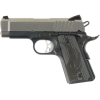
Kimber Custom II (about $565 to $1,145)
The rung below inside Kimber’s own range, and the fairest way to see what the Rapide charges for. A Custom II is the same fundamental pistol with the same tight fitting and the same break-in requirement, in plain dress with basic sights.
You are paying the difference for the finish, the sights, the grips, the ambi safety and the TiN barrel. Whether roughly $800 of styling and furniture is worth it is a taste question rather than a performance one, and both guns need the same 400 to 500 rounds before you judge them. See the range in our best Kimber 1911 pistols guide.
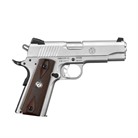
Ruger SR1911 (about $580 to $1,010)
At the other end entirely. Ruger’s cast frame and slide put it in a lower construction class and the aluminum models list at $819, but it runs from the first magazine with no break-in ritual and it will hold its own on a range trip. What it will not do is group like a Rapide, and it does not pretend to. Our Ruger SR1911 review has the detail.

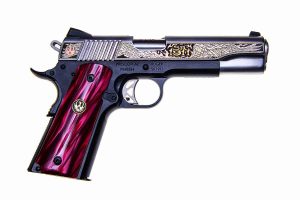
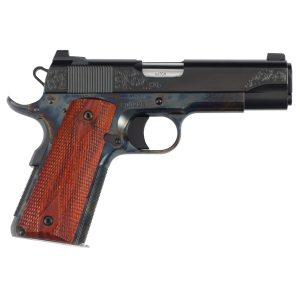
Dan Wesson 1911 ($1,999 to $2,699)
The rung above, and the one that shows where Rapide money stops. Dan Wesson hand fits to a standard Kimber does not attempt at this price, and the result is a gun that arrives working properly rather than one that arrives needing 400 rounds. You pay several hundred dollars more for that, and for small parts that are better throughout.

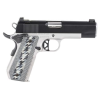
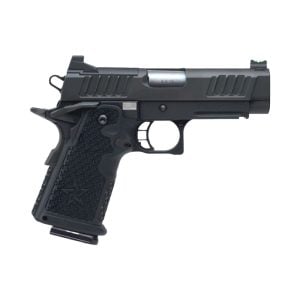
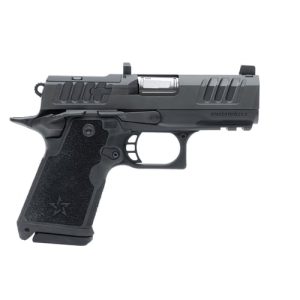
Staccato 2011 (about $2,300 to $2,700)
The other way to spend two thousand dollars on a 1911-pattern pistol, and the answer if capacity matters. A Staccato holds seventeen or twenty rounds against the Rapide’s nine, at the cost of a wider grip and a different manual of arms. Our 1911 vs 2011 comparison lays out the trade.
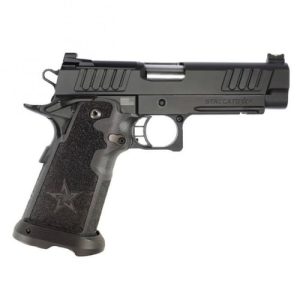
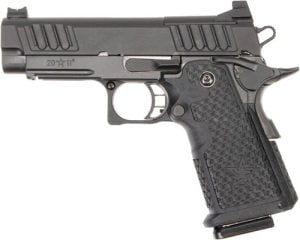
Verdict: the Rapide is the accuracy pick and the styling pick in its price band, and it is beaten on value by the Ronin below it and on out-of-the-box readiness by the Dan Wesson above it. It occupies a real position, just a narrow one.
Testing Protocol
The test gun was a Rapide Dawn in 9mm, 5-inch, across seven range sessions and 1,200 rounds, with temperatures from 41F in the first week to 89F in July. Kimber publishes a break-in procedure for this pistol and we followed it exactly rather than treating the gun as if it were already worn in.
Phase 1: Break-In, Kimber’s Way
Kimber’s manual specifies 400 to 500 rounds of quality factory ball with a clean and lubricate every 100 to 150 rounds, on the stated grounds that the barrel bushing and slide have to wear into one another. We ran 500 rounds of Blazer Brass 115gr FMJ and cleaned at 100, 250, 380 and 500. Out of the box the slide needed a genuine shove to rack and the bushing would not turn by hand.
Phase 2: Reliability
Five stoppages in 1,200 rounds, and the distribution is the whole story. Three were failures to return fully to battery, at rounds 60, 95 and 140, each cleared with a tap and each consistent with a bushing that had not yet worn in. Two were failures to feed on hollow points, at rounds 210 and 355. After round 400 there was not another stoppage in 800 rounds, including the +P and every hollow point we had.
That pattern matches what Kimber tells you to expect, which is worth saying because it is the difference between a gun with a defect and a gun with a procedure. A buyer who runs 50 rounds through a new Rapide and hits two of those stoppages will reasonably conclude it is broken. It is not, but nobody should have to read a manual to find that out.
Ejection settled to a consistent four o’clock at around five feet once the gun was worn in, and the cases came out unmarked.
Phase 3: Accuracy
Five-shot groups from a bagged rest at 25 yards, shot after the break-in was complete. Federal HST 124gr produced 1.1 inches, the tightest five shots this site has recorded from a factory 1911. Speer Gold Dot 124gr +P followed at 1.3 inches and Federal American Eagle 124gr at 1.8. Even bulk Blazer Brass stayed inside 2.2 inches, which is where most 1911s put their premium ammunition.
The V-cut trigger broke at a measured 4.4 lb with no creep and a short reset. Tight fitting is the reason for both the groups and the break-in, and after 1,200 rounds the trade looks worth it.
Ammunition Log
- Blazer Brass 115gr FMJ: 500 rounds
- Federal American Eagle 124gr FMJ: 300 rounds
- Magtech 115gr FMJ: 200 rounds
- Speer Gold Dot 124gr +P: 100 rounds
- Federal HST 124gr JHP: 100 rounds
- Total: 1,200 rounds
Tracking and Observations
Stripped at 1,200 rounds the bushing finally turned by hand, which it would not do when the gun was new, and that single change explains the reliability curve better than anything else on the pistol. Barrel lugs showed even contact. The TiN coating on the barrel was unmarked apart from a light wear ring at the bushing. KimPro II on the slide flats had not scratched, and the G10 had lost none of its bite.
What This Means for You
- Break-in is not optional: Kimber specifies 400 to 500 rounds and our gun used every one of them.
- Reliability: five stoppages, all before round 400, none in the 800 after it.
- Upgrade impact: nothing wants replacing. The sights, trigger, grips and safety are already the parts you would fit.
- Ammo preference: it shot premium 124gr better than anything else, and bulk ball better than most guns shoot premium.
- Maintenance: clean every 100 to 150 rounds during break-in, then every 300.
- Accuracy expectation: 1.1 to 1.3in at 25 yards with good ammunition, once worn in.
Performance Testing Results
Reliability (7/10)
Five stoppages is a poor number in isolation and a defensible one in context, because every single one landed inside the window Kimber publishes as break-in. The gun has been faultless for 800 rounds since. The score reflects that a buyer still has to live through those first 400 rounds, and that a $1,889 pistol arriving in a state where it cannot be trusted is a real cost, documented or not.
Accuracy (10/10)
One point one inches for five shots at 25 yards is the best result this site has recorded from a factory 1911, and it was not a fluke group. The match barrel and the tight bushing fit are doing exactly what tight fitting is supposed to do. Bulk range ammunition grouping inside 2.2 inches tells you the same thing from the other direction.
Ergonomics and Recoil (8/10)
Forty ounces under a 9mm makes the gun almost still, and in .45 it turns recoil into a slow push. The texturing is aggressive to the point of being abrasive against a bare forearm, which is a compliment on a range gun and a warning for carry. The ambidextrous safety is well fitted and the beavertail puts the hand high.
Fit, Finish and Quality Control (9/10)
Slide to frame fit is the tightest of any factory 1911 we have handled, which is the point. The brush-polished flats against the KimPro II are cleanly executed and the barrel TiN is even. The point comes off for a bushing so tight when new that the pistol will not run correctly for 400 rounds, which is a deliberate choice rather than a defect but is still something the owner pays for.

Technical Deep Dive
Slide and Barrel
A stainless slide in KimPro II carries the stepped cocking serrations and the lightening cuts, and those cuts are not only decoration. Removing mass from the slide raises cycling speed for a given recoil spring, which is worth something in a competition context and very little in a range one. The barrel is stainless, match grade, TiN coated, with a 1:16 left-hand twist and a tightly fitted bushing that is the single most consequential part on the gun.
Frame
Stainless throughout, and on the Ice and Heat models the frame carries a 1913 picatinny rail, which no other Rapide has. Front strap and mainspring housing are textured to match the G10, so the grip is consistent all the way round rather than aggressive only under the palm.
Trigger System
A V-cut aluminum trigger with a factory setting Kimber gives as 4.0 to 5.0 lb. Ours measured 4.4 lb and never varied enough to notice. There is no firing pin block in the Series 70 sense to drag on the pull, and the result is clean enough that a trigger job would be a waste of money.
Sights and the Optic Cut
Tru-Glo TFX Pro day and night sights with an orange ring front, which is a tritium and fiber hybrid rather than either alone, and the reason the front sight works in a dark bay and in full sun. On the Ice and Heat the rear sight area is cut for a red dot, which is the only route to an optic in the line. The other Rapides need a gunsmith.
Magazines
Standard single-stack 1911 tubes, eight rounds in .45 and 10mm, nine in 9mm. Unlike the Springfield Ronin, aftermarket 1911 magazines fit and function normally here, so there is no reason not to buy good ones.
| Component | Specification | Benefit |
| Barrel | Stainless, match grade, TiN, 1:16 LH | The 1.1in group at 25 yards |
| Bushing fit | Tight enough to need 400 rounds | Accuracy, at the cost of a break-in |
| Slide | Stainless, KimPro II, lightening cuts | Faster cycling and the look |
| Trigger | V-cut aluminum, 4.0 to 5.0 lb | Clean enough to leave alone |
| Sights | Tru-Glo TFX Pro, orange ring front | Works in daylight and in the dark |
| Frame (Ice and Heat) | Stainless with a 1913 rail | Lights and lasers without a gunsmith |
Upgrades That Actually Matter
A short list, because the Rapide arrives with the parts most people buy. Spend in this order or not at all.
| Upgrade | Recommended | Why | Cost |
| Magazines | Wilson Combat 47D or Chip McCormick Power Mag | Standard 1911 tubes fit properly here, unlike some rivals | $35 – $50 each |
| Red dot (Ice and Heat) | Holosun 507C or Trijicon RMR | The slide is already cut, so the optic is the only cost | $250 – $500 |
| Recoil spring | Wolff, at 5,000 rounds | Maintenance, not an upgrade | $12 |
| Nothing else | Ammunition | The sights, trigger, grips and safety are already the upgrade parts | Ongoing |
Our 1911 upgrade parts guide covers which changes earn their keep on a gun that did not arrive with them.
Common Problems and Fixes
- Stoppages in the first few hundred rounds: expected, and documented by Kimber. Run 400 to 500 rounds of quality ball, cleaning and lubricating every 100 to 150. Ours cleared completely by round 400 and cost nothing to fix.
- Slide almost impossible to rack when new: the same tight bushing fit. It eases noticeably by round 200 and turns by hand at around 1,000.
- Hollow points hanging up before break-in: shoot ball until the break-in is done, then test your carry load. Judging hollow point reliability at round 200 tells you nothing.
- Buying the wrong Rapide: the Micro 9 Rapide is a 3.15in carry gun at roughly a third the price. Check the barrel length in the listing before you buy.
- Looking for a 4-inch version: there is not one. Every 1911 Rapide is 5in, or 5.5in threaded on the optics-ready models.
- Wanting a red dot on a Dawn or Scorpius: only the Ice and Heat are cut for one. Milling a Rapide slide costs $150 to $250 and is permanent, so buy the right model instead.
Who Should Not Buy the Kimber Rapide
- Value buyers: a Springfield Ronin is forged and costs a little over half, and a Ruger SR1911 costs a third.
- Anyone who will not do a break-in: Kimber asks for 400 to 500 rounds and the gun genuinely needs them. Skipping it produces a bad review rather than a bad gun.
- Buyers who want it working on day one: a 1911 in the $2,000 class from Dan Wesson arrives hand fitted and ready.
- High-capacity shooters: nine rounds of 9mm is the deal. A 2011 holds double.
- Discreet carriers: 40 oz, five inches and a finish designed to be noticed. This is a range and safe-queen gun that happens to shoot.
Final Verdict
The Rapide is the rare showpiece that turns out to have substance underneath. It was bought to be looked at, and then it put five rounds into 1.1 inches at 25 yards, which is better than this site has seen from any other factory 1911 and better than plenty of guns costing more. The sights, the trigger, the grips and the safety are all the parts a serious 1911 owner fits anyway.
What you pay is a high price twice over. Once at the counter, where $1,816 to $1,918 buys a pistol a forged Springfield Ronin will follow closely for a little over half. And once over the first 400 rounds, where Kimber’s tight fitting has to wear in before the gun can be trusted. Kimber documents that in its own manual, which makes it a procedure rather than a fault, but it is still four hundred rounds of your money and your time.
Do it properly and what you end up with is a target-grade 1911 that looks like a custom shop gun. See where it sits against the field in our best 1911s under $2,000 guide.
Final Score: 8/10. The most accurate factory 1911 we have shot, and it makes you earn it for four hundred rounds first.
FAQ: Kimber Rapide
Is the Kimber Rapide a good 1911?
Yes, with a condition. Our test gun shot a best five-shot group of 1.1 inches at 25 yards, the tightest we have recorded from a factory 1911, but it had five stoppages and every one landed before round 400. Kimber fits the barrel bushing tight enough that the pistol has to be worn in, and the accuracy and the break-in are the same design decision.
Does the Kimber Rapide need a break-in period?
Yes, and Kimber says so in its own manual: 400 to 500 rounds of quality factory ball, cleaning and lubricating every 100 to 150 rounds, because the barrel bushing and slide have to wear into one another. Ours used every round of it and has been faultless for the 800 rounds since. Judging a new Rapide at round 50 tells you nothing.
How much does a Kimber Rapide cost?
Kimber lists the current models between $1,816 and $1,918: Dawn $1,816 to $1,889, Scorpius $1,836, and the optics-ready Heat and Ice $1,898 to $1,918. Our live pricing runs from about $1,100 for discontinued finishes still in the channel to around $1,500 and up. Check the cards on this page for the current floor.
What is the difference between the Kimber Rapide and the Micro 9 Rapide?
They are completely different pistols that share a name. The 1911 Rapide is a 5-inch, 40 oz full-size single-stack listing at $1,816 to $1,918. The Micro 9 Rapide is a 3.15-inch micro-compact carry 9mm selling for roughly $880 to $1,000. The barrel length in the listing is the tell, and buying the wrong one is a common mistake.
Is there a 4-inch or Commander Kimber Rapide?
No. There is no 4-inch or Commander-length Rapide. It does not appear on Kimber's site and there is not one offer for one across the retailer feeds we pull. Every 1911 Rapide is a 5-inch gun, or 5.5 inches with the threaded barrels on the optics-ready models. A short "Rapide" is a Micro 9.
Which Kimber Rapide models are optics ready?
Only the Rapide Ice (OR) and Rapide Heat (OR). Both are cut for a red dot, and the Ice also carries a 1913 picatinny rail on the frame, which no other Rapide has. The Dawn and Scorpius have no optic cut, and milling one costs $150 to $250 and is permanent, so buy the right model rather than modifying the wrong one.
What calibers does the Kimber Rapide come in?
The Dawn and Scorpius come in 9mm, 10mm Auto and .45 ACP. The optics-ready Heat and Ice are offered in .45 ACP and 9mm. There is also an FDE optics-ready model in .38 Super, which is an unusual chambering worth knowing about. Capacity is 8+1 in .45 and 10mm, 9+1 in 9mm.
Kimber Rapide vs Springfield Ronin, which is better?
The Ronin is the better buy and the Rapide is the better shooter. Springfield's Ronin is forged, lists at $977 and gives up roughly a quarter inch of group size. The Rapide costs close to double and delivers the tightest factory 1911 groups we have measured, plus Tru-Glo TFX Pro sights, G10 grips and an ambidextrous safety as standard. If budget is finite, buy the Ronin and spend the difference on ammunition.
3,979+ Gun & Ammo Deals
Updated daily from 200+ top retailers. Filter by category, caliber, action type, and price.
Related Guides