

Affiliate disclosure: This EOTech Vudu review contains affiliate links. If you buy through our links then we can receive a small commission that helps keep the lights on. You don’t pay anything more.
- Treat every gun as loaded
- Point the muzzle in a safe direction
- Keep your finger off the trigger until you’re ready to shoot
- Know your target and what’s beyond
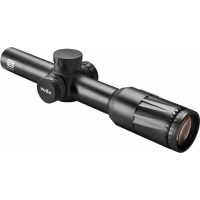
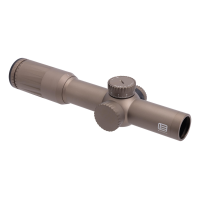
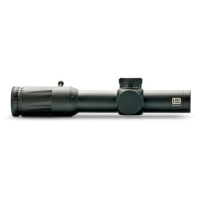
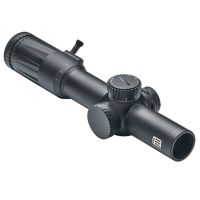
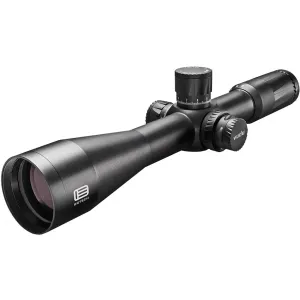
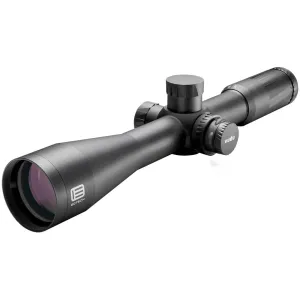
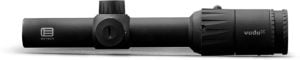
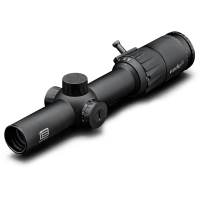
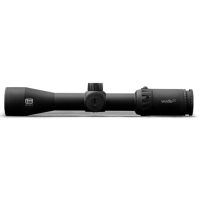
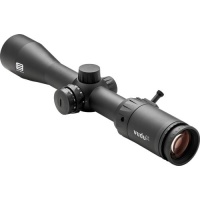
The EOTech Vudu is the scope line from the company that made its name on holographic sights, and it is a bigger family than most buyers realize. There are eleven Vudu and Vudu X scopes on sale today, from a 1-6x24 for a carbine to an 8-32x50 for a benchrest rifle, and they sold from $759 to $2,155.99 on our price cards as I wrote this. Nine are built in Japan and two in the Philippines. Five are first focal plane and six are second. I’ve run five of them on four rifles, shot a box test with each, and read every manual EOTech publishes. This review covers which Vudu does which job, what the turrets and glass are like to live with, where EOTech’s own spec pages disagree with each other, and which one I’d buy.
Last updated October 13, 2026
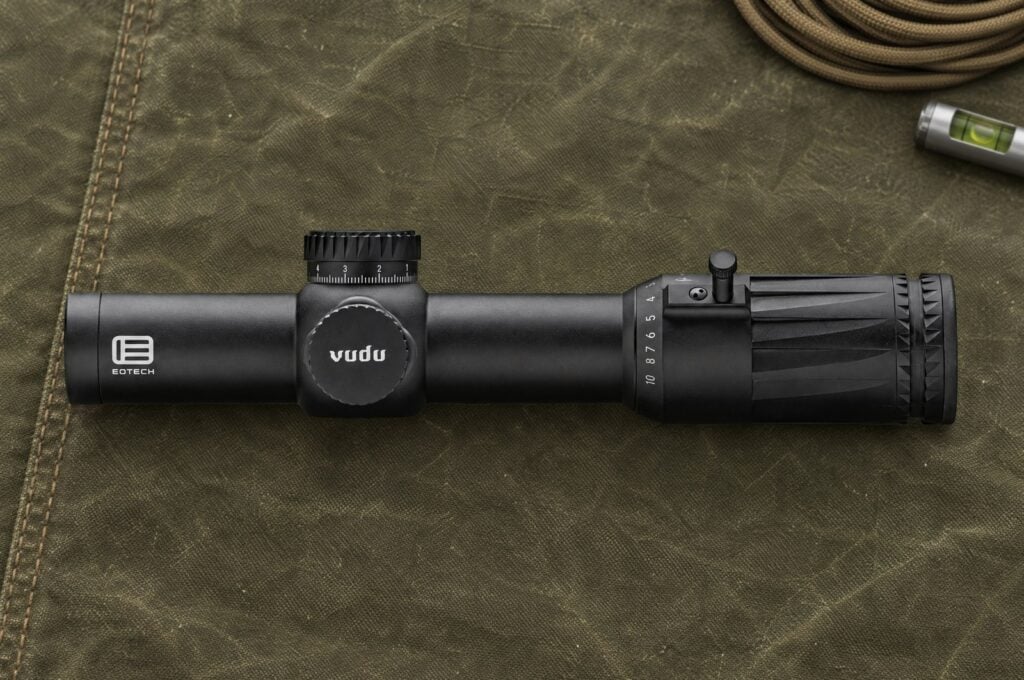
Table of Contents
Review: EOTech Vudu, a Speed Ring in Front of Japanese Glass
Our Rating: 8.4/10
EOTech Vudu Specs at a Glance
| Type | Variable power rifle scopes, two lines: Vudu and Vudu X |
| Current models | Eleven: nine Vudu, two Vudu X |
| Magnification ranges | 1-6x, 1-8x, 1-10x, 3-9x, 4-12x, 3.5-18x, 5-25x, 8-32x (Vudu); 1-6x, 2-12x (Vudu X) |
| Focal plane | First on five models, second on six |
| Tube | 30 mm or 34 mm. The 3-9x32 and 4-12x36 have a built-in mount in place of a ring tube |
| Weight | 16 oz (3-9x32) to 33.6 oz (3.5-18x50) |
| Length | 6.8 in (3-9x32) to 15.4 in (8-32x50) |
| Click values | 0.1 or 0.2 MRAD, or 0.125, 0.25 or 0.5 MOA, depending on model and reticle |
| Illumination | Ten settings from one CR2032 on ten models, two hour auto off. The 8-32x50 is not illuminated |
| Made in | Japan (Vudu) and the Philippines (Vudu X) |
| Warranty | EOTech No BS limited lifetime, transferable, no receipt needed |
| EOTech list price | $799 (Vudu X 1-6x24) to $2,519 (5-25x50 with Horus Tremor5) |
| Street price | $759 to $2,155.99 (use our live pricing for the best up to date deal) |
Jump to the live price card for each scope: 1-6x24, 1-8x24, 1-10x28, 3-9x32, 4-12x36, 3.5-18x50 FFP, 3.5-18x50 SFP, 5-25x50, 8-32x50, Vudu X 1-6x24, Vudu X 2-12x40.
Pros
- Clear Japanese glass, true low end
- Lifetime warranty, no receipt needed
- Eleven models, $759 to $2,155.99
Cons
- Standard illumination fades in bright sun
- Heavy for the magnification
- EOTech spec pages contradict each other
Quick Take
A Vudu is what you buy when you like the way an EOTech holographic sight works and want it to reach. On the low-power models the reticle is a big illuminated ring with a fine aiming point in the middle, so at 1x you shoot it like a holographic sight with both eyes open. Turn the power up on a first focal plane model and the ring grows out of view, leaving a precise crosshair or tree. Nobody else does that quite as well.
The glass is the other reason. Every Vudu, as opposed to the Vudu X, says Made in Japan on EOTech’s own spec table, and it looks like it. Color is neutral, the edges stay sharp, and I never fought the image at any magnification I’d shoot at.
The weak spots are real. The standard red illumination is not bright enough for a sunlit berm at noon, the scopes are a few ounces heavier than their rivals, and EOTech’s product pages, catalog and manuals disagree on things as basic as length, weight and warranty. I’ve sorted those out below. My pick for most rifles is the Vudu 1-10x28 FFP at $1,835.99. On a budget, the Vudu X 1-6x24 at $759 gets you most of the experience for less than half the money.
Best For: Shooters who run an AR or a short bolt gun from 10 to 600 yards and want one optic to do it. Not for anyone counting ounces, and not for anyone who needs a blazing red dot at noon unless they pay for the DFG reticle.
What the Vudu Is, and What Has Changed
EOTech introduced the Vudu line in 2016. Until then the Michigan company made holographic sights, magnifiers and night vision, and nothing with a zoom ring. The 1-6x24 with the speed ring reticle became the one everybody knew, and in May 2018 it won American Rifleman’s Golden Bullseye for Optic of the Year, the first Golden Bullseye that magazine had given EOTech. That scope is still in the catalog and still the heart of the line. Our EOTech brand page covers the rest of what the company builds.
Two things about the family tree matter when you shop. First, there are two lines. The Vudu is the premium one: Japanese made, one-piece eyepiece, push-button illumination, and both focal planes. The Vudu X arrived later as the affordable one: made in the Philippines, second focal plane only, capped turrets, a rotary illumination dial, and a price about half that of the nearest Vudu. EOTech sells both under the same lifetime warranty.
Second, the lineup moves and the dealers don’t always keep up. The 2.5-10x44 FFP is gone from EOTech’s store and from the 2026 catalog, though its manual is still on the support page and you’ll still find leftover stock. EOTech’s catalog lists green-reticle versions of the 1-6x24 and a Horus H59 version of the 5-25x50 that the company’s own store does not sell today, and dealers still list a Tremor3 5-25x50 that EOTech has replaced with the Tremor5. The newest scope is the 4-12x36 FFP, added for 2026. If a listing names a reticle that isn’t in my table below, it’s old stock. That is not a reason to avoid it, but it is a reason to expect a discount.
The Vudu Lineup: All 11 Scopes Explained
Read the name the way you’d read any scope. The first pair of numbers is the magnification range and the last is the objective lens in millimeters, so a 1-10x28 zooms from 1x to 10x behind a 28 mm lens. FFP and SFP are first and second focal plane, which I’ll explain with a diagram further down. Here is every scope EOTech sells today with its list price, then the full table.
Vudu 1-6x24 FFP $1,479 list
Vudu 1-8x24 SFP $1,489 list
Vudu 1-10x28 FFP $1,939 list
Vudu 3-9x32 SFP $1,059 list
Vudu 4-12x36 FFP $1,219 list
Vudu 3.5-18x50 FFP $1,939 list
Vudu 3.5-18x50 SFP $1,719 list
Vudu 5-25x50 FFP $2,279 list
Vudu 8-32x50 SFP $1,939 list
Vudu X 1-6x24 SFP $799 list
Vudu X 2-12x40 SFP $859 list
| Model | Focal plane | Tube | Weight | Length | View at 100 yd, low / high | Click value | Made in | Price today |
|---|---|---|---|---|---|---|---|---|
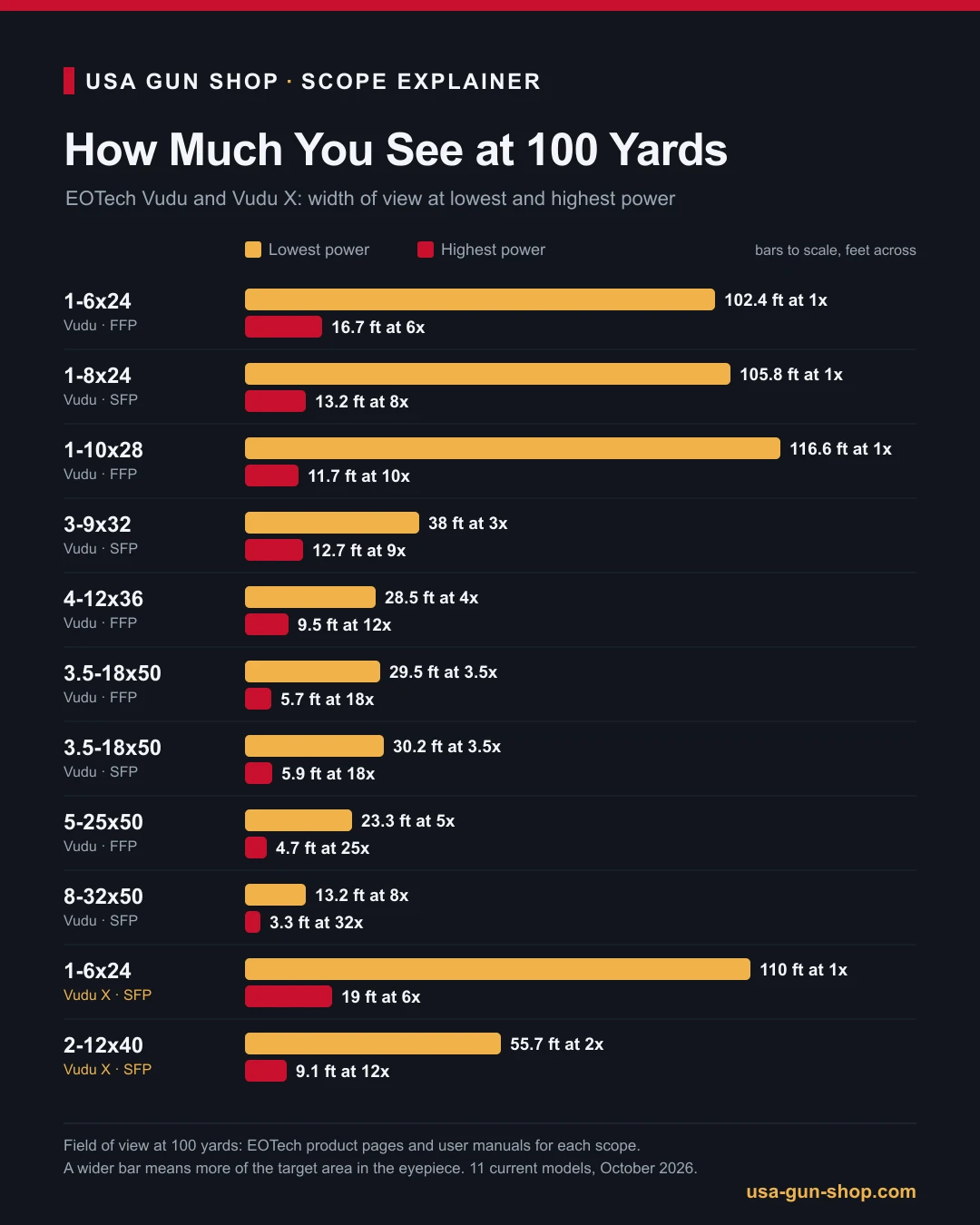
| 1-6x24 | FFP | 30 mm | 20.1 oz | 10.63 in | 102.4 ft / 16.7 ft | 0.2 MRAD (SR1) or 0.5 MOA (SR2, SR3) | Japan | $1,329 |
| 1-8x24 | SFP | 30 mm | 20.8 oz | 10.9 in | 105.8 ft / 13.2 ft | 0.25 MOA | Japan | $1,339 |
| 1-10x28 | FFP | 34 mm | 21.3 oz | 10.63 in | 116.6 ft / 11.7 ft | 0.1 MRAD (SR5, LE5) or 0.25 MOA (SR4) | Japan | $1,835.99 |
| 3-9x32 | SFP | Built-in mount | 16 oz | 6.8 in | 38 ft / 12.7 ft | 0.25 MOA | Japan | $999 |
| 4-12x36 | FFP | Built-in mount | 16.9 oz | 7.1 in | 28.5 ft / 9.5 ft | 0.1 MRAD | Japan | $1,149 |
| 3.5-18x50 FFP | FFP | 34 mm | 33.6 oz | 15.13 in | 29.5 ft / 5.7 ft | 0.1 MRAD (MD1, H59) or 0.25 MOA (MD2) | Japan | $1,835.99 |
| 3.5-18x50 SFP | SFP | 34 mm | 33.6 oz | 15.13 in | 30.2 ft / 5.9 ft | 0.25 MOA | Japan | $1,625 |
| 5-25x50 | FFP | 34 mm | 29.5 oz | 11.2 in | 23.3 ft / 4.7 ft | 0.1 MRAD or 0.25 MOA | Japan | $2,155.99 |
| 8-32x50 | SFP | 34 mm | 32.8 oz | 15.4 in | 13.2 ft / 3.3 ft | 0.125 MOA | Japan | $1,835 |
| Vudu X 1-6x24 | SFP | 30 mm | 17.8 oz | 10.3 in | 110 ft / 19 ft | 0.5 MOA | Philippines | $759 |
| Vudu X 2-12x40 | SFP | 30 mm | 21.1 oz | 12.6 in | 55.7 ft / 9.1 ft | 0.25 MOA | Philippines | $815 |
Weight, length and field of view are EOTech’s product-page figures. Click values come from each scope’s manual. Price is the headline price on our cards on October 13. Where EOTech’s page and manual disagree, I used the figure the page and the 2026 catalog share, and I list the disagreements in the mounting section.
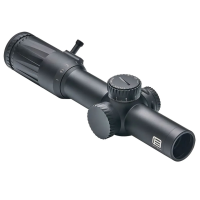
The Low-Power Three: 1-6x24, 1-8x24 and 1-10x28
These are the scopes most people mean when they say Vudu, and they are three different animals. The 1-6x24 FFP is the original. It’s first focal plane, 20.1 ounces, on a 30 mm tube, with exposed turrets and three reticles: SR1 in MRAD, SR2 with a 7.62 drop ladder and SR3 with a 5.56 drop ladder. It’s the simplest and it has the longest record. EOTech lists it at $1,479 and our card had it at $1,329 at Sportsman’s Guide. The same card showed it as low as $919.99 at EuroOptic.
The 1-8x24 SFP looks like the same scope with more zoom. It isn’t. It’s second focal plane with capped turrets and one reticle, the HC3, in MOA only. The dot is always the same size, which is why 3-gun shooters like it, and the hold marks only read true at 8x. None of the five big retailers we headline prices from had a clean listing, so the card leads with the first dealer in the list, Firearms Depot at $1,339. The same card showed it as low as $943.85 at KYGUNCO.
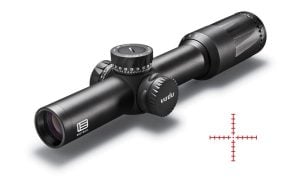
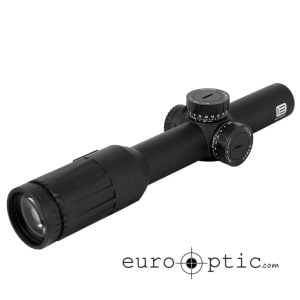
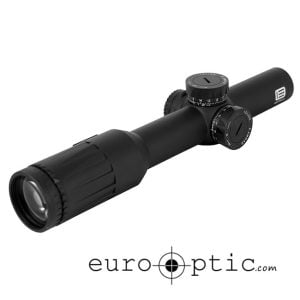
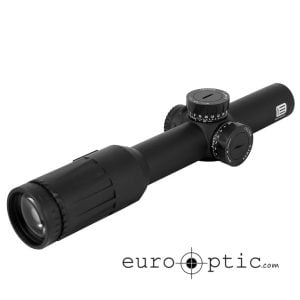
The 1-10x28 FFP is the one I’d buy. It moves to a 34 mm tube and a 28 mm objective, adds a locking elevation turret and a capped windage turret, and weighs 21.3 ounces, barely more than the 1-6x. Ten power is enough to read wind on steel at 600 yards, and the field of view at 1x is the widest in the family at 116.6 feet. It comes with the SR4 in MOA, the SR5 or LE5 tree reticles in MRAD, or the SR5 DFG, which I’ll get to under illumination. EOTech lists it from $1,939 and our card showed $1,835.99 at Palmetto State Armory. The same card showed it as low as $1,599.99 at Primary Arms.
The Super Shorts: 3-9x32 and 4-12x36
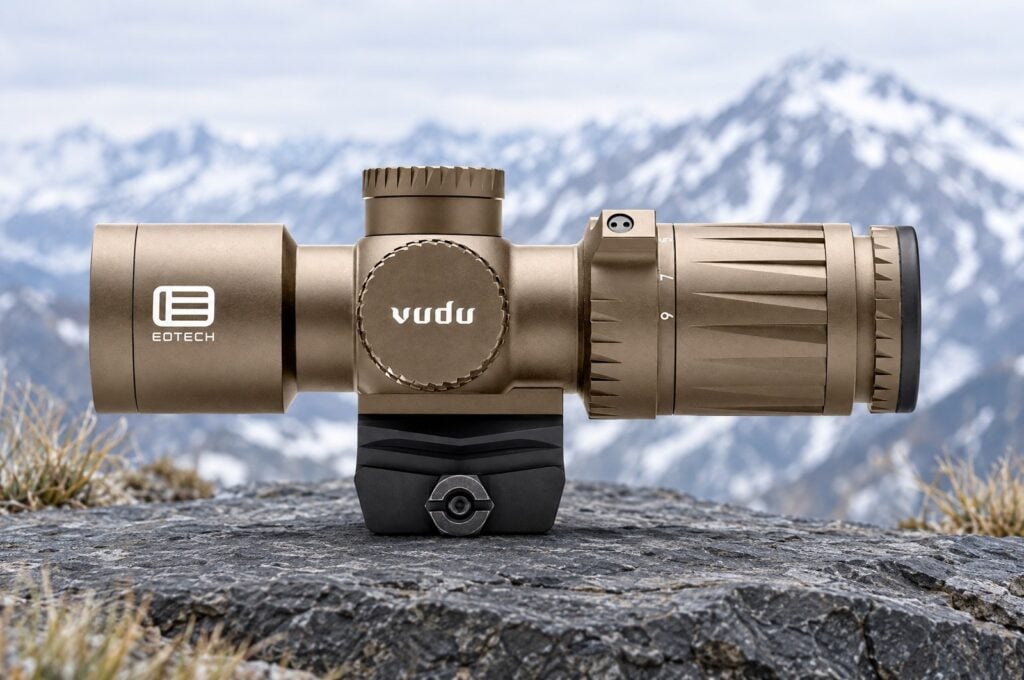
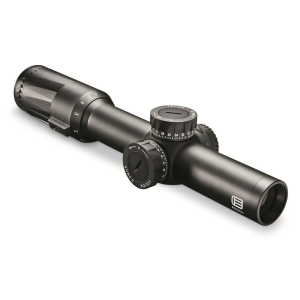
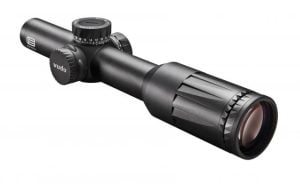
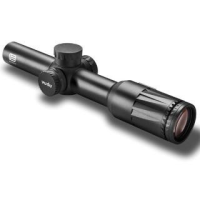
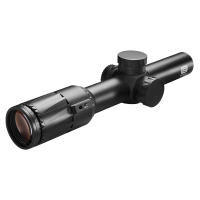
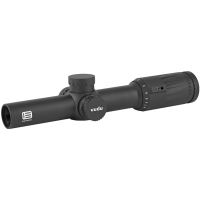
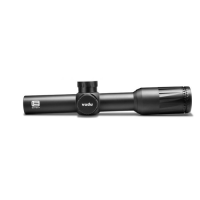
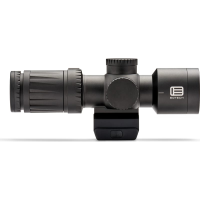
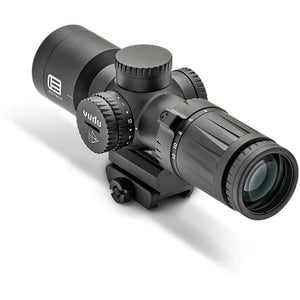
Nothing else on the market looks like these two. The 3-9x32 SFP is 6.8 inches long and 16 ounces, and the 4-12x36 FFP, new for 2026, is 7.1 inches and 16.9 ounces with its mount and battery. Neither has a ring tube. Each rides on a built-in base that takes the same bolt pattern as a compact ACOG mount, and EOTech sells both as a package with an EFLX red dot on a ring that clamps around the front of the scope, at 12 o’clock or offset 45 degrees.
They’re made for short rifles where a full-length scope would hang over the handguard: a bullpup, a pistol-caliber carbine, a compact .308. The price of that shortness is eye relief. EOTech gives 2.3 to 3.1 inches for the 3-9 and 2.4 to 3.1 for the 4-12, a full inch less than the low-power three, so plan on mounting them well back. The 3-9 comes with the HC1 or MD6 in MOA or the MR5 in mils, in black or tan. The 4-12 comes with the MD5 or MR5, both MRAD. EOTech’s store had the MR5 version of the 4-12 out of stock when I checked on October 13.
The 3-9x32 was $999 at Sportsman’s Guide on our card and the 4-12x36 was $1,149 at Brownells. The same card showed it as low as $932.19 at KYGUNCO.
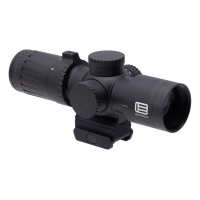
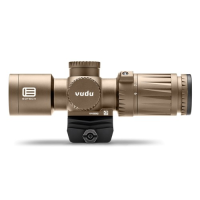
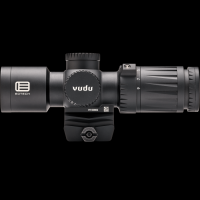
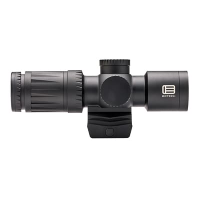
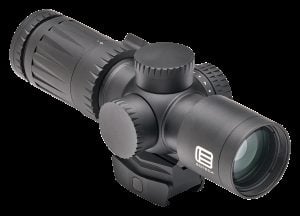
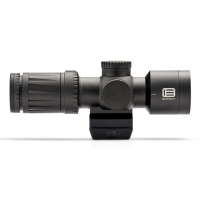
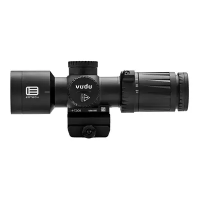
The Long-Range Four: 3.5-18x50 FFP and SFP, 5-25x50 and 8-32x50
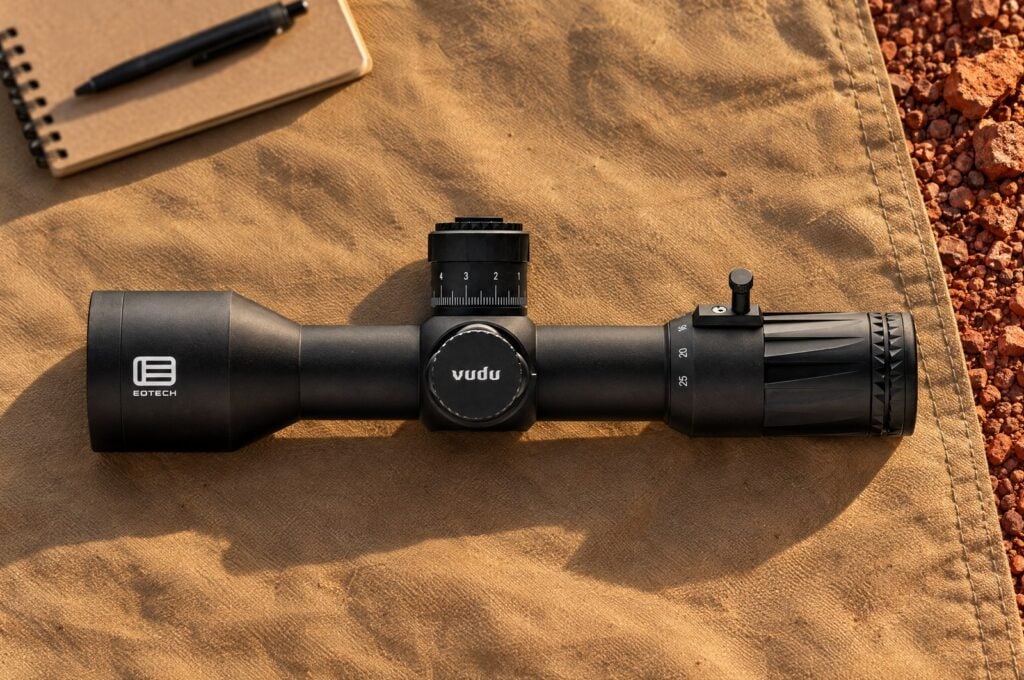
The 5-25x50 FFP is the star here. At 11.2 inches it’s one of the shortest 5-25 power first focal plane scopes anyone makes, which leaves rail in front of it for a clip-on thermal or night vision unit, and it still carries a 34 mm tube, a locking elevation turret with a zero stop and side parallax. It weighs 29.5 ounces. Reticles are the MD3 in MRAD, the MD4 in MOA or the Horus Tremor5, in black or tan. Our card had it at $2,155.99 at Palmetto State Armory. The same card showed it as low as $1,729 at Optics Planet.
The 3.5-18x50 comes both ways. The FFP version has exposed turrets with a zero stop and the MD1, MD2 or Horus H59. The SFP version has capped turrets and the HC1 in MOA, and it’s the hunting scope of the pair. Both are 15.13 inches long and EOTech’s product pages give both the same 33.6 ounces, which makes them the heaviest scopes in the line. On our cards the FFP was $1,835.99 at Palmetto State Armory and the SFP was $1,625 at Lotz Outdoors, where again no big-five retailer had it and the first dealer in the list leads the card. The same card showed it as low as $1,223.52 at KYGUNCO.
The 8-32x50 SFP is the odd one out, a target scope. It has eighth-minute clicks, a fine HC2 reticle with a 0.15 MOA center dot at 32x, and no illumination at all: EOTech’s spec table lists its power source as none. It’s for F-Class, benchrest and prairie dogs, and it was $1,835 at Brownells. The same card showed it as low as $1,099.98 at DEGuns.
The Vudu X Pair: 1-6x24 and 2-12x40
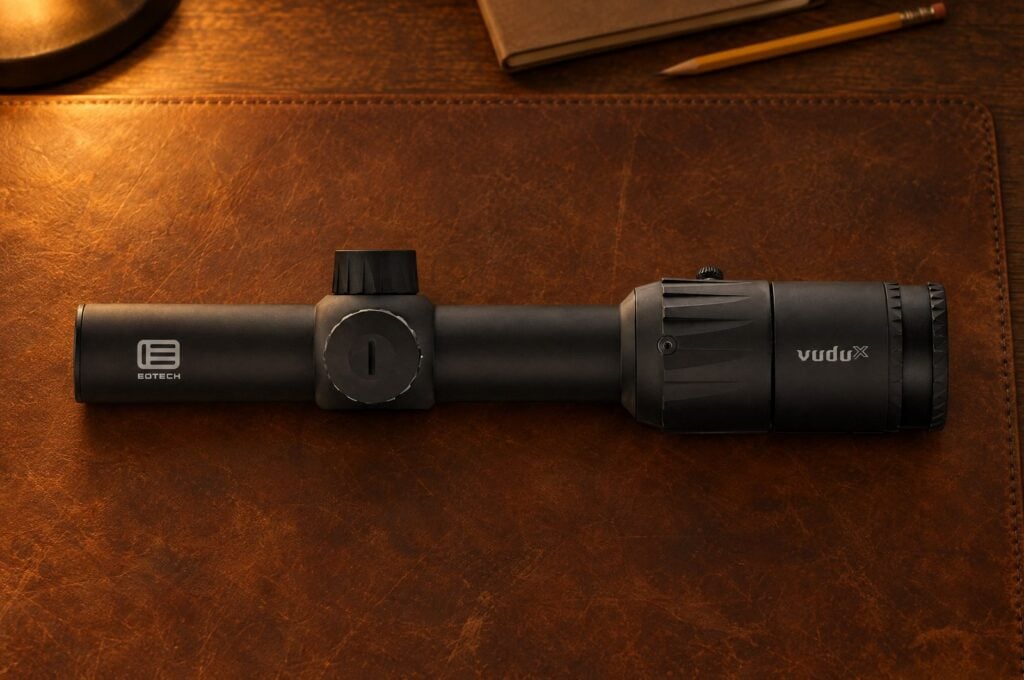
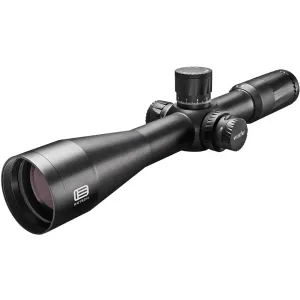
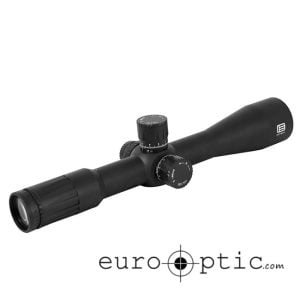
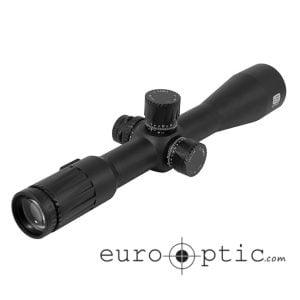
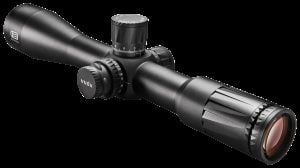
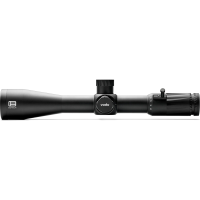
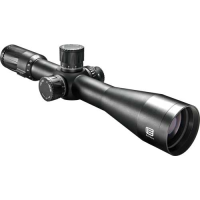
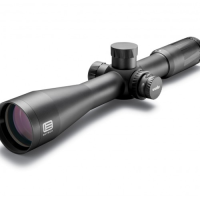
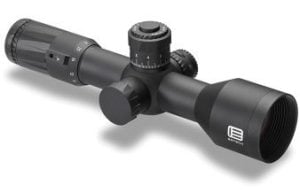
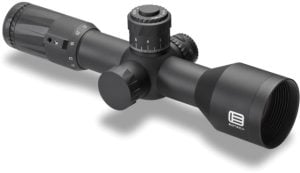
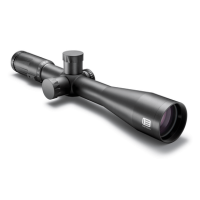
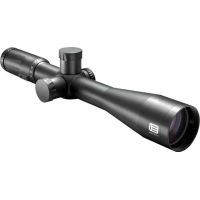
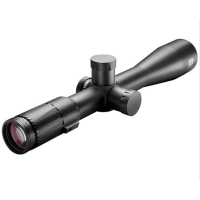
The Vudu X scopes are the ones most people can afford. Both are second focal plane on 30 mm tubes with capped turrets, a removable throw lever and flip caps in the box. Each comes with the DP1, a plain illuminated duplex, or the BD1, the same thing with drop marks. The Vudu X 1-6x24 is 17.8 ounces, the lightest full-size scope EOTech makes, and it was $759 at Brownells on our card. The same card showed it as low as $668.99 at Optics Planet. The Vudu X 2-12x40 adds side parallax and weighs 21.1 ounces. It’s a hunting scope, and a good one, at $815 at Brownells.
Glass and Reticles
EOTech calls its glass XC High-Density and says nothing more useful about it than that. What I can tell you is what I saw. Side by side with a Vortex Razor HD Gen II-E at 6x on a resolution chart at 100 yards, the Vudu 1-6x24 resolved the same line pair and showed a touch less color fringing on a white target against dark timber. The 1-10x28 holds its sharpness to about 8x. From 8x to 10x the center stays crisp and the outer fifth of the picture softens. The 5-25x50 is the best glass in the family: at 25x I could call .264 holes in white paper at 300 yards on a calm morning.
At 1x the low-power scopes are close to flat. Close, not perfect. With both eyes open there’s a faint bend at the very edge of the 1-8x24 when you pan fast across a doorway, and the 1-6x24 and 1-10x28 show less of it. None of the three gave me the fishbowl feeling cheap low-power scopes do.
The reticles are where the Vudu separates from the pack, and the choice is confusing because EOTech’s own 1-6x24 page gives the SR2 and SR3 the same description. They aren’t the same. Here is every current reticle in one place.
| Reticle | Found in | Unit | What it is for |
|---|---|---|---|
| SR1 | 1-6x24 FFP | MRAD | Speed ring around a hashed crosshair. The pick if you dial or hold in mils |
| SR2 | 1-6x24 FFP | MOA | Speed ring with a drop ladder EOTech calibrates for 7.62 mm M118LR to 600 yards |
| SR3 | 1-6x24 FFP | MOA | Speed ring with a drop ladder calibrated for 5.56 mm with a 75 grain bullet to 600 yards |
| HC3 | 1-8x24 SFP | MOA | Four hold marks under a 0.5 MOA illuminated dot. Reads true at 8x only |
| SR4 | 1-10x28 FFP | MOA | Clean duplex with a 1 MOA center dot |
| SR5 | 1-10x28 FFP | MRAD | Tree reticle with a 0.25 MRAD center dot inside a ring |
| SR5 DFG | 1-10x28 FFP | MRAD | The SR5 with a diffraction grating that lights only the dot and inner ring, far brighter |
| LE5 | 1-10x28 FFP | MRAD | The SR5 tree with an open center crosshair in place of the dot |
| HC1 | 3-9x32, 3.5-18x50 SFP | MOA | Hash reticle for hunting and general use |
| MD6 | 3-9x32 | MOA | 1 MOA hashes at 9x with heavier marks every 2.5 and 5 |
| MR5 | 3-9x32, 4-12x36 | MIL | Floating center dot over a holdover grid |
| MD5 | 4-12x36 FFP | MRAD | Clean mil grid for holds and wind |
| MD1 / MD2 | 3.5-18x50 FFP | MRAD / MOA | Hash crosshair, fully illuminated |
| MD3 / MD4 | 5-25x50 FFP | MRAD / MOA | Hash crosshair with stadia pulled back from a center dot |
| Horus H59, Tremor5 | 3.5-18x50 FFP, 5-25x50 | MRAD | Horus grids for holding elevation and wind without dialing |
| HC2 | 8-32x50 SFP | MOA | Fine target crosshair, 0.15 MOA dot at 32x, not illuminated |
| DP1 / BD1 | Vudu X | MOA | Illuminated duplex, plain or with drop marks |
If you’re new to the units, our MOA vs MRAD explainer covers them. The short version: buy the reticle that matches the turrets and the way you already think. On every Vudu whose manual I could read, EOTech pairs them, MRAD reticle with MRAD clicks and MOA with MOA. The one to ask a dealer about is the 3-9x32 with the MR5, a mil reticle on a scope EOTech describes as having quarter-minute turrets.
FFP vs SFP in Practice
In a first focal plane scope the reticle grows and shrinks with the target as you zoom. A mark that means 5 MOA at one power means 5 MOA at every power. That’s what you want for holding over at whatever magnification the shot allows, and it’s why the speed ring trick works: at 1x the ring is small and bold, at 6x it has grown past the edge of the picture and left the fine center behind.
In a second focal plane scope the reticle stays one size. It’s always easy to see, which hunters and 3-gun shooters like, but the marks only match their stated values at one magnification, the top one on every SFP Vudu. EOTech’s HC3 manual says so in plain words. The diagram shows what that does to the 1-8x24.
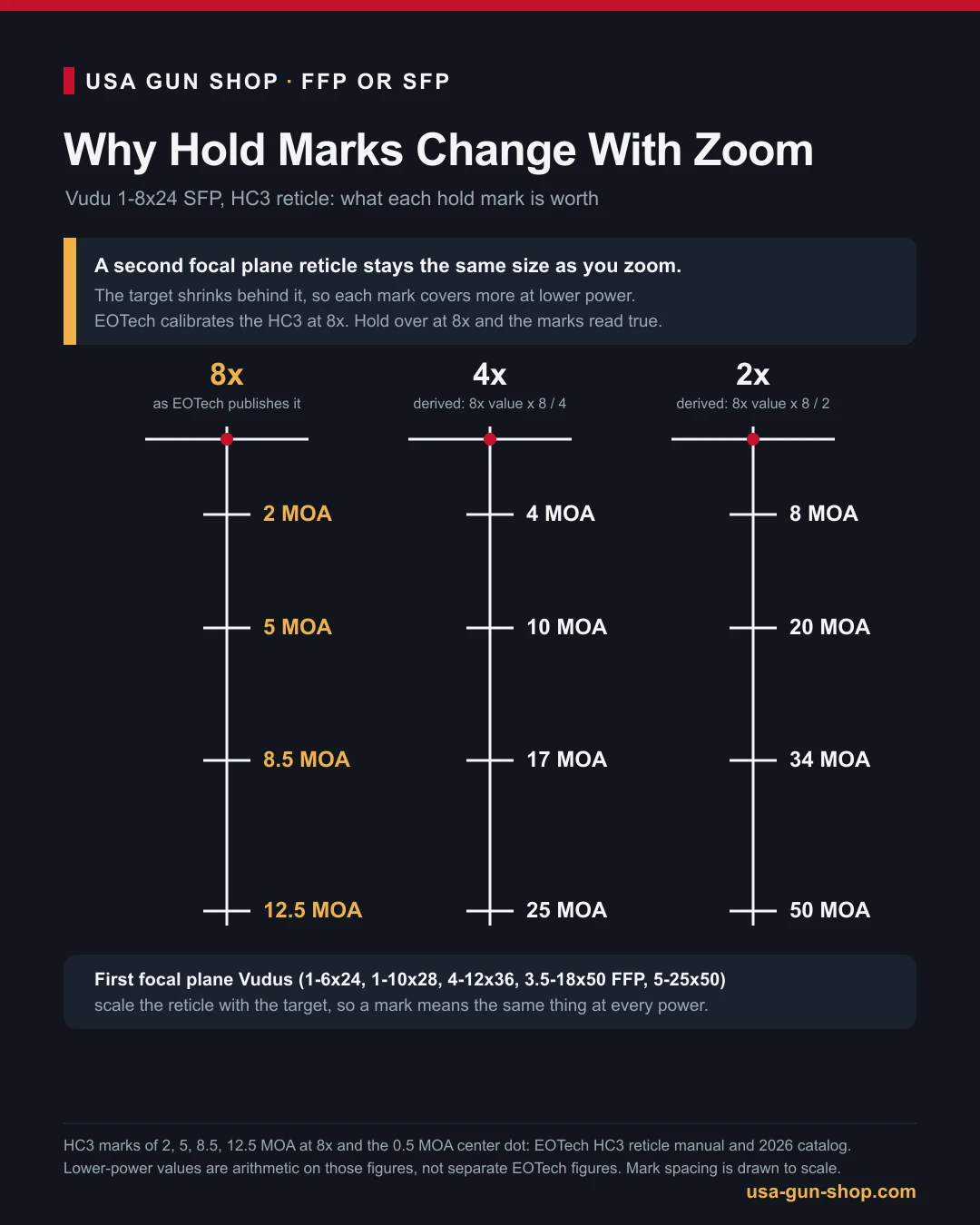
So on the 1-8x24, hold over at 8x or not at all. At 4x the mark you think of as 5 MOA is 10. I’ve watched a shooter miss a 300 yard plate by a foot and a half doing exactly this. The center dot is safe at any power because your zero doesn’t move.
Turrets and Tracking: Our Box Test
EOTech’s product pages don’t print click values or travel, and the biggest dealer listing for the 1-6x24 prints two different click values on the same page. The numbers are in the manuals, so here they are for every scope.
| Model | Turrets | One click | Per rotation | Total elevation | Total windage |
|---|---|---|---|---|---|
| 1-6x24 | Exposed | 0.2 MRAD (SR1) or 0.5 MOA (SR2, SR3) | 15 MRAD or 40 MOA | 29 MRAD or 100 MOA | 23 MRAD or 80 MOA |
| 1-8x24 | Capped | 0.25 MOA | 20 MOA | 100 MOA | 80 MOA |
| 1-10x28 | Locking elevation, capped windage | 0.1 MRAD (SR5, LE5) or 0.25 MOA (SR4) | 15 MRAD or 40 MOA | 29 MRAD or 100 MOA | 23 MRAD or 80 MOA |
| 3-9x32 | Capped | 0.25 MOA | Not published | Not published | Not published |
| 4-12x36 | Capped | 0.1 MRAD | 8 MRAD | 20 MRAD | 13 MRAD |
| 3.5-18x50 FFP | Exposed, zero stop | 0.1 MRAD (MD1, H59) or 0.25 MOA (MD2) | 10 MRAD or 25 MOA | 29 MRAD or 100 MOA | 23 MRAD or 80 MOA |
| 3.5-18x50 SFP | Capped | 0.25 MOA | 25 MOA | 100 MOA | 80 MOA |
| 5-25x50 | Locking elevation, zero stop | 0.1 MRAD or 0.25 MOA | 10 MRAD or 25 MOA | 29 MRAD or 100 MOA | 23 MRAD or 80 MOA |
| 8-32x50 | Capped | 0.125 MOA | 10 MOA | 100 MOA | 80 MOA |
| Vudu X 1-6x24 | Capped | 0.5 MOA | 30 MOA | 160 MOA | 160 MOA |
| Vudu X 2-12x40 | Capped | 0.25 MOA | 15 MOA | 80 MOA | 80 MOA |
A few things stand out. The 1-6x24 SR1 has 0.2 MRAD clicks, coarse for a mil scope, where the 1-10x28 uses the 0.1 MRAD you’d expect. The Vudu X 1-6x24 has 160 MOA of travel in both directions, more than any Vudu, because a simple scope with a small erector can afford it. The 4-12x36 has the least, 20 MRAD up and 13 across. And I can’t give you rotation or travel for the 3-9x32 because the manual link on EOTech’s support page returned a page-not-found error on October 13. Its product page says quarter-minute capped turrets and stops there.
I ran the same two tests on all five scopes I had. For the box, I fired one shot at the corner of a square at 100 yards, dialed up, fired, dialed right, fired, dialed down, fired, dialed left and fired a fifth shot that should land on the first. For the tall target I clamped the rifle, dialed a known amount of elevation and measured how far the reticle moved on a ruled board. Rifles were a 16-inch 5.56 AR, a 16-inch .308 AR and a 6.5 Creedmoor bolt gun, and the basics of sighting in a rifle scope apply to all of them.
| Scope | Box at 100 yd | Last shot from first | Tall target, measured of expected | Tracking |
|---|---|---|---|---|
| 1-6x24 FFP, SR3 | 20 MOA box | 0.3 in | 20 MOA: 20.8 in of 20.9 | 99.5 percent |
| 1-8x24 SFP, HC3 | 16 MOA box | 0.4 in | 20 MOA: 20.7 in of 20.9 | 99.0 percent |
| 1-10x28 FFP, SR5 | 5 MRAD box | 0.2 in | 10 MRAD: 35.8 in of 36.0 | 99.4 percent |
| 5-25x50 FFP, MD3 | 5 MRAD box | 0.2 in | 10 MRAD: 35.9 in of 36.0 | 99.7 percent |
| Vudu X 2-12x40, BD1 | 16 MOA box | 0.5 in | 20 MOA: 20.6 in of 20.9 | 98.6 percent |
Every one came back to zero inside the rifle’s own group, and every one tracked within a percent and a half. The 5-25x50 was the best and the Vudu X the least exact, which is the order the prices would predict. For a scope you zero once and hold with, any of them is more precise than you are.
Feel is a different matter. The clicks on the Japanese scopes are firm and evenly spaced, and quieter than a Nightforce. You feel them more than you hear them. The exposed turrets on the 1-6x24 don’t lock, and I found mine two clicks off after a day in a soft case. The 1-10x28 and 5-25x50 fix that with a push-pull lock that works. The zero stop on the 5-25x50 and 3.5-18x50 FFP is a ring held by three small set screws that you slide down against a pin. It takes a 1.5 mm hex key and five minutes, and once set it stops dead at zero.
Eye Box and Illumination in Daylight
Eye relief on the low-power three runs from about 3.2 to 4.1 inches by EOTech’s figures, and the eye box at 1x is generous. I could mount the rifle sloppy from a barricade and still find the ring. It tightens as you zoom, as every scope’s does. The 1-6x24 at 6x is easy. The 1-8x24 at 8x asks for a consistent cheek weld. The 1-10x28 is comfortable to 8x and fussy from there to 10x, where a quarter inch of head movement starts to shade the picture. That’s the price of 10x in a scope under 11 inches long, and the Vortex Razor Gen III I compared it with behaves the same way.
Now the illumination, because it’s the most argued-about thing on these scopes. The standard Vudu reticle is etched glass lit by an LED through ten settings, with a two hour auto off. On the top setting in open shade or under cloud, the red ring and dot stand out clearly. On a sunlit tan berm at one in the afternoon, the 1-6x24’s ring went from red to a dull maroon and then to plain black, and I was aiming with an etched black reticle. It still works. It just isn’t the glowing donut you see in the product photos. The Vudu X on its highest setting was about the same.
EOTech’s answer is the SR5 DFG on the 1-10x28. A diffraction grating throws all the light into the center dot and inner ring, and the difference is not subtle: against the same berm at the same hour the dot stayed a clean, bright red, close to what a holographic sight gives you. EOTech lists the black DFG at $2,159 against $1,939 for the standard SR5. If you shoot matches in summer or work outdoors, pay it. If you hunt at dawn and dusk, the standard reticle is all you need and the battery lasts longer.
Controls differ by family. The full-size Vudus use three rubber buttons on the left turret: on and off in the middle, up and down either side, and the scope comes back on at the setting you left. The 3-9x32 and 4-12x36 use a rotary dial, and EOTech gives about 300 hours from a CR2032 at setting 5 on those two. The Vudu X uses a dial with an off position between every setting.
Weight and Mounting
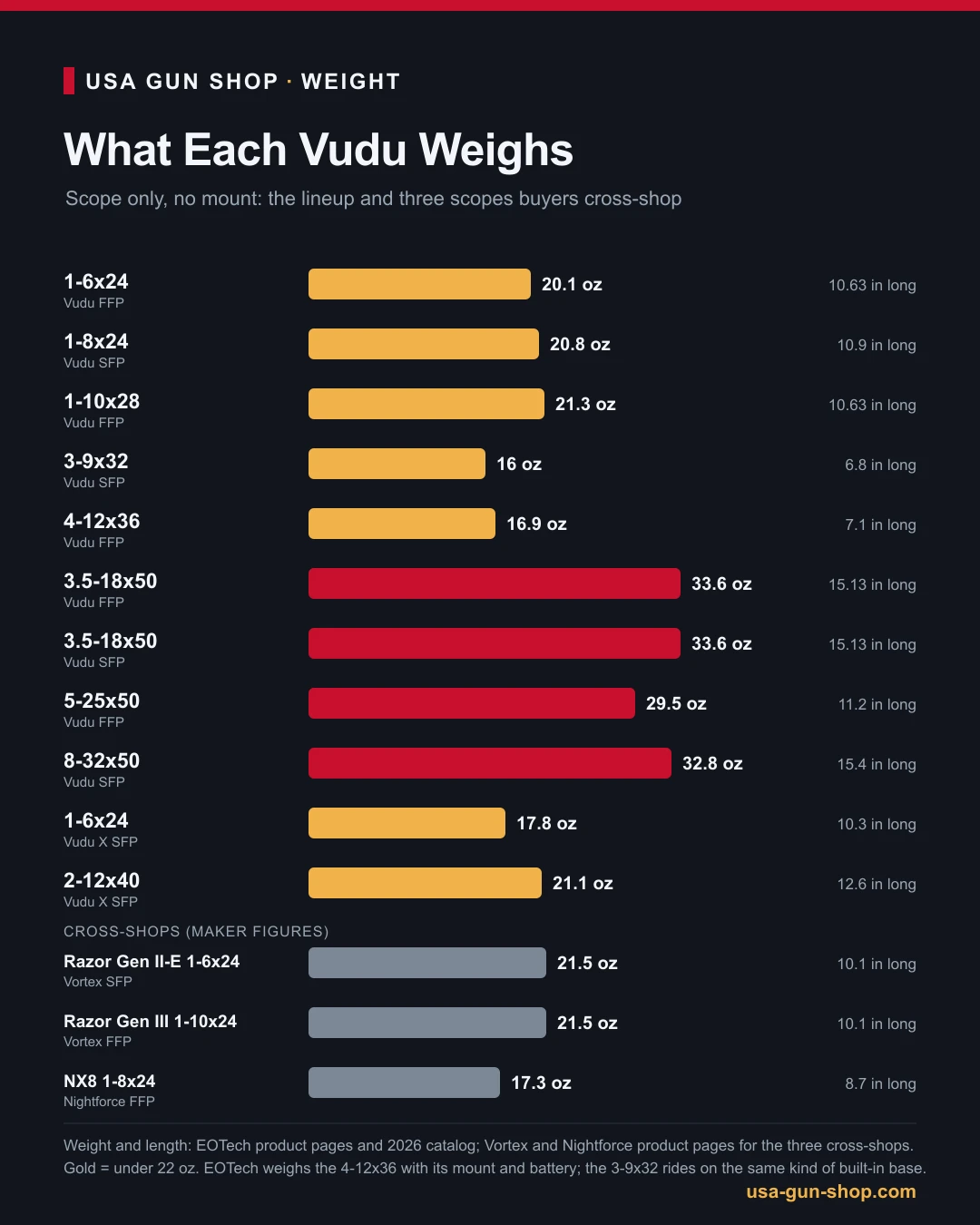
Vudus are compact and they are not light. The 1-6x24 is 20.1 ounces. The Nightforce NX8 1-8x24 gives you two more power at 17.3. The 1-10x28 is the exception: at 21.3 ounces it’s a hair lighter than the Vortex Razor HD Gen III 1-10x24 at 21.5, with a bigger objective. Add 6 to 8 ounces for a one-piece mount on anything but the two super shorts.
Ring size. The 1-6x24, 1-8x24 and both Vudu X scopes take 30 mm rings. The 1-10x28, both 3.5-18x50s, the 5-25x50 and the 8-32x50 take 34 mm. People buy the 1-10x28 assuming it shares a mount with the 1-6x24. It doesn’t.
Height. On an AR, a cantilever mount at 1.5 to 1.57 inches gives a normal cheek weld, and 1.93 suits a heads-up stance or passive night vision work. On a bolt gun with a rail, medium rings clear the 24 and 28 mm objectives easily and high rings are safer for the 50 mm scopes. Our guide to scope rings and mounts has current picks in both tube sizes.
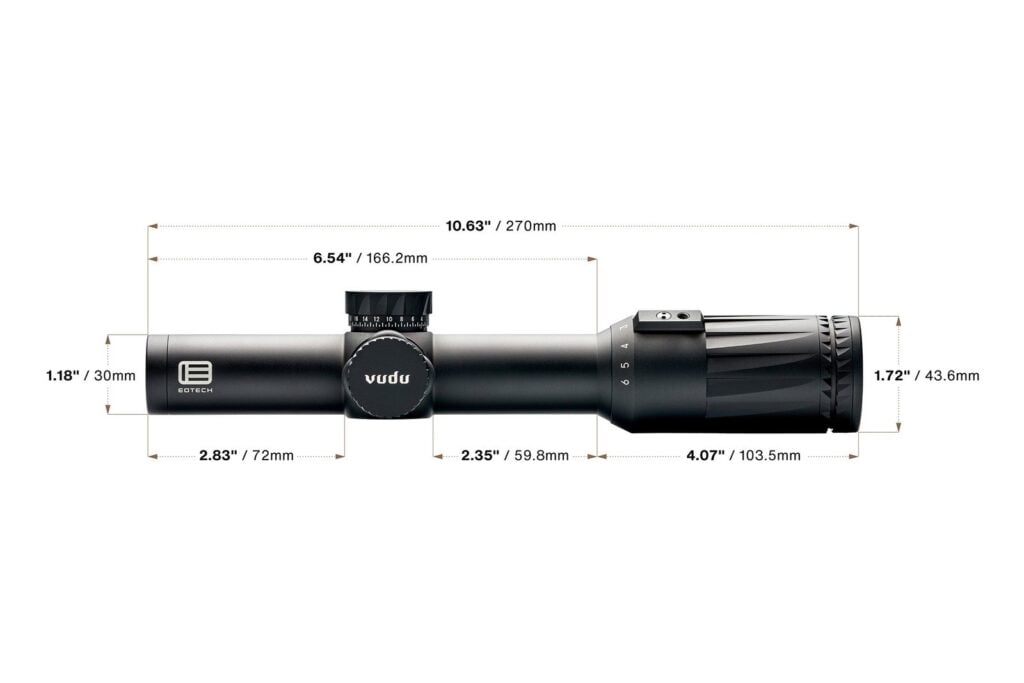
Ring spacing. EOTech publishes a dimension drawing for every scope, and it’s worth a look before you order a mount. The 1-6x24 has 2.83 inches of tube ahead of the turret block and 2.35 behind it, which fits every cantilever mount I own. The 5-25x50 is the tight one. Packing that much scope into 11.2 inches leaves little straight tube, so two-piece rings on a long action may not reach. Use a one-piece mount or a full-length rail.
The built-in mounts. The 3-9x32 sits 1.56 inches above the bore on its own base. For the 4-12x36, EOTech’s manual gives 65 inch-pounds for the half-inch cross-bolt nut and 17 to 19 inch-pounds for the base screws. For the full-size scopes EOTech tells you to use the ring maker’s torque figure, which is the right answer.
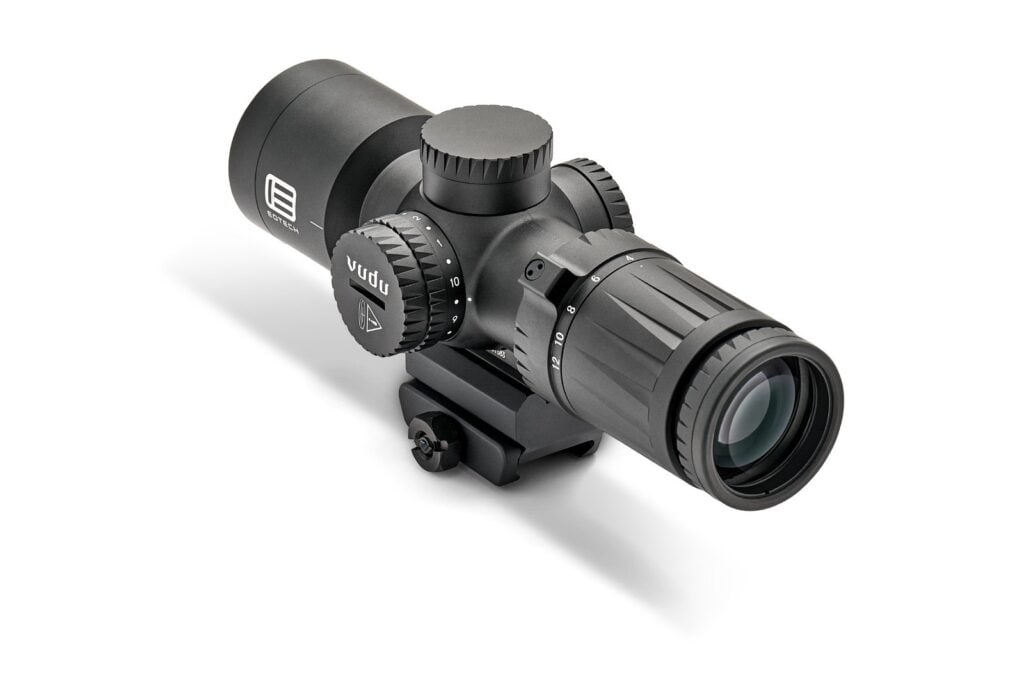
The throw lever. Every Vudu and Vudu X except the two super shorts ships with a threaded lever for the power ring. EOTech’s manual says finger tight with a drop of medium thread locker, and I’d follow it. Mine backed out on the .308 before I did.
Where EOTech’s numbers disagree. I checked every figure on this page against the product page, the manual and the 2026 catalog, and they don’t always match. The 1-8x24 is 10.9 inches and 20.8 ounces on the product page and in the catalog, and 10.6 inches and 21.3 ounces in its manual. Both 3.5-18x50 manuals say 14.8 inches where the pages say 15.13, and the SFP manual says 31 ounces where the page says 33.6. The 3.5-18x50 FFP page prints 34 mm as the objective diameter, which is the tube. The 8-32x50 manual gives a length that is plainly a misprint. I’ve used the figure two EOTech documents agree on each time. If a fraction of an inch matters for your mount, measure the scope.
Our Field Testing
The five scopes I shot were a 1-6x24 SR3, a 1-8x24 HC3, a 1-10x28 SR5, a 5-25x50 MD3 and a Vudu X 2-12x40 BD1. I also handled the 3-9x32 and the Vudu X 1-6x24 at a dealer’s counter and on his demo rifles, long enough to check eye relief and controls, not long enough to test.
1-6x24 on a 16-inch 5.56 AR. This one saw the most use: 420 rounds across four range days, mostly PMC X-TAC 55 grain with 60 rounds of Federal Gold Medal 77 grain. I zeroed at 50 yards for a 200 yard second crossing. With the 77 grain load the SR3 ladder was close without being exact. The 300 mark put me two inches high at 300 and the 500 mark four inches low at 500, about what you’d expect from a ladder cut for a 75 grain bullet and a longer barrel. Inside 50 yards at 1x the ring is as fast as anything with glass in it. I ran ten-yard failure drills with it and with an EXPS3 back to back and the split times were within five hundredths.
1-8x24 on the same AR. 300 rounds of 55 grain. On a 50 yard zero the HC3 marks lined up well: the first mark for 300 yards, the second for 400, and the third rang a 12-inch plate at 500 four times in five. All of that at 8x. I confirmed the diagram above the hard way by holding the second mark at 4x on the 400 yard plate and watching the round sail over it.
1-10x28 on a 16-inch .308 AR. 180 rounds of Federal Gold Medal Match 168 grain. This was the combination that made me like the line. At 1x I shot the same close drills as the 1-6x. At 10x I held 3.1 mils on the SR5 tree and put eight of ten on a 10-inch plate at 600 yards in a quartering wind. The scope held zero through all of it, including two trips in a truck bed rack.
5-25x50 on a 6.5 Creedmoor bolt gun. 160 rounds of Hornady 140 grain ELD Match on steel from 300 to 800 yards. Parallax marks matched the distances closely enough to set by number and fine-tune by eye. I dialed for every target, 5.6 mils at 800, and came back to the zero stop each time without a miss I could blame on the scope. Mirage, yes. The scope, no.
Vudu X 2-12x40 on a .308 hunting rifle. 80 rounds of 150 grain soft points. The glass is a step behind the Japanese scopes in the last fifteen minutes of light and you’d need them side by side to see it. The power ring is stiff. Without the throw lever I needed my whole hand. With it, fine.
Weather. The 1-6x24 spent a night in a chest freezer and went straight into a warm, humid garage. The outside lenses fogged for a minute. Nothing fogged inside. I ran the .308 and the 1-10x28 through an hour of steady rain with no change in zero or image.
What I Don’t Like
- Illumination on everything but the DFG. Covered above. It’s the one place a Vudu loses to a cheaper scope with a fiber dot.
- The 1-6x24 turrets don’t lock. Exposed, easy to bump, no zero stop. On a scope most people will hold with and never dial, capped turrets would be better.
- The 1-8x24 comes one way. One reticle, MOA only. If you think in mils, EOTech has nothing for you between the 1-6x and the 1-10x.
- Coarse clicks on the SR1. 0.2 MRAD is 0.72 inch at 100 yards. Fine for a carbine, too coarse for a precise zero.
- Weight. The 3.5-18x50 at 33.6 ounces is heavy for a hunting rifle, and the 1-6x24 gives up three ounces to the lightest scopes in its class.
- The paperwork. A buyer shouldn’t have to read three documents to learn how long a scope is, or find a ten-year warranty badge on a lifetime-warranty product.
Which Vudu for Which Job
| Your rifle or use | Model | Why |
|---|---|---|
| Duty or home-defense carbine | 1-6x24 FFP, SR3 or SR1 | Fastest at 1x, simplest to run, longest record. $1,329 |
| One AR for everything out to 600 yards | 1-10x28 FFP, SR5 | Same weight class as the 1-6x with four more power. $1,835.99 |
| 3-gun and action matches | 1-8x24 SFP, or the 1-10x28 SR5 DFG | Constant dot size, or the brightest dot in the line. $1,339 |
| Designated marksman rifle, .308 gas gun | 1-10x28 FFP or 3.5-18x50 FFP | The 1-10x if it moves, the 3.5-18x if it sits. $1,835.99 |
| PRS on a budget | 5-25x50 FFP, MD3 | Tracks, locks, has a zero stop, and costs less than the usual match scopes. $2,155.99 |
| Bullpup, PCC or very short rifle | 3-9x32 or 4-12x36 | Seven inches long with the mount built in. $999 |
| Hunting rifle | Vudu X 2-12x40 or 3.5-18x50 SFP | Capped turrets and an always-visible reticle. $815 |
| First LPVO, tight budget | Vudu X 1-6x24 | The lightest Vudu and the cheapest. $759 |
| Benchrest, F-Class, prairie dogs | 8-32x50 SFP | Eighth-minute clicks and a fine dot. $1,835 |
For the wider field at every price, our best LPVO scopes and best AR-15 LPVO roundups rank the alternatives, and the best PRS scopes guide covers the long-range end.
Vudu vs Vudu X
The fair comparison is the pair that share a magnification range: the Vudu 1-6x24 FFP and the Vudu X 1-6x24 SFP. On our cards they were $1,329 and $759, a gap of $570.
| Vudu 1-6x24 FFP | Vudu X 1-6x24 SFP | |
|---|---|---|
| Made in | Japan | Philippines |
| Focal plane | First | Second |
| Reticles | SR1, SR2, SR3 speed ring | DP1 or BD1 duplex |
| Turrets | Exposed, 0.2 MRAD (SR1) or 0.5 MOA (SR2, SR3) | Capped, 0.5 MOA |
| Total elevation | 29 MRAD or 100 MOA | 160 MOA |
| Weight | 20.1 oz | 17.8 oz |
| Field of view at 100 yd | 102.4 ft to 16.7 ft | 110 ft to 19 ft |
| Illumination control | Push buttons, 10 settings | Rotary dial, off between settings |
| Eyepiece | One-piece, whole eyepiece turns | Separate power ring |
| Warranty | No BS limited lifetime | No BS limited lifetime |
| Price on our cards | $1,329 | $759 |
The Vudu X is lighter, sees a little wider, has more travel and costs a little over half as much. What it doesn’t have is the thing the Vudu is known for. There’s no speed ring. The DP1 and BD1 are ordinary duplex reticles with a lit center, good ones, and nothing you can’t get elsewhere. The glass is a notch down too, though you have to look for it.
So buy the Vudu X because you want a well-made scope with a lifetime warranty at that price. Buy the Vudu because you want the EOTech reticle and the Japanese glass. If the reason you’re reading this page is the ring, the X will disappoint you.
Vudu vs the Competition
Three scopes come up whenever someone prices a Vudu. Each is on its maker’s site as a current product as of October 13, and the specs below are each maker’s own.
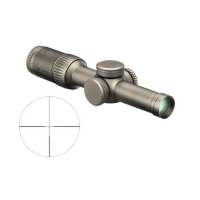
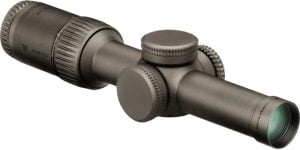
Vortex Razor HD Gen II-E 1-6x24
This is the scope the 1-6x24 has been measured against since the day it launched. The Razor is second focal plane with capped turrets, half-minute clicks and 150 MOA of travel, on a 30 mm tube at 21.5 ounces. Vortex gives it a field of view of 115.2 feet at 1x, which is 12.8 feet wider than the Vudu, and 4 inches of eye relief. Vortex lists it at $2,399.99. On our card it was $1,274.99 at Brownells, $54.01 under the Vudu 1-6x24.
On paper and at the register the Razor wins. In the hand it’s closer. The Razor’s dot is brighter in daylight and its view at 1x is wider. The Vudu is first focal plane, an ounce and a half lighter, and its ring is faster for me on close targets than the Razor’s small dot. If you never hold over, buy the Razor. If you want the ladder to be right at 3x or 4x, buy the Vudu.
Vortex Razor HD Gen III 1-10x24
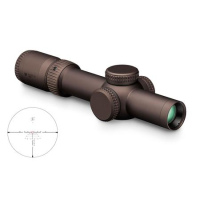
The Gen III is the 1-10x28’s direct rival: first focal plane, 34 mm tube, 21.5 ounces, 10.1 inches, 0.1 MRAD or quarter-minute clicks with 30 MRAD or 120 MOA of travel. Vortex lists it at $3,999.99. Our card had it at $2,499.99 at Brownells, which is $664 more than the Vudu 1-10x28.
Through the glass I’d call them equals, with the Razor a touch brighter at 10x and the Vudu showing a slightly bigger picture through its 28 mm objective. Field of view is a wash, 116.0 feet for the Razor and 116.6 for the Vudu at 1x and 11.7 for both at 10x. The Razor’s illumination beats the standard SR5 and loses to the DFG. At that price gap, the Vudu is the better buy and it isn’t close.

Nightforce NX8 1-8x24
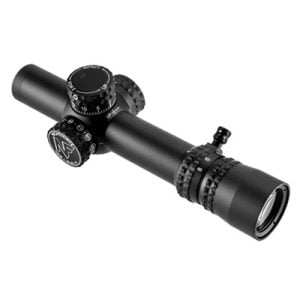
The NX8 is what the 1-8x24 would be if EOTech had made it first focal plane. It’s 8.7 inches long and 17.3 ounces with capped turrets, more than two inches shorter and three and a half ounces lighter than the Vudu, with a daylight-visible dot, a choice of MOA or mil reticles and fixed parallax at 137 yards. It was $2,100 at Brownells on our card, $761 more than the Vudu 1-8x24.
The NX8 is the tougher, lighter, brighter scope, and its eye box at 8x is tighter than the Vudu’s by a clear margin. I can get behind the Vudu faster. If the rifle gets carried more than it gets shot, buy the Nightforce. If you shoot stages or want the more forgiving view, the Vudu saves you money and is easier to use. We’ll have a full NX8 review up soon.
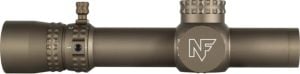
Verdict: The Vudu is rarely the lightest or the brightest in its class and it’s often the best value among the Japanese-made options. For more names, see our best rifle scopes guide, and for the same sort of deep review on a thermal, our AGM Rattler V2 review.
Who Should NOT Buy an EOTech Vudu
- Shooters who need a daylight-bright dot and won’t pay for the DFG. The standard illumination washes out in hard sun. Buy the Vortex Razor HD Gen II-E 1-6x24, which is brighter and cost less on our cards.
- Weight counters. If the rifle is a lightweight build, the Nightforce NX8 1-8x24 gives you more magnification at 17.3 ounces.
- Mil shooters who want 1-8 power. The Vudu 1-8x24 is MOA only. Buy the Vudu 1-10x28 with the SR5, or the NX8 with its mil reticle.
- Buyers on a tight budget who want a first focal plane LPVO. The Vudu X is second focal plane only. The Vortex Strike Eagle 1-10x24 FFP in our Strike Eagle review is the cheaper way to get one.
- Anyone who mainly shoots inside 50 yards. A scope is the wrong tool. An EOTech holographic sight with a magnifier is lighter and faster, and our Trijicon vs EOTech comparison covers the two best-known makers.
Warranty, Battery and What Is in the Box
Warranty. This needs clearing up, because EOTech’s own site muddies it. Every Vudu and Vudu X product page shows a ten-year warranty badge beside the buy button. That badge belongs to EOTech’s holographic sights, whose ten-year Prestige warranty says in writing that it does not cover Vudu riflescopes. The warranty that does cover them is on EOTech’s warranty page and in every manual: the No BS limited lifetime warranty. EOTech will repair or replace the scope free of charge, you don’t have to be the original owner, and you don’t need proof of purchase. It excludes theft, loss, abuse, cosmetic damage and repairs done by anyone else. That is as good as Vortex’s and it follows the scope if you sell it.
Battery. One CR2032, in a cap on the left turret that opens without a tool. The illumination turns itself off after about two hours with no button pushed. EOTech recommends taking the battery out for storage.
In the box. The full-size Vudus come with the scope, a throw lever, the operator and reticle manuals, a lens cloth and a battery. The 5-25x50 and 8-32x50 add a sunshade. The 3-9x32 and 4-12x36 swap the throw lever for lens covers, and the Vudu X scopes include flip caps. No rings or mount with any of them except the two with a built-in base.
Export. EOTech’s product pages state that export is controlled under the US Export Administration Regulations and that the company won’t support a scope exported without authorization. Don’t ship one abroad.
Price and Where to Buy
EOTech sells every scope direct at list price, from $799 for the Vudu X 1-6x24 to $2,519 for the 5-25x50 with the Tremor5. Dealers sit well under that. On October 13 our cards showed the 1-6x24 at $1,329 against a list of $1,479, the 1-10x28 at $1,835.99 against $1,939, and the 5-25x50 at $2,155.99 against $2,279. So don’t buy direct unless you want the EFLX package for the 3-9x32, which EOTech sells at $1,429.
The price on each card is what one of the five big retailers we headline charges when one of them stocks the scope, and those five tend to hold EOTech’s advertised price. Smaller dealers further down the same card often run a few hundred dollars under it, so read the whole list before you click. Each scope has its own live card above: 1-6x24, 1-8x24, 1-10x28, 3-9x32, 4-12x36, 3.5-18x50 FFP, 3.5-18x50 SFP, 5-25x50, 8-32x50, Vudu X 1-6x24, Vudu X 2-12x40.
Three things to check on any listing. Match the reticle and the part number to the table in this review, because a Tremor3 or a 2.5-10x44 is old stock. Skip demo, open box and display units unless the saving is real, though the lifetime warranty does follow the scope. And confirm the tube size before you order a mount: 30 mm for the 1-6x, 1-8x and Vudu X, 34 mm for the rest.
Final Verdict
The EOTech Vudu line is better than its reputation and more confusing than it needs to be. The glass is excellent, the turrets track, the warranty is as good as any, and the speed ring reticles do something no rival quite copies. Against that, the standard illumination is ordinary, the scopes run heavy, and EOTech’s own documents can’t agree on the details.
Buy the 1-10x28 FFP if you want one scope for one rifle, and get the DFG reticle if you shoot in bright sun. Buy the 5-25x50 if you want a compact precision scope for less than the usual names. Buy the Vudu X 1-6x24 if the budget stops under a thousand dollars. Skip the 1-8x24 unless you know you want a second focal plane MOA scope, and skip the 3.5-18x50 if the rifle has to be carried far.
Final Score: 8.4/10. A premium scope family with one standout reticle idea, sold at dealer prices that make it a fair deal.
Sources: EOTech product pages, user manuals, reticle manuals, warranty page and 2026 catalog (EOTech product manuals), EOTech’s 2018 Golden Bullseye announcement, and the Vortex and Nightforce product pages for the three competing scopes.
FAQ: EOTech Vudu
Is the EOTech Vudu worth the money?
Yes, at dealer prices. The EOTech Vudu scopes are made in Japan, tracked within one percent in our box tests and carry a transferable lifetime warranty. The eleven current models sold from $759 to $2,155.99 on our price cards on October 13. The 1-10x FFP is the one I'd buy for a single rifle.
What is the difference between the EOTech Vudu and the Vudu X?
The Vudu is EOTech's premium line, made in Japan, with first and second focal plane models and the speed ring reticles. The Vudu X is the lower-priced line, made in the Philippines, second focal plane only, with capped turrets and duplex reticles. Both carry the same lifetime warranty. On our cards the Vudu X 1-6x was $759 and the Vudu 1-6x FFP was $1,329.
Where are EOTech Vudu scopes made?
EOTech's own spec tables list every Vudu riflescope as made in Japan and both Vudu X scopes as made in the Philippines. EOTech itself is based in Michigan, where it builds its holographic sights.
Is the EOTech Vudu illumination daylight bright?
Not on the standard reticles. In shade or under cloud the red ring and dot are easy to see on the top setting. Against a sunlit berm at midday the standard illumination washed out for me and I was aiming with the black etched reticle. The exception is the SR5 DFG on the 1-10x FFP, whose diffraction grating keeps the center dot bright in full sun.
What warranty does the EOTech Vudu have?
The No BS limited lifetime warranty. EOTech repairs or replaces a Vudu or Vudu X free of charge, you do not have to be the original owner and you do not need proof of purchase. The ten-year warranty badge shown on EOTech's product pages is the holographic sight warranty, which excludes Vudu riflescopes.
Which EOTech Vudu reticle should I choose?
Match the reticle to your units and your cartridge. On the 1-6x FFP the SR1 is MRAD, the SR2 has a 7.62 drop ladder and the SR3 has a 5.56 drop ladder. On the 1-10x FFP the SR5 is the mil tree most people want and the SR5 DFG is the bright version. The 1-8x SFP comes only with the HC3 in MOA, which reads true at 8x.
Is the EOTech Vudu better than the Vortex Razor?
It depends on the pair. The Vortex Razor HD Gen II-E 1-6x is brighter, has a wider view and was $1,274.99 on our card against $1,329 for the Vudu 1-6x FFP, but it is second focal plane. The Vudu 1-10x FFP matched the Razor HD Gen III 1-10x for glass in my testing and cost $664 less on our cards.
What size rings does an EOTech Vudu need?
The Vudu 1-6x and 1-8x and both Vudu X scopes have 30 mm tubes. The 1-10x, both 3.5-18x scopes, the 5-25x and the 8-32x have 34 mm tubes. The 3-9x and 4-12x need no rings because they have a built-in mount. On an AR, a one-piece cantilever mount 1.5 to 1.93 inches high suits the low-power models.
5,189+ Gun & Ammo Deals
Updated daily from 200+ top retailers. Filter by category, caliber, action type, and price.
Related Guides