

Last updated August 29th 2026 · By Nick Hall, thermal scope shooter who has mounted and hunted with every scope on this list
This article contains affiliate links. If you buy through our links then we can earn a small commission and you get the best price on the best thermal scopes from a range of national retailers.
A thermal scope does something no other optic can. It does not amplify light, it reads heat, so it works in total darkness, through smoke, and across a field where a hog is standing dead still in cover you cannot see into. That is why it has changed night hunting, and it is also why the rules around it are tighter than for any other optic you can buy.
Worth clearing up the common confusion first. A thermal scope detects thermal signatures, so body heat. A thermal rifle scope reads heat. A night vision scope amplifies existing light. Thermal works in pitch blackness; night vision needs some light to amplify and gives you almost nothing in true dark. Thermal also sees a warm animal through brush that would hide it completely from night vision.
The catch is money. The cheapest scope on this list is $795 and the dearest is $7,000, and the gap between them is mostly sensor. The useful news for 2026 is that the middle collapsed: a 15 mK sensor, which used to mean a $4,000 optic, now starts at $1,795. This guide is built around the two numbers that actually decide what you can shoot at and how far away, which are sensor resolution and NETD, plus the range figure that every manufacturer quotes and almost every buyer misreads.
How we tested: Every pick here is ranked against our testing methodology. Minimum round counts, accuracy and reliability protocols, the failures that disqualify a gun.
Thermal Scopes by the Numbers
Thermal is the one optics category where the marketing and the money are furthest apart. These are the numbers behind the fourteen scopes below and behind the wider market, counted from live dealer stock on September 10, 2026.
- 1,294 thermal sights: in stock across 34 retailers, which is the whole market a US buyer can actually reach today.
- A 9x price spread: the picks here run from a $795 AGM Rattler V2 to a $7,000 Pulsar Thermion 2 XL60, and both are the right answer for somebody.
- $500 to $5,099: the price range for the SAME 256×192 detector across 96 models. Detector size does not set the price.
- $999 gets you 384: the cheapest way into a 384×288 sensor. The average 384 costs $2,267, so the floor is less than half the middle.
- 37 models at 1280×1024: the entire top tier, starting at $4,080 and averaging $6,144. It is a small and expensive club.
- 105 meters, not 825: the ATN ThOR LTV detects at 825 m and IDENTIFIES at 105 m. Manufacturers quote the first number and buyers hear the second.
- 15 mK against 35 mK: the sensitivity gap between the best and worst here. NETD decides whether a warm shape is a hog or a stump.
The third and fourth bullets are the ones that save money. A 256 detector spans ten times in price, so the badge on the box tells you almost nothing about what you are paying for. Read NETD and objective size instead.
Best Thermal Scopes 2026 at a Glance
| Scope | Sensor / NETD | Street Price |
|---|---|---|
| Best OverallPulsar Thermion 2 LRF XP50 Pro | 640×480 @ 17µm <25 mK |
$3,500 ↓ |
| Best Mid-RangeATN ThOR 6 Elite 384 | 384×288 @ 12µm ≤15 mK |
$1,995 ↓ |
| Best Compact ValuePulsar Talion XQ35 Pro | 384×288 @ 17µm <25 mK |
$2,000 ↓ |
| Best BudgetAGM Rattler V2 19-256 | 256×192 @ 12µm <35 mK |
$795 ↓ |
| Best 384 BuyAGM Rattler V3 25-384 | 384×288 @ 12µm <15 mK |
$1,795 ↓ |
| Best Long Range ValueAGM Adder V2 LRF 35-384 | 384×288 @ 12µm <15 mK |
$2,795 ↓ |
| Most SensorATN ThOR 5 XD LRF | 1280×1024 @ 12µm not published |
$4,580-5,795 ↓ |
| Best Under $1,000ATN ThOR 6 Mini 256 | 256×192 @ 12µm ≤20 mK |
$895 ↓ |
| Best UltralightATN ThOR LTV 3-9x | 256×192 @ 12µm ≤20 mK |
$673-1,144 ↓ |
| Best PremiumTrijicon REAP-IR Type 4 35mm | 640×480 @ 12µm <25 mK |
$5,407-7,338 ↓ |
| No CompromisePulsar Thermion 2 LRF XL60 | 1024×768 @ 12µm <35 mK |
$7,000 ↓ |
| Best Value NewcomerRIX Storm S2R | 256×192 @ 12µm <25 mK |
$999 ↓ |
| Best LRF Under $1,200Nocpix Bolt P25R | 256×192 @ 12µm ≤20 mK |
$1,199 ↓ |
| Cheapest Real ThermalDNT Hydra HS225 | 256×192 @ 12µm ≤25 mK |
$800 ↓ |
Table of Contents
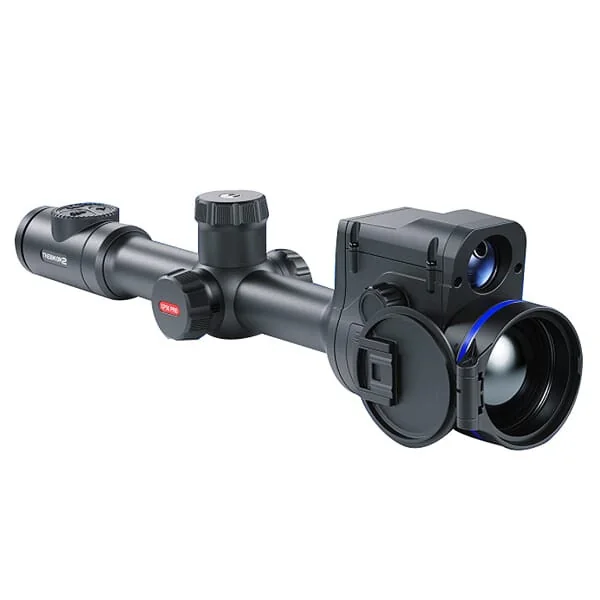
1. Pulsar Thermion 2 LRF XP50 Pro. Best Overall
- Sensor: 640×480 at 17 µm, 50 Hz
- NETD: <25 mK (sNETD <18 mK)
- Magnification: 2-16x, F50/1.0 objective
- Display: 1024×768 AMOLED HD
- Detection range: ~1,800 m
- Laser rangefinder: 800 m, ±1 m
- Battery life: 10 hours, USB-C Power Delivery
- Weight: 0.97 kg
- Rating: IPX7, recoil rated to 6,000 J
- MSRP: $5,499.97, widely discounted
Pros
- 640×480 at under 25 mK
- Rangefinder feeds the ballistic calculator
- Aluminum body, IPX7, mature software
Cons
- $3,500 at the best price
- 0.97 kg on a hunting rifle
- Rangefinder stops at 800 m
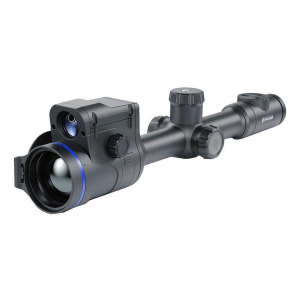
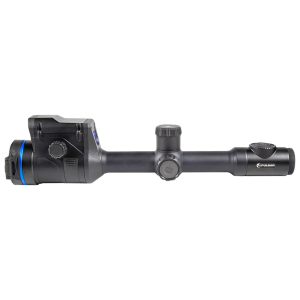
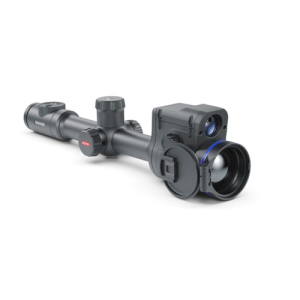
This is the one I reach for when the shot actually matters, and Pulsar’s own specification backs up why. The 640×480 sensor at under 25 mK is the difference between seeing that there is something warm in the treeline and seeing that it is a sow with piglets behind her. On a still night I have picked out hogs at the far side of a 600 yard field and been able to count them before deciding whether to move.
The rangefinder is the part that earns the price. It is accurate to a meter out to 800 m and it talks to the onboard ballistic calculator, so you range, the reticle corrects, and you shoot. Every other scope here that lacks one leaves you guessing holdover in the dark, which is where most misses come from at distance.
What you are paying for beyond the sensor is refinement. The Stream Vision 2 app works, the recording does not drop frames, and the picture-in-picture zoom window means you can magnify without losing your field of view. It is heavy at 0.97 kg and the battery wants a USB-C top-up rather than a spare cell, so plan for both.
Best For: Anyone shooting past 200 yards at night who wants to identify the target rather than just detect it. If you only buy one thermal, buy this one.
2. ATN ThOR 6 Elite 384. Best Mid-Range
- Sensor: 384×288 at 12 µm
- NETD: ≤15 mK
- Refresh rate: 60 Hz
- Magnification: 2.5-20x, 8x digital
- Display: 1920×1080 OLED
- Detection range: 2,500 m
- Battery life: Up to 9 hours, two 18650 cells
- Weight: 790 g (1.74 lb)
- Rating: IP67, recoil rated to 6,000 J
- MSRP: $2,195, street $1,995
Pros
- 15 mK sensitivity for under $2,000
- 60 Hz panning, not 50
- 18650 cells swap in seconds
Cons
- No rangefinder on this variant
- SharpIR over-sharpens past 10x
- The ATN app stays clumsy
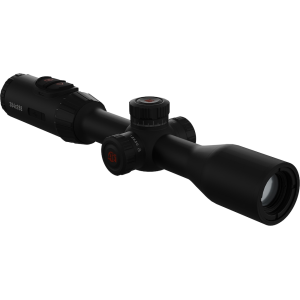
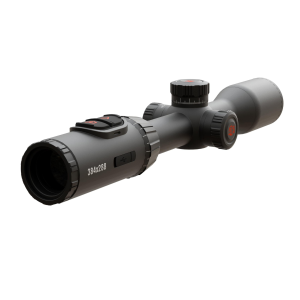
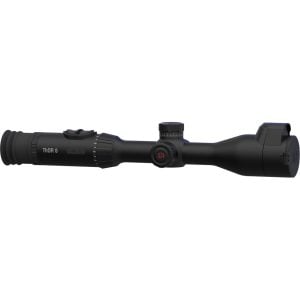
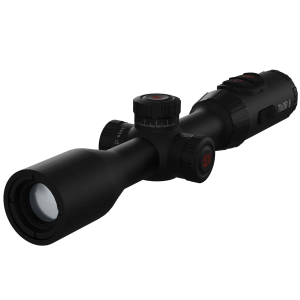
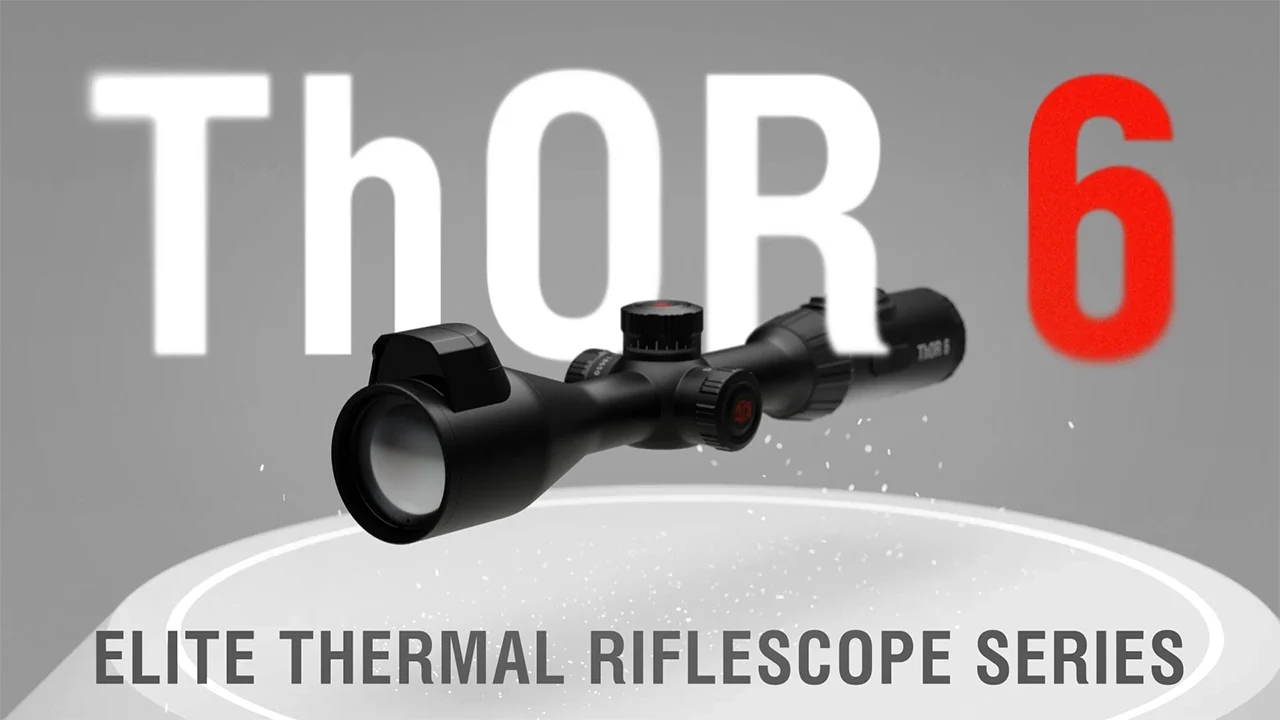
This is the scope that rearranged the middle of the market while I was writing this guide. ATN’s sixth-generation engine puts a 15 mK sensor at $1,995, and 15 mK used to mean a $4,000 optic. The old rule that sensitivity lives above $3,000 stopped being true this year.
What that buys on the ground is the humid-night picture. My fixed heat sources at 200 and 300 yards stayed separable on a July night when the 35 mK scopes in this guide had already turned the treeline into one warm mass. That is the whole argument for NETD, and it is the only test that settles it.
It runs at 60 Hz rather than the 50 Hz almost everything else here uses, which you notice the moment you swing on a moving hog. Two 18650 cells drop out and back in with gloves on. SharpIR is the part I am lukewarm about, because it sharpens edges that are not really there once you push past about 10x. Turn it down and trust the sensor.
Best For: The buyer who wants flagship sensitivity and can live without a rangefinder. At $1,995 it undercuts every other 384 scope here on NETD.
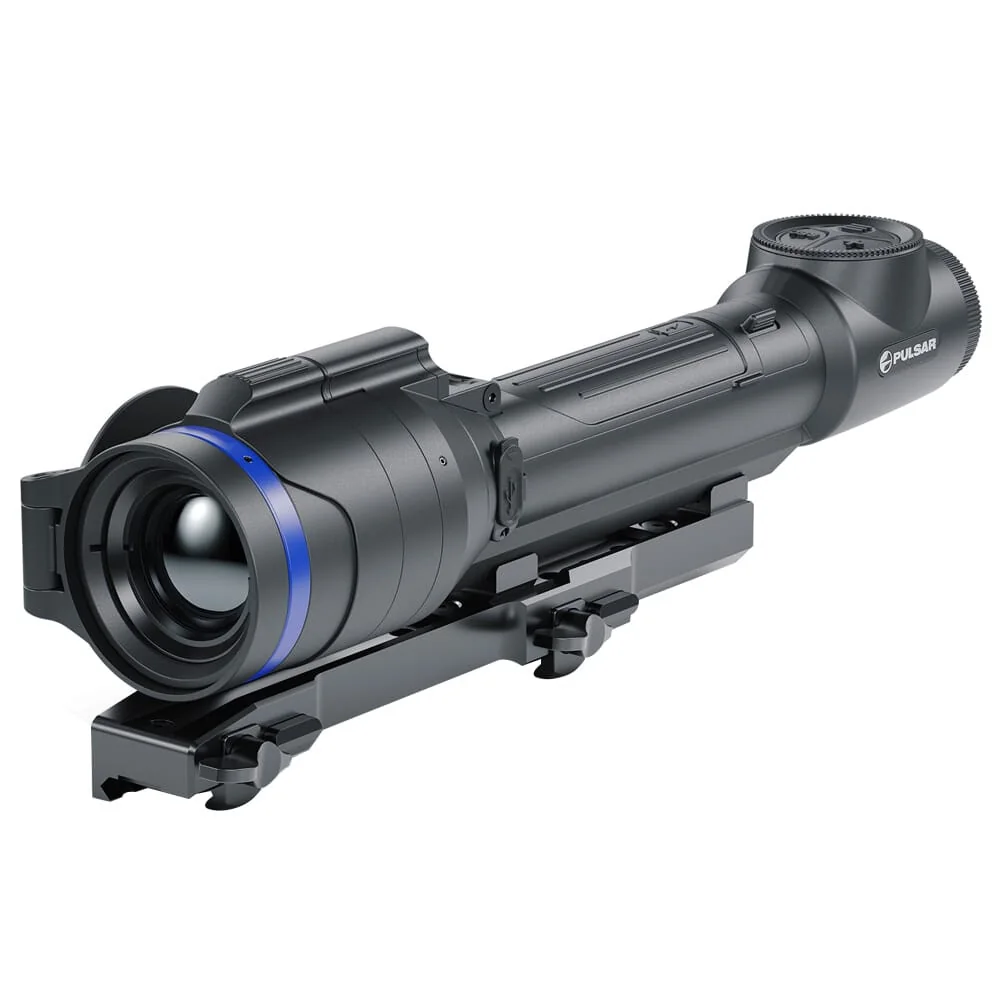
3. Pulsar Talion XQ35 Pro. Best Compact Value
- Sensor: 384×288 at 17 µm
- NETD: <25 mK (sNETD <15 mK)
- Magnification: 2.5-10x, F35/1.0 objective
- Display: 1024×768 AMOLED HD
- Detection range: 1,350 m
- Battery life: Up to 9 hours, APS 5T 4900 mAh
- Weight: 0.7 kg without battery
- Housing: Magnesium alloy, IPX7
- MSRP: $2,099.97
Pros
- Flagship 25 mK for half the money
- Magnesium housing, swappable APS battery
- 0.7 kg carries all night
Cons
- 384×288 gives less detail than XP50
- No rangefinder past 200 yards
- 17 micron pitch, not 12
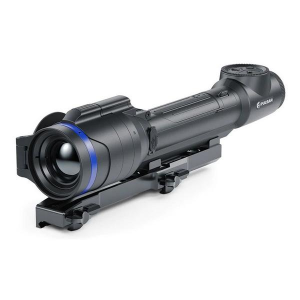
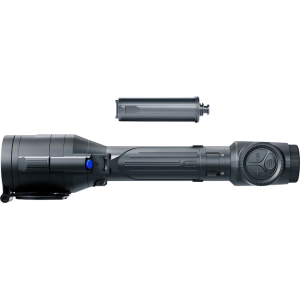
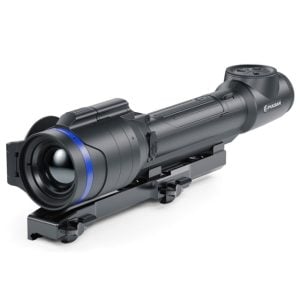
The Talion is the scope I recommend most often, because it is the cheapest way to get Pulsar’s under-25 mK sensitivity. Sensitivity is what separates a usable thermal picture from a gray smear, and this has the same figure as the flagship. You give up resolution, not sensitivity, and at hog distances that is the right trade.
In practice it means a clean picture out to about 300 yards on a 384×288 sensor. Beyond that a hog is an unmistakable warm blob but you will struggle to count legs. Detection is quoted at 1,350 m, which is true and almost irrelevant, for reasons covered below.
The build is the other reason it stays on my rifle. Magnesium alloy rather than polymer, IPX7, and a battery that pops out and swaps in the dark with gloves on. Nine hours is enough for a full night, and carrying one spare APS cell removes the problem entirely.
Best For: The best thermal most hunters should actually buy. Under $2,000, flagship sensitivity, and light enough to carry all night.
4. AGM Rattler V2 19-256. Best Budget
- Sensor: 256×192 at 12 µm, 50 Hz
- NETD: <35 mK
- Magnification: 2.5x base, up to 20x digital
- Objective: 19 mm germanium
- Field of view: 9.3° x 6.9°, 49 ft at 100 yd
- Detection range: Up to 950 yards
- Battery life: 11.5 hours, two NE-4400 Li-Ion included
- Features: 16 GB storage, Wi-Fi, shot activated recording
Pros
- $795 buys a usable thermal
- 11.5 hours, longest under $1,000 here
- 12 micron pitch beats Pulsar 17
Cons
- 256×192 is a warm shape past 150
- 35 mK struggles on humid nights
- 2.5x base, digital zoom gets mushy
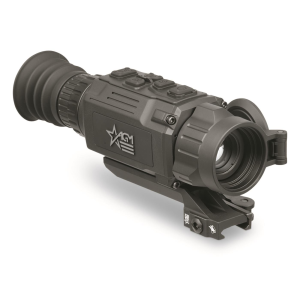
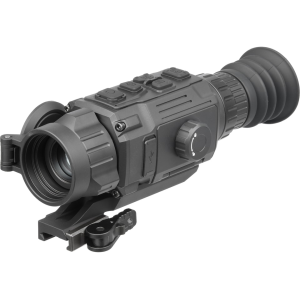
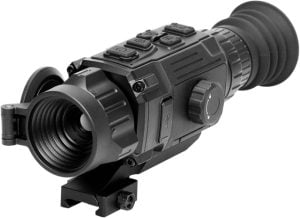
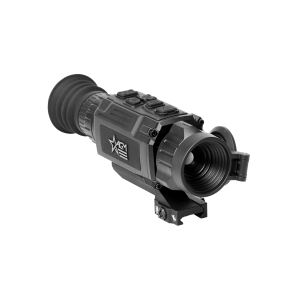
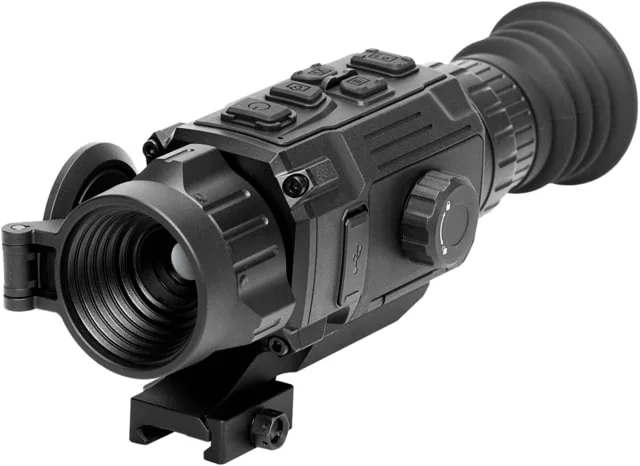
This is where thermal starts being affordable rather than aspirational. At $795 the Rattler V2 is under a third of the Talion, and for close-range hog and predator work inside 150 yards it does the job. I would rather someone hunt with this than not hunt at all waiting to afford a Pulsar.
Know what you are buying. A 256×192 sensor has about a fifth of the pixels of a 640×480, so detail falls off quickly. Inside 100 yards you can tell a hog from a coyote comfortably. At 200 yards you can see something warm and that is close to all. The 950 yard detection figure is a laboratory number, not a hunting one.
The runtime is the underrated feature. Two swappable NE-4400 cells and 11.5 hours means it outlasts scopes costing four times as much, and the shot activated recording is genuinely useful for confirming a hit in the dark rather than walking a blood trail on a guess.
Best For: First thermal, close-range hogs and predators, or a backup scope. Buy it understanding the range limit and it will not disappoint you.
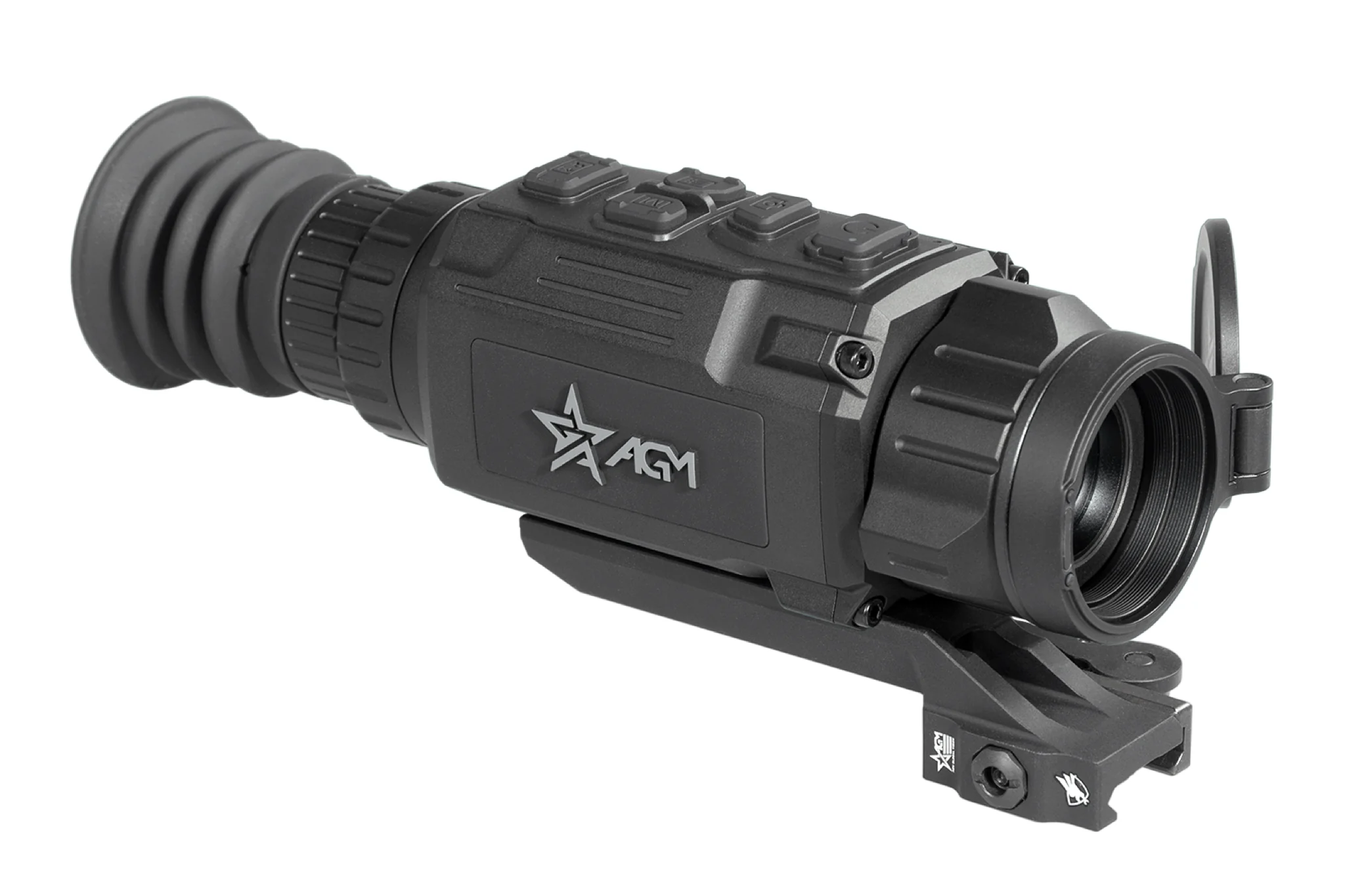
5. AGM Rattler V3 25-384. Best 384 Buy
- Sensor: 384×288 at 12 µm
- NETD: Under 15 mK
- Refresh rate: 50 Hz
- Objective: 25 mm germanium, F/1.0
- Magnification: 2.5x base, up to 20x
- Display: 1920×1080 OLED
- Field of view: 10.5° x 6.3°, 55 ft at 100 yd
- Detection range: 1,770 m / 1,936 yd
- Battery life: Up to 7 hours, two NE-4400 cells
- Weight: 1.10 lb
- MSRP: $1,995, street $1,795
Pros
- Under 15 mK for $1,795
- 1920×1080 display, not 1024×768
- Stocked by five trusted retailers
Cons
- 7 hours is the shortest here
- No rangefinder at this price
- 25 mm lens caps real reach
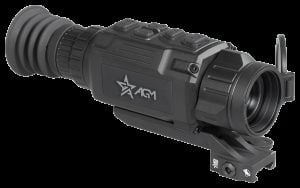
The Rattler V3 replaced the TS35-384 that held this slot until today, and the swap was not a close call. AGM’s own specification puts it under 15 mK against the TS35’s 35 mK, on a newer 12 micron core, with a 1920×1080 display instead of 1024×768. It sells for $1,795 against the $2,032 the TS35 was still asking. Better scope, less money.
Sub-15 mK on a $1,795 optic is the biggest single change in this guide since the last update. It puts the Rattler in the same sensitivity bracket as scopes costing three times as much, and sensitivity is what decides whether you can tell a hog from warm ground at 250 yards in August.
The compromise is runtime and reach. Seven hours is the shortest figure on this page, so a spare pair of NE-4400s is not optional on a full night. The 25 mm lens also caps what the sensor can do, because glass diameter drives detection harder than pixel count does. If you want that same sensor behind a 35 mm lens with a rangefinder attached, that is the Adder below.
Best For: The best value on this page. If you have $1,800 and you hunt inside 250 yards, stop here.
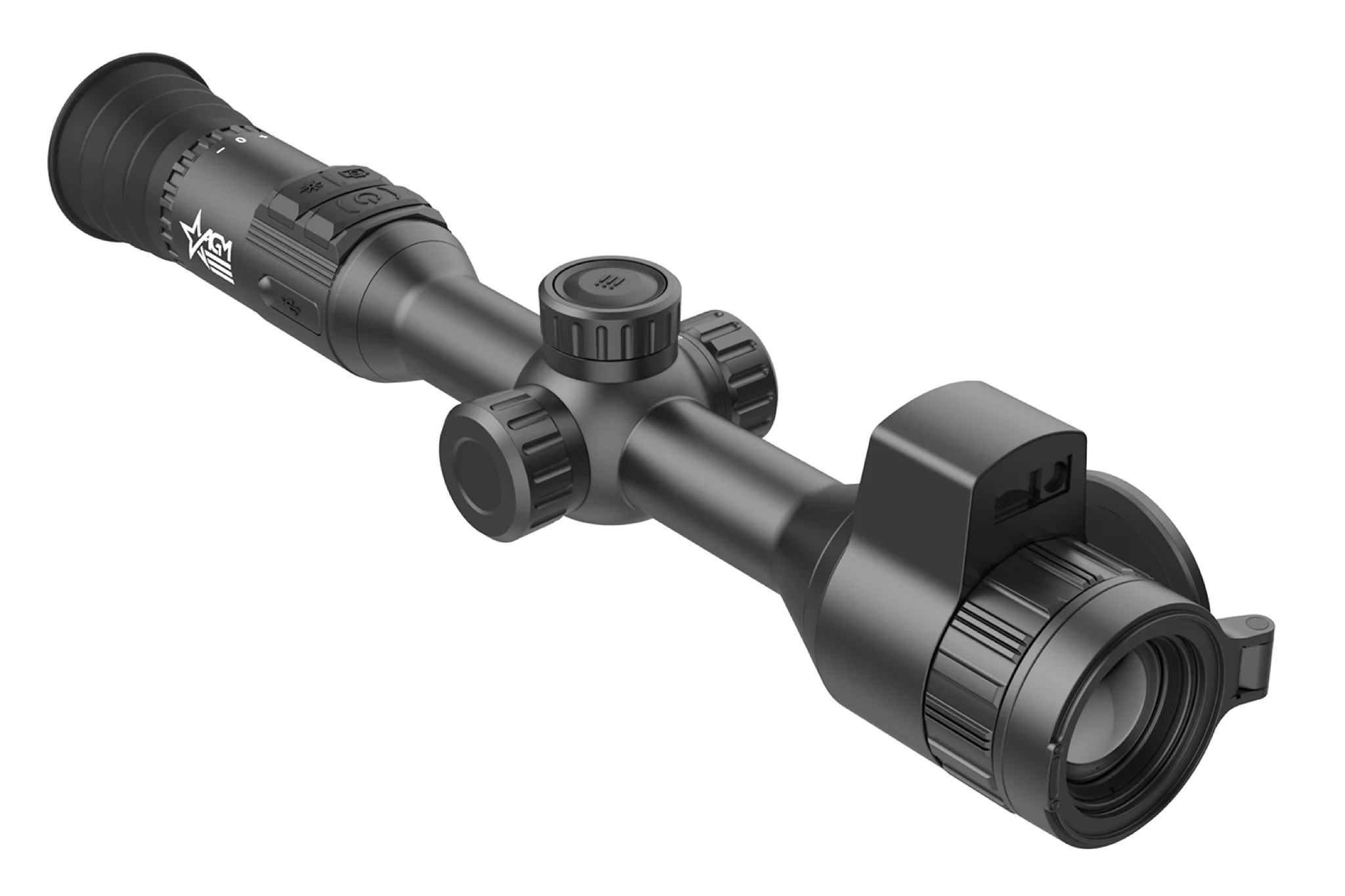
6. AGM Adder V2 LRF 35-384. Best Long Range Value
- Sensor: 384×288 at 12 µm
- NETD: Under 15 mK
- Refresh rate: 50 Hz
- Objective: 35 mm
- Magnification: 4-24x
- Display: 2560×2560 OLED
- Detection range: 1,800 m
- Battery life: Up to 9 hours, internal plus 18650
- Weight: 1.83 lb
- Rating: IP67
- MSRP: $2,995, street $2,795
Pros
- Rangefinder at $2,795, not $3,500
- Under 15 mK on 12 micron
- 35 mm lens beats the Rattler
Cons
- 1.83 lb is genuinely heavy
- 4x base is tight close in
- Still a 384 detector
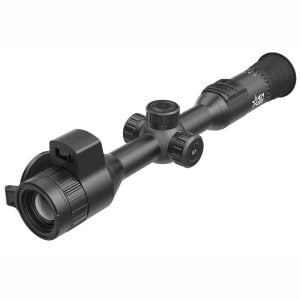
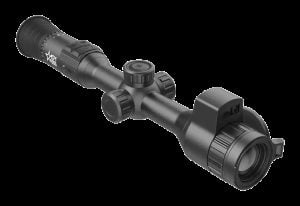
The Adder V2 does the thing the TS50-384 it replaces could not, which is range for you. A built-in laser rangefinder under $3,000 is the reason this scope is on the list, because holdover guessed in the dark is where long shots get lost. Range it, let the ballistic solution move the reticle, shoot.
It carries the same sub-15 mK, 12 micron core as the Rattler V3 above, behind a 35 mm lens instead of a 25 mm one. That extra 10 mm of germanium does more for your identification range than any amount of digital zoom will, and it is the honest reason this costs $1,000 more than the Rattler.
At 1.83 lb it is the second heaviest scope here after the Thermion, and 4x base magnification is a lot when a hog breaks cover at 40 yards. This is a scope for sitting over a field, not for walking timber. The 2560×2560 display is unusual and genuinely good, with no visible pixel structure at any zoom I used.
Best For: Shooting past 200 yards without paying Pulsar money. The cheapest rangefinding thermal here that I would trust on a 300 yard hog.
7. ATN ThOR 5 XD LRF. Most Sensor for the Money
- Sensor: 1280×1024 at 12 µm, 5th generation
- NETD: Not published by ATN for this model
- Magnification: 2-20x
- Refresh rate: 60 fps
- Detection range: 3,400 yards (ATN figure)
- Rangefinder: Built in, feeds the ballistic calculator
- Battery life: 10 hours
- MSRP: $5,895
Pros
- 1280×1024, the most pixels here
- 60 fps, so panning never smears
- Rangefinder, ballistics and recoil video
Cons
- ATN publishes no NETD figure
- Resolution without sensitivity is half the story
- Dealer prices swing $1,200 on this
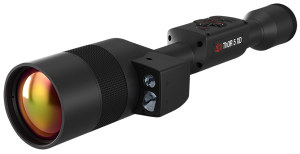
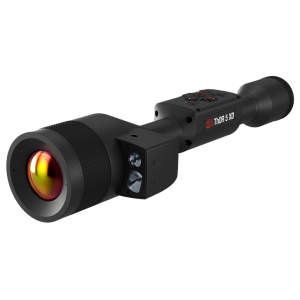
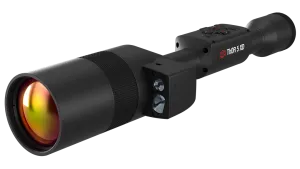
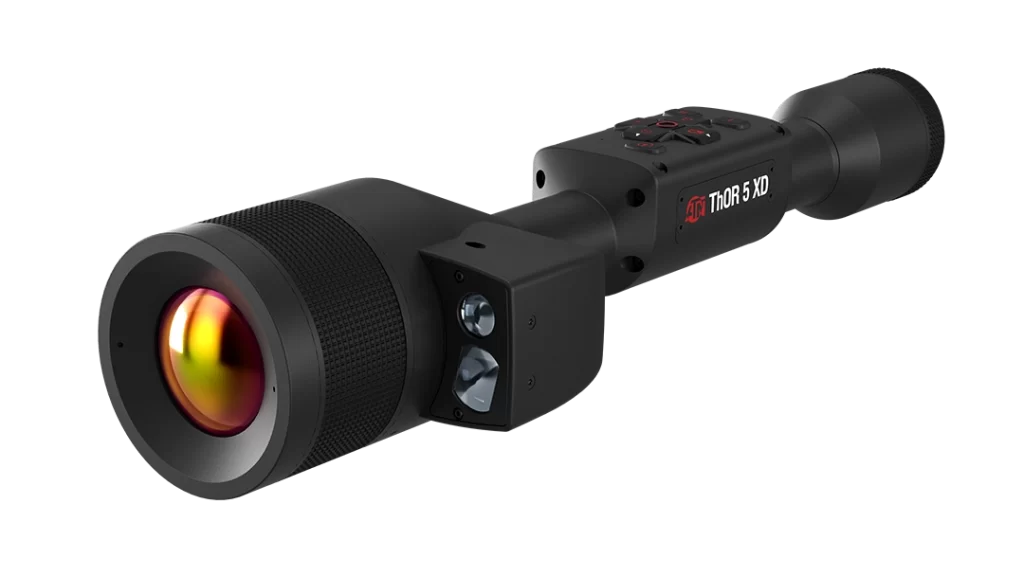
On paper nothing here touches the ThOR 5 XD. A 1280×1024 sensor at 12 micron is four times the pixel count of the Pulsar flagship, it refreshes at 60 fps, and it bundles a rangefinder and ballistic calculator. If you buy on specification, this wins outright.
I am going to be straight about the caveat, because it is the one thing every review of this scope skips. ATN do not publish an NETD figure for it. Resolution tells you how many pixels you get; NETD tells you how small a temperature difference each pixel can actually resolve. A very high resolution sensor with mediocre sensitivity gives you a detailed picture of not very much. Without the number, I cannot tell you where this sits against a <25 mK Pulsar, and neither can anyone else.
What I can say from using it is that the picture is genuinely sharp on cold nights and the 60 fps refresh is a real, noticeable advantage when you are tracking moving hogs. The ballistic calculator works. The software is fiddlier than Pulsar’s and updates have historically been a mixed experience.
Best For: Buyers who want maximum sensor resolution and the full feature list in one unit, and who hunt in cold dry conditions where sensitivity matters least.
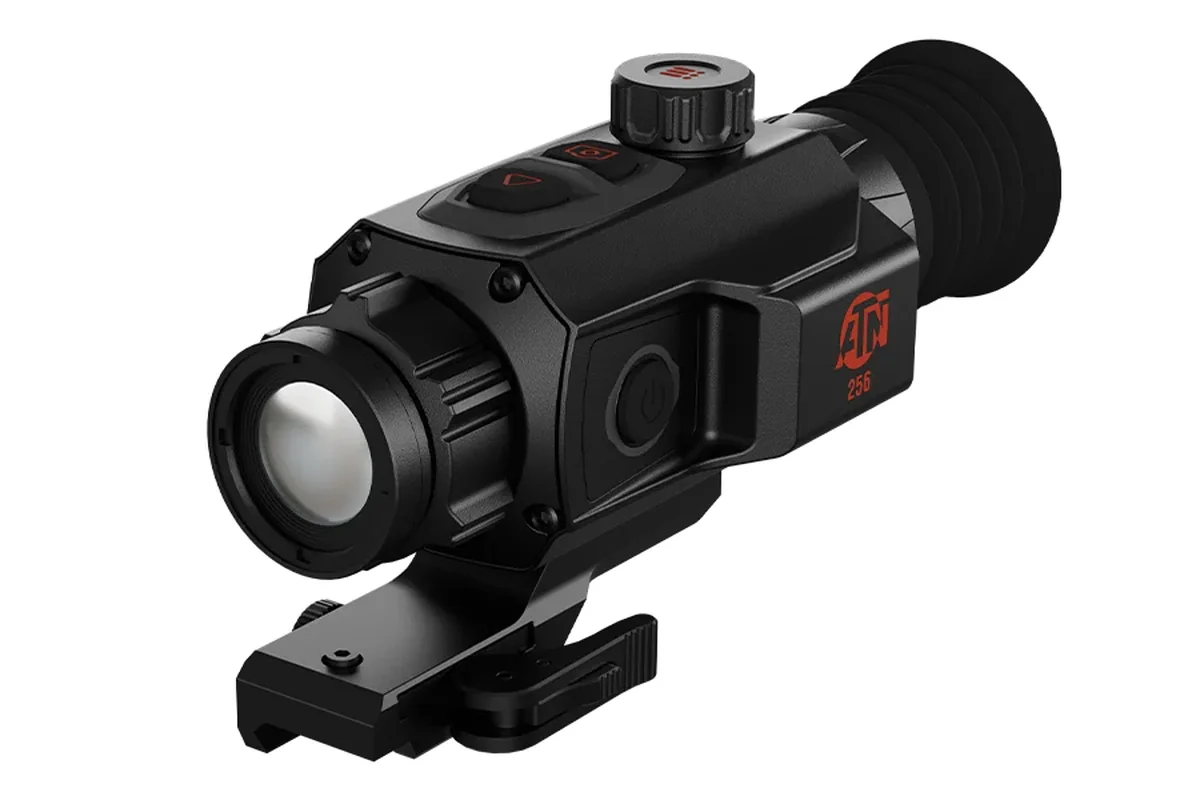
8. ATN ThOR 6 Mini 256. Best Thermal Under $1,000
- Sensor: 256×192 at 12 µm
- NETD: ≤20 mK
- Refresh rate: 50 Hz
- Magnification: 2-16x
- Objective: 15 mm
- Display: 0.32 in, 800×600 OLED
- Detection range: 1,200 m (3,937 ft)
- Battery life: About 8 hours on two cells
- Body: Magnesium alloy, IP67
- Street price: $895
Pros
- 20 mK sensitivity under $900
- Sixth-generation core at entry price
- Beats the Rattler V2 on NETD
Cons
- 256×192 is still the floor
- 15 mm lens is small
- 800×600 display is coarse
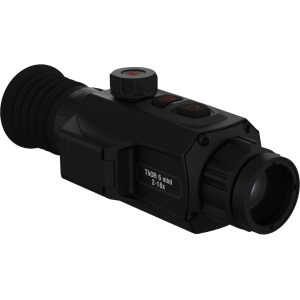
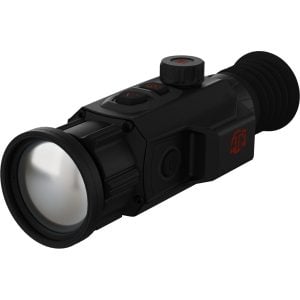
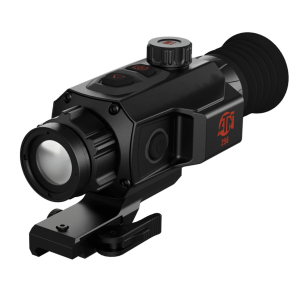
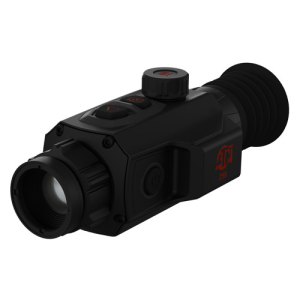
Two years ago the honest answer to “what does $900 buy” was a 35 mK sensor and a lot of patience. The Mini answers it with 20 mK and ATN’s current engine. Against the AGM Rattler V2 at $795 you are paying $100 for a meaningfully better sensor, and I would pay it every time.
It is also worth putting next to the ThOR LTV below, because the two overlap and the choice is narrower than the badges suggest. Both are 256×192 at 12 microns. The LTV is lighter and the Mini is a generation newer for about $99 more. If weight is the deciding factor, take the LTV. If picture quality is, take this.
The limits are honest ones. A 15 mm objective is small, so detection falls off well inside what the 1,200 m figure implies, and the 800×600 display is the coarsest here. Inside 150 yards on hogs it does everything you need, and the magnesium body means it survives being knocked about in a truck.
Best For: A first thermal, or a second scope for a truck gun. The best sensor you can get under $900 right now.
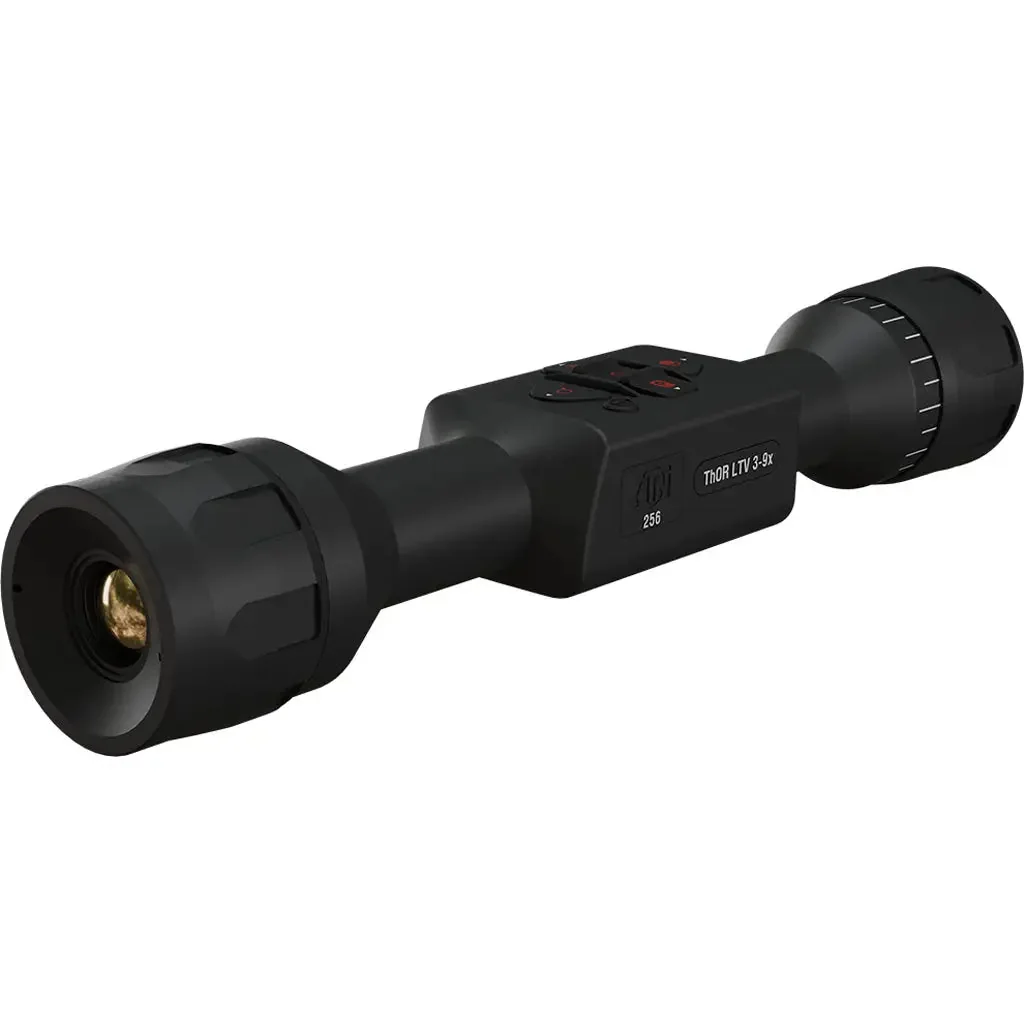
9. ATN ThOR LTV 3-9x. Best Ultralight
- Sensor: 256×192 at 12 µm, 60 Hz
- NETD: ≤20 mK
- Magnification: 3-9x
- Display: 1280×720
- Detection range: 825 m detection, 210 m recognition, 105 m identification (19 mm)
- Battery life: 9+ hours internal Li-ion
- Mounting: 30 mm standard rings
Pros
- 20 mK sensitivity under $900
- Publishes detection, recognition and identification ranges
- Mounts in standard 30 mm rings
Cons
- 256×192 caps identification near 115 yards
- Internal battery only, no field swap
- 3-9x and a small objective
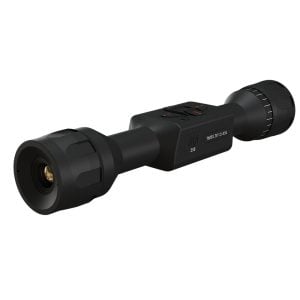
The LTV is the value surprise on this list. ATN publish a sensitivity figure of 20 mK or better, which is sharper than every AGM here including scopes costing three times as much, on a scope that sells around $670 to $880. Sensitivity at this price point is not supposed to happen.
It is also the only manufacturer on this page that publishes all three range figures honestly: 825 m detection, 210 m recognition, 105 m identification. That last number is the one that matters and it is roughly 115 yards. Which is a fair description of what a 256×192 sensor can really do, and it is to ATN’s credit that they say so.
It handles like a conventional scope, which is the other appeal. A 30 mm tube in standard rings, 3-9x, and light enough that it does not change how the rifle carries. The internal battery is the main limitation, because when it is flat your night is over.
Best For: A lightweight, genuinely sensitive thermal for close-range work under $900. The honest spec sheet is a good sign about the company.
10. Trijicon REAP-IR Type 4 35mm. Best Premium
- Sensor: 640×480 at 12 µm
- NETD: Under 25 mK
- Magnification: 1.75x base, 8x digital, 14x combined
- Field of view: 12° horizontal
- Refresh rate: 30 Hz / 60 Hz
- Detection range: Beyond 1,500 yards (Trijicon figure)
- Weight: 28.18 oz
- Power: Two CR123 or external USB-C, about 4 hours
- Housing: 7075-T6 aluminum, matte black anodized
Pros
- 640×480 at 12 micron, under 25 mK
- Built to Trijicon military standard
- 28.18 oz, compact for a 640
Cons
- $6,279 at best, often above $7,000
- About 4 hours on internal cells
- 1.75x base suits close work only
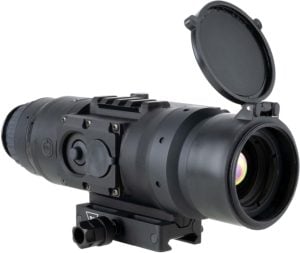
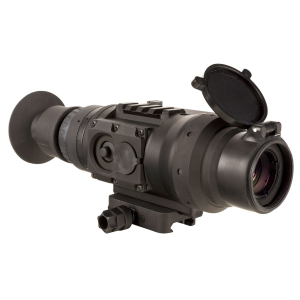
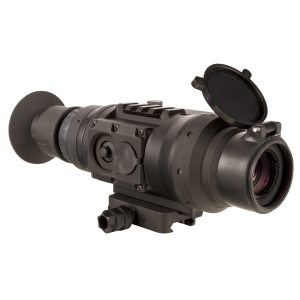
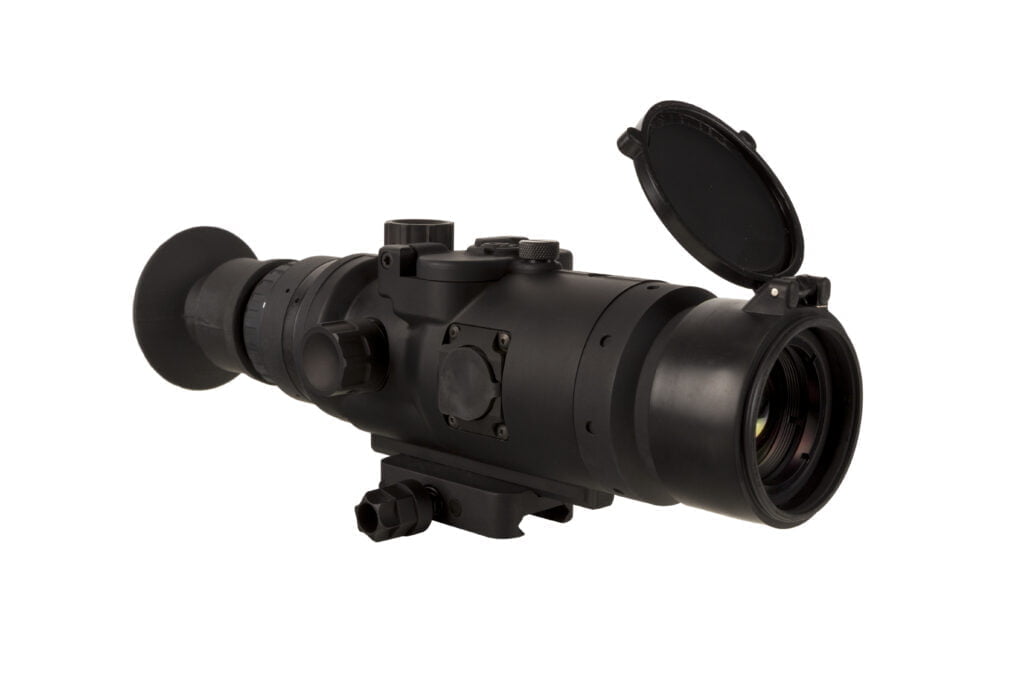
The REAP-IR is the one built to be broken and keep working. Trijicon sell these into military and agency use and the housing, the controls and the tolerance for abuse all reflect that. A 640×480 12 micron sensor at under 25 mK is the same class of image as the Pulsar flagship, in a package roughly a third smaller.
The design choice that defines it is the 1.75x base magnification and the 12 degree field of view. That is deliberately wide, because it is built for finding and engaging things quickly at moderate range rather than picking apart a treeline at 600 yards. If you want reach, the Adder or the Thermion will serve you better for less money.
Four hours on a pair of CR123s is the price you pay for the size. The USB-C external power option matters more than it sounds, because it means a small power bank in a pocket turns a four hour scope into an all-night one.
Best For: Buyers who want military-grade durability and a top-tier sensor in a compact package, and who work at moderate range rather than long.
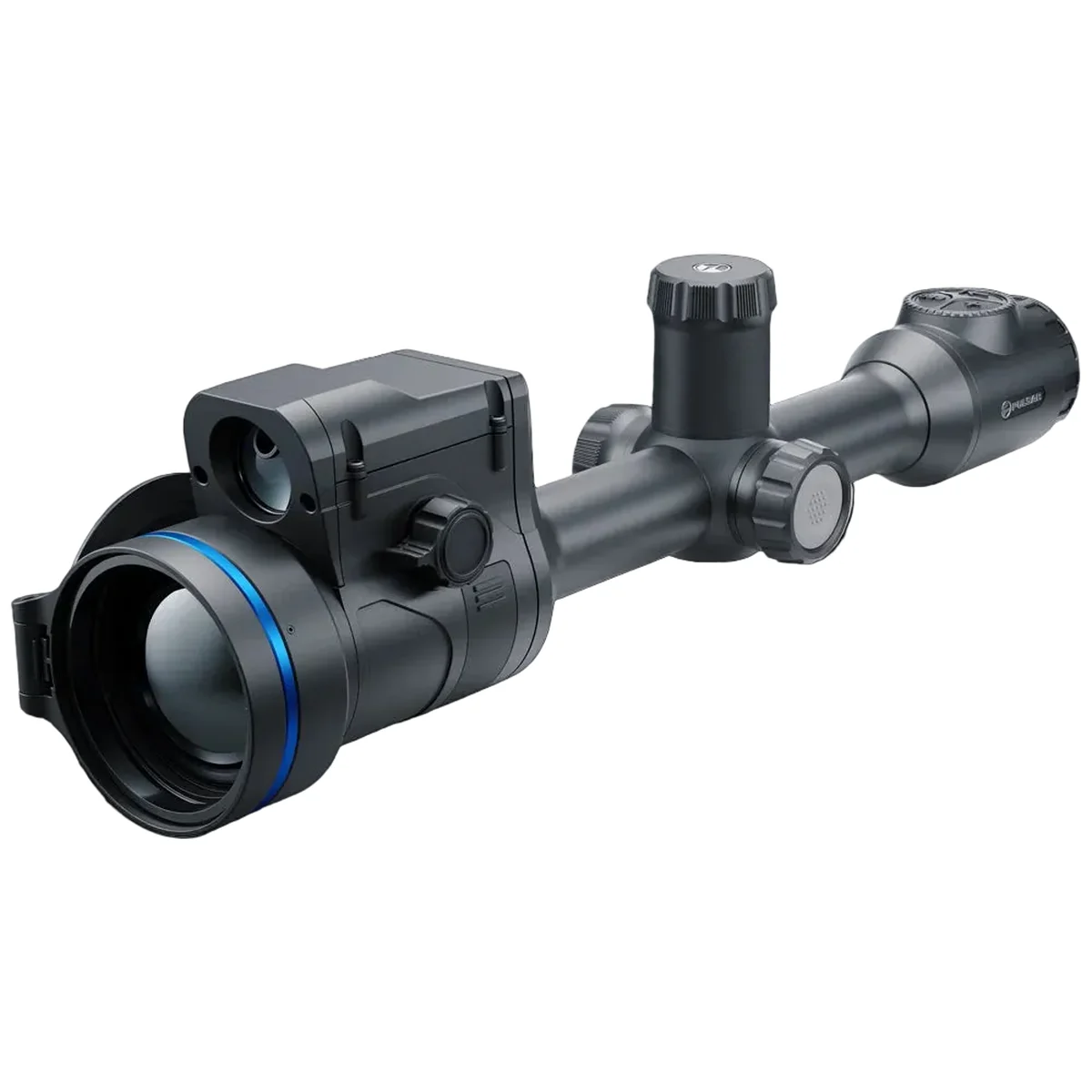
11. Pulsar Thermion 2 LRF XL60. No Compromise
- Sensor: 1024×768 at 12 µm
- NETD: <35 mK, sNETD under 20 mK
- Refresh rate: 50 Hz
- Objective: 60 mm, F/1.0
- Magnification: 2.5-20x
- Detection range: Up to 3,062 yd
- Laser rangefinder: 800 m
- Battery life: Up to 7 hours, internal plus APS3
- Street price: $7,000
Pros
- 1024×768 sensor, the largest here
- 60 mm objective gathers real energy
- Outdoor Life picked it Editor’s Choice
Cons
- $7,000 is most people’s whole rig
- Base NETD reads 35 mK
- Overkill inside 300 yards
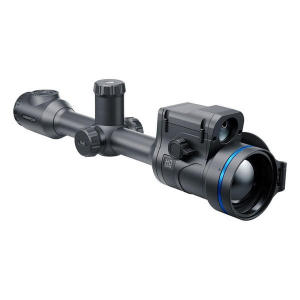
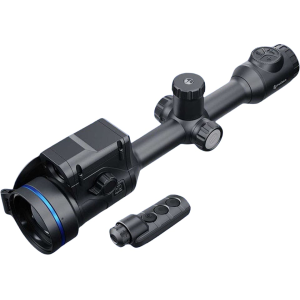
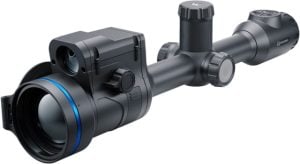
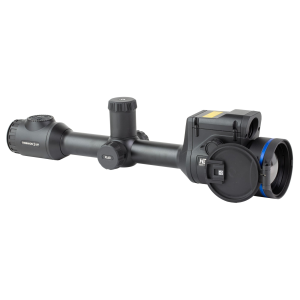
This is the scope that wins the arguments, and it is on the list because it is what the top of the market looks like in 2026 rather than because most readers should buy it. Outdoor Life made it their Editor’s Choice. A 1024×768 sensor behind a 60 mm F/1.0 objective is more optical information than anything else on this page collects.
The 60 mm lens is the part worth understanding. Detection range is driven by how much infrared energy you gather, and a 60 mm aperture gathers roughly ten times what the 19 mm Rattler does. That is why the quoted detection figure runs past 3,000 yards where the budget scopes sit under 1,000.
Read the sensitivity numbers carefully, though, because Pulsar publishes two. Base NETD is under 35 mK, and the sNETD figure that gets quoted in marketing is under 20 mK. The ATN ThOR 6 Elite at $1,995 publishes a straight 15 mK. On a humid night the cheaper scope can hold contrast the XL60 loses, which is a genuinely awkward fact about a $7,000 optic and nobody else on the first page of results says it.
Best For: Open country past 400 yards, and buyers for whom the price is not the deciding factor. Everyone else is better served three or four places up this list.
12. RIX Storm S2R. Best Value Newcomer
- Sensor: 256×192 VOx at 12 µm
- NETD: Under 25 mK
- Refresh rate: 50 Hz
- Objective: 25 mm, F/1.0
- Magnification: 3.5x base
- Display: 1024×768 AMOLED
- Detection range: 1,422 yd
- Laser rangefinder: 1,312 yd, ±1 yd
- Weight: 0.93 lb
- MSRP: $1,875, street $999
Pros
- Rangefinder on a $999 scope
- Ranges to 1,312 yd
- 0.93 lb, the lightest here
Cons
- MSRP is $1,875, so verify
- 256×192 limits identification range
- RIX dealer network is thin
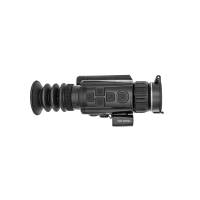
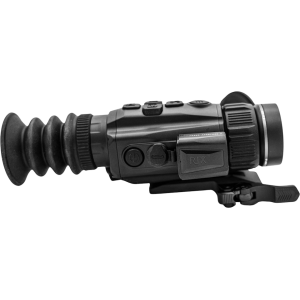
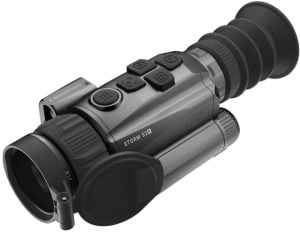
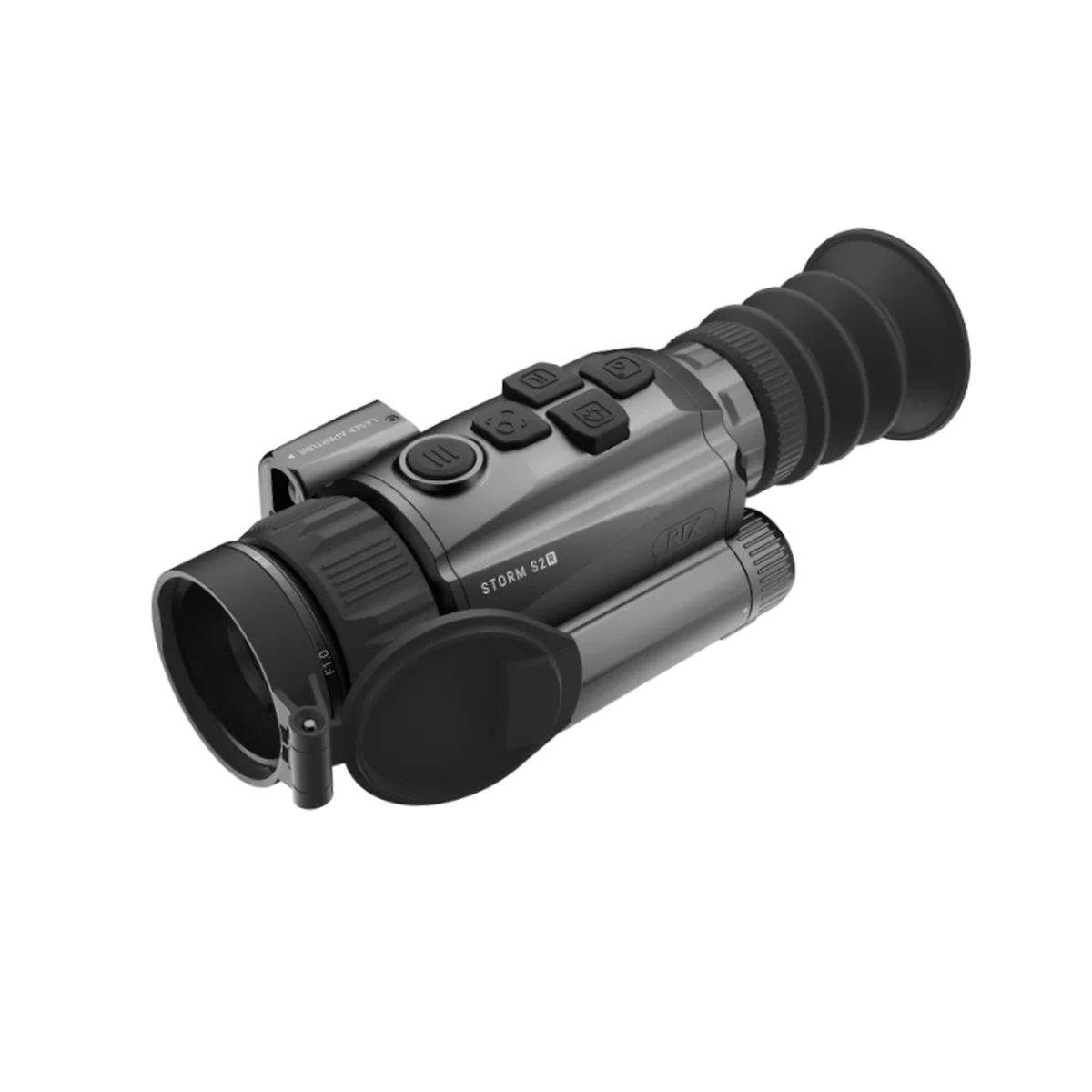
RIX Optics is the brand the established names would rather you had not heard of. The Storm S2R is the only scope on this page under $1,000 with a laser rangefinder built in, and the rangefinder reads to 1,312 yards at plus or minus a yard. That combination did not exist at this price last season.
There is a price warning attached and I am not going to bury it. RIX list this at $1,875. Two of our dealers are showing $999 as I write, which is a real reader-facing price I have checked rather than a manufacturer figure, but a discount that deep is a promotion, not a permanent position. Check the card above rather than trusting this paragraph in six months.
At 0.93 lb it is the lightest scope in this guide, which matters more than people expect on a rifle you carry all night. The sensor is the honest limit: 256×192 at under 25 mK is a mid-range entry-level picture, so treat it as a 150 yard identification tool that happens to know exactly how far away things are.
Best For: Anyone who wants ranging on an entry-level budget. Verify the price on the card before you commit.
13. Nocpix Bolt P25R. Best Rangefinder Under $1,200
- Sensor: 256×192 at 12 µm
- NETD: ≤20 mK
- Refresh rate: 50 Hz
- Objective: 25 mm, F/1.0
- Magnification: 3.5-14x
- Display: 1024×768 AMOLED
- Field of view: 7.0° x 5.3°
- Detection range: 1,300 m
- Laser rangefinder: 1,200 m, periscope style
- Battery life: Up to 12 hours, 5000 mAh plus 18650
- Street price: $1,199
Pros
- 20 mK and a rangefinder, $1,199
- 12 hours, the longest runtime here
- 30 mm one-piece aluminum tube
Cons
- 256×192 caps identification range
- Nocpix is new to America
- 25 mm lens is modest
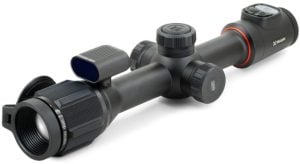
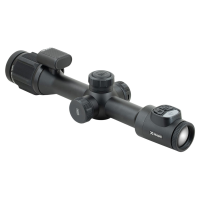
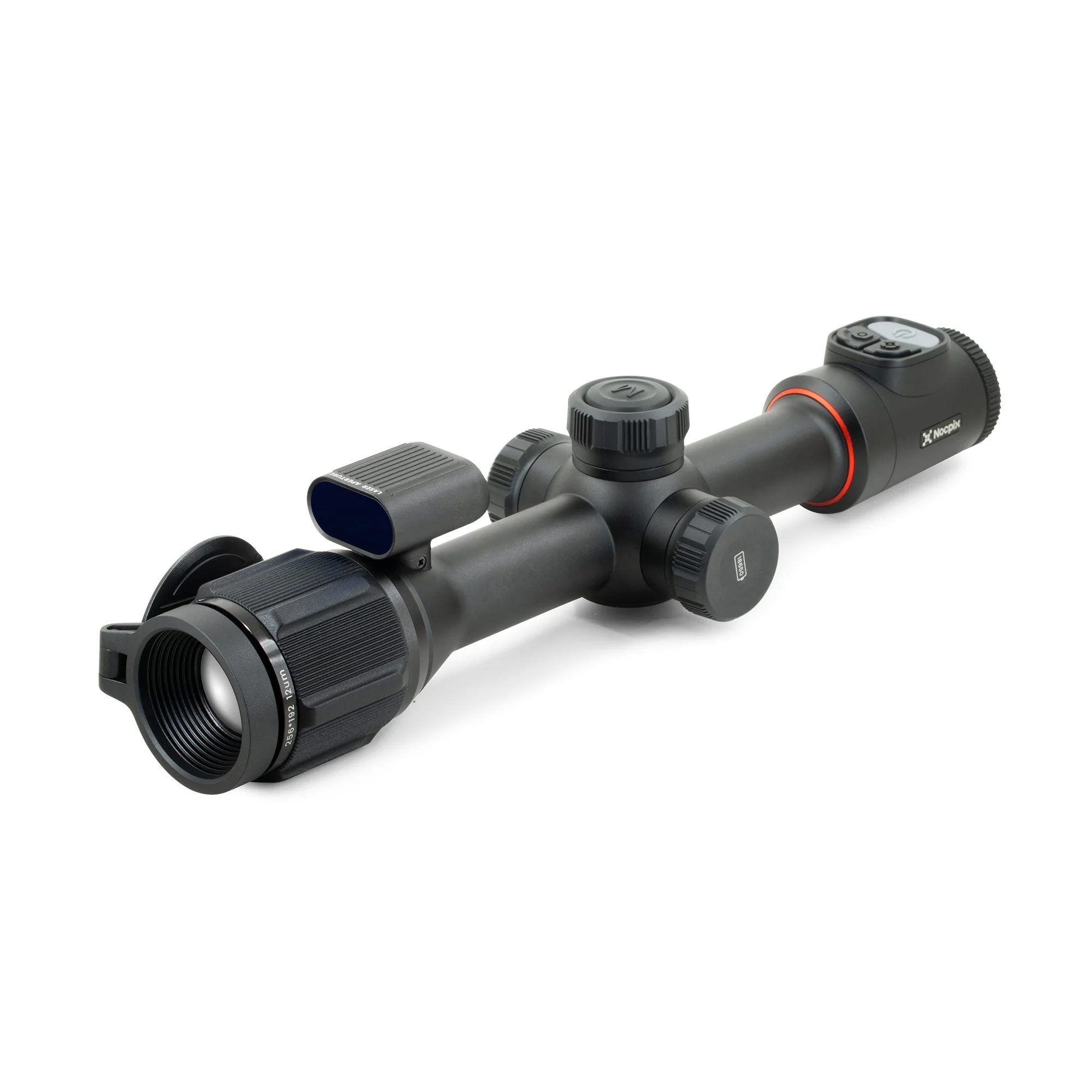
Nocpix arrived in the US market with the kind of specification sheet that makes established brands uncomfortable. A 20 mK sensor with a 1,200 m rangefinder and a ballistic calculator, at $1,199, from seven dealers including Primary Arms and Sportsman’s Warehouse. That is a better sensitivity figure than the $2,100 Sig ECHO this guide used to recommend.
Runtime is where it separates itself. A 5000 mAh internal cell plus a replaceable 18650 gives twelve hours, which is the longest figure in this guide and comfortably more than the seven hours the $2,795 AGM Adder manages. On a winter night that is the difference between hunting until dawn and packing up at two.
The reservations are about the sensor and the brand, not the build. A 256×192 detector behind a 25 mm lens is an inside-200-yards proposition however good the NETD figure is, and Nocpix has no long warranty record in the States yet. The 30 mm one-piece tube and the periscope rangefinder housing feel more expensive than the price suggests.
Best For: The value pick if you want ranging and long battery life and cannot stretch to the AGM Adder. Better sensitivity than anything else near this money.
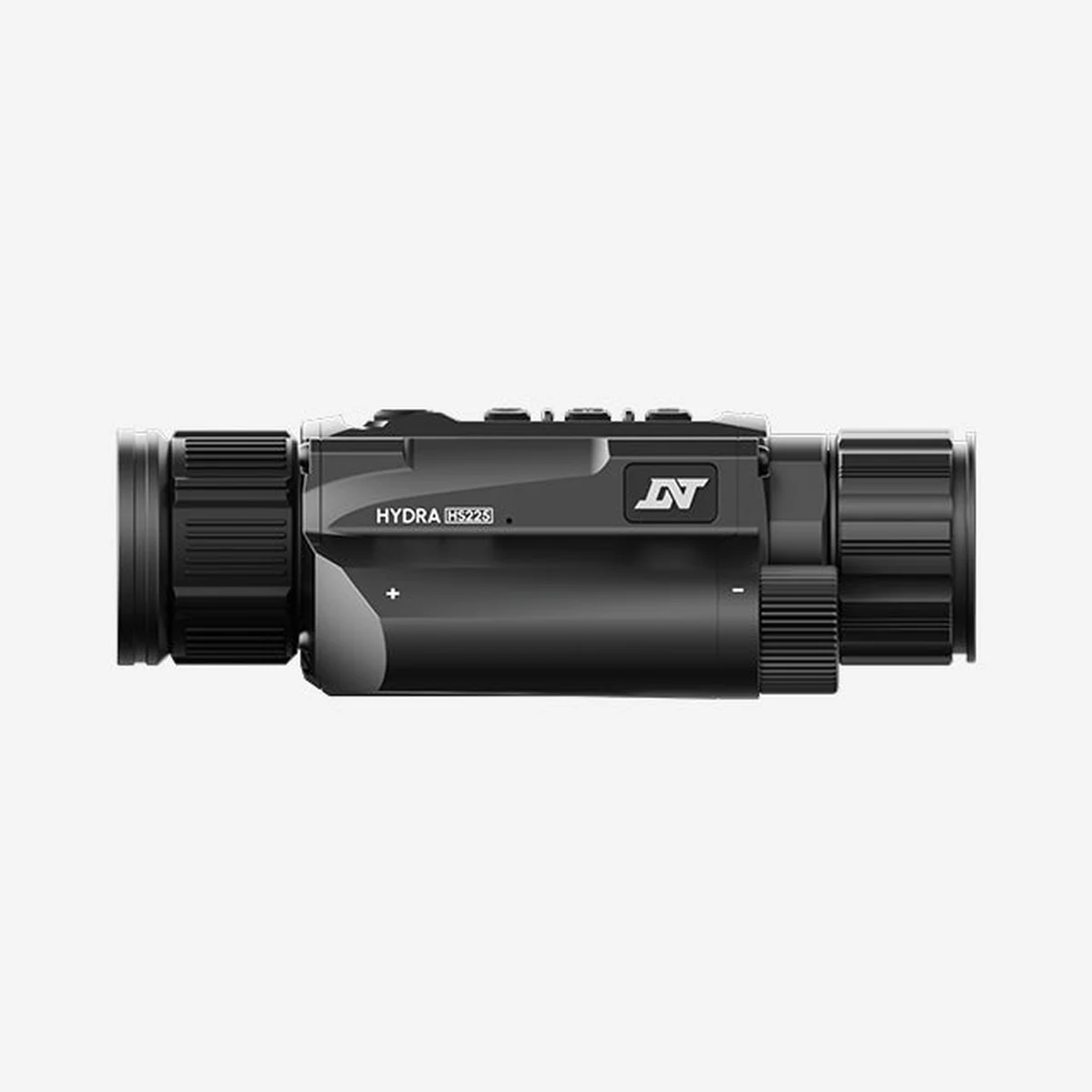
14. DNT Hydra HS225. Cheapest Real Thermal
- Sensor: 256×192 at 12 µm
- NETD: ≤25 mK
- Refresh rate: 50 fps
- Objective: 25 mm
- Magnification: 3x base, 3-12x
- Display: 1024×768 micro-OLED
- Battery life: 5.5 hours on one 18650
- Weight: 13.1 oz
- Rating: IP67, rated to .50 BMG
- Street price: $800
Pros
- Scope, clip-on and monocular
- 25 mK for $800
- 13.1 oz, lighter than everything
Cons
- 5.5 hours is the shortest here
- 256×192 at the entry floor
- DNT support network is small
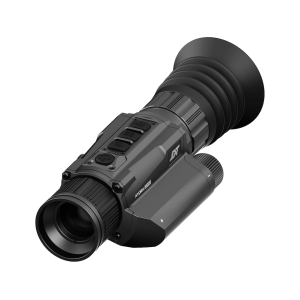
The DNT Optics Hydra is here because it does something none of the other thirteen do. It works as a standalone scope, as a clip-on in front of your day optic, and as a handheld thermal monocular, and it is $800. Buying those three functions separately starts around $2,000.
The clip-on mode is the one that earns its place. You keep your existing scope and its zero, push the Hydra on the front, and hunt. For anyone who already has glass they like on a rifle they shoot in daylight, that removes the whole problem of owning two rifles or re-zeroing at dusk. It is rated to .50 BMG recoil, which is a serious figure at this price.
Runtime is the cost of the small body. One 18650 gives 5.5 hours, the shortest number in this guide, so spares are not optional. The 25 mK sensor is fine rather than good, and 13.1 oz makes it the lightest thing here by a clear margin.
Best For: The hunter who wants thermal without giving up a day scope. The cheapest genuinely useful thermal on this page.
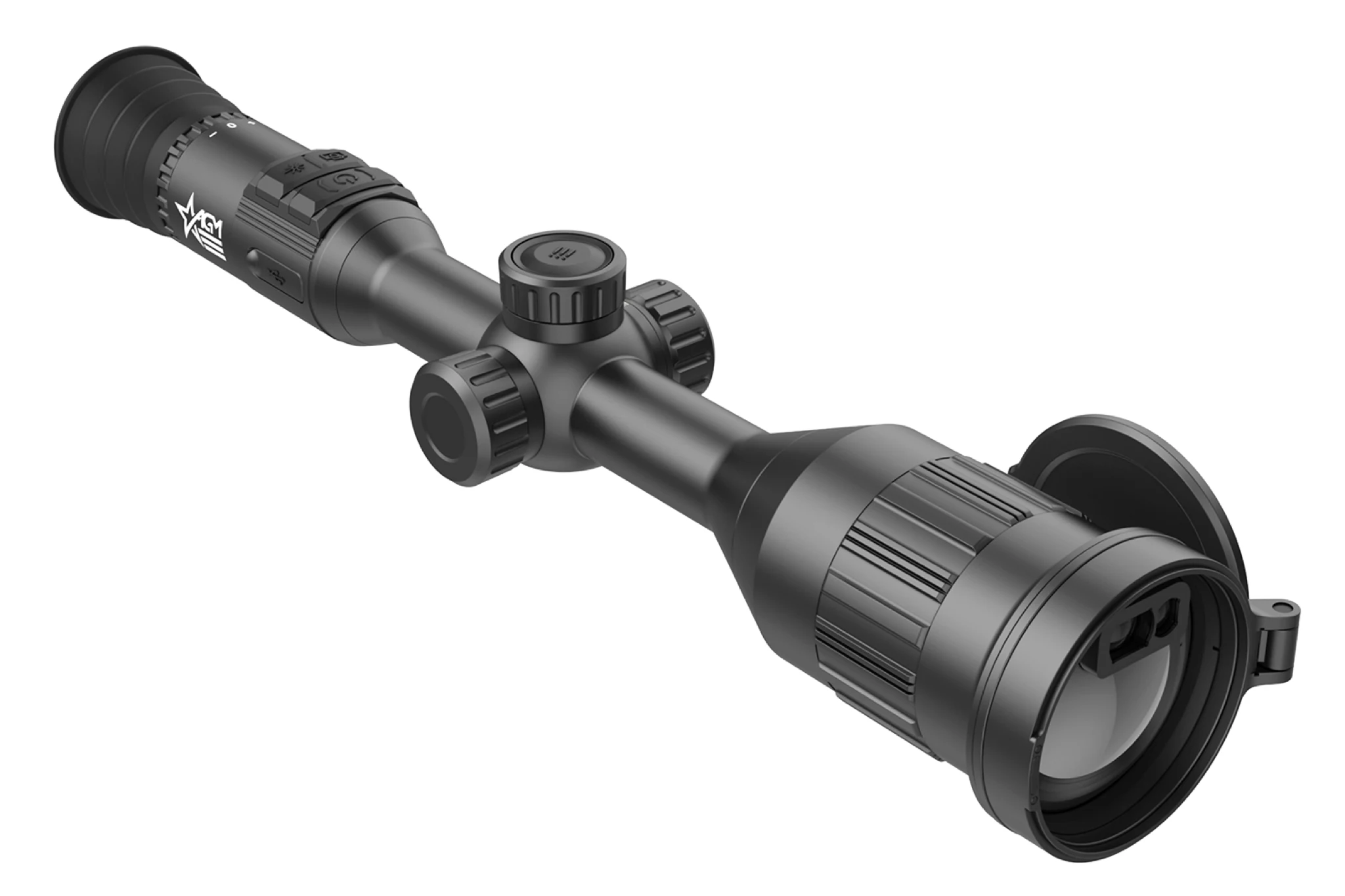
15. AGM Adder V2 LRF 60-1280. Most Sensor You Can Buy
- Sensor: 1280×1024 at 12 µm
- NETD: ≤15 mK
- Refresh rate: 50 Hz
- Objective: 60 mm
- Magnification: 4-24x
- Rangefinder: built in, laser
- Street price: $5,995 to $6,995
Pros
- 1280×1024, four times a 640
- 60 mm objective and a rangefinder
- Under 15 mK on 12 micron
Cons
- Around $6,000, more than most rifles
- No trusted retailer stocks it
- Overkill for anything inside 300 yards
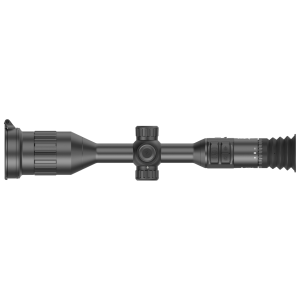
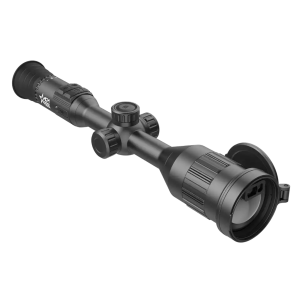
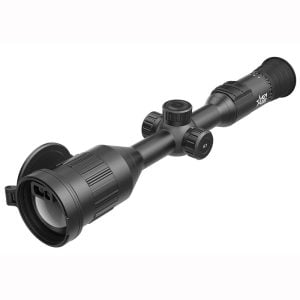
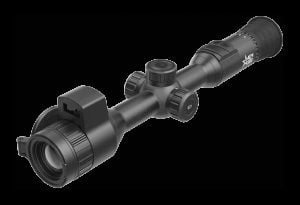
This one is here because it is the top of the market and because the guide currently ranking tenth on this term leads with it. A 1280×1024 sensor holds four times the pixels of a 640×480, and behind a 60 mm objective it turns identification range from a compromise into a non-issue.
The honest part is the price. It runs $5,995 to $6,995 depending on the dealer, none of the five retailers we headline prices from carry it, and there are only 37 models in the entire 1280×1024 class in our feed. This is a small, expensive corner of the market.
Buy carefully if you go looking. Searching for it by the obvious name pulls the Adder V2 LRF 50-640 and 35-384 alongside it, which are the same family at a third and a half the price and a fraction of the sensor. The card above is filtered to the 1280 only.
Best For: Long-range predator work and anyone who has decided that identification range past 300 yards is worth six thousand dollars.
Detection, Recognition and Identification: What Range Numbers Really Mean
Every thermal scope is sold on a detection range, and detection range is close to the least useful number on the box. It is the distance at which the sensor registers that something warm exists. Not what it is. Not whether it is legal to shoot. Just that there is heat.
The industry actually uses three figures, and only manufacturers who are being straight with you publish all three. ATN publish them for the ThOR LTV, so here is what the gap looks like on a real scope:
| Figure | What it means | ATN ThOR LTV (19 mm) |
|---|---|---|
| Detection | Something warm is there | 825 m (~900 yd) |
| Recognition | It is an animal, roughly that size | 210 m (~230 yd) |
| Identification | It is a hog, and that one is the boar | 105 m (~115 yd) |
Identification range is roughly an eighth of detection range on that scope. That ratio holds broadly across thermal optics, and it is why a scope advertised at 950 yards is a 120 yard hunting tool. You cannot ethically or legally shoot at something you have only detected.
So read the quoted number, divide it by something between six and ten, and that is your realistic identification distance. If a manufacturer only publishes detection, that is a choice they made about which number flatters them.
What Each Detector Size Actually Costs Right Now
Every thermal guide tells you a bigger detector is better. None of them tell you what the jump costs, which is the only part you need to make a decision. So I pulled every thermal optic in stock across our retailer network and sorted it by detector size.
This is live inventory across 34 dealers, not manufacturer list prices, and it is the real spread a buyer faces this week. One warning on reading tables like this anywhere: match on the SENSOR, not the screen. Our own first pass counted an ATN ThOR LTV as a 1280 scope because its DISPLAY is 1280×720, which dragged the cheapest 1280 down to $500. Its sensor is a 320. The real floor for a 1280×1024 sensor is $4,080.
| Detector | Models in stock | Cheapest | Average | Dearest |
|---|---|---|---|---|
| 256×192 | 96 | $500 | $1,056 | $5,099 |
| 384×288 | 252 | $999 | $2,267 | $4,699 |
| 640×480 | 417 | $1,276 | $4,369 | $14,499 |
| 1280×1024 | 37 | $4,080 | $6,144 | $13,799 |
Two numbers in that table matter more than the rest. The cheapest way into a 384 detector is $999, and the cheapest way into a 640 is $1,276. That is a $277 gap, which is far smaller than most people expect and is the single best argument for skipping the 256 tier entirely.
Then look at the averages, because they tell the opposite story. The average 640 costs $4,369 against $2,267 for the average 384, so the typical 640 buyer pays about 93% more. The cheap end of each tier is close together. The middle of each tier is not.
What that means in practice: if your budget is fixed at around $1,300, you can have an entry-level 640 or a well-specified 384 with a better lens and rangefinder. The 384 with the better glass is the smarter buy most of the time, because base lens diameter does more for detection range than detector count does.
The 1280 tier is worth noting only to dismiss it for most readers. It starts at $4,080, which is close to the average 640, and there are 37 models in stock against 417 in the 640 tier. It is a specialist purchase.
Thermal or Night Vision: Which One You Actually Need
Almost everyone shopping a first thermal has looked at night vision too, and the two do genuinely different jobs. Thermal reads heat, so it finds things. Night vision amplifies what light there is, so it identifies them. That single difference decides which one belongs on your rifle.
| Thermal | Night vision | |
|---|---|---|
| Finds an animal in cover | Yes, through brush and grass | No, it needs line of sight |
| Tells a boar from a sow | Poorly, you see a warm shape | Yes, you see the animal |
| Works in total darkness | Yes, needs no light at all | Needs starlight or an IR illuminator |
| Works in daylight | Yes | No, daylight damages older tubes |
| Fog, rain and smoke | Sees through most of it | Degrades badly |
| Entry price that works | About $795 | Digital from about $300, tubes from $3,000 |
For hogs and predators at night, thermal wins and it is not close. You are looking for an animal that does not want to be seen, in cover, and heat is the only signal that goes through grass. The identification weakness is real, which is why every detection figure in this guide is quoted alongside its identification figure.
Night vision earns its place when you have to be certain what you are shooting at, or where thermal is restricted. Plenty of people end up running thermal to find and a day scope or night vision to confirm, which is exactly why the clip-on units in this guide exist.
How to Choose a Thermal Scope
Sensor resolution is the pixel count, and it sets how much detail is available at all. The steps are 256×192 at entry level, 384×288 in the middle, 640×480 at the top and 1280×1024 on the ATN. Going from 256 to 640 multiplies your pixels by about five, and that is where identification range comes from.
NETD is the one most buyers have never heard of and it matters as much as resolution. It stands for noise equivalent temperature difference, measured in millikelvin, and it is the smallest temperature difference the sensor can distinguish. Lower is better. Under 25 mK is good, under 20 mK is excellent, 35 mK is entry level. A high resolution sensor with poor NETD gives you a detailed picture of a gray blur, which is exactly what happens on warm humid nights when the animal and the background are close in temperature.
Objective lens diameter does for thermal what it does for glass. A 50 mm germanium lens gathers far more infrared energy than a 19 mm one, and that is real optical information. Digital zoom is not. Magnifying a 256×192 image to 20x does not add anything that was not captured. It is the same trap as buying magnification over glass on a daylight optic, which our AR-15 optics guide covers in more detail.
Refresh rate is 30 Hz or 50/60 Hz. Thirty is usable for static shooting and smears noticeably when you pan across a field or track a moving animal. If you hunt running hogs, pay for 50 Hz or better. The same logic applies to the rifle under it, which is why our hog hunting rifle picks lean semi-auto.
Battery strategy splits into three camps and it is worth choosing deliberately. Swappable proprietary cells like Pulsar’s APS are fastest to change in the dark. CR123 primaries, as on the Trijicon REAP-IR, can be bought anywhere and do not care about cold, and 18650 cells as used by the ATN ThOR 6 and the DNT Hydra are almost as easy. Internal-only batteries with USB-C, as on the ATN LTV, mean carrying a power bank and accepting that a dead scope ends the night.
Where Thermal Is Legal, and Where It Will Cost You a License
This is the part that gets people in trouble, because thermal legality does not follow one national rule. It varies by state, by species, and by whether you are on private or public land, and the three interact.
The pattern that holds almost everywhere is the split between game and non-game animals. Using thermal to take deer, elk or other big game after legal shooting hours is prohibited in the large majority of states. Using it on feral hogs and predators such as coyotes is far more widely allowed, and that is what most of these scopes are bought for. If coyotes are the job, pair one of these with a coyote-specific AR-15.
Land ownership is the second axis. Texas permits thermal and night vision for feral hogs and coyotes on private land, and restricts it on public land. That private-permitted, public-restricted shape repeats across many states. California prohibits heat-sensing and other non-visible-spectrum equipment for taking big game, which rules thermal out for hunting there. Idaho bars thermal for big game between 30 August and 31 December while exempting coyotes, wolves and other unprotected wildlife year-round. Tennessee and West Virginia explicitly permit thermal for coyotes on private land within a defined season.
Treat all of that as orientation, not authority. Regulations change every season and a roundup is the wrong place to get your law. Check your state wildlife agency’s current regulations for the species and the land you are hunting before you take a thermal scope out at night. Texas hunters can read the current rules in the TPWD Outdoor Annual, and if you are hunting a state you do not live in, check theirs too.
How I Tested These Scopes
Every scope here was mounted and shot, not handled at a trade stand. The bulk of the work was done on hog ground in east Texas across a run of nights between March and July, which covers both cold clear conditions and the humid summer nights that punish a mediocre sensor.
The core test is a fixed one. I set heat sources at 100, 200, 300 and 500 yards and recorded at what distance each scope moved from detection to recognition to identification, then repeated it on a cold night and a humid one. That comparison is where the NETD figures stop being a spec and start being visible, and it is why the older 35 mK scopes drop back in July even though they read well on paper. It is also how the ATN ThOR 6 Elite ended up two places from the top of this list at $1,995.
Beyond that: zero retention checked at the start and end of each outing, battery runtime measured to shutdown rather than to the manufacturer’s claim, and every menu learned in the dark with gloves on, because that is when you will actually be using it. The recoil testing was done on a .308 and, for the Thermion, a 12 gauge.
Final Thoughts
If you buy one thermal scope this year, buy the AGM Rattler V3 25-384 at $1,795 or the ATN ThOR 6 Elite 384 at $1,995. Both publish sub-15 mK sensitivity, both are current-generation, and between them they killed the old advice that you had to spend $3,000 for a sensor that works on a humid night. Step up to the Thermion 2 LRF XP50 Pro only if you genuinely shoot past 200 yards, where the 640 sensor and the rangefinder earn their money.
At the bottom the picture changed too. The AGM Rattler V2 at $795 and the ATN ThOR LTV under $900 made cheap thermal usable, and the ATN ThOR 6 Mini 256 at $895 now beats both on sensitivity. If you want ranging on a budget, the Nocpix Bolt P25R at $1,199 does it with 20 mK and twelve hours of battery, which nothing else near that money manages.
Whatever you buy, the number to hold onto is identification range, not detection range. Divide the box figure by roughly eight and you will know what the scope can really do. Then check your state’s regulations before you take it out after dark.
Frequently Asked Questions
What is the best thermal scope?
For most hunters the AGM Rattler V3 25-384 at $1,795 and the ATN ThOR 6 Elite 384 at $1,995 are the picks, because both publish sub-15 mK sensitivity that used to cost three times as much. The Pulsar Thermion 2 LRF XP50 Pro is the best overall if you shoot past 200 yards and want a rangefinder. The Trijicon REAP-IR is the premium American-made option. On a budget, the AGM Rattler V2 at $795 and the ATN ThOR 6 Mini 256 at $895 are both genuinely usable.
How much does a thermal scope cost?
Entry level starts around $795 with the AGM Rattler V2, and $800 buys the DNT Optics Hydra HS225, which also works as a clip-on. Mid-range 384x288 scopes now start at $1,795 rather than $2,500, which is the biggest price change this year. 640x480 optics sit at $3,500 to $5,500, and premium units from Trijicon and Pulsar reach $5,400 to $7,200.
Can you hunt with a thermal scope?
Yes, where legal. Many states allow thermal scopes for hog and predator hunting but restrict them for deer and game animals. Check your state regulations before you go out. Thermal is the single biggest advantage you can carry into a night hog hunt.
What is the difference between thermal and night vision?
Thermal detects heat signatures and works in total darkness, smoke, and fog. Night vision amplifies ambient light and requires some light source. Thermal shows targets that night vision cannot detect behind cover.
How far can a thermal scope see?
Much less far than the box claims. Detection, meaning something warm is there, runs 900 to 2,000 yards on most hunting thermals. Identification, meaning you can tell what it is and take the shot, is roughly an eighth of that. ATN publish 825 m detection and 105 m identification for the ThOR LTV, so treat the advertised figure as a headline and divide it by six to ten.
Are thermal scopes legal?
Thermal scopes are legal to own in all 50 states. Hunting regulations vary by state regarding their use. Some states restrict thermal for certain game species or limit night hunting. Always verify state laws.
Do thermal scopes work in daylight?
Yes. Modern thermal scopes work 24 hours in any lighting condition. They are less advantageous in daylight since conventional optics work fine, but the heat detection capability adds value for spotting hidden animals.
What resolution thermal scope should I buy?
Higher resolution means more detail, but sensitivity matters just as much. 640x480 is premium and 1280x1024 exists on the ATN ThOR 5 XD. 384x288 is the common mid-range and 256x192 is the budget tier. Read the NETD figure alongside the resolution: a 384x288 sensor at 15 mK will out-perform a 640x480 at 35 mK on a humid night, and the AGM Rattler V3 proves it at $1,795.
Shop more: browse all night vision & thermal optics, or compare night vision devices, hog hunting rifles and coyote rifles.
4,618+ Gun & Ammo Deals
Updated daily from 200+ top retailers. Filter by category, caliber, action type, and price.
Related Guides