
Last updated March 9th 2026
I track ammunition prices daily across dozens of online retailers and have purchased well over 100,000 rounds online over the past decade. Every recommendation in this guide — from retailers to specific loads — is based on personal experience and real purchase data, not paid placements. Some links are affiliate links that support our independent testing. Read our editorial policy.
Quick Reference: Best Ammo Prices in 2026
Here is what you should be paying for common calibers in 2026 (brass-cased, practice-grade FMJ, per round):
- 9mm Luger: 22-28 cents (bulk 1,000 rounds: $220-$280)
- 5.56 NATO / .223 Rem: 30-40 cents (bulk 1,000 rounds: $300-$400)
- .45 ACP: 35-45 cents (bulk 500 rounds: $175-$225)
- .22 LR: 5-8 cents (bulk 500 rounds: $25-$40)
- .308 Win / 7.62 NATO: 55-75 cents (bulk 500 rounds: $275-$375)
- .380 ACP: 30-40 cents (bulk 500 rounds: $150-$200)
- 12 Gauge (buckshot): 60 cents-$1.00 per shell
- 6.5 Creedmoor: 80 cents-$1.20 (match grade: $1.20-$1.80)
If you are paying significantly more than these prices, you are overpaying. Check our daily ammo deals page for current pricing — we update it every day with the best prices across dozens of retailers.
How Buying Ammo Online Works
Buying ammunition online is legal in most states and is the single best way to save money on ammo. Online retailers have lower overhead than brick-and-mortar stores, buy in higher volume, and compete aggressively on price. Here is the process:
The Basic Process
- Browse and compare prices. Use our price comparison tool or check individual retailers. Always calculate the cost per round including shipping — some retailers advertise low per-round prices but charge $15-$30 for shipping.
- Add to cart and check out. You will need to provide a shipping address and payment. Most retailers accept credit cards; some also accept PayPal, Venmo, or cryptocurrency.
- Verify your age. You must be 18 to purchase rifle and shotgun ammunition and 21 for handgun ammunition. Most retailers require you to confirm your age during checkout. Some require a photo ID upload.
- Receive your shipment. Ammunition ships via ground carriers (UPS, FedEx) directly to your door in most states. No FFL transfer is needed — unlike firearms, ammunition ships to residential addresses. Expect delivery in 3-7 business days.
No background check is required for ammunition purchases in most states (exceptions below). No paperwork. No waiting period. It shows up on your doorstep like any other package — just heavier.
State Restrictions on Online Ammo Purchases
Most states allow unrestricted online ammo purchases shipped directly to your home. However, several states have enacted restrictions:
California: Online ammo must be shipped to a licensed ammunition vendor (FFL dealer) for an in-person transfer. A background check and $1 fee apply at each point of sale. You must show a valid California ID and be in the state’s system (via Automated Firearms System or REAL ID).
New York: Ammunition sales must go through a licensed dealer with a background check. Online sellers must ship to an FFL.
Connecticut: Requires an ammunition certificate or valid permit to purchase ammunition.
Illinois: Requires a valid FOID (Firearm Owners Identification) card. Some online retailers will not ship to Illinois due to the verification requirement.
Massachusetts: Requires a valid FID card or License to Carry (LTC) for ammunition purchases.
New Jersey: Requires a Firearms Purchaser Identification Card for handgun ammo and a valid FID or hunting license for rifle/shotgun ammo.
Washington, D.C.: Ammunition must be purchased from a licensed dealer within D.C.
Always verify your state’s current laws before ordering. Our gun laws by state guide covers ammunition regulations for all 50 states.
Best Online Ammo Retailers
After years of buying ammunition from every major online retailer, I have settled on a handful that consistently deliver the best combination of price, selection, shipping speed, and customer service. Here are my top picks:
Best Overall: Palmetto State Armory (PSA)
PSA regularly has the lowest prices on bulk 9mm, 5.56, and .22 LR. They run frequent sales — especially around holidays — that drop prices 10-20% below market. Free shipping on orders over $100 (ammunition included). The downside: shipping can be slow (5-10 business days) during peak sale periods. But for price, nobody beats PSA consistently.
Best for Selection: Brownells
Brownells carries virtually every ammunition type in existence — from common 9mm FMJ to obscure wildcat cartridges. Their prices are competitive (not always the lowest), but the selection is unmatched. They also carry reloading components if you are into handloading. Free shipping on orders over $100 with code or frequent promotions.
Best for Fast Shipping: Primary Arms
Primary Arms ships fast — typically 1-2 business days processing time. Based in Houston, TX, they reach most of the continental US within 3-5 days. Prices are competitive, and they run regular sales. If you need ammo quickly, PA is the answer.
Best for Bulk Buying: SGAmmo
SGAmmo (SG = “Stillwater Guns”) specializes in bulk and mil-surp ammunition. They are the go-to source for cases of 1,000+ rounds at wholesale-level pricing. Their website is not pretty, but their prices are real. Flat-rate shipping on most orders. If you are buying a case or more, check SGAmmo first.
Best Budget Option: Norma (normashooting.com)
Norma’s direct-to-consumer site consistently offers the lowest per-round prices on 9mm and 5.56. Their range ammo is clean-shooting, brass-cased, and reliable. Free shipping on orders over $200. The catch: limited selection (mostly Norma-brand ammo), but for high-volume calibers, they are hard to beat.
For the complete list of vetted retailers — including pricing, shipping policies, and customer service ratings — see our best online gun stores guide and our where to buy cheap ammo online article.
Understanding Ammunition Types
Walking into the ammo aisle (or browsing online) can be overwhelming. Dozens of brands, bullet types, grain weights, and acronyms compete for your money. Here is what all of it means in practical terms:
Bullet Types
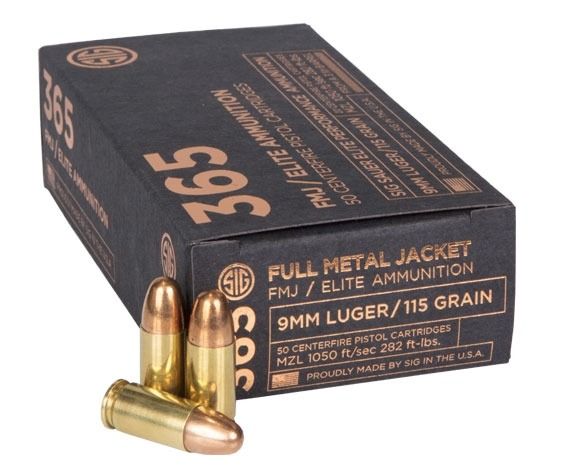
FMJ (Full Metal Jacket): A lead core fully encased in a copper jacket. FMJ rounds do not expand on impact — they penetrate in a straight line. This is your practice and range ammunition. It is the cheapest option and feeds reliably in virtually every firearm. Do not use FMJ for self-defense — the lack of expansion means overpenetration and reduced stopping effectiveness.
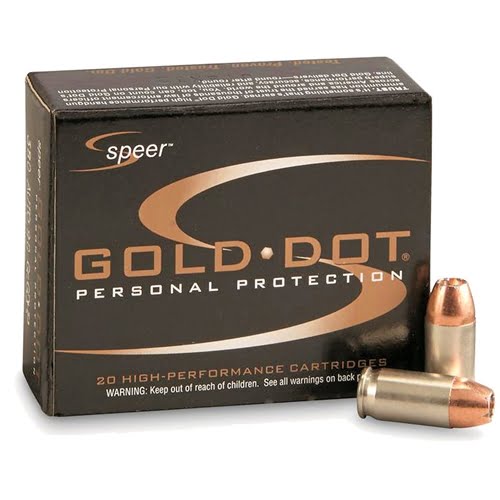
JHP (Jacketed Hollow Point): A copper-jacketed bullet with a hollow cavity in the nose. On impact, the hollow point causes the bullet to mushroom outward, creating a larger wound channel and transferring energy into the target more effectively. JHP also reduces overpenetration risk. This is your self-defense ammunition. Premium JHP brands include Federal HST, Speer Gold Dot, Hornady Critical Duty, and Winchester Ranger-T.
Soft Point (SP): A partially jacketed bullet with an exposed lead tip. On impact, the lead deforms and expands. Soft points are the traditional hunting bullet — they expand more predictably than hollow points through hide and bone. Popular for .308, .30-06, and other rifle calibers used for hunting.
Ballistic Tip / Polymer Tip: A hollow-point design with a polymer insert in the tip. The insert improves aerodynamics for better long-range accuracy and initiates expansion on impact. Hornady ELD-X, Nosler Ballistic Tip, and Federal Terminal Ascent are examples. Primarily used for hunting and long-range shooting.
Frangible: Made from compressed copper or other metals that disintegrate on impact with hard surfaces. Designed for close-quarters training environments and steel target shooting at close range. They reduce ricochet and splashback risk.
Tracer, AP (Armor Piercing), Incendiary: Specialty ammunition that is restricted or banned for civilian purchase in many jurisdictions. Check federal and state laws before purchasing. Generally not relevant for civilian shooters.
Grain Weight Explained
“Grain” (abbreviated gr) is a unit of weight (7,000 grains = 1 pound). When ammunition lists a grain weight — like “124-grain 9mm” — it refers to the bullet weight only, not the entire cartridge. Grain weight affects:
- Velocity: Lighter bullets travel faster. A 115-grain 9mm typically runs 1,150-1,200 fps; a 147-grain 9mm runs 950-1,000 fps.
- Recoil: Heavier bullets generally produce more felt recoil, though this is also affected by powder charge and barrel length.
- Terminal performance: Heavier bullets carry more momentum and often penetrate deeper. Lighter bullets may fragment more readily.
- Accuracy: In rifles, heavier bullets are often more accurate at longer ranges due to higher ballistic coefficient (better resistance to wind and drag).
Common grain weights by caliber: 9mm: 115gr (budget/plinking), 124gr (standard/defensive), 147gr (subsonic/suppressed). 5.56/.223: 55gr (standard), 62gr (M855 steel-tip), 77gr (match/precision). .45 ACP: 185gr (light), 230gr (standard). .308 Win: 147gr (M80 ball), 168gr (match), 175gr (long-range match).
Brass vs. Steel vs. Aluminum Cases
Brass-cased ammunition is the gold standard. Brass is softer than steel, which means it seals the chamber more effectively (reducing gas blowback), extracts more reliably, and causes less wear on your extractor. Brass cases are also reloadable if you get into handloading. This is what I recommend for all purposes.
Steel-cased ammunition (Wolf, Tula, Barnaul) is 20-40% cheaper than brass but comes with trade-offs: harder on extractors, often uses bimetal jackets that wear barrels faster, and many indoor ranges prohibit it. Some firearms are finicky with steel-cased ammo. It works fine in AK-pattern rifles (which were designed for it) but I avoid it in AR-15s and precision firearms.
Aluminum-cased ammunition (CCI Blazer) is a middle ground — lighter than brass, non-reloadable, but soft enough to extract reliably. It is a perfectly acceptable budget option for range practice in handguns.
Best Ammunition by Caliber
Here are my specific recommendations for the most common calibers, split into practice and defensive/hunting categories:
9mm Luger
Best practice ammo: Federal American Eagle 124gr FMJ, PMC Bronze 115gr FMJ, Norma Range & Training 124gr FMJ, Blazer Brass 115gr FMJ. All are brass-cased, reliable, and typically 22-28 cpr in bulk.
Best defensive ammo: Federal HST 124gr (the law enforcement standard — consistent 14-16″ penetration, .55-.65″ expansion), Speer Gold Dot 124gr (bonded core, excellent through barriers), Hornady Critical Duty 135gr +P (barrier-blind performance). For short-barreled carry guns, Hornady Critical Defense 115gr is designed to expand reliably at lower velocities. For the full breakdown, read our best 9mm ammo guide.
5.56 NATO / .223 Remington
Best practice ammo: Federal American Eagle 55gr FMJ (XM193), PMC X-TAC 55gr (mil-spec equivalent), Norma Tactical 55gr. Budget 30-40 cpr for brass-cased in 2026.
Best match ammo: Federal Gold Medal 77gr SMK (the precision standard), Hornady 73gr ELD-Match (excellent BC), IMI Razorcore 77gr OTM. Expect $1.00-$1.50 per round for genuine match-grade ammunition.
Best defensive ammo: Hornady 75gr TAP (FBI-tested, excellent terminal performance), Speer Gold Dot 62gr (barrier-blind bonded bullet), Federal Tactical 62gr Bonded. Read the complete AR-15 ammo guide for detailed ballistic data.
.45 ACP
Best practice ammo: Federal American Eagle 230gr FMJ, Blazer Brass 230gr FMJ, PMC Bronze 230gr FMJ. Budget 35-45 cpr.
Best defensive ammo: Federal HST 230gr (massive expansion, consistent penetration), Speer Gold Dot 230gr (bonded, reliable feeding in 1911s), Hornady Critical Duty 220gr +P. See our best .45 ACP ammo guide for the complete analysis.
.308 Winchester / 7.62 NATO
Best practice ammo: Federal American Eagle 150gr FMJ, PMC Bronze 147gr FMJ, Norma Tactical 150gr FMJ. Budget 55-75 cpr.
Best match ammo: Federal Gold Medal 168gr SMK (the standard for .308 match shooting), Hornady Match 168gr ELD-M, Lapua Scenar 167gr. Expect $1.20-$1.80 per round.
Best hunting ammo: Federal Terminal Ascent 175gr (bonded, great weight retention across velocities), Hornady ELD-X 178gr (heat-resistant tip, excellent BC), Nosler AccuBond 165gr. Read our best .308 ammo guide for specific recommendations by game type.
.22 LR
Best practice ammo: CCI Standard Velocity (the gold standard — 1,070 fps, consistent, incredibly accurate), Federal AutoMatch (reliable semi-auto function), Aguila Super Extra. Budget 5-8 cpr.
Best target/match ammo: Eley Tenex (the competition standard — if your gun likes it, nothing is more accurate), CCI Green Tag, SK Standard Plus. Expect 10-20 cpr for genuine match-grade .22 LR. Read our best .22 LR ammo guide for detailed testing.
.380 ACP
Best practice ammo: Federal American Eagle 95gr FMJ, Blazer Brass 95gr FMJ. Budget 30-40 cpr.
Best defensive ammo: Hornady Critical Defense 90gr FTX (specifically designed to expand from short barrels), Federal HST Micro 99gr (engineered for .380 velocities). See our best .380 ammo guide.
12 Gauge
Best defensive loads: Federal FliteControl 00 Buckshot (the tightest buckshot pattern you will find — stays on a torso at 25 yards), Hornady Critical Defense 00 Buckshot (Versatite wad for tight patterns). For slug options, see our best 12 gauge slugs guide.
Best target/sporting loads: Federal Top Gun 7.5 shot, Winchester AA 7.5 shot (the trap and skeet standard), Fiocchi 7.5 shot. Budget 25-35 cents per shell in bulk.
For a full overview of how different calibers compare and which is right for your firearm, read our guide to the most popular rifle calibers in America.
How to Save Money on Ammo
Ammunition is the biggest ongoing cost of gun ownership. Here is how I keep my ammo budget under control while still training regularly:
Buy in Bulk
The per-round price drops significantly when you buy in bulk. A box of 50 rounds of 9mm might cost 32 cents per round. A case of 1,000 rounds of the same ammo runs 24 cents per round. Over a year of regular shooting (500 rounds per month), buying in bulk versus by the box saves $480. Always buy at least 500 rounds at a time — 1,000 is the sweet spot for most calibers.
Watch for Sales
The best ammo deals happen around Black Friday/Cyber Monday (late November), Independence Day (July), Memorial Day (May), and manufacturer rebate periods (Federal, Remington, and Winchester all run seasonal rebates). PSA’s daily deals frequently hit rock-bottom pricing. Set price alerts on AmmoSeek and our daily ammo deals page.
Factor in Shipping
Ammunition is heavy, and shipping costs can erase price advantages. A case of 1,000 rounds of 9mm weighs about 28 pounds. Shipping charges vary from free (PSA over $100, Brownells with code) to $15-$30 per order. Always calculate the total cost per round including shipping before buying. A retailer with slightly higher per-round pricing but free shipping often wins overall.
Consider Reloading
Reloading (handloading) your own ammunition can cut costs by 30-60% per round once you have recouped the initial equipment investment ($300-$600 for a quality setup). It also lets you tune loads for your specific firearm’s barrel and chamber. Reloading makes the most financial sense for expensive calibers — .308 Win, 6.5 Creedmoor, .300 Win Mag — and for high-volume shooters who go through 500+ rounds per month. It is not worth the effort for cheap calibers like 9mm or .22 LR unless you also enjoy the craft.
Train with .22 LR
A .22 LR conversion kit for your AR-15 ($200-$300) or a dedicated .22 LR pistol ($200-$400) lets you practice fundamentals at a fraction of the cost. At 5-8 cents per round versus 25-30 cents for 9mm, you can shoot 5x more for the same money. Dry fire is free and even more effective for trigger control. Pair both with occasional live-fire sessions in your primary caliber for the most cost-effective training program.
Ammo Storage: How to Keep Your Ammunition Safe
Properly stored ammunition lasts decades. Improperly stored ammunition can degrade, corrode, and become unreliable. Here is how to store ammo correctly:
The Enemies of Ammunition
Moisture is the primary threat. Water causes brass to corrode, primers to degrade, and powder to absorb humidity (leading to inconsistent ignition). Extreme heat (above 150°F sustained) can degrade powder and primers. Temperature cycling (hot days, cold nights) causes condensation inside ammo cans. Direct sunlight accelerates all of the above.
Best Storage Practices
- Use military-surplus ammo cans. The .50 caliber ammo can with a rubber gasket seal is the gold standard for ammunition storage. They are waterproof, stackable, and nearly indestructible. Buy them at surplus stores for $10-$15 each.
- Store in a cool, dry, climate-controlled space. A closet in your house is better than a garage, shed, or attic. The ideal temperature range is 55-75°F with low humidity.
- Add desiccant packs. Throw a silica gel desiccant packet in each ammo can to absorb residual moisture. Replace the desiccant annually.
- Label everything. Mark each can with caliber, grain weight, brand, purchase date, and quantity. When you pull a can out in three years, you do not want to wonder what is inside.
- FIFO rotation. First in, first out. Shoot your oldest ammunition first and rotate new purchases to the back of the shelf.
How Long Does Ammo Last?
Modern commercial ammunition stored properly can last 50+ years. I have personally shot military surplus 7.62 NATO from the 1970s with zero issues. The primers and powder in modern brass-cased ammunition are remarkably stable when kept dry. That said, rotate your carry ammunition every 6-12 months — the repeated chambering cycle and exposure to body heat, sweat, and humidity can degrade reliability. Shoot your old carry ammo at the range and load fresh rounds.
How Much Ammo Should You Keep on Hand?
This depends on your situation, but here are my general guidelines:
Minimum for each firearm you own: 200 rounds of defensive/hunting ammunition and 500 rounds of practice ammunition. This gives you enough to maintain your training schedule for 2-3 months even if supply chain disruptions hit (as we saw in 2020-2021).
Comfortable supply: 1,000 rounds of practice ammo and 200 rounds of defensive ammo per caliber. This is my personal baseline.
Deep stock: 2,000-5,000 rounds of practice ammo per primary caliber. This level protects against extended shortages and price spikes. Buy when prices are low and you will always have ammo when you need it, at prices you are happy with. Our guide on why you should stock up on ammo explains the reasoning in detail.
Ammunition Safety
Ammunition is generally very safe when handled and stored properly. A few important safety points:
- Never fire ammunition in a firearm not chambered for it. A .300 Blackout round will chamber in a 5.56 NATO rifle — and if fired, it will cause a catastrophic failure. Always verify you are loading the correct caliber.
- Inspect your ammo before loading. Look for corroded primers, dented cases, seated bullets (bullet pushed back into the case), and cracked necks. Discard any questionable rounds.
- Do not shoot wet or submerged ammunition. Water can infiltrate the primer or case mouth, causing hangfires (delayed ignition) or misfires.
- Ammunition outside of a firearm is not explosive. A round of ammunition sitting on a table and exposed to fire will “cook off” with a pop — the case ruptures, but without a chamber to contain the pressure, the bullet has minimal velocity. It is nothing like a fired round. Store your ammo safely, but do not be afraid of it.
- Keep ammunition away from children. Store it in a locked cabinet, safe, or locked ammo can. Teach children gun safety appropriate to their age — curiosity is the biggest risk.
Frequently Asked Questions
Is it legal to buy ammo online?
Yes, in most states. Ammunition ships directly to your door via UPS or FedEx without an FFL transfer or background check in the majority of states. Exceptions include California, New York, Connecticut, Illinois, Massachusetts, New Jersey, and Washington D.C., which have various restrictions. Check our gun laws by state guide for your state’s specific requirements.
How old do you have to be to buy ammo?
Under federal law, you must be 18 years old to purchase rifle and shotgun ammunition and 21 years old to purchase handgun ammunition from a licensed dealer. Some states have additional age requirements. Note that ammunition marketed for both handguns and rifles (like 9mm or .22 LR) may fall under the 21+ requirement at some retailers.
What is the difference between +P and standard ammo?
+P ammunition is loaded to higher pressures than standard for that caliber — approximately 10% higher in most cases. This produces higher velocity and energy, improving terminal performance. Most modern firearms are rated for +P use, but check your owner’s manual. +P+ exceeds even +P pressures and is not standardized by SAAMI — use only in firearms specifically rated for it. Steady diet of +P ammunition accelerates wear on recoil springs and frames.
Can I mix different brands of ammo in a magazine?
You can, but I would not recommend it for defensive use. Different brands have different bullet profiles, overall lengths, and pressure curves that can affect reliability. For practice at the range, mixing brands is fine. For carry and home defense magazines, load one consistent brand and type throughout.
Should I buy steel-cased or brass-cased ammo?
Brass-cased is better in virtually every way — more reliable extraction, less wear on the firearm, reloadable, and accepted at all ranges. Steel-cased (Wolf, Tula) saves 20-40% per round but is prohibited at many indoor ranges, causes more extractor wear, and uses bimetal jackets that accelerate barrel wear. For AK-pattern rifles, steel-cased is perfectly fine. For AR-15s, quality handguns, and precision rifles, stick with brass.
How much ammo should I bring to the range?
For a productive range session, bring 150-200 rounds for handguns (about 1-1.5 hours of focused practice) or 100-150 rounds for rifles. Bring enough to run drills with purpose — “mag dumping” 500 rounds with no structure teaches you nothing except how to waste money. Have a plan for each session: draw drills, accuracy at specific distances, timed strings, or malfunction clearance practice.
What ammo should I use for home defense?
For handguns: Federal HST, Speer Gold Dot, or Hornady Critical Duty in your gun’s caliber. For AR-15s: Hornady 75gr TAP or Speer Gold Dot 62gr. For shotguns: Federal FliteControl 00 Buckshot. The key requirement is reliable expansion, consistent penetration (12-18″ in gel), and proven reliability in your specific firearm. Fire 50-100 rounds of your chosen defensive ammo through your gun to verify function before relying on it. See our which defensive ammo is best for you guide for a complete comparison.
Final Thoughts
Buying ammo online is simple, legal (in most states), and saves serious money compared to local gun stores. The keys are: buy in bulk to lower your per-round cost, compare prices including shipping, stock up when prices are low, and store properly in sealed ammo cans in a climate-controlled space.
Do not cheap out on defensive ammunition. The Federal HST, Speer Gold Dot, and Hornady Critical Duty loads I recommended cost $1.00-$1.50 per round — a small price for the ammunition your life may depend on. Practice ammo is where you save money. Defensive ammo is where you invest.
Check our daily ammo deals page for the best current prices across dozens of retailers — we update it every day. Use our price comparison tool to find the best deal on your specific caliber and brand. And if you are still choosing a firearm, our handgun buyer’s guide and AR-15 buyer’s guide will help you find the right gun before you start buying ammo for it.