

Affiliate disclosure: This Browning BAR MK4 review contains affiliate links. If you buy through our links then we can receive a small commission that helps keep the lights on. You don’t pay anything more.
- Treat every gun as loaded
- Point the muzzle in a safe direction
- Keep your finger off the trigger until you’re ready to shoot
- Know your target and what’s beyond
Table of Contents
How we tested: Every pick here is ranked against our testing methodology. Minimum round counts, accuracy and reliability protocols, the failures that disqualify a gun. Where we have not shot a specific variant ourselves, we say so in that section.
Review: Browning BAR MK4 – The Deer Rifle Built for the Second Shot
Our Rating: 8.4/10
- RRP: $1,639.99 (standard chamberings), $1,739.99 (magnums)
- Street Price: $1,387.99 (Use our live pricing for the best up to date deal)
- Caliber: .30-06 Springfield tested, also .243 Win, .270 Win, .308 Win, 7mm Rem Mag, .300 Win Mag
- Action: Gas piston operated semi-automatic
- Barrel Length: 22 in. fluted sporter (24 in. on magnums)
- Twist Rate: 1:10 in. (.308 Win is 1:12, 7mm Rem Mag is 1:9.5)
- Capacity: 4+1 standard, 3+1 magnum, hinged floorplate magazine
- Overall Length: 43 3/8 in.
- Length of Pull: 13 3/4 in. (walnut), 14 3/8 in. (composite)
- Weight: 7 lbs 2 oz listed, 7 lbs 7 oz on our scale
- Receiver: Aluminum alloy, drilled and tapped, matte black
- Stock: Grade II Turkish walnut, oil finish, Inflex II recoil pad
- Trigger: Gold plated single stage, 3.25 to 3.5 lbs measured
- Safety: Crossbolt
- Made in: Viana, Portugal
Pros
- Gas piston soaks up 30-06 recoil
- Grouped 1.12 inches with Power Points
- Left hand models in every chambering
Cons
- Barrel heats fast, three shot strings
- No threaded muzzle for a suppressor
- The older MK3 costs far less


Quick Take
The BAR is the rifle you buy when you hunt where second shots happen. Thick timber, driven deer, hogs coming out of a creek bottom. Browning has been building it in Portugal since the early 1970s, and the MK4 is the current chapter: a threaded barrel to receiver joint, a lighter trigger, and new detachable magazine and left hand configurations.
It shoots. Winchester 150 grain Power Points went into 1.12 inches at 100 yards out of the .30-06, and the .308 put Hornady 178 grain ELD-X into 1.24 inches. That is hunting accuracy from a gas gun, not target accuracy, and the gas piston under the forearm makes a full power .30-06 feel like a mild .243.
Here is the part that should decide your purchase. Browning still lists the previous generation MK3 as current production, in nine chamberings against the MK4’s six, and Palmetto State Armory is selling an MK3 Stalker in .300 Win Mag for $899.99 while the cheapest trusted MK4 sits at $1,387.99.
Best For: Timber and stand hunters who want a fast second shot and a soft shooting .30-06. Not for anyone chasing sub MOA groups or planning to hang a suppressor off the muzzle.

The MK3 Is Still On The Shelf, And It Is Cheaper
Every BAR buyer runs into this and almost nobody writes it down. The MK3 Stalker is listed by Browning as current production, not old stock, and its list price starts $250 under the MK4. On the street the gap is wider still.
| Model | Stock | Chamberings | MSRP | Trusted street |
|---|---|---|---|---|
| BAR MK4 Hunter | Walnut | 6 | $1,639.99 | $1,387.99 |
| BAR MK4 Hunter Composite | Composite | 6 | $1,639.99 | $1,388.99 |
| BAR MK4 Medallion | Walnut, nickel | 6 | $1,899.99 | $1,659.99 |
| BAR MK4 DBM Hunter | Composite | .308 only | $1,879.99 | $1,639.99 |
| BAR MK3 Stalker | Composite | 9 | $1,389.99 | $899.99 |
The MK3 also covers ground the MK4 dropped. Browning lists the Stalker in 7mm-08 Rem, .270 WSM and .300 WSM on top of the six the MK4 offers, and the two WSM chamberings are the cheapest SKUs in the whole BAR catalog at $1,389.99 list. If you want a short magnum BAR, the MK4 does not make one.
So what does the extra money buy? A barrel that threads into the receiver instead of being pressed and pinned, a trigger that broke about three quarters of a pound lighter on our scale, and the configurations the MK3 never got: a 10 round detachable box magazine and left hand models. Those are real, and on a rifle you will own for twenty years they may be worth it. Just make the trade with your eyes open.

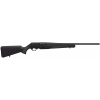
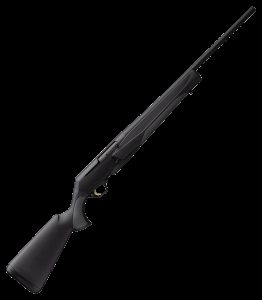
Which BAR MK4 To Buy
Ten MK4 configurations are in current production. The differences that matter are stock material, magazine type and whether you shoot left handed.
Start with the one nobody expects: walnut costs nothing. The Hunter in Grade II Turkish walnut and the Hunter Composite carry the same $1,639.99 list, and in the standard chamberings they weigh the same 7 lbs 2 oz. The stocks are not identical, though. The composite gives you a 14 3/8 in. length of pull against 13 3/4 in. on the wood, and a lower comb. In the magnums the composite is the lighter gun by six ounces, 7 lbs 5 oz against 7 lbs 11 oz, because a magnum walnut stock is a lot of timber.
MK4 Hunter, walnut, 7 lbs 2 oz $1,388-$1,438
MK4 Hunter Composite, 14 3/8 in. pull $1,389-$1,430
MK4 DBM Hunter, 10 round magazine $1,640-$1,880
MK4 Medallion, nickel receiver $1,660-$2,030
The magnum tax is $100 at list and about $90 on the street, and it buys two more inches of barrel, nine more ounces on the walnut gun and one fewer round in the magazine. The DBM models swap the hinged floorplate for a 10 round detachable box, cut the barrel to 18.5 inches and are .308 only. The Medallion adds a nickel receiver and better wood.
Left handers get looked after here in a way they rarely are. Browning lists left hand Hunter, Hunter Composite, Medallion and Speed models at a $70 premium, $1,709.99 against $1,639.99. Compare that with the Browning Citori CXS side of the house, where left hand guns are thin on the ground.
How We Tested It
Phase 1: Break-In and Trigger
We gauged the trigger before firing. The gold plated blade broke at 3.5 pounds on the .30-06 and 3.25 pounds on the .308, with noticeable take-up and a little creep before the break. It is not a bolt gun trigger and it is not pretending to be. The face is wide and flat, which makes the pull easier to control than the numbers suggest.
First hint that this is not a target rifle: the fluted sporter barrel heats up fast. After three shots it was warm enough that we stopped shooting five shot strings on the .30-06 and let it cool between groups.

Phase 2: Reliability
Just over 400 rounds went through the pair, a mix of 150, 178, 180 and 220 grain factory loads, in weather from 40 to 70 degrees. There were no failures to feed, fire or eject, and no short strokes on the lightest loads.
The gas piston lives under the forearm and runs cleaner than an AR style direct impingement system, which matters on a rifle you carry in the rain for a week. Stripping it is the trade. Getting the trigger group and magazine well off a BAR means driving out notched crosspins and pulling two fasteners, and that is a kitchen table job, not a tailgate job.
Phase 3: Accuracy
Groups were fired from a sandbag rest at 100 yards under a Leupold VX-6HD 1-6×24, with velocities averaged over 10 shots on a Garmin Xero C2 Pro. The .308 numbers are three five shot groups per load; the .30-06 numbers are three shot strings because of the barrel heat.
| Load | Chambering | Velocity | Average group |
|---|---|---|---|
| Winchester 150 gr. Power Point | .30-06 | 3,037 fps | 1.12 in. |
| Hornady 178 gr. ELD-X Precision Hunter | .308 | 2,491 fps | 1.24 in. |
| Fiocchi 150 gr. Copper HP Knockdown | .308 | 2,858 fps | 1.54 in. |
| Federal 180 gr. Fusion Tipped | .308 | 2,514 fps | 1.62 in. |
| Remington 150 gr. Core-Lokt Copper | .308 | 2,790 fps | 1.78 in. |
| Remington 180 gr. Core-Lokt | .30-06 | not chronographed | 1.83 in. |
Read that table the way a hunter would. Every load stayed inside two inches, the spread between the best and the worst was about seven tenths of an inch, and the rifle told us which ammunition it liked within one range session. Buy a box of three loads, shoot them, then buy a case of whichever wins.
Ammunition Log
- Winchester 150 gr. Power Point, .30-06: accuracy and chrono
- Remington 180 gr. Core-Lokt, .30-06: accuracy
- Federal 220 gr. round nose, .30-06: function only, heaviest bullet we could find
- Hornady 178 gr. ELD-X, .308: accuracy and chrono
- Fiocchi 150 gr. Copper HP, .308: accuracy and chrono
- Federal 180 gr. Fusion Tipped and Remington 150 gr. Core-Lokt Copper, .308
What This Means for You
- Reliability: Nothing to report in 400 rounds. This is the BAR’s reputation and it held.
- Ammo preference: It liked the 150 grain Power Point and the 178 grain ELD-X. Cheap copper hollow points were the loosest.
- Accuracy expectation: Plan on 1.2 to 1.8 inches at 100 yards with factory ammunition.
- Maintenance: Wipe the piston and the gas ports every few hundred rounds. Full teardown is a bench job.
Performance Results
Reliability (9/10)
Four hundred rounds without a stoppage, across two rifles and four bullet weights from 150 to 220 grains, is the whole argument for buying a BAR instead of something cheaper. The gas system is not fussy about ammunition, and the bolt locks back when the magazine runs dry.

Accuracy (8/10)
A 1.12 inch group from a semi-automatic hunting rifle is genuinely good, and Browning’s threaded barrel to receiver joint is the likeliest reason the MK4 shoots tighter than the BARs we grew up with. It is not sub MOA across the board, and a bolt gun at this money will beat it on paper.
Ergonomics and Recoil (9/10)
If you shoot Browning’s autoloading shotguns, your hands already know this rifle. The safety and the bolt release sit where an A5 or a Maxus puts them, and the receiver even carries a slight humpback. Recoil is the headline: between the gas piston and the Inflex II pad, a .30-06 that would thump you in a seven pound bolt gun feels closer to a .243.
Fit, Finish, and Quality Control (9/10)
Both rifles came out of the box straight, with even checkering and no proud edges. One honest note on the numbers: Browning lists the Hunter at 7 lbs 2 oz and our scale read 7 lbs 7 oz empty. Five ounces is not a scandal, but do not plan a mountain hunt around the catalog figure.
Technical Deep Dive
The Barrel Joint Is The Whole Story
Browning’s own explanation of the MK4 is a threaded barrel to receiver interface, and that is a real engineering change rather than marketing. A barrel that screws into the receiver under tension returns to the same place shot after shot, which is why bolt actions have done it that way forever. The rest of the MK4 update is a lighter trigger and revised recoil management.
| Component | Specification | Why it matters |
| Gas system | Piston under the forearm | Runs cleaner and softer than direct impingement |
| Barrel | 22 in. fluted sporter, threads into receiver | The MK4’s accuracy change |
| Receiver | Aluminum alloy, drilled and tapped | Keeps an 8 pound rifle off your shoulder |
| Magazine | 4 round, hinged floorplate (10 round DBM option) | Load it in place or drop the box |
| Recoil pad | Inflex II | Directs comb away from the cheek |
| Muzzle | Not threaded | No suppressor without gunsmithing |
Where It Is Built
The BAR was designed by Bruce Browning and finished at FN in Belgium, and production moved to Portugal in the early 1970s. It has stayed there ever since, which is why the barrel on your new MK4 says Viana rather than Morgan, Utah. That is also why this rifle has never shared a factory with Browning’s Japanese built shotguns.
How It Compares
For the wider field, our best .30-06 rifles and best deer hunting rifles rankings cover the bolt guns too. These are the three we would actually cross shop against a BAR.
Benelli R1 ($1,300-$1,800)
The other serious semi-automatic hunting rifle, and the one that undercuts a new MK4 at Guns.com’s $1,299.99. Benelli’s ARGO rotating bolt system is excellent and the R1 handles beautifully. The catch is availability: we track a handful of in stock R1 listings against eighty for the BAR, and parts and magazines follow that same ratio.
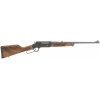
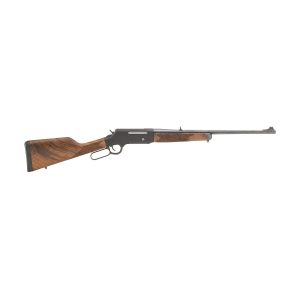
Henry Long Ranger ($940-$1,032)
A lever gun with a geared rotary bolt that shoots pointed bullets, so it covers the same timber and follow up shot ground for around $450 less. It is slower than the BAR on the second shot and the .30-06 is not on the menu, but for .308 and .243 deer hunting in close country it is a genuine alternative with better rifle handling than most levers.
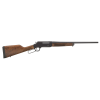
Browning BAR MK3 Stalker ($900-$1,361)
The in-house rival, and the hardest one to argue with. Same gas system, same handling, nine chamberings, and Palmetto State Armory has the .300 Win Mag at $899.99. You give up the threaded barrel joint, the lighter trigger, the detachable magazine option and left hand availability.
Verdict: The MK4 is the better rifle and the MK3 is the better buy. If the $488 matters at all, buy the MK3 and spend the difference on a scope and ammunition.
Upgrades Worth Making
| Upgrade Category | Recommended Component | Why It Matters | Priority |
| Optic | A 1-6x or 2-7x low power variable | Matches what this rifle is for: fast shots inside 300 yards | First |
| Spare magazine | Browning 10 round box, DBM models only | The hinged floorplate guns cannot take one | Second |
| Sling | A wide padded sling on the factory studs | Seven and a half pounds carries differently than seven | Third |
Skip the muzzle work. The barrel is not threaded, Browning has not committed to a suppressor ready BAR, and having a gunsmith thread a fluted sporter barrel on a gas gun is money spent against the grain of the design. If a can is the point, our best .308 rifles guide has bolt guns that come threaded.
Common Problems and Fixes
- Groups opening on the fourth and fifth shot: The fluted sporter barrel heats quickly. Shoot three shot strings and let it cool. This is a hunting barrel, not a bull barrel.
- Carbon in the gas system: Pull the forearm and wipe the piston every few hundred rounds. Neglect here is the usual cause of a sluggish BAR.
- Detail stripping feels intimidating: It needs notched crosspins driven out and two fasteners removed. Do it on a bench with a pick and a punch, or leave it to a gunsmith at your annual clean.
- Scope mounting confusion: The receiver is drilled and tapped from the factory, so you need bases for a BAR MK4 specifically, not a shotgun rail.
Who Should NOT Buy This Gun
- The suppressor owner: No threaded muzzle and no factory option. Buy a threaded bolt gun such as the Browning X-Bolt 2 instead.
- The long range shooter: 1.2 inches at 100 yards is hunting accuracy, not match accuracy. A Tikka T3x will shoot tighter for less money.
- The mountain hunter counting ounces: Seven and a half pounds before a scope is a lot to carry uphill. Look at a lightweight bolt rifle like the Christensen Arms Mesa FFT.
- Anyone shopping on price alone: The MK3 Stalker does nine tenths of this for $899.99 at Palmetto State Armory.
- The short magnum fan: The MK4 has no WSM chambering at all. That is MK3 territory, in .270 WSM and .300 WSM.
Final Verdict
The BAR MK4 does exactly what a BAR has done since 1967, with better accuracy than the old ones and a trigger that finally suits the rifle. Four hundred rounds, no stoppages, 1.12 inches with the load it liked, and recoil that makes a .30-06 pleasant. If you hunt timber, drive deer or just want a second shot without moving your face off the stock, this is the rifle.
What keeps it off a higher score is sitting in the same catalog. Browning still builds the MK3, still lists nine chamberings for it, and sells it for hundreds less. Buy the MK4 for the threaded barrel joint, the left hand option or the detachable magazine. Buy the MK3 if what you want is a BAR.
Final Score: 8.4/10. The best BAR yet, sold alongside the bargain that undercuts it.
FAQ: Browning BAR MK4
Is the Browning BAR MK4 accurate?
For a semi-automatic hunting rifle, yes. Our best group was 1.12 inches at 100 yards with Winchester 150 grain Power Points in .30-06, and the .308 averaged 1.24 inches with Hornady 178 grain ELD-X. Expect 1.2 to 1.8 inches with factory ammunition, which is hunting accuracy rather than match accuracy.
What is the difference between the Browning BAR MK3 and MK4?
The MK4 threads the barrel into the receiver instead of pressing it, which is the accuracy change, and it has a lighter trigger plus configurations the MK3 never got: a 10 round detachable box magazine and left hand models. The MK3 is still current production, offers nine chamberings against the MK4's six, and costs far less.
How much does a Browning BAR MK4 cost?
List is $1,639.99 for the standard chamberings and $1,739.99 for the magnums. Trusted retailers start it at $1,387.99. The Medallion runs $1,899.99 list and the DBM models $1,879.99.
How much does a Browning BAR MK4 weigh?
Browning lists 7 lbs 2 oz for the 22 inch standard chamberings and 7 lbs 11 oz for the walnut magnums. Our scale read 7 lbs 7 oz empty, so budget a few ounces over the catalog figure before you add a scope.
Can you put a suppressor on a Browning BAR MK4?
Not without gunsmithing. The muzzle is not threaded on any MK4, and Browning has not released a suppressor ready version. If a can matters, buy a rifle that comes threaded from the factory.
Where is the Browning BAR made?
In Viana, Portugal. The BAR was designed by Bruce Browning and first built at FN in Belgium, and production moved to Portugal in the early 1970s. Unlike Browning's shotguns, it has never been built in Japan.
6,417+ Gun & Ammo Deals
Updated daily from 200+ top retailers. Filter by category, caliber, action type, and price.
Related Guides