

Here is the joke at the center of Bullet Train. It’s a film about the most dangerous assassins in the world, packed into a train carriage, and almost none of them get to use a gun properly. Brad Pitt’s Ladybug is handed a beautifully built competition pistol and leaves it in a locker. Tangerine fires his revolver through a plush toy. The Zastava has a bomb in it. The Thompson is the wrong century.
That’s deliberate, and it makes the armory more interesting than the body count suggests. David Leitch came up through stunts, and the hardware in his films tends to be specified rather than generic. Not “a pistol,” but a Taurus PT92AFS-D with the model name legible on the frame. Not “a lever gun,” but a Marlin 336 wearing a Midwest Industries handguard. I went through all thirty-odd guns of Bullet Train, frame by frame. Here is what everyone actually carries, and what you’d buy to own the real version.
Table of Contents
The gun Ladybug leaves in the locker
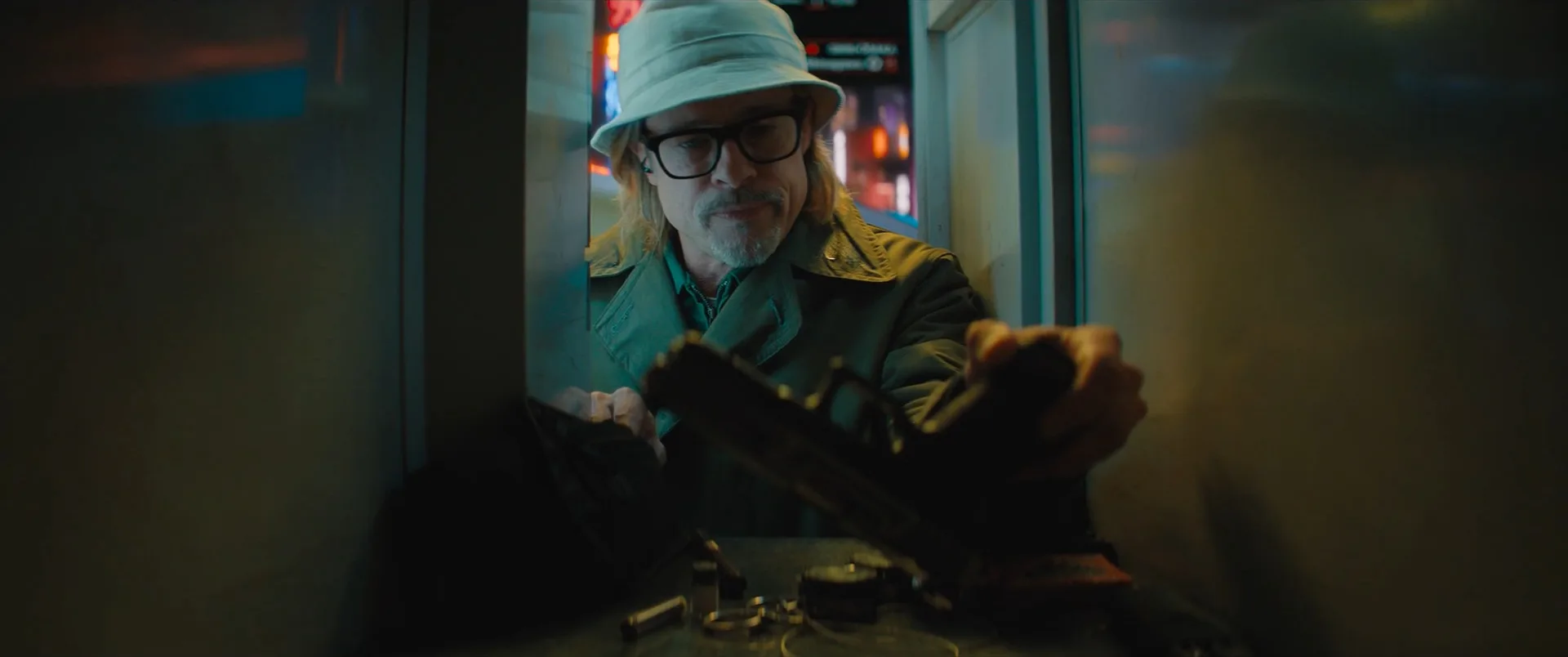
Ladybug’s handler leaves him a kit in a station locker. Sleeping pills, a multi-tool, a watch, firecrackers, and a Glock 17 built out with the Taran Tactical Innovations Combat Master package. He picks it up, looks at it, and puts it back down. He takes the firecrackers.
If that name rings a bell, it should. Taran Butler’s shop is the one that built John Wick’s guns, and the Combat Master package is the exact thing Keanu Reeves runs on screen. Stippled grip, competition slide cuts, a flared magwell, an extended magazine release. It’s a race gun dressed as a duty pistol, and it costs more than most people’s first three guns put together.
So the film hands its lead a John Wick gun in the first ten minutes and has him decline it. That’s the whole character in one prop. Ladybug is trying to be a better person, his therapist says so repeatedly, and the movie makes the point by putting the coolest pistol in the film in his hand and then taking it away.
You can get most of that look for a fraction of the money. A stock Glock 17 plus a decent trigger, a magwell and some grip work covers the practical part. We break the parts down in our best Glock 17 parts and accessories guide, and the base gun itself is covered in our Glock 17 Gen 6 review.
Lemon’s Taurus PT92, the one he calls Lucille
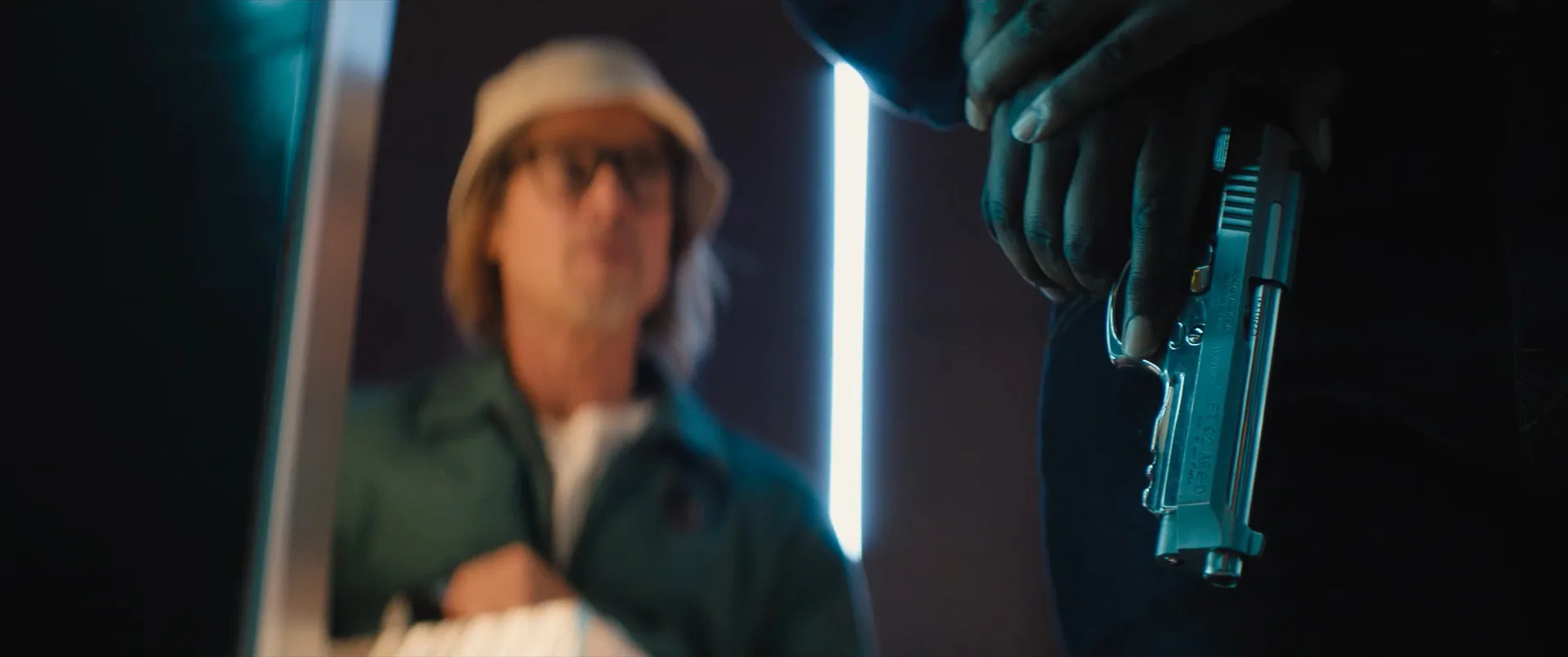
Lemon carries a Taurus PT92AFS-D through most of the film and calls it Lucille. It’s his gun in the Johannesburg flashback, it’s the gun he pulls on Ladybug by the carriage door, and it’s the gun Ladybug eventually unloads, strips and buries in the luggage rack.
Look at the frame in the shot above and you can read “PT 92 AFS-D” stamped on the side. Taurus sells the current version as the Taurus 92. That is not a prop department picking something vaguely Beretta-shaped. The PT92 is Taurus’s take on the Beretta 92, built on tooling Taurus acquired when Beretta left its Brazilian factory, and the giveaway is the safety. Beretta puts its safety on the slide. Taurus puts it on the frame, where a 1911 shooter expects it, and that single change is why a lot of people prefer the Taurus.
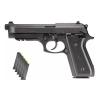
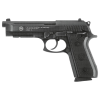
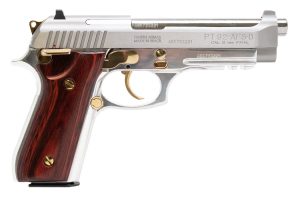
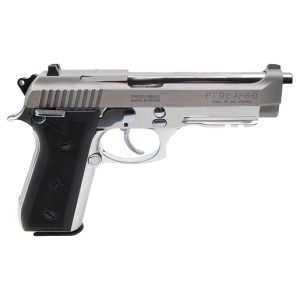
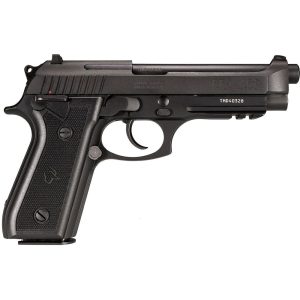
It’s also the most affordable serious gun in this film by a distance. A full-size steel-framed 9mm with a 17-round magazine for under five hundred dollars is a genuinely good deal, and it’s a much better pistol than its price suggests. Of everything the assassins carry, Lucille is the one I would actually recommend to somebody buying their first full-size 9mm.
Tangerine’s Smith & Wesson Model 36
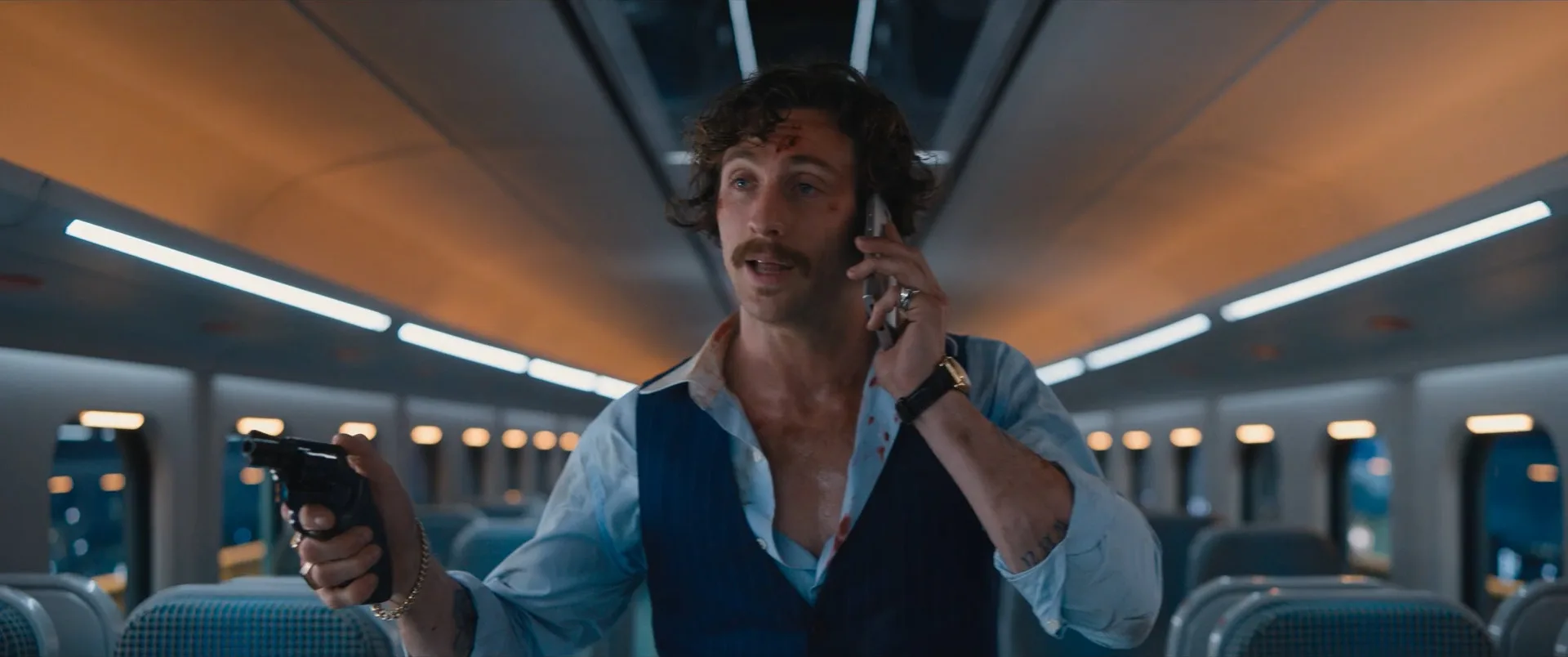
Tangerine’s primary weapon is a Smith & Wesson Model 36-10, the five-shot .38 Special J-frame with a barrel just under two inches, carried in a holster at the small of his back. It passes around more than any other gun in the film. He hands it to Lemon barrel-first, the Prince lifts it off Lemon and plants it in the unconscious Father’s hand to frame him for murder, Tangerine takes it back, and Ladybug takes it off Tangerine.
The choice fits the character better than a Glock would. Tangerine is the one in the tailored suit who talks about Thomas the Tank Engine, and a snub revolver is the gun that disappears under a jacket without printing. Five rounds, no magazine, nothing to go wrong. The small-of-back carry is pure style over sense, mind you. It’s slow to draw, it’s awkward seated, and sitting on a steel revolver for a four-hour train ride is its own punishment.
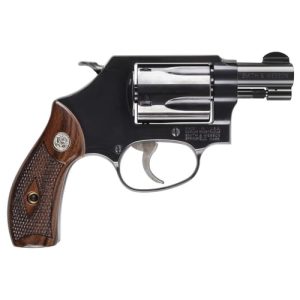
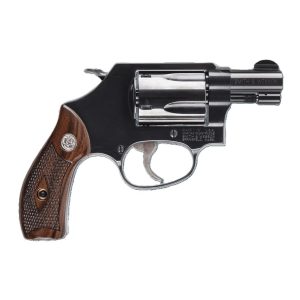
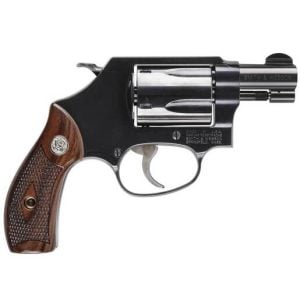
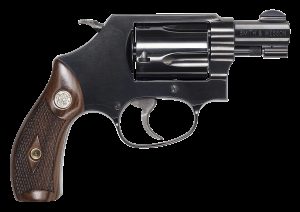
Smith still builds the Model 36 Classic, and the wider J-frame family has barely changed in seventy years because it did not need to. If you want the pocket-carry version rather than the blued collector’s piece, the aluminum-framed 442 and 642 do the same job for less. More options in our best snub-nose revolvers and best .38 Special revolvers guides.
About that plush toy silencer
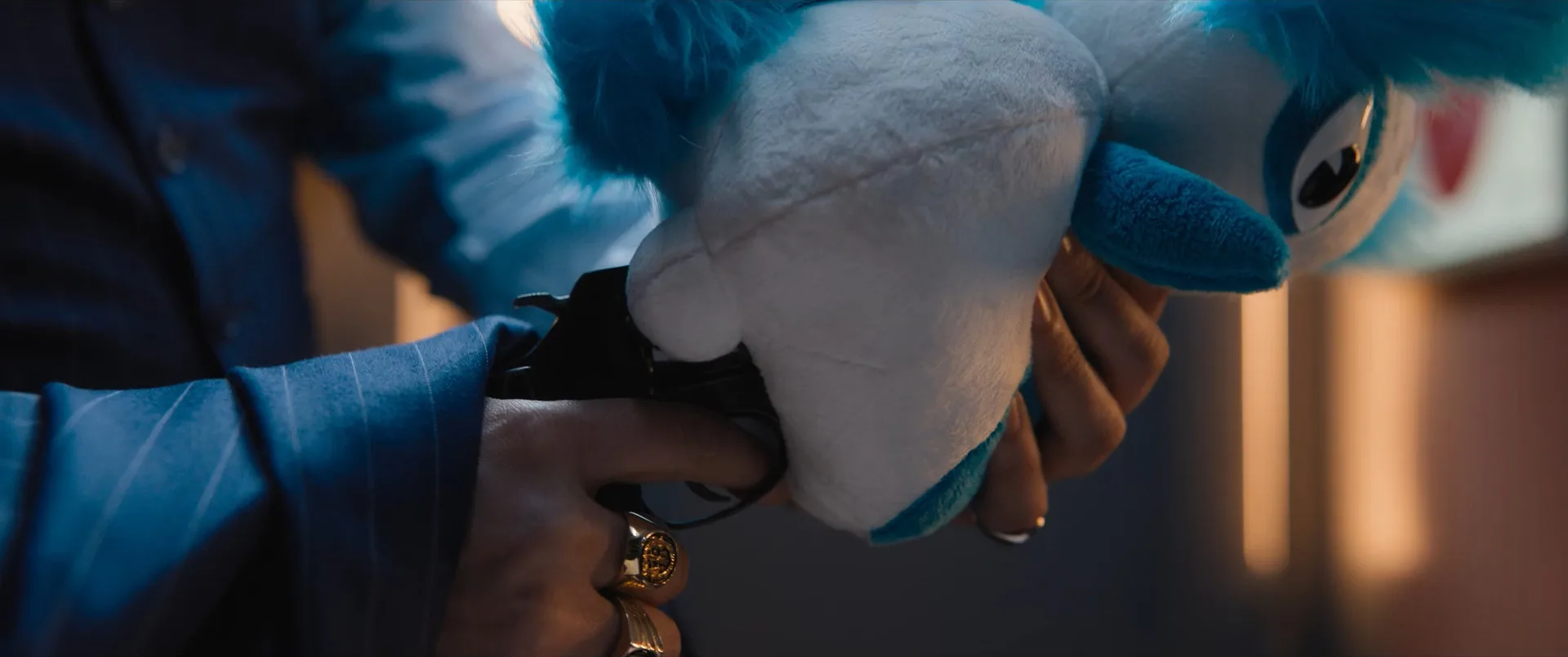
Tangerine jams a little girl’s Momomon plush over the muzzle and fires through a barricaded door. It’s a great gag. It would also do essentially nothing.
Two reasons, and the second is the one people forget. A suppressor works by giving expanding gas somewhere to slow down and cool off inside a sealed chamber before it reaches open air. A polyester toy has no baffles, no volume and no seal, so the gas blows straight through it. You get a mildly muffled first shot, a ruined toy, and a lot of burning stuffing.
The bigger problem is that he’s using a revolver. There’s a gap between the cylinder and the barrel on every conventional revolver, and a serious slice of the noise and gas escapes sideways out of that gap no matter what you hang off the muzzle. This is why suppressed revolvers are close to nonexistent, and why the handful that work at all use exotic gas-seal designs like the Nagant. Covering the muzzle of a J-frame does about as much as putting your hand over one end of a trumpet.
The White Death’s Smith & Wesson Model 29
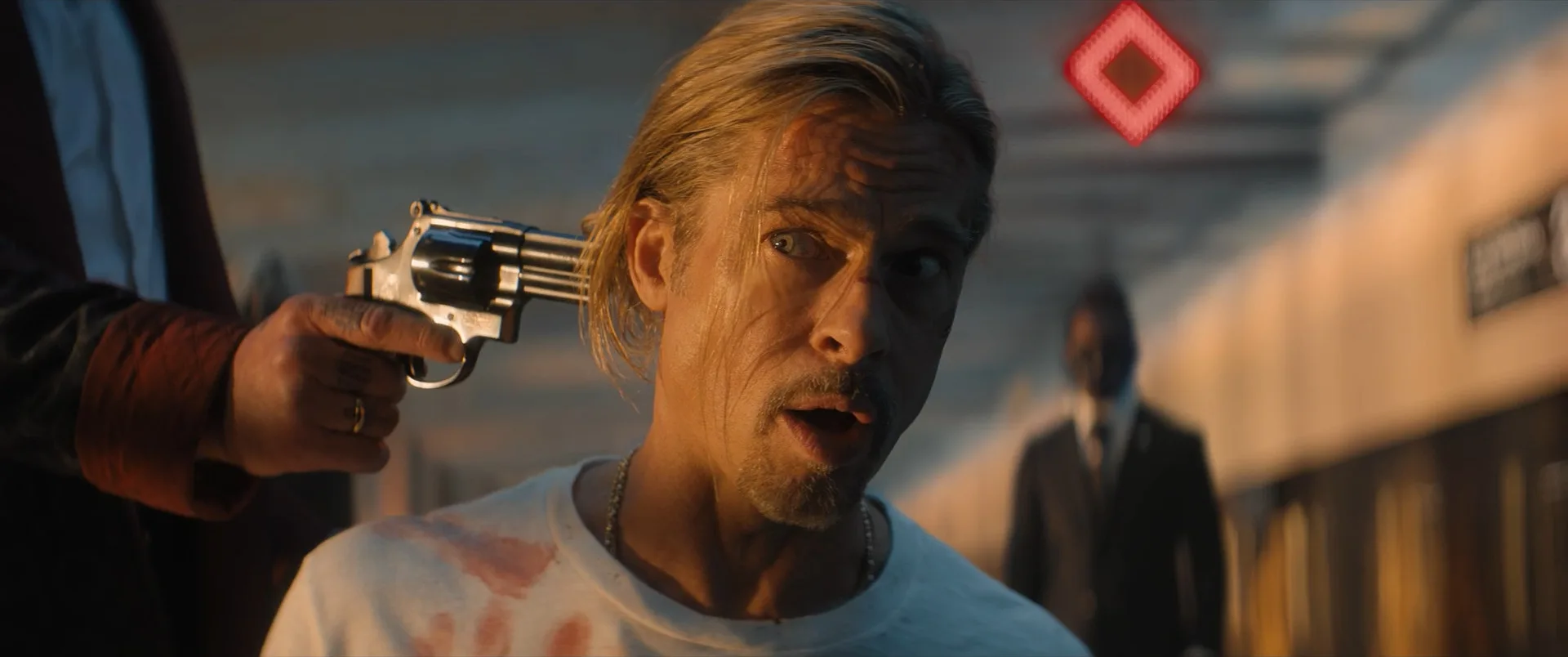
Michael Shannon’s White Death carries a Smith & Wesson Model 29 with a four-inch barrel, and he only ever uses it for one thing. He executes the previous Yakuza boss with it. He spins the cylinder against his coat sleeve. He unloads it down to a single round and plays Russian roulette with the Elder and with Ladybug. At no point does he use it in an actual fight.
That’s exactly right for the gun. The Model 29 is the .44 Magnum Dirty Harry made famous, and half a century later it still reads on screen as a threat rather than a tool. It’s big, it’s slow, it holds six, and nobody sensible picks one for a gunfight in a train corridor. The White Death carries it because it’s theater, and the character is nothing but theater.
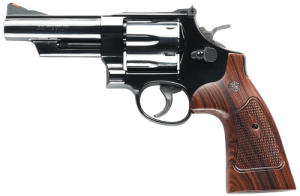
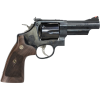
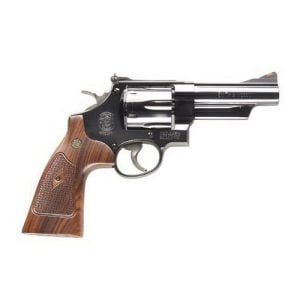
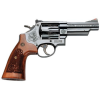
Smith brought the Model 29 Classic back and it is not a cheap gun any more. If you want the .44 without the collector premium, the stainless 629 does the same work. See our best .44 Magnum revolvers roundup, and our take on the guns of Dirty Harry if you want the original.
The Zastava M57 with a bomb in it
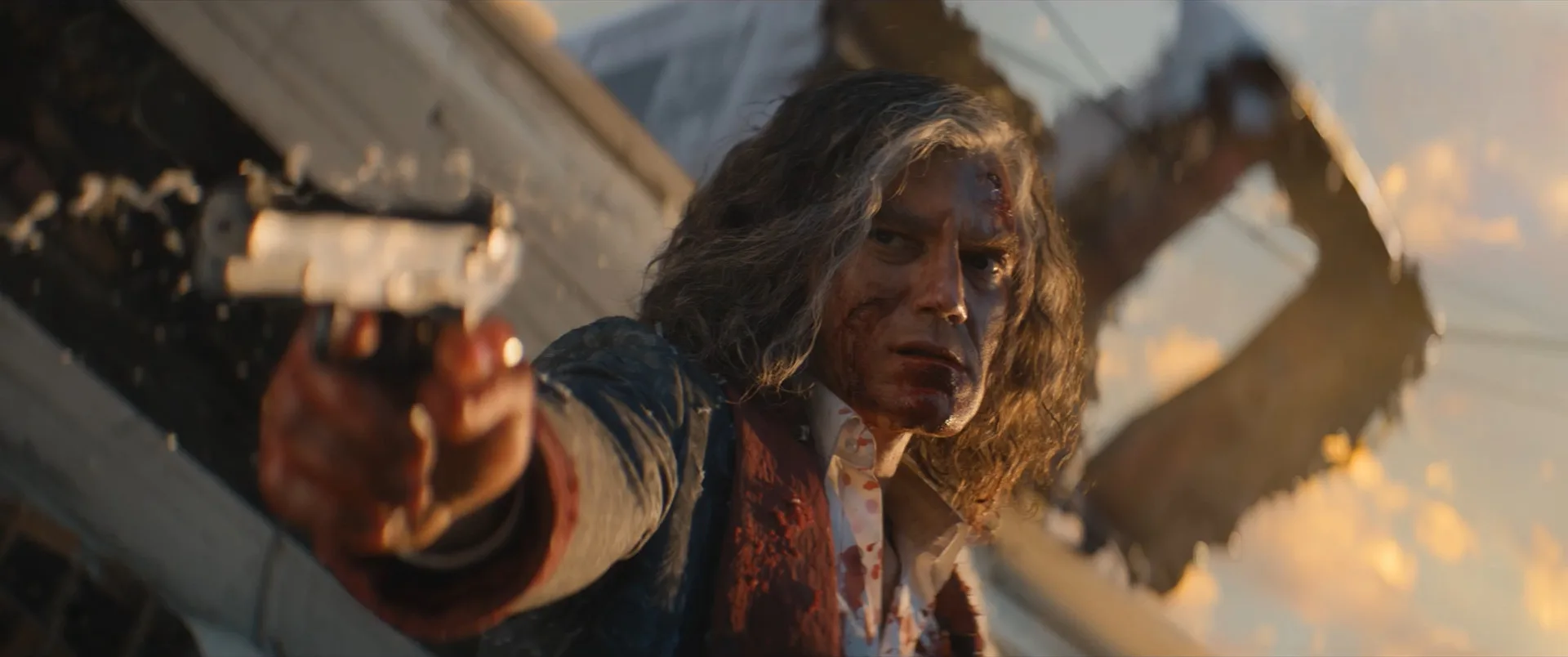
The Father brings a Zastava M57A aboard to kill the Prince. She tasers him, opens the pistol, drops a small charge inside that detonates when the gun is fired, and hands it back. It then changes hands three more times before the White Death ends up pointing it at Ladybug.
The M57 is the Yugoslav-built Tokarev, chambered in 7.62x25mm and carrying nine rounds instead of the Soviet TT-33’s eight. The film does something I haven’t seen another film bother with: it shows an x-ray of the pistol, and the frame markings are legible. “MADE IN SERBIA,” and in an earlier frame of the same shot, “C.A.I. Georgia, VT,” which is a Century Arms import stamp. Somebody sourced a genuine imported surplus M57 and let the camera sit on the proof of it.
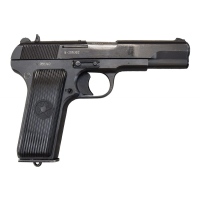
These come into the country as surplus rather than new production, so condition varies and availability comes and goes in batches. The 7.62×25 cartridge is the appeal and the catch: it’s fast, it’s flat, it will go through things a 9mm won’t, and it’s not something your local shop keeps on the shelf.
Lemon’s Marlin 336, the strangest gun in the film
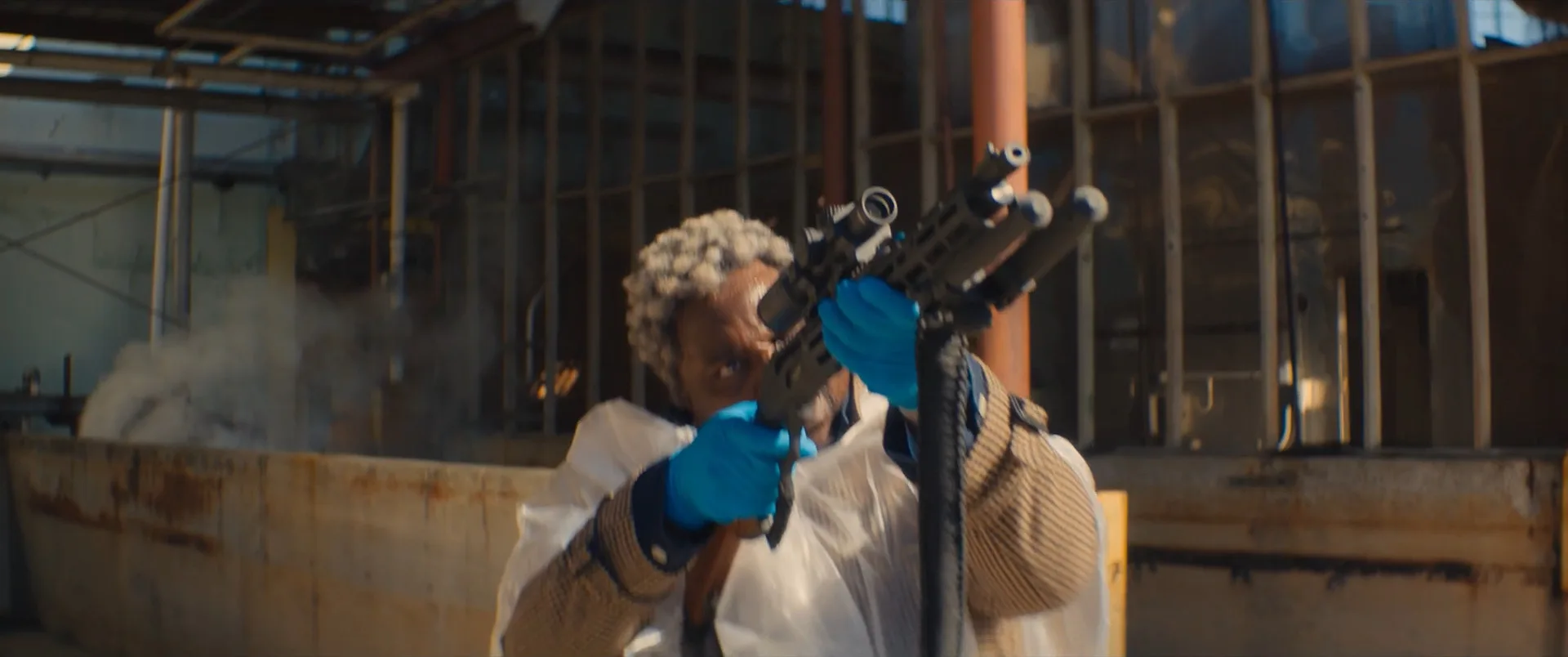
In the Bolivia flashback, Lemon works a heavily modified Marlin Model 336. Midwest Industries aluminum handguard with orange side panels, a scope, a bipod, an oversized lever loop, and the original walnut buttstock left on the back. It is a deer rifle from 1948 wearing modern rail furniture, and it’s the single most unusual gun in the movie.
Here is the thing though. That is a real category now. Midwest Industries genuinely makes that handguard, people genuinely build “tactical lever gun” 336s, and there’s a whole competition scene built around lever actions. The prop department did not invent this. They found a niche that already existed and put it in the hands of the character who talks about Thomas the Tank Engine’s moral clarity, which is a joke I only got on a second viewing.


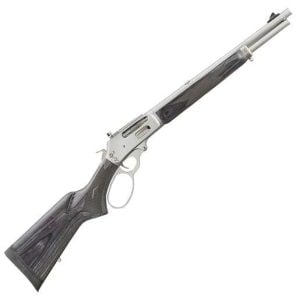
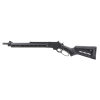
Ruger bought Marlin and restarted the 336, and by most accounts the new ones are better made than the last of the Remington-era guns. More in our best .30-30 lever action rifles guide and the wider best lever action rifles roundup.
The Wolf’s gold Rock Island 1911
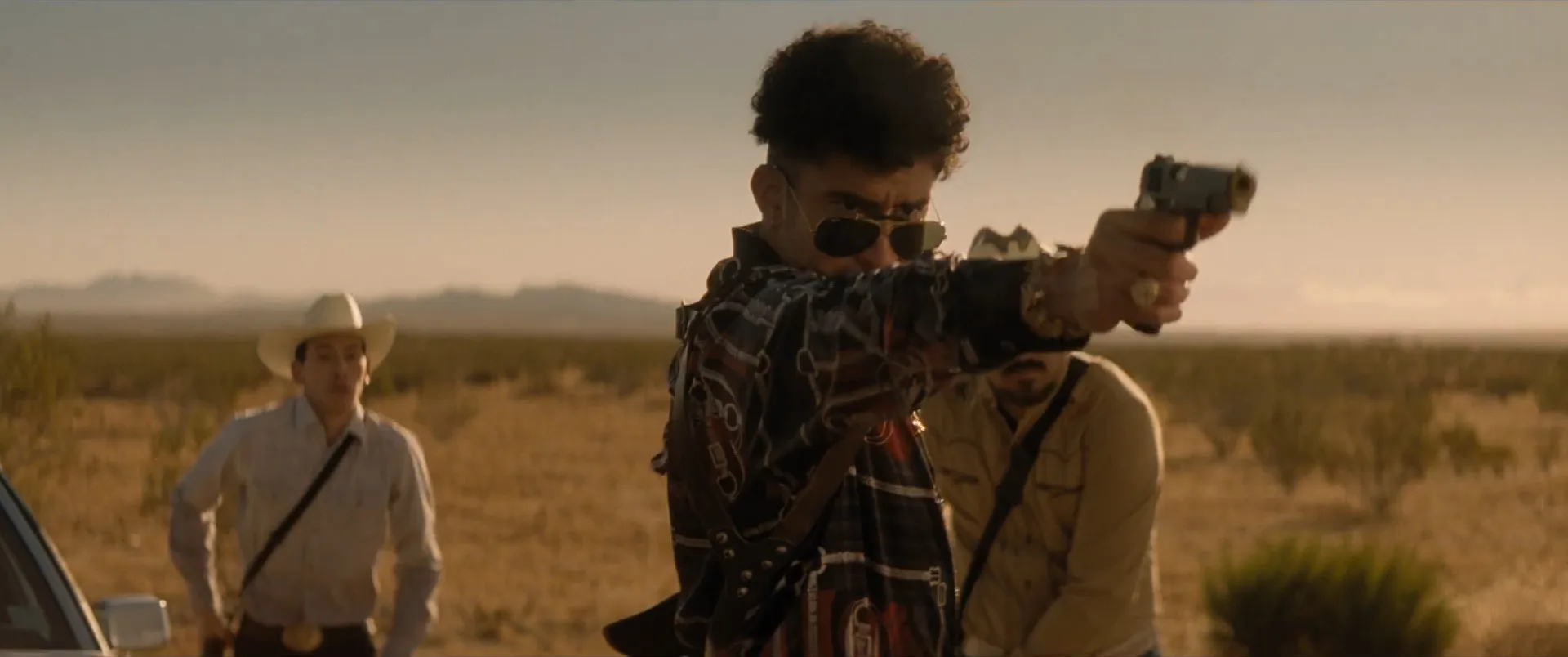
Bad Bunny’s Wolf gets a Rock Island Armory 1911 with gold accents and engraved grips, handed to him across a table when he takes his first job. Gold barrel bushing, gold trigger, gold slide stop, gold safety and hammer pins. He fires it exactly once, at the deal that goes wrong.
There’s a second gold 1911 in those flashbacks, a Colt M1911A1 belonging to El Saguaro, plus a nickel Colt on one of the White Death’s men at Shizuoka. The cartel scenes are wall-to-wall 1911s, which is good casting. The gold is not a Hollywood invention either. Plating a 1911 and engraving the grips is a real thing in the world these scenes are set in.
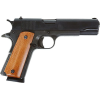
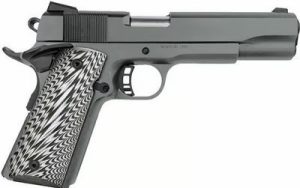
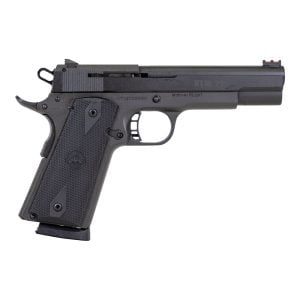
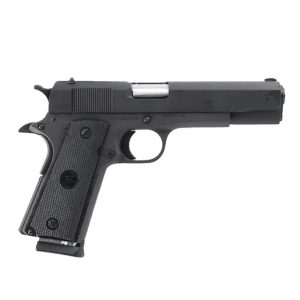
Rock Island is the reason a lot of people own a 1911 at all. The GI-pattern guns are plain, heavy, and cheap enough that customizing one doesn’t feel like vandalism. Our cheap 1911 pistols under $500 guide covers the ground.
The Prince and the Thompson
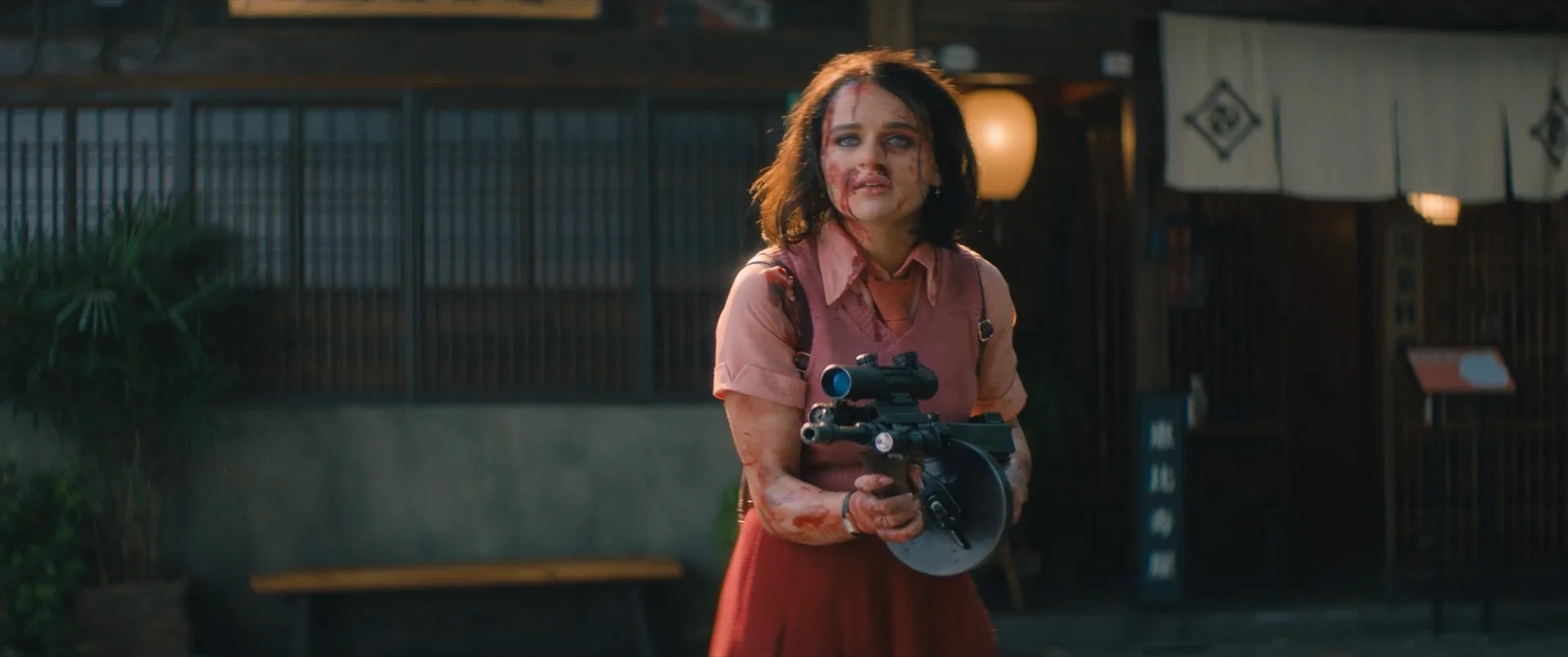
One of the White Death’s men at Kyoto Station carries an M1928 Thompson that somebody has been at with a toolbox. Buttstock removed, a large optic on top, two ring-mounted flashlights on the barrel, drum magazine underneath. After the train comes off the rails, Joey King’s Prince picks it up and goes looking for survivors.
A hundred-year-old .45 with a drum and a modern scope should look ridiculous, and it does, and that’s the point. The Prince spends the film being underestimated because she looks like a schoolgirl. Handing her the heaviest, oldest, least subtle gun in the movie for the final shot is the film making its joke one last time.
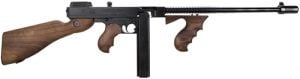
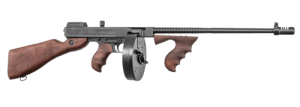
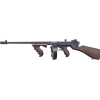
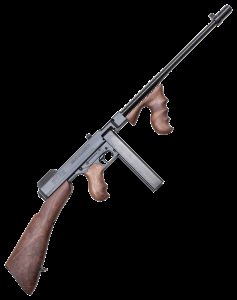
The original M1928 is a machine gun, so owning one means serious money and a federal tax stamp. Auto-Ordnance builds the semi-automatic 1927A-1, which is the same gun in a form you can buy over the counter, drum and all. We covered one in our Thompson 1927A-1 writeup.
The second Glock, and the toy Luger
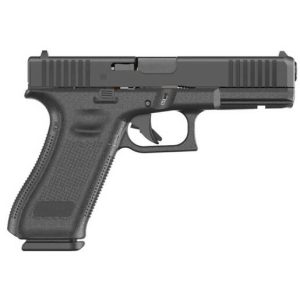
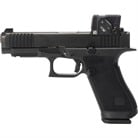
There are two distinct Glock 17s in Bullet Train and it’s easy to miss that they’re different guns. The one in the locker is the Taran Tactical build. The other belongs to Lemon in the Johannesburg flashback, wears a gold slide, and is the gun he uses to double-tap Ladybug. Two Glock 17s, two very different statements, neither of them the standard black pistol you’d expect.
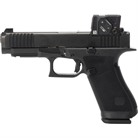
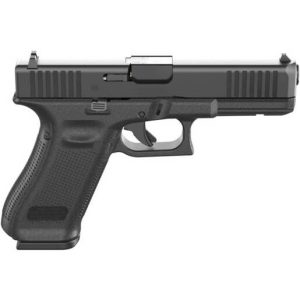
Then there’s my favorite piece of hardware in the film, which is not a firearm at all. In a childhood flashback, a young Tangerine plays with a toy Luger P08. It sits in the background of the shot and nobody draws attention to it.
It’s the only weapon in the movie that’s honest about what it is. Every adult on that train is carrying something real and spending the entire film failing to solve anything with it. The kid with the fake one is the only person getting the intended use out of a gun.
What the White Death’s men carry
The henchmen waiting at Kyoto Station are the only people in the film with anything like a coherent loadout, and it’s a submachine gun crowd. MP5A3s, MP5Ks, MP5KNs and at least one MP5K-PDW. A pair of UMP45s. Uzis, both full-size and Mini. TEC-9s, one of which Lemon fishes out of a river and turns on its owner.
Mixed in are two guns worth naming. One henchman runs a SIG Sauer MPX Pistol in an odd painted finish, and another carries a Daniel Defense V7S with a red dot and a Magpul angled foregrip. Those are both current, expensive, American-market guns sitting alongside forty-year-old surplus, which is a nice touch. Criminal organizations buy what they can get, not what matches.
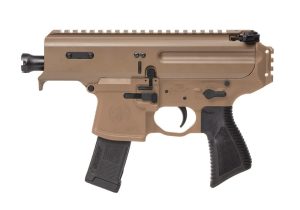
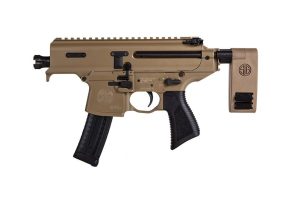
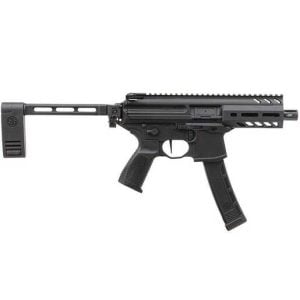
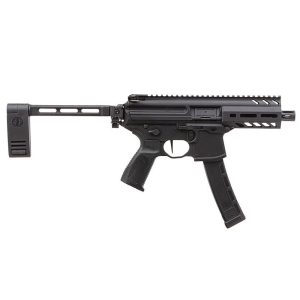
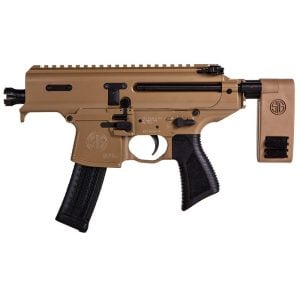
The MPX is the closest thing on this list to a civilian-legal version of what the henchmen are using. It runs a proper short-stroke gas piston rather than the blowback most pistol-caliber carbines use, which is why it shoots flatter than it has any right to. Our best competition PCCs guide covers the class.
Every other weapon in Bullet Train
The rest of the Bullet Train guns, including the background pieces and the set dressing, in one place. Screen identifications cross-checked against the Internet Movie Firearms Database entry for the film.
| Weapon | Who has it | Where |
|---|---|---|
| Colt M1911A1 (gold) | Triad member, El Saguaro | Wolf’s cartel flashback |
| Colt M1911A1 (nickel) | White Death gangster | Shizuoka Station check |
| Heckler & Koch USP | White Death gangster | Shizuoka Station check |
| SIG Sauer P229 | Rival cartel member, White Death gangster | Flashback and Shizuoka |
| Walther PP | Decorative glass replica | Bedside table, Wolf’s flashback |
| Unknown revolver | White Death gangster | Holstered, station check |
| Heckler & Koch MP5A3 | Triad, White Death henchmen | Flashback and Kyoto Station |
| Heckler & Koch MP5K / MP5KN | Triad, White Death henchmen | Flashback and Kyoto Station |
| Heckler & Koch MP5K-PDW | White Death henchman | Roof of the train |
| Heckler & Koch UMP45 | Rival cartel ambusher, henchman | Bolivia and Kyoto |
| IMI Uzi and Mini Uzi | White Death thugs | Trackside at Kyoto |
| Intratec TEC-9 | Henchmen, then Lemon | Kyoto Station and the river |
| Daniel Defense V7S | White Death thug | Kyoto Station platform |
| AKMS | White Death gangsters | Shizuoka and Kyoto |
| M4A1 | Triad member | Flashback, and loose in the crash |
| Gold AK pistol | Set dressing | Shelf at the Wolf’s wedding |
| Remington 870 | Dead White Death thug | Bolivia camp |
| Browning M1919A4 | Pickup mount | Bolivia camp |
| RPG-7 | Abandoned | Bolivia camp |
| M1A1 stun grenade | White Death thug | Roof of the train |
Why the guns barely matter, on purpose
Here is the thing about the guns of Bullet Train. Count the actual gunfights. There are almost none on the train itself. The film’s set pieces are fist fights in narrow corridors, a briefcase, a bottle of water, a snake, and a katana. Every gun that appears in a carriage gets taken away, unloaded, sabotaged, dropped or hidden within about a minute of showing up.
That’s a choice, and it’s the same choice the specificity serves. Leitch specs the hardware precisely so that when it fails to matter, the failure lands. A prop-department generic pistol getting knocked out of somebody’s hand is nothing. A Taran Tactical Combat Master left in a locker, a Taurus stripped and dumped in a luggage rack, a Tokarev with a bomb in it, and a .44 Magnum reduced to a party trick add up to a running argument that none of these very serious people are in control of anything.
It is the opposite of how a John Wick film treats a gun, from a director who worked on those too. Worth noticing, given he sent Ladybug a John Wick pistol and had him walk away from it.
Frequently asked questions
What gun does Ladybug use in Bullet Train?
Barely one, which is the joke. He is issued a Glock 17 with the Taran Tactical Combat Master package and deliberately leaves it in the station locker. Through the rest of the film he only handles guns he has taken off other people, mostly to unload them and get rid of them.
What is Lemon’s gun called in Bullet Train?
Lucille. It’s a Taurus PT92AFS-D, a Brazilian-built 9mm based on the Beretta 92 with a frame-mounted safety instead of a slide-mounted one. The “PT 92 AFS-D” marking is visible on the frame in close-up.
What revolver does Tangerine carry?
A Smith & Wesson Model 36-10, the five-shot .38 Special J-frame with a sub-two-inch barrel, carried at the small of his back. It’s the gun he fires through the plush toy, and it changes hands repeatedly through the second half of the film.
Would a stuffed toy really silence a gunshot?
No. A suppressor needs sealed internal volume and baffles to slow and cool the gas, and a plush toy has neither. It is worse on a revolver, because gas and noise escape sideways through the cylinder gap regardless of what covers the muzzle.
Can you buy the Zastava M57 from the film?
Yes, as imported surplus rather than new production, so supply and condition both vary. It is the Yugoslav Tokarev in 7.62x25mm with a nine-round magazine. The film even shows a Century Arms import mark on the frame.
How many guns are in Bullet Train?
Around thirty distinct weapons, counting variants separately, across pistols, revolvers, submachine guns, rifles, a shotgun, a mounted machine gun, an RPG-7 and a stun grenade. Only a handful get meaningful screen time.
Keep exploring
More screen guns identified: Civil War, Extraction, The Equalizer and Leon: The Professional. On television, our guns of TV legends rundown covers eight decades of the same ground.
4,015+ Gun & Ammo Deals
Updated daily from 200+ top retailers. Filter by category, caliber, action type, and price.
Related Guides