
Affiliate disclosure: This Mossberg 990 review contains affiliate links. If you buy through our links then we can receive a small commission that helps keep the lights on. You don’t pay anything more.
- Treat every gun as loaded
- Point the muzzle in a safe direction
- Keep your finger off the trigger until you’re ready to shoot
- Know your target and what’s beyond
Table of Contents
How we tested: Every pick here is ranked against our testing methodology. Minimum round counts, accuracy and reliability protocols, the failures that disqualify a gun.
Review: Mossberg 990, the Semi-Auto AfterShock With a Hidden $18 Upgrade
Our Rating: 7.6/10
- MSRP: Not shown on the Mossberg pages we could load
- Street Price: Our live card starts at $819.99 at Sportsman’s Warehouse for the 990 AfterShock on October 3, 2026 (Use our live pricing for the best up to date deal)
- Gauge: 12 gauge, 3 in. chamber
- Action: Gas-operated semi-auto
- Barrel Length: 14.75 in. or 18.5 in., matte blue (Cerakote on two SPX models)
- Choke: Cylinder bore on the AfterShock; Accu-Choke with a Cylinder tube installed on the SPX
- Capacity: 5+1 (AfterShock, and 14.75 in. SPX); 7+1 (18.5 in. SPX)
- Overall Length: 27.125 in. (14.75 in.), 30.875 in. (18.5 in.)
- Weight: 6.04 lb (14.75 in.), 6.29 lb (18.5 in.)
- Stock: AfterShock bird’s head grip; the 990 SPX Magpul adds a Magpul SGA stock
- Sights: Fiber optic front; winged fiber optic front and an optic cut on the SPX
- Trigger Pull: 5 lb 9 oz on our 14.75 in. AfterShock
Pros
- Gas action softens the AfterShock’s recoil
- 18.5 inch SPX holds 7+1
- SPX ships with three optic plates
Cons
- Fussy with light target loads early
- Twice the price of a Shockwave
- No stock makes aiming hard


Quick Take
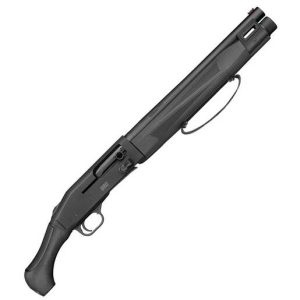
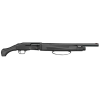
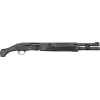
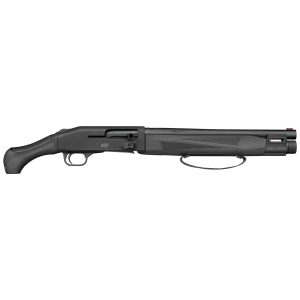
The Mossberg 990 is Mossberg’s gas-operated 12 gauge built around the AfterShock idea: a bird’s head grip, no stock and a short barrel. The 14.75 in. model is 27.125 in. long, the same kind of package as the pump Shockwave, except this one reloads itself. There’s also an 18.5 in. version, a better-equipped SPX line and a 990 SPX Magpul with a real stock.
I shot 600 shells through two of them, a 14.75 in. 990 AfterShock (83001) and an 18.5 in. 990 AfterShock SPX (83013). Full-power buckshot and slugs ran without a single stoppage. Light target loads didn’t, at first: the short gun had five stoppages, all with light or reduced-recoil shells, and all but one in its first 100 rounds.
The most useful thing I learned wasn’t from shooting. On Mossberg’s own spec pages, the plain 18.5 in. AfterShock holds 5+1 and the 18.5 in. AfterShock SPX holds 7+1, with the same barrel length and the same listed weight. At Palmetto State Armory the SPX was only $18 more.
Best For: Buyers who want the most compact semi-auto 12 gauge they can own without NFA paperwork, and anyone who found a pump Shockwave too punishing. Not for shooters who want to aim carefully at distance, or anyone on a pump-gun budget.
Same Barrel, Two More Shells: AfterShock vs AfterShock SPX
Put the two 18.5 in. guns side by side on Mossberg’s spec pages and they look like twins: 3 in. chamber, 18.5 in. matte blue barrel, 30.875 in. long, 6.29 lb. Then you get to capacity. The 990 AfterShock 18.5 in. (83002) is listed at 5+1. The 990 AfterShock SPX 18.5 in. (83013) is listed at 7+1.
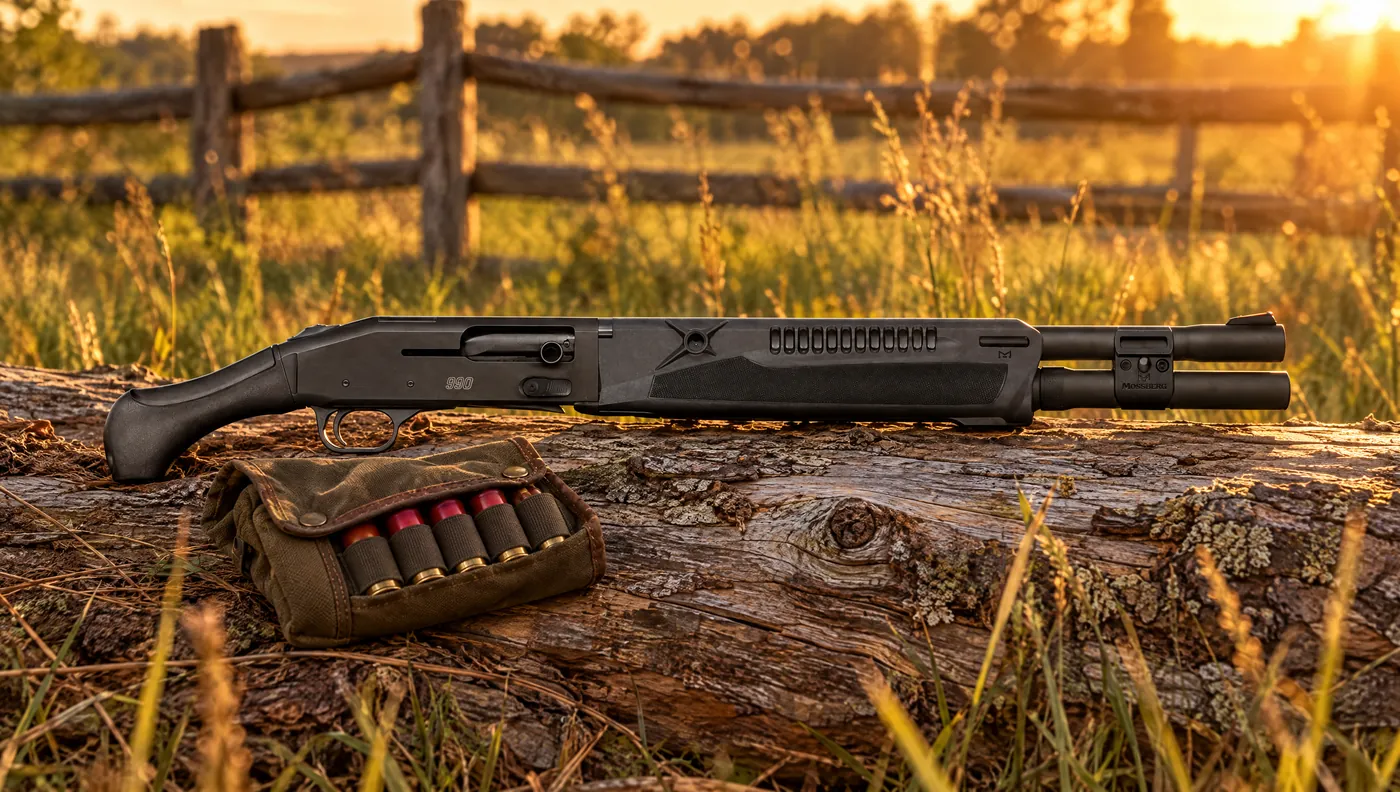
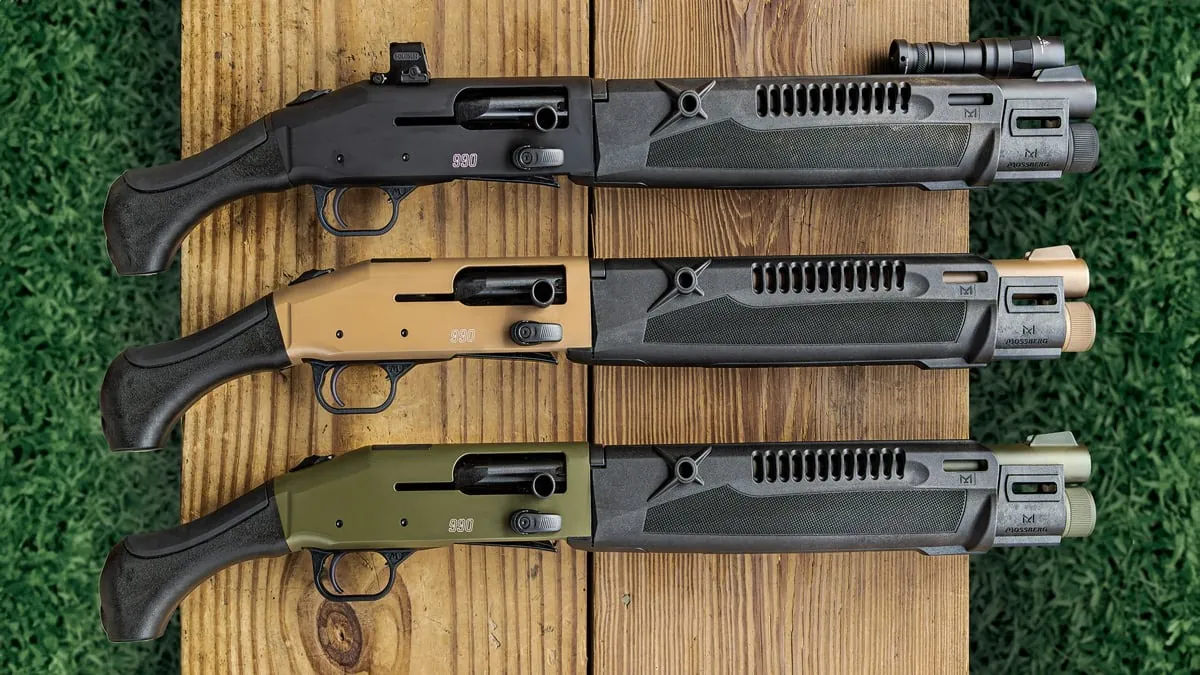
The SPX also gets a forend with an integrated heat shield, M-LOK slots and QD ports, an Accu-Choke barrel with a Cylinder tube installed, a winged fiber optic front sight, and an optic cut for the Shield RMSc footprint with three adapter plates for RMR, Docter and Leupold footprints. The plain AfterShock has a fixed cylinder bore, a strapped forend and a plain fiber optic bead.
On October 3, 2026, Palmetto State Armory had the 18.5 in. AfterShock at $901.99 and the 18.5 in. AfterShock SPX at $919.99. That’s $18 for two more shells, a heat shield, screw-in chokes and an optic cut. If you’re buying the 18.5 in. gun, buy the SPX. The math only flips at Sportsman’s Warehouse, which had the plain AfterShock at $819.99 in both barrel lengths.
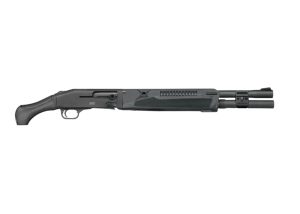
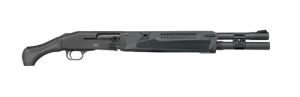
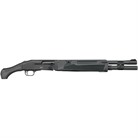

One caution: the 14.75 in. SPX (83010) is still 5+1, so the extra capacity comes only with the 18.5 in. barrel and its longer magazine tube. Dealers don’t always get it right either: Brownells’ listing for the 18.5 in. SPX gave it 5 rounds, while Mossberg lists 7+1. Check the SKU, 83013, before you pay for the 7+1 gun.
Design Intent: Why Mossberg Built It This Way
The pump Shockwave proved there’s a market for a 12 gauge that’s short, light and sold as a non-NFA firearm in most states. Its weak point is recoil. With no stock, a 5 lb pump puts all of a buckshot load into your wrists, and the pump stroke makes fast follow-ups hard. The 990 answers both: a gas system that spreads recoil out, and a semi-auto action so you only pull the trigger.
Mossberg’s feature list for the 990 AfterShock is short and practical: the AfterShock grip “provides a firm grip and minimizes felt recoil,” a “durable gas system and host of corrosion-resistant internal parts,” an enlarged and beveled loading port, a knurled charging handle, an oversized safety and bolt release, an embossed forend strap that “keeps the lead hand clear of the muzzle,” and a magazine tube extension with M-LOK slots. Mossberg lists every 990 under “Security” use. It’s a defensive tool, not a field gun.
Is the 990 AfterShock Legal Without a Tax Stamp?
The 14.75 in. AfterShock is built the same way as the Shockwave: a barrel under 18 in., an overall length over 26 in. (27.125 in.), and a bird’s head grip instead of a stock. As our guide to short-barrel shotguns explains, guns built that way are sold as “firearms” rather than short-barreled shotguns and are legal in most states without a stamp. Some states and cities restrict them anyway, so check your local law before you buy.
Two things change that. Putting a stock on a 14.75 in. 990 would make it a short-barreled shotgun under the NFA. And Mossberg sells exactly that gun, the 990 SPX Magpul Class 3 (83014), with a 14.75 in. barrel and a Magpul SGA stock, which is why its name says Class 3. It goes through NFA paperwork like any other short-barreled shotgun.
Mossberg 990 Variants
| Model | SKU | Barrel | Capacity | Length | Weight | Notes |
| 990 AfterShock | 83001 | 14.75 in. | 5+1 | 27.125 in. | 6.04 lb | Cylinder bore, strapped forend |
| 990 AfterShock 18.5″ | 83002 | 18.5 in. | 5+1 | 30.875 in. | 6.29 lb | Cylinder bore, strapped forend |
| 990 AfterShock Lasersaddle | 83003 | 14.75 in. | 5+1 | 27.125 in. | 6.10 lb | Crimson Trace Lasersaddle |
| 990 AfterShock SPX | 83010 | 14.75 in. | 5+1 | 27.125 in. | 6.04 lb | Heat shield, Accu-Choke, optic cut |
| 990 AfterShock SPX Cerakote | 83011 / 83012 | 14.75 in. | 5+1 | 27.125 in. | 6.04 lb | Flat Dark Earth / OD Green barrel and receiver |
| 990 AfterShock SPX 18.5″ | 83013 | 18.5 in. | 7+1 | 30.875 in. | 6.29 lb | Heat shield, Accu-Choke, optic cut |
| 990 SPX Magpul | 83009 | 18.5 in. | 7+1 | 37.25 in. | 7.75 lb | Magpul SGA stock, ghost ring |
| 990 SPX Magpul Class 3 | 83014 | 14.75 in. | 5+1 | 33 in. | 7.35 lb | NFA item |
990 AfterShock (83001): 14.75 in. barrel, 5+1, 27.125 in., 6.04 lb, strapped forend $819.99 to $964.99 street
990 AfterShock Lasersaddle (83003): 14.75 in. barrel, Crimson Trace laser, 6.10 lb $969.99 to $1,119.99 street
990 AfterShock SPX 18.5 in. (83013): 7+1, heat shield, Accu-Choke, optic cut, 6.29 lb $919.99 to $1,029.99 street
990 SPX Magpul (83009): 18.5 in. barrel, 7+1, Magpul SGA stock, ghost ring, 7.75 lb Not in stock at our dealers
The Lasersaddle model costs the most for the least. Sportsman’s Warehouse had it at $1,119.99 and Guns.com at $1,112.99, $300 over the plain AfterShock at Sportsman’s Warehouse, for a laser on the receiver. Classic Firearms had it for $969.99. The FDE Cerakote SPX was $999.99 at Sportsman’s Outdoor Superstore. The 990 SPX Magpul with the full stock wasn’t in stock at any dealer we track on the day we checked.
Competitor Comparison
The 990’s real rivals are other semi-auto defensive 12 gauges, which all cost more or have a stock, plus the pump gun that started the whole category.
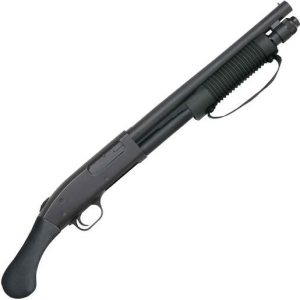
Mossberg 590 Shockwave ($419.99 to $499.99)
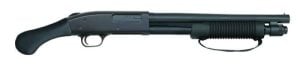
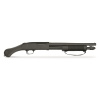
The pump original, with a 14 in. barrel and 5+1 capacity, per our Mossberg 590 Shockwave review. Sportsman’s Warehouse had it at $419.99, about half the 990 AfterShock. It’s simpler and it’ll run any shell you can chamber. The 990 costs $400 more to take the pump stroke out of the equation and soften the recoil, and after 600 shells I think that’s worth it if you’ll practice with it.

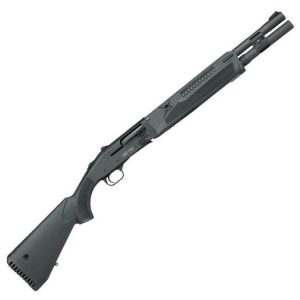
Mossberg 940 Pro Tactical ($899.99 to $964.99)
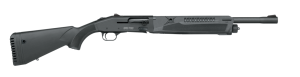
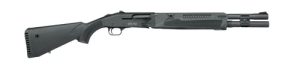
Mossberg’s other semi-auto defensive gun has a stock, an 18.5 in. barrel and a self-regulating gas system, per our Mossberg 940 Pro Tactical review. Palmetto State Armory had it at $899.99, which is where our card starts. It’s the better choice if you have room for a full-length gun: a stock makes hitting with slugs far easier. Pick the 990 if overall length is the point.
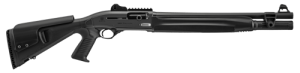
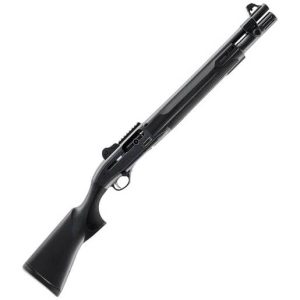
Beretta 1301 Tactical ($1,660.99 to $1,749.99)
The gold standard for a fast semi-auto defensive shotgun, with Beretta’s BLINK gas system and 7+1 capacity in its current form, per our Beretta 1301 Tactical review. Guns.com had a new one at $1,660.99, which is where our card starts. It’s roughly twice the 990, and it has a stock. Buy it if you want the best and don’t need the AfterShock’s short package.
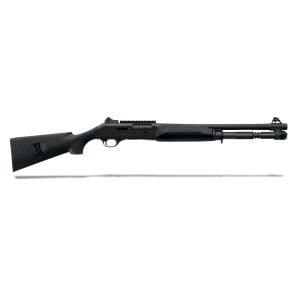
Benelli M4 (from $1,999)
The M4 uses Benelli’s ARGO dual-piston gas system and holds 5+1 standard, per our Benelli M4 vs Beretta 1301 comparison. Sportsman’s Warehouse had it at $1,999, which is where our card starts. It’s a duty shotgun with a duty price, more than double the 990.


Verdict: The 990 is the cheapest way into a semi-auto defensive 12 gauge from a major maker, and the only one built around the AfterShock layout. If you want a stock, the 940 Pro Tactical costs about the same. If you want a pump, the Shockwave costs half. For more, see our best Mossberg shotguns.
Testing Protocol
We shot two guns: a 14.75 in. 990 AfterShock (83001) for 400 shells and an 18.5 in. 990 AfterShock SPX (83013) for 200. That’s 600 shells over four sessions in September at an outdoor range, from 58°F to 84°F. Patterns were shot at 7 and 15 yards on paper, slugs at 25 yards from a rest. Both guns came out of the box dry, so I oiled the bolt and action bars as you would any new semi-auto before the first shell.
Ammunition Log
- 990 AfterShock 14.75 in., 400 shells: Federal Top Gun 2 3/4 in. 1 1/8 oz #8 (100), Winchester Super-X 2 3/4 in. 00 buck 9 pellet (75), Federal Premium FliteControl 2 3/4 in. 00 buck 9 pellet (75), Fiocchi Low Recoil 2 3/4 in. 00 buck 9 pellet (75), Remington Slugger 2 3/4 in. 1 oz rifled slug (50), Winchester Super-X 3 in. 00 buck 15 pellet (25)
- 990 AfterShock SPX 18.5 in., 200 shells: Federal Top Gun 2 3/4 in. 1 1/8 oz #8 (50), Federal Premium FliteControl 2 3/4 in. 00 buck 9 pellet (50), Fiocchi Low Recoil 2 3/4 in. 00 buck 9 pellet (25), Remington Slugger 2 3/4 in. 1 oz rifled slug (50), Winchester Super-X 3 in. 00 buck 15 pellet (25)
Phase 1: Break-In
I started the short gun on full-power buckshot, which is what most new semi-autos want, and it ran 75 rounds of Winchester Super-X without a hiccup. Then I switched to Federal Top Gun target loads. Three of the first 50 Top Gun shells failed to eject fully and the empty hull got caught in the port. After that first box, the remaining 50 Top Gun shells ran clean.
Phase 2: Reliability
Across 600 shells I had five stoppages, all in the 14.75 in. gun. Three were the early Top Gun failures to eject. The other two were Fiocchi Low Recoil buckshot hulls that didn’t clear the port, at shells 96 and 211. Every full-power buckshot load, every slug and every 3 in. shell fired and cycled in both guns. The 18.5 in. SPX ran all 200 of its shells, including 25 Fiocchi Low Recoil and 50 Top Gun, without a problem.
That pattern makes sense. The shorter barrel gives the gas system less time to work, and the lightest loads are the first to suffer. If you’ll train with cheap target shells, buy a box of the exact load you plan to use and run it before you buy a case. For defense, full-power buckshot is what this gun likes.
Phase 3: Patterns and Slugs
From the 14.75 in. cylinder bore barrel at 7 yards, Federal FliteControl 00 buck kept all nine pellets in 2.4 in. and Winchester Super-X 00 buck spread to 7 in. At 15 yards, FliteControl opened to 5.5 in. and Super-X to 16 in. The 18.5 in. SPX with its Cylinder Accu-Choke tube tightened FliteControl to 2.1 in. at 7 yards and 4.8 in. at 15.
Slugs from a rest at 25 yards averaged 3.9 in. for five shots from the 14.75 in. AfterShock and 2.8 in. from the 18.5 in. SPX, both with Remington Slugger. That’s with the fiber optic front alone, since there’s no rear sight on either gun. Our trigger gauge read 5 lb 9 oz on the AfterShock and 5 lb 6 oz on the SPX.
Tracking & Observations
After 600 shells the gas areas of both guns were black with carbon, as any gas gun gets, and the actions still felt as smooth as they did new. The forend strap on the AfterShock stayed tight and did what Mossberg says it does: my support hand never crept toward the muzzle. Recoil was the surprise. With full-power buckshot the 990 is a push, not the sharp jab of a pump Shockwave, and I could put five rounds on a target in a couple of seconds.
What This Means for You
- Reliability: Flawless with full-power loads. Test your light target load before you buy it in bulk.
- Ammo Preference: Federal FliteControl 00 buck for defense, Remington Slugger for slugs.
- Accuracy Expectation: Buckshot inside 3 in. at 7 yards with FliteControl; slugs about 3 to 4 in. at 25 yards.
- Maintenance: Clean the gas system as well as the bore. A pump doesn’t need it; this does.
- Upgrade Impact: A weapon light on the M-LOK slots is the most useful add-on.
Performance Testing Results
Reliability (8/10)
No stoppages with defensive loads in either gun, and the 18.5 in. SPX was perfect. The 14.75 in. gun’s five failures to eject with light shells cost it two points. For a defensive gun fed defensive ammunition, that’s a strong result.
Accuracy (7/10)
With FliteControl, buckshot patterns were tight enough to keep every pellet on a torso well past room distances. Slugs are possible but hard without a stock. The SPX’s optic cut is the way to fix that, and it’s worth using if you’ll ever shoot slugs.
Ergonomics & Recoil (7/10)
The softest-shooting stockless 12 gauge I’ve fired. The oversized safety and bolt release are easy to find, and the beveled loading port is easy to feed. It loses points for the same reason every AfterShock-style gun does: with no stock you aim by pushing it out and pulling back on the strap, and that takes practice.
Fit, Finish, and Quality Control (8/10)
The matte blue was even, the controls had no slop, and nothing rattled on either gun. The forend on the SPX felt more solid than the plain AfterShock’s strapped forend, and its heat shield did stay cool enough to touch after 25 fast rounds.
Value (7/10)
At $819.99 the 990 is the cheapest semi-auto in its class by a lot, but it’s still twice a Shockwave. The 18.5 in. SPX at $919.99 is the best value in the line.
Features (8/10)
M-LOK on the magazine tube, a strapped or heat-shielded forend, a 3 in. chamber, and on the SPX an optic cut with three adapter plates and screw-in chokes.
Technical Deep Dive
Action and Gas System
The 990 is gas operated. Mossberg describes it as a “durable gas system” with “corrosion-resistant internal parts/finishing,” and on the SPX Magpul page as a “smooth running gas-vent system.” Mossberg’s pages don’t give more detail than that, so I won’t guess at the internals. In use, it cycled every full-power load we fed it, and it’s the reason the gun recoils so much less than a pump of the same size.
Barrel, Chokes and Sights
| Component | Specification | Benefit |
| Chamber | 3 in., 12 gauge | Takes 2 3/4 in. and 3 in. shells |
| Barrel | 14.75 in. or 18.5 in., matte blue | Short package; 18.5 in. adds capacity on the SPX |
| Choke | Cylinder bore (AfterShock); Accu-Choke, Cylinder installed (SPX) | Screw-in tubes on the SPX |
| Front sight | Fiber optic; winged on the SPX | Fast to pick up |
| Optic | Shield RMSc cut plus RMR, Docter and Leupold plates (SPX) | Mount a red dot without a gunsmith |
| Magazine tube | Extension with M-LOK slots | Mount a light or a sling point |
Grip, Forend and Controls
The AfterShock grip is a bird’s head shape that fills your hand and points the gun naturally. The plain AfterShock’s forend has an embossed strap for your support hand; the SPX forend trades the strap for an integrated heat shield, M-LOK slots and QD ports. The charging handle is knurled, and Mossberg made the safety and bolt release oversized, which you’ll appreciate when your hands are cold or sweaty.
How to Shoot a Gun With No Stock
The 990 AfterShock is easy to shoot badly. Here’s what worked for me after a few hundred shells.
- Push and pull. Push forward on the strap with your support hand and pull back on the grip. The tension controls recoil far better than a loose hold.
- Hold it at chest height. Bring the gun up until you can see the fiber optic over the receiver, about chest high. Never try to bring a stockless gun to your face.
- Keep your hand behind the strap. The strap is there to keep your fingers away from the muzzle. Use it every time.
- Pattern your load. At these distances the difference between FliteControl and standard buck was 2.4 in. against 7 in. Know which one you’re carrying.
For more on loads, see our guide to home defense shotgun slugs and buckshot.
Cleaning the Gas System
This is the part pump owners forget. A gas gun puts carbon where a pump doesn’t: around the gas ports, the piston area and the action bars. I cleaned both guns after every 200 shells. Follow Mossberg’s manual for field stripping, scrub the carbon off the gas parts, wipe the bolt and the inside of the receiver, and use a light coat of oil on the bolt and action bars. Don’t soak the gas parts in oil; it holds carbon. Clean the choke threads on the SPX when you pull the tube.
A dirty gas gun is the first one to stop cycling light loads. If your 990 starts failing to eject target shells after a few hundred rounds, clean it before you blame the ammunition.
Parts, Accessories and Upgrades
| Upgrade Category | Recommended Component | Why It Matters | Cost Estimate |
| Light | An M-LOK weapon light on the magazine tube | You need to see what you’re shooting at night | $100 to $300 |
| Optic (SPX) | A Shield RMSc, RMR, Docter or Leupold footprint red dot | Mossberg includes the plates | $200 to $500 |
| Sling | A single-point sling on a QD point | Keeps a stockless gun on you | $25 to $60 |
| Shell carrier | A receiver-mounted side saddle | Five or seven shells go fast | $30 to $80 |
| Chokes (SPX) | Accu-Choke Improved Cylinder or Modified | Tighter buckshot patterns | $25 to $45 |
Common Problems & Solutions
- Failures to eject with target loads: Ours had three in the first 50 light shells. Run full-power loads first and keep the gas system clean.
- Reduced-recoil buckshot hanging up: Two Fiocchi Low Recoil hulls stuck in our 14.75 in. gun. Use full-power buckshot for defense.
- Buying the wrong SPX: Only the 18.5 in. SPX holds 7+1. Check the barrel length and round count on the listing.
- Slugs all over the target: There’s no rear sight on the AfterShock. Mount a red dot on the SPX’s optic cut.
- Local law: The stockless 14.75 in. gun is restricted in some states. Check before you buy, and never add a stock to it without NFA approval.
Who Should NOT Buy This Gun
The 990 does one job well. It’s the wrong gun for some buyers.
- Buyers on a pump-gun budget: The Mossberg 590 Shockwave was $419.99.
- Anyone who wants to shoot slugs at distance: The Mossberg 940 Pro Tactical has a stock and an 18.5 in. barrel.
- Shooters who want the most proven semi-auto: The Beretta 1301 Tactical costs twice as much and has the record to show for it.
- People who live where short “firearms” are restricted: The Mossberg 940 Pro Tactical is a standard shotgun with a stock.
Final Verdict
The Mossberg 990 takes the AfterShock idea and makes it shootable. The gas action turns a punishing short 12 gauge into something you can run fast, and both guns ran every full-power shell we fed them. The short gun stumbled with light target loads early, which is the price of a 14.75 in. barrel on a gas gun.
If you want the shortest package, buy the 14.75 in. AfterShock and feed it real buckshot. If you can live with 18.5 in., buy the SPX: at Palmetto State Armory it was only $18 more than the plain 18.5 in. gun for two extra shells, chokes and an optic cut. For Mossberg’s mag-fed pump, see our Mossberg 590M review.
Final Score: 7.6/10. The softest-shooting AfterShock-style 12 gauge you can buy, and the 18.5 in. SPX is the one to get.
FAQ: Mossberg 990
Is the Mossberg 990 reliable?
With full-power loads, yes. Both of our guns ran every full-power buckshot load, slug and 3 in. shell without a stoppage. The 14.75 in. gun had five failures to eject with light target and reduced-recoil loads.
How many shells does the Mossberg 990 hold?
Mossberg lists the 990 AfterShock at 5+1 in both barrel lengths, and the 18.5 in. 990 AfterShock SPX (83013) at 7+1. The 14.75 in. SPX is 5+1.
Is the Mossberg 990 AfterShock legal without a tax stamp?
The 14.75 in. model is built like the Shockwave: under 18 in. of barrel, over 26 in. overall and no stock, so it's sold as a firearm rather than a short-barreled shotgun and is legal in most states. Some states restrict it, and adding a stock would make it an NFA item.
How much does the Mossberg 990 cost?
On October 3, 2026, Sportsman's Warehouse had the 990 AfterShock at $819.99 and Palmetto State Armory had the 18.5 in. AfterShock SPX at $919.99.
What is the difference between the 990 AfterShock and the 990 SPX?
The SPX adds a heat-shield forend with M-LOK and QD ports, Accu-Choke tubes, a winged fiber optic front and an optic cut with three adapter plates. The 18.5 in. SPX also holds 7+1 instead of 5+1.
Can the Mossberg 990 shoot 3 inch shells?
Yes. Every 990 has a 3 in. chamber, and both our guns ran Winchester Super-X 3 in. 00 buck without a problem.
Does the Mossberg 990 work with light target loads?
Ours had three failures to eject in its first 50 Federal Top Gun shells, then ran clean. Test your target load before you buy it in bulk.
5,492+ Gun & Ammo Deals
Updated daily from 200+ top retailers. Filter by category, caliber, action type, and price.
Related Guides