
Last updated May 22, 2026
Some of the links below are affiliate links. If you buy through them we may earn a small commission at no extra cost to you. It helps keep the lights on.
- Treat every gun as loaded
- Point the muzzle in a safe direction
- Keep your finger off the trigger until you’re ready to shoot
- Know your target and what’s beyond
Table of Contents
Public Land Hunting in 2026: The Honest Field Guide
The United States has roughly 640 million acres of federal public land plus hundreds of millions more in state-managed wildlife areas, forests, and walk-in access programs. That’s nearly a third of the country open to hunting in some form, and it’s the reason the average American hunter without family land or lease money can still pursue deer, elk, hogs, turkey, and waterfowl at world-class levels. The catch is that this land comes with rules, pressure, and a learning curve that catches a lot of first-time public land hunters off guard.
This guide is the honest version of how public land hunting actually works in 2026, how to find it, how to manage hunting pressure, what the federal and state rules actually require, and where the obvious mistakes live. No paid placements, no marketing fluff. Just the practical knowledge that turns frustrated first-year public land hunters into the ones who consistently fill tags.
Types of Public Land
Federal Land
National Forests (193M acres), Managed by the US Forest Service. Open to hunting under state regulations, generally with the broadest access of any federal land category. Roads and trails are usually well-marked; backcountry access is excellent. National Forest land is where most Western elk, deer, and bear hunting happens on public land.
Bureau of Land Management land (245M acres), Concentrated in the Mountain West (Nevada, Wyoming, Montana, Oregon, Idaho, Utah, Arizona, New Mexico, Colorado). BLM is the most loosely-regulated federal land and tends to be the most lightly hunted. Lots of antelope, mule deer, and predator hunting opportunity. Access roads vary from well-maintained to two-track barely-roads.
National Wildlife Refuges (89M acres), Some refuges allow hunting under specific federal regulations; many do not. Refuges that do allow hunting often have additional restrictions beyond state law, limited weapon types, restricted days, drawn permits required. Check the specific refuge’s regulations before assuming.
Corps of Engineers (12M acres), Land around federally-managed lakes and reservoirs. Often excellent waterfowl and deer hunting; rules vary by specific project. Many COE lands restrict firearm types (often shotgun/muzzleloader/archery only) due to proximity to recreation areas.
State Land
Wildlife Management Areas (WMAs), Each state manages dedicated WMA land specifically for wildlife and hunting. Rules vary by state and often by individual WMA. Many WMAs are intensively managed for specific species, turkey, deer, waterfowl. Some require draw permits for specific seasons; others are over-the-counter access.
State forests, Larger contiguous parcels generally open to hunting under state regulations. Pennsylvania, Michigan, Wisconsin, and Minnesota have particularly extensive state forest systems with millions of acres of huntable land.
Walk-in access programs, States including Kansas, South Dakota, Nebraska, and Iowa have programs that lease private land for public hunting access. The IHAP (Iowa Habitat and Access Program), Kansas WIHA (Walk-In Hunting Access), and South Dakota CHAP (Conservation Reserve Enhancement Program) are particularly well-funded and offer access to high-quality private land at no cost to the hunter.
Finding Public Land, The Apps That Matter
The single biggest change in public land hunting over the last decade is the availability of accurate, layered mapping data via smartphone apps. The three that matter:
onX Hunt ($30/year for one state, $100/year all states), The category leader. Property boundaries, public land layers, topographic data, satellite imagery, offline maps, and waypoint tracking. The “Hunt” version includes hunting-specific layers (WMAs, refuges, walk-in programs) that the base “Trails” version lacks. If you only buy one mapping app, this is the one.
HuntStand, Direct competitor to onX with a slightly different feature set. Strong on weather integration, scrape/sign mapping, and stand-management features. Some hunters prefer it for the interface; functionally comparable to onX for the property-boundary basics.
Basemap and Gohunt, Useful for Western big-game hunters. Basemap focuses on rancher-permitted private land mapping; Gohunt is purpose-built for Western tag application and unit research. Both pair well with onX rather than replacing it.
State wildlife agency maps remain essential and often free. State DNR and Fish and Wildlife websites publish their WMA maps, hunting unit boundaries, and seasonal regulations as downloadable PDFs. Pair these with the app data, the apps give you property boundaries, the state maps give you the regulations.
The Pressure Problem
Public land hunting in 2026 is more crowded than at any point in recorded history. The number of hunters has dropped overall, but the percentage of hunters using public land has increased, primarily because lease prices for private land have priced out the average hunter. Every accessible parking area, trailhead, and obvious approach is getting hammered, especially the first three days of any major season.
Pressure management is the difference between successful public land hunters and frustrated ones. Three strategies that genuinely work:
1. Hunt deeper than the typical hunter. The average public-land hunter walks 0.5-1 mile from a parking area before setting up. Walking 2-3 miles puts you in country other hunters won’t pursue. The animals know this and they hold in the deeper pockets where the hunting pressure doesn’t reach. This requires fitness and gear (a quality pack, headlamp, sometimes overnight equipment) but the payoff is real.
2. Hunt the awkward terrain. The cover that’s hard to access, hard to navigate, or unattractive on a map is where mature animals retreat under pressure. River bottoms, swamps, blowdowns from old timber harvests, the dense brush between two obvious draws, these are the public-land sanctuaries. Use satellite imagery to identify these features and plan routes that other hunters won’t.
3. Hunt the off-times. Tuesdays, Wednesdays, and the middle of the day during the rut. Most public-land hunters work conventional jobs and hunt weekend mornings. The animals are aware of this pattern and shift to mid-day movement on weekdays when human pressure drops. If you can hunt Tuesday/Wednesday during pressure-season, you’re hunting the same animals other hunters are missing.
E-Scouting Before Boots-On-Ground
The best public-land hunters do significant work before ever setting foot on the property. Using satellite imagery and topo data through onX or HuntStand, you can identify:
Pinch points, Topographic features that funnel deer movement. Saddles between ridges, the narrowest part of a creek bottom, the bridge between two pieces of cover. Mature animals move through these features predictably and they’re identifiable from satellite without leaving home.
Edge habitat, The transitions between cover types. Where pine forest meets clearcut, where agricultural land meets hardwood, where dense brush meets open meadow. Most game activity happens within 100 yards of these edges.
Access route planning, Plan how you’ll enter the property without alerting game. The straight-line route from parking to stand is rarely the right one, wind, scent dispersion, and the likely bedding areas all factor into the better route. Most public-land hunters fail at access more than at any other phase of the hunt.
Combine e-scouting with at least one pre-season boots-on-ground visit. Walk the property in summer to verify the satellite assumptions, locate sign, and pre-position cameras if legal in your state. Cameras on public land are legal in some states and prohibited in others (Arizona prohibits trail cameras on public land outright; many other states restrict them during specific seasons), check your state regulations.
Public Land Rules, Federal Layer
Federal public land hunting is governed by the state’s hunting regulations (seasons, bag limits, weapon types) plus additional federal restrictions specific to the land type. Universal federal rules:
Hunters must follow state hunting regulations for the state where they are hunting, regardless of which federal agency manages the land. A Colorado deer license is required on Colorado National Forest land, even though the National Forest is federal, the state regulates the hunting.
Vehicle access is restricted to designated roads and trails. Most National Forests prohibit off-road vehicle travel for hunting unless you’re retrieving downed game; even then, retrieval routes are restricted. BLM land has more permissive off-road rules in some areas but enforcement varies.
Camping rules vary. Dispersed camping (off-road, no facilities) is generally allowed on most National Forest and BLM land for up to 14 days. NWR camping is typically restricted to designated areas only. Always check the specific unit’s regulations.
Restricted weapons categories exist for some federal land. NWRs frequently restrict to shotgun, muzzleloader, or archery only. Some COE recreation-adjacent areas restrict to shotgun. Always verify the specific weapon you intend to hunt with is legal on the specific parcel.
State Rules, Where State Firearm Laws Affect Hunting
Some states have firearm laws that directly affect what’s legal to carry on public land while hunting. These are independent of hunting regulations, they’re general firearm laws that apply on the federal land within those states. The most consequential right now:
Colorado (SB25-003 semi-auto ban, magazine limits). Colorado’s 2025 semi-auto legislation affects what rifles can be legally possessed and carried for hunting on Colorado public land. AR-15 platform hunting rifles in particular are now subject to specific restrictions. For full details, see our Colorado Gun Laws 2026 guide before planning a Colorado public-land elk or deer hunt.
Oregon (Measure 114, SB 243). Oregon’s permit-to-purchase scheme and magazine restrictions affect what hunting firearms can be acquired and used in-state. Out-of-state hunters bringing equipment to hunt Oregon public land need to verify their specific rifles and magazines comply with current Oregon law. See Oregon Gun Laws 2026 for the specifics.
Constitutional carry states (Wyoming, Montana, Texas). If you’re carrying a sidearm while bow hunting for bear defense or general self-defense, constitutional carry states make this legally simple. Wyoming, Montana, and Texas all allow concealed carry without a permit, which simplifies the public-land carry question considerably.
For the broader state-by-state firearm law reference, see our US Gun Laws by State directory. If you’re planning an out-of-state public land hunt and you’ll be carrying any firearm not directly used for hunting, review the destination state’s carry laws before traveling.
Western Public Land, Backcountry Mentality
Western public land hunting is its own discipline. Massive scale (hundreds of thousands of contiguous acres in some units), serious terrain (elevation, weather, weight-out distances), and the kind of physical demands that catch flatland hunters off guard. The species, elk, mule deer, antelope, bear, typically reward hunters who can get away from roads and into country that demands fitness and gear.
Plan on miles of walking and significant elevation gain. The successful Western public land elk hunter often walks 5-10 miles per day during the season. Pack accordingly: quality boots, layered clothing system, a serious internal-frame pack with 60+ liter capacity, water filtration, navigation that doesn’t depend on cellular coverage.
Pack-out is the underestimated reality. A bull elk yields 250-350 pounds of usable meat, plus antlers, plus head and cape. Getting that out of the backcountry by yourself takes 4-6 round trips of 50+ pounds each over multiple days. Plan the hunt around realistic pack-out distance from your truck or have arrangements for outfitter pack support.
For rifle setups built for Western public land, see our Best Hunting Rifles 2026 roundup, lightweight bolt actions in 6.5 Creedmoor, 6.5 PRC.30-06, or .300 Win Mag dominate this niche. For optics that survive backcountry weather and provide the necessary ranging capability, see our Best Rifle Scopes 2026.
Eastern and Midwest Public Land
Eastern public land hunting is fundamentally a pressure-management game. Pennsylvania, Michigan, Wisconsin, and New York have millions of acres of state forest and game land, but they also have intense deer-hunting populations concentrated into shorter seasons. The first three days of Pennsylvania firearm deer season see hundreds of thousands of hunters in the woods simultaneously.
Strategies that work in this context:
Hunt archery season instead of firearm season where possible. The pressure is dramatically lower from October through mid-November when bowhunters have the woods to themselves. See our Best Compound Bows 2026 or Best Crossbows 2026 if you’re considering this path.
Hunt the second week of firearm season. Most casual hunters give up after the first three or four days. Animals that survive the opening rush start moving in patterns that the remaining serious hunters can exploit.
Hunt the marginal-access properties. Every state forest has properties that are technically open but practically difficult to access, narrow road shoulders, parking restrictions, awkward boundary geometry. These get a fraction of the pressure of the obvious tracts and produce mature deer in surprising numbers.
For deer hunting equipment context, see Best Hunting Rifles or Best Slug Guns (for shotgun-only zones common in agricultural Midwest counties).
Southern and Hog-Country Public Land
Southern public land, Florida, Georgia, Alabama, Louisiana, East Texas, features a different mix. Deer hunting on WMAs is competitive and often draw-only. Hog hunting on the same WMAs is often year-round or near-year-round with generous bag limits, and the population pressure on hogs benefits from any hunting that happens. Waterfowl WMAs in the Mississippi Flyway are world-class but extremely competitive for the best blinds and timed-entry permits.
For Southern hog hunting on public land, an AR-platform rifle in 5.56 NATO, 6mm ARC, or .350 Legend is the standard setup. See our Best AR-15 for Hunting for the picks. Texas-specific public land hog hunting often allows night hunting with thermal optics on WMAs, see Texas Gun Laws 2026 for the firearm-side context.
Pack-In and Backcountry Protocols
Multi-day backcountry hunts on public land require a different gear and protocol set than day hunts. The minimum kit additions for an overnight pack-in:
Shelter, a 1- or 2-person tent rated for the season, or a quality tarp setup. Bivy bags work for emergency but are punishing for multi-night hunts. Plan on 2-4 pounds for tent weight depending on conditions.
Sleep system, a sleeping bag rated 10-20°F below your expected low temperature plus a quality sleeping pad with R-value matching the season. Underestimating cold weather is the most common backcountry mistake.
Cooking, alcohol or canister stove plus 4-6 oz of fuel per day plus calorie-dense food (1.5-2 lb dry food per day; bring extra). Don’t rely on harvesting game for sustenance, successful kills happen on a fraction of hunting days.
Communication, satellite messenger (Garmin inReach, SPOT X) is mandatory for any backcountry hunt outside cellular coverage. See our Hunting Safety Guide for the broader safety equipment context.
Water, water filtration system (Sawyer Squeeze, MSR TrailShot) plus 2L of carrying capacity. Plan routes that pass water sources at least every 6-8 miles.
Public Land Etiquette
Public land is shared land. The hunter who treats it that way has a far better hunting experience than the one who treats every other hunter as competition. The basics:
Don’t park to block other hunters’ access. Pull fully off the road, leave room for other vehicles, and don’t park where you’ve effectively claimed a trailhead.
Don’t set up directly downwind or in the obvious approach of another hunter you’ve spotted. If you arrive to a stand area and find another hunter already there, move. The 400-yard rule (set up at least a quarter mile from another hunter) is the public-land norm.
Pack out what you pack in. Plus what other people left behind. Public land hunting access depends on hunters not trashing the land.
Report poachers and illegal activity. Most state agencies have anonymous tip lines. Public land hunting access is constantly threatened by political pressure; reducing illegal activity makes the political case for continued access easier.
Live Hunting Rifle Deals for Public Land Setups
For the rifle hunter heading to public land, especially Western public land where lightweight builds and quality glass matter most, current deals across the hunting rifle category:
Top Public Land Hunting Rifle Deals
Best-priced firearms across 200+ retailers · Updated every 4 hours

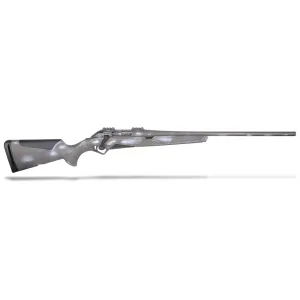
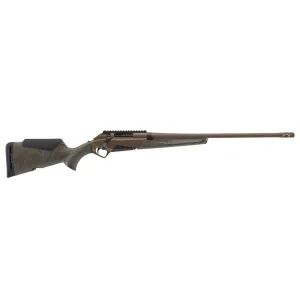
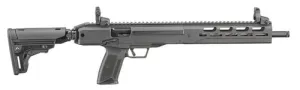
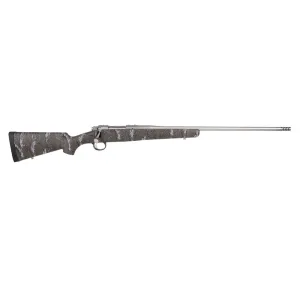
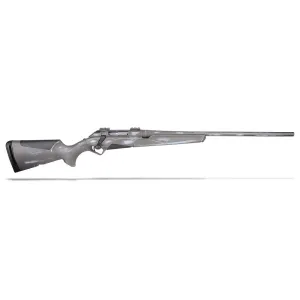
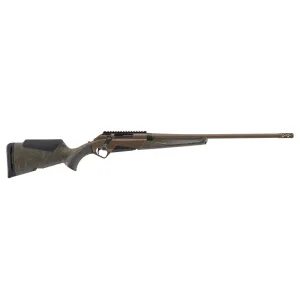
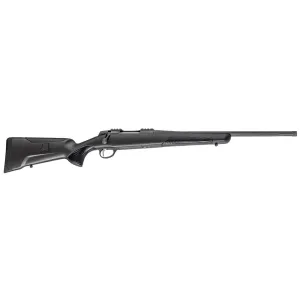
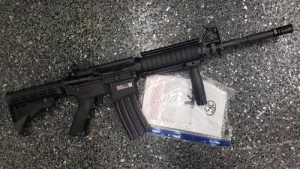
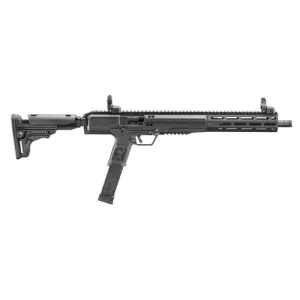
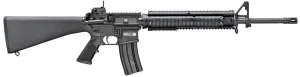
For curated editorial picks across budgets and use cases, see Best Hunting Rifles 2026, Best Cheap Hunting Rifles, and our caliber-specific guides for .30-06 and 6.5 Creedmoor. For AR-platform hunting setups, see Best AR-15 for Hunting, but check your destination state’s firearm restrictions first (especially Colorado and Oregon).
Common Public Land Mistakes
Setting up too close to the road. Most public land hunters set up within 0.5 miles of a parking area. So do most other public land hunters. Walking 1.5-2 miles puts you in country with 80% less hunting pressure. This is the single highest-leverage improvement most public land hunters can make.
Ignoring wind on entry. A hunter who walks the straight-line route to a stand area with the wind at their back has blown out the area before they’ve reached the stand. Plan entries with the wind in your face or perpendicular to your route. This costs you 10-20 extra minutes of walking and gains you the entire hunt.
Hunting the same spot every day. Public land animals learn human pressure patterns within 2-3 days. Rotate between multiple setups across a hunting trip. Hunt a spot, give it 3-4 days off, then return.
Underestimating pack-out logistics. First-time backcountry hunters consistently shoot animals further from the truck than they can reasonably pack out. Use the gun-or-pack-out test: before taking the shot, ask whether you can realistically retrieve the animal from this location. If the answer is no, pass the shot.
Not checking the specific unit’s regulations. WMA rules can differ unit-to-unit within the same state. National forest rules can differ ranger district to ranger district. Confirm the specific unit’s rules before opening day, not after you’ve started hunting.
FAQ: Public Land Hunting 2026
Do I need a hunter education certification to hunt public land?
Yes, in every US state for hunters born after a specific year (typically 1960-1972 depending on state). The certification is a one-time requirement and is transferable between states. Take the course online plus a brief in-person field day, typical total cost $15-50. See our Hunting Safety Guide for the broader certification context.
Can I camp on public land for free during a hunt?
On most National Forest and BLM land, yes, dispersed camping is free for up to 14 days in any single location. National Wildlife Refuges and some WMAs require designated-area camping. State forests vary. Always check the specific unit’s regulations before assuming.
Can I carry a sidearm while bow hunting on public land?
State law applies. In constitutional carry states (Wyoming, Montana, Texas, and others), yes, concealed carry without a permit is generally legal on federal public land within the state. In permit-required states, you need the applicable carry permit. Some specific federal land (e.g., National Wildlife Refuges) has additional restrictions. Check both state law and the specific unit’s regulations.
Are trail cameras legal on public land?
Varies by state. Arizona prohibits them outright on public land. Many Western states restrict them during specific seasons. Many Eastern states allow them year-round but require the camera to be marked with the hunter’s name and contact information. Check your destination state’s regulations annually because the rules are changing rapidly.
How do I find public land that isn’t already crowded?
E-scout for the awkward terrain features other hunters skip. Look for properties without obvious trailheads or roadside access. Consider walk-in access programs (Kansas WIHA, Iowa IHAP, South Dakota CHAP) where most hunters don’t even know to look. The smaller, harder-to-find pieces of public land are consistently undersubscribed compared to the famous units.
What’s the difference between a National Forest and a National Park for hunting?
Hunting is allowed on National Forests under state regulations. Hunting is prohibited in National Parks (with rare exceptions like specific designated hunts in Grand Teton and Yellowstone for elk population management). Confusing the two is a common first-year public land hunter mistake. Verify the specific unit type before hunting.
Related Hunting Guides
Equipment selection: Rifle vs Bow Hunting, Best Hunting Rifles 2026, Best AR-15 for Hunting, Best Compound Bows 2026, Best Crossbows 2026, Best Broadheads 2026, Best Bow Sights 2026, Best Bow Releases 2026.
State firearm law context: US Gun Laws by State, Colorado, Oregon, Wyoming, Montana, Texas, Pennsylvania, Wisconsin, Michigan.
Safety and broader context: Hunting Safety Guide 2026, Best Guns for Hunting.
4,611+ Gun & Ammo Deals
Updated daily from 200+ top retailers. Filter by category, caliber, action type, and price.