
Last updated October 2026 · By Nick Hall, who has followed SB 749 from the 2026 session through every injunction and stay, and read Virginia’s Supreme Court brief end to end
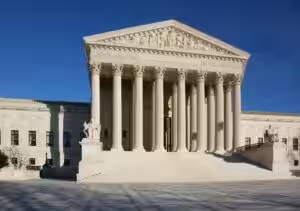
Quick take: Virginia filed its own brief at the Supreme Court on October 28 telling the justices that AR-15s are not protected arms at all, and that states may restrict them the way they restrict machine guns. The twist: Virginia’s own sales ban, SB 749, was enjoined in June, and every Virginia case over it is now paused until the justices rule.
- What happened: Attorney General Jay Jones and Solicitor General Tillman J. Breckenridge filed an amicus brief for the Commonwealth in the consolidated AR-15 cases, Nos. 25-238 and 25-566, backing Cook County and Connecticut.
- Why it matters: Virginia asks the Court to rule at the first step of the Bruen test that AR-15s are not Second Amendment arms, which would end most challenges before history is even weighed.
- What’s next: The Court hears one hour of argument on Wednesday, December 2, 2026, and the stayed Virginia cases wait on that decision.
- Who to watch: The six Virginia cases the brief lists as stayed, including the Justice Department’s own suit, United States v. Commonwealth of Virginia, No. 1:26-cv-2035.
Here is a state defending in Washington the kind of law its own courts paused at home, and saying so on page one. That is not a normal amicus brief. I read it end to end, along with the docket and the statute.
Deals of the Day
Today's best discounts · Updated 3x daily
Gun Deals
See All →
Ammo Deals
See All →


Table of Contents
What Virginia’s AR-15 Brief Argues
The Commonwealth’s brief was submitted on October 28, 2026 “in support of respondents,” the Cook County and Connecticut officials defending their bans. It is signed by Jay Jones, Attorney General of Virginia, and Tillman J. Breckenridge, the Solicitor General and counsel of record, with Chief Deputy Attorney General Travis G. Hill and Deputy Solicitor General Daniel J. Honold.
The thesis fits in one line of the summary: AR-15s are not arms the Second Amendment protects, so a state may restrict them. Virginia says it agrees with the respondents on history and tradition, then spends its pages on Bruen step one, where the challengers carry the burden.
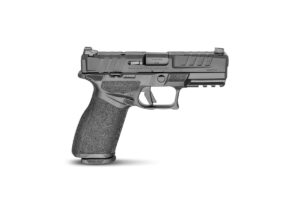
The headline argument is a section titled “AR-15s are exceedingly similar to unprotected machineguns.” The brief points to Heller’s line that states may restrict machine guns and calls the AR-15 their “fraternal twin.” The only real difference, in Virginia’s telling, is semiautomatic fire, and it says “several inexpensive and inconspicuous devices exist to turn a semiautomatic assault rifle into a machinegun or its functional equivalent.”
It walks through four of them. Bump stocks, with a quoted rate of “between 400 and 800 rounds per minute” from the Cargill dissent. Auto sears, which it says can be 3-D printed at home for a marginal cost of $5.00. Binary triggers. And forced-reset triggers, where the brief notes that one maker had sold “approximately 100,000” of them in under three years, and that the federal government “eventually reversed course and ended several enforcement efforts” with its May 16, 2025 Rare Breed settlement.
The Common-Use Fight, Told the Virginia Way
Virginia goes after the challengers’ numbers head on. It calls their approach “the simplistic counting exercise that petitioners suggest” and argues that ownership surveys say nothing about actual defensive use. Its figures: rifles made up four percent of defensive gun uses in one study against 90 percent for handguns, and 30.2 percent of gun owners had ever owned an AR-15-style rifle in the 2021 National Firearms Survey.
It also argues popularity is arbitrary. If Congress had kept renewing the 1994 federal ban, the brief says, AR-15s would not be common today, so a common-use test would make state laws depend on whether a federal law existed. Its kicker on the state count: 11 states and the District of Columbia restrict AR-15s, covering more than 34 percent of the population, so “AR-15 regulation is more common than the gun itself.”
And it takes a direct shot at the United States, which filed for the challengers on September 4 and asked on September 9 to share argument time. Virginia says the federal government “wrongly asks this Court to hold that all firearms are, by definition, Second Amendment-protected” arms. The merits briefs it is backing are covered in our report on the Cook County and Connecticut filings.
The device section is the boldest move in the brief, and the riskiest. It asks the Court to judge a stock rifle by what someone could add to it, in front of the same Court that held in Cargill that a bump-stocked rifle is not a machinegun under the National Firearms Act. The brief concedes that point itself, then argues the result is “no less deadly than one in practice.”
SB 749: Virginia’s Own Ban Is Stuck at Home
The law Virginia is quietly defending here is Va. Code § 18.2-287.4:1, enacted this year as Senate Bill 749. It reads: “Any person who imports, sells, manufactures, purchases, or transfers an assault firearm is guilty of a Class 1 misdemeanor.”
It is a sales ban with a grandfather clause, not a confiscation law. Anyone who “lawfully purchased and possessed such assault firearm prior to July 1, 2026” can still sell it to a dealer or an out-of-state buyer who may lawfully own it, leave it to an heir, or gift it to an immediate family member. The brief itself describes Virginia as “restricting the purchase and sale of assault firearms,” then counts the state in a footnote among those with “laws restricting AR-15 possession.” Those are two different things.
Then the courts got it. The brief says two Virginia circuit courts issued “preliminary injunctions restricting enforcement of the challenged laws, including one with statewide application.” It cites the Crump case in Lancaster County and the Santolla case in Washington County (order of July 9, 2026). The attorney general’s own June 25 release said the Lancaster judge’s injunction ran against the Virginia State Police, “pausing the VSP from taking steps to implement or enforce Virginia’s new assault weapons ban.”
The next sentence of the brief is the one Virginia buyers need: “Later, those courts and all the other courts entertaining similar challenges issued stays pending the outcome of these writs of certiorari.” Its footnote lists six stay orders, four in state circuit courts (Lancaster, Washington, Spotsylvania and Fauquier counties) and two in the Eastern District of Virginia, one of them the Justice Department’s lawsuit against SB 749, stayed on July 28, 2026.
Jones announced the Lancaster stay on August 21, saying in his office’s release that “this stay ensures Virginia’s cases move forward on solid, consistent footing.” Nothing in that release or in the brief says the injunctions were lifted. So as of October 28, the law is on the books, two courts restricted its enforcement before it could bite, and every lawsuit over it is parked until the Supreme Court rules. The rest of the state’s rules are in our Virginia gun laws guide.
What Happens Before December 2
The docket shows the Court granted review on June 30, consolidated the two cases with one hour of argument in total, and set them for Wednesday, December 2, 2026. Virginia’s brief landed the same day as a separate multistate filing from Massachusetts, New Jersey, 16 other states and the District of Columbia.
If the Court rules for the challengers, SB 749 is in serious trouble before a Virginia judge ever reaches the merits. If it upholds Cook County and Connecticut, Virginia walks back into its own courthouses with the Supreme Court’s reasoning in hand.
Either way, the Justice Department and the Commonwealth will face each other twice: once in the Eastern District of Virginia, and once at the Supreme Court, on opposite sides of the same rifle.
Virginia passed the ban, then asked the Court to bless it. Its own gun counters are waiting on the same answer.
Frequently Asked Questions
What did Virginia argue in its Supreme Court AR-15 brief?
That AR-15s are not arms the Second Amendment protects, so states may restrict them. The Commonwealth says the rifles are close cousins of machine guns, that cheap devices such as auto sears and forced-reset triggers close the remaining gap, and that counting how many AR-15s are in circulation does not show they are commonly used for lawful self-defense.
Who signed Virginia's brief?
Attorney General Jay Jones and Solicitor General Tillman J. Breckenridge, who is counsel of record, along with Chief Deputy Attorney General Travis G. Hill and Deputy Solicitor General Daniel J. Honold. It was filed on October 28, 2026 in support of the respondents.
Is Virginia's assault firearm ban, SB 749, being enforced?
According to the Commonwealth's own October 28, 2026 brief, two Virginia circuit courts issued preliminary injunctions restricting enforcement, one of them statewide, and every court hearing a challenge then stayed its case until the Supreme Court decides the AR-15 question. Neither the brief nor the attorney general's August 21 stay announcement says the injunctions were lifted.
Does SB 749 make it illegal to own an AR-15 I already have?
The statute, Va. Code 18.2-287.4:1, makes it a Class 1 misdemeanor to import, sell, manufacture, purchase or transfer an assault firearm. People who lawfully bought and possessed one before July 1, 2026 can still sell it to a dealer or a lawful out-of-state buyer, pass it on by inheritance, or gift it to an immediate family member.
Which Supreme Court cases is Virginia weighing in on?
Viramontes v. Cook County, No. 25-238, from the Seventh Circuit, and Grant v. Higgins, No. 25-566, from the Second Circuit. The Court granted review on June 30, 2026, consolidated them, and set one hour of argument for December 2, 2026.
Is the federal government on Virginia's side?
No. The United States filed an amicus brief for the challengers on September 4, 2026 and asked to share their argument time. The Justice Department is also suing Virginia over SB 749 in the Eastern District of Virginia, No. 1:26-cv-2035, a case stayed on July 28, 2026.
What happens to the Virginia lawsuits after the Supreme Court rules?
The stays were entered pending the outcome of the Supreme Court cases, so the state and federal cases in Virginia stay on hold until a decision comes down. What happens to SB 749 after that depends on the test the justices set.
Related Reading
- Cook County and Connecticut Defend AR-15 Bans at SCOTUS
- Supreme Court Takes the AR-15 Question Head On
- DOJ Sues Virginia to Block SB 749
- New Jersey’s Assault Weapons Ban Falls: What Changes
- Virginia Gun Sales Surge as New Bans Advance
- US Gun Laws by State
4,716+ Gun & Ammo Deals
Updated daily from 200+ top retailers. Filter by category, caliber, action type, and price.
Related Guides