

Affiliate disclosure: This article contains affiliate links. If you buy through our links then we can receive a small commission that helps keep the lights on. You don’t pay anything more.
Last updated July 2026 · By Nick Hall, CCW instructor familiar with Hawaii’s strict registration and permit requirements
Disclaimer: This is an editorial round-up of Hawaii gun laws. We do our best to make sure it’s correct, but do not rely on this as legal advice. If you’re unsure about anything, consult a lawyer.
- Treat every gun as loaded
- Point the muzzle in a safe direction
- Keep your finger off the trigger until you’re ready to shoot
- Know your target and what’s beyond
Hawaii is arguably the most restrictive state in the country for gun owners. Every firearm must be registered. You need a permit to purchase. There’s a 14-day waiting period. Magazines are capped at 10 rounds. There’s an assault weapons ban. Suppressors are completely illegal. And until the Supreme Court’s Bruen decision in 2022, concealed carry permits were essentially impossible to get.
If you’re moving to Hawaii with firearms, or trying to buy your first gun on the islands, you need to understand every layer of this system. The regulations here aren’t just strict. They’re unique. Hawaii is the only state that requires registration of every firearm, and the permit and registration process is managed at the county level by the police department. It’s a completely different world from the mainland.
State-Compliant Gun Deals
Best-priced firearms across 200+ retailers · Updated every 4 hours
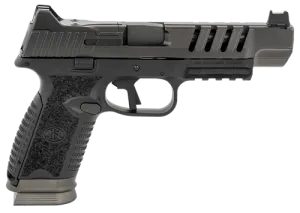
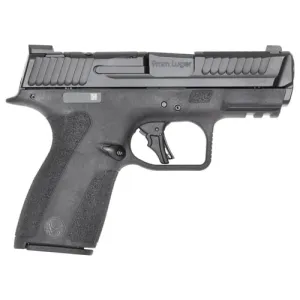
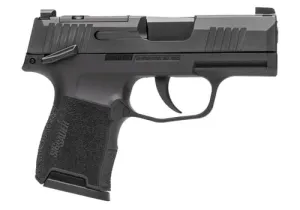
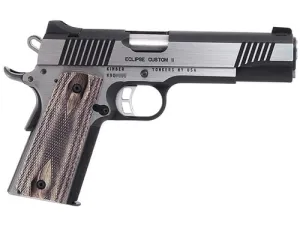
Looking for a brick-and-mortar shop in Hawaii? See our best gun stores in Hawaii guide for verified FFL dealers, ranges, and gunsmiths near you.
Top Ammo Deals
Best-priced ammunition across 200+ retailers · Updated every 4 hours





Table of Contents
Key Information: Hawaii Gun Laws at a Glance (2026)
Fast answers first, with statutes and sources below.
| Permitless Carry | No |
|---|---|
| Open Carry | With carry license only |
| Concealed Carry | Shall-issue post-Bruen, weapon-specific |
| Purchase Permit | Required (Permit to Acquire) |
| Firearm Registration | ALL firearms must be registered (5 days) |
| Background Checks | Universal (all sales) |
| Waiting Period | Minimum 14 days |
| Magazine Capacity Limit | 10 rounds (no grandfathering) |
| Assault Weapon Ban | Yes (broad, effective July 2024) |
| Red Flag Law | Yes (GVPO, 2020) |
| Suppressors | Banned (felony) |
| SBRs/SBSs | Banned |
| State Preemption | None |
Official Hawaii Resources
Hawaii Gun Laws: The Highlights
- Constitutional Carry: No.
- Concealed Carry: Shall-issue post-Bruen. Permit process is onerous. County-specific, weapon-specific.
- Open Carry: Requires a carry license. Extremely rare in practice.
- Purchase Permit: Yes. Permit to Acquire required for all firearms.
- Firearm Registration: Yes. ALL firearms must be registered with county police within 5 days of acquisition.
- Background Checks: Universal (all sales including private).
- Waiting Period: Minimum 14 days (built into permit process).
- Magazine Limit: 10 rounds.
- Assault Weapons Ban: Yes. Covers assault pistols, rifles, shotguns, and .50 caliber rifles.
- Red Flag Law: Yes (Gun Violence Protective Orders, enacted 2020).
- Suppressors: Completely illegal for civilians.
- NFA Items: Heavily restricted. SBRs and SBSs banned.
- Preemption: None. Counties can add restrictions.
Permits, Registration, and Purchasing
Hawaii requires a Permit to Acquire for all firearms under HRS § 134-2. The process begins at your county police department. You’ll need to submit an application, provide fingerprints, undergo a background check, and wait a minimum of 14 days before the permit is issued. The permit is valid for a limited time and must be used before it expires.
Once you acquire a firearm, you must register it with the county chief of police within 5 days under HRS § 134-3. This applies to every firearm, whether purchased new, transferred privately, or brought into the state. Hawaii is one of the very few states in the country that maintains a full firearms registry. Failure to register is a criminal offense.
If you’re moving to Hawaii with firearms you already own, you must register them within 5 days of arrival. The registration process goes through the county police department where you’ll be residing (Honolulu Police Department for Oahu, Maui Police Department for Maui, etc.).
All firearm transfers, including private sales, require a background check. Hawaii uses its own state system rather than going directly through NICS. There are no exceptions for private sales, gifts, or family transfers.
Concealed and Open Carry
For decades, Hawaii was effectively a no-issue state for carry permits. Permits existed in statute under HRS § 134-9, but county police chiefs almost never issued them. That changed when the Supreme Court decided NYSRPA v. Bruen in June 2022, which held that states must issue carry permits on a shall-issue basis.
Hawaii has grudgingly complied. Over 2,200 licenses have been issued since Bruen. But the process is still onerous by mainland standards. The carry license requires training, fingerprinting, photographs, a background check, and a $150 fee. Permits are valid for 4 years. Here’s the unusual part: Hawaii permits are weapon-specific. You must name the actual firearm on the permit and pass a shooting proficiency test with that specific gun. If you want to carry a different gun, you need it added to the permit.
Permits were historically county-specific, but are now valid statewide. Both open and concealed carry require the same license. Carrying any loaded firearm without a license is a Class B felony under Hawaii law.
The Supreme Court granted cert in Wolford v. Lopez in October 2025, which challenges Hawaii’s requirement that carry permit holders must have express property owner authorization to carry on others’ private property. Oral arguments were heard on February 2, 2026. A decision is pending and could significantly impact Hawaii’s carry laws.
Magazine Capacity and Assault Weapons Ban
Hawaii limits magazine capacity to 10 rounds for all firearms under HRS § 134-8. There is no grandfathering provision for pre-existing magazines. If you possess a magazine over 10 rounds in Hawaii, you are in violation of state law.
The state also has a broad assault weapons ban under HRS § 134-1 and § 134-4. Effective July 8, 2024, the ban covers:
- Assault pistols: Semiautomatic handguns with certain feature combinations
- Assault rifles: Semiautomatic rifles with features like folding stocks, pistol grips, or detachable magazines
- Assault shotguns: Semiautomatic shotguns with revolving cylinders, pistol grips, or detachable magazines
- .50 caliber rifles
- Assault weapon attachments
No assault weapon may be sold or transferred within the state. If you own firearms that fall under this ban and are moving to Hawaii, you cannot bring them with you.
NFA Items
Suppressors are completely banned for civilians in Hawaii under HRS § 134-8. Possession is a felony. The 2026 federal change, which dropped the NFA transfer tax on suppressors to $0 but did not remove them from the NFA or its registration requirements, does not override Hawaii’s state-level ban. Hawaii is one of eight states that completely prohibit civilian suppressor ownership.
Short-barreled rifles (barrels under 16 inches) and short-barreled shotguns are also banned under Hawaii law. Hawaii is one of the most restrictive states in the country for NFA items. Pre-1986 machine guns are prohibited as well.
Hawaii Suppressor Facts & Figures
| Suppressor ownership | Illegal for civilians. HRS § 134-8 prohibits civilian possession of a firearm silencer, there is no exception for a federal ATF Form 4 or tax stamp. |
| Hunting with a suppressor | Prohibited, possession is itself a crime, so there is no lawful hunting use. |
| Bringing one in from out of state | Not allowed. Possessing a suppressor in Hawaii is a felony regardless of where it was bought or registered. |
| 2026 federal $0 tax stamp | Does not apply here. The federal change removed only the $200 federal tax; it does not affect Hawaii’s state ban. |
Do not attempt to buy, build, import, or possess a suppressor in Hawaii. Even a fully ATF-registered, tax-stamped suppressor is illegal to possess here. To see where suppressors are and are not legal, see our suppressor laws by state guide. This page is general information, not legal advice, consult a Hawaii firearms attorney about your specific situation.
Red Flag Law (Gun Violence Protective Orders)
HRS § 134-51 Hawaii Concealed Carry RestrictionsA person shall not carry concealed or unconcealed on his or her person a firearm at any time except when the person is carrying the firearm pursuant to a license issued under section 134-9 or when the person is engaged in lawful hunting, target shooting, or any other activity specifically authorized by this chapter. Act 52 of 2023 designates extensive sensitive locations where carry is prohibited even with a license, including schools, childcare facilities, government buildings, healthcare facilities, places of worship, public transportation, stadiums, parks, beaches, and establishments where alcohol is served for on-site consumption.
Hawaii enacted its Gun Violence Protective Order (GVPO) law in 2020 under HRS § 134-71 through § 134-79. The law allows a broader range of petitioners than most states: law enforcement, family members, household members, medical professionals, educators, and coworkers can all petition for a GVPO.
Hawaii uses a preponderance of evidence standard for final orders, which is a lower bar than the “clear and convincing evidence” standard used in most other states. This means it’s easier to obtain a GVPO in Hawaii than in many other states with red flag laws.
In the 2026 legislative session, several bills are being considered to expand the red flag law: SB 2517 (expanding grounds), HB 2062 (funding to encourage use), and SB 2575 (increased penalties for violations).
State Preemption
Hawaii has no firearms preemption law. Counties may impose their own additional restrictions on top of state law. In practice, few counties have enacted significantly different rules, but the absence of preemption means the legal landscape could become more fragmented over time. Always check your specific county’s regulations in addition to state law.
Self-Defense Laws
Hawaii has a duty to retreat before using deadly force outside the home. Under HRS § 703-304, you may use deadly force only when you reasonably believe it is necessary to protect yourself or another from death, serious bodily injury, kidnapping, or sexual assault, AND you cannot safely retreat.
The Castle Doctrine applies within your own dwelling: under HRS § 703-304(5)(b), there is no duty to retreat in your own home if an intruder is unlawfully entering or has entered. You may use force, including deadly force, if you reasonably believe it is necessary to protect yourself or others from an imminent use of deadly physical force.
Hawaii’s self-defense laws are more restrictive than most mainland states. Stand Your Ground does not exist here. The burden is on you to demonstrate that retreat was not safely possible if you use force outside your home. This is an important distinction for concealed carry holders to understand.
Reciprocity: Out-of-State Permits
Hawaii Concealed Carry at a Glance
Constitutional carry: No
Honors non-resident permits: No — out-of-state permits not honored
Classification: No reciprocity, extremely limited local permits
Map base: Wikimedia Commons (CC BY-SA). Color overlay and reciprocity data by USA Gun Shop.
Can I Carry in Hawaii?
Select your home state to see if your permit authorizes carry in Hawaii.
Hawaii does not recognize concealed carry permits from any other state. If you’re visiting Hawaii with a carry permit from Texas, Florida, or anywhere else, it means nothing here. You cannot legally carry a concealed firearm in Hawaii without a Hawaii-issued permit.
Hawaii’s own concealed carry permit was virtually impossible to obtain before the Bruen decision. The state was a textbook may-issue jurisdiction that simply never issued permits. Post-Bruen, the state has been forced to process applications, but the process is county-based, slow, and involves extensive background checks, training requirements, and fees. Even with a Hawaii permit, the list of prohibited places is so long that finding somewhere you can actually carry is a challenge.
States That Recognize Hawaii Concealed Carry Permit
| Hawaii Permit Recognized In | NOT Recognized (Nearly Everywhere) |
| A small number of states with universal recognition policies may honor Hawaii permits. These states include: Arizona, Idaho, Indiana, Iowa, Kansas, Kentucky, Michigan, Missouri, Montana, Nebraska, Ohio, Oklahoma, South Dakota, Tennessee, Utah, Vermont, Virginia | Hawaii permits are not widely recognized because the state does not enter into reciprocity agreements. Most states do not honor Hawaii permits, and Hawaii honors no out-of-state permits in return. |
Critical Details for Travelers
- No Incoming Recognition: Hawaii does not honor any out-of-state concealed carry permits. Visitors from other states cannot carry in Hawaii regardless of what permits they hold.
- Non-Resident Permits: Hawaii does not issue non-resident concealed carry permits.
- Practical Reality: Even with a Hawaii permit, the prohibited-places list is extensive. Carrying a firearm in Hawaii is legally complex and culturally unusual. Most gun owners visiting Hawaii leave their firearms at home.
- Registration Required: All firearms brought into Hawaii must be registered with the county police department within 5 days of arrival. This applies even if you don’t plan to carry.
Prohibited Places
Prohibited Places in Hawaii
Hawaii is one of the most restrictive states. Act 52 of 2023 added extensive sensitive-places restrictions for CCW permit holders.
- K-12 schools and school grounds
- Colleges and universities
- Courthouses, courtrooms
- State and county government buildings
- State Capitol
- Hospitals
- Medical offices
- Stadiums, theaters, concert halls
- Beaches and parks
- Public transportation
- Bars and restaurants serving alcohol for on-site consumption
- Federal courthouses, post offices, agency offices
- Private property presumed gun-free unless posted permissive
Even with a valid Hawaii carry license, firearms are prohibited in numerous locations including:
- Schools and school grounds
- Government buildings
- Courthouses
- Airports and harbors
- Bars and establishments primarily serving alcohol
- Hospitals and medical facilities
- Places of worship
- Banks and financial institutions
- Parks and beaches (under county regulation)
The Wolford v. Lopez case before the Supreme Court specifically challenges Hawaii’s requirement that carry permit holders must have express property owner authorization to carry on private property. This ruling could significantly narrow or expand the prohibited places list.
Purchasing Process Step by Step
Buying a gun in Hawaii is the most involved process of any state. Here’s exactly what it looks like:
- Visit your county police department (Honolulu PD for Oahu, Maui PD for Maui, etc.). Bring valid ID, proof of residency, and proof of citizenship or permanent residency.
- Apply for a Permit to Acquire. You’ll be fingerprinted, photographed, and submit to a background check through Hawaii’s state system.
- Wait a minimum of 14 days. The permit process cannot be completed in less than 14 days. In practice, it often takes longer depending on the county.
- Receive your Permit to Acquire. The permit is valid for a limited time (typically 10 days for handguns, varies for long guns). You must use it before it expires.
- Purchase your firearm from a licensed dealer. Complete the federal 4473 and undergo another background check at the point of sale.
- Register the firearm within 5 days. Return to your county police department with the firearm and complete the registration process. This is mandatory.
The entire process from first application to registered firearm typically takes 3-4 weeks minimum. For subsequent purchases, you still need a new Permit to Acquire each time, but the process is faster if your fingerprints and background information are already on file.
Recent Changes (2022-2026)
The Supreme Court’s Bruen decision in June 2022 forced Hawaii to actually process concealed carry applications for the first time. Before Bruen, Hawaii was a textbook no-issue state. The “may issue” framework gave county police chiefs effectively unlimited discretion to deny permits, and they denied virtually all of them. Post-Bruen, the state has been compelled to process applications under a shall-issue framework, though the process remains slow, expensive, and burdened with requirements.
Hawaii responded to Bruen with new legislation aimed at restricting where permit holders can carry. The state expanded its list of prohibited places and imposed additional training requirements. The pattern mirrors what California did with SB 2: if the courts say you have to issue permits, make the permits as limited as possible.
The federal elimination of the $200 NFA tax stamp (effective January 1, 2026) has zero practical impact in Hawaii, since suppressors are completely illegal under state law regardless of federal registration. Same for SBRs and machine guns.
The most significant pending issue is whether federal courts will apply Bruen‘s historical-tradition test to strike down some of Hawaii’s more extreme restrictions. The firearms registration requirement, in particular, has no clear historical analogue and could be vulnerable to challenge. But litigation in Hawaii moves slowly and the Ninth Circuit is not known for Second Amendment enthusiasm.
Our Take on Hawaii Gun Laws
Hawaii is the toughest state in the country to be a gun owner. Registration, permits to purchase, 14-day waiting periods, 10-round magazine limits, an assault weapons ban, no suppressors, no SBRs, and a carry permit process that was designed to be as difficult as possible without technically being unconstitutional. The Bruen decision forced the state to issue carry permits, but Hawaii has made the process as burdensome as the courts will allow.
If you live in Hawaii and want to own firearms, it’s doable but you need to be meticulous about compliance. The registration requirement alone catches a lot of people who move from the mainland and don’t realize they have 5 days to register everything. Work with a local dealer who knows the county-level process. The Hawaii Rifle Association is the primary advocacy group and a good resource for navigating the system.
The Wolford v. Lopez case pending before the Supreme Court could change the carry landscape significantly. Watch for that decision in 2026.
For the complete statutes, visit Hawaii Revised Statutes Chapter 134.
FAQ: Hawaii Gun Laws
Hawaii-Specific Carry Questions
Did the 2022 Bruen decision change Hawaii’s concealed carry licensing?
Yes. The US Supreme Court’s ruling in New York State Rifle & Pistol Association v. Bruen required Hawaii to begin issuing concealed-carry licenses under a shall-issue rather than may-issue standard. The Hawaii Attorney General issued guidance reflecting this change, and county police chiefs now process license applications differently than before 2022. The training requirement and background check remain rigorous, but the discretionary good-cause standard that historically blocked most applications no longer applies.
What is Hawaii’s permit-to-acquire process?
Hawaii requires a permit to acquire any firearm, long gun or handgun, issued by the police department of the county where the buyer resides. The application requires a background check, fingerprinting, and proof of completion of a firearm safety course. Long-gun permits cover one or multiple long guns over a defined period; handgun permits typically cover a single handgun purchase within 10 days of issuance.
Does Hawaii honor any out-of-state concealed carry permits?
No. Hawaii does not extend reciprocity to any out-of-state concealed carry permit. A non-resident traveling to Hawaii cannot carry concealed under their home-state permit. Firearms transported into Hawaii for lawful purposes must be declared at the airport and stored unloaded and locked while in the state.
What are Hawaii’s magazine-capacity rules?
Hawaii restricts handgun magazines to a maximum capacity of 10 rounds. Long-gun magazine capacity is not capped at the state level, though local rules may apply. Possession of a handgun magazine over 10 rounds is a separate offense from possession of an unregistered firearm and carries its own penalties.
Frequently Asked Questions
For our complete state-by-state comparison, see our complete state gun law index.
Do I need to register my guns in Hawaii?
Yes. Hawaii requires registration of ALL firearms with the county chief of police within 5 days of acquisition. This applies to firearms purchased new, transferred privately, or brought into the state. Hawaii is one of the very few states that maintains a complete firearms registry. Failure to register is a criminal offense.
Can I get a concealed carry permit in Hawaii?
Yes, since the Supreme Court's Bruen decision in 2022. Hawaii is now shall-issue for carry licenses. The process requires training, fingerprinting, a background check, and a 150 dollar fee. Permits are weapon-specific, meaning you must name each firearm on the permit and pass a proficiency test with it. Over 2,200 licenses have been issued since Bruen.
What is the waiting period to buy a gun in Hawaii?
Hawaii has a minimum 14-day waiting period built into the Permit to Acquire process. You must apply for and receive a purchase permit before buying any firearm, and the permit process takes at least 14 days. This applies to all firearms including handguns, rifles, and shotguns.
What is the magazine capacity limit in Hawaii?
Hawaii limits magazine capacity to 10 rounds for all firearms. There is no grandfathering provision for pre-existing magazines. Possessing a magazine over 10 rounds is a violation of state law regardless of when it was purchased.
Are suppressors legal in Hawaii?
No. Suppressors are completely banned for civilians in Hawaii under HRS section 134-8. Possession is a felony. The 2026 federal change dropped the NFA transfer tax on suppressors to $0 but did not remove them from the NFA or its registration requirements, so it does not override Hawaii's state-level ban. Short-barreled rifles and short-barreled shotguns are also banned.
Does Hawaii have an assault weapons ban?
Yes. Effective July 8, 2024, Hawaii bans assault pistols, assault rifles, assault shotguns, .50 caliber rifles, and assault weapon attachments. No assault weapon may be sold or transferred within the state. The ban covers semiautomatic firearms with specific feature combinations similar to other state-level assault weapons bans.
Can I bring my guns to Hawaii if I move there?
You can bring firearms that are legal under Hawaii law, but you must register them with the county police within 5 days of arrival. Firearms that fall under the assault weapons ban, magazines over 10 rounds, and suppressors cannot be brought into the state. Contact your county police department before moving to verify which firearms are legal.
Does Hawaii have a red flag law?
Yes. Hawaii enacted Gun Violence Protective Orders in 2020. A broader range of petitioners can file than most states, including law enforcement, family members, medical professionals, educators, and coworkers. Hawaii uses a preponderance of evidence standard, which is a lower bar than most other states with red flag laws.
Explore More States
Alabama Gun Laws (2026): Constitutional Carry, Stand Your Ground & Full Freedom, Alaska Gun Laws, Arizona Gun Laws (2026): Constitutional Carry, No Limits & Stand Your Ground, Arkansas Gun Laws (2026): Constitutional Carry, No Limits & Stand Your Ground, Bruen Decision Explained (2026): NYSRPA v. Bruen, History-and-Tradition Test & Downstream Litigation, California Gun Laws (2026): CCW, AWB, Roster & Everything You Need to Know, Castle Doctrine Explained (2026): All 50 States, Civil Immunity & Presumption of Reasonable Fear, Colorado Gun Laws (2026): 15-Round Cap, SB25-003 Semi-Auto Ban & Red Flag Law, Connecticut Gun Laws (2026): Permits, Carry Rules & Restrictions, Constitutional Carry States (2026): Complete List of 29 Permitless Carry States, Florida Gun Laws (2026): Constitutional Carry, Open Carry & Stand Your Ground, Georgia Gun Laws (2026): Constitutional Carry, No Limits & Full Freedom, Idaho Gun Laws (2026): Constitutional Carry, Stand Your Ground & Full Freedom, Illinois Gun Laws (2026): FOID Card, CCL, AWB & What You Need to Know, Indiana Gun Laws (2026): Constitutional Carry, Free Lifetime License & Stand Your Ground, Iowa Gun Laws (2026): Constitutional Carry, Strict Scrutiny & Full Freedom, Kansas Gun Laws (2026): Constitutional Carry, Stand Your Ground & Full Immunity, Kentucky Gun Laws (2026): Constitutional Carry, CDWL & Stand Your Ground, Louisiana Gun Laws (2026): Constitutional Carry at 18, CHP & Stand Your Ground, Louisiana Lets 18-Year-Olds Carry, Then Won’t Issue Them a Permit, Maine Gun Laws (2026): Constitutional Carry, 72-Hour Wait & Red Flag Law, Maryland Gun Laws (2026): HQL, Wear and Carry Permit, AWB & Sensitive Places, Massachusetts Gun Laws (2026): Chapter 135, LTC, FID & AWB, Michigan Gun Laws (2026): CPL, License to Purchase, Red Flag & Safe Storage, Minnesota Gun Laws (2026): Permit to Carry, Permit to Purchase & Red Flag, Mississippi Gun Laws (2026): Constitutional Carry, Enhanced Permit & Stand Your Ground, Missouri Gun Laws (2026): Constitutional Carry, Lifetime CCW & Stand Your Ground, Montana Gun Laws (2026): Constitutional Carry (HB 102), MCWP & Stand Your Ground, Nebraska Gun Laws (2026): Constitutional Carry (LB 77), CHP, HPC & Castle Doctrine, Nevada Gun Laws (2026): CCW, Universal Background Checks, Red Flag & Ghost Gun Ban, New Hampshire Gun Laws (2026): Constitutional Carry, PRL & Stand Your Ground, New Jersey Gun Laws (2026): FPIC, PPH, Chapter 131 CCP & Sensitive Places, New Mexico Gun Laws (2026): CHL, Universal Background Checks, HB 129 Status & Article 2 Section 6, New Mexico’s Waiting Period Lost in Court and Still Applies to You, New York Gun Laws (2026): CCIA, Pistol License, SAFE Act & Sensitive Locations, North Carolina Gun Laws (2026): CHP, SB 41 Repeal & Stand Your Ground, North Dakota Gun Laws (2026): Constitutional Carry, Class 1 & Class 2 CWL, Ohio Gun Laws (2026): Constitutional Carry (SB 215), CHL & Stand Your Ground, Oklahoma Gun Laws (2026): Constitutional Carry (HB 2597), SDA License & Make My Day, Oregon Gun Laws (2026): CHL, Measure 114 Status, SB 243 & Sandoval, Pennsylvania Gun Laws (2026): LTCF, PICS, Crawford & 18 Pa.C.S. § 6109, Red Flag Laws by State (2026): Complete List of 21 ERPO States, Rhode Island Gun Laws (2026): Blue Card, Dual Permits, 10-Round Cap & 2026 AWB, South Carolina Gun Laws (2026): Constitutional Carry, CWP & Stand Your Ground, South Dakota Gun Laws (2026): Constitutional Carry, Three-Tier Permits & Stand Your Ground, Stand Your Ground States (2026): Complete List of 38 SYG States, Tennessee Gun Laws (2026): Constitutional Carry, Enhanced HCP & Stand Your Ground, Texas Gun Laws (2026): Constitutional Carry, LTC, Castle Doctrine & Civil Immunity, Universal Background Check States (2026): Complete List of 21 UBC States, Utah Gun Laws (2026): Constitutional Carry, CFP, Stand Your Ground & Reciprocity, Vermont Gun Laws (2026): “Vermont Carry,” Universal Background Check & Magazine Cap, Virginia Gun Laws (2026): CHP, Universal Background Checks & Substantial Risk Order, Virginia Halts Private-Sale Background Checks Again (2026), Washington Gun Laws (2026): CPL, Universal Background Checks, Magazine Cap & 2023 AWB, West Virginia Gun Laws (2026): Constitutional Carry, CHL & Stand Your Ground, Wisconsin Gun Laws (2026): CCL, Castle Doctrine & Reciprocity, Wyoming Gun Laws (2026): Constitutional Carry, CFP, Stand Your Ground & 2A Sanctuary
6,187+ Gun & Ammo Deals
Updated daily from 200+ top retailers. Filter by category, caliber, action type, and price.