

Last updated August 26th 2026 · By Nick Hall, AR-15 shooter who has run both 5.56 NATO and .223 Remington loads through the same rifles
Last updated August 26th 2026. This post contains affiliate links. If you click and buy, I may earn a small commission at no extra cost to you. Full disclosure.
- Treat every gun as loaded
- Point the muzzle in a safe direction
- Keep your finger off the trigger until you’re ready to shoot
- Know your target and what’s beyond
Quick Answer: The .223 Wylde chamber is the answer for almost every modern AR-15 build in 2026, a hybrid chamber designed to safely handle 5.56 NATO pressures while maintaining the tighter tolerances of a .223 Remington chamber for better accuracy with both cartridges.
5.56 NATO is the higher-pressure military cartridge (~62,000 psi) and is unsafe to fire from a chamber marked .223 Remington only. .223 Remington is the lower-pressure (~55,000 psi) civilian cartridge and is safe to fire from any 5.56 NATO chamber, though with slightly reduced accuracy due to the longer 5.56 throat. .223 Wylde splits the difference safely.
The biggest mistake new AR-15 buyers make is firing 5.56 NATO from a barrel marked .223 Rem. Check the barrel marking before loading; if it says “.223 Rem” only, run only .223 Remington ammo. If it says “5.56 NATO” or “.223 Wylde”, both are safe. Modern factory ARs almost always ship with .223 Wylde or 5.56 NATO chambers.
Table of Contents
If you’ve spent more than five minutes in the AR-15 world, you’ve heard the question: can I shoot 5.56 in my .223 chamber? The answer matters more than most people think. Getting it wrong can damage your rifle or, worse, hurt you.
I’ve seen cracked bolt lugs and blown primers from guys who didn’t understand the difference. It’s not just internet lore. These two cartridges look identical on the outside, but the pressure specs and chamber dimensions tell a very different story.
Also see our head-to-head comparison: .223 vs .308.
How we tested: Every pick here is ranked against our testing methodology. Minimum round counts, accuracy and reliability protocols, the failures that disqualify a gun. Where we have not shot a specific variant ourselves, we say so in that section.
The Short Answer
You can safely shoot .223 Remington in a 5.56 NATO chamber. You cannot safely shoot 5.56 NATO in a .223 Remington chamber. And .223 Wylde handles both. That’s the TL;DR, but understanding why requires a quick dive into chamber specs and pressure ratings.
Most modern AR-15 rifles are chambered in 5.56 NATO or .223 Wylde, so you’re probably fine. But if you own an older bolt-action or a varmint rifle stamped “.223 Rem” only, pay attention. This could save your rifle and your face.
Chamber Pressure: The Core Difference
Almost every article you’ll read says 5.56 NATO runs about 13% more pressure than .223 Remington. I wrote something close to that myself. Then I went and read the actual standards, and the picture is more interesting than that.
SAAMI, the civilian standards body, rates .223 Remington at 55,000 psi maximum average pressure, measured with a conformal piezoelectric transducer. That figure comes straight out of ANSI/SAAMI Z299.4, the centerfire rifle standard.
Here’s the part nobody mentions. That 400 page standard does not contain the word “NATO” even once. SAAMI has never standardized 5.56x45mm. So when you see 55,000 psi sitting next to 62,366 psi, you are not looking at two cartridges measured the same way. You are looking at a SAAMI number beside a military number, produced by a different organization using a different test barrel with the pressure port in a different place.
Measure them the same way and the gap mostly vanishes. Under the US Army’s SCATP 5.56 procedure, 5.56 NATO is rated 380.00 MPa, which is 55,114 psi. SAAMI rates .223 Remington at 55,000 psi. That is a difference of 114 psi, or about two tenths of one percent.
Run it the other direction and you get the same answer. CIP, the European authority, rates .223 Remington at 430.00 MPa, 62,366 psi. That is the identical number NATO publishes for 5.56 under EPVAT. Same figure, to the psi.
So pick any single standard and the two cartridges are rated the same. The famous 13% is the gap between two different rulers, not between two cartridges. And that matters, because it means the reason you cannot put 5.56 in a .223 chamber is not that the ammunition is dramatically hotter. It is the shape of the chamber.
I’ve personally chronographed M855 5.56 ammo running about 50-100 FPS hotter than equivalent .223 loads from the same barrel length. The military loads are simply pushed harder. That’s by design, because NATO wanted reliable cycling in full-auto platforms under adverse conditions.
Chamber Dimensions: The Leade Matters
Pressure is only half the story. The other half is the chamber itself. A 5.56 NATO chamber has a longer leade (the distance between the case mouth and where the rifling begins). This extra space gives the bullet room to accelerate before engaging the rifling, which keeps pressures manageable.
A .223 Remington chamber has a shorter, tighter leade. It’s designed for accuracy, not for handling hot military ammo. When you stuff a 5.56 round into that tighter space, the bullet hits the rifling sooner. That spike in pressure is where the danger lives.
Think of it like a highway on-ramp. A longer ramp, the 5.56 chamber, lets the bullet merge smoothly. A short ramp, the .223 chamber, forces everything to happen too fast, and pressure spikes are the result.
This is the actual mechanism, and it is worth being precise about it because the pressure numbers above do not explain it. Identical ammunition, loaded to an identical rated pressure, will produce a higher peak in the tighter chamber. The load did not change. The room the bullet has before it hits the rifling did. A 5.56 round seated with a long ogive can be touching the lands before the bolt has finished locking, and the pressure has to go somewhere.
One caveat on the numbers you’ll see quoted for leade length. SAAMI publishes a full cartridge and chamber drawing for .223 Remington and you can read it yourself in the standard. There is no equivalent SAAMI drawing for 5.56, because SAAMI does not standardise it, so the 5.56 leade figures that circulate online come from military prints and from people measuring real barrels. Treat any exact decimal you see for the 5.56 leade, mine included, as a good working figure rather than a published spec.
Pressure Comparison Table
Here’s how the numbers break down side by side.
| Specification | .223 Remington | 5.56 NATO |
|---|---|---|
| Max pressure, SAAMI | 55,000 psi (380 MPa) | Not rated. SAAMI does not standardise 5.56 |
| Max pressure, US SCATP 5.56 | Not rated under SCATP | 55,114 psi (380.00 MPa) |
| Max pressure, CIP / NATO EPVAT | 62,366 psi (430.00 MPa) | 62,366 psi (430.00 MPa) |
| Measurement method | Conformal piezo transducer | Piezo transducer in an EPVAT barrel |
| Chamber leade | Shorter | Longer |
| Case Dimensions | Identical | Identical |
| Bullet Diameter | .224″ | .224″ |
| Common Bullet Weights | 40-77 gr | 55-77 gr (M193, M855) |
| Safe in .223 Chamber? | Yes | NO (dangerous) |
| Safe in 5.56 Chamber? | Yes | Yes |
Can You Shoot 5.56 in a .223 Chamber?
No. And I don’t care what your buddy at the range says. The combination of higher pressure ammo in a tighter chamber is a recipe for problems. Will it blow up every time? Probably not. But “probably not” isn’t a standard I’m comfortable with when a chamber is inches from my face.
Signs of pressure problems include flattened or cratered primers, difficult extraction, brass showing pressure signs at the case head, and in serious cases, cracked bolt lugs. I’ve seen a Remington 700 in .223 that a guy had been feeding M855 through. The bolt lugs had visible stress cracks after about 500 rounds. That rifle was done.
Can You Shoot .223 in a 5.56 Chamber?
Yes, this is completely safe. You’re running lower-pressure ammo in a chamber designed for higher pressure. The only downside is a theoretical accuracy reduction. That longer leade in the 5.56 chamber means the bullet has more room to yaw before engaging the rifling.
In practice, I’ve shot plenty of match-grade .223 through 5.56 barrels and gotten perfectly acceptable accuracy. We’re talking maybe 0.25-0.5 MOA difference at 100 yards, which 99% of shooters will never notice. If you’re a benchrest competitor, sure, it matters. For everyone else, it’s a non-issue.
.223 Wylde: The Best of Both Worlds
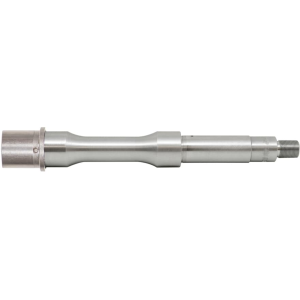
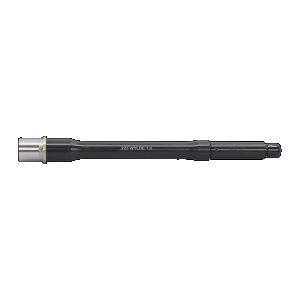
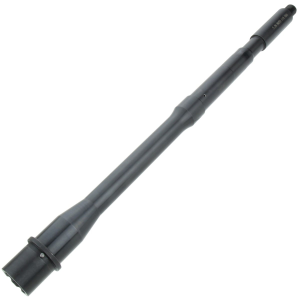
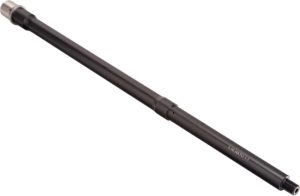
The .223 Wylde chamber is the answer to this whole debate, and it’s what I recommend for most AR-15 builds. It’s a hybrid chamber designed to safely handle 5.56 NATO pressures while maintaining the tighter tolerances of a .223 Rem chamber for better accuracy.
The leade dimensions split the difference between .223 and 5.56. You get safe 5.56 feeding with match-grade accuracy potential. There’s genuinely no downside. Most quality AR-15 barrel makers (Criterion, Faxon, Ballistic Advantage) offer .223 Wylde as a standard option.
If you’re building a new rifle or choosing between options, go with .223 Wylde every time. I’ve been running Wylde chambers on my precision AR builds for years and the accuracy with both .223 match ammo and 5.56 ball has been excellent. Check out our best AR-15 rifles roundup for top picks that come chambered in Wylde.
Why One Is Called .223 and the Other 5.56
This trips people up constantly, and the answer is on the SAAMI drawing. Both numbers describe the same barrel, measured in two different places.
SAAMI specifies the .223 Remington barrel as .219 inch bore diameter, which is 5.56 mm, and .224 inch groove diameter, which is 5.69 mm. The bore is the hole before the rifling grooves are cut. The groove diameter is what the bullet actually has to fill, and the bullet itself is .2245 inch.
So the metric name comes from the bore and the imperial name is a rounded-off cousin of the same measurement. Neither one is the bullet diameter. If the naming had been consistent we would be calling it 5.69, or .224, and nobody would ask this question. And the x45 in 5.56x45mm is simply the case length in millimeters.
The Twist Rate Nobody Checks
Here is a practical trap that catches people who buy an older .223 rifle for heavy bullets. SAAMI’s reference twist for .223 Remington is 1 in 12. Military 5.56 barrels run 1 in 7, and most modern AR-15s are 1 in 7 or 1 in 8.
That difference decides which bullets you can actually shoot. A 1 in 12 barrel will stabilize 55 grain ball fine and will keyhole 77 grain match bullets at distance. It is not a safety problem, it is an accuracy ceiling, and it is baked into the barrel. Check the twist stamp before you buy heavy ammo for an older varmint rifle. I have watched someone burn through a box of 77 grain trying to work out why his groups looked like buckshot.
Military vs Civilian Specs
The 5.56 NATO cartridge was developed alongside the M16 platform for military use. NATO standardized it as STANAG 4172. Military ammo has to function in full-auto weapons, in extreme temperatures, after being stored for decades, and in dirty conditions. That’s why the specs are hotter and the chamber is more forgiving.
The .223 Remington is the civilian SAAMI-spec version. It was introduced commercially by Remington in 1964, right around the time the military adopted the M16. The civilian version has lower pressure limits because SAAMI builds in larger safety margins for the wide variety of firearms that might chamber it.
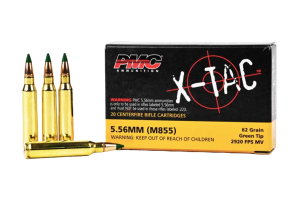
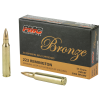
When you buy commercial ammo labeled “.223 Remington” from Federal, Hornady, or similar, it’s loaded to SAAMI specs. When you buy ammo labeled “5.56 NATO” or “5.56x45mm,” it’s loaded to NATO specs. Some manufacturers, like Black Hills, produce both versions and clearly label them.
Accuracy Differences
In terms of inherent accuracy, .223 Remington match ammo in a .223 chamber will outperform 5.56 ball ammo in a 5.56 chamber. But that’s comparing match ammo to military ball, which isn’t really fair. The chamber has less to do with it than the ammo quality.
Match-grade 5.56 ammo (like Mk 262 or Black Hills 77gr OTM) shot from a quality 5.56 or Wylde barrel is incredibly accurate. Sub-MOA is very achievable. The chamber specification matters far less than barrel quality, ammo consistency, and the person behind the trigger.
For the best accuracy with the widest ammo compatibility, a .223 Wylde barrel with a 1:8 twist rate is hard to beat. That combination handles everything from 55gr plinking ammo to 77gr match loads beautifully.
Barrel Markings: How to Tell What You Have
Check your barrel. Seriously, go look right now. The chamber specification should be stamped or engraved on the barrel, near the chamber end. You’ll see “5.56 NATO,” “.223 REM,” “.223 WYLDE,” or possibly “5.56/223.” Some older or cheaper barrels may only say “.223” without specifying further.
If you can’t find a marking, check the manufacturer’s documentation. If you bought the rifle new, it’s in the manual. If you bought it used with no paperwork, contact the manufacturer with the serial number. Don’t guess on this one.
Nearly every AR-15 sold in the last 20 years is chambered in 5.56 NATO or .223 Wylde. The .223-only chambers are mostly found on bolt-action rifles, older mini-14s, and some single-shot rifles. But verify before you load that first round. For more on barrel specifications, see our AR-15 barrel length guide.
What About Reloaders?
If you reload your own ammo, this distinction matters even more. 5.56 NATO brass tends to have thicker case walls and less internal volume than .223 brass. If you use load data developed for .223 brass and apply it to 5.56 brass without reducing the charge, you can get pressure spikes.
Always sort your brass by headstamp. Keep military brass (LC, WCC, FC with NATO cross) separate from commercial .223 brass. Work up loads separately for each. This is basic reloading safety, but I’m amazed how many people skip it.
My Recommendation
For any new AR-15 purchase or build, go with .223 Wylde. It handles everything safely and accurately. If you already own a 5.56 NATO rifle, you’re good to shoot any .223 or 5.56 ammo you want. If you own a rifle stamped .223 only, stick to .223 Remington ammo and don’t take chances.
The best AR-15 ammo guide covers specific loads for both chamberings. And if you’re still figuring out your ideal AR-15 caliber, our caliber guide goes deep on every option available for the platform.
Don’t overthink this. Check your barrel marking, buy the right ammo, and go shoot. The .223/5.56 family remains the most versatile and affordable centerfire rifle cartridge in America for good reason. Whether you’re defending your home, hunting, or punching paper, this caliber family has you covered.




Browse AR-15 Parts & Upgrades →
Frequently Asked Questions
Can 5.56 NATO ammo damage a .223 Remington chamber?
Yes, though not for the reason most people give. Measured by any single standard the two cartridges are rated to the same maximum pressure. SAAMI rates .223 Remington at 55,000 psi, and the US SCATP procedure rates 5.56 NATO at 55,114 psi. The problem is the chamber, not the ammunition. A .223 Remington chamber has a shorter leade, so a 5.56 round meets the rifling sooner and the pressure spikes in that specific chamber. That spike is what causes excessive bolt thrust, primer flow, difficult extraction, and over time cracked bolt lugs or worse.
Is .223 Wylde more accurate than 5.56 NATO?
Yes, because the tighter leade dimensions of .223 Wylde give better bullet alignment before the round engages the rifling. In my own shooting the gap runs about 0.25 to 0.5 MOA, which matters to a benchrest shooter and to almost nobody else.
Why do AR-15s come in 5.56 instead of .223?
Because the AR-15 was designed as the civilian version of the M16 military rifle, which uses 5.56 NATO. The 5.56 chamber gives shooters flexibility to use both .223 and 5.56 ammo safely.
Can I tell the difference between .223 and 5.56 ammo by looking at it?
Not reliably by appearance alone. The cartridges are dimensionally identical. You need to read the headstamp on the case or the box labeling.
Does 5.56 ammo cost more than .223?
Not necessarily. Military surplus 5.56 is often the cheapest centerfire rifle ammo available. Match-grade .223 tends to cost more due to tighter manufacturing tolerances.
What does the x45mm mean in 5.56x45mm?
The 45mm refers to the case length. The full designation means a 5.56mm bullet in a 45mm long case, which is the standard NATO naming convention.
Is .223 Wylde a real cartridge?
No, .223 Wylde is a chamber specification, not a cartridge. You shoot standard .223 Remington or 5.56 NATO ammo through a barrel with a .223 Wylde chamber.
Should I buy a .223 Wylde barrel for my AR-15 build?
Absolutely. It is the best all-around choice. You get the safety of a 5.56-rated chamber with accuracy closer to a .223 chamber, and there is no real downside.
Is 5.56 NATO really higher pressure than .223 Remington?
Not when you measure them the same way. SAAMI rates .223 Remington at 55,000 psi and does not standardise 5.56 at all, so the 62,366 psi figure you see quoted for 5.56 comes from NATO, measured in a different test barrel with the pressure port in a different position. Under the US SCATP procedure 5.56 is rated 55,114 psi, and under CIP the .223 Remington is rated 62,366 psi, the same number as 5.56. Pick one standard and the two cartridges match. The real difference between them is chamber geometry.
4,626+ Gun & Ammo Deals
Updated daily from 200+ top retailers. Filter by category, caliber, action type, and price.
Related Guides