

Last updated August 25, 2026 · By Nick Hall. I have carried and shot both platforms. Every spec below comes from Glock’s and Springfield’s own published data, and every price is the lowest live offer in our retailer feed on the day of the update.
Affiliate disclosure: some links below are affiliate links. If you buy through them you still get the best price and you help us keep tracking deals, at no extra cost to you.
Table of Contents
- Treat every gun as loaded
- Point the muzzle in a safe direction
- Keep your finger off the trigger until you’re ready to shoot
- Know your target and what’s beyond
Also see our head-to-head comparison: Beretta 92FS vs Glock 17.
How we tested: Every pick here is ranked against our testing methodology. Minimum round counts, accuracy and reliability protocols, the failures that disqualify a gun.
Quick Verdict: 1911 vs Glock
Buy a Glock if you want a high-capacity 9mm that runs with almost no maintenance and needs nothing upgraded to trust. Buy a 1911 if you want one of the best stock triggers ever fitted to a handgun and a slim steel pistol that rewards the shooter. The Glock is the better tool for most carry, duty and home-defense buyers. The 1911 is the better gun to shoot.
One thing worth killing straight away, because almost every comparison gets it backwards: the 1911 is not automatically the expensive one. A Tisas 1911A1 Government in .45 is $299.99 right now. The cheapest Glock we can source is a 43X at $448.00. At the entry point the 1911 undercuts the Glock by nearly $150.
Where the Glock wins on money is higher up. Around $470 buys a Glock 19 that needs nothing done to it, while $470 buys a 1911 that will want better magazines and probably better sights. Both are excellent. They answer different questions.
Specs Comparison: 1911 vs Glock
| Spec | Springfield 1911 Mil-Spec .45 | Glock 19 Gen6 9mm | Glock 17 Gen6 9mm |
|---|---|---|---|
| Action | Single-action, hammer-fired | Striker-fired Safe Action | Striker-fired Safe Action |
| Frame | Forged carbon steel | Polymer | Polymer |
| Caliber | .45 ACP | 9x19mm | 9x19mm |
| Standard capacity | 7 | 15 | 17 |
| Barrel | 5in | 4.02in | 4.49in |
| Overall length | 8.6in | 7.28in | 7.95in |
| Height | 5.5in | 5.04in | 5.47in |
| Width | Not published | 1.35in | 1.34in |
| Weight, no magazine | 39oz (as published) | 20.11oz | 21.16oz |
| Weight, loaded | Not published | 29.10oz | 31.39oz |
| Manual safety | Thumb safety plus grip safety | Trigger safety only | Trigger safety only |
| Cheapest live offer | $569.99 | $469.99 (Glock 19) | $620.00 |
Two notes on that table, because they are where most comparisons go wrong. Springfield publishes 39oz as a bare weight, not a loaded one, so putting it next to a Glock’s loaded weight flatters the 1911 by several ounces. Compare like with like and the gap is bigger: 39oz against 20.11oz for a bare G19.
The second is width. Glock publishes 1.34in and 1.35in. Springfield publishes no width figure for its 1911s at all, and neither does Colt, so any exact single-stack number you see quoted online is somebody’s tape measure rather than a manufacturer spec.
Pros
- One of the best stock triggers made
- Slim, flat grip that points naturally
- All-steel build soaks up recoil
- Deep customization and gunsmithing tradition
- Entry $299.99, cheaper than any Glock
Cons
- Low capacity, 7 rounds of .45
- Heavy, 39oz bare against 20.11oz G19
- Good ones cost much more than Glocks
- Cheap examples and bad magazines get finicky
- A red dot means milling the slide
Pros
- High capacity, 15 or 17 rounds
- Runs reliably with minimal maintenance
- Light, 20.11oz bare for a G19
- $470 buys duty-grade, no upgrades needed
- Huge parts, holster and magazine ecosystem
- Optics ready from the factory on Gen6
Cons
- Trigger good, but not 1911-crisp stock
- Grip angle is not for everyone
- No external manual safety
- Nothing to collect, never appreciates
Two Philosophies: Steel Single-Action vs Polymer Striker
This is not really a fight between two pistols so much as two eras of design. The 1911 is the classic approach: a machined steel frame, a hammer-fired single-action trigger, a slim single-stack magazine and a manual thumb safety. It came from an age that prized fit, feel and a superb trigger above all else.
The Glock is the modern approach: a polymer frame, a striker-fired action with no external safety, a double-stack magazine and a relentless focus on reliability, simplicity and low cost. It was built to be a tool that works in any condition with little maintenance.
Understand those two starting points and every practical difference below follows from them. Each gun is optimized for a different set of priorities, and neither is trying to be the other.
A Brief History of the 1911
The 1911 is John Browning’s masterpiece, adopted by the U.S. military in 1911 and serving as the standard sidearm through both World Wars, Korea and Vietnam. For most of the twentieth century it defined what an American fighting pistol looked like. Its .45 ACP cartridge and crisp single-action trigger became legendary.
Even after the military moved to the 9mm Beretta M9 in 1985, the 1911 never faded. Today it is produced by dozens of makers at every price point, from mil-spec guns under $600 to hand-fitted customs. More than a century on it remains one of the most carried handgun designs in the world.

A Brief History of Glock
Glock is the upstart that rewrote the rules. Gaston Glock, an Austrian engineer with no prior firearms experience, designed the Glock 17 in 1982 around a polymer frame and a striker-fired action with very few parts. Sceptics mocked the plastic pistol, but it proved reliable, light and cheap to produce, and it held 17 rounds when most service pistols held far fewer.
Within a decade Glock had taken over American law enforcement, and the 17 and 19 family now dominates duty use worldwide. The design has moved through six generations, and the sixth arrived in dealers on January 20, 2026 with the G17, G19 and G45 leading the line.
That timing matters if you are shopping this year, because it means the gun on the shelf may be a Gen5 or a Gen6 and the difference is real. More on what changed further down.
Trigger Feel
This is the 1911’s signature advantage. Its single-action trigger gives a short, crisp, light press with a clean break and a positive reset, and it is widely regarded as one of the best stock triggers in the handgun world. Because the hammer is already cocked, every shot feels identical.
The Glock trigger is consistent rather than crisp. Glock rates the pull at 26 newtons, roughly 5.8 lb, and out of the box it has more take-up and a softer break than a 1911. The Gen6 flat-faced trigger is the best factory Glock trigger yet and the aftermarket can close more of the gap for modest money.
Stock for stock, though, the 1911 still leads on pure trigger feel, and it is not close. This one section explains most of why people who own both keep reaching for the 1911 at the range.
Capacity
Capacity is the Glock’s clearest practical win. A Glock 17 holds 17 rounds of 9mm as standard and a Glock 19 holds 15, with larger magazines available. A classic single-stack 1911 in .45 holds 7 or 8, and even 9mm 1911s hold 9 or 10.
That is roughly double, and it is why the Glock dominates duty use where reloads cost time. If you want the 1911 trigger with Glock-class capacity, that gun exists now: the double-stack platform we cover in 1911 vs 2011, which starts at $663.99.
Is a 1911 Bigger Than a Glock?
Yes, in every dimension that matters except width, and the gap is larger than most people expect. This is one of the most-asked questions on the comparison and it is easy to answer with published numbers.
A Springfield 1911 Mil-Spec is 8.6in long and 5.5in tall and weighs 39oz. A Glock 19 Gen6 is 7.28in long, 5.04in tall and 20.11oz bare. That is 1.3in shorter, half an inch lower and nearly nineteen ounces lighter, which is well over a pound of difference before you load either one.
Even the full-size Glock 17 comes in smaller and lighter than the 1911 at 7.95in, 5.47in and 21.16oz. The one place the 1911 wins is thickness, and we cannot put a number on it because no 1911 maker publishes one.
Ergonomics and Grip
The 1911’s slim single-stack grip is one of its most-loved features. It fills the hand comfortably for most people, points naturally and is easy to get a high, secure purchase on, which helps recoil control and fast shooting. Plenty of people say a 1911 simply feels right in a way that is hard to describe until you hold one.
The Glock’s grip is wider at 1.34in to 1.35in because of the double-stack magazine, and its grip angle points slightly higher than most pistols. Some shooters adapt instantly, others need range time. Gen6 adds an extended thumb rest, an enlarged beavertail, a more aggressively undercut trigger guard and the new RTF6 texture spread over more of the frame.
Grip preference is personal and nobody can settle it for you. Handle both before you spend anything.
Reliability and Maintenance
Both can be extremely reliable, but they get there differently. The Glock is famous for running dirty, wet, sandy and neglected, which is exactly why agencies trust it. It has few parts, is simple to clean and tends to just work.
A quality 1911 from a reputable maker is also very reliable, but the design is tighter and wants regular cleaning, good lubrication and quality magazines. The old unreliability reputation came from cheap guns and bad magazines rather than from Browning’s design.
The honest framing is not that one is reliable and one is not. It is that the Glock asks less of you, and the 1911 rewards you for knowing what you are doing.
Weight and Carry
Springfield publishes 39oz for the Mil-Spec, and that is the bare gun. Add seven rounds of .45 and a steel magazine and you are carrying meaningfully more than that. The weight helps soak up recoil and gives the gun a planted feel, but it tells on a belt by mid-afternoon.
Glock publishes both numbers, which makes the comparison easy. A Glock 19 Gen6 is 20.11oz bare, 22.58oz with an empty magazine and 29.10oz fully loaded. A Glock 17 Gen6 runs 21.16oz, 23.99oz and 31.39oz on the same three measures.
So a loaded Glock 19 still weighs less than an unloaded steel 1911. If all-day comfort is the priority, that is the whole argument, and aluminum-framed 1911s are the platform’s answer to it.
Caliber Options
The 1911 is most associated with its original .45 ACP, the big, slow, heavy bullet that built its reputation, though it is widely offered in 9mm and 10mm. For the classic .45 experience the 1911 is its spiritual home, and the steel frame makes even .45 recoil pleasant. Our best .45 ACP ammo guide covers what to feed one.
The Glock is most popular in 9mm, the modern default for capacity, mild recoil and low cost, but it is also made in .45 ACP, .40 S&W and 10mm across the range. If you want maximum capacity and cheap practice, the 9mm Glock is ideal.
Recoil and Shootability
The 1911’s heavy steel frame and low bore axis make it genuinely pleasant to shoot, soaking up recoil so that even .45 ACP feels like a push rather than a snap. Combine that with the trigger and many shooters find it one of the easiest pistols to shoot accurately.
The Glock in 9mm is also easy to shoot, with mild recoil and a lighter frame that some find livelier in the hand. It is extremely controllable for fast strings, which is why it dominates practical shooting.
Both are shootable. The 1911 wins on smoothness and trigger, the 9mm Glock wins on light recoil and sheer ease of running fast.
Accuracy
Both are accurate enough for any practical purpose, and a good shooter will print tight groups with either. The 1911 has a slight edge in inherent accuracy potential thanks to its crisp trigger and the tight barrel fit of quality examples, which is why it stays popular in bullseye circles.
The Glock is plenty accurate for defense, duty and competition, and the practical difference shrinks to nothing at typical distances. The 1911’s advantage shows up mainly in deliberate slow fire. For fast, combat-style accuracy the two are effectively equal and shooter skill matters far more than the gun.
Aftermarket and Customization
Both have enormous aftermarket support. The 1911 has more than a century of parts, sights, triggers, grips and barrels behind it plus a deep gunsmithing tradition, so it can be hand-fitted into almost anything. Tinkerers have endless options.
The Glock has arguably the largest modern aftermarket of any pistol, with cheap, plentiful parts available everywhere and most upgrades doable at the kitchen table. For affordable, plug-and-play customization the Glock leads. For craftsman-level custom work the 1911 is unmatched.
Optics, Gen6 and Modern Features
Red dots are standard equipment now and this is where the Glock has pulled clearly ahead. Glock’s sixth generation reached dealers on January 20, 2026, and the company describes it as bringing key ergonomic updates, a flat faced trigger design, and a new Gen6 optic ready system into one platform.
In practice that means a dot mounts at the right height without a stack of adapter plates, on a gun that also has front serrations, an accessory rail and a corrosion-resistant finish as standard. The G17, G19 and G45 led the launch.

A 1911 can absolutely wear a dot, but on most models it means sending the slide out to be milled, which is a few hundred dollars and a few weeks. Plenty of modern 1911s now ship optics-ready, but as a platform the Glock is the more natively modern design and it is not a close call.
Concealed Carry
For concealed carry the two trade strengths. The 1911’s slim single-stack profile rides flat against the body, which is a real advantage, but the steel weight drags on a belt over a long day and the lower capacity means earlier reloads. Compact and lightweight 1911s address the weight, and our subcompact 1911 guide covers those.
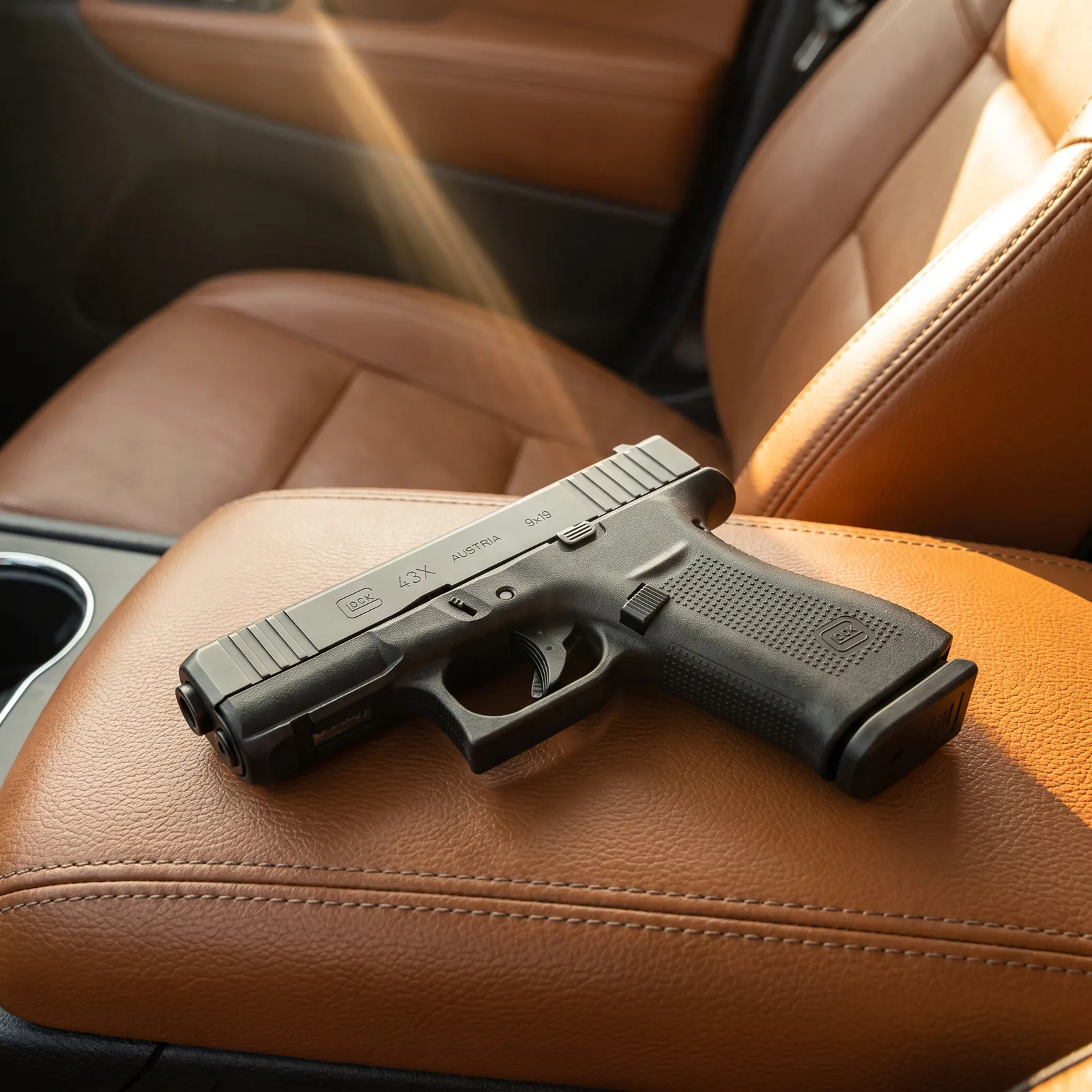
The Glock 19 is one of the most popular carry guns in the world for good reason, balancing concealable size with 15 rounds and 20.11oz. The 43X goes smaller and lighter still at $448.00 and is the one I would point a new carrier at. For the wider field, see our best 9mm concealed carry guns.
Price and Value
Here is the part that has quietly gone out of date everywhere else. The received wisdom is that Glocks are cheap and 1911s are expensive. At the bottom of the market that is simply false.
A Tisas 1911A1 Government is $299.99. A Rock Island GI Standard is $344.99. The cheapest Glock in our feed is a 43X at $448.00, and a Glock 19 starts at $469.99. The 1911 platform starts roughly $150 below the Glock platform.
What the Glock buys you at $470 is a finished gun. Nothing needs replacing for you to trust it, the magazines are cheap and plentiful, and it will still be running in twenty years. A $300 1911 is a real gun that works, but it is the start of a project more often than the end of one.
Higher up the ladder the old rule reasserts itself. A serious 1911 runs $570 to well past $2,000, while a Glock tops out around $620 for a Gen6 G17. You can spend a lot on a 1911. You cannot really spend a lot on a Glock, and that is the point of it.
The 1911s Worth Buying
Three guns cover the useful range: the cheapest one that genuinely works, the one most people should actually buy, and a stainless step up.
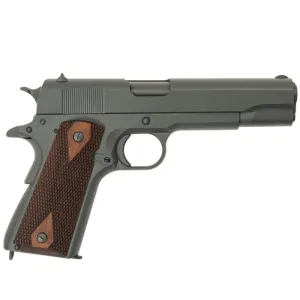
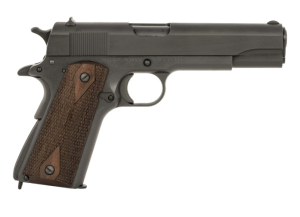

The cheapest way into a real 1911 that I am comfortable recommending, and the gun that undercuts every Glock made. Turkish-built, GI-pattern, 7+1 of .45 through a 5in barrel. You are not getting a fitted match barrel at this money, and you do not need one.
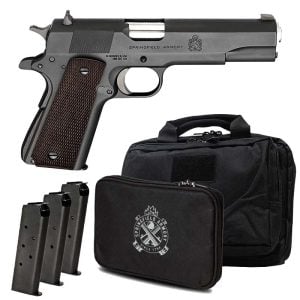


This is the 1911 the specs table is built around and the one I point most people at. Forged carbon steel frame and slide, 5in match-grade barrel, and none of the fussiness that makes cheap 1911s frustrating. It is the honest comparison point against a Glock 19.

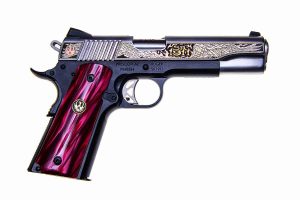
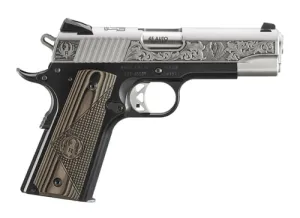
The best-value American-made 1911, and the one to buy if you want stainless without paying custom money. We put it through a full Ruger SR1911 review. If you want the whole field at this level, we ranked the best 1911s under $1,000.
The Glocks Worth Buying
Same idea on the other side: the easiest to carry, the one that does everything, and the current-generation flagship.
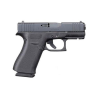
The cheapest Glock we can source and the slimmest of the useful ones. If the 1911’s appeal to you is the flat profile rather than the trigger, this is the gun that solves the same problem for less weight. We covered it in our Glock 43X review.
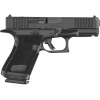
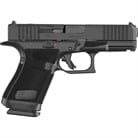
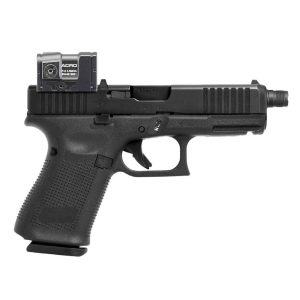
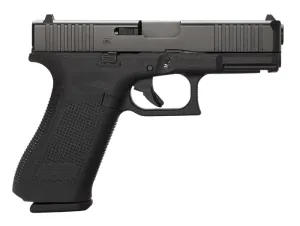
If you buy one handgun in your life and want it to be the right one, this is a defensible answer. Fifteen rounds, 20.11oz, and a holster for it in every shop in the country. The card runs across generations, so check which one you are getting before you buy.
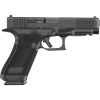
The newest full-size Glock, with the flat-faced trigger and the Gen6 optic system. Supply is still thin this soon after the January launch, so the card may show a single offer. The rest of the range is in our best Glock pistols guide.
Safeties and Manual of Arms
The 1911 layers its safeties. It carries cocked and locked with a thumb safety, adds a grip safety that must be depressed by a firing grip before the gun will fire, and modern examples include a firing-pin block. Running it well means training to sweep that thumb safety off on every draw.
The Glock takes the opposite approach with its trigger-based Safe Action system and no external manual safety, so the manual of arms is draw and fire. That simplicity is excellent under stress and is part of why agencies favour it, but it demands strict holster discipline and trigger-finger control.
Neither approach is unsafe when trained properly. This is a genuine preference, and the right answer is whichever one you will actually practice with.
Durability and Round Count
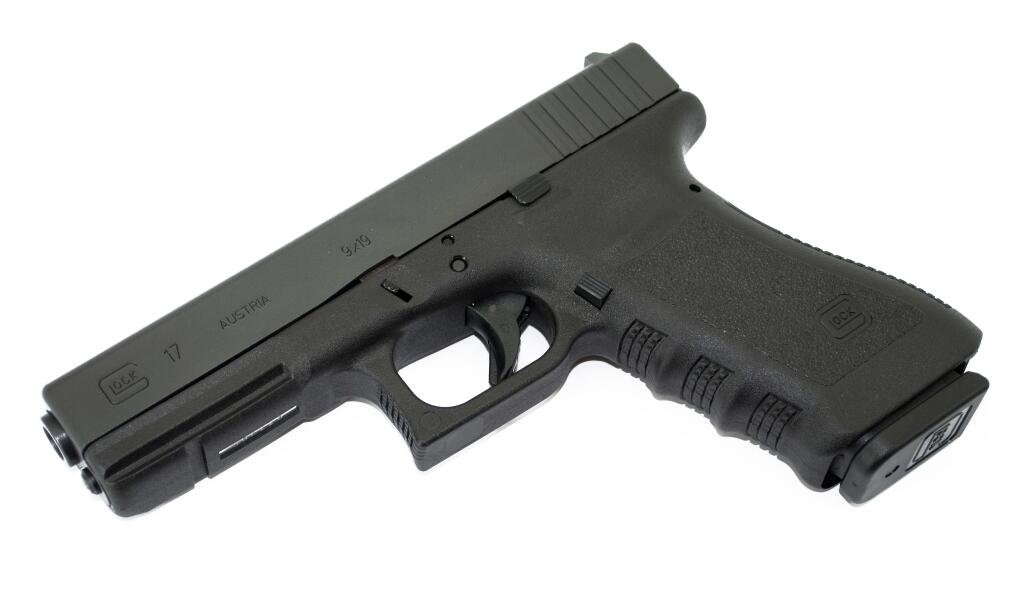
Both are durable in different ways. The Glock is engineered for very high round counts with minimal maintenance, and well-documented torture tests show it running through mud, water and neglect without failure. Its finish and polymer frame shrug off abuse.
A quality 1911 is also durable and will last generations with proper care, and steel is tough. But it has more parts that benefit from periodic attention, and the tighter tolerances reward regular cleaning.
For a low-maintenance, high-round-count workhorse the Glock wins. For a well-kept gun you hand to your kid, the 1911 is in its element.
Competition Use
Both have a home in competition, in different divisions. The Glock is a staple of USPSA Production and Carry Optics and of IDPA, where its reliability, capacity and cheap parts make it easy to run and upgrade. For a new competitor on a budget it is one of the easiest ways into the game.
The 1911 competes in Single Stack division, built around its classic format, where the trigger and accuracy shine. Its double-stack descendant dominates Open and Limited at the highest levels, which we cover in the best 2011 pistols.
Resale Value and Collectibility
Both hold value, but differently. Glocks are so common and in such steady demand that they are easy to buy, sell or trade at predictable prices, which makes them a low-risk purchase. They are tools rather than collectibles and they rarely appreciate.
The 1911 has genuine collectibility at the high end, where custom and historic examples hold or gain value, and quality 1911s retain their worth on craftsmanship alone. For pure liquidity the Glock is easier to move. For a gun that might be an heirloom, the 1911 offers something the Glock does not.
Common Myths
Myth: Glocks are the cheap option. At the entry point the opposite is true. A Tisas 1911A1 is $299.99 against $448.00 for the cheapest Glock.
Myth: a loaded Glock weighs about the same as a 1911. A fully loaded Glock 19 Gen6 is 29.10oz. An unloaded Springfield Mil-Spec is 39oz.
Myth: 1911s are unreliable. A quality modern 1911 with good magazines runs reliably. The reputation came from cheap guns and bad magazines.
Myth: .45 always beats 9mm. Modern 9mm defensive ammunition performs excellently and is what most agencies issue.
Myth: you have to choose forever. Plenty of shooters own both and enjoy each for what it does best.
Live 1911 and Glock Deals
Best-priced firearms across 200+ retailers · Updated every 4 hours

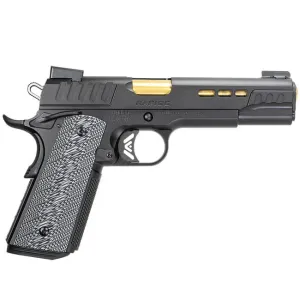


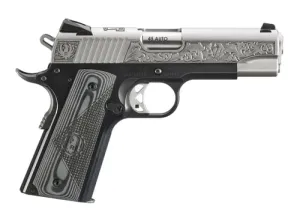
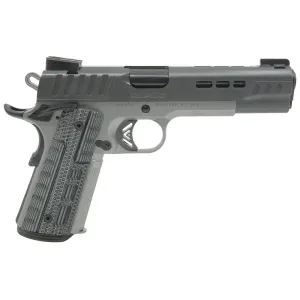

Best-priced firearms across 200+ retailers · Updated every 4 hours
Which Should You Buy?
Buy a Glock if you want a reliable, high-capacity 9mm for carry, duty or home defense that runs with minimal maintenance and is easy to accessorise. That covers most buyers, and the Glock 19 is one of the best all-round handguns ever made.
Buy a 1911 if you love a superb single-action trigger, a slim steel pistol and a classic shooting experience, and you accept lower capacity and more weight. If budget is the constraint, note that the 1911 is the cheaper way in.
The honest take: the Glock is the smarter tool, the 1911 is the more rewarding pistol to shoot, and a lot of people end up owning both.
How I Compared These
I have carried and shot both platforms, and this comparison weighs trigger, capacity, size, weight, price and ergonomics against how each gun actually performs for carry, duty, competition and range use.
Every spec figure came from the manufacturer rather than from another article. Glock’s dimensions, weights and the 26N trigger rating come from Glock’s published technical data for the Gen6 G17 and G19, and the Gen6 launch details from Glock’s own SHOT Show release. Springfield’s 39oz, 8.6in and 5.5in come from the 1911 Mil-Spec spec sheet.
Every price is the lowest live offer across the eleven retailers in our feed on August 25, 2026, checked against the card shown beside it. Prices move, so treat the cards as current and the prose as of that date.
Bottom Line
The Glock is the better practical choice for most shooters, delivering reliability, capacity, light weight and low running costs in a package that simply works. The 1911 is the better choice for shooters who prize its world-class trigger and slim steel feel and accept the trade-offs that come with it.
Neither is wrong. Decide whether you want the ultimate modern tool or the ultimate shooting feel, and the choice makes itself. And if the answer is that you want the 1911 trigger with Glock capacity, that gun exists now and it starts at $663.99.
Frequently Asked Questions
Is a 1911 better than a Glock?
For most practical uses the Glock is the better tool. It holds nearly double the rounds, weighs about half as much, runs with far less maintenance and needs nothing upgraded to trust. The 1911 is the better gun to shoot, because its single-action trigger is one of the best ever fitted to a handgun. Pick the Glock for utility and the 1911 for the shooting experience.
Are 1911s more accurate than Glocks?
The 1911 has a slight edge in inherent accuracy potential, thanks to its crisp single-action trigger and the tight barrel fit on quality examples, which is why it remains popular in bullseye shooting. In practical terms the gap disappears at normal distances. For fast, combat-style shooting the two are effectively equal and shooter skill matters far more than the pistol.
Is a 1911 bigger than a Glock?
Yes, in almost every dimension. A Springfield 1911 Mil-Spec is 8.6in long, 5.5in tall and 39oz. A Glock 19 Gen6 is 7.28in long, 5.04in tall and 20.11oz without a magazine, so the 1911 is 1.3in longer and nearly 19oz heavier. Even a fully loaded Glock 19 at 29.10oz weighs less than an unloaded steel 1911. The 1911 is thinner, but no 1911 maker publishes a width figure.
Which is better, a Glock 19 or a 1911?
For a single do-everything handgun, the Glock 19. It holds 15 rounds, weighs 20.11oz bare, starts at $469.99 and has a holster available in every gun shop in the country. Choose the 1911 over it if the trigger and the slim steel feel are what you actually want from a pistol, and you are happy to carry more weight for fewer rounds.
Which is cheaper, a 1911 or a Glock?
At the entry point the 1911 is cheaper, which surprises most people. A Tisas 1911A1 Government is $299.99 and a Rock Island GI Standard is $344.99, while the cheapest Glock we can source is a 43X at $448.00 and a Glock 19 starts at $469.99. Higher up the ladder that reverses, because a serious 1911 runs past $2,000 while a Glock tops out around $620.
Is a 1911 reliable enough for concealed carry?
A quality 1911 from a reputable maker, fed good magazines and kept reasonably clean, is reliable enough to carry. The old unreliability reputation came from cheap guns and bad magazines rather than the design. The Glock simply asks less of you to reach the same place. Test any carry gun with your defensive ammunition before you trust it, whichever you choose.
What is different about the Glock Gen6?
Glock's sixth generation reached US dealers on January 20, 2026, led by the G17, G19 and G45. Glock describes it as bringing key ergonomic updates, a flat faced trigger design and a new Gen6 optic ready system into one platform, along with an extended thumb rest, an enlarged beavertail, a more aggressively undercut trigger guard and wider RTF6 texture coverage.
Which is better for a first handgun?
For most first-time buyers, a Glock 19. It is reliable, holds 15 rounds, weighs little, starts at $469.99 and needs no upgrades to trust. A 1911 is a wonderful pistol but it rewards a shooter who already appreciates its trigger and is willing to maintain it and buy decent magazines.
3,979+ Gun & Ammo Deals
Updated daily from 200+ top retailers. Filter by category, caliber, action type, and price.