

Last updated August 25, 2026 · By Nick Hall, who has shot and carried custom 1911s from both shops and spent more range time behind Berryville steel than is probably healthy. Company facts below are sourced to each maker and to the Encyclopedia of Arkansas; prices are the lowest live offer in our retailer feed on the day of the update.
This article contains affiliate links. If you buy through them we earn a small commission at no extra cost to you, and it helps us keep testing expensive guns so you don’t have to guess.
Here is a strange piece of trivia that tells you almost everything about this matchup: Wilson Combat and Nighthawk Custom build some of the finest 1911s on the planet, and they do it from the same tiny town of Berryville, Arkansas, a few minutes apart. Two of the biggest names in the custom pistol world grew up as neighbors. That shared zip code hides two very different ideas about how a great 1911 should be made.
Both shops will sell you a hand-built, sub-two-inch-group 1911 for around three thousand dollars. Both back it for life. Both have a waiting list of buyers who could have bought a used car instead. So when a reader emails me asking whether to spend the mortgage payment on a Wilson or a Nighthawk, the honest answer is that you almost cannot go wrong. The interesting answer is why you might still pick one over the other.
Table of Contents
How we tested: Every pick here is ranked against our testing methodology. Minimum round counts, accuracy and reliability protocols, the failures that disqualify a gun.
Quick Verdict
If you want the most modern, most shootable carry gun and you like the idea of a company that also makes rifles, optics, and a huge parts catalog, Wilson Combat is the pick, and the EDC X9 is the gun that made everyone else play catch-up. If you want the purest hand-built experience, one master gunsmith fitting one pistol from bar stock with zero cast parts, Nighthawk Custom is the more romantic and arguably more exclusive choice.
For a daily carry 9mm, I lean Wilson. For a heirloom .45 you hand down, I lean Nighthawk. Neither answer is wrong, and the rest of this guide explains exactly where the money goes so you can decide for yourself.
Specs Comparison
Both makers build dozens of configurations, so a single spec table can only sketch the outline. Below I have lined up two comparable full-size flagships, the Wilson Combat CQB and the Nighthawk Custom War Hawk, both classic single-stack Government-size 1911s, alongside the broader range each company offers.
| Spec | Wilson Combat (CQB / EDC X9) | Nighthawk Custom (War Hawk / Government) |
|---|---|---|
| Founded | 1977 by Bill Wilson, Berryville AR | 2004 by four founders, Berryville AR |
| Scale | 125 staff in 2014, 50 of them gunsmiths; 200 by 2020 | About 50 staff in total by 2014 |
| Build model | Team cells, CNC + hand fitting | One gun, one gunsmith, start to finish |
| Cast/MIM parts | Some MIM small parts on select models | Zero MIM, every part machined from 416 billet steel |
| Calibers | 9mm, .45 ACP, 10mm, .38 Super, .40 | 9mm, .45 ACP, 10mm, .38 Super |
| Signature model | EDC X9 double-stack 9mm | War Hawk, GRP, President |
| Capacity (flagship) | 15+1 (EDC X9), 8+1 (single-stack) | 8+1 to 10+1, double-stack up to 20+1 |
| Barrel | 3.25 to 5 in, match grade | 4.25 to 5 in, match grade, hand fit |
| Trigger pull | ~3.5 to 4 lb | ~3.5 to 4 lb |
| Typical price | $2,900 to $4,200 | $2,900 to $5,200 |
| Cheapest live offer we can source | $3,223.91 (1911 CQB Full Size) | $3,899 (Talon II, California compliant), one of two in stock |
| Warranty | Lifetime | Lifetime |
| Lead time | In-stock to a few months | Weeks to several months |
Wilson Combat Pros & Cons
Pros
- EDC X9 is the best double-stack carry
- Huge ecosystem: parts, mags, holsters, rifles, optics
- Easier to find in stock than custom
- Excellent triggers, dead-reliable from the box
- Strong resale, a name everyone recognizes
Cons
- Some MIM small parts on certain models
- Semi-custom volume, less bespoke than one-smith
- Top orders cost as much as Nighthawk
Nighthawk Custom Pros & Cons
Pros
- One gunsmith builds and signs your pistol
- Zero MIM, machined from 416 billet steel
- Fit and finish that feels like jewelry
- Deep custom shop, engraving and collaborations
- More exclusive, fewer built each year
Cons
- The pricier option once you spec it
- Fewer in stock, so you often wait
- Smaller accessory ecosystem than Wilson
- Double-stack arrived later than the EDC X9
The Two Houses: Heritage and Philosophy
Wilson Combat is the older of the two by nearly thirty years. Bill Wilson originally trained as a watchmaker before opening a retail store in Berryville, which explains a lot about the company’s obsession with tight tolerances, and he founded the gun business in 1977. Over the decades Wilson grew from a one-man custom shop into a full firearms manufacturer.
Today the company builds pistols, AR-pattern rifles, bolt guns, suppressors, and a parts catalog so deep that half the custom 1911s in America are wearing at least one Wilson component. That breadth matters, because when you buy a Wilson you are buying into an entire ecosystem. The scale is worth putting a number on: by the end of 2014 Wilson employed 125 people, fifty of them gunsmiths, and by 2020 that had grown to 200.
Nighthawk Custom was established in 2004 by four people, with a narrower and more purist mission. The company set out to build 1911s the old way, one pistol at a time, by one gunsmith, with no compromises on parts. Where Wilson embraced volume and modern manufacturing, Nighthawk leaned hard into the artisan model.
The result is a genuinely smaller company: ten years after founding it had roughly fifty employees in total, which is about the same as Wilson’s gunsmith headcount alone. Nighthawk is also the exclusive US importer and distributor for Korth revolvers of Germany and Cosmi shotguns of Italy, which tells you the kind of clientele it courts.
So you have the same town, the same caliber of talent, and two philosophies pulling in different directions. Wilson is the engineer’s custom shop. Nighthawk is the artist’s.
How They Are Built: One Gunsmith vs a Team
This is the single biggest difference between the two, and it drives almost everything else. Nighthawk’s entire brand rests on the phrase “One Gun, One Gunsmith”, and the company describes it as a pistol “completely hand built, prepped, blended, and beveled by a single gunsmith”. A single builder takes your pistol from a box of parts to a finished, test-fired gun, and on completion each weapon is marked with the stamp of that gunsmith.
Nothing gets passed down an assembly line. That approach creates a level of accountability and pride that shows up in the details, and it is a genuinely different way to build a firearm in 2026.
Wilson Combat uses a cell or team approach layered on top of serious CNC machining. Specialists handle the stages they are best at, and modern manufacturing keeps tolerances repeatable across far more guns than a single smith could ever finish. The upside is consistency and availability. A Wilson coming off the line this month should shoot exactly like one from last month. The trade-off, if you want to call it that, is that no single person owns the whole build.
Neither method is objectively better. Nighthawk’s model feels more personal and appeals to collectors who love the idea of a maker’s mark. Wilson’s model scales, which is why you can actually find a Wilson in stock and why the parts and support network is so deep. If the story of who built your gun matters to you, that is a real reason to lean Nighthawk.

Materials and the MIM Question
Ask any custom 1911 forum about these two and the conversation turns to metal injection molded parts within about ten minutes. Nighthawk makes a point of using zero MIM. In the company’s own words, “Each part on a Nighthawk Custom is fully machined from 416 billet steel”, and that includes the thumb safety, slide stop, sear and hammer. For buyers who believe bar-stock parts last longer and fit tighter, this is a headline feature and a genuine point of pride.
Wilson Combat uses some MIM small parts on certain models. Here is the honest nuance most arguments skip: modern MIM parts from a serious maker are not the fragile junk they were twenty years ago, and Wilson’s guns are famously reliable. Plenty of Wilson pistols have run tens of thousands of rounds on their factory parts. Still, if you are paying custom money and the idea of any cast part bothers you, Nighthawk removes the question entirely.
This is one of the clearest philosophical splits in the whole comparison.
The Lineups: What You Can Actually Buy
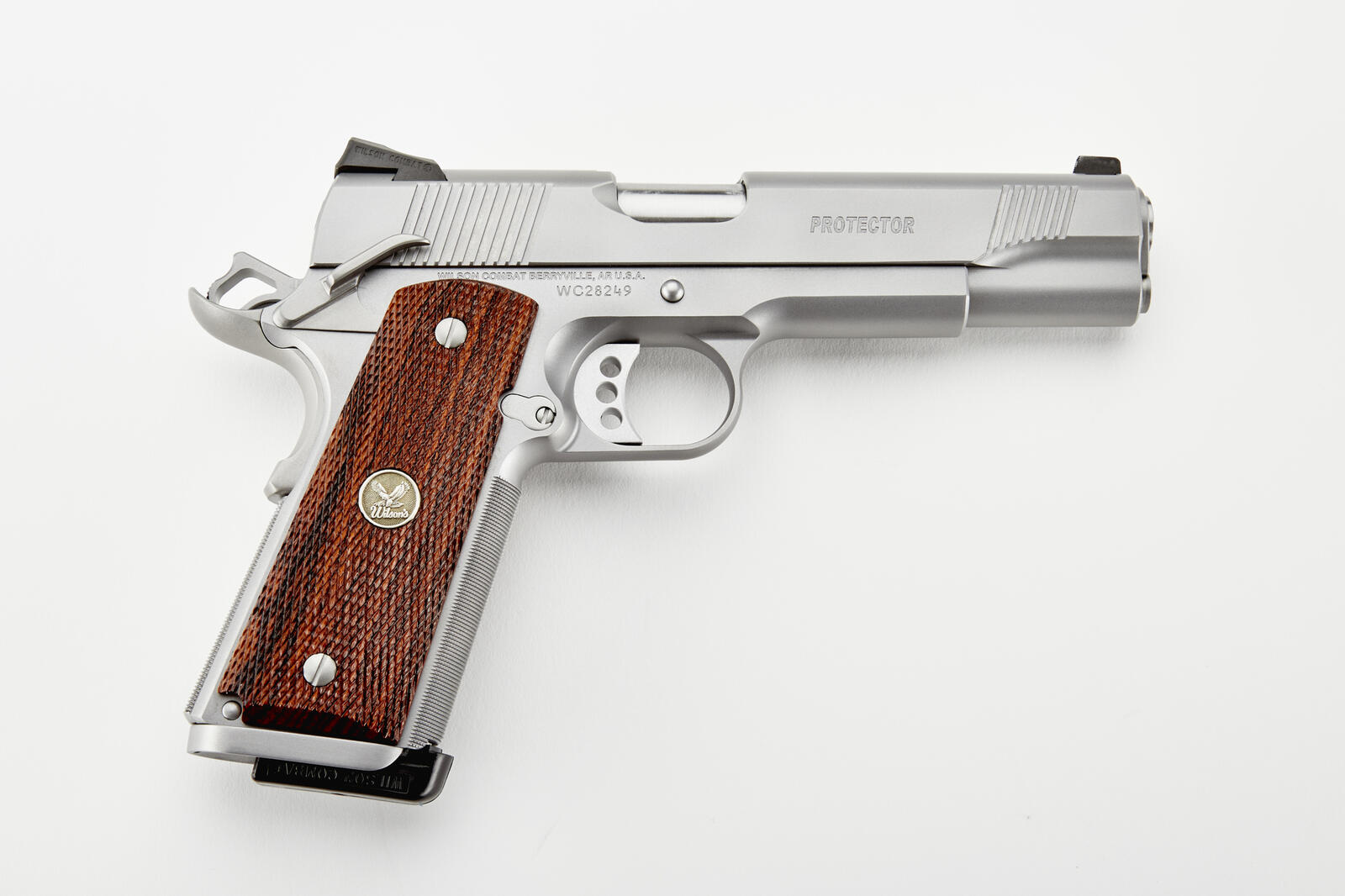
Wilson’s catalog is broad and modern. The single-stack side includes the CQB, the Protector, the Bill Wilson Carry, and the classic ACP. The star, though, is the EDC X9, a double-stack 9mm built on Wilson’s own X-frame that holds fifteen rounds in a package barely larger than a single-stack. The X9 spawned the smaller SFX9 and SFT9 carry guns, and it reshaped the entire premium carry market.
If you want a modern high-capacity 1911-style carry gun with a custom pedigree, Wilson got there first and did it best.
Nighthawk’s lineup leans more traditional but is enormous in its own right. The GRP, War Hawk, Talon, Predator, Falcon, Agent, and President cover everything from carry guns to full-size range and duty pistols, and the custom shop can build almost anything you dream up. Nighthawk has since added double-stack models to answer the high-capacity trend, and it offers striking collaborations and finishes that Wilson does not, like the recently revealed Alpha Hawk.
If your taste runs toward a hand-finished single-stack .45 with perfect blueing, Nighthawk is playing your song. We also put both against the modern double-stack benchmark in Wilson Combat vs Staccato and Nighthawk vs Staccato. For the full range, see our roundups of the best Wilson Combat pistols and the best Nighthawk Custom guns.
Fit and Finish
This is where both companies justify their price, and where the gap between them and a factory 1911 becomes obvious the moment you rack the slide. Both deliver hand-fit slide-to-frame tolerances so tight the gun feels like it moves on rails. Both crown their barrels, blend their grip safeties, and finish their flats without a hint of tool marks.
If I am splitting hairs, Nighthawk’s hand-built model tends to produce that last five percent of jewelry-grade feel, the sense that a person sweated every surface. Wilson’s finishes are outstanding and remarkably consistent, but the very consistency can make them feel a touch more manufactured, in the best sense of that word. Hold both blindfolded and you will struggle to tell which is better built. You will only be able to say they are built differently.
Triggers
Both companies ship triggers that will ruin factory guns for you forever. Expect a crisp, single-action break in the three-and-a-half to four pound range with almost no creep and a short, positive reset. This is the heart of why a custom 1911 shoots so well, and it is the first thing new owners notice.
Differences here come down to individual guns and personal taste rather than one brand beating the other. A Nighthawk trigger, tuned by the same hand that built the gun, can feel almost eerily clean. A Wilson trigger is every bit as good and is backed by decades of refinement. If the trigger is your deciding factor, you should try to dry fire both in person, because at this level the winner is whichever one your finger prefers.
Accuracy and Barrel Fitting
Both makers hand-fit match-grade barrels and both will shoot better than the person holding them. Wilson advertises tight groups on many of its models and backs the claim, and Nighthawk’s hand-lapped barrel fitting produces the same kind of results. In practical terms, a good shooter can print groups from either that make a factory gun look loose.
The honest truth is that mechanical accuracy is a tie at this tier. What you are paying for is the fitting that makes that accuracy repeatable across thousands of rounds without the gun loosening up. Both deliver it. Do not choose between these two on accuracy alone, because you will never out-shoot the difference.
Reliability and Break-In
A custom 1911 lives or dies on reliability, because a five-thousand-dollar gun that chokes is worse than a five-hundred-dollar one that runs. Both Wilson and Nighthawk have sterling reputations here. Both test-fire every pistol before it ships, and both tune extractors and feed ramps by hand. Tight custom 1911s sometimes want a short break-in period and quality magazines, and that advice applies to both.
Wilson’s advantage is volume-proven consistency and an in-house magazine line that just works. Nighthawk’s advantage is the single-builder accountability, since the person who fit your gun is the one who has to make it run. In my experience both brands earn their reputation, and reliability is not a reason to pick one over the other. It is table stakes at this price.
Customization and Custom Orders
Both run true custom shops, and this is where the fun money goes. You can order grips, finishes, sights, checkering patterns, engraving, and internal work from either. Nighthawk’s custom program leans into artistry, with hand engraving, exotic grips, and one-off collaborations that turn a pistol into a piece. Wilson’s program is deep and practical, and it benefits from the company’s ability to make almost every part in house.
If you want a working custom, a carry gun spec’d exactly to your hand, both nail it. If you want a safe queen that doubles as art, Nighthawk’s finish and engraving options give it a slight edge in the pure jewelry department. Either way, spec’ing one of these out is dangerous for your bank account.
What You Can Actually Buy Right Now
Here is something the spec sheets will not tell you, and it is the most practical difference between these two companies. Wilson Combat is genuinely available at retail. Nighthawk mostly is not.
Across the eleven retailers we track, there are multiple Wilson models in stock at any given time. Nighthawk returns two guns, a California-compliant Talon II at $3,899 and a Talon at $4,831.99. That is not a knock on the pistol, it is how the company sells: Nighthawk pushes buyers to a preferred dealer and builds to order, so the guns rarely sit on a shelf. Budget for a dealer conversation and a wait rather than a checkout button.
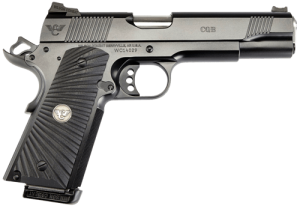
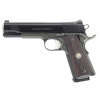
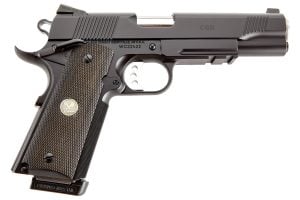
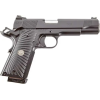
The classic full-size Wilson single-stack and the closest thing here to the three thousand dollars in the headline, at $3,223.91. This is the gun the spec table is built around.
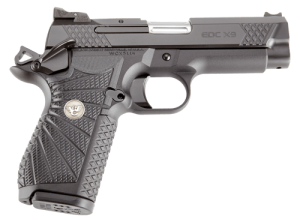
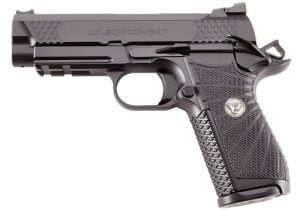
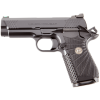
The gun that made everyone else play catch-up. Fifteen rounds of 9mm on Wilson’s X-frame in a package barely wider than a single-stack. If you are cross-shopping these two for carry, this is the pistol that decides it for most people.
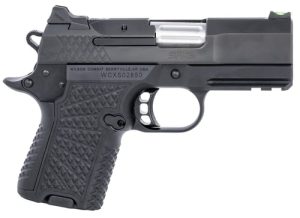
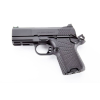

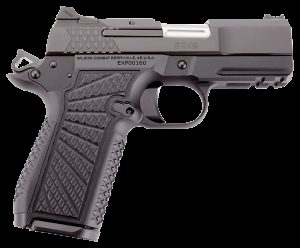
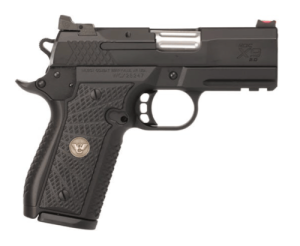
The smaller, cheaper descendant of the X9 and the most affordable way into a Wilson double-stack. It is the value pick of the Wilson range for anyone who wants the X9 concept in a carry-sized gun.
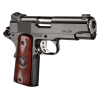
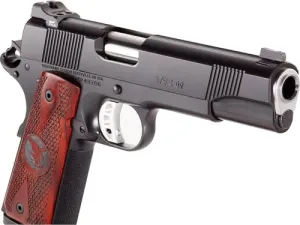
The cheapest Nighthawk our retailers have in stock, and at $3,899 it sits well above the three thousand this comparison is framed around. Treat it as a snapshot of retail availability rather than the price of entry, because a built-to-order Government or Talon through a dealer starts far lower.
Price and Value: Where the Money Goes
Base to base, the two overlap heavily. A Wilson CQB and a Nighthawk War Hawk land within a few hundred dollars of each other, both hovering around three thousand. The gap opens up as you climb. Nighthawk’s high-end custom and collaboration guns can run past five thousand, and its no-MIM, one-smith model tends to carry a small premium at every tier.
Wilson’s EDC X9 delivers a modern high-capacity feature set for the money that Nighthawk answered later, so on a pure carry-gun value basis Wilson often wins.
The real question is not which is cheaper, because neither is cheap. It is what you value. Paying for one gunsmith and bar-stock everything is worth it to some buyers and irrelevant to others. Paying for a modern double-stack carry design and a huge support ecosystem is worth it to a different buyer. Both are fair prices for what they deliver.
Wait Times and Ordering
Availability tips toward Wilson. Because the company builds in higher volume, dealers more often stock popular models like the EDC X9, and lead times on semi-custom guns can be shorter. Nighthawk’s hand-built model means fewer guns exist, so you more often join a waiting list, especially for custom configurations. If you want to walk out of a shop with a custom-grade 1911 this month, Wilson gives you better odds.
That said, waiting for a Nighthawk is part of the appeal for some buyers. There is something to anticipating a pistol that a specific gunsmith is building just for you. Whether that is romance or inconvenience depends entirely on your patience.

Resale and Collectibility
Both hold value far better than a production pistol, which is one of the quiet arguments for buying custom in the first place. Wilson’s name recognition is broader, so its guns move quickly on the used market and the EDC X9 in particular commands strong prices. Nighthawk’s exclusivity and hand-built story give its higher-end and collaboration guns real collector appeal, and a rare finish or engraved model can appreciate.
For a working carry gun you plan to shoot, resale is close enough not to matter. For a collectible you might sell in a decade, a rare Nighthawk has a slightly higher ceiling, while a clean Wilson has a broader and faster buyer pool.
Warranty and Customer Service
Both back their pistols for life, and both have reputations for taking care of owners. This is what you should expect when you spend custom money, and neither company disappoints. Send either a gun with a problem and it comes back right. Service is not a differentiator here, it is a shared strength that helps justify the price of admission for both.
Concealed Carry Reality Check
Most buyers cross-shopping these two are thinking about carry, and this is where the philosophies produce the clearest practical split. Wilson’s EDC X9 was purpose-built for concealed carry in the modern era. Fifteen rounds of nine-millimeter, a grip barely wider than a single-stack, and a bushingless bull barrel make it one of the easiest premium guns to hide and shoot well. We compared it head to head with its closest rival in Wilson EDC X9 vs Staccato C2. It is the reason so many serious carriers walked away from their steel single-stacks.
If your goal is a daily driver that disappears under a shirt and still runs like a custom, the X9 is tough to argue with.
Nighthawk’s carry answer is more classic. A Government or Commander-size single-stack rides beautifully for anyone who has made peace with eight or nine rounds and the weight of steel, and Nighthawk’s newer double-stack guns close the capacity gap. The carry experience is more traditional 1911, thin and flat and heavy in a way that soaks up recoil. Neither is wrong. The X9 is the modern high-capacity carry tool, and a Nighthawk single-stack is the timeless one.
This is also the exact fault line that runs through the broader 1911 vs 2011 debate, which is worth reading if capacity is your sticking point.
Which Should You Buy?
Buy the Wilson Combat if you want a modern high-capacity carry gun, you like the idea of buying into a full ecosystem of parts and support, you value availability, or the EDC X9’s fifteen-round nine-millimeter package is exactly what you have been looking for. It is the more practical, more shootable everyday choice for most buyers.
Buy the Nighthawk Custom if you want the purest hand-built experience, you care that one gunsmith built and signed your pistol, you want zero MIM parts, or you are chasing a heirloom-grade .45 with jewelry-level finish. It is the more exclusive, more romantic choice, and for a collectible or a lifetime gun it is hard to beat.
If the price is the sticking point rather than the badge, Wilson Combat vs Dan Wesson covers the tier below, and the best 1911s under $1,000 covers the tier below that. Still torn? Handle both. Dry fire both. At this level the specs are a wash and the decision is emotional as much as rational, which is exactly how spending three thousand dollars on a handgun should feel.
How I Compared These
This comparison draws on hands-on time with 1911s and carry guns from both shops, published specifications from Nighthawk Custom and Wilson Combat, company history and employee figures from the Encyclopedia of Arkansas, and years of watching how these guns hold up on the range and on the used market. I weighted the things buyers at this price actually care about: build philosophy, fit and finish, trigger, reliability, real-world value, and resale.
Prices shift with configuration and availability, so treat the figures here as a current guide rather than a fixed quote, and check the live pricing above before you buy.
Bottom Line
Wilson Combat and Nighthawk Custom are two of the best answers to the same question, built by neighbors who chose different paths. Wilson is the engineer’s custom shop, modern and broad, and the EDC X9 makes it the smarter buy for a lot of carry-minded shooters. Nighthawk is the artist’s custom shop, hand-built and exclusive, and it wins the hearts of buyers who want one gunsmith and no compromises.
Pick the philosophy that speaks to you, because both build the kind of 1911 you keep for life.
Related buying guide: For more picks, see our best custom 1911 pistols roundup.
Is Nighthawk Custom better than Wilson Combat?
Neither is objectively better. Nighthawk builds each pistol with one gunsmith and zero MIM parts for a more exclusive, hand-built feel, while Wilson offers modern designs like the EDC X9, far broader availability and a huge support ecosystem. Pick the philosophy that fits you.
Are Wilson Combat and Nighthawk Custom made in the same place?
Yes. Both are based in Berryville, Arkansas, in Carroll County, just minutes apart, though they build their guns in very different ways. Wilson Combat was founded there in 1977 by Bill Wilson and Nighthawk Custom in 2004 by four founders.
Does Nighthawk Custom use MIM parts?
No. In Nighthawk's own words, "Each part on a Nighthawk Custom is fully machined from 416 billet steel", so there are no metal injection moulded components. Wilson Combat uses some MIM small parts on certain models, though modern MIM from a serious maker is not the weak point it was twenty years ago.
Can you actually buy a Nighthawk Custom off the shelf?
Rarely, and this is the most practical difference between the two. Across the eleven retailers we track there are currently two Nighthawks in stock, both Talons, from $3,899, while several Wilson models are available at any time from $2,499.99. Nighthawk builds to order and points buyers to a preferred dealer, so expect a dealer conversation and a wait rather than a checkout button.
How much bigger is Wilson Combat than Nighthawk Custom?
Considerably. By the end of 2014 Wilson Combat employed 125 people, fifty of them gunsmiths, and by 2020 that had reached 200. Nighthawk had roughly fifty employees in total ten years after it was founded, which is about the same as Wilson's gunsmith headcount alone. That scale gap is what drives the availability difference.
What is "One Gun, One Gunsmith"?
It is Nighthawk's build philosophy and it has applied since the company started in 2004. A single gunsmith hand builds, preps, blends and bevels your entire pistol from a box of parts, and once it has been test fired that weapon is marked with the stamp of the gunsmith who built it. Wilson Combat instead uses specialist team cells layered over CNC machining, which is what makes its output so consistent and available.
What is Wilson Combat's answer to the 2011?
The EDC X9, a double-stack 9mm built on Wilson's X-frame that holds 15+1 in a package close to a single-stack. It reshaped the premium concealed carry market and currently starts at $3,000.99. The smaller SFX9 follows the same idea from $2,499.99.
Which holds its value better, Wilson or Nighthawk?
Both hold value far better than production pistols. Wilson's name recognition moves guns fast on the used market, while rare, engraved or collaboration Nighthawks have a higher collector ceiling. For a gun you intend to shoot, resale is close enough not to matter.
Is a $3,000 custom 1911 worth it over a $1,500 one?
For hand-fit accuracy, a flawless trigger, top-tier reliability and a lifetime warranty, many buyers say yes. If you want those traits closer to $1,500, a Springfield Prodigy or a Dan Wesson is worth a serious look before you spend double.
4,021+ Gun & Ammo Deals
Updated daily from 200+ top retailers. Filter by category, caliber, action type, and price.
Related Guides