
The most famous weapon in No Country for Old Men is not a gun. Anton Chigurh walks around West Texas with a slaughterhouse cattle stunner and a tank of compressed air, and that choice tells you everything about him before he says a word.
The rest of the armory is worth the same attention, and it holds a couple of surprises. Chigurh’s shotgun is not a pump. Its enormous suppressor does not work and never could. And the film is set in 1980 while carrying at least six guns that hadn’t been built yet. Here are the guns of No Country for Old Men, who actually carries what, and what you’d buy today.
Table of Contents
The captive bolt pistol
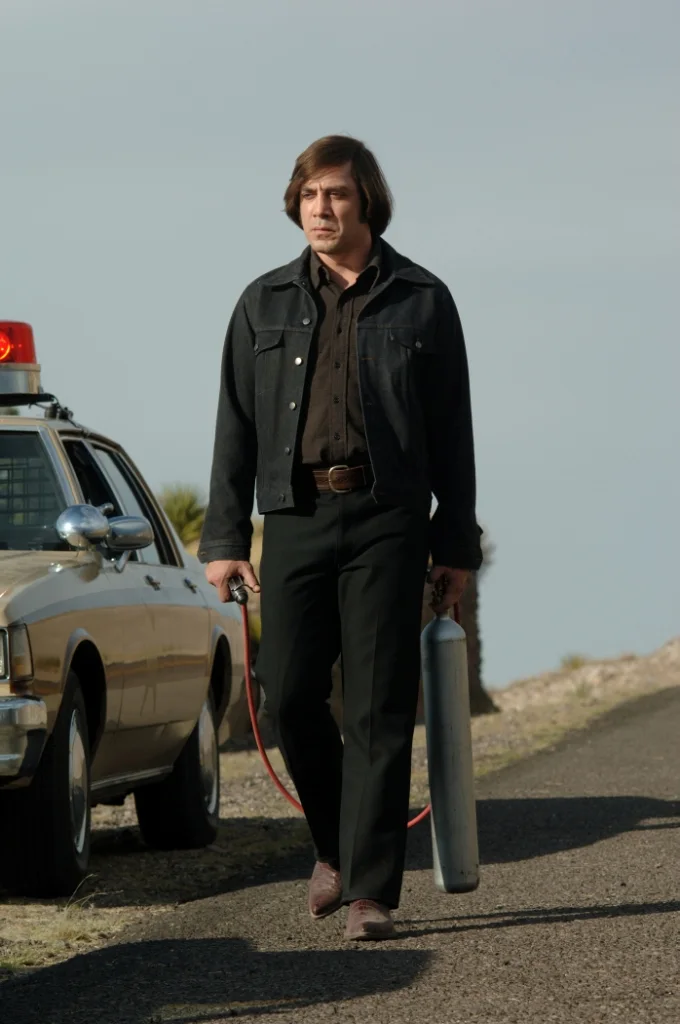
A captive bolt pistol is a slaughterhouse tool. Compressed air or a blank cartridge drives a short steel bolt out of the muzzle to stun cattle, and the bolt is captive, meaning it stays attached and springs straight back into the housing. It does not fire a projectile. It is not, legally or mechanically, a firearm.
Now think about why a hitman would pick one. No ammunition to buy and no paper trail to buy it with. No cartridge case left on the floor. No bullet in the wall to run ballistics on. Barely any noise. And it punches out door locks, which is how he gets into half the buildings in the film.
The Coens didn’t invent a weapon here. They picked a real object off a shelf and gave it to a character whose whole method is being untraceable. Every other gun in the film generates evidence. His does not.
Chigurh’s shotgun is a semi-auto, and the can is fake
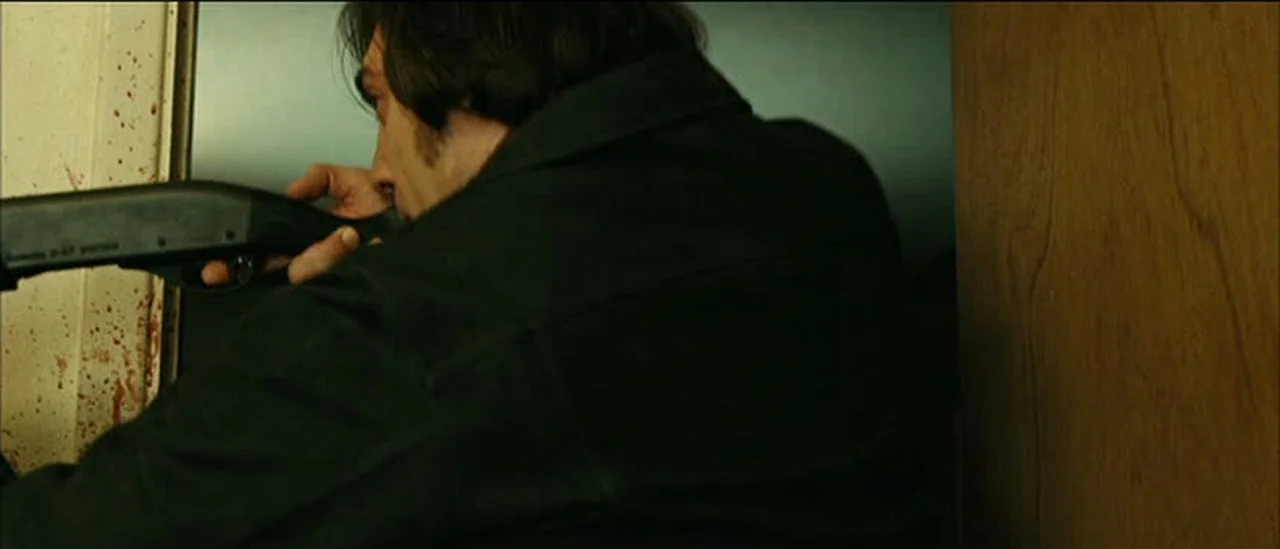
This one gets written up wrong constantly. Chigurh’s shotgun is a Remington 11-87, and the 11-87 is a gas-operated semi-automatic, not a pump. You can read the model number on the receiver in the motel scenes. He never works a slide because there’s no slide to work.
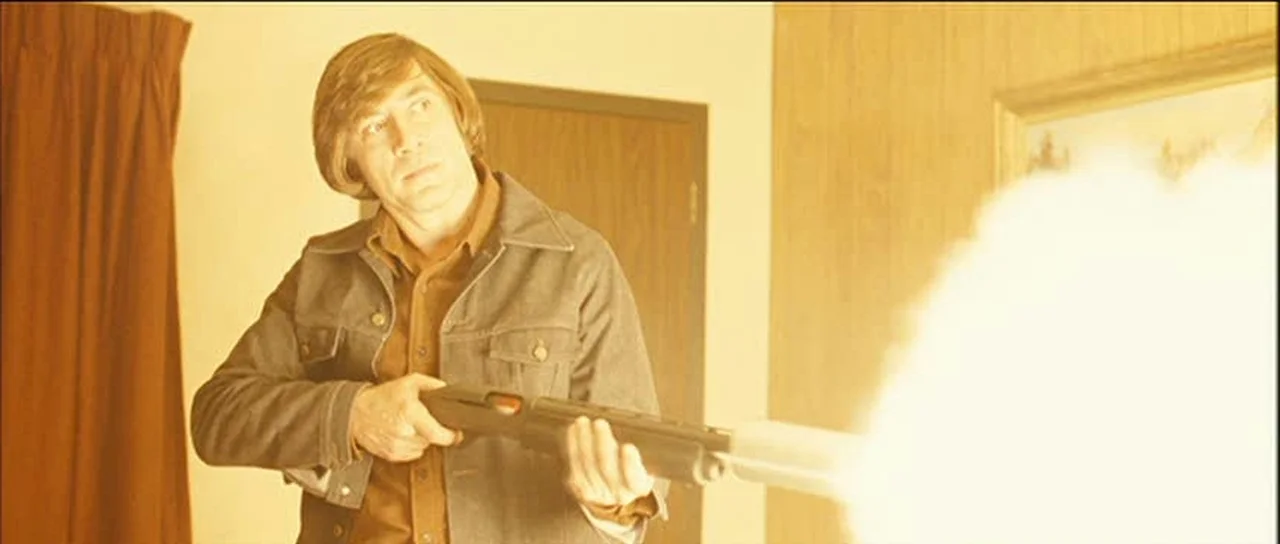
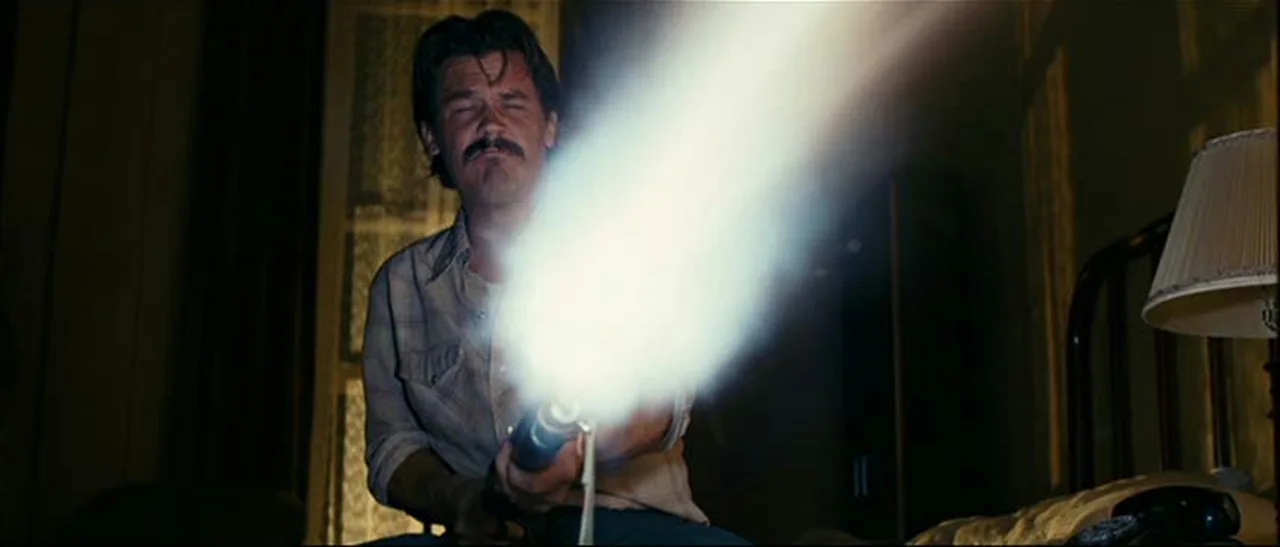
And that giant suppressor does nothing. Larry Zanoff, the Independent Studio Services armorer who handled the guns, says on camera that the can is a custom-built non-functional prop. It obscures the barrel entirely, so the thing couldn’t have been fired with it fitted. Every suppressed shotgun blast you hear was added in post.
Look at the frame above and you can see the seams. That’s a fireball lighting up an entire motel room. A working suppressor bleeds off gas and cuts flash substantially. The prop just gets out of the way of it.
None of which makes it a bad choice, because a suppressed semi-auto shotgun is a genuinely coherent idea for the character: quiet enough to work an apartment building, and no manual action to make noise between shots.
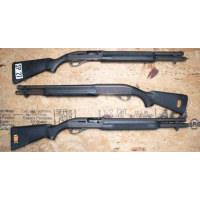
RemArms no longer builds the 11-87, so what turns up is used, and police trade-ins are the bargain. If you want to understand why the semi-auto versus pump distinction matters at all, we set them against each other in pump action vs semi-auto shotguns. Real suppressors are covered in how suppressors work and how to buy a suppressor.
Moss and the sawed-off Winchester 1897
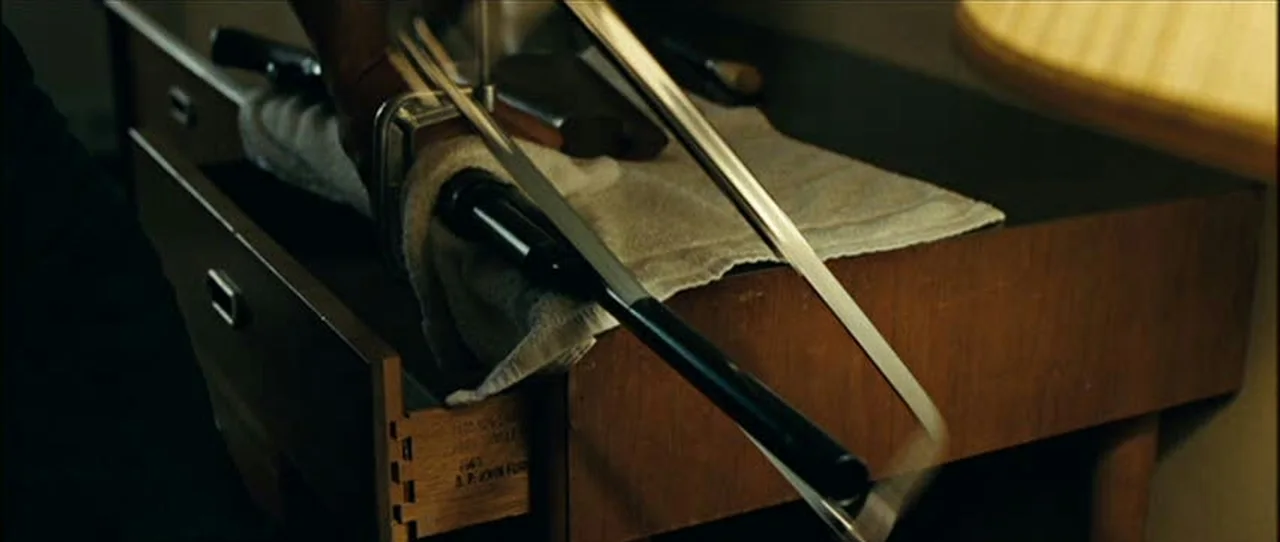
Moss buys a long-barreled Winchester Model 1897 field gun and a box of 00 buck over the counter at Tina’s Range Gear, takes it back to a motel room, and cuts down both the barrel and the stock with a hacksaw. It becomes his weapon for the rest of the film and it’s what he puts into Chigurh.
Here is my favorite thing about this gun, and it is a detail about how film armorers actually work. The novel never names the model. What it does say is that Moss cocks the hammer. That is the clue: the 1897 is an external-hammer pump, one of the last of its kind, and almost nothing else Moss could have bought in a Texas gun store works that way. The armorer says so himself in the DVD extras. He read the book, spotted the hammer, and identified the shotgun from a single verb.
The gun on screen is not actually a Winchester. It’s a Norinco clone, which is what most productions use because real 1897s are eighty-year-old collector guns and nobody’s taking a hacksaw to one.
Worth saying plainly: cutting a shotgun down like that is a federal felony without a tax stamp and prior approval. Barrels stay at 18 inches, overall length at 26. Moss is a man who has already decided the rules don’t apply to his week.
Winchester stopped making them in 1957, so these are collector guns now. For something you would actually run, our best pump action shotguns guide covers the modern field.
The rifle that starts the whole thing
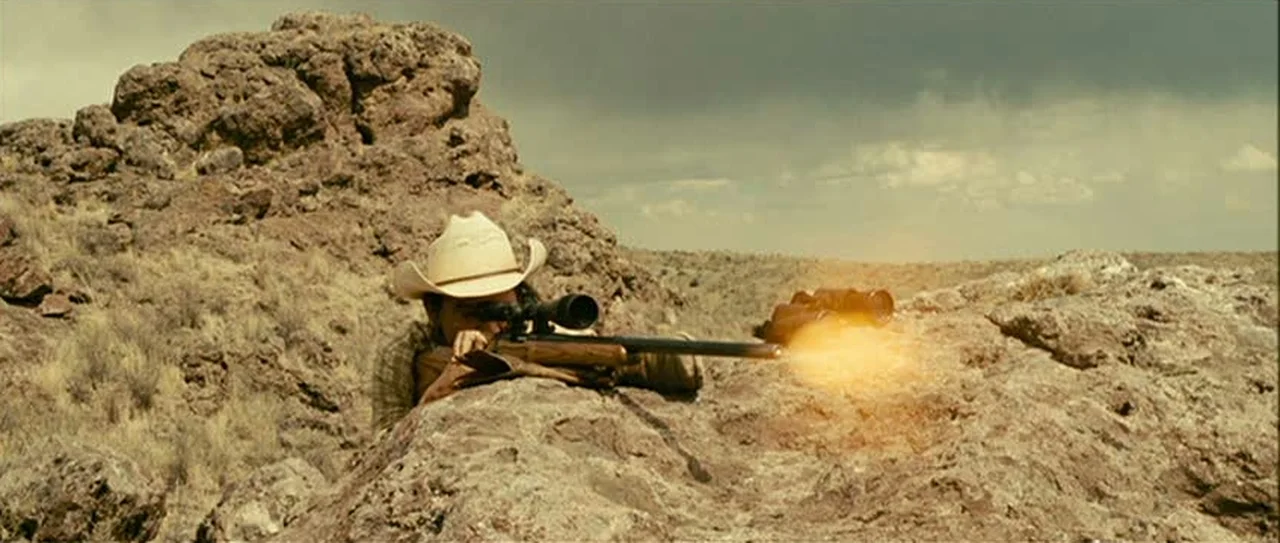
Moss opens the film hunting pronghorn with a scoped Remington 700, the heavy-barreled VLS variant judging by the laminated stock. Watch what happens: he takes the shot, and he hits the animal in the upper hind leg. Not a vital. He says “shit,” climbs down off the rock and goes looking for a blood trail, which is how he finds the trucks.
The entire plot of this film happens because a competent hunter pulled one shot. I’ve never seen another movie open by having the hero miss slightly and then build two hours on it.
In the novel it’s a different rifle entirely: a heavy-barrel .270 built on a ’98 Mauser action with a laminated maple and walnut stock and a 10x Unertl scope, which sounds a lot like a Parker Hale 1200. The production went with a Remington, which is the more recognizably American answer.
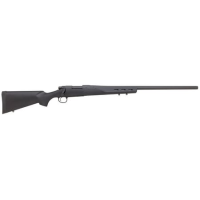
The 700 remains the most-copied bolt action in the world and the aftermarket for it is effectively infinite. We covered it properly in our Remington 700 review, and the wider field in best deer hunting rifles.
What the lawmen carry
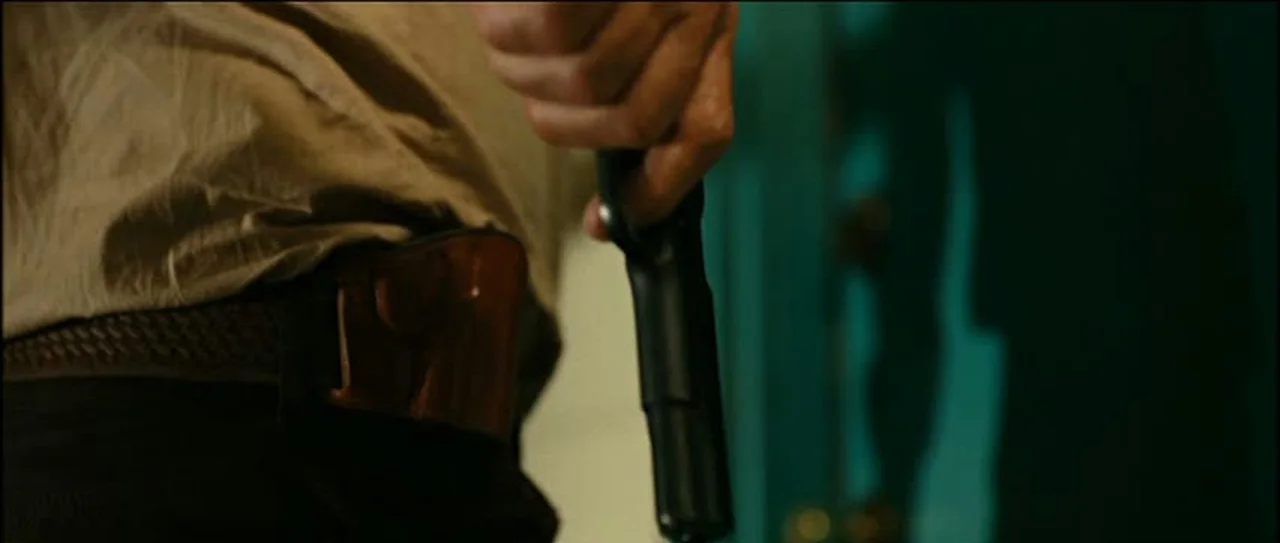
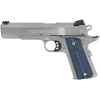
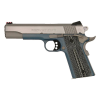
Sheriff Ed Tom Bell carries a Colt Series 70 Combat Government Model, a .45 with black grips and gold medallions and a combat hammer. Not a revolver, which is what a lot of write-ups claim. It’s the forerunner of the Combat Elite and it was the right gun for a Texas sheriff in 1980.
The novel gives him something else, and it’s one of the better small losses in the adaptation. Book Bell muses that he still likes “the old Colt’s .44-40,” and that if that doesn’t stop a man the best you can do is throw it at him and run. He later draws a single-action revolver he never fires. That’s a whole character in one aside.
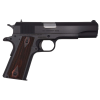
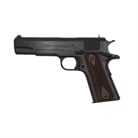
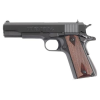
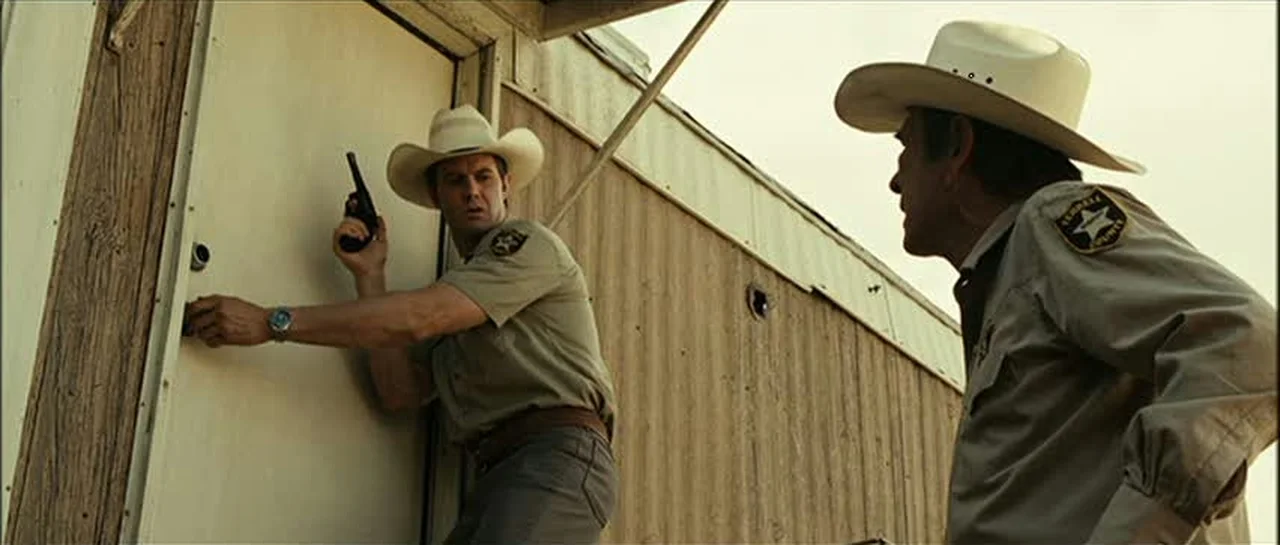
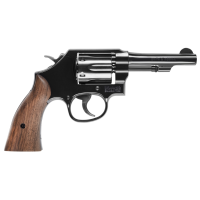
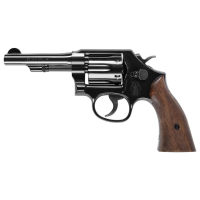
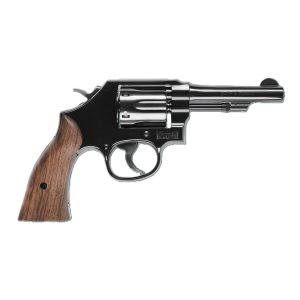
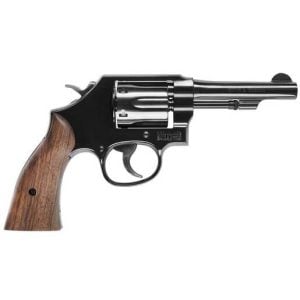
The revolver belongs to Deputy Wendell, and it is a Smith & Wesson Model 10 with Pachmayr rubber grips. The .38 Model 10 was close to universal in American police holsters for most of the twentieth century, so it’s exactly what a young West Texas deputy would have been issued.
The two sidearms do quiet character work. Bell has the semi-auto and stands behind his deputy. Wendell has the revolver and goes through the door first.
A 1980 film full of guns from the nineties
The story is set in 1980. Count what should not be there yet.
| Gun | Introduced | Years early |
|---|---|---|
| Glock 19 (Chigurh) | 1988 | 8 |
| Interdynamic KG-99 | 1982 | 2 |
| Cobray M11/9 | 1983 | 3 |
| Remington 11-87 (Chigurh) | 1987 | 7 |
| Heckler & Koch SP89 | 1989 | 9 |
| Remington 700 VLS (Moss) | 1995 | 15 |
Six of the film’s most visible weapons postdate its own setting, and the rifle Moss opens the film with misses by fifteen years. This is the same thing that happens on every period production: the rental armory stocks what shooters bought, and what shooters bought is whatever was in production when the props were acquired.
The book isn’t innocent either. McCarthy names TEC-9s, which also didn’t exist in 1980, and names a Glock. He never specifies Chigurh’s shotgun beyond “a twelve-gauge Remington automatic with a plastic military stock and a parkerized finish”, and in 1980 that description has an exact answer: the Remington 1100, the gas semi-auto the 11-87 was built to replace. The film also swapped an SP89 in for the novel’s MP5K. Nobody was trying very hard on this particular axis, and I don’t think it costs the film anything.
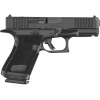
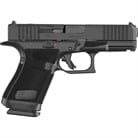
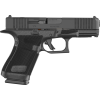
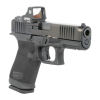
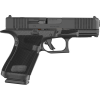
The Glock is Chigurh’s, used at the trucks, and it’s the only conventional handgun he touches. Ours is the current Gen 6, covered in the Glock 19 Gen 6 review.
Everything at the drug deal
The trucks Moss stumbles onto are a small arsenal, and the mix is deliberately cheap and disposable: MAC-10s, an IMI Uzi, a Cobray M11/9, and Type 56 rifles, the Chinese AK copy, in both fixed and under-folding stock. Moss takes an H&K SP89 off a dying dealer and a nickel-plated Colt Government off another.
The KG-99 that Chigurh runs later, the one he shoots a crow with from the car, is the direct ancestor of the TEC-9 and was modified to fire full-auto for the film, as they almost always are.
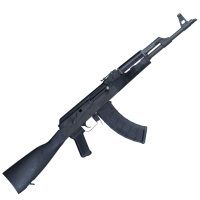
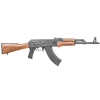
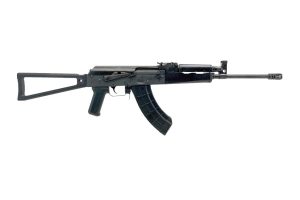
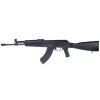
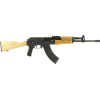
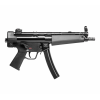
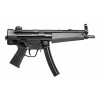
The SP89 is long out of production. HK’s current SP5 and SP5K are the same idea, a semi-automatic MP5 you can actually buy, at a price that reflects how badly people want one.
Every weapon in No Country for Old Men
Sixteen entries, checked against IMFDB’s screen-by-screen breakdown, down to the rack guns behind the counter.
| Weapon | Who carries it | Note |
|---|---|---|
| Captive bolt pistol | Anton Chigurh | Not a firearm; no ammunition, no brass, no ballistics |
| Remington 11-87 | Anton Chigurh | Semi-auto, not a pump; the suppressor is a non-firing prop |
| Interdynamic KG-99 | Anton Chigurh | TEC-9 ancestor, converted to full-auto for the film |
| Glock 19 | Anton Chigurh | Used at the trucks; 8 years early for 1980 |
| Winchester Model 1897 | Llewelyn Moss | Bought long, sawed down; prop is a Norinco clone |
| Remington 700 VLS | Llewelyn Moss | The pronghorn shot that starts the plot |
| Heckler & Koch SP89 | Llewelyn Moss | Taken at the deal site; MP5K in the novel |
| Colt Government Model (nickel) | Llewelyn Moss | Off a dead dealer; used on the pit bull |
| Colt Series 70 Combat Government | Sheriff Ed Tom Bell | A .45 automatic, not a revolver |
| Smith & Wesson Model 10 | Deputy Wendell | Pachmayr grips; the ubiquitous police .38 |
| MAC-10 | Cartel members | Seen throughout, mostly beside bodies |
| Cobray M11/9 | Motel gunman | 1983 design in a 1980 film |
| IMI Uzi | Dead dealer at the trucks | Spotted by Bell and Wendell |
| Type 56 and Type 56-1 | Cartel members | Chinese AK copies, fixed and folding stock |
| Star Model BM | Dead driver | Beside the red truck |
| Rack guns at Tina’s Range Gear | Set dressing | Bolt-action rifles and what looks like a Marlin 336 behind the clerk |
Why the weapons work
Three men, three completely different relationships with hardware.
Moss has a hunter’s rifle and improvises everything after that, buying a shotgun over a counter and cutting it up in a motel room. Bell carries a service pistol he barely draws and, in the book, would rather have a revolver from before he was born. Chigurh brings a tool from an abattoir and a shotgun with a can on it, and neither leaves anything behind to find.
The anachronisms do not matter and the fake suppressor does not matter. What matters is that each man’s kit is an argument about how he sees the world, and Chigurh’s argument is that he’s not really a person you can investigate. The props agree with him.
Frequently asked questions
What weapon does Anton Chigurh use?
Three. A captive bolt pistol powered by a compressed air tank, a suppressed Remington 11-87 semi-automatic shotgun, and an Interdynamic KG-99. He also uses a Glock 19 at the trucks early in the film.
Is the captive bolt pistol a real thing?
Yes. It’s standard slaughterhouse equipment, used to stun cattle before slaughter. Compressed air drives a steel bolt out of the muzzle and springs retract it, so nothing leaves the tool. It is not classed as a firearm.
Is Chigurh’s shotgun a pump or a semi-auto?
A semi-automatic. It’s a Remington 11-87, gas-operated, and the model number is visible on the receiver. It’s frequently described as a pump action, which is wrong.
Does the suppressor on the shotgun actually work?
No. Armorer Larry Zanoff has confirmed it’s a custom non-functional prop that blocks the barrel, so the gun couldn’t be fired with it attached. The suppressed report was added in post-production, and you can see the unreduced muzzle flash on screen.
What gun does Sheriff Bell carry?
A Colt Series 70 Combat Government Model in .45 ACP. The Smith & Wesson Model 10 revolver often credited to him actually belongs to his deputy, Wendell.
What shotgun does Llewelyn Moss use?
A Winchester Model 1897 that he buys as a full-length field gun and then saws down at both ends. The armorer identified the model from the novel, which mentions Moss cocking the hammer, and the 1897 is an external-hammer pump.
Chigurh’s shotgun is a prop build, but the 11-87 underneath it is an ordinary semi-auto and the 870 alongside is cheaper still. Both sit on our shotgun deals page, with the 1911 and the Smith on handgun deals.
Keep exploring
More screen guns identified: Dirty Harry, Saving Private Ryan, Django Unchained and Bullet Train.
4,830+ Gun & Ammo Deals
Updated daily from 200+ top retailers. Filter by category, caliber, action type, and price.
Related Guides