
Last updated March 9th 2026
I have personally fired thousands of rounds through AR-15s at every price point covered in this guide — from $400 budget builds to $3,000+ premium rifles. Every recommendation is based on range time, not spec sheets. Some links are affiliate links that support our independent testing. Read our editorial policy.

Quick Answer: Best AR-15s by Budget
If you already know what you want and just need a recommendation, here are my top picks after years of testing:
- Best Budget AR-15 (Under $500): PSA PA-15 — Unbeatable value at $399-$449
- Best Value AR-15 (Under $700): S&W M&P15 Sport III — The gold standard starter rifle at $649
- Best Mid-Range AR-15 ($700-$1,200): Ruger AR-556 MPR — Free-float handguard and great trigger for $849
- Best Premium AR-15 ($1,200-$2,000): Daniel Defense DDM4 V7 — Cold hammer forged excellence at $1,799
- Best High-End AR-15 ($2,000+): Geissele Super Duty — Purpose-built for hard use at $2,200
- Best for Beginners: S&W M&P15 Sport III — Reliable, easy to use, excellent resale value
- Best for Home Defense: BCM RECCE-16 — Battle-proven reliability with a 16″ barrel
Find the Best Price in Seconds
Search once, compare 100+ trusted retailers instantly.
What Is an AR-15 and Why Is It So Popular?
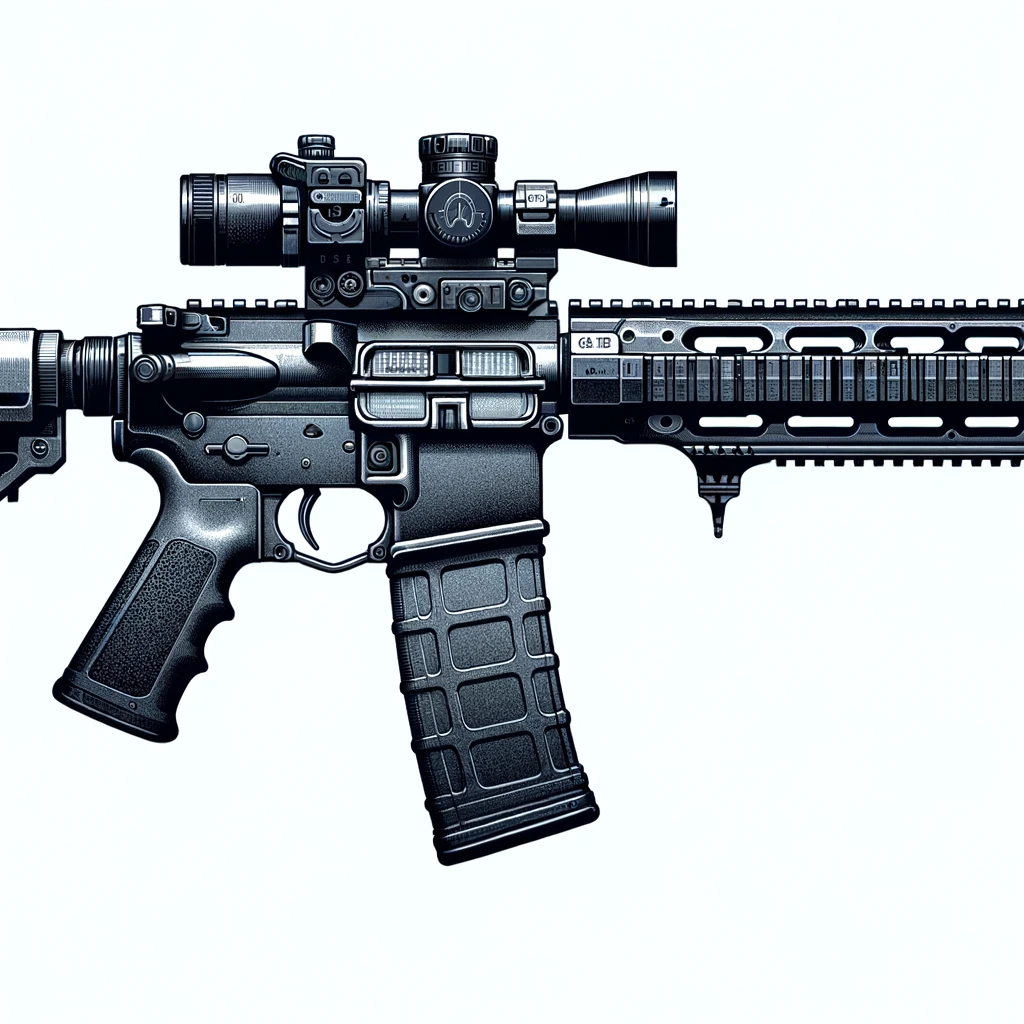
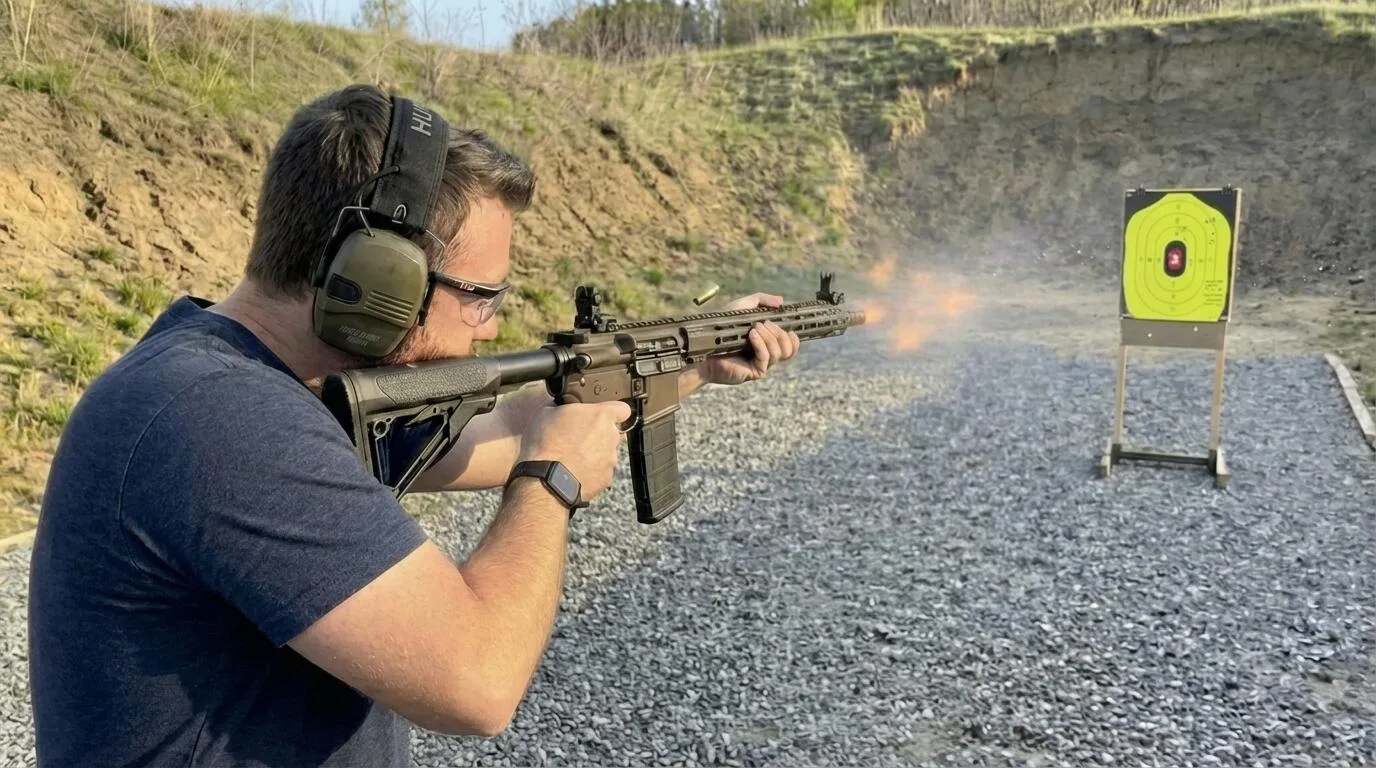
The AR-15 is a semi-automatic, magazine-fed rifle chambered most commonly in 5.56 NATO/.223 Remington. The “AR” stands for ArmaLite Rifle — the company that designed it in the 1950s — not “assault rifle” as many people incorrectly assume. Eugene Stoner’s original design has evolved over seven decades into the most versatile rifle platform ever made, and its history is genuinely fascinating if you want to dig deeper.
So why does the AR-15 dominate the American rifle market? Four reasons: Modularity — every component is interchangeable, and you can swap uppers in 30 seconds to go from a 5.56 carbine to a .300 Blackout setup. Reliability — a quality AR-15, properly lubricated, will run for thousands of rounds without issue. I have rifles with 5,000+ rounds that have never malfunctioned. Affordability — you can buy a reliable AR-15 for under $450 in 2026, and 5.56 ammo runs 30-40 cents per round for brass-cased practice loads. Aftermarket support — more accessories and parts exist for the AR-15 than for every other rifle platform combined.
It is no surprise the AR-15 consistently ranks among America’s most popular rifles. Whether you are buying your first rifle or your tenth, the AR platform deserves serious consideration.
Define Your Purpose Before You Buy
The biggest mistake I see new AR-15 buyers make is shopping by brand or price without first asking: “What am I going to use this rifle for?” Your intended purpose determines everything — barrel length, caliber, weight, optics, and accessories. A rifle optimized for 3-Gun competition is a terrible home defense weapon, and vice versa.
Here is how I think about the main use cases:
Home Defense
For home defense, reliability is non-negotiable — this is the one rifle that must work every single time. You want a 16-inch barrel (or 14.5″ pinned and welded), a weapon-mounted light, and a red dot optic. Keep it lean — a 9-pound AR loaded with accessories is clumsy in doorways. I run a BCM RECCE-16 with a Streamlight ProTac and Holosun 510C, total weight around 7.5 pounds loaded. If you are debating between an AR-15 and a shotgun, read our shotgun vs. AR-15 for home defense comparison.
Target Shooting and Range Use
If your AR-15 is primarily a range toy, prioritize accuracy and comfort. An 18-inch barrel with a rifle-length gas system gives softer recoil and better velocity. A free-float handguard is essential for consistent accuracy. And spend extra on a good trigger — the difference between mil-spec and a LaRue MBT-2S ($99) or Geissele SSA-E ($240) is night and day. For a pure range rifle, the Ruger AR-556 MPR or Aero Precision M4E1 are excellent starting points.
Hunting
Standard 5.56/.223 handles coyotes, prairie dogs, and feral hogs. For deer-sized game, use heavier loads (77-grain TMK or 62-grain Fusion) or step up to 6.5 Grendel, 6.8 SPC, or .350 Legend — all work in the AR-15 with just an upper swap. Check our guide to the most popular rifle calibers for more. I prefer an 18-inch barrel with 1:8 twist for hunting. If you are hiking to your spot, consider lightweight AR-15 options, and always check your state’s hunting regulations.
Competition (3-Gun, USPSA PCC)
Competition ARs need to be lightweight (under 7 pounds), with a fast trigger (Geissele SD-E or Timney 667S), extended charging handle, and free-float M-LOK handguard. A 16-inch mid-length gas setup with a muzzle brake is the most common configuration. If you are just getting into competition, a Ruger AR-556 MPR with a trigger upgrade will get you through your first season without breaking the bank.
General Purpose
Most people need a “do-it-all” AR-15, and that is perfectly fine. The ideal general-purpose setup is a 16-inch barrel with a mid-length gas system, a free-float handguard with M-LOK slots, and a good red dot or 1-6x LPVO. This configuration handles home defense, range days, hunting, and even entry-level competition without being terrible at any of them. If I could only own one AR-15 — and I have owned many — it would be a 16-inch mid-length with a quality red dot.
Build vs. Buy: Which Is Right for You?
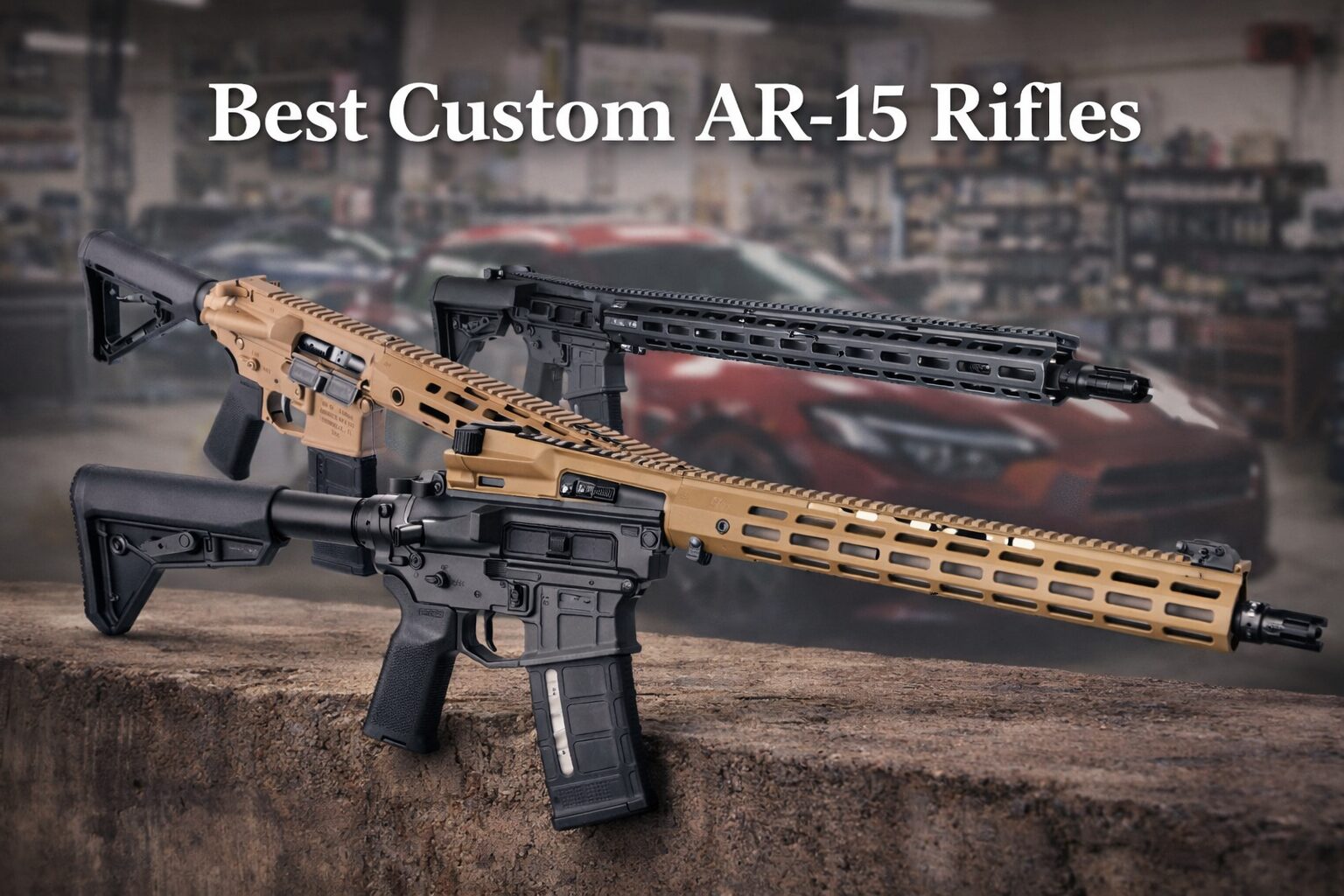
This is one of the most debated topics in the AR-15 world, and the answer depends entirely on your experience level and what you want out of the process.
Why First-Time Buyers Should Buy Complete
If this is your first AR-15, buy a complete rifle from a reputable manufacturer. Full stop. Factory rifles come with warranties, are headspaced and test-fired, and have critical dimensions verified. When you build from parts, you are your own warranty department — and diagnosing issues on a rifle you assembled yourself is frustrating and potentially dangerous.
Here is the thing nobody tells you: building from parts does not actually save money. By the time you buy quality components individually, add shipping, and invest in tools (armorer’s wrench, vise block, torque wrench, roll pin punches), you are at or above the price of an equivalent factory rifle.
When Building Makes Sense
Once you own an AR-15 and understand how it works, building becomes genuinely rewarding. Want a Criterion barrel with a Geissele trigger in a BCM upper with an Aero lower? Nobody makes that rifle, but you can build it. Building also teaches you how the rifle works at a mechanical level. Our guide on how to build an AR-15 walks through the entire process.
The Middle Ground: Complete Upper + Stripped Lower
Buy a complete upper from a quality manufacturer (BCM, Aero Precision, Daniel Defense) and pair it with a stripped lower you build yourself. The lower is the easy part — mostly pins and springs — while the upper is where critical dimensions live. This gives you factory headspacing and barrel installation with your choice of trigger, stock, and grip. It is how I recommend people get into their second AR-15. For parts sourcing, check out our guide to buying AR-15 parts online.
Key Specifications Explained (What Actually Matters)
Walk into any gun store, read any forum post, and you will be bombarded with specs and jargon. Some of it matters a lot. Some of it is marketing nonsense. Here is what you actually need to understand:
Caliber
The AR-15’s standard chambering is 5.56x45mm NATO, which will also safely fire .223 Remington ammunition. The reverse is not always true: firing 5.56 NATO through a barrel chambered only for .223 Remington can produce dangerous pressures because the 5.56 NATO chamber has a longer throat. This matters when you are buying.
The best option is a .223 Wylde chamber, which is specifically designed to safely handle both 5.56 NATO and .223 Rem while providing optimal accuracy with both. Most mid-range and premium AR-15s use .223 Wylde chambers in 2026, and I would specifically look for this on any new purchase.
For a deep dive on ammunition selection — including which specific loads I recommend for different purposes — read our guide to the best AR-15 ammo.
Barrel Length
Barrel length affects velocity, accuracy, maneuverability, and legal classification. Here is the practical breakdown:
16 inches is the standard. It is the shortest barrel length you can have on a rifle without entering NFA territory (which means tax stamps, wait times, and federal registration). A 16-inch barrel gives you roughly 3,000 fps with 55-grain 5.56 NATO, which is more than adequate for any practical purpose out to 500 yards. If you are buying one AR-15, get a 16-inch barrel.
14.5 inches with a pinned and welded muzzle device is the loophole that gives you a shorter, handier rifle while staying legal. The permanently attached muzzle device brings the overall barrel length to 16+ inches. This is how BCM ships their RECCE-14 uppers. The trade-off is you cannot change muzzle devices without a gunsmith.
18 inches is the sweet spot for accuracy-focused builds. You gain about 100-150 fps over a 16-inch barrel, which improves long-range performance. This is the “SPR” (Special Purpose Rifle) length, popular for precision shooting and hunting.
20 inches is the original M16 rifle-length barrel. It extracts maximum velocity from the 5.56 cartridge (about 3,200 fps with 55-grain), runs the smoothest with a rifle-length gas system, and is extremely accurate. The downside is length and weight. If you have no need for a compact rifle, a 20-inch AR-15 is a joy to shoot.
Anything under 16 inches on a rifle (without a pinned muzzle device reaching 16″) puts you in NFA Short-Barreled Rifle (SBR) territory, requiring a $200 tax stamp and ATF approval. The pistol brace landscape has shifted significantly since 2023 — see the Legal Considerations section below for the current status.
Barrel Material and Lining
AR-15 barrels are typically 4150 chrome-moly vanadium (CMV) steel — tougher and more durable than 416R stainless, which offers marginally better accuracy but wears faster. For general-purpose use, chrome-moly is the better choice. What matters more is the treatment:
Chrome-lined barrels offer 15,000-20,000+ round barrel life and excellent corrosion resistance, with a tiny accuracy trade-off most shooters will never notice. All duty-grade rifles should be chrome-lined. Nitride (Melonite/QPQ) barrels provide great accuracy and corrosion resistance at a lower cost — 10,000-15,000 round life. Most mid-range ARs use nitride in 2026. Cold hammer forged (CHF) barrels are the gold standard for durability — Daniel Defense and FN use this process, and it is a key reason premium rifles cost more.
Twist Rate
Twist rate is how many inches the rifling takes to complete one full rotation of the bullet. It determines which bullet weights your barrel will stabilize accurately:
1:7 twist stabilizes everything from light 55-grain plinking ammo to heavy 77-grain match rounds. This is the military standard (M4 carbine uses 1:7) and the most versatile choice. If you plan to shoot heavier match ammunition, 1:7 is the way to go.
1:8 twist is the “do-everything” twist rate that handles 55-grain to 77-grain bullets well. It is arguably the best all-around choice and has become the most common twist rate in civilian AR-15s. I shoot 62-grain and 77-grain ammo through 1:8 barrels all the time with excellent results.
1:9 twist works best with lighter bullets in the 55-grain range. It will struggle to stabilize 77-grain ammunition, especially in cold weather (cold air is denser, requiring more spin to stabilize). If you primarily shoot cheap 55-grain FMJ, 1:9 is fine, but I would avoid it for a new purchase in 2026 — there is no reason to limit yourself.
Gas System Length
The gas system length determines where the gas port is located along the barrel, which directly affects how the rifle cycles and how it feels to shoot.
Carbine-length (7 inches) cycles fast with more felt recoil — functional but not ideal. Mid-length (9 inches) is the sweet spot for 16-inch barrels: lower port pressure, softer recoil, less wear on parts. If you are buying a 16-inch AR-15, get mid-length gas — this is the single most impactful specification for how pleasant the rifle is to shoot. Rifle-length (12 inches) is designed for 18-20 inch barrels and produces the softest recoil of any configuration.
For a detailed comparison of how the gas system works and the difference between direct impingement and piston-driven ARs, read our direct impingement vs. gas piston guide.
Bolt Carrier Group
The BCG is the engine of the AR-15. Look for Carpenter 158 or 9310 steel bolt, properly staked gas key (screws peened over so they cannot back out), and a full-auto profile carrier (more mass for reliable cycling — it does not make your rifle full-auto). Finish matters less than people think: phosphate, nitride, and chrome are all fine. Nickel boron and DLC are easier to clean but do not affect reliability. If you are building, Toolcraft BCGs ($75-$90) are the best value in the industry.
Handguard and Rail
Free-float handguards attach only to the barrel nut and do not touch the barrel, which means pressure from your grip or a sling will not shift your point of impact. Every serious AR-15 in 2026 should have one. M-LOK has won the attachment standard war — lighter, slimmer, and more versatile than quad-rail Picatinny, and it beat KeyMod in USSOCOM testing. Unless you need full Picatinny on all four sides (you don’t), M-LOK is the answer.
Trigger
The stock mil-spec trigger is functional but mediocre — heavy (6-8 pounds), gritty, mushy break. Upgrading the trigger is the single best modification for improving accuracy. Single-stage triggers break at a consistent weight with no take-up — faster for defensive use. The ALG ACT ($65) is the best budget upgrade. Two-stage triggers have a light take-up followed by a crisp break — better for precision. The LaRue MBT-2S ($99) is the best trigger value in the AR-15 world, competing with triggers costing $200+.
Furniture
Stock, pistol grip, and buffer tube affect comfort more than performance. The Magpul MOE or CTR stock ($30-$55) and MOE+ grip ($20) are industry standards. The B5 Systems SOPMOD stock ($55-$100) is my personal favorite for its wider cheek weld. One note: buffer tubes come in mil-spec (1.148″) and commercial (1.168″) sizes. Mil-spec is the standard in 2026 — every reputable factory rifle uses it.
Best AR-15 Rifles by Budget (2026 Picks)
These are my actual recommendations based on rifles I have shot, not a list scraped from Amazon reviews. Each pick earned its spot through range time, reliability testing, and value assessment. Let me walk through each budget tier.
Best Budget AR-15 Under $500: PSA PA-15
Street price: $399-$449
Key specs: 16″ nitride barrel, carbine-length gas, phosphate BCG, A2 flash hider, MOE furniture
Chamber: 5.56 NATO
Weight: 6.5 lbs
Palmetto State Armory has done more to make the AR-15 accessible than any other company. The PA-15 is a no-frills, mil-spec AR-15 that runs. Period. I ran 800 rounds through one without cleaning it — zero malfunctions. Are the fit and finish on par with a Daniel Defense? Of course not. The furniture is basic, the trigger is standard mil-spec, and the barrel is carbine-length gas (not mid-length). But for under $450, you get a reliable rifle that will let you train, learn the platform, and figure out what you actually want in your next AR.
PSA also runs frequent sales that can drop the price below $400, especially around holidays. Check out our PSA AR-15 review for our detailed range report, and browse other budget AR-15s under $500 if you want to compare options.
Who it is for: First-time buyers on a tight budget, people who want a reliable rifle without overspending, anyone who plans to upgrade components over time.
PSA PA-15
Best Value AR-15 Under $700: S&W M&P15 Sport III
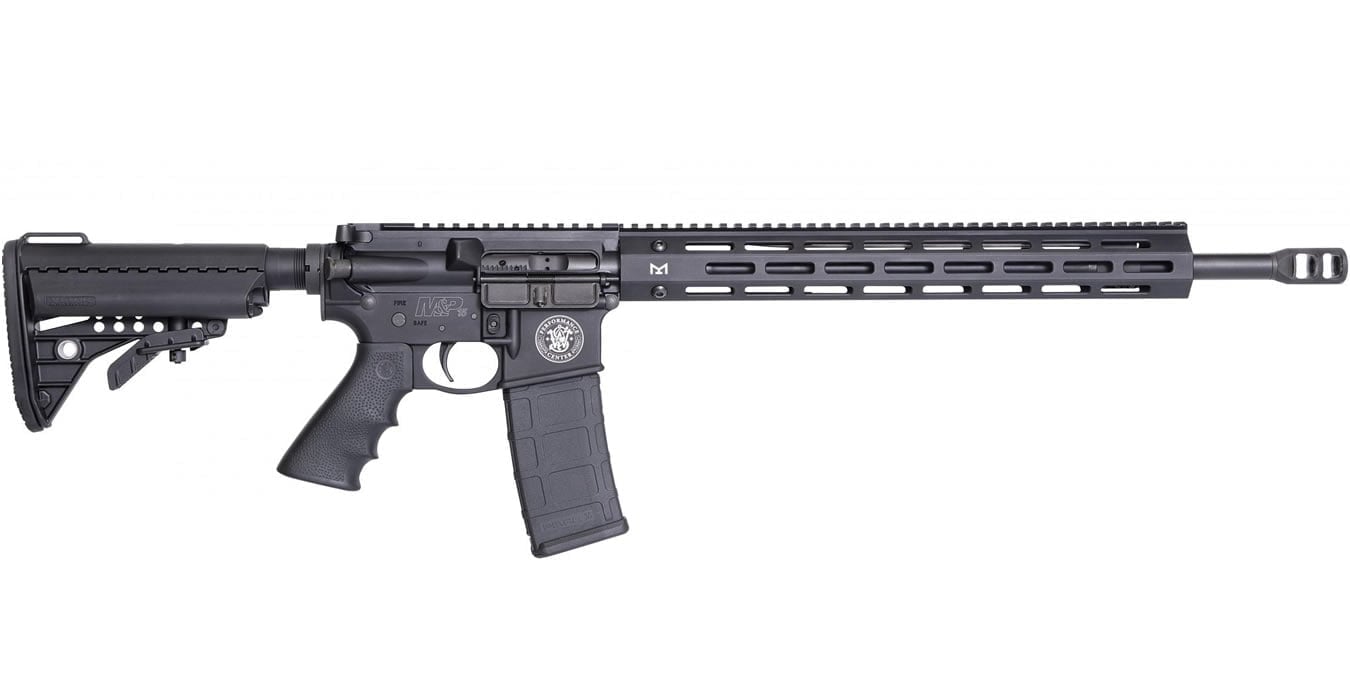
Street price: $629-$679
Key specs: 16″ nitride barrel, mid-length gas system, enhanced two-position armored charging handle, upgraded B5 SOPMOD stock, 1:8 twist
Chamber: 5.56 NATO
Weight: 6.45 lbs
Smith & Wesson took the beloved Sport II — which was already the best-selling AR-15 in America — and improved it in every way that matters. The Sport III gets a mid-length gas system (smoother recoil), an upgraded stock, a better charging handle, and improved overall fit and finish.
I ran 1,500 rounds through the Sport III without a single malfunction. Not one. It digested everything from steel-cased Wolf to Federal 77-grain Gold Medal Match without complaint. The mid-length gas system makes a real difference — this rifle shoots softer than any carbine-length AR I have tested in this price range.
Read the full S&W M&P15 Sport III review for detailed accuracy data and our 1,500-round test results. This is the rifle I recommend more than any other to first-time AR-15 buyers.
Also worth considering: The base Ruger AR-556 ($599) is another excellent option in this range, with Ruger’s superb customer service as a bonus.
Who it is for: First-time buyers who can stretch their budget a bit, anyone who wants a reliable rifle from a major American manufacturer with excellent resale value.
S&W M&P15 Sport III
Best Mid-Range AR-15 ($700-$1,200): Ruger AR-556 MPR
Street price: $829-$899
Key specs: 18″ cold hammer forged barrel, rifle-length gas system, 15″ free-float M-LOK handguard, Ruger Elite 452 two-stage trigger, 1:8 twist
Chamber: 5.56 NATO
Weight: 6.8 lbs
The Ruger AR-556 MPR (Multi-Purpose Rifle) is the rifle that made me rethink what “mid-range” means. At under $900, you get a cold hammer forged barrel, a genuinely good two-stage trigger, a 15-inch free-float handguard, and a rifle-length gas system. That specification sheet reads like a $1,200-$1,400 rifle from five years ago.
In our 1,200-round test, the MPR averaged 1.3 MOA with Federal 69-grain Gold Medal Match and held 1.8 MOA with cheap brass-cased 55-grain. For a factory rifle under $900, that is outstanding. The Ruger Elite 452 trigger is a pleasant surprise — crisp, with a clean break around 4.5 pounds. It is not a Geissele, but it is a massive improvement over mil-spec.
Also excellent in this range: The Aero Precision M4E1 Complete Rifle ($750-$900) offers similar features with Aero’s excellent fit and finish, and the Springfield Saint Victor ($850-$999) brings a nickel boron BCG and Bravo Company furniture to the table. See our best AR-15 rifles under $1,000 roundup for more options.
Who it is for: Shooters who want premium features without premium pricing, anyone who values accuracy, the best “bang for your buck” in the AR-15 market.
Ruger AR-556 MPR
Best Premium AR-15 ($1,200-$2,000): Daniel Defense DDM4 V7
Street price: $1,749-$1,849
Key specs: 16″ cold hammer forged, chrome-lined barrel, mid-length gas system, 15″ M-LOK handguard, mil-spec+ trigger, 1:7 twist
Chamber: 5.56 NATO
Weight: 6.4 lbs
The DDM4 V7 is the gold standard for “buy once, cry once” AR-15 ownership. The cold hammer forged, chrome-lined barrel held sub-MOA groups at 100 yards with 77-grain ammo during my 2,000-round test. The machining is impeccable — upper and lower fit with zero play, and the overall build quality is a class above everything else in this price range.
The DDM4 V7 runs like a sewing machine — smooth, consistent, and boringly reliable. I say “boringly” as a compliment. After 2,000 rounds, nothing went wrong.
Check out the full DDM4 V7 review with 2,000-round test results for our detailed analysis. It is the most thorough review we have published.
Also excellent in this range: The BCM RECCE-16 ($1,300-$1,450) is my personal home defense rifle and offers Daniel Defense-level reliability at a lower price — BCM just does less marketing. The IWI Zion-15 ($1,000-$1,200) sneaks into the bottom of this category and punches well above its weight. See our full best AR-15 rifles under $2,000 guide for the complete list.
Who it is for: Serious shooters who want a rifle they can depend on for a lifetime, home defense, duty use, anyone who understands quality and is willing to pay for it.
Daniel Defense DDM4 V7
Best High-End AR-15 ($2,000+): Geissele Super Duty

Street price: $2,100-$2,350
Key specs: 16″ cold hammer forged, chrome-lined barrel by DD, mid-length gas system, Geissele SMR MK16 handguard, SSA-E trigger, Geissele Airborne Charging Handle, REBCG
Chamber: 5.56 NATO
Weight: 6.6 lbs
The Geissele Super Duty is what happens when a trigger company builds a complete rifle and refuses to cut corners. Everything is proprietary Geissele — the MK16 handguard, the legendary SSA-E trigger ($240 standalone), the Airborne charging handle, the Reliability Enhanced BCG, even the buffer and spring.
The SSA-E trigger is as good as it gets in a duty-rated two-stage — 4.5 pounds total pull with a glass-rod break. The Nanoweapon coating on the REBCG is slick enough that the rifle practically self-cleans.
Also in this tier: The LMT MARS-L ($2,200-$2,600) features a monolithic upper receiver and fully ambidextrous lower — it is the choice of several SOF units. The Knights Armament SR-15 ($2,800-$3,200) has the legendary E3 bolt and proprietary gas system that make it arguably the most over-engineered AR-15 ever made. These are rifles for people who demand the absolute best and accept no compromise. Browse our roundup of the best custom and high-end AR-15s for more options in this range.
Who it is for: Professionals, serious enthusiasts, and anyone who wants the finest AR-15 available regardless of price.
Geissele Super Duty
Best AR-15 for Beginners
If you have never owned an AR-15, the sheer number of options can be paralyzing. I have helped dozens of first-time buyers make this decision, and here is what I tell every one of them: your first AR-15 does not need to be perfect. It needs to be reliable, simple, and from a manufacturer who will stand behind it.
Here are the qualities I prioritize for a beginner’s first AR-15:
- Reliability over features. A rifle that runs every time is more important than a free-float handguard or upgraded trigger. Those can come later.
- Factory complete. No building, no assembling, no headspace gauges. Take it out of the box, add oil, load a magazine, and shoot.
- Manufacturer support. Companies like Smith & Wesson, Ruger, and Daniel Defense have real customer service departments. If something goes wrong, you make a phone call and ship the rifle back. That peace of mind matters.
- Good resale value. Your first AR will probably not be your last. Name-brand rifles from S&W, Ruger, and DD hold their value well on the secondary market.
My top three picks for beginners:
1. S&W M&P15 Sport III ($649) — The best overall first AR-15. Mid-length gas, reliable, great resale value, and Smith & Wesson’s excellent customer service. This is the rifle I recommend to my friends and family who ask me what to buy. Read our full review here.
2. Ruger AR-556 ($599) — Ruger’s legendary customer service alone is worth the price of admission. The base AR-556 is a solid, well-built rifle with everything you need and nothing you don’t. Check out our Ruger AR-556 review.
3. PSA PA-15 ($399-$449) — If budget is the primary concern, the PA-15 will not let you down. It runs, it is accurate enough for a new shooter, and the money you save can go toward ammunition and range time — which matters far more than fancy parts. See our PSA review.
Common beginner mistakes to avoid:
- Spending too much on the rifle, too little on ammo. A $2,000 rifle you have only shot 200 rounds through is less useful than a $500 rifle you have shot 2,000 rounds through. Trigger time builds skill; expensive parts don’t.
- Buying accessories before understanding what you need. Do not bolt on a bipod, magnifier, laser, vertical grip, and backup iron sights before your first range trip. Shoot the rifle stock for 500 rounds. You will quickly learn what you actually want.
- Listening to internet forum experts over real-world experience. Forums are full of people who will tell you that anything under $1,500 is junk. That is nonsense. Budget ARs from reputable companies work. I have proven it with thousands of rounds.
- Neglecting ear and eye protection. Before you buy a single accessory, buy quality hearing protection (electronic muffs like Walker Razors or Howard Leight Impact Sport) and ANSI-rated eye protection. Your hearing does not grow back.
Best AR-15 for Home Defense
Choosing a home defense AR-15 is different from choosing a range toy. You need 100% reliability, easy handling under stress, and the ability to identify your target in low light. Accuracy at 300 yards is irrelevant — you need combat accuracy at 5-15 yards, in the dark.
Barrel length: 16 inches or 14.5 inches with a pinned and welded muzzle device. A weapon-mounted light is mandatory. You must identify your target before you shoot. The Streamlight ProTac HLX ($100-$120) is the best value — 1,000 lumens with a reliable pressure pad switch. The Surefire M600DF ($270) is the premium option.
Caliber considerations: 5.56 NATO with quality defensive ammunition (Hornady 75-grain TAP, Speer Gold Dot 62-grain) is excellent. Contrary to popular belief, 5.56 actually fragments faster through drywall than pistol calibers or buckshot, making overpenetration less of a concern with the right ammo. For suppressed use, .300 Blackout subsonic is the answer, but it overpenetrates more — see our best .300 Blackout rifles guide. We also have roundups of home defense shotguns if you prefer that route.
Optics: A red dot sight is ideal for home defense. It is fast to acquire, works in low light, and offers unlimited eye relief. I recommend the Holosun 510C ($250) for most people — it has a large window, solar backup, shake-awake, and a 50,000-hour battery life on medium brightness. The Aimpoint Duty RDS ($400) is the step up for those who want a combat-proven optic. Iron sights are fine as a backup, but a red dot is significantly faster in low-light situations. Check out our best AR-15 red dot sights guide for more options.
My recommended home defense setup:
- Rifle: BCM RECCE-16 ($1,350) or Daniel Defense DDM4 V7 ($1,799)
- Light: Streamlight ProTac HLX ($110) with Arisaka offset mount
- Optic: Holosun 510C ($250) or Aimpoint Duty RDS ($400)
- Sling: Blue Force Gear Vickers padded sling ($55)
- Ammo: Speer Gold Dot 62-grain or Hornady 75-grain TAP
- Total cost: $1,765-$2,414 for a genuinely duty-grade home defense setup
Must-Have AR-15 Accessories for New Owners
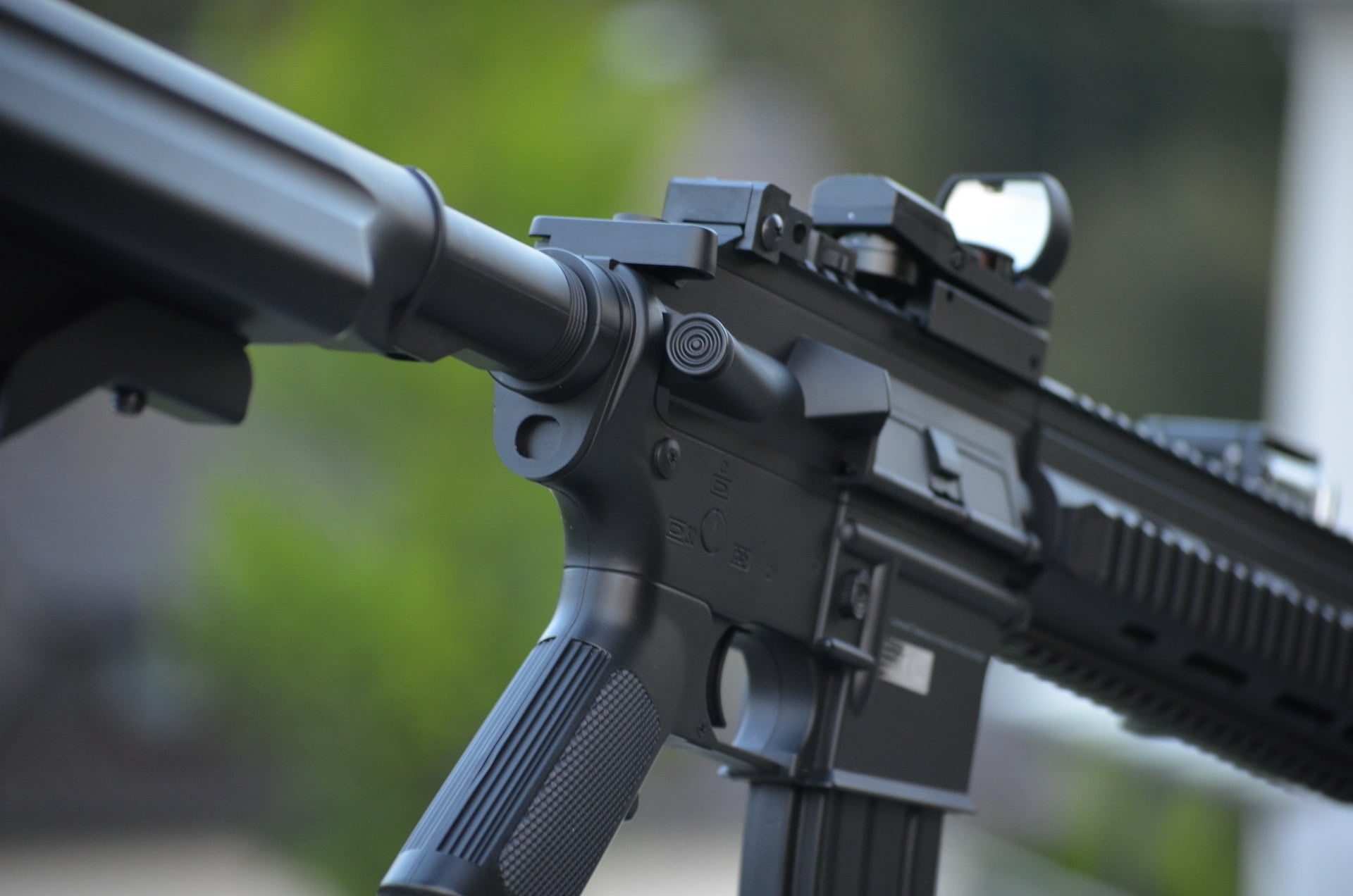
After you buy your rifle, the temptation to immediately spend another $1,000 on accessories is real. Resist it. Here is what you actually need, in order of priority:
Optics
Your first optic purchase depends on how you plan to use the rifle. For general purpose and home defense, a quality red dot sight is the answer. The Sig Sauer Romeo5 ($120) is the best budget red dot on the market — it includes a shake-awake feature, MOTAC auto-on technology, and it holds zero reliably. I have used one on a training rifle for over 3,000 rounds without issues.
If you want something better, the Holosun 510C ($250) offers a larger window and solar backup. And for those who want the gold standard, an Aimpoint PRO ($430) or Aimpoint Duty RDS ($400) will last longer than you will.
For shooters who want versatility from close quarters to 300+ yards, a 1-6x or 1-8x LPVO (Low Power Variable Optic) is the modern solution. The Vortex Strike Eagle 1-6x ($250) is the budget option, and the Primary Arms SLx 1-6x with ACSS reticle ($290) is my preferred mid-range pick. See our guide to the best AR-15 red dot sights and best rifle scopes under $1,000 for detailed comparisons.
Weapon-Mounted Light
If your AR-15 has any defensive role whatsoever, a weapon light is essential — not optional. The Streamlight ProTac HLX ($100-$120) remains the best value. The Surefire M600DF ($270) is the industry standard for duty use. Mount it at the 10:30 or 1:30 position on your handguard so it does not interfere with your support hand grip, and use a pressure pad switch mounted where your thumb naturally falls.
Sling
A sling is to a rifle what a holster is to a pistol — it lets you retain the weapon while using your hands for other tasks. Get a quality two-point, quick-adjust sling. The Blue Force Gear Vickers sling ($45-$55) is the gold standard. The Magpul MS4 ($35-$45) is a solid budget option that can convert between one-point and two-point configurations.
Mount the sling to QD (quick-detach) sockets on your stock and handguard. Most modern AR-15s have QD sockets built in.
Magazines and Ammo
Magpul PMAG Gen M3 magazines ($12-$14 each) are the industry standard. They are reliable, durable, and available everywhere. Buy at least six — two for defensive use (loaded and stored with the rifle), four for range days. Ten is better. Magazines are consumable items that wear out over time, and having extras means you spend less time loading at the range.
For ammunition, buy a case (1,000 rounds) of brass-cased 55-grain FMJ for practice — Federal American Eagle, PMC Bronze, or Winchester White Box are all fine. Budget 30-40 cents per round for practice ammo in 2026. For defensive ammo, buy at least 200 rounds of your chosen defensive load, fire 60-100 rounds through your rifle to confirm reliability, and keep the rest for duty use. Check our AR-15 ammo guide for specific recommendations by purpose, and keep an eye on our daily ammo deals for the best prices.
What to Skip for Now
Skip the bipod on your first AR — the money is better spent on ammo. Skip the magnifier, the vertical foregrip (a C-clamp grip is faster anyway), and the laser (those are for night vision users). And please skip the $35 Amazon red/green dot sight. It will not hold zero and you will waste your money. Put 1,000 rounds through your rifle first, then you will know exactly what you need. For a broader look at worthwhile upgrades, see our best AR-15 parts and accessories guide.
AR-15 Legal Considerations by State
Before you buy any AR-15, you need to understand the laws in your state. The AR-15 is legal to own in most of the United States, but several states have restrictions that range from minor inconveniences to near-total bans on standard configurations.
States with “assault weapon” bans or significant restrictions as of 2026: California, New York, New Jersey, Connecticut, Massachusetts, Maryland, Delaware, Illinois, Hawaii, and Washington. The specifics vary dramatically — California requires a “featureless” configuration or a fixed magazine, New York has the SAFE Act with its own set of requirements, and Illinois implemented a ban in 2023 with grandfathering provisions.
What “compliant” means: In ban states, “featureless” builds remove pistol grips, adjustable stocks, and flash hiders. Fixed-magazine builds prevent magazine removal without opening the action. Neither is ideal, but they keep you legal.
NFA considerations: Short-Barreled Rifles (barrels under 16″ without a pinned muzzle device) require a $200 tax stamp and ATF approval — expect 3-6 months for eForm processing in 2026. The same applies to suppressors. Pistol brace status: The ATF’s 2023 reclassification rule has faced ongoing litigation and shifting enforcement. Consult current federal guidance before purchasing an AR pistol with a stabilizing brace.
Check your state laws before purchasing any AR-15. We maintain an updated guide to gun laws by state that covers the key regulations in all 50 states. When in doubt, contact a local firearms attorney or your state’s firearms regulatory agency.
How to Buy an AR-15 Online
Buying an AR-15 online is completely legal and often saves you $100-$200 over your local gun store. The process is simple: purchase online, the dealer ships to an FFL holder near you, you fill out a Form 4473, pass the NICS background check, pay a transfer fee ($20-$50), and walk out with your rifle. The in-person portion takes 15-30 minutes.
The key is finding the best price. Use our gun price comparison tool to search across dozens of retailers simultaneously.
Find the Best Price in Seconds
Search once, compare 100+ trusted retailers instantly.
For a detailed walkthrough of the entire online purchase process, including how to find a good FFL transfer agent in your area, read our complete guide on how to buy guns online. And check out our list of the best online gun stores — we have vetted each one for pricing, shipping speed, customer service, and inventory selection.
We also post daily gun deals that frequently include AR-15s at significant discounts. If you are flexible on timing, waiting for a sale can save you $50-$150 on popular models.
AR-15 Maintenance Basics
AR-15 maintenance is simpler than most people think. Scrubbing your rifle after every 50-round range session is unnecessary. Here is what actually matters:
Cleaning frequency: Every 500-1,000 rounds is plenty for casual shooters. I have run rifles past 2,000 rounds without cleaning — they keep running as long as they stay lubricated.
Lubrication matters more than cleaning. A dirty, wet AR-15 runs. A clean, dry AR-15 will malfunction. Apply Slip 2000 EWL or CLP to the bolt body, cam pin, firing pin, and inside the carrier where the gas rings ride. Run it wet.
Key areas to clean and inspect:
- Bolt carrier group: Wipe down the bolt, remove the firing pin and cam pin, scrub carbon off the bolt tail and gas rings. This is where 90% of your maintenance effort should go.
- Chamber: Use a chamber brush to remove carbon buildup. A dirty chamber is the most common cause of failures to fully go into battery.
- Bore: Run a bore snake or a few wet patches followed by dry patches. The bore does not need to be mirror-clean — a light layer of fouling actually helps accuracy in many barrels.
- Trigger group: Blow out debris with compressed air. Do not drown it in oil — too much lubrication in the trigger group attracts grit and can cause a sluggish trigger.
When to replace parts: The AR-15 has a handful of wear items that need periodic replacement:
- Gas rings: Check by standing the bolt carrier on the bolt face — if the carrier collapses under its own weight, replace the gas rings. Typical life: 5,000-10,000 rounds.
- Extractor and extractor spring: If you start seeing failures to extract, replace the extractor spring first (cheap), then the extractor if needed. Typical life: 5,000-15,000 rounds.
- Buffer spring: Replace if you notice short-stroking or feel the action cycling slower. Typical life: 10,000+ rounds.
- Bolt: Inspect for cracks at the cam pin hole and lugs. Typical life: 10,000-20,000+ rounds depending on quality.
A basic maintenance kit (cleaning rod, bore brush, chamber brush, CLP, rags) costs under $30. Keep spare gas rings, an extractor spring, and a firing pin on hand — these cost a few dollars each and can save a range trip.
Frequently Asked Questions
Is it legal to own an AR-15?
Yes, AR-15s are legal to own in the vast majority of the United States. Several states — including California, New York, New Jersey, Connecticut, Massachusetts, Maryland, Delaware, Illinois, Hawaii, and Washington — have restrictions that require modified configurations or ban certain features, but compliant versions are available. Check our gun laws by state guide for specifics.
What does AR stand for?
AR stands for ArmaLite Rifle, named after the company that originally designed the platform in the 1950s. It does not stand for “assault rifle” or “automatic rifle.” The AR-15 is a semi-automatic rifle — one trigger pull fires one round. Read the full history in our article: What does the AR stand for in AR-15?
Is 5.56 the same as .223?
No, they are similar but not identical. 5.56 NATO operates at higher pressures than .223 Remington and has a slightly different chamber geometry (longer throat). You can safely fire .223 Rem in a 5.56 NATO chamber, but firing 5.56 NATO in a chamber marked only for .223 Rem can produce excessive pressures. The solution is a .223 Wylde chamber, which safely handles both cartridges with optimal accuracy. For more detail, see our AR-15 ammo guide.
How much should I spend on my first AR-15?
The sweet spot for a first AR-15 is $600-$900. At this price, you get rifles from major manufacturers (Smith & Wesson, Ruger, Aero Precision) with mid-length gas systems, quality barrels, and real warranties. You can absolutely get a functional rifle for $400-$450 (PSA PA-15), but the $600-$900 range gives you noticeably better features and refinement. Spending more than $1,000 on your first AR-15 is unnecessary — put the savings toward ammunition, training, and a quality optic.
Should I build or buy my first AR-15?
Buy. Unless you have mechanical experience and access to proper tools, building your first AR-15 introduces risk without meaningful cost savings. Buy a complete rifle from a reputable manufacturer, learn how it works, and build your second or third AR once you understand the platform. See the “Build vs. Buy” section above for a detailed breakdown.
Can I hunt with an AR-15?
Yes. In standard 5.56/.223, the AR-15 is well-suited for varmints (coyotes, prairie dogs) and small to medium game including feral hogs. For deer-sized game, 5.56 is legal in many states but marginal — I prefer heavier 77-grain bullets or stepping up to 6.5 Grendel or .350 Legend for ethical kills on whitetail. For larger game like elk, you need an AR-10 platform in .308 Winchester or 6.5 Creedmoor. Check out our guides to the best semi-auto .308 rifles and best AR-10 rifles for large-game options, plus our guide to the best .308 ammo for hunting loads. Always check your state’s hunting regulations — some states restrict semi-automatic rifles, magazine capacity, or minimum caliber for certain game.
What is the best barrel length for an AR-15?
16 inches for most purposes. It is the shortest legal rifle barrel length (without NFA paperwork), gives adequate velocity for the 5.56 cartridge out to 500 yards, and balances maneuverability with performance. If you want a more compact rifle, 14.5 inches with a pinned and welded muzzle device is the smart alternative. For precision or long-range shooting, 18 inches with a rifle-length gas system is the optimal choice.
How does the AR-15 compare to the AK-47?
Both are excellent rifle platforms with different strengths. The AR-15 is more accurate, more modular, lighter, and has less recoil. The AK-47 is simpler, runs dirtier for longer without cleaning, and fires a heavier 7.62x39mm round. For most American shooters, the AR-15 wins on ergonomics, aftermarket support, and ammunition availability. But the AK has its own cult following for good reasons. We wrote a detailed AR-15 vs. AK-47 comparison if you want the full breakdown.
Final Thoughts
My advice after years of testing: do not overthink it. Pick a rifle in your budget from a reputable manufacturer, invest in a good optic and weapon light if it is for home defense, and spend the rest on ammunition and training. A $600 rifle in trained hands will outperform a $2,000 rifle in untrained hands every single time. The best AR-15 is the one you can shoot well, maintain properly, and trust with your life if necessary.
Ready to find the best price on your next AR-15? Use our price comparison tool to search across dozens of online retailers, or browse the latest gun deals for current discounts. And if you are comparing the best AR-15 rifles available right now, our regularly updated roundup has you covered.
Ready to choose an optic? Our AR-15 optics guide covers every type — red dots, LPVOs, holographic sights, and magnified scopes — with specific recommendations at every price point.
Keep your firearms running reliably. Our complete gun cleaning and maintenance guide covers step-by-step cleaning for handguns, rifles, and shotguns — plus storage, rust prevention, and recommended supplies.
AR-15 Guides & Resources
Our complete library of AR-15 content, from budget builds to precision custom rifles.
Shopping Guides
- Cheap AR-15 Rifles Under $500 — budget builds that actually work
- Best AR-15s Under $1,000 — the sweet spot for most buyers
- Best AR-15s Under $2,000 — premium factory and custom options
- Best AR-15 Rifles Overall — top picks at every price point
- Best Custom AR-15 Rifles — hand-built precision platforms
- Best Lightweight AR-15s — sub-6lb rifles for all-day carry
- Best Websites to Buy AR-15s Online — retailer comparison with live pricing
Parts, Optics & Ammo
- AR-15 Optics Guide — red dots, LPVOs, holographic sights & scopes
- Best AR-15 Red Dot Sights — top picks on sale now
- Best AR-15 Parts & Accessories — upgrade every component
- Buy Cheap AR-15 Parts Online — where to find the best deals
- Best AR-15 Ammo (5.56/.223) — range, defense, and hunting picks
Reviews & Comparisons
- PSA AR-15 Review — 1,500 round test
- S&W M&P15 Sport III Review — 1,500 round test
- Ruger AR-556 Review — 1,200 round test
- Daniel Defense DDM4 V7 Review — 2,000 round test
- AR-15 vs AK-47 — which platform wins?
- Shotgun vs AR-15 for Home Defense
Learn More
- How to Build an AR-15 — complete step-by-step guide
- Direct Impingement vs Gas Piston — which system is better?
- What Does AR Stand For? — the real answer
- History of the AR-15 — from ArmaLite to today
- Rifle Caliber Guide — compare 5.56, .308, 6.5 Creedmoor and more