

Affiliate disclosure: This Browning 1911-22 review contains affiliate links. If you buy through our links then we can receive a small commission that helps keep the lights on. You don’t pay anything more.
- Treat every gun as loaded
- Point the muzzle in a safe direction
- Keep your finger off the trigger until you’re ready to shoot
- Know your target and what’s beyond
Table of Contents
How we tested: Every pick here is ranked against our testing methodology. Minimum round counts, accuracy and reliability protocols, the failures that disqualify a gun. Where we have not shot a specific variant ourselves, we say so in that section.
Review: Browning 1911-22 A1 – A Real 1911, Shrunk to Fit a .22
Our Rating: 7.8/10
- RRP: $759.99 for the A1 Full Size (item 051802490). The range runs from $639.99 (A1 Polymer) to $899.99 (Black Label Suppressor Ready)
- Street Price: $683.99 for the A1 Full Size at trusted retailers (Use our live pricing for the best up to date deal)
- Caliber: .22 LR only (Browning says no .22 Short, .22 Long or blanks)
- Action: Straight blowback, single action, exposed hammer
- Scale: About 85% of John Browning’s original .45 ACP Model 1911
- Barrel Length: 4 1/4 in. (Full Size), 3 5/8 in. (Compact), 4 7/8 in. threaded 1/2-28 (Suppressor Ready)
- Overall Length: 7 3/8 in. (A1 Full Size)
- Weight (unloaded): 15 oz (A1 Full Size)
- Capacity: 10+1
- Frame Material: Aluminum alloy on the A1; composite over a 7075 aluminum subframe on the Polymer and most Black Label models
- Slide Material: Anodized aluminum alloy, with a steel barrel
- Sights: Fixed black A1 sights, 5 1/2 in. sight radius
- Safety: Left side thumb safety, grip safety and magazine safety (Black Label models get an ambidextrous thumb safety)
- Grip: Walnut with diamond pattern checkering
Pros
- 85% scale suits smaller hands
- Genuine 1911 controls and takedown
- Only 15 ounces unloaded
Cons
- Fussy with bulk and standard velocity
- Browning says never dry fire it
- Spare magazines list at $59.99
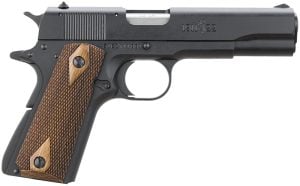
Quick Take
Most .22 1911s are full-size .45 lookalikes with a rimfire barrel inside. The Browning 1911-22 isn’t. Browning built it to roughly 85% of the size of the original Model 1911, so the whole gun is smaller: a 4 1/4 inch barrel, 7 3/8 inches overall and 15 ounces empty on the A1. Put it next to a Government .45 and it looks like the .45’s kid brother.
I ran 500 rounds through an A1 Full Size over three September sessions. With CCI Mini-Mags it was close to flawless and it shot small groups for a pistol with sights this thin. With bulk hollow points and standard velocity target ammo it got fussy. That’s the story of this gun in one sentence: it’s a well-made, genuinely fun little 1911 that wants the right food.
The part nobody tells you is how much the 20 models differ, and how little some of the differences cost. Browning lists the plain Black Label at $739.99, twenty dollars under the A1, and its composite frame is an ounce lighter. The A1 Polymer lists at $639.99 and weighs exactly what the aluminum A1 weighs.
The short answer: if you want a .22 that runs the controls and takedown of a real 1911 and fits a smaller hand, this is the one to buy. If you want a cheap plinker the same size as your .45, it isn’t.
Best For: New shooters, smaller-handed shooters and 1911 fans who want a rimfire that handles like the real thing. Not for anyone buying the cheapest bulk ammo on the shelf, and not for shooters who want a full-size .45 trainer.
Design Intent: Why Browning Scaled the 1911 Down
Browning’s own product page puts it plainly: the 1911-22 “isn’t a full size Model 1911 with a barrel conversion kit, it’s built to approximately 85% of the scale of John M. Browning’s original 45 ACP Model 1911 pistol.” That’s the whole design brief, and it’s a deliberate choice.
A .22 LR round doesn’t need a frame built for a .45. Scaling the gun to the cartridge makes it lighter and easier for a smaller hand to wrap. It also lets Browning run a straight blowback action with an aluminum slide, where the 1911-380 sibling needs a tilting barrel and a locked breech to handle its heavier round. Browning’s manual describes both guns side by side, and that’s the one mechanical difference that matters between them.
What Browning kept is the part 1911 people care about. There’s a grip safety, a thumb safety, an exposed hammer with half-cock and full-cock notches, a slide stop that locks back on the last round, and a barrel bushing takedown that works like a full-size 1911. Learn it on the .22 and you’ve learned it on the .45.
The trade-off is obvious once you hold one. It’s a trainer for the 1911 manual of arms, not for the 1911 size. Full-size 1911 grips, magazines and holsters are sized for the big gun, not this one.
The capacity number Browning’s own pages get wrong
Here’s something that’ll trip up anyone comparing models on browning.com. Nine of the 1911-22 spec sheets list an 8 round magazine, including the plain Black Label Full Size, both Maple Medallions and all four Medallion Composites. The rest say 10. Browning’s owner’s manual doesn’t hedge: “The magazine capacity of the 1911-22 is ten, 22 LR cartridges. The magazine capacity of the 1911-380 is eight.” Retailer listings for the plain Black Label, one of the 8 round sheets, say 10 rounds too.
Eight is the 1911-380’s number. It looks like it got copied onto the wrong spec sheets. Don’t pick a model off it, and if the capacity matters to you, confirm it with the seller before you pay.
Browning 1911-22 Variants: A1 vs Polymer vs Black Label
Browning lists 20 current 1911-22 models. Strip away the Cerakote colors and grip choices and there are really four families: the A1 with an aluminum frame, the A1 Polymer, the composite-frame Black Label line, and the Medallions with fancier grips and three-dot sights. Here’s Browning’s own price ladder, from its product data.
| Model (Browning list price) | Frame | Barrel | Weight |
| A1 Polymer Full Size ($639.99) | Composite, 7075 aluminum subframe | 4 1/4 in. | 15 oz |
| Black Label Full Size ($739.99) | Composite, 7075 aluminum subframe | 4 1/4 in. | 14 oz |
| A1 Full Size ($759.99) | Aluminum alloy | 4 1/4 in. | 15 oz |
| A1 Compact ($759.99) | Aluminum alloy | 3 5/8 in. | 15 oz |
| Black Label Laminate / Cerakote ($799.99) | Composite | 4 1/4 or 3 5/8 in. | 13 to 14 oz |
| Black Label with Rail ($819.99) | Composite | 4 1/4 in. | 14 oz |
| Black Label Medallion ($819.99) | Aluminum alloy | 4 1/4 in. | 15 oz |
| Black Label Suppressor Ready ($899.99) | Composite | 4 7/8 in., 1/2-28 | 14 oz |
Two things jump out. First, weight doesn’t follow the frame material. The A1 Polymer and the aluminum A1 both come in at 15 ounces on Browning’s sheets, so the polymer saves you $120 and zero ounces. Second, the A1 Compact weighs the same 15 ounces as the Full Size on paper, even with a shorter barrel. If you want the lightest gun, it’s a composite Black Label Compact at 13 ounces.
Browning 1911-22 A1 Full Size: aluminum frame, walnut grips, 4 1/4 in., 15 oz, left side thumb safety $683.99-$699.99
Browning 1911-22 A1 Compact: aluminum frame, 3 5/8 in. barrel, 6 3/4 in. overall, 15 oz $579.99-$699.99
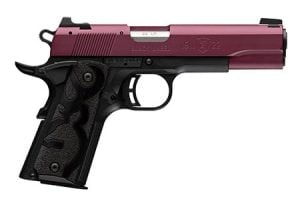
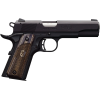
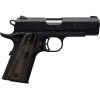
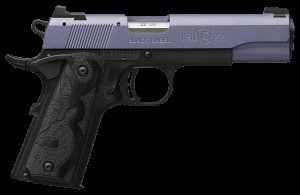
Browning 1911-22 Black Label Full Size: composite frame, 4 1/4 in., 14 oz, beavertail, Commander hammer $660.99-$699.99
Browning 1911-22 Black Label Medallion: aluminum frame, rosewood grips, gold Buckmark, three-dot sights $650.99-$719.99
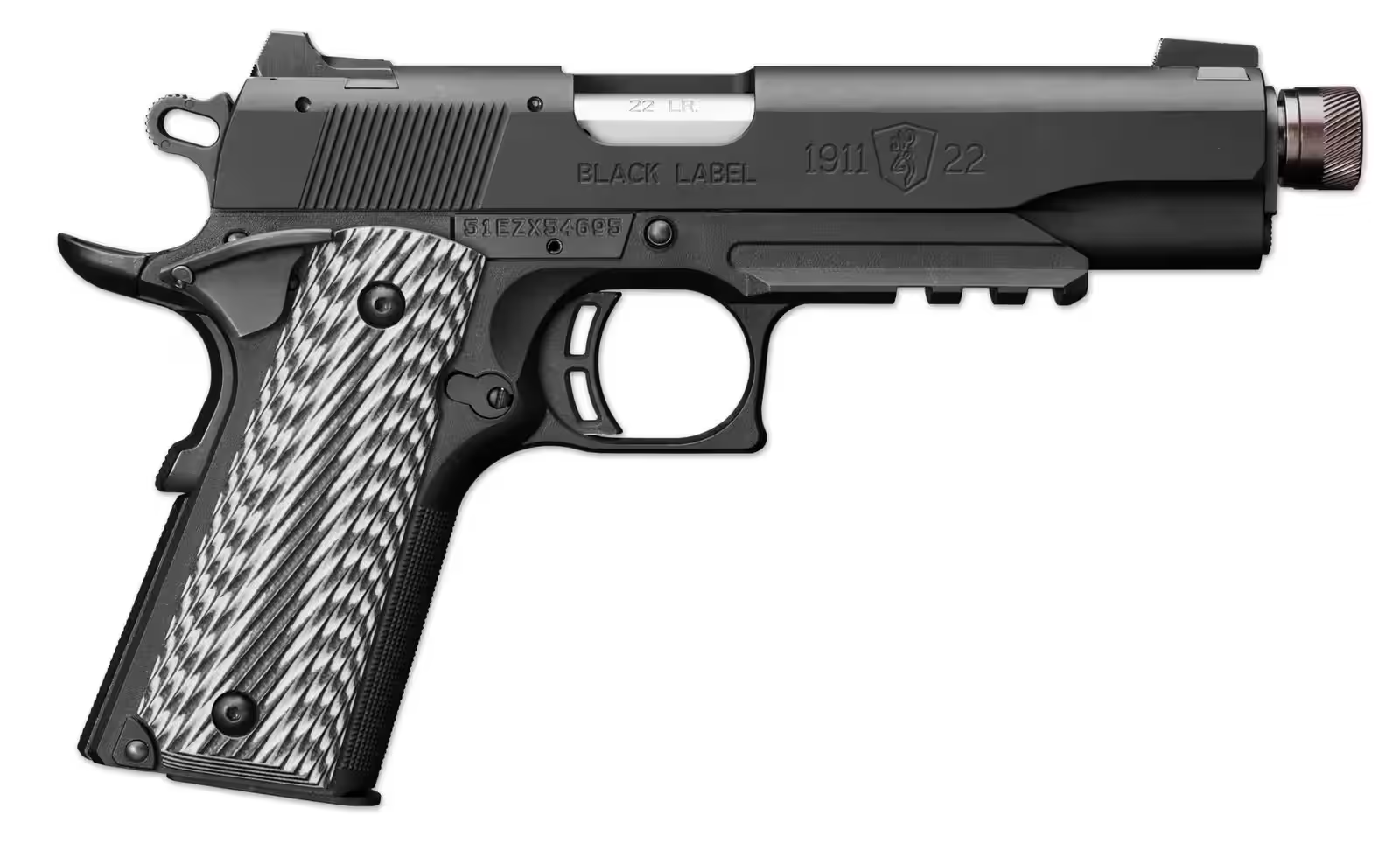
Browning 1911-22 Black Label Suppressor Ready: 4 7/8 in. barrel threaded 1/2-28, G-10 grips, rail $669.99-$889.99
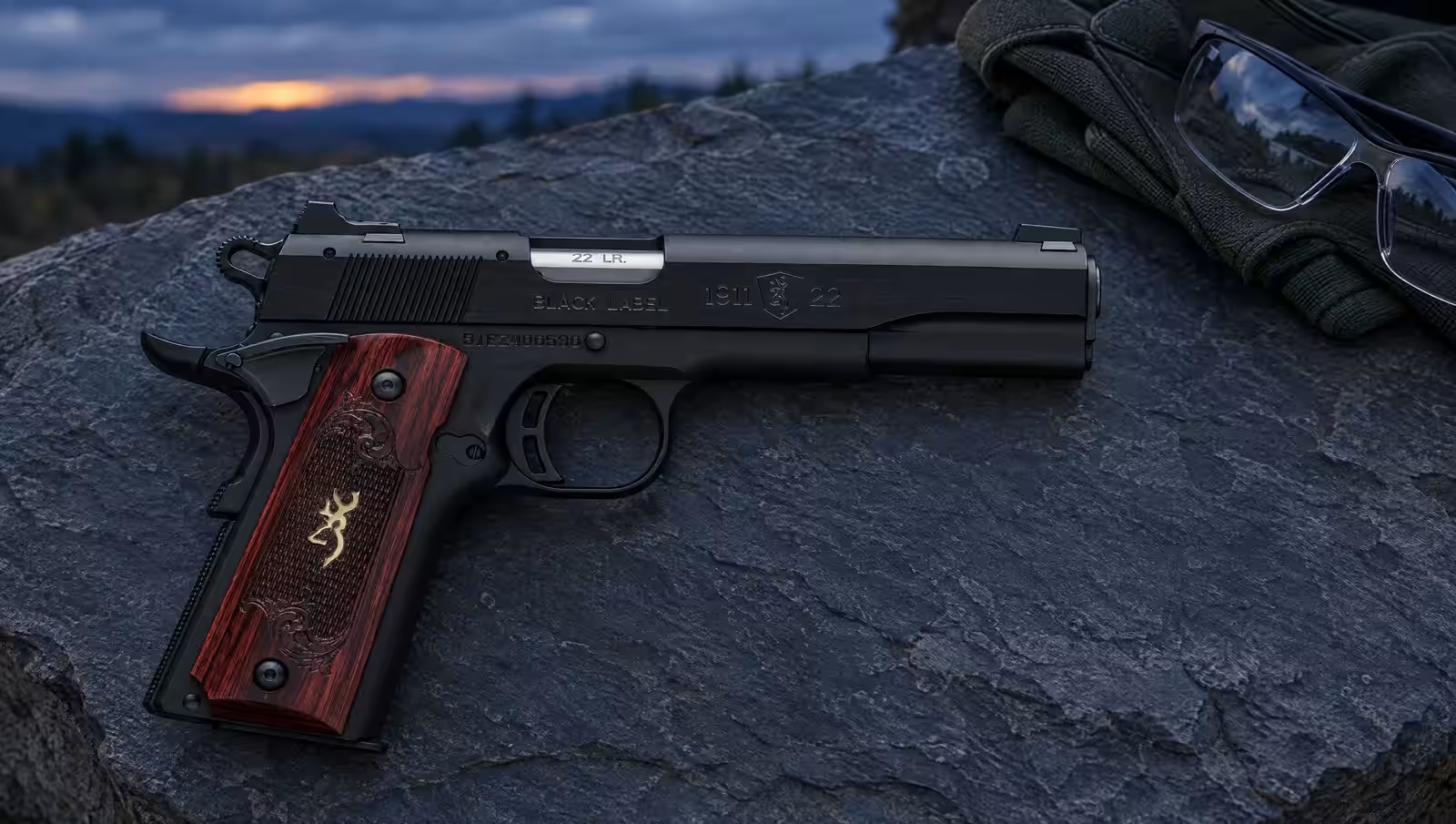
Competitor Comparison
There are two kinds of .22 1911 on the market. There’s Browning’s scaled-down gun, and there are full-size lookalikes that cost less than half as much. I’ve also included the pistol most people buy instead of a .22 1911 when they just want to hit things.
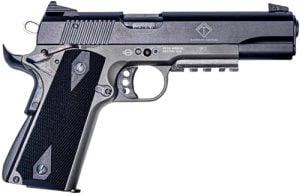
GSG 1911 (from $329.95)
The German Sport Guns 1911, imported by American Tactical, is the obvious budget pick. Retailers list it with a 5 inch barrel and a 10+1 magazine, so it’s a Government-length gun, not a scaled one. That matters if you want a trainer the same size as your full-size .45. Where the Browning wins is the finish: an anodized aluminum slide with crisp roll marks and cut-checkered walnut. Where the GSG wins is obvious. It costs less than half as much.
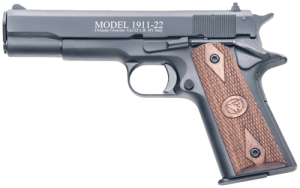
Chiappa 1911-22 (from $259.99)
Chiappa’s 1911-22 is the other full-size option, listed with a 5 inch barrel, 10+1 and walnut grips on the standard model. It’s the cheapest way into a .22 that looks like a GI 1911. I’d take the Browning over it for a new shooter with smaller hands, because the 85% frame is the whole point. For a big-handed shooter who wants a Government-size plinker, the Chiappa makes more sense and leaves about $400 for ammo.
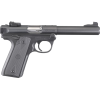
Ruger Mark IV 22/45 (from $386.13)
If accuracy and easy cleaning matter more than 1911 controls, look at the Ruger Mark IV 22/45. The standard model comes with a 5.5 inch barrel and 10+1. Ruger’s own page calls out its one-button takedown: press a button at the back of the frame and the barrel and receiver tilt up and off without tools. It wears checkered 1911-style grip panels, but it doesn’t have a grip safety, a bushing or a slide. It’s a target pistol, not a 1911. Our Mark IV 22/45 Lite review covers the lighter version.
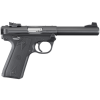
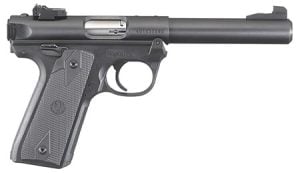
Browning’s own Buck Mark is worth a look too. It’s the company’s dedicated target .22, and our testing on it is in that review.
Verdict: The Browning is the only one of these that’s scaled down to .22 size, and it’s the best built of the three 1911s. It’s also twice the price of the GSG and the Chiappa. Pay for it if the smaller frame and the finish matter to you. If they don’t, the cheaper guns shoot .22 LR just as well.
Testing Protocol
I shot a new A1 Full Size, item 051802490, over three sessions in September at an outdoor range, with temperatures between 71 and 84 degrees. Before the first round I cleaned off the factory rust preventive, as Browning’s manual tells you to, and lightly oiled the slide rails. I cleaned it once more at round 250 and not again until the end.
Ammunition Log
- CCI Mini-Mag 40 grain copper-plated round nose: 200 rounds
- Federal AutoMatch 40 grain lead round nose: 150 rounds
- Remington Golden Bullet 36 grain plated hollow point: 100 rounds
- CCI Standard Velocity 40 grain lead round nose: 50 rounds
- Total: 500 rounds, 8 stoppages
Phase 1: Break-In
The first 100 rounds were all CCI Mini-Mag. I had one failure to feed at round 37, a bullet nose that dipped into the ramp instead of climbing it. A tap and rack cleared it. After that the slide ran smoothly and the last-round hold-open worked every time. The recoil spring felt stiff for the first few magazines and loosened up by the end of the box.
Phase 2: Reliability
Rounds 101 to 500 mixed all four loads, and this is where the pattern showed up. The other 100 Mini-Mags ran without a single stoppage. Federal AutoMatch gave me one stovepipe in 150 rounds. Golden Bullet was the problem child: three failures to feed and one failure to extract in 100 rounds, all in the dirty stretch between rounds 200 and 250, before the mid-test cleaning.
CCI Standard Velocity caused the last two stoppages. Both were failures to eject, with the empty case still in the port because the slide didn’t come back far enough. A blowback aluminum slide runs on the push from the cartridge, and a softer target load doesn’t always give it enough. That’s eight stoppages in 500 rounds, and seven of them came from three of the four ammo types.
Phase 3: Accuracy
I shot five-shot groups at 15 yards, seated, with the pistol on a rest. The best load for accuracy was the one that didn’t cycle perfectly: CCI Standard Velocity printed a 1.4 inch best group. Mini-Mag averaged 1.6 inches, AutoMatch 2.1 inches and Golden Bullet 2.6 inches. The A1 sights are small and black, and they’re the limiting factor, not the barrel. The trigger broke at an average of 5 lb 2 oz on my gauge with a little take-up and a clean break.
Tracking & Observations
At 500 rounds there was no visible wear on the slide rails, and the anodizing had only picked up a faint ring where the barrel bushing turns. The breech face and extractor collected the usual rimfire crud. Copper-plated Mini-Mags left copper fouling in the bore, which Browning’s manual flags too: it tells you to use a copper solvent after shooting plated bullets.
What This Means for You
- Upgrade Impact: The one upgrade worth paying for is a second magazine.
- Reliability: Excellent on high velocity copper-plated ammo, fussy on bulk and standard velocity.
- Ammo Preference: Buy CCI Mini-Mag or similar 40 grain high velocity for plinking.
- Maintenance: Clean every range day, and more often if you shoot cheap ammo.
- Accuracy Expectation: 1.5 to 2.5 inches at 15 yards with factory sights.
Performance Testing Results
Reliability (7/10)
Feed it what it likes and the 1911-22 runs. Feed it what’s cheapest and you’ll spend part of every range trip clearing it. That isn’t unusual for a small blowback .22, but it’s worth knowing before you buy a 500 round brick of bargain hollow points. The slide lock and magazine release never failed once, and the hammer never followed the slide.
Accuracy (8/10)
The barrel is better than the sights. A 5 1/2 inch sight radius and thin A1 posts make it hard to hold a fine aim, and I’d bet the Medallion’s three-dot sights would tighten my groups a little. Even so, 1.4 to 2.6 inches at 15 yards is more than good enough for cans, steel and teaching someone new.
Ergonomics & Recoil (8/10)
Recoil barely registers. The size is the real story. A friend with small hands, who can’t get a proper grip on a full-size 1911, wrapped this one easily and reached the thumb safety without shifting. My own hands are large, and with them the little grip safety and short trigger reach felt crowded. On the A1 the thumb safety is on the left side only, so a lefty wants a Black Label with the ambidextrous safety.
Fit, Finish, and Quality Control (9/10)
This is where the Browning earns its price over the GSG and the Chiappa. The slide-to-frame fit had no rattle, the anodizing was even, and the walnut grips have properly cut diamond checkering. The roll marks are crisp. Nothing on it feels like a toy, which is the fastest way a cheap .22 1911 gives itself away.
Technical Deep Dive
Slide, Barrel and Blowback Action
Browning’s manual describes the 1911-22 as a straight-blowback, single-action pistol. There’s no locking of the barrel to the slide. The slide’s weight and the recoil spring hold the breech closed while pressure drops, which is why a light aluminum slide works with .22 LR and why weak ammo sometimes fails to cycle it. The steel barrel sits in a barrel block, and Browning’s A1 description calls it a stainless steel barrel block.
Safeties and Hammer
You get three safeties. The thumb safety sits on the left on the A1 and is ambidextrous on the Black Label models. The grip safety blocks the trigger until your hand depresses it. And there’s a magazine safety: the trigger won’t release the hammer unless a magazine is in the gun. That last one surprises 1911 shooters, and it means you need an empty magazine inserted just to lower the hammer. The hammer has dropped, half-cock and full-cock positions, and Browning says to store it in the dropped position on an empty chamber.
Takedown
Field stripping is pure 1911. You press the recoil spring plug in and turn the barrel bushing clockwise 90 degrees, ease out the plug, line up the slide’s disassembly notch with the slide stop and push the slide stop out, then run the slide off the front. Browning says to stop there and send it to its Arnold, Missouri service center for anything deeper.
| Component | Specification | Benefit |
| Action | Straight blowback, single action | Simple, no locking parts to wear |
| Frame | Aluminum alloy (A1) or composite over 7075 aluminum subframe | 15 oz or less, easy to carry all day |
| Barrel | Steel, 4 1/4 in. on the Full Size | Holds groups the sights can’t match |
| Safeties | Thumb, grip and magazine | Full 1911 manual of arms, plus a magazine safety |
| Sight Radius | 5 1/2 in. (A1 Full Size), 4 7/8 in. (A1 Compact) | Short, so upgrade to a Medallion for 3-dot sights |
| Magazine | Single stack, 10 rounds, side follower button | Easy to thumb load, Browning lists spares at $59.99 |
Parts, Accessories and Upgrades
The 85% scale cuts both ways here. Full-size 1911 grips, holsters and magazines don’t fit, so most of what you’ll buy comes from Browning. These are Browning’s own list prices from the 1911-22 product pages.
| Upgrade Category | Recommended Component | Why It Matters | Cost Estimate |
| Magazines | Browning 1911-22 Pistol Magazine | Spares mean more shooting and less thumbing rounds in. | $59.99 each |
| Holster | Browning 1911-22/1911-380 Kydex Holster | Cut for the smaller frame, which full-size holsters aren’t. | $59.99 |
| Carry Holster | Browning 1911-22/1911-380 Hybrid Leather Holster | A more comfortable carry option. | $109.99 |
| Mag Pouch | Browning 1911-22/1911-380 Magazine Carrier | Keeps spare magazines on your belt at the range. | $39.99 |
| Ammo | 40 grain high velocity copper-plated .22 LR | The load it ran best on in our testing. | See our .22 LR ammo guide |
Common Problems & Solutions
- Failures to feed or eject: Almost always ammo or dirt. Switch to 40 grain high velocity ammo, clean the breech face and extractor, and most of it goes away.
- Trigger won’t drop the hammer: The magazine safety is working. Insert a magazine, even an empty one.
- Dry fire damage: Browning’s manual says not to dry fire the 1911-22 because it can damage the pistol. Practice trigger control with snap caps made for .22 LR instead.
- Accuracy drops off: Copper fouling from plated bullets. Browning recommends a copper solvent after shooting them.
- Confusing capacity listings: Some Browning spec sheets say 8 rounds. The manual and the retailers say 10. Ask the seller if it matters to you.
Who Should NOT Buy This Gun
- Budget plinkers: If you just want a .22 that looks like a 1911, the GSG 1911 or Chiappa 1911-22 costs less than half as much.
- Full-size .45 owners who want an identical trainer: This gun is 85% scale, so it won’t feel like your .45. A GSG 1911 has the Government-length 5 inch barrel.
- Bulk ammo buyers: If your .22 LR comes in the cheapest 500 round brick, a Ruger Mark IV 22/45 will stay happier with it.
- Serious target shooters: The thin A1 sights hold it back. The Browning Buck Mark is the better bullseye gun.
Final Verdict
The Browning 1911-22 is exactly what Browning says it is: a real 1911, built at about 85% of the size, for a cartridge that doesn’t need anything bigger. It’s light, it’s beautifully finished, and it teaches the full 1911 manual of arms without the recoil of a .45. It also has the usual small blowback .22 appetite. Give it good high velocity ammo and it runs.
Pick your model with Browning’s price ladder in mind. The plain A1 at $759.99 list is the classic. The $739.99 Black Label is lighter and cheaper, and the Medallion adds the three-dot sights I’d want. For shooting suppressed, the two Suppressor Ready models are the ones Browning threads 1/2-28. And if the smaller frame doesn’t matter to you, save the money and buy a GSG. For more .22 options, see our list of the best .22 LR pistols, or our best 1911s under $1,000 if a .22 is your stepping stone to a centerfire 1911.
Final Score: 7.8/10 – The best-made .22 1911 you can buy, as long as you feed it what it likes.
Specs and prices in this review come from Browning’s 1911-22 A1 product page and related model pages, and operating details from the 1911-22 and 1911-380 owner’s manual. Buying for someone new to shooting? Our .22 pistols for women guide covers other small-framed options.
FAQ: Browning 1911-22
Is the Browning 1911-22 a full size 1911?
No. Browning builds it to approximately 85% of the scale of John Browning's original .45 ACP Model 1911. The A1 Full Size has a 4 1/4 inch barrel, is 7 3/8 inches long and weighs 15 ounces.
How many rounds does the Browning 1911-22 hold?
10+1. Browning's owner's manual says the 1911-22 magazine holds ten .22 LR cartridges. Some of Browning's own spec sheets list 8, which is the capacity of the 1911-380.
What ammo should I use in a Browning 1911-22?
.22 LR only. Browning says not to shoot .22 Short, .22 Long or blanks. In our 500 round test it ran best on 40 grain high velocity copper-plated ammo such as CCI Mini-Mag, and it had stoppages with bulk hollow points and standard velocity target loads.
Can you dry fire a Browning 1911-22?
No. Browning's manual says not to dry fire the 1911-22 because it can damage the pistol. Use .22 LR snap caps if you want to practice trigger control.
Does the Browning 1911-22 have a magazine safety?
Yes. The trigger won't release the hammer unless a magazine is inserted. It also has a grip safety and a thumb safety, which is left side only on the A1 and ambidextrous on the Black Label models.
Is the Browning 1911-22 better than a GSG 1911?
It's better finished and scaled to .22 size, while the GSG 1911 is a Government-length gun with a 5 inch barrel at less than half the price. Buy the Browning for smaller hands and quality, the GSG for a budget full-size trainer.
5,718+ Gun & Ammo Deals
Updated daily from 200+ top retailers. Filter by category, caliber, action type, and price.
Related Guides