

Last updated September 27, 2026
Some of the links below are affiliate links, meaning at no additional cost to you, we may earn a commission if you click through and make a purchase.
- Treat every gun as loaded
- Point the muzzle in a safe direction
- Keep your finger off the trigger until you’re ready to shoot
- Know your target and what’s beyond
World War II was the last war fought mostly with rifles and pistols you can still buy, shoot and hang on a wall. The guns that armed the US, German, Soviet, British, Japanese and Italian armies are now 80 years old or more, and a surprising number of them are sitting in dealer inventory right now.
This is my guide to the 22 most important World War 2 guns, grouped by the army that carried them, from the M1 Garand and the Thompson to the Luger, the PPSh-41 and the Arisaka. For each one I’ll tell you what made it matter, whether a civilian can own one today, and what our dealers are asking, with a live price card wherever a real gun or a legal civilian version is for sale.
WW2 Guns at a Glance
Here are all 22 WW2 guns on this list, which army carried each one, and if you can own one today.
| Gun | Why It Matters | Key Facts | Check Price |
|---|---|---|---|
 |
THE STANDARD US RIFLE
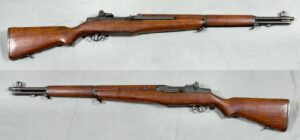
M1 Garand
Anyone who wants one WW2 gun to shoot and keep, and the rifle that defined the American infantryman. |
Army: United States Caliber: .30-06 Springfield Own one: Yes, original |
Check Price ↓ |
 |
THE MOST-PRODUCED US ARM OF THE WAR
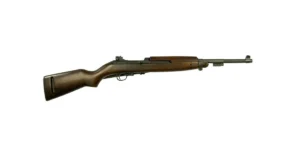
M1 Carbine
Shooters who want a light, historic semi-auto and would rather put rounds through a new copy than an 80-year-old barrel. |
Army: United States Caliber: .30 Carbine Own one: Yes, original or new copy |
Check Price ↓ |
 |
THE WARTIME BOLT ACTION
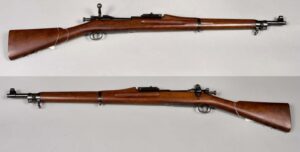
Springfield M1903A3
Collectors who want the American bolt gun of both world wars, and shooters who like an accurate iron-sighted rifle. |
Army: United States Caliber: .30-06 Springfield Own one: Yes, original |
Check Price ↓ |
 |
THE TOMMY GUN
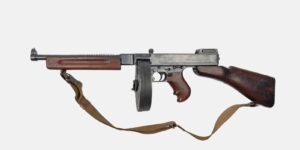
Thompson Submachine Gun
Anyone who wants the look and feel of the WW2 Tommy gun without federal machine-gun paperwork. |
Army: United States Caliber: .45 ACP Own one: Semi-auto copy |
Check Price ↓ |
 |
THE US SIDEARM
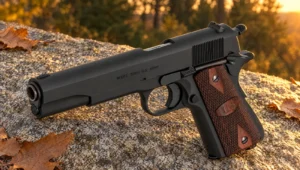
M1911A1
Shooters who want the WW2 American sidearm to actually carry to the range, and collectors hunting by maker. |
Army: United States Caliber: .45 ACP Own one: Yes, original or copy |
Check Price ↓ |
 |
THE STANDARD GERMAN RIFLE
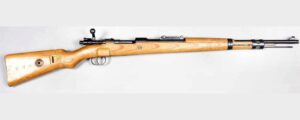
Mauser Karabiner 98k
Collectors of German WW2 guns and shooters who want the classic Mauser in its wartime form. |
Army: Germany Caliber: 8mm Mauser Own one: Yes, original |
Check Price ↓ |
 |
THE ICONIC GERMAN PISTOL
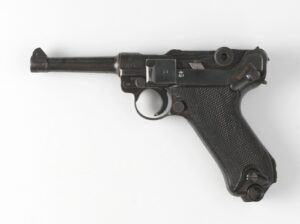
Luger P08
Collectors who want the most famous pistol of both world wars. |
Army: Germany Caliber: 9mm Luger Own one: Yes, original |
Check Price ↓ |
 |
THE MODERN GERMAN SIDEARM
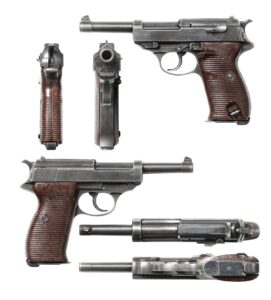
Walther P38
Shooters who want an original German WW2 pistol they can shoot regularly with modern 9mm. |
Army: Germany Caliber: 9mm Luger Own one: Yes, original |
Check Price ↓ |
 |
THE GERMAN SUBMACHINE GUN
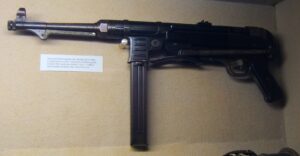
MP40
Collectors who want the MP40 look for the range without machine-gun paperwork. |
Army: Germany Caliber: 9mm Luger Own one: Semi-auto or .22 copy |
Check Price ↓ |
 |
THE FIRST ASSAULT RIFLE
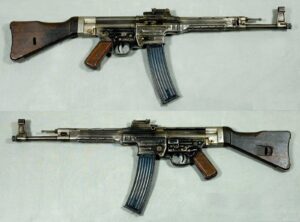
StG 44
History buffs who want the silhouette of the first assault rifle in a gun they can shoot cheaply. |
Army: Germany Caliber: 7.92×33 Kurz Own one: .22 copy |
Check Price ↓ |
 |
THE GERMAN SEMI-AUTO RIFLE
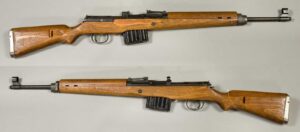
Gewehr 43
Advanced collectors of German WW2 guns. |
Army: Germany Caliber: 8mm Mauser Own one: Yes, original |
Check Price ↓ |
 |
THE STANDARD SOVIET RIFLE
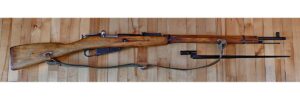
Mosin-Nagant M91/30
Anyone who wants an original WW2 rifle for very little money. |
Army: Soviet Union Caliber: 7.62x54R Own one: Yes, original |
Check Price ↓ |
 |
THE SOVIET SEMI-AUTO
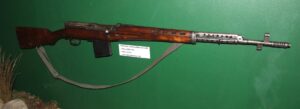
Tokarev SVT-40
Collectors who want the Soviet semi-auto that shaped German design. |
Army: Soviet Union Caliber: 7.62x54R Own one: Yes, original |
Check Price ↓ |
 |
THE SOVIET SUBMACHINE GUN
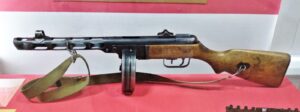
PPSh-41
Collectors who want the look of the most-produced submachine gun of the war. |
Army: Soviet Union Caliber: 7.62×25 Tokarev Own one: .22 copy |
Check Price ↓ |
 |
THE SOVIET PISTOL
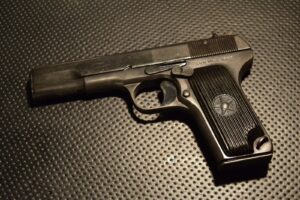
Tokarev TT-33
Shooters who want a cheap, tough WW2-pattern pistol with a unique cartridge. |
Army: Soviet Union Caliber: 7.62×25 Tokarev Own one: Yes, licensed copy |
Check Price ↓ |
 |
THE GAS-SEAL REVOLVER
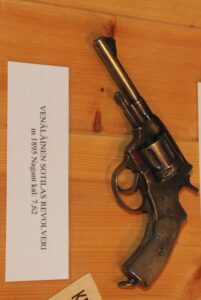
Nagant M1895 Revolver
Collectors after an inexpensive, genuinely unusual WW2 handgun. |
Army: Soviet Union Caliber: 7.62x38R Own one: Yes, original |
Check Price ↓ |
 |
THE STANDARD BRITISH RIFLE
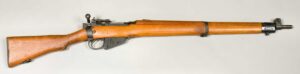
Lee-Enfield No. 4 Mk I
Shooters who want the most practical bolt action of WW2 at a sensible price. |
Army: Britain and Commonwealth Caliber: .303 British Own one: Yes, original |
Check Price ↓ |
 |
THE PISTOL BOTH SIDES USED
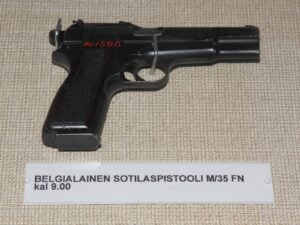
Browning Hi-Power
Anyone who wants a WW2-pattern 9mm pistol that still shoots like a modern one. |
Army: Britain and Commonwealth Caliber: 9mm Luger Own one: Yes, original or copy |
Check Price ↓ |
 |
THE STANDARD JAPANESE RIFLE
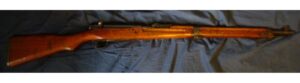
Arisaka Type 99
Collectors of Pacific War history who are willing to hunt for one. |
Army: Japan Caliber: 7.7×58 Arisaka Own one: Yes, but scarce |
Read More ↓ |
 |
THE JAPANESE PISTOL
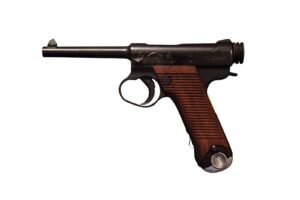
Nambu Type 14
Collectors who want a Pacific War sidearm for the wall. |
Army: Japan Caliber: 8×22 Nambu Own one: Yes, original |
Check Price ↓ |
 |
THE STANDARD ITALIAN RIFLE
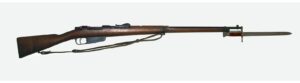
Carcano M91
Budget collectors who want an original WW2 rifle for the price of a new .22. |
Army: Italy Caliber: 6.5×52 Carcano Own one: Yes, original |
Check Price ↓ |
 |
THE ITALIAN SIDEARM
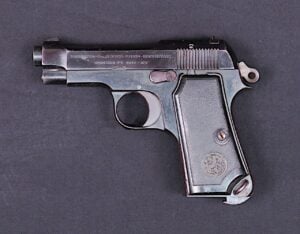
Beretta M1934
Anyone who wants an original WW2 pistol they can shoot cheaply every weekend. |
Army: Italy Caliber: .380 ACP Own one: Yes, original |
Check Price ↓ |
Table of Contents
What Guns Were Used in WW2?
The most important WW2 guns were the standard rifles, pistols and submachine guns of each major army: the M1 Garand, M1911A1 and Thompson for the US, the Karabiner 98k, Luger, P38 and MP40 for Germany, the Mosin-Nagant, TT-33 and PPSh-41 for the Soviet Union, and the Lee-Enfield for Britain.
Most WW2 rifles were bolt actions, and most WW2 pistols were semi-automatics or revolvers, which a civilian can own like any other firearm. The submachine guns and assault rifles are different. An original select-fire Thompson, MP40, PPSh-41 or StG 44 is a machine gun under federal law, so for those I’ve carded the legal semi-automatic or .22 versions that dealers sell today, and I say so on each one.
| Army | Standard rifle | Pistols | Submachine gun | Semi-auto rifle |
|---|---|---|---|---|
| United States | M1 Garand | M1911A1 | Thompson, M3 | M1 Carbine |
| Germany | Karabiner 98k | Luger P08, Walther P38 | MP40 | StG 44, Gewehr 43 |
| Soviet Union | Mosin-Nagant M91/30 | TT-33, Nagant M1895 | PPSh-41 | SVT-40 |
| Britain and Commonwealth | Lee-Enfield No. 4 | Hi-Power, Webley, Enfield No. 2 | Sten | None standard |
| Japan | Arisaka Type 99 | Nambu Type 14 | Type 100 | None standard |
| Italy | Carcano M91 and M38 | Beretta M1934 | Beretta M38 | None standard |
WW2 Guns of the United States
The US was the only major army to fight the whole war with a semi-automatic rifle as its standard infantry issue, and American WW2 guns are the easiest to own today, because so many were built and so many came home.
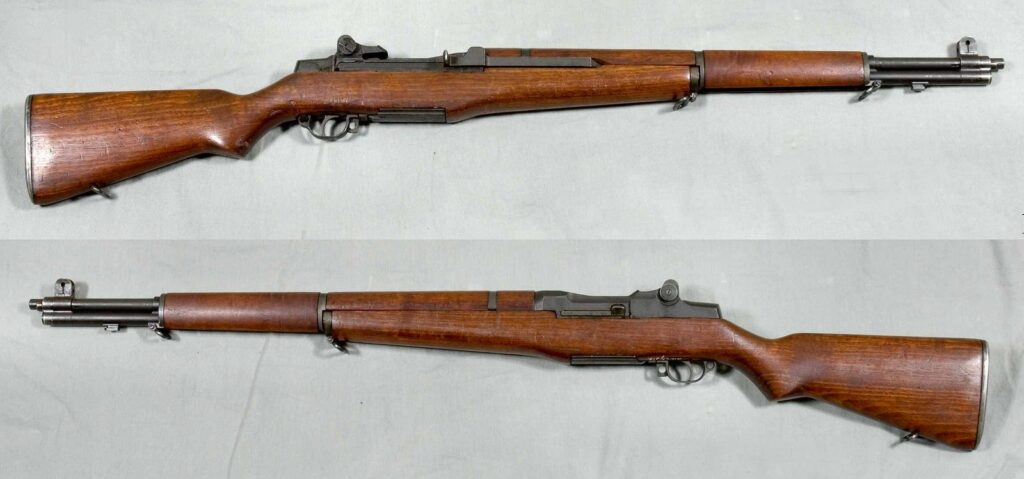
1. M1 Garand: The Standard US Rifle
- Caliber: .30-06 Springfield
- Action: Gas-operated semi-auto, 8-round en-bloc clip
- Made: 5,468,772 from 1937 to 1957
- Own one today: Yes, as an original surplus rifle, C&R eligible
| Category | Rating |
|---|---|
| Historical Impact | 5/5 |
| Shootability Today | 5/5 |
| Availability | 4/5 |
Pros
- Semi-auto when others had bolts
- Still easy to feed and shoot
- The CMP still sells them
Cons
- Heavy at about 9.5 lb
- Needs M1-safe .30-06 ammo
- Clean originals cost real money
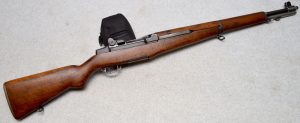
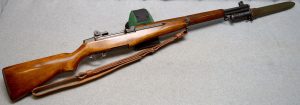
The M1 Garand was the standard US infantry rifle of WW2, a gas-operated .30-06 semi-auto fed by eight-round clips, and it carried American troops from Guadalcanal to D-Day and Normandy.
General Patton called it the greatest battle implement ever devised, and he had a point. While most armies went to war with bolt actions, the average American rifleman could fire eight rounds as fast as he could pull the trigger. It gave US squads a volume of rifle fire nobody else could match. Our history of firearms in warfare explains how that changed infantry tactics.
Originals are easy to find. The card below starts at $1,599.99 for a Springfield at Classic Firearms, and collection rifles run $1,800 to $2,000. Our full M1 Garand guide covers makers, serial ranges and CMP grades.
On the range it’s pure joy. Load the clip, let the bolt slam home, and shoot. The recoil is a firm push, not a slap. Just feed it ammo made for the M1, because hot modern hunting loads can bend the operating rod.
Best For: Anyone who wants one WW2 gun to shoot and keep, and the rifle that defined the American infantryman.
2. M1 Carbine: The Most-Produced US Arm of the War
- Caliber: .30 Carbine
- Action: Gas-operated semi-auto, 15-round magazine
- Made: 6,121,309 for the US military, July 1942 to August 1945
- Own one today: Yes, as a GI original or a new Inland or Auto-Ordnance copy
| Category | Rating |
|---|---|
| Historical Impact | 4.5/5 |
| Shootability Today | 5/5 |
| Availability | 5/5 |
Pros
- Light, handy, almost no recoil
- New copies built to GI dimensions
- Detachable 15-round magazines
Cons
- .30 Carbine is a short-range round
- Ammo costs more than 9mm
- GI originals priced by the bore
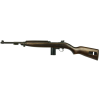
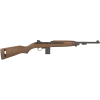
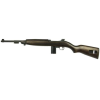
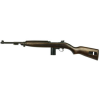
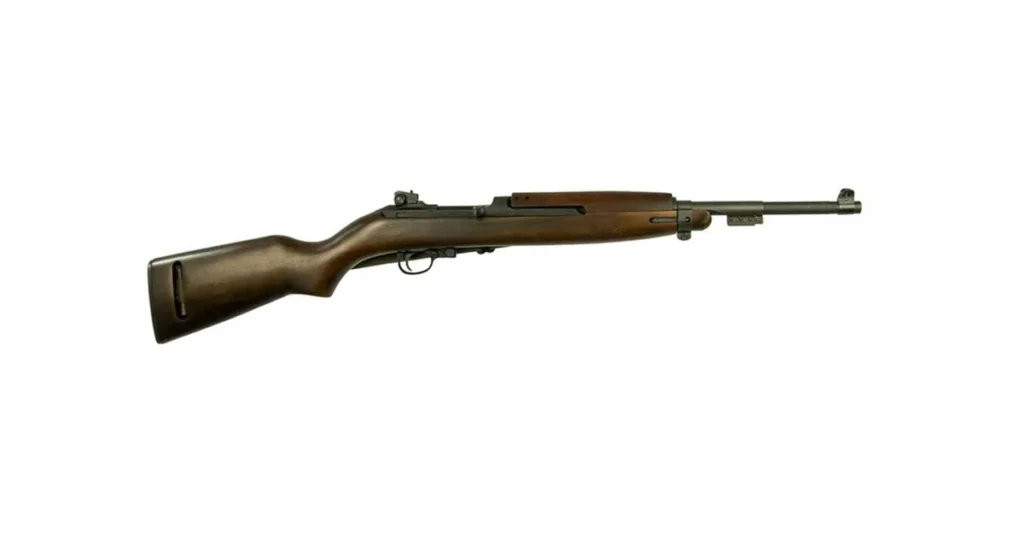
More M1 Carbines were built during the war than any other American small arm, and it went to the men who needed a light gun: officers, radiomen, mortar crews and paratroopers. At about five pounds it was a revelation next to a Garand.
You can buy an original GI carbine, and our best M1 carbines roundup prices them by maker. If you want to shoot one hard, the card below tracks Inland’s new-production M1 1945, which Kentucky Gun Co lists at $1,351.55.
Mine is the gun everybody asks to try. It points like a .22 and barely moves on recoil. Stick with good 15-round magazines, though. Worn old ones cause most of the feeding trouble people blame on the carbine.
Best For: Shooters who want a light, historic semi-auto and would rather put rounds through a new copy than an 80-year-old barrel.
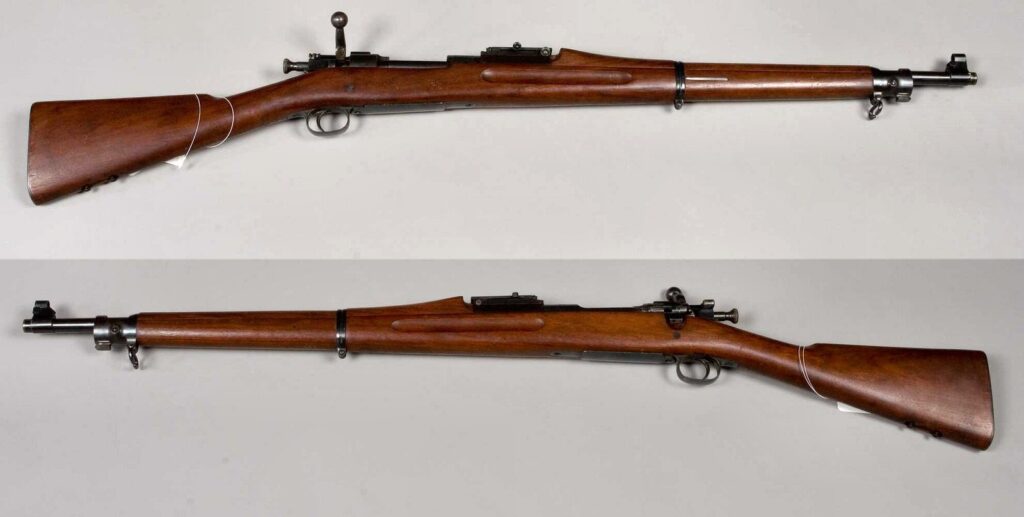
3. Springfield M1903A3: The Wartime Bolt Action
- Caliber: .30-06 Springfield
- Action: Mauser-pattern bolt action, 5 rounds
- Made: About 3 million 1903-pattern rifles, 1903 to 1949
- Own one today: Yes, as an original, C&R eligible
| Category | Rating |
|---|---|
| Historical Impact | 4/5 |
| Shootability Today | 4.5/5 |
| Availability | 3.5/5 |
Pros
- Very accurate for its age
- Feeds on common .30-06
- Wartime Smith-Corona history
Cons
- Clean ones cost over $1,000
- Avoid early low-number receivers
- Stamped parts look cheaper
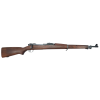
The Springfield M1903A3 was the simplified wartime version of America’s 1903 bolt-action rifle, and the Garand never fully replaced it. Remington and, from late 1942, the Smith-Corona typewriter company built the simplified M1903A3 with stamped parts and an aperture rear sight on the receiver, and it served as a standard rifle, a training rifle and the base of the M1903A4 sniper rifle.
On the card below, a Smith-Corona 1903A3 from a private collection sits at $1,300. Our US service rifles history puts it in context with every rifle before and after.
Mine shoots better than it has any right to at 80 years old. The trigger is a clean two-stage pull, and the aperture sight on the A3 is quick. Check the receiver date and serial before you buy one to shoot.
Best For: Collectors who want the American bolt gun of both world wars, and shooters who like an accurate iron-sighted rifle.
4. Thompson Submachine Gun: The Tommy Gun
- Caliber: .45 ACP
- Action: Blowback, Blish lock on early models, select fire
- Made: More than 1.5 million in WW2, including 539,143 M1A1s
- Own one today: Originals only as registered machine guns; semi-auto 1927A-1 copies are sold normally
| Category | Rating |
|---|---|
| Historical Impact | 5/5 |
| Shootability Today | 4/5 |
| Availability | 4/5 |
Pros
- The most famous gun of the era
- Semi-auto copies need no paperwork
- Soft-shooting .45 ACP
Cons
- Originals are regulated machine guns
- Copies weigh over 10 lb
- Drum magazines cost extra
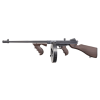
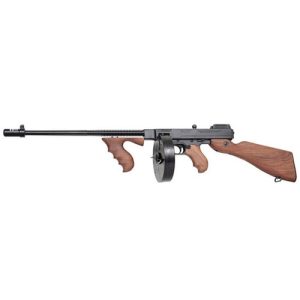
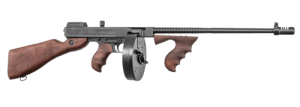
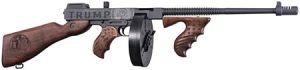
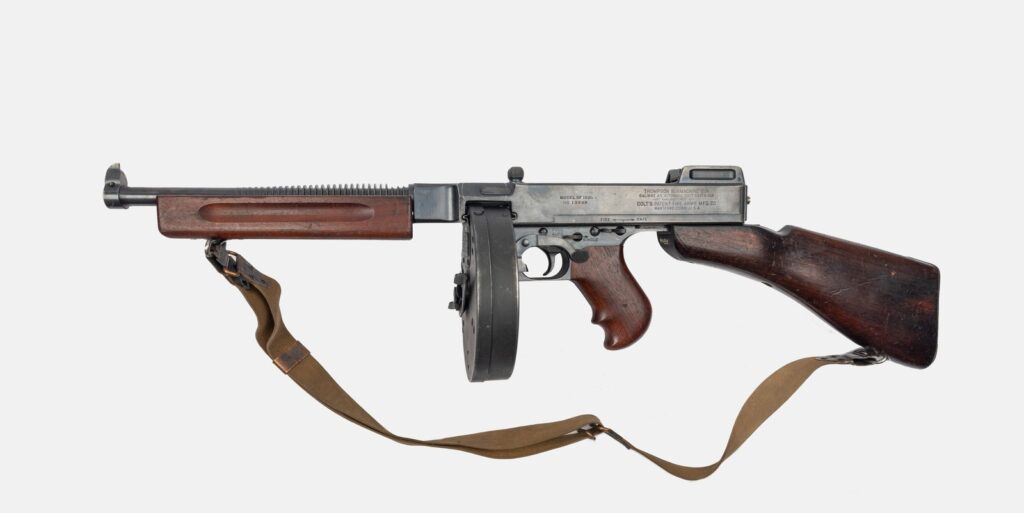
The Thompson started the war as a gangster’s gun and finished it as a GI’s. Early M1928A1s with finned barrels and drum magazines gave way to the simplified M1 and M1A1, which dropped the drum and the Blish lock so factories could build them faster.
An original select-fire Thompson is a machine gun, so you can only own one if it was registered before 1986, which puts it far out of most budgets. What you can buy is Auto-Ordnance’s semi-auto 1927A-1 with a 16.5-inch barrel, and the card below tracks it across our dealers. Our guide to buying a Tommy gun walks through both routes.
The semi-auto copy is heavy, and that’s the point. Over ten pounds soaks up the .45 so the muzzle barely rises. It’s a range toy, not a practical rifle. But I’ve never seen anyone put one down without smiling.
Best For: Anyone who wants the look and feel of the WW2 Tommy gun without federal machine-gun paperwork.
5. M1911A1: The US Sidearm
- Caliber: .45 ACP
- Action: Short recoil, single action, 7 rounds
- Made: About 1.9 million procured in WW2 by Remington Rand, Colt, Ithaca, Union Switch & Signal and Singer
- Own one today: Yes, as an original or a GI-pattern copy
| Category | Rating |
|---|---|
| Historical Impact | 5/5 |
| Shootability Today | 5/5 |
| Availability | 5/5 |
Pros
- Cheap GI-pattern copies everywhere
- Easy to shoot well
- Ammo is plentiful
Cons
- Originals priced by maker
- Singer examples are six figures
- Seven rounds in a heavy gun

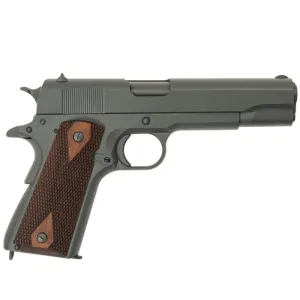
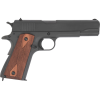
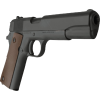
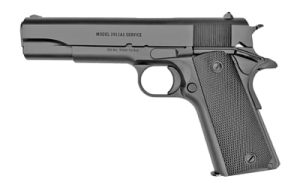
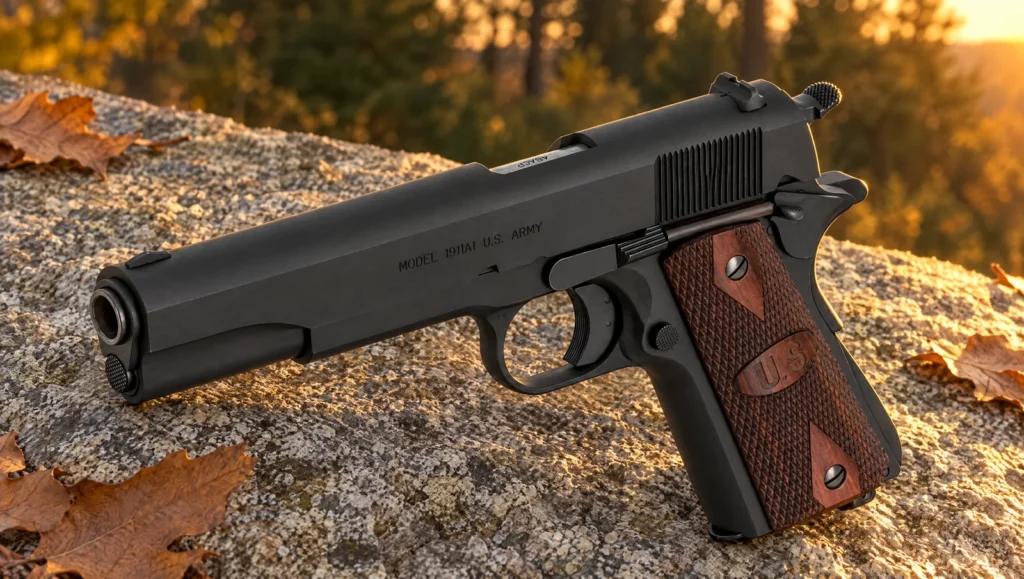
The M1911A1 was the 1924 update of John Browning’s 1911, with small changes such as a shorter trigger and an arched mainspring housing that came out of World War I experience, and during the war the government bought about 1.9 million of them. Remington Rand built the most, about 900,000, while Singer, the sewing machine company, made just 500, which is why a Singer is one of the most valuable American pistols there is. Our guide to WW1 guns covers the original M1911 and the rifles it served beside in 1918.
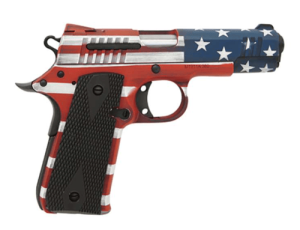
Originals by Colt, Remington Rand and Ithaca are easy to find through collectors. For a shooter, a GI-pattern copy makes more sense, and Tisas GI-pattern 1911A1s run $349.99 to $376.99 on the card below. Our Colt 1911 Government review covers the modern Colt.
A GI-pattern 1911 is the best way I know to learn what the war felt like from the shooter’s side. The sights are tiny and the trigger is long by modern standards. Still, it shoots straight. Seven rounds of .45 go a long way.
Best For: Shooters who want the WW2 American sidearm to actually carry to the range, and collectors hunting by maker.
WW2 German Guns
German WW2 guns run from the bolt-action Mausers the Wehrmacht carried to the first assault rifle, and originals of the rarer ones now sell in the thousands. They’re also heavily restamped and faked, so check matching numbers and buy from sellers who stand behind their descriptions.
6. Mauser Karabiner 98k: The Standard German Rifle
- Caliber: 8mm Mauser
- Action: Mauser 98 bolt action, 5 rounds
- Made: More than 14.6 million, 1934 to 1945
- Own one today: Yes, as an original, C&R eligible
| Category | Rating |
|---|---|
| Historical Impact | 5/5 |
| Shootability Today | 4/5 |
| Availability | 4/5 |
Pros
- The Mauser 98 action itself
- Huge variety for collectors
- 8mm ammo still available
Cons
- Matching rifles cost thousands
- Stiff recoil, steel buttplate
- Restamped fakes are common
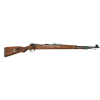
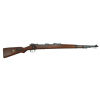
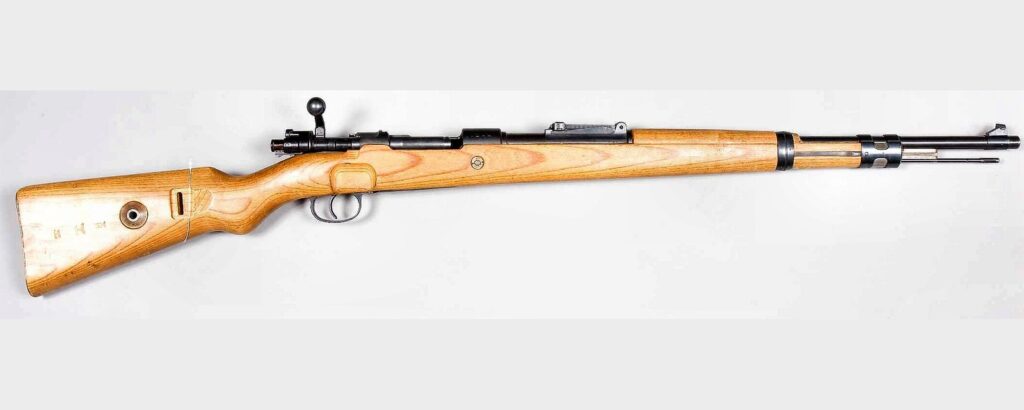
More than 14.6 million K98ks, also written Kar98k, were built, and it was the rifle of the German infantryman from the invasion of Poland to the fall of Berlin. Its Mauser 98 action is the most copied bolt action ever made.
The card below runs from $800 for a non-matching 1941 rifle to $2,400 for a rare S/42K, with Russian-capture rifles from Classic’s surplus line at $899.99. Look for import marks too, which tell you a rifle came in as surplus rather than as a bring-back. Our Mauser rifle guide explains codes, matching numbers and rebuilds.
Behind a K98k you feel every shot of 8mm. The steel buttplate makes sure of it. But the bolt is smooth, the sights are sharp, and a good one groups well. Check that the bolt number matches the receiver before you pay a matching price.
Best For: Collectors of German WW2 guns and shooters who want the classic Mauser in its wartime form.
7. Luger P08: The Iconic German Pistol
- Caliber: 9mm Luger
- Action: Toggle-locked short recoil, 8 rounds
- Made: About 3 million from 1900 to 1953; German Army adoption 1908
- Own one today: Yes, as an original, C&R eligible
| Category | Rating |
|---|---|
| Historical Impact | 5/5 |
| Shootability Today | 3.5/5 |
| Availability | 3.5/5 |
Pros
- The most recognized pistol ever
- Natural point, lovely grip angle
- Common 9mm ammo
Cons
- Picky with modern ammo
- Collector prices start high
- Fakes and mismatched parts
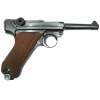
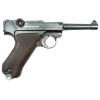
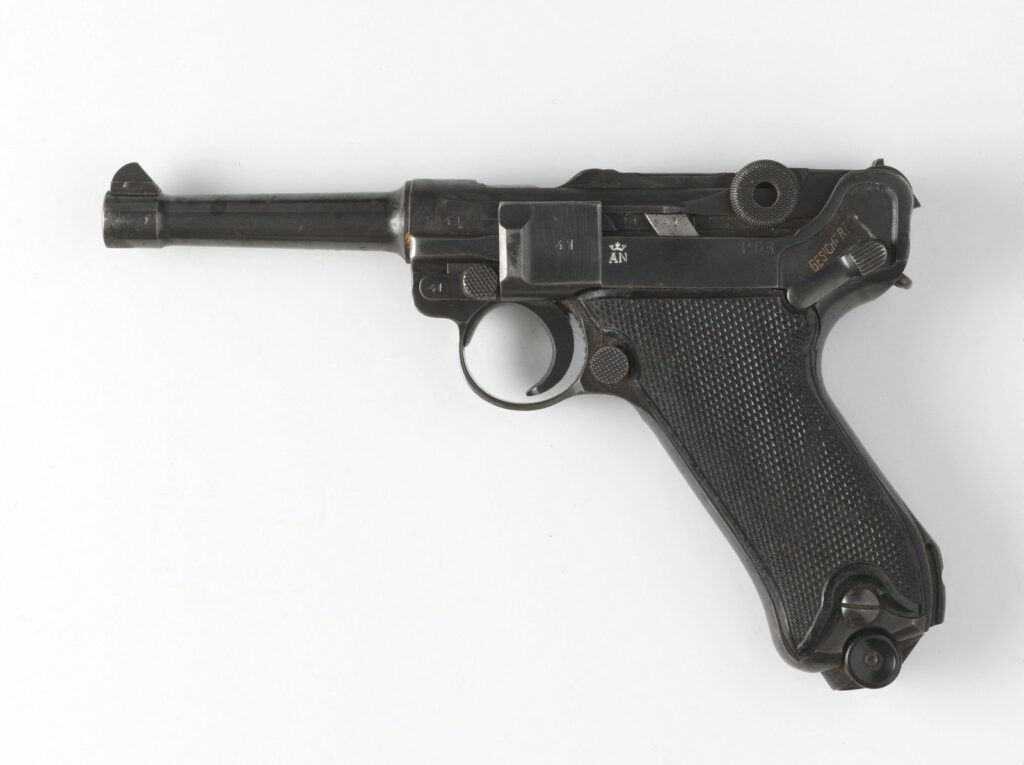
The Luger’s toggle action gave the world the 9mm Luger cartridge, and the German Army adopted it in 1908. It was still in service in 1945, although the Walther P38 had officially replaced it because the Luger took so long to make.
Two collection pistols sit on the card below, a 1938 Mauser S/42 at $1,650 and a 1917 DWM at $1,850.
A Luger points like your finger. That grip angle is famous for a reason. Shooting one is another story, because most want full-power ammo to cycle the toggle reliably. I shoot mine a few magazines at a time and put it away.
Best For: Collectors who want the most famous pistol of both world wars.
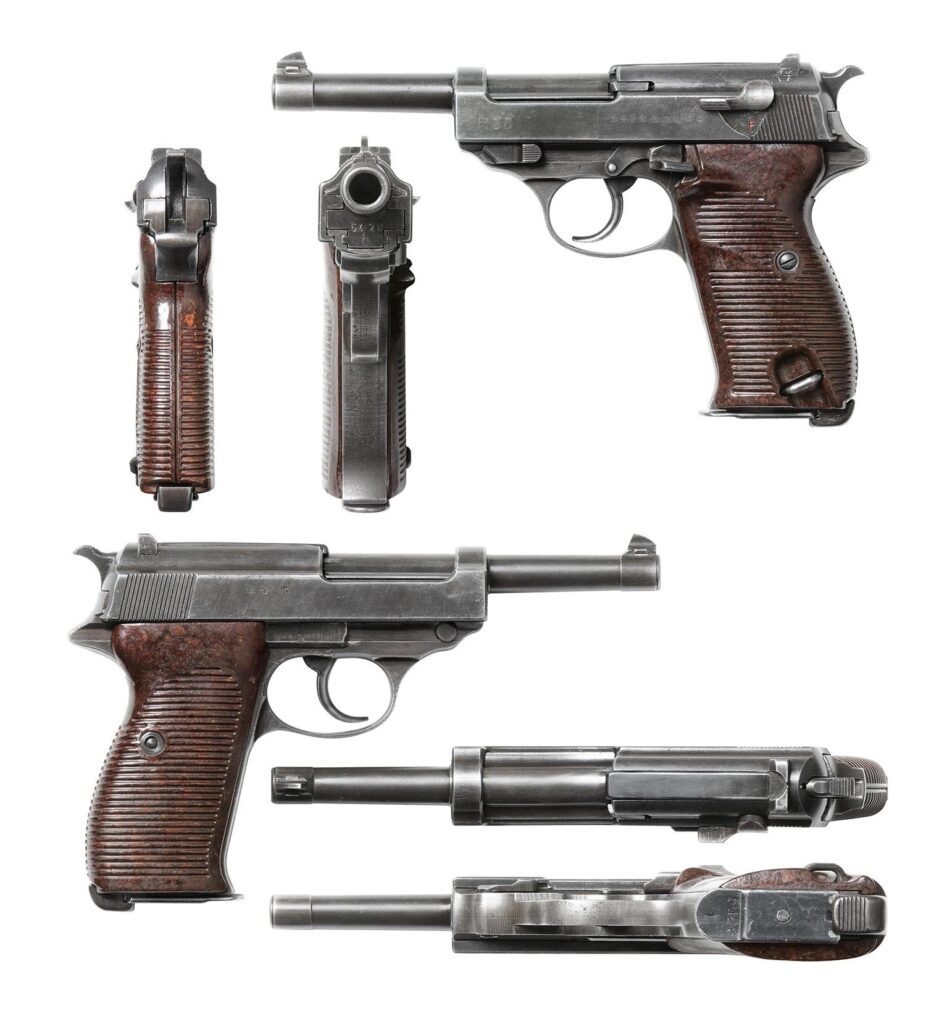
8. Walther P38: The Modern German Sidearm
- Caliber: 9mm Luger
- Action: Short recoil, double action/single action, 8 rounds
- Made: About 1 million, 1939 to 1945
- Own one today: Yes, as a wartime original or a postwar P1
| Category | Rating |
|---|---|
| Historical Impact | 4.5/5 |
| Shootability Today | 4.5/5 |
| Availability | 4/5 |
Pros
- First locked-breech DA/SA pistol
- Shoots well with modern 9mm
- Cheaper than a Luger
Cons
- Maker codes drive the price
- Postwar guns often sold as wartime
- Heavy DA first pull
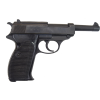
The P38 was the first locked-breech pistol with a double-action/single-action trigger, the layout the Beretta 92 and dozens of others still use. Germany adopted it in 1938 because it did the Luger’s job in far less factory time.
Wartime guns carry maker codes, with ac for Walther, byf for Mauser and cyq for Spreewerk. The card below shows an original German WWII model at $749.99 from Classic Firearms.
Of the German originals, this is the one I actually shoot. It handles modern 9mm fine and the double-action first shot is heavy but smooth. Watch the listings, though. Postwar P1 pistols get sold as wartime guns all the time.
Best For: Shooters who want an original German WW2 pistol they can shoot regularly with modern 9mm.
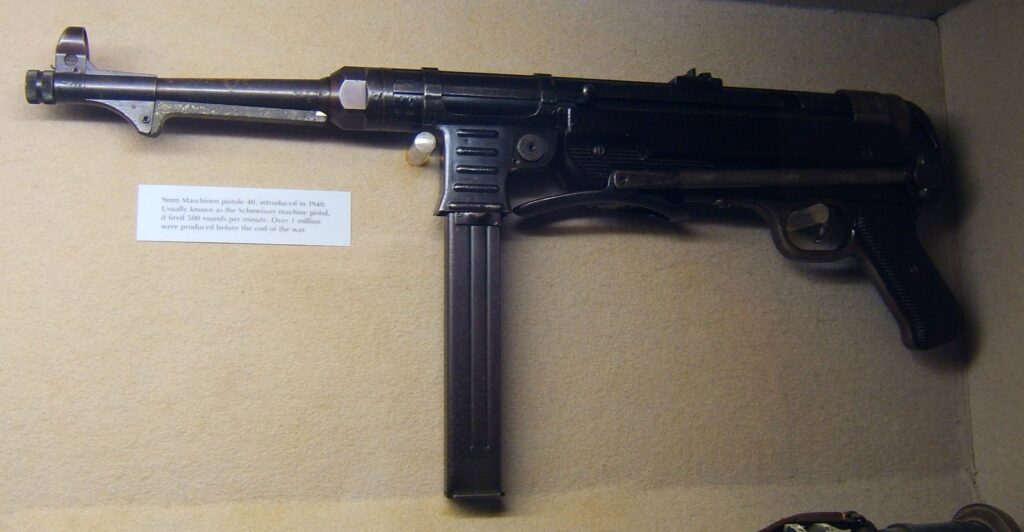
9. MP40: The German Submachine Gun
- Caliber: 9mm Luger
- Action: Open-bolt straight blowback, 32-round magazine
- Made: About 1.1 million, 1940 to 1945
- Own one today: Originals only as registered machine guns; semi-auto .22 and 9mm versions are sold normally
| Category | Rating |
|---|---|
| Historical Impact | 4.5/5 |
| Shootability Today | 3.5/5 |
| Availability | 3.5/5 |
Pros
- Iconic folding-stock design
- Semi-auto versions are cheap fun
- GSG version fires real 9mm
Cons
- Originals are regulated machine guns
- .22 version is only a lookalike
- Never called a Schmeisser
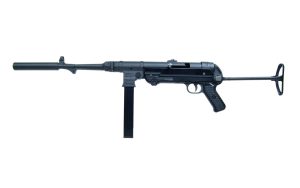
The MP40 was one of the first guns designed around stamped steel and plastic rather than milled parts and wood, and it set the pattern for the submachine guns that followed. Its designers worked at Erma, not for Hugo Schmeisser, despite the nickname.
An original is a machine gun, so the civilian route is a semi-auto copy. The card below shows Mauser’s .22 LR MP-40 carbine from $443.98 and GSG’s 9mm MP-40 pistol at $603.28.
The GSG 9mm copy is the more honest of the two. It fires real 9mm from a closed bolt, so it’s semi-auto only, but it has the weight and the feel. The .22 version is lighter and cheaper to feed. Pick based on your budget for ammo.
Best For: Collectors who want the MP40 look for the range without machine-gun paperwork.
10. StG 44: The First Assault Rifle
- Caliber: 7.92×33 Kurz
- Action: Gas-operated, tilting bolt, select fire, 30 rounds
- Made: 425,977, 1943 to 1945
- Own one today: Originals only as registered machine guns; .22 LR copies are sold normally
| Category | Rating |
|---|---|
| Historical Impact | 5/5 |
| Shootability Today | 3/5 |
| Availability | 3/5 |
Pros
- Father of the modern assault rifle
- .22 copy is cheap to shoot
- Striking wartime design
Cons
- Originals are regulated machine guns
- 7.92×33 ammo is scarce
- The .22 is a lookalike only
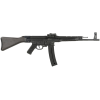
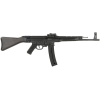
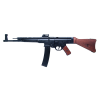
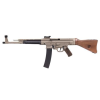
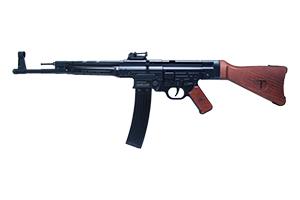
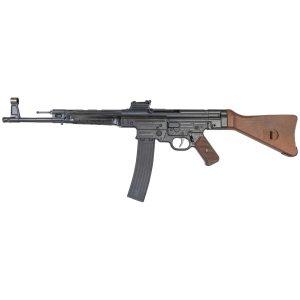
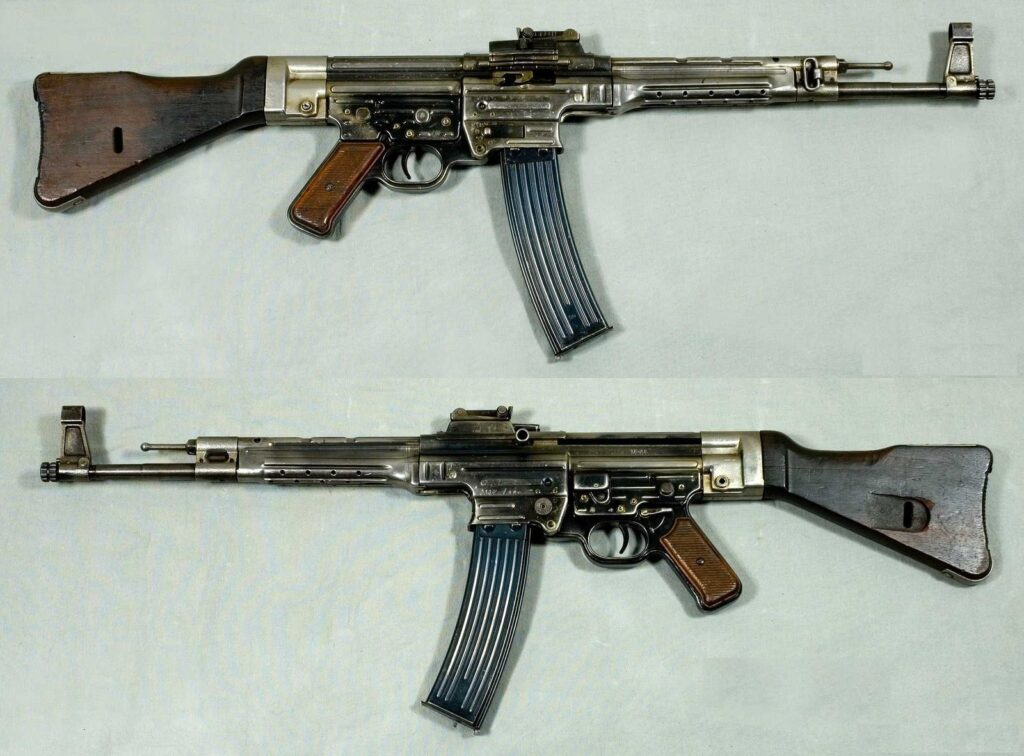
The StG 44, short for Sturmgewehr 44, was the first assault rifle to see real service: an intermediate cartridge, a 30-round magazine and select fire in one rifle. Every AK and AR-15 descends from the idea it proved, and Germany built 425,977 of them.
But originals are transferable machine guns that cost a fortune, and 7.92×33 Kurz is hard to find, with only five listings on our dealers. The card below tracks Mauser’s .22 LR STG-44, with Guns.com at $499.99.
The .22 copy won’t fool anyone who has held the real thing. It’s lighter, and it feeds .22 LR from its own magazine. But it’s cheap, it’s fun, and it lets you shoot the silhouette of the most important rifle of the century for pennies a round.
Best For: History buffs who want the silhouette of the first assault rifle in a gun they can shoot cheaply.
11. Gewehr 43: The German Semi-Auto Rifle
- Caliber: 8mm Mauser
- Action: Gas-operated semi-auto, 10-round detachable magazine
- Made: 402,713, 1943 to 1945
- Own one today: Yes, as an original, C&R eligible
| Category | Rating |
|---|---|
| Historical Impact | 4/5 |
| Shootability Today | 3.5/5 |
| Availability | 2.5/5 |
Pros
- Germany’s answer to the Garand
- Detachable 10-round magazine
- Built to take a scope mount
Cons
- $4,000 and up
- Late-war rough machining
- Parts are very hard to find
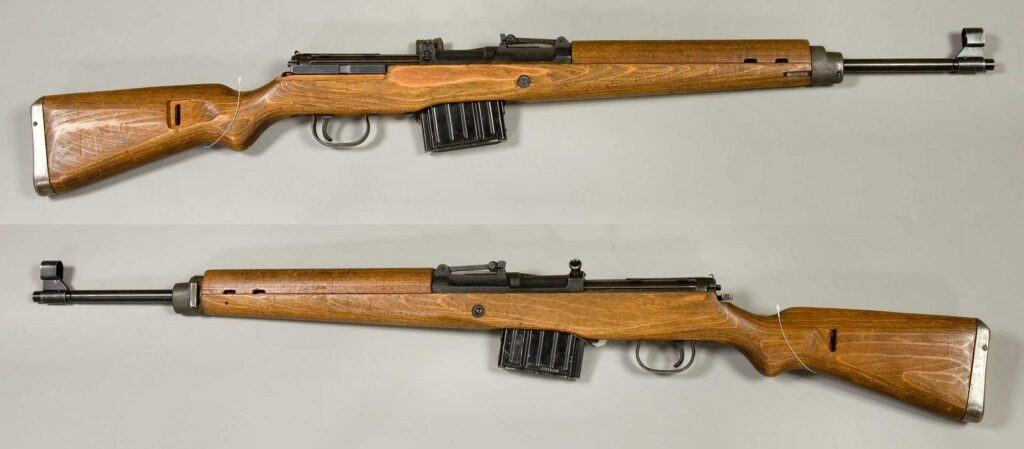
Germany came late to semi-auto rifles, and the Gewehr 43 was its best effort, borrowing the gas system of the Soviet SVT-40. It fed from a detachable 10-round magazine and was issued to marksmen as well as ordinary riflemen.
It’s a serious collector piece. Expensive, too. The card below shows one from a private collection at $4,200 at Classic Firearms.
If you’re lucky enough to shoot one, the recoil is brisk and the action is loud. Don’t run it hard. Parts for a G43 are scarce and expensive. This is a rifle you take out once a year and put back carefully.
Best For: Advanced collectors of German WW2 guns.
WW2 Soviet Guns
The Mosin-Nagant and the PPSh-41 carried the Red Army across the Eastern Front, and Soviet guns were built for mass production and hard use in enormous numbers. That’s why Soviet WW2 guns are still some of the cheapest originals you can buy, although the 2021 import ban has pushed prices up.
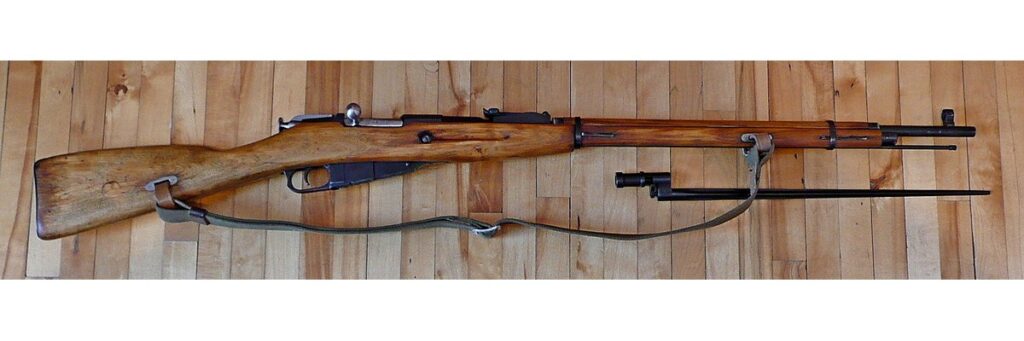
12. Mosin-Nagant M91/30: The Standard Soviet Rifle
- Caliber: 7.62x54R
- Action: Bolt action, 5 rounds
- Made: 1930 to 1945 at Tula and Izhevsk
- Own one today: Yes, as an original, C&R eligible
| Category | Rating |
|---|---|
| Historical Impact | 5/5 |
| Shootability Today | 3.5/5 |
| Availability | 4/5 |
Pros
- One of the cheapest WW2 rifles
- Nearly indestructible
- Stalingrad-era history
Cons
- Stiff bolt, heavy trigger
- Ammo scarcer since 2021
- Long and awkward
The M91/30 armed the Red Army from Moscow to Berlin, and it was built in such numbers that it’s still one of the cheapest original WW2 rifles you can buy. The bolt is stiff and the trigger is heavy, but it works in any weather.
Sportsman’s Outdoor Superstore has a police trade-in at $449.99 on the card below, and Guns.com has a Century import at $455.99. Our Mosin-Nagant buyer’s guide covers the M44 and the Finnish rifles too.
Expect cosmoline. Lots of it. Once it’s clean, a decent M91/30 will surprise you with its accuracy, and the long barrel makes a huge fireball. The bolt sticks when the chamber is dirty, so clean it properly before blaming the rifle.
Best For: Anyone who wants an original WW2 rifle for very little money.
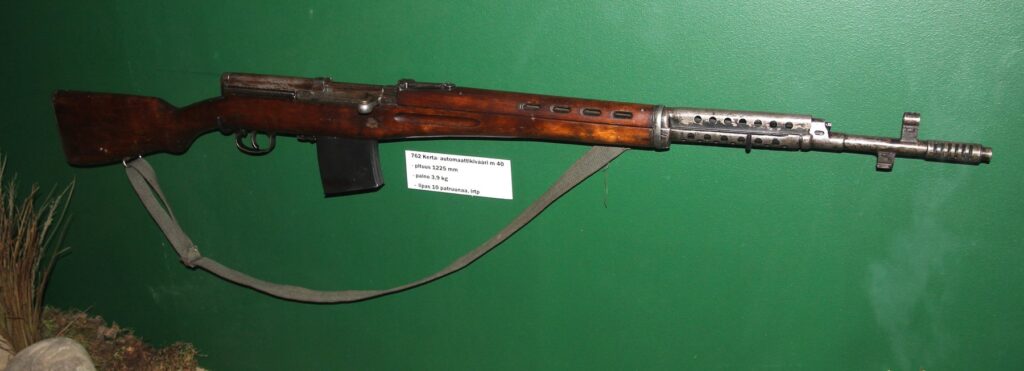
13. Tokarev SVT-40: The Soviet Semi-Auto
- Caliber: 7.62x54R
- Action: Gas-operated semi-auto, 10-round detachable magazine
- Made: 1938 to 1945
- Own one today: Yes, as an original, C&R eligible
| Category | Rating |
|---|---|
| Historical Impact | 4/5 |
| Shootability Today | 3.5/5 |
| Availability | 2.5/5 |
Pros
- Scarce in the US today
- Detachable 10-round magazine
- Inspired the Gewehr 43
Cons
- $2,400 and up
- Gas regulator needs care
- Few left for sale
The SVT-40 was meant to replace the Mosin, and the Germans thought enough of it to copy its gas system for the Gewehr 43. It proved harder to build and maintain in the field, and the order to stop production came in January 1945.
Classic Firearms has a Tula rifle from a private collection at $2,400 on the card below. Lyudmila Pavlichenko, the war’s most famous female sniper, used one, as our story on Lyudmila Pavlichenko’s guns explains.
The SVT is surprisingly soft for a full-power 7.62x54R, thanks to the muzzle brake. Set the gas regulator for your ammo first. Too much gas batters the action, and on a rifle this old and this rare, that’s a mistake you only make once.
Best For: Collectors who want the Soviet semi-auto that shaped German design.
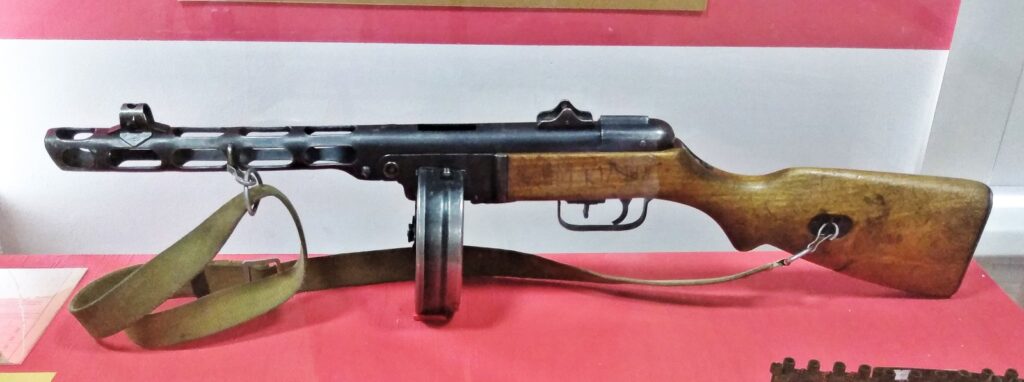
14. PPSh-41: The Soviet Submachine Gun
- Caliber: 7.62×25 Tokarev
- Action: Open-bolt blowback, 71-round drum or 35-round box
- Made: About 6 million, 1941 to 1947 in the USSR
- Own one today: Originals only as registered machine guns; semi-auto and .22 copies exist
| Category | Rating |
|---|---|
| Historical Impact | 5/5 |
| Shootability Today | 3/5 |
| Availability | 2.5/5 |
Pros
- Most-built SMG of the war
- Iconic 71-round drum
- .22 copy is cheap fun
Cons
- Originals are regulated machine guns
- Copies are rarely in stock
- .22 version is a lookalike
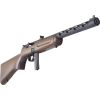
The PPSh-41 was built mostly from stamped steel, and the Soviets made about six million of them. With a 71-round drum and a rate of fire around 1,250 rounds a minute, whole Red Army companies were armed with nothing else.
Originals are machine guns, so the civilian option is a copy. There’s a .22 LR PPSh41 from Mitchell’s Mauser at $349.99 on the card below, and semi-auto 7.62×25 versions turn up now and then.
The .22 copy is a cheap way to own the look. It feeds from its own magazines and shoots like any .22 rifle, which is to say gently. Don’t expect it to feel like 7.62×25 fire. It’s a display gun you can plink with.
Best For: Collectors who want the look of the most-produced submachine gun of the war.
15. Tokarev TT-33: The Soviet Pistol
- Caliber: 7.62×25 Tokarev
- Action: Short recoil, single action, 8 rounds
- Made: 1,653,188 TT-30s and TT-33s in the USSR, 1930 to 1945
- Own one today: Yes, as an original or a postwar licensed copy
| Category | Rating |
|---|---|
| Historical Impact | 4/5 |
| Shootability Today | 4/5 |
| Availability | 4/5 |
Pros
- Flat, tough, simple pistol
- Hot, fast 7.62×25 round
- Copies are cheap
Cons
- No manual safety on originals
- Ammo is harder to find
- Soviet originals are scarce
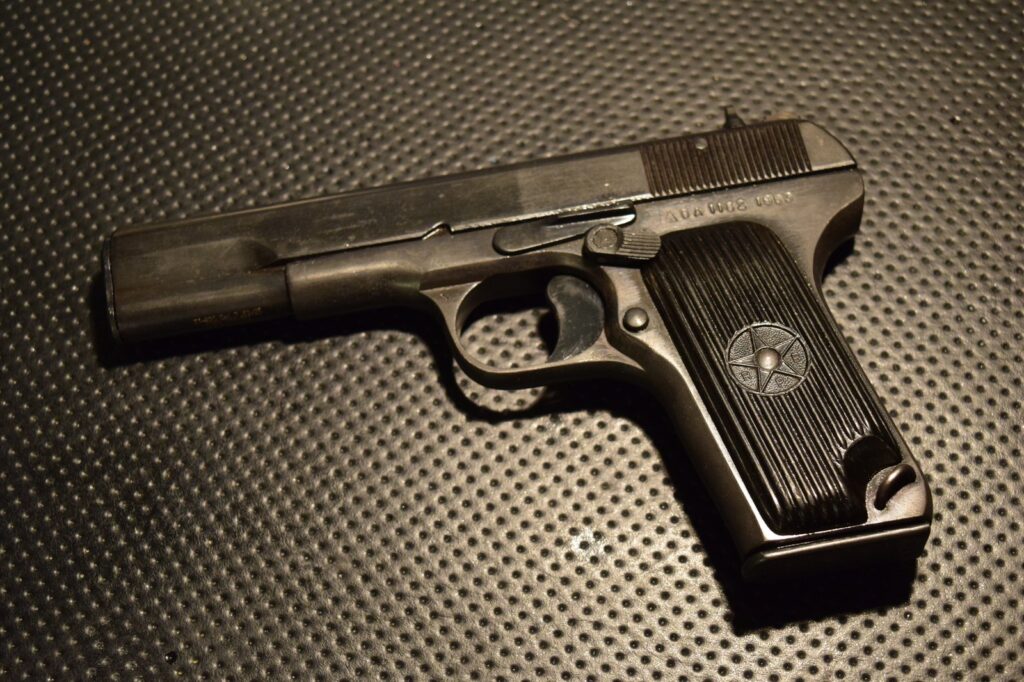
The TT-33 was a simplified Browning design, and it served the Red Army alongside the older Nagant revolver. It fires the hot, bottlenecked 7.62×25, which gave it real penetration for a pistol.
But wartime Soviet originals are scarce in the US, so most shooters buy a postwar licensed copy. The card below shows a Romanian TTC made at Cugir at $399.99, and our Tokarev pistol guide covers every version.
The TT-33 pattern is flat, thin and easy to shoot well. The 7.62×25 is loud and snappy, with a real fireball. Keep the hammer down on an empty chamber if your copy has no added safety. Old Soviet designs didn’t plan for pockets.
Best For: Shooters who want a cheap, tough WW2-pattern pistol with a unique cartridge.
16. Nagant M1895 Revolver: The Gas-Seal Revolver
- Caliber: 7.62x38R
- Action: Double action or single action, 7-round cylinder
- Made: About 2 million, 1895 to 1945
- Own one today: Yes, as an original, C&R eligible
| Category | Rating |
|---|---|
| Historical Impact | 3.5/5 |
| Shootability Today | 3/5 |
| Availability | 4/5 |
Pros
- Unique gas-seal cylinder
- Cheap way into Soviet WW2
- Built like an anvil
Cons
- Brutal double-action pull
- Slow gate loading
- Ammo is scarce
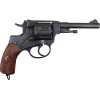
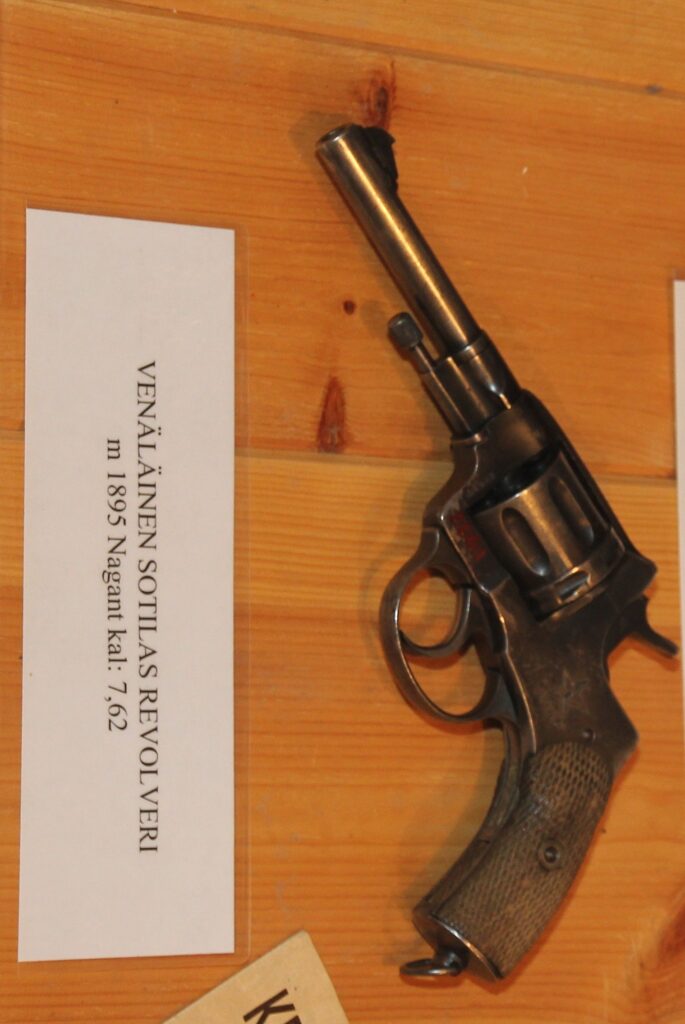
The Nagant’s cylinder moves forward when you cock it, closing the gap to the barrel, which made it one of the few revolvers that could be suppressed. It was already old in 1941, but the Soviets kept making it and it served right through the war.
The card below starts with a Nagant M1895 at $399.99 from Classic Firearms. Budget for ammo, though: there were only six listings of 7.62x38R on our dealers when I checked, all Fiocchi.
The double-action pull is the heaviest I’ve ever felt on a revolver. Cock it single action and it’s a different gun. Loading is slow, one round at a time through a gate. It’s a history lesson more than a range gun.
Best For: Collectors after an inexpensive, genuinely unusual WW2 handgun.
WW2 British and Commonwealth Guns
Britain and Canada fought the whole war, and their guns reflect it: a bolt-action rifle many soldiers rated the best of the war, and a Belgian pistol built in Canada after Germany took the factory that designed it.
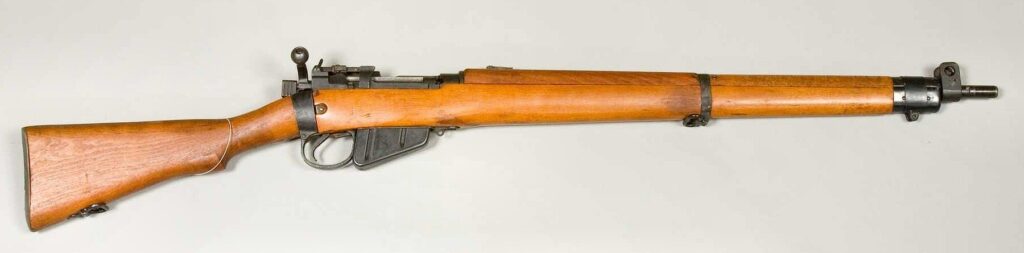
17. Lee-Enfield No. 4 Mk I: The Standard British Rifle
- Caliber: .303 British
- Action: Rear-locking bolt action, 10-round magazine
- Made: Mass production from mid-1941 in Britain, Canada and the US
- Own one today: Yes, as an original, C&R eligible
| Category | Rating |
|---|---|
| Historical Impact | 5/5 |
| Shootability Today | 5/5 |
| Availability | 4/5 |
Pros
- Fastest bolt of the war
- Ten-round magazine
- Excellent aperture sight
Cons
- .303 costs more than .30-06
- Check bolt-head headspace
- Many were sporterized
The British Army’s famous mad minute drill asked a trained rifleman for 15 aimed rounds a minute, and the No. 4’s slick bolt and 10-round magazine made that possible. Long Branch in Canada and Savage in the US built them alongside British factories.
The card below starts at $499.99 for an NRA surplus Good No. 4 at Classic Firearms. Our Lee-Enfield rifle buyer’s guide covers every mark.
Of all the WW2 bolt guns, this is the one I’d grab to shoot fast. The rear-locking bolt flicks back and forth without breaking your cheek weld. Just have the headspace checked first. Enfield bolt heads were numbered and swapped.
Best For: Shooters who want the most practical bolt action of WW2 at a sensible price.
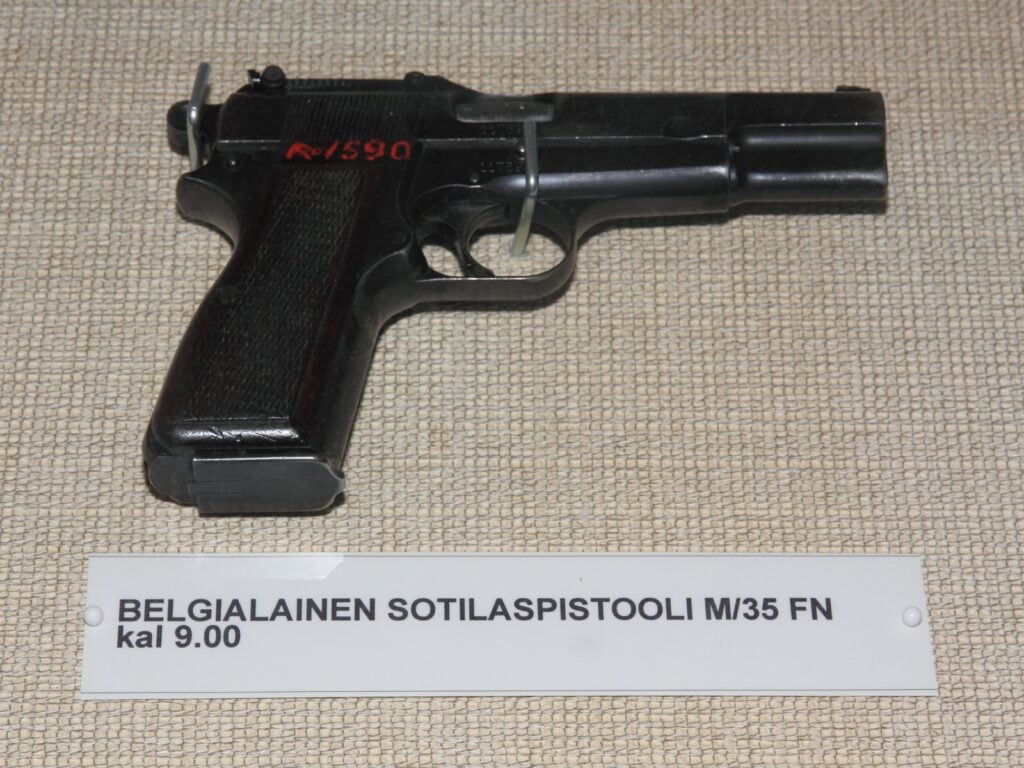
18. Browning Hi-Power: The Pistol Both Sides Used
- Caliber: 9mm Luger
- Action: Short recoil, tilting barrel, 13-round double-stack magazine
- Made: From 1935 by FN, and in WW2 by John Inglis and Company in Canada
- Own one today: Yes, as an original or a modern Inglis-pattern copy
| Category | Rating |
|---|---|
| Historical Impact | 4.5/5 |
| Shootability Today | 5/5 |
| Availability | 4/5 |
Pros
- First great double-stack 9mm
- Served both Allies and Axis
- Modern copies shoot great
Cons
- Wartime FN guns carry German proofs
- Canadian originals cost more
- Magazine safety on many

The Browning Hi-Power was built for both the Allies and the Axis during WW2. After Germany occupied Belgium, FN’s factory built it for the Wehrmacht as the Pistole 640(b), while John Inglis and Company in Canada built it for the Allies, which is where the Hi-Power name came from.
Wartime Inglis pistols are collector items. For shooting, a modern reproduction sold under the Inglis name is on the card below, with Classic Firearms at $452.51. Our best Browning Hi-Power pistols roundup covers the rest.
The Hi-Power feels thin and natural in the hand, and it’s still one of the best-pointing 9mm pistols ever made. Wartime examples are for collecting. A modern copy is for shooting, and most take standard Hi-Power pattern magazines.
Best For: Anyone who wants a WW2-pattern 9mm pistol that still shoots like a modern one.
WW2 Japanese Guns
Japanese WW2 guns came home as souvenirs with American servicemen, and most of the ones on the US market arrived that way. They’re harder to find and much harder to feed than anything else on this list.
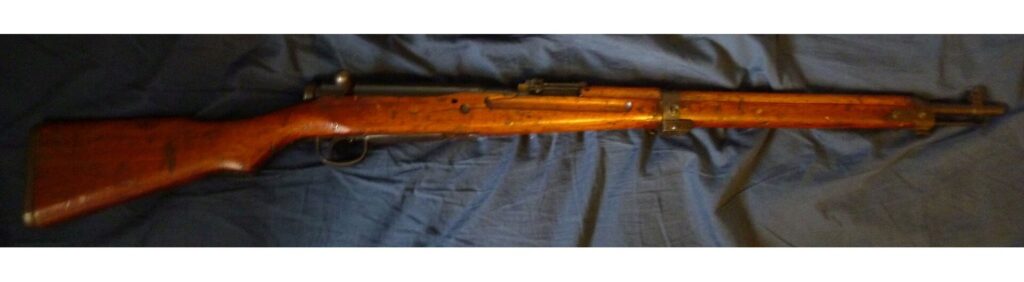
19. Arisaka Type 99: The Standard Japanese Rifle
- Caliber: 7.7×58 Arisaka
- Action: Bolt action, 5 rounds
- Made: About 3.5 million, 1939 to 1945
- Own one today: Yes, as a C&R original, but few are for sale
| Category | Rating |
|---|---|
| Historical Impact | 4.5/5 |
| Shootability Today | 3/5 |
| Availability | 2/5 |
Pros
- Very strong bolt action
- Real bring-back history
- Unusual features like AA sights
Cons
- Hard to find for sale
- 7.7 Arisaka ammo is rare
- Last-ditch rifles aren’t safe to shoot
The Type 99 replaced the older 6.5mm Type 38 with a heavier 7.7mm round, and about 3.5 million were made. Many came home with American servicemen as war trophies after the surrender in 1945, which is also why so many have the imperial chrysanthemum on the receiver ground off, a step taken on rifles surrendered by Japanese forces. Look for it.
None of our dealers had one listed when I checked, and ammo is scarce, with just two listings of 7.7 Arisaka, both Norma. If you find one, have it checked before shooting, because the rough last-ditch rifles made late in the war are not built to the same standard. Our best military surplus rifles roundup covers where the rarer rifles turn up.
Check for the mum. An intact chrysanthemum on the receiver adds real value, and a ground one tells you where the rifle has been. If you plan to shoot, confirm the chamber first. Some were rebarreled after the war.
Best For: Collectors of Pacific War history who are willing to hunt for one.
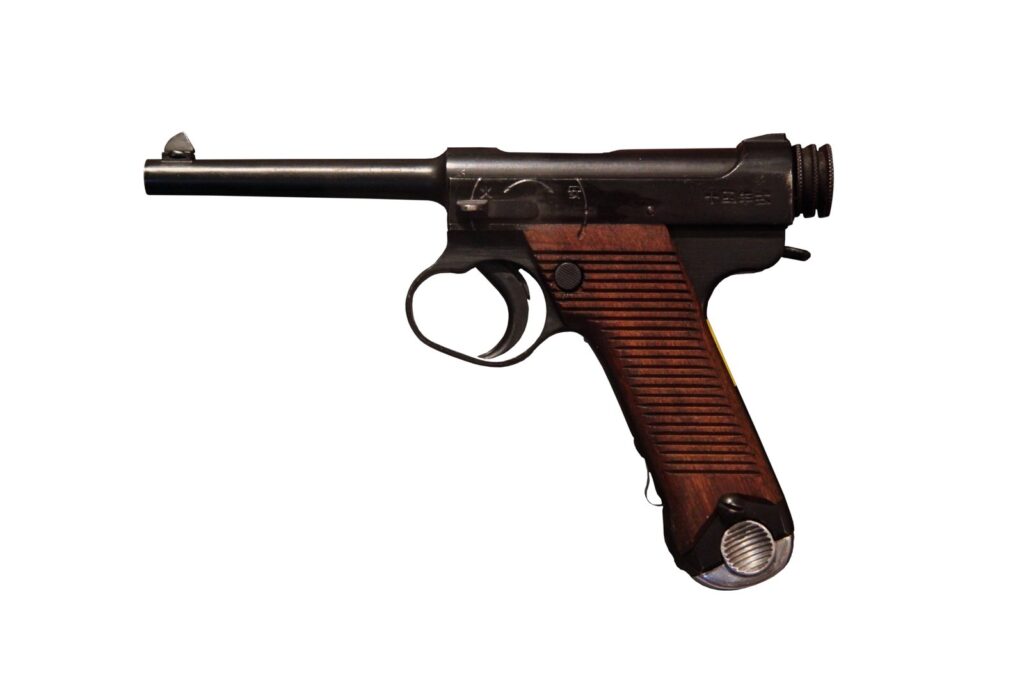
20. Nambu Type 14: The Japanese Pistol
- Caliber: 8×22 Nambu
- Action: Recoil-operated, 8 rounds
- Made: About 400,000
- Own one today: Yes, as an original, C&R eligible
| Category | Rating |
|---|---|
| Historical Impact | 3.5/5 |
| Shootability Today | 2/5 |
| Availability | 3/5 |
Pros
- Distinctive Luger-like looks
- Classic Pacific War bring-back
- Priced below a Luger
Cons
- 8mm Nambu ammo is almost gone
- Weak striker spring on many
- Mostly a display piece now
The Type 14 was the standard Japanese service pistol, and about 400,000 were built. It looks like a Luger at a glance, which is why it’s so often called the Japanese Luger, but inside it’s a completely different mechanism firing a much weaker 8mm cartridge. Not a Luger at all.
The card below shows a Guns.com consignment listed as a Nambu Type 14 at $899.99. Plan to display it rather than shoot it: there were no 8mm Nambu listings at all on our dealers when I checked.
Collectors love the Type 14 for its look and its history, and I get it. It’s a striking pistol. But with no ammo on the market, I’d treat any Nambu as a display piece and never dry-fire it hard, since firing pins and springs are scarce.
Best For: Collectors who want a Pacific War sidearm for the wall.
WW2 Italian Guns
Italy’s WW2 guns, the Carcano rifle and the Beretta M1934 pistol, are the cheapest originals of the war to buy today. They were made in large numbers and they’re historically important, yet they sell for less than almost anything else on this list.
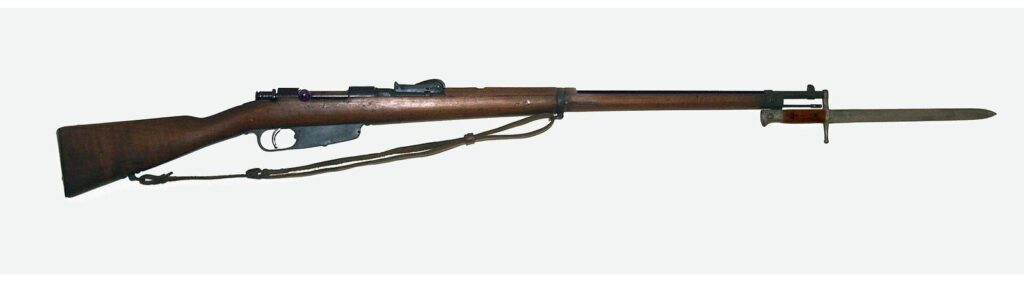
21. Carcano M91: The Standard Italian Rifle
- Caliber: 6.5×52 Carcano
- Action: Bolt action, 6-round en-bloc clip
- Made: 5 to 6 million of all variants, 1892 to 1945
- Own one today: Yes, as an original, C&R eligible
| Category | Rating |
|---|---|
| Historical Impact | 3.5/5 |
| Shootability Today | 3/5 |
| Availability | 3.5/5 |
Pros
- Cheapest WW2 rifle to buy
- Light, handy carbine versions
- Six-round en-bloc clips
Cons
- Clips are needed to feed
- 6.5 Carcano ammo is limited
- Unfairly poor reputation
Italy fought WW2 with the Carcano family, in 6.5mm and a short-lived 7.35mm, loaded from six-round clips like a Mannlicher. Its poor reputation comes mostly from wartime jokes, and a good one is a perfectly serviceable rifle.
It’s also the cheapest WW2 rifle on this list. The card below shows a Terni M91 police trade-in at $249.99 at Sportsman’s Outdoor Superstore and an M38 on Guns.com at $395.99.
A Carcano is light and quick for a service rifle, and the recoil is mild. The catch is the clip. It feeds from its en-bloc clip, so buy a few with the rifle. Without them you’ll be single-loading it.
Best For: Budget collectors who want an original WW2 rifle for the price of a new .22.
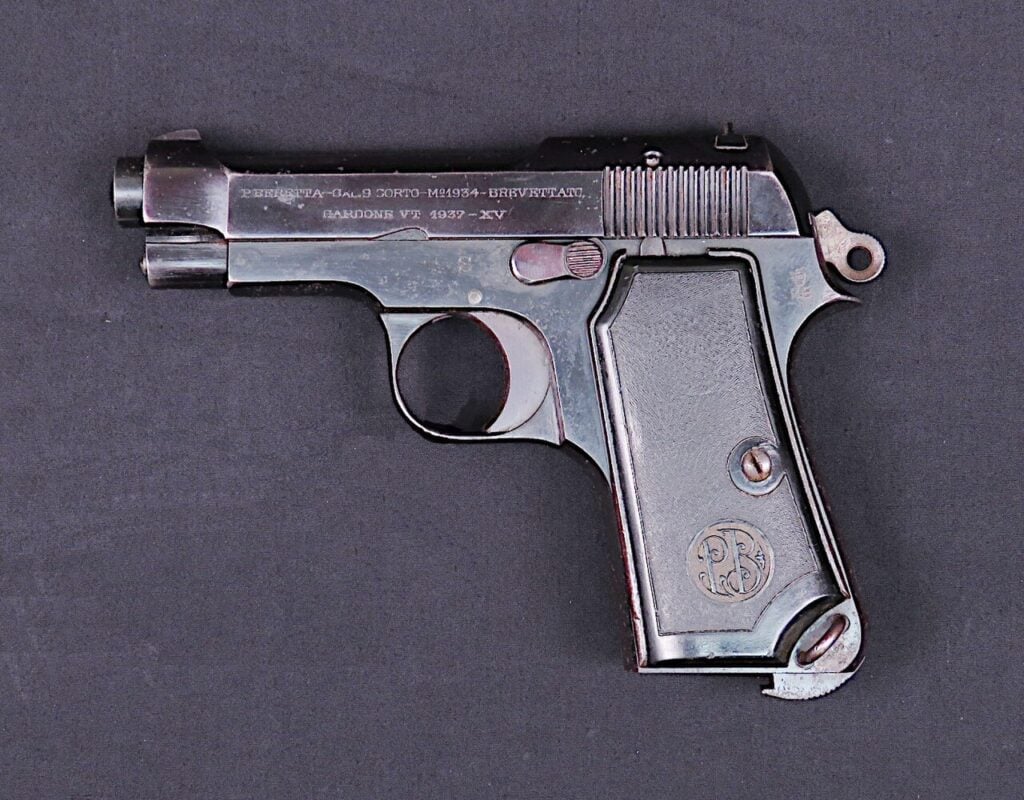
22. Beretta M1934: The Italian Sidearm
- Caliber: .380 ACP, called 9mm Corto in Italy
- Action: Blowback, 7 rounds
- Made: 1,080,000, 1934 to 1991
- Own one today: Yes, as a wartime original or a postwar gun
| Category | Rating |
|---|---|
| Historical Impact | 3.5/5 |
| Shootability Today | 4.5/5 |
| Availability | 4.5/5 |
Pros
- Cheap, reliable wartime pistol
- Common .380 ammo
- Small enough to carry
Cons
- Small, weak .380 round
- Heavy trigger pull
- Wartime dates cost more
The M1934 was the Italian Army’s pistol, and a favorite souvenir for Allied soldiers. It’s small, simple and reliable, and its slide is dated in both the regular calendar and the Fascist era year, like the 1937-XV pistol in the photo.
It’s the easiest WW2 original to own and shoot. Full stop. The card below shows one at $339.99 on Guns.com, and it runs on .380 ACP, which you can buy anywhere.
This is the WW2 pistol I’d tell anyone to start with. It’s small, reliable and cheap to shoot, and there’s nothing fragile about it. Check that the magazine is an original Beretta. A worn or reproduction magazine is the most common cause of feeding trouble.
Best For: Anyone who wants an original WW2 pistol they can shoot cheaply every weekend.
WW2 Machine Guns: Why You Can’t Easily Own One
Most famous WW2 machine guns are regulated under the National Firearms Act, or NFA, and can’t be bought like ordinary guns. The Browning Automatic Rifle fired .30-06 from 20-round magazines and the Bren fired .303 British from 30-round magazines.
The MG42, the Browning Automatic Rifle, the Bren, the Sten, the M3 Grease Gun and the Browning M1919 were all fully automatic, and so were the original Thompson, MP40, PPSh-41 and StG 44 above. If you’ve watched the BAR and the MG42 at work on Omaha Beach, our breakdown of the guns of Saving Private Ryan shows how the film used them.
Federal law at 18 U.S.C. 922(o) makes it unlawful for a private person to transfer or possess a machine gun, with an exception for one that was lawfully possessed before the ban took effect in May 1986. That fixed the number of civilian-transferable machine guns, and it’s why an original Thompson or MG42 sells for far more than the gun itself is worth.
Semi-automatic reproductions of several of these guns are made in small numbers by specialist makers, but none were in stock on our dealers when I checked. For most people, the semi-auto and .22 copies carded above are the practical way to own the look.
Can You Own a WW2 Gun? The Short Legal Answer
Most WW2 guns are legal for US civilians to own. Every bolt-action rifle and pistol on this list is an ordinary firearm under federal law, and you can buy one through a licensed dealer with a normal background check. Your state and city laws still apply, so check them first.
Almost every WW2 original also counts as a curio or relic. Under 27 CFR 478.11, that covers firearms made at least 50 years before today’s date, which lets collectors with a curio and relic license have them shipped directly. No WW2 gun is an antique under federal law, since that line is 1898.
The exceptions are the select-fire guns: original submachine guns, assault rifles and machine guns. Those fall under the National Firearms Act and 922(o), which is why this list cards legal semi-auto and .22 versions for them instead.
WW2 Ammo You Can Still Buy
Most WW2 guns still have ammunition on the market, but a few calibers have nearly vanished, so check before you shop WWII guns for sale. Here’s how many listings each WW2 cartridge had across our dealer network on September 27, 2026, and how many different dealers carried it. The numbers tell you which of these guns you can shoot every weekend and which belong on the wall.
| Cartridge | WW2 guns | Ammo listings | Dealers carrying it |
|---|---|---|---|
| 9mm Luger | Luger, P38, MP40, Hi-Power | 1,917 | 21 |
| .45 ACP | M1911A1, Thompson | 856 | 17 |
| .30-06 Springfield | M1 Garand, 1903A3 | 824 | 16 |
| .380 ACP | Beretta M1934 | 432 | 19 |
| 8mm Mauser | K98k, Gewehr 43 | 82 | 11 |
| .303 British | Lee-Enfield No. 4 | 72 | 9 |
| .30 Carbine | M1 Carbine | 56 | 11 |
| 7.62x54R | Mosin-Nagant, SVT-40 | 37 | 11 |
| 7.62×25 Tokarev | TT-33, PPSh-41 | 16 | 7 |
| 6.5×52 Carcano | Carcano | 9 | 6 |
| 7.62x38R Nagant | Nagant M1895 | 6 | 6 |
| 7.92×33 Kurz | StG 44 | 5 | 5 |
| 7.7×58 Arisaka | Arisaka Type 99 | 2 | 2 |
| 8×22 Nambu | Nambu Type 14 | 0 | 0 |
The pattern is clear. The Allied service cartridges and the German 9mm are everywhere, the Soviet and Axis rifle rounds are made by a handful of European factories like PPU and Sellier & Bellot, and 8mm Nambu has effectively disappeared. Old military surplus ammo in any of these calibers is often corrosive, so clean the bore the same day you shoot it.
How I Picked These 22 WW2 Guns
I started with the standard rifle, pistol and submachine gun of each major army, added the guns that changed how wars were fought, like the M1 Garand, the StG 44 and the MP40, and then checked what our dealers actually had for sale on September 27, 2026.
Every gun with a real or civilian-legal version in stock has a live price card pulling WWII guns for sale from our 200+ retailers, and the one that didn’t, the Arisaka, is labeled that way.
Over the years I’ve shot most of the rifles and pistols here, and all of the specs come from military records and our own model guides. The machine guns are left out of the numbered list on purpose, because almost nobody can buy one.
Featured image: a composite built from a Swedish Army Museum photo of a Thompson M1928, licensed CC BY 4.0 and modified, with a public-domain StG 44 photo from the same museum and a CC0 PPSh-41 photo from Wikimedia Commons.
The Bottom Line
Of all the World War 2 guns here, the WW2 rifles I’d buy first to shoot are an M1 Garand or a Lee-Enfield No. 4. Among WW2 pistols, a Walther P38 is the most affordable German original you can shoot with modern ammo. And if you just want to own a piece of the war for the least money, a Mosin-Nagant, a Carcano or a Beretta M1934 gets you there for under $500.
Frequently Asked Questions
What guns were used in WW2?
The main WW2 guns were each army's standard rifle, pistol and submachine gun. The US used the M1 Garand, M1 Carbine, M1911A1 and Thompson, Germany the Karabiner 98k, Luger, Walther P38 and MP40, the Soviet Union the Mosin-Nagant, TT-33 and PPSh-41, Britain the Lee-Enfield No. 4 and Sten, Japan the Arisaka Type 99 and Nambu Type 14, and Italy the Carcano and Beretta M1934.
What was the most produced rifle of WW2?
The Mosin-Nagant and the Karabiner 98k were built in the largest numbers. More than 14.6 million K98ks were made from 1934 to 1945, and Mosin-Nagant production across all versions ran to tens of millions. The M1 Garand, the standard US rifle, reached 5,468,772 by the end of production in 1957.
Can civilians own WW2 guns?
Yes. Bolt-action rifles and semi-automatic pistols from WW2 are ordinary firearms, bought through a licensed dealer with a background check, and most are curio and relic eligible. Original machine guns such as the Thompson, MP40 and MG42 can only be owned if they were lawfully registered before the federal ban took effect in 1986.
Can you buy a Thompson submachine gun?
You can buy a semi-automatic Thompson 1927A-1 from Auto-Ordnance like any other rifle, with a 16.5-inch barrel. An original select-fire Thompson is a machine gun, so it can only be transferred to a civilian if it was registered before the 1986 ban, and those sell for tens of thousands of dollars.
What pistol did Germany use in WW2?
Germany used the Luger P08 and the Walther P38 as its main service pistols. The Luger was adopted in 1908, and the P38 was adopted in 1938 as its replacement because it was faster to build. Germany also issued captured and occupied-country pistols such as the FN Hi-Power, known as the Pistole 640(b).
What was the standard US rifle in WW2?
The M1 Garand was the standard US infantry rifle in WW2. It was a gas-operated semi-automatic in .30-06 fed by an eight-round en-bloc clip, and it made the US the only major army to fight the war with a semi-automatic rifle as standard issue.
Are WW2 guns C&R eligible?
Almost all original WW2 guns are curio and relic eligible, because federal rules cover firearms made at least 50 years ago. A curio and relic license, issued by the ATF for $10 a year over a three-year term, lets collectors have C&R guns shipped directly to them. Modern reproductions do not qualify.
What was the first assault rifle?
The German StG 44 is considered the first assault rifle to see real military service. It combined an intermediate 7.92x33 Kurz cartridge, a 30-round magazine and select fire, and Germany built 425,977 of them from 1943 to 1945. Today civilians can buy .22 LR copies such as Mauser's STG-44.
What is the cheapest WW2 gun to buy?
An Italian Carcano rifle or a Beretta M1934 pistol is the cheapest WW2 original on the market. On our dealers a Carcano M91 police trade-in was $249.99 and a Beretta M1934 was $339.99, while a Mosin-Nagant M91/30 started at $449.99. All three are curio and relic eligible.
What guns did Soviet soldiers use in WW2?
Soviet soldiers carried the Mosin-Nagant M91/30 rifle, the PPSh-41 submachine gun, the TT-33 pistol and the older Nagant M1895 revolver, plus the SVT-40 semi-automatic rifle. The PPSh-41 was built in huge numbers, about six million, and whole companies were armed with it.
5,305+ Gun & Ammo Deals
Updated daily from 200+ top retailers. Filter by category, caliber, action type, and price.
Related Guides