
Pretty Boy Floyd carried two Colt .45 Government Model pistols, and he had both of them on him, fully loaded, when FBI agents and East Liverpool police shot him down in an Ohio farm field on October 22, 1934. The FBI’s own history says that when he pulled them on a Missouri sheriff in 1933, he “drew two .45 caliber automatic pistols.” The men who killed him used Thompson submachine guns borrowed from the local police department and a local officer’s Winchester rifle. One of those Thompsons sold at auction in 2018 for $69,000.
Here are all of the Pretty Boy Floyd guns on the record, the massacre that changed how the FBI is armed, and what the same guns cost today.
Table of Contents
Pretty Boy Floyd’s Guns at a Glance
| Gun | Whose | Caliber | Where it is now |
|---|---|---|---|
| Colt Government Model 1911 (two) | Floyd | .45 ACP | One in the FBI’s collection; one offered at Rock Island Auction in 2020 |
| Colt Model 1921 Thompson, serial 14033 | East Liverpool Police, borrowed by the FBI | .45 ACP | Sold at Rock Island Auction in 2018 for $69,000 |
| Winchester rifle | Officer Chester Smith | .32 | Not publicly traced |
| Thompsons and Winchester Model 1907 rifles | The FBI, after 1934 | .45 ACP, .351 | The Bureau’s first issued long guns |
Who Was Pretty Boy Floyd?
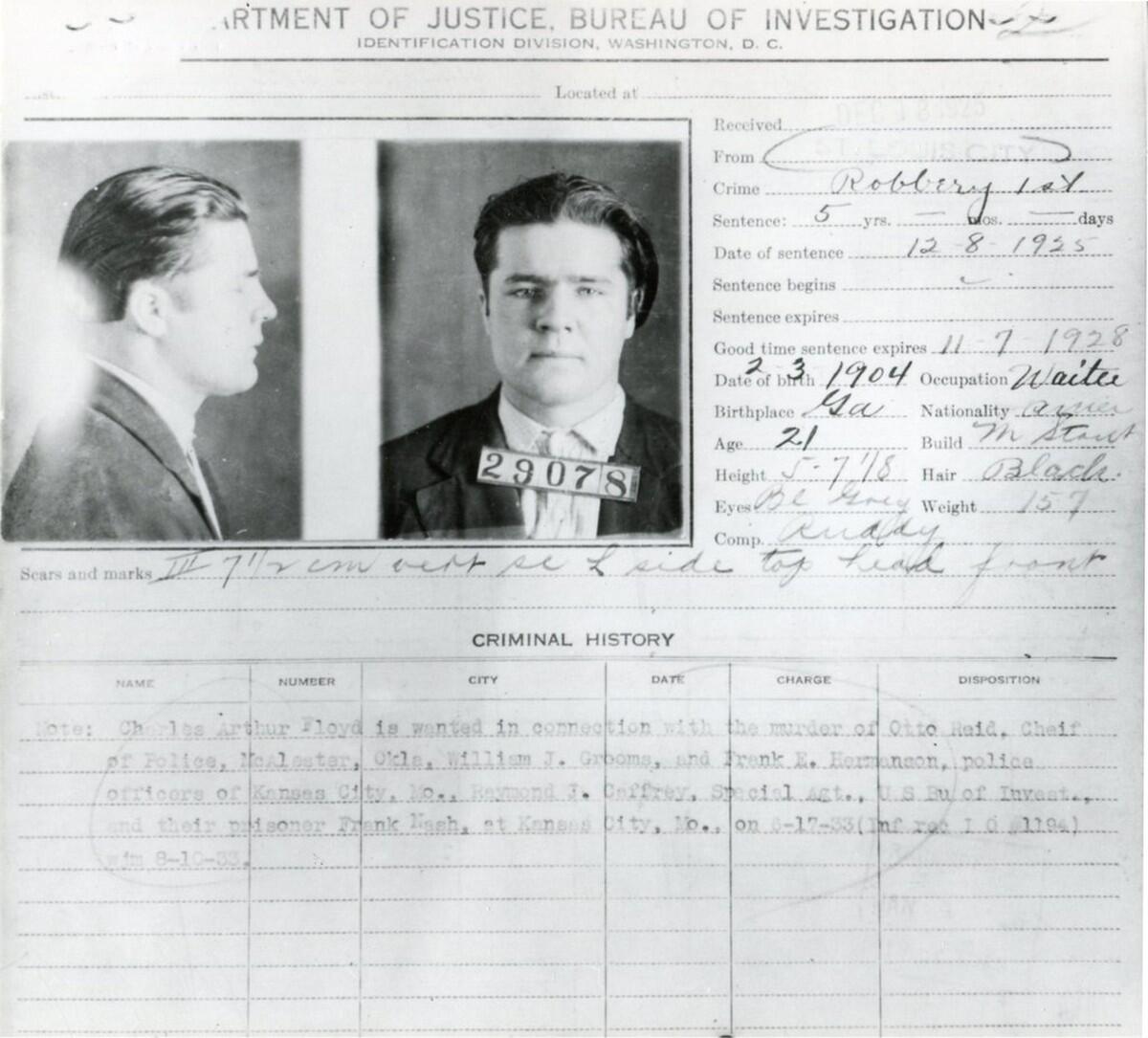
Charles Arthur Floyd was born in Adairsville, Georgia, on February 3, 1904, and grew up in Akins, Oklahoma. His first arrest came at 18, for stealing $3.50 from a post office. In 1925 he took part in a payroll robbery in St. Louis and served three and a half years of a five-year sentence. After his parole he fell in with the Kansas City underworld and spent the rest of his short life robbing banks across Oklahoma, Kansas, Missouri, Ohio and Indiana.
He hated the nickname. One story says oil-field workers gave it to him for wearing a white dress shirt to the rigs; another says a payroll clerk described one of the St. Louis robbers as “a pretty boy with apple cheeks.” Back home in the Cookson Hills, people called him something else: a Robin Hood who supposedly tore up mortgage papers during his robberies. That part has never been confirmed, but locals hid him from the law for years, and it’s why Woody Guthrie wrote a ballad about him in 1939.
Floyd’s Guns: Two Colt .45s
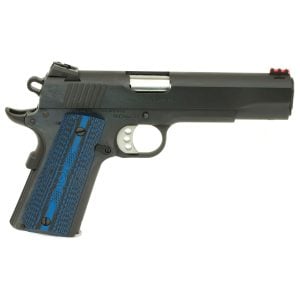
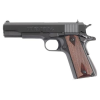
Like almost every serious gunman of the early 1930s, Floyd carried the Colt Government Model in .45 ACP, the civilian version of the Army’s M1911 pistol. He carried two of them, and he used them. On the morning of June 16, 1933, Floyd and his partner Adam Richetti were stuck at a garage in Bolivar, Missouri, waiting on car repairs, when Sheriff Jack Killingsworth walked in. According to the FBI’s account, Richetti grabbed a machine gun, and Floyd “drew two .45 caliber automatic pistols” and held everyone against the wall. They took the sheriff hostage, switched cars twice, and let him go on the way to Kansas City.
You’ll sometimes see Floyd’s pistols described as “machine pistols,” including in Wikipedia’s account of the Bolivar holdup, but the FBI’s own history calls them automatic pistols, and nothing on the record says they were converted to full auto. They were the same Colt .45 soldiers and cops carried, and it’s still made today.
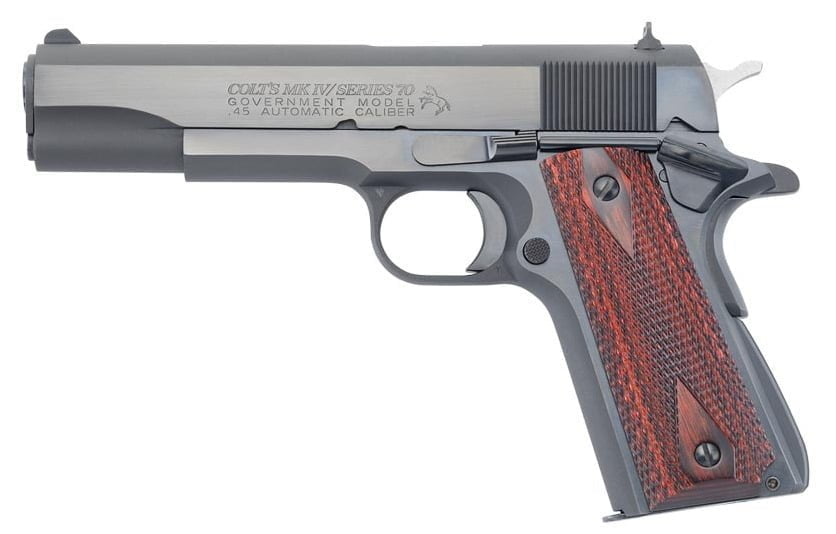
Colt’s Series 70 Government is the closest thing on sale to the Colts in Floyd’s waistband, and our Colt 1911 Government review covers how it shoots. If you want the look for less, see the best 1911s under $1,000 and cheap 1911s under $500. The best .45 ACP ammo guide covers what to feed one, and our 1911 vs Glock comparison explains why the old Colt design still has fans nearly a century after Floyd.
The Kansas City Massacre: Was Floyd There?
The FBI named Floyd as one of the Kansas City Massacre gunmen, but it has never been proven, and he denied it until he died. On June 17, 1933, the morning after the Bolivar garage, gunmen opened fire on a group of lawmen escorting the escaped robber Frank Nash to a car outside Union Station in Kansas City. The attack lasted about 30 seconds. Kansas City officers W.J. Grooms and Frank Hermanson, McAlester, Oklahoma, police chief Otto Reed and Bureau agent R.J. Caffrey were killed, and so was Nash, the man the gunmen had apparently come to free. The survivors said at least one attacker had a machine gun.
J. Edgar Hoover named Floyd and Richetti as two of the gunmen, alongside the man who led them, Vernon Miller. The evidence was Richetti’s fingerprint on a beer bottle at Miller’s house, eyewitness identifications and underworld informants. Floyd denied it to the end, and historians still argue about it. One gunman was reported to have been hit in the shoulder, and Floyd’s body showed no such wound. Biographer Michael Wallis and other writers believe he was framed. Others, including Bryan Burrough, think he was almost certainly there.
The Kansas City Massacre Guns
The gunmen had at least one machine gun. The lawmen had shotguns too: Agent Joe Lackey and Chief Reed were both carrying them as the group walked Nash to the car. That detail matters, because the FBI story has been challenged in several books, including Robert Unger’s Union Station Massacre, which argues that some of the dead may have been hit by the lawmen’s own fire. Adam Richetti, the only one of the three named gunmen taken alive, was convicted and executed in Missouri on October 7, 1938.
The Massacre That Armed the FBI
Whoever pulled the triggers, the Kansas City Massacre changed American law enforcement. At the time, Bureau agents had no general legal authority to carry guns or make arrests. In May and June 1934 Congress gave them both. The Bureau then bought its first Thompson submachine guns and Winchester Model 1907 self-loading rifles, and later moved to modified Remington Model 81 rifles. So when agents went after Floyd in 1934, they did it under powers his case had helped win, even if the Thompsons they carried that day were borrowed. For more on how full-auto guns shaped this era, see our history of machine guns in combat.
Public Enemy No. 1 and the Last Stand
When John Dillinger was killed in July 1934, Hoover named Floyd the new Public Enemy No. 1. Baby Face Nelson, Dillinger’s former partner, would outlast Floyd by barely a month. Three months later Floyd’s luck ran out in eastern Ohio. A few days before his death, he and Richetti crashed their car in fog near Wellsville and were spotted resting by the road. In the gunfight that followed, Police Chief John Fultz took a bullet in the foot and an officer was hit in the shoulder. Richetti was captured. Floyd ran into the woods.
Melvin Purvis, the agent who had run down Dillinger, arrived with a team, and the FBI men borrowed two Thompson submachine guns from the East Liverpool Police Department. On October 22, after Floyd had hitched a ride and eaten at a friend’s pool hall, agents and local officers found him on the Conkle farm near Clarkson, Ohio. He ran for a wooded ridge and was cut down in the field.
Who Shot Pretty Boy Floyd? Three Versions
- The FBI’s version: The Bureau’s own history describes a joint patrol of four agents under Melvin Purvis and four East Liverpool officers under Chief Hugh McDermott. They shot Floyd as he ran for the trees. Agent Winfred Hopton later went further and said the local police arrived only after Floyd was mortally wounded.
- The local version: East Liverpool officer Chester Smith, a World War I sniper, dropped Floyd with two shots from his Winchester rifle, and the agents fired after that.
- Chester Smith’s 1979 version: In an interview with Time, Smith said, “I knew Purvis couldn’t hit him, so I dropped him with two shots from my .32 Winchester rifle.” He claimed Floyd never got up, and that after Floyd cursed at Purvis’s questions about Kansas City, Purvis had an agent “fire into him” with a submachine gun. Hopton wrote to Time to deny it, and said the agent Smith named was not even there.
Most accounts agree on how it ended. Floyd died with three wounds, one in the right forearm and two in the lower body, though other versions have him hit by four bullets. The officers picked up the Colt he had dropped, and found a second .45 tucked in his trousers. According to Wallis, he fled without firing a single shot from either fully loaded pistol. In his pocket was a watch, and on its fob was a lucky piece. Each carried ten notches, which Hoover took as a tally of the men Floyd had killed. Hoover had the watch photographed before sending Floyd’s belongings to his mother.
The Tommy Gun That Killed Pretty Boy Floyd
One of the two borrowed Thompsons, a Colt-built Model 1921 with serial number 14033, later passed into private collections. It was sold at Rock Island Auction Company in December 2018 for $69,000.
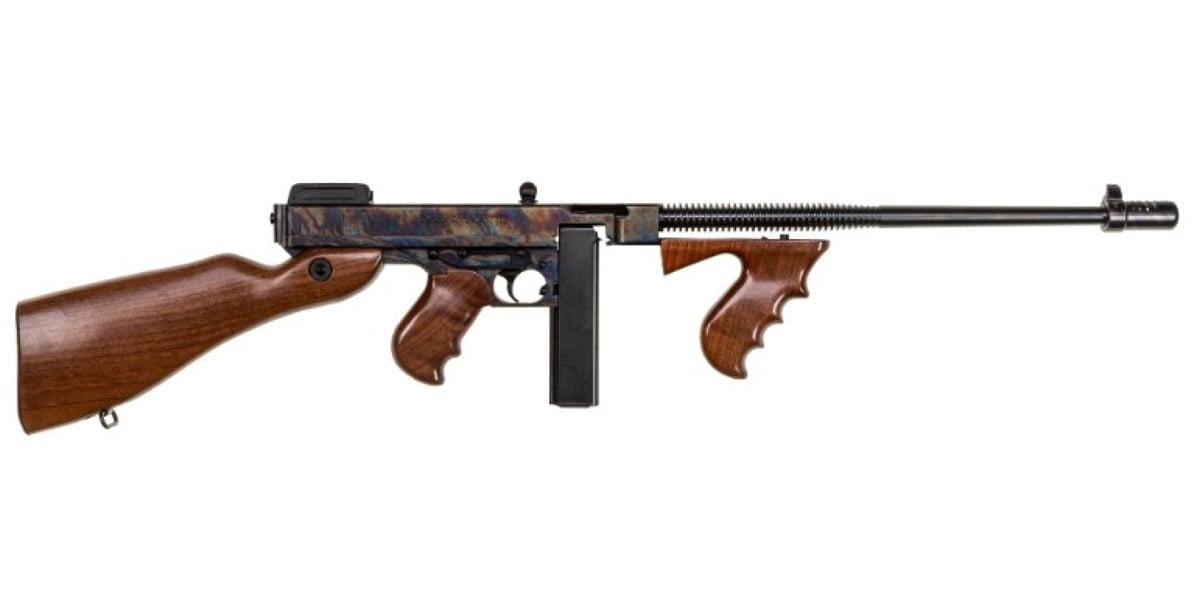
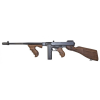
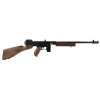
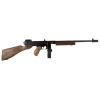
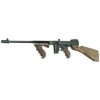
The Tommy gun you can buy without federal registration is Auto-Ordnance’s semi-automatic 1927A-1, which copies the look of the 1921 right down to the finned barrel and vertical foregrip. Our guide to buying a Tommy gun explains the options, including the rare real ones, and our Prohibition gangster guns guide covers the Thompson’s whole outlaw career.
Where Are Pretty Boy Floyd’s Guns Now?
Pretty Boy Floyd’s two Colts went separate ways: one to the FBI and one, through Chester Smith, to a private collector. A newspaper in Pittsburgh printed a photo of both the day after the shooting, captioned as “the two guns found on the body of Floyd.” Their stories split from there.
- The FBI’s Colt: The Bureau’s own reference collection holds a Floyd Colt .45, which once hung on J. Edgar Hoover’s “wall of shame,” his display of guns taken from the criminals the Bureau hunted.
- Chester Smith’s Colt: A 1917-made Colt Government Model, serial C 97206, came from Chester Smith himself. According to a collector’s notarized letter, Smith handed it over in a 1982 interview along with a .45 bullet said to have come from Floyd’s body, and described the gun as an “added prize” for keeping quiet about how Floyd died. Rock Island Auction Company offered it in 2020 with a notarized provenance letter and an estimate of $10,000 to $20,000.
- The East Liverpool Thompson: sold for $69,000 in 2018.
Those prices are a fraction of what the Bonnie and Clyde guns fetch. Clyde Barrow’s shotgun sold for $1 million in 2026, and you can read that story in the guns of Bonnie and Clyde. For the rest of the record-setters, see the most expensive guns ever sold.
The Largest Funeral in Oklahoma History
Floyd’s body went home to Oklahoma and was displayed in Sallisaw. Somewhere between 20,000 and 40,000 people came to the funeral, still the largest in the state’s history, and he was buried in Akins. John Steinbeck put him in The Grapes of Wrath, Woody Guthrie’s song made him a folk hero, and Channing Tatum played him in Public Enemies (2009), which got the order of events wrong by killing him off before Dillinger.
The laws he grew up and died under are long gone. If you’re buying a handgun in his home state or the state where he died, our Oklahoma gun laws and Ohio gun laws guides explain the rules today. For a .45 you’d actually carry, start with the best .45 ACP concealed carry pistols or our broader best concealed carry handguns list. Vintage Colts turn up on the used gun market regularly, and our handgun deals page tracks the best prices on new ones across more than 200 retailers.
Frequently Asked Questions
What gun did Pretty Boy Floyd use?
Pretty Boy Floyd carried two Colt Government Model 1911 pistols in .45 ACP. The FBI's account of a June 1933 holdup in Bolivar, Missouri, says he "drew two .45 caliber automatic pistols," and he had both on him, fully loaded, when he was killed in October 1934.
Who killed Pretty Boy Floyd?
A joint patrol of FBI agents led by Melvin Purvis and East Liverpool, Ohio, police officers shot Floyd on a farm near Clarkson, Ohio, on October 22, 1934. Accounts differ on who fired first. Local officer Chester Smith said in 1979 that he dropped Floyd with his .32 Winchester rifle, while the FBI said its agents fired when Floyd ran.
What gun killed Pretty Boy Floyd?
The agents used two Thompson submachine guns borrowed from the East Liverpool Police Department, and officer Chester Smith fired a .32 Winchester rifle. One of the Thompsons, a Colt Model 1921 with serial number 14033, sold at Rock Island Auction Company in December 2018 for $69,000.
Was Pretty Boy Floyd in the Kansas City Massacre?
The FBI said he was one of the gunmen who killed four lawmen and prisoner Frank Nash at Union Station on June 17, 1933. Floyd denied it until he died, and historians still disagree. One gunman was reported wounded in the shoulder, and Floyd's body showed no such wound.
Who died in the Kansas City Massacre?
Kansas City police officers W.J. Grooms and Frank Hermanson, McAlester, Oklahoma, police chief Otto Reed and Bureau agent R.J. Caffrey were killed at Union Station on June 17, 1933, along with the prisoner they were escorting, Frank Nash.
What was on Pretty Boy Floyd's watch?
Floyd's pocket watch and the lucky piece on its fob each carried ten notches. J. Edgar Hoover believed they tallied the men Floyd had killed and had the watch photographed before Floyd's belongings were sent to his mother.
How did Pretty Boy Floyd get his nickname?
There are two stories. One says oil-field workers called him Pretty Boy for wearing a white dress shirt to the rigs. The other says a payroll clerk described one of the 1925 St. Louis robbers as "a pretty boy with apple cheeks." Floyd hated the name.
Where is Pretty Boy Floyd buried?
In Akins, Oklahoma. Between 20,000 and 40,000 people attended his funeral, the largest in Oklahoma history.
Featured image: Charles Arthur Floyd, FBI photograph, public domain, with added text.
5,743+ Gun & Ammo Deals
Updated daily from 200+ top retailers. Filter by category, caliber, action type, and price.
Related Guides