
Baby Face Nelson’s signature gun was a Colt 1911 converted to fire fully automatic, a “machine pistol” built by a San Antonio gunsmith named Hyman Lebman, with a compensator on the muzzle, a Tommy-gun foregrip under the frame and a magazine that hung nine inches below the grip. He used one in .38 Super to kill FBI agent W. Carter Baum in April 1934. At his last gunfight in Barrington, Illinois, that November, he had a Thompson, a Winchester Model 1907 and a Colt Monitor, the commercial version of the Browning Automatic Rifle. He also wore a bulletproof vest, which the FBI still has.
Nelson killed three FBI agents, more than any other criminal in the Bureau’s history. Here are the guns he did it with, the guns that finally stopped him, and what their modern versions cost.
Table of Contents
Baby Face Nelson’s Guns at a Glance
| Gun | Caliber | Where he used it |
|---|---|---|
| Lebman-converted Colt 1911 “machine pistol” | .38 Super and .45 ACP | Little Bohemia (killed Agent Baum), the July 1934 trooper shooting |
| Thompson submachine gun | .45 ACP | Bank robberies; jammed at Barrington |
| Colt Monitor (commercial BAR) | .30-06 | Most likely the gun he charged with at Barrington |
| Winchester Model 1907 | .351 WSL | Homer Van Meter’s rifle at South Bend; in Nelson’s car at Barrington |
| Bulletproof vest | n/a | Stopped a jeweler’s bullet at South Bend; recovered after Barrington, now in the FBI collection |
Who Was Baby Face Nelson?
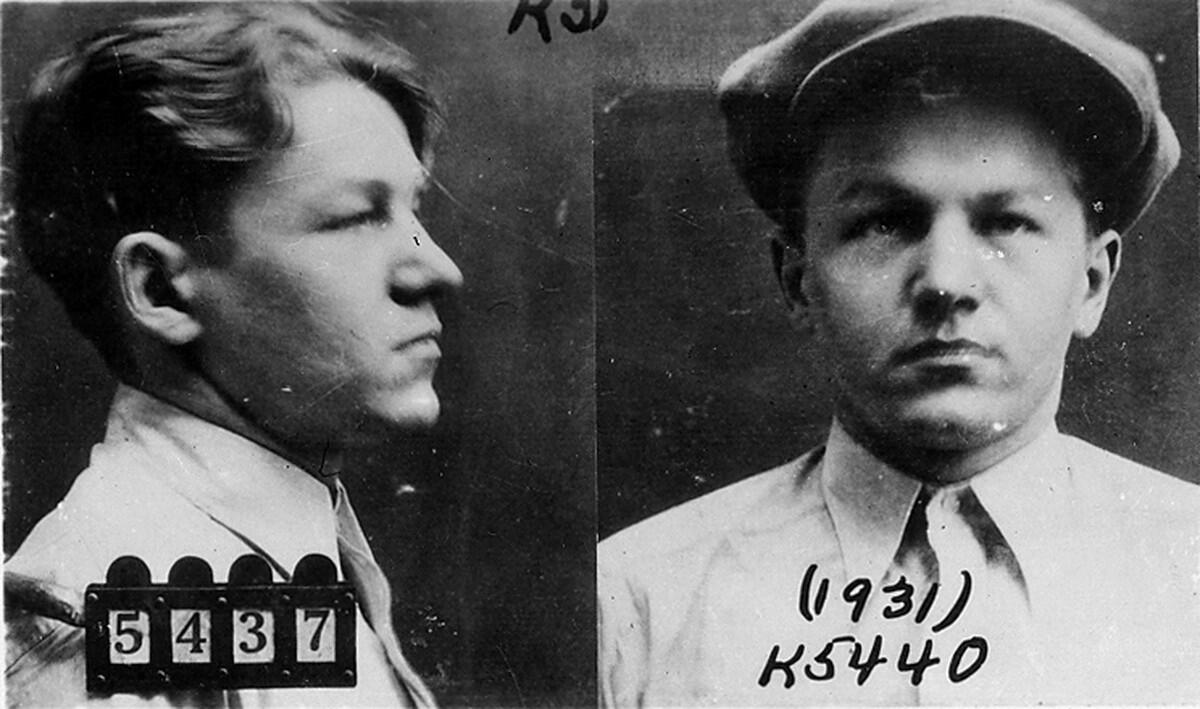
He was born Lester Joseph Gillis in Chicago on December 6, 1908, the son of Belgian immigrants. Guns were in his story from the start: at 12 he accidentally shot a playmate in the jaw with a pistol he had found, and he spent more than a year in a reformatory. By 1930 he was robbing banks and homes. The origin of the nickname is disputed. The FBI says his own gang dubbed him “Baby Face” for his young looks. Another story says that when he robbed the Chicago mayor’s wife that year, she told police her attacker “had a baby face.” His own crew called him “Jimmy,” and he hated the nickname.
Nelson was short, quick-tempered and, by every account, far more willing to shoot than the men he worked with. During the October 1933 robbery of a bank in Brainerd, Minnesota, witnesses said he sprayed submachine-gun fire at bystanders on the way out. Members of his new gang are suspected of arranging and financing John Dillinger’s March 1934 jailbreak, and Nelson joined the “second Dillinger gang.”
The Lebman “Baby Machine Guns”
In late 1933 Nelson and his gang went to San Antonio, Texas, and found Hyman Lebman, a saddle maker and gunsmith whose shop sat half a block from City Hall. Nelson told him he was an oilman named James Williams. Lebman built him something no factory sold: a Colt 1911 converted to fire fully automatic. According to Guns.com’s history of the guns, each one had:
- a full-auto conversion, so the pistol emptied its magazine with one squeeze of the trigger;
- a seven-port compensator on the muzzle to push the barrel back down as it fired;
- a finger-grooved foregrip in the style of the Thompson 1928, mounted just ahead of the trigger guard for a two-handed hold;
- an extended magazine reaching about nine inches below the grip, holding 18 rounds of .45 ACP or 22 rounds of .38 Super.
The .38 Super was the hot new pistol round of the day, introduced in 1929 and fast enough to beat the early bulletproof vests some lawmen wore. Accounts differ on how many Lebman sold Nelson, anywhere from two to five. One more turned up in Lebman’s shop in 1935, sent back by the gang for repair.
Texas prosecuted Lebman under its 1933 machine gun law. He was convicted in 1935, won on appeal, and a 1936 retrial ended in a hung jury. He never served a day in prison, kept working as a gunsmith for decades, and died in 1990.
The Lebman’s Modern Descendants
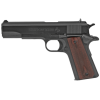
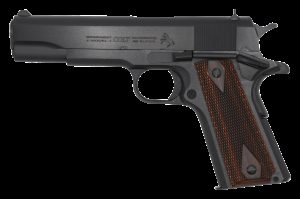
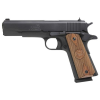
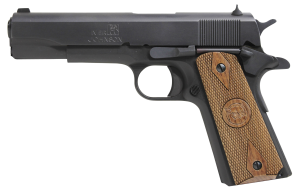
A full-auto pistol has been heavily restricted under federal law since 1934, and no new ones can be sold to civilians. But look at a modern competition pistol and you’ll see Lebman’s ideas everywhere: a compensator to fight muzzle flip, a big-capacity magazine, and a lot of them still chambered in .38 Super, which is a favorite in USPSA Open division. Today’s best 2011 pistols are the direct heirs of that idea, and our 1911 vs 2011 guide explains how the double-stack version grew out of the gun Nelson carried. For the classic single-stack, Colt still builds the Government in .38 Super:


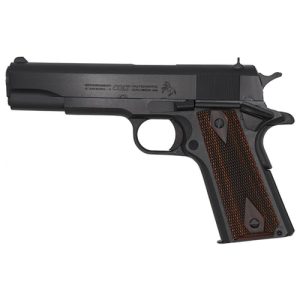
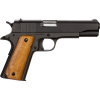
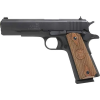
If a Colt is more than you want to spend, .38 Super 1911s from Rock Island Armory and others cost about half as much, and our cheap 1911s under $500 and best 1911s under $1,000 lists compare them. Compensators and extended magazines for the 1911 are in our best 1911 upgrade parts guide.
Little Bohemia: The Machine Pistol That Killed Agent Baum
On April 22, 1934, FBI agents led by Melvin Purvis raided the Little Bohemia Lodge in northern Wisconsin, where the Dillinger gang was hiding out. It went wrong from the first shot. The agents opened fire on a car of departing customers who had not heard the order to stop, killing one, and the whole gang got away.
Nearby, Nelson was trying to get away in a commandeered car when Agents W. Carter Baum and Jay Newman and a local constable, Carl Christensen, pulled up. When they identified themselves, he opened up with his converted Colt. Baum was hit three times in the neck and killed, and Newman and Christensen were badly wounded. Nelson later said Baum had him “cold” and he couldn’t understand why the agent hadn’t fired. The answer was found afterward: the safety on Baum’s gun was still on.
The machine pistol Nelson used on Baum was never recovered. Dillinger left one of his own Lebman guns behind at the lodge, though, and the FBI traced its serial number through Colt to a Fort Worth distributor and on to Lebman’s San Antonio shop. That trail is what put Lebman in court. The FBI has held one of his conversions since 1943.
The Bulletproof Vest
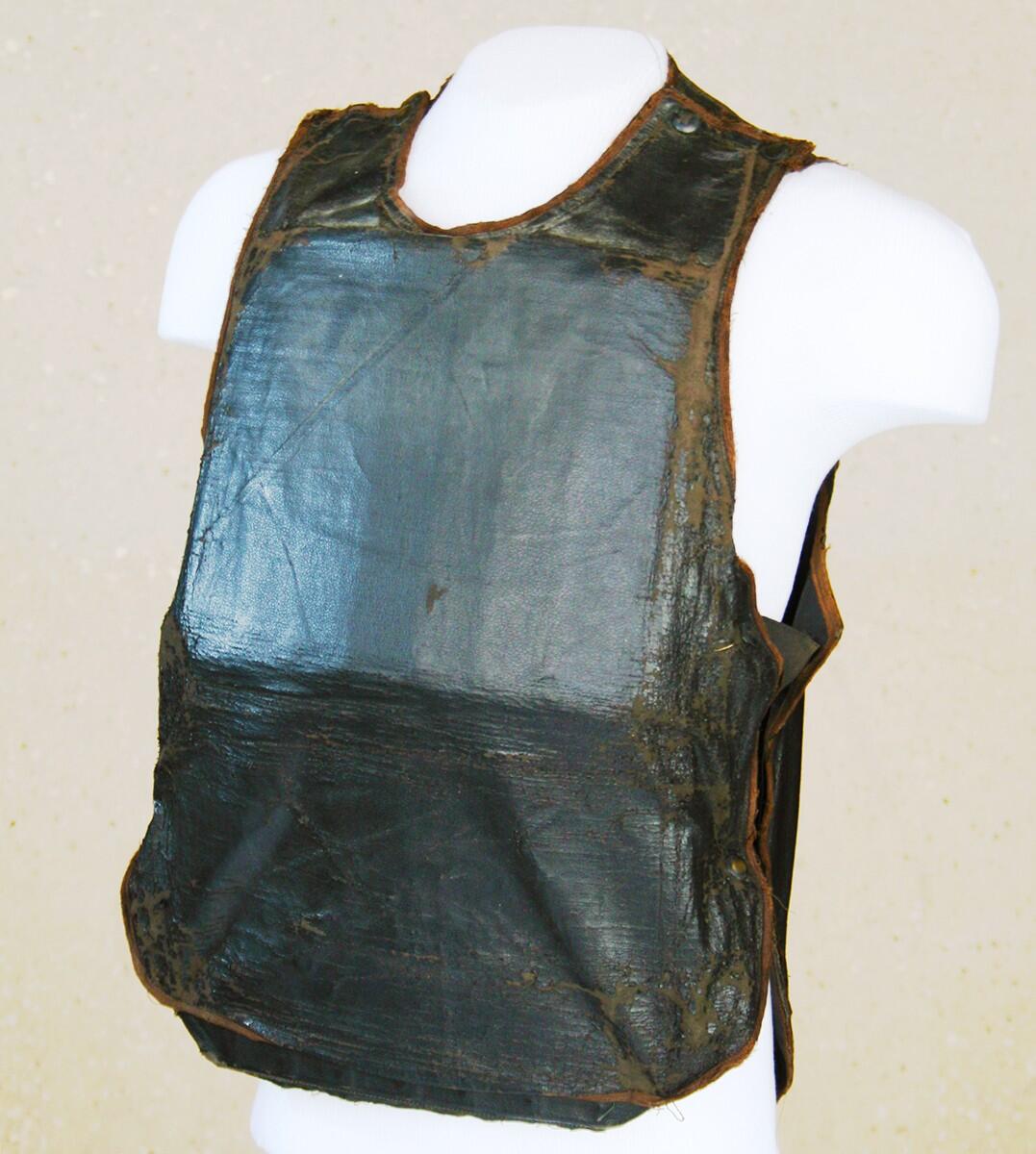
Nelson expected to be shot at, and he dressed for it. During the gang’s robbery of a South Bend, Indiana, bank on June 30, 1934, a local jeweler named Harry Berg shot him in the chest. The bullet did nothing, because Nelson was wearing a bulletproof vest. The FBI still holds body armor recovered after his last gunfight, found in Barrington on November 27, 1934.
Body armor has come a long way since the vests Nelson wore. Modern Level IIIA vests stop most handgun rounds at a fraction of the weight, and rifle plates are affordable to civilians in most states. Our best body armor for home defense and best plate carriers guides cover what to buy.
The Battle of Barrington: Nelson’s Last Gunfight
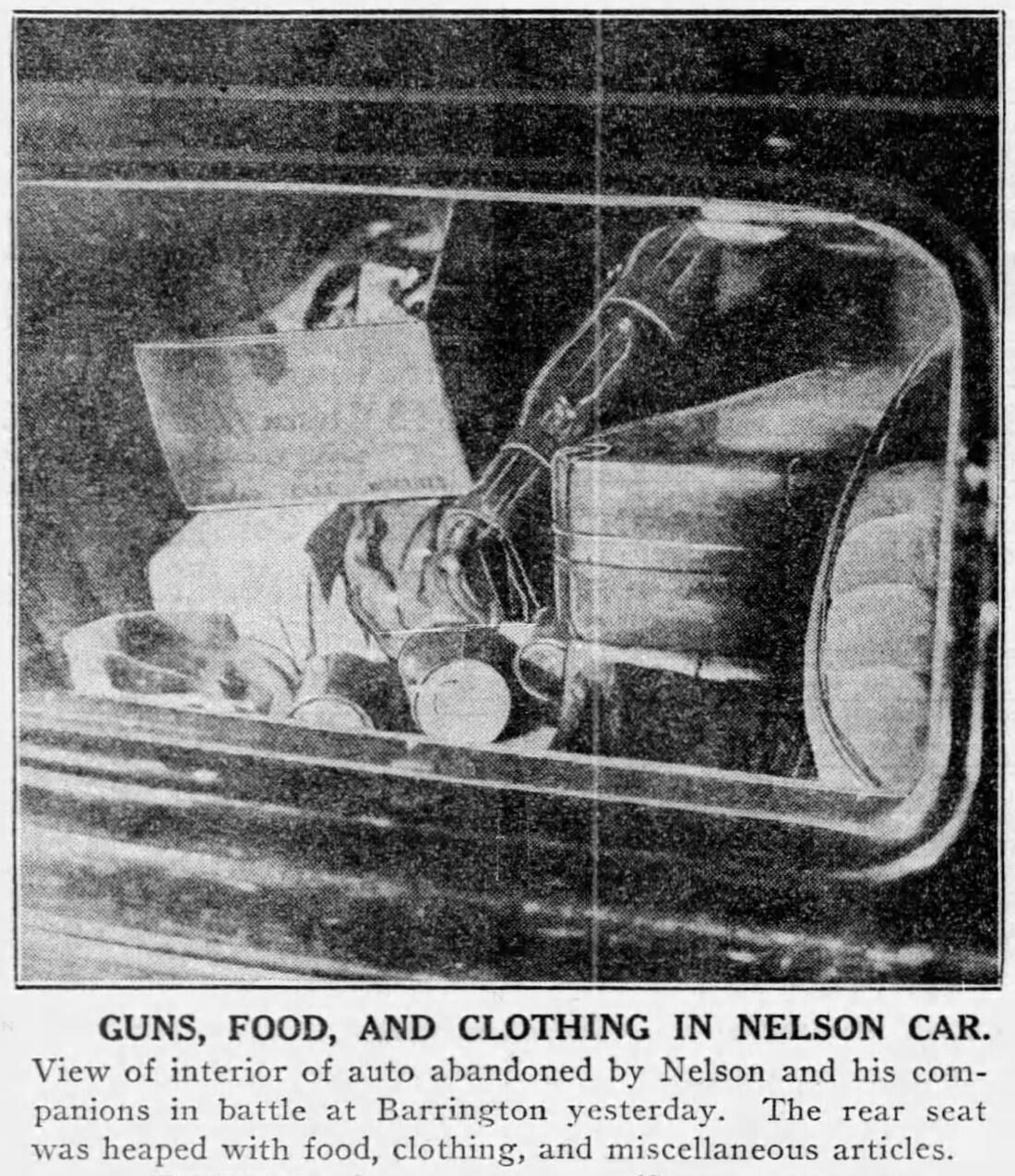
On November 27, 1934, Nelson, his wife Helen and his partner John Paul Chase were driving a stolen Ford toward Chicago when they passed a car carrying two FBI agents. After a string of U-turns, Chase fired on the agents, who shot back and hit the Ford’s water pump. A second FBI car, with Inspector Samuel Cowley and Agent Herman Hollis, caught up with the failing Ford at the entrance to North Park, now Langendorf Park, in Barrington, Illinois.
Novelist and gun writer Stephen Hunter’s reconstruction for American Rifleman lays out who carried what:
- Nelson: a Thompson in .45 ACP that jammed during the fight, a Winchester Model 1907 in .351 Winchester Self-Loading that Homer Van Meter had fired at the South Bend robbery, and a Colt Monitor in .30-06 with a shortened stock, a pistol grip and a Cutts compensator.
- Chase: he fired the Colt Monitor during the fight, and also had a Thompson and a .38 Super pistol.
- Inspector Cowley: a Thompson with a 50-round drum.
- Agent Hollis: a short-barreled Remington Model 11 semi-automatic shotgun and a Colt .38 Super pistol.
A single .45 bullet from Cowley’s Thompson hit Nelson in the abdomen. He swapped guns with Chase, complaining that his weapon was jamming, and came out from behind the car firing. Hunter concludes he was most likely carrying the Monitor. He hit Cowley twice. Buckshot from Hollis’s shotgun knocked Nelson down, but he got up, and when Hollis moved to cover behind a utility pole and drew his pistol, Nelson shot him in the head. Then he limped to the agents’ car, loaded it with the guns from the Ford, and Chase drove them away.
Hollis died on the way to the hospital. Cowley lived long enough for surgery and died early the next morning, November 28, of a stomach wound much like Nelson’s. Nelson had been hit nine times: the one .45 bullet and eight shotgun pellets in his legs. Reports at the time said 17. “I’m done for,” he told Helen, and he died that evening at a safe house in Wilmette. His body was later found in a ditch by a Skokie cemetery, wrapped in a blanket. Helen later said she’d covered him because “he always hated being cold.” He was 25. Helen served a year in prison for harboring him, Chase was caught and did time at Alcatraz, and Nelson and Helen are buried at St. Joseph Cemetery in River Grove, Illinois.
The Colt Monitor: a BAR Built for Police
The Monitor was Colt’s commercial version of the Browning Automatic Rifle, a shorter, handier gun than the Army’s M1918 that Colt built in small numbers in the early 1930s, almost all for law enforcement. Stephen Hunter writes that Nelson paid thousands for his. It’s the same basic idea as the cut-down BAR “scattergun” Clyde Barrow built himself, which we cover in the guns of Bonnie and Clyde. Real Monitors are rare, registered machine guns today. The closest thing a civilian can buy new is Ohio Ordnance Works’ HCAR, a semi-automatic rifle built on the BAR design:
![OHIO ORDNANCE WORKS INC HCAR [BLK]](https://www.usa-gun-shop.com/wp-content/uploads/ugs-pc-img/a1dd1593af20bf52a41248ae5076e8a1.jpg)
The Winchester Model 1907
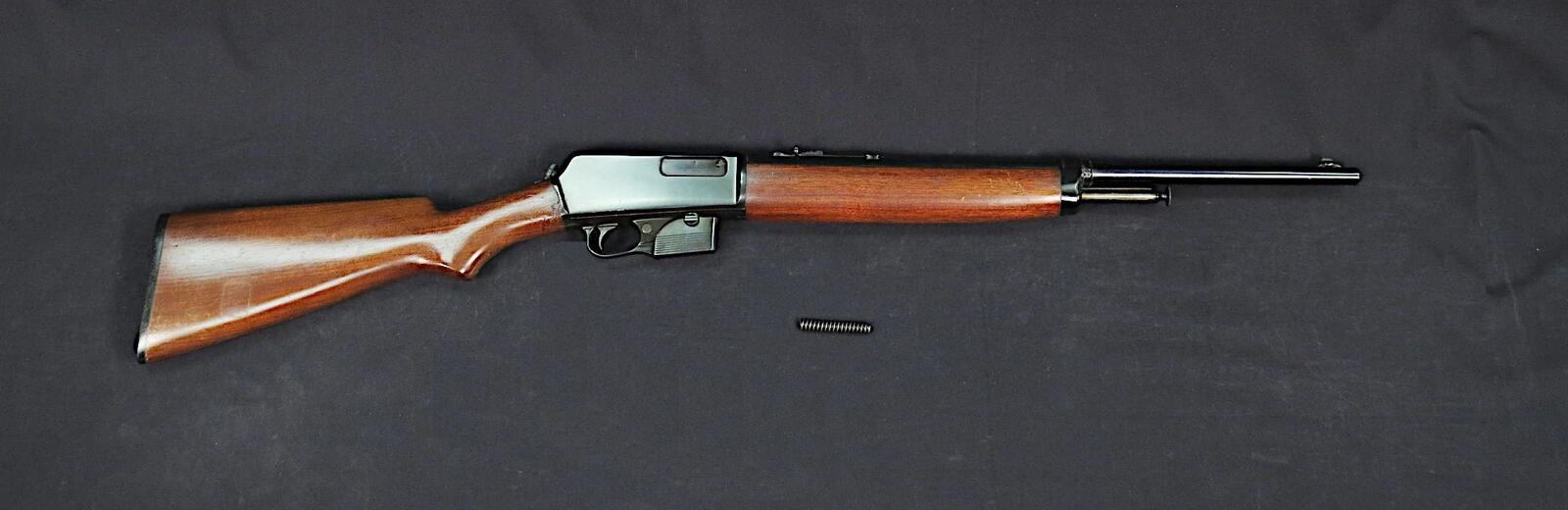
The Winchester 1907 was a semi-automatic carbine in .351 Winchester Self-Loading, and in the 1930s it was a favorite of both sides. After the Kansas City Massacre, the FBI bought Model 1907s as some of its first issued long guns, which is part of the story in Pretty Boy Floyd’s guns. Nelson’s gang had one too. Homer Van Meter fired it at South Bend, and it was in Nelson’s Ford at Barrington. Winchester stopped making it in 1957, so today’s nearest equivalent is a pistol-caliber carbine, which we cover in our best PCCs for home defense guide.
The Agents’ Guns
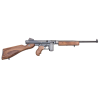
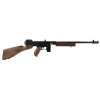
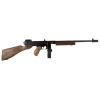
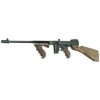
Cowley’s Thompson fired the bullet that killed Nelson. The semi-automatic Thompson 1927A-1 is still made, and our guide to buying a Tommy gun explains the options:
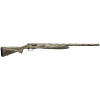
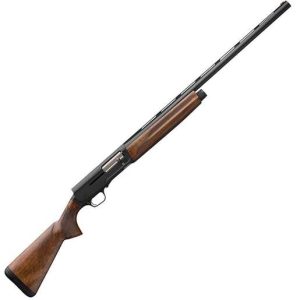
Hollis’s shotgun was a Remington Model 11, Remington’s licensed copy of John Browning’s Auto-5, the same design as the $1 million Bonnie and Clyde shotgun. Browning still makes an A5, now with a modern inertia action, and our Browning A5 review covers it. For a defensive semi-auto shotgun, start with the best semi-auto tactical shotguns:

Baby Face Nelson and the National Firearms Act
Bonnie and Clyde, Dillinger, Floyd and Nelson all died within about six months of each other in 1934, and the gangland violence of 1933 and 1934 is why Congress passed the National Firearms Act in June 1934, five months before Nelson died. It put a $200 tax and federal registration on machine guns, short-barreled rifles and shotguns and suppressors, and the rules it set still apply. Full-auto guns like Lebman’s conversions became collector pieces, and the 1986 ban on new civilian machine guns froze the supply for good. Our history of machine guns in combat and our Prohibition gangster guns guide cover the rest of the era.
State law changed too. Texas already had its 1933 machine gun ban, the one Lebman was tried under, and the states where Nelson robbed and fought still regulate these guns differently. Our Texas, Illinois and Wisconsin gun law guides explain the rules today. For a handgun you can actually carry, see our best concealed carry handguns, and our handgun deals page tracks the best current prices across more than 200 retailers.
Frequently Asked Questions
What gun did Baby Face Nelson use?
His signature gun was a Colt 1911 converted to fire fully automatic by San Antonio gunsmith Hyman Lebman, with a compensator, a Thompson-style foregrip and a 22-round .38 Super magazine. He also used Thompson submachine guns, a Winchester Model 1907 and a Colt Monitor, the commercial version of the Browning Automatic Rifle.
What was a Lebman machine pistol?
A Colt 1911 that Hyman Lebman converted to full-auto fire in the early 1930s. He added a seven-port compensator, a finger-grooved foregrip and an extended magazine holding 18 rounds of .45 ACP or 22 rounds of .38 Super. Baby Face Nelson and John Dillinger both bought them.
How many FBI agents did Baby Face Nelson kill?
Three, more than any other criminal in FBI history. He killed Special Agent W. Carter Baum at Little Bohemia Lodge in April 1934, and Agent Herman Hollis and Inspector Samuel Cowley in the Battle of Barrington on November 27, 1934. Cowley died early the next morning.
What gun killed Baby Face Nelson?
A single .45 ACP bullet from Inspector Samuel Cowley's Thompson submachine gun hit Nelson in the abdomen at Barrington, and it proved fatal. He was also hit in the legs by eight pellets from Agent Herman Hollis's Remington Model 11 shotgun.
Did Baby Face Nelson wear a bulletproof vest?
Yes. A jeweler shot him in the chest during the June 30, 1934, South Bend bank robbery, and the vest stopped the bullet. Body armor recovered after the Barrington gunfight is in the FBI's collection.
Where is Baby Face Nelson's machine pistol now?
The Lebman machine pistol Nelson used at Little Bohemia was never recovered. The FBI traced a Lebman gun Dillinger left behind at the lodge back to Lebman's San Antonio shop, and it has held one of his conversions since 1943. Others are in museums and private collections.
Why was he called Baby Face Nelson?
For his youthful looks, though the story is disputed. The FBI says his own gang called him Baby Face. Another account says that after he robbed the wife of Chicago's mayor in 1930, she told police her attacker "had a baby face." He hated the name, and his associates called him Jimmy.
Where is Baby Face Nelson buried?
At St. Joseph Cemetery in River Grove, Illinois, next to his wife, Helen. He died in Wilmette on November 27, 1934, at age 25, after the Battle of Barrington.
Featured image: Lester Gillis, Baby Face Nelson, FBI photograph, public domain, with added text. Car photo: Chicago Tribune, November 28, 1934, public domain, copyright not renewed.
5,743+ Gun & Ammo Deals
Updated daily from 200+ top retailers. Filter by category, caliber, action type, and price.
Related Guides