

Affiliate disclosure: This Stoeger M3000 review contains affiliate links. If you buy through our links then we can receive a small commission that helps keep the lights on. You don’t pay anything more.
- Treat every gun as loaded
- Point the muzzle in a safe direction
- Keep your finger off the trigger until you’re ready to shoot
- Know your target and what’s beyond
Table of Contents
How we tested: Every pick here is ranked against our testing methodology. Minimum round counts, accuracy and reliability protocols, the failures that disqualify a gun. Where we have not shot a specific variant ourselves, we say so in that section.
Review: Stoeger M3000: An Inertia Gun at a Pump-Gun Price
Our Rating: 8.0/10
- MSRP: $749 (black synthetic) to $949 (Signature)
- Street Price: about $520 to $700 for a field gun (Use our live pricing for the best up to date deal)
- Gauge: 12 gauge, 3 in. chamber (2-3/4 in. and 3 in. shells)
- Action: Semi-automatic, Inertia Driven
- Barrel Length: 26 or 28 in. (field models), 18.5 to 30 in. across the line
- Capacity: 4+1 (7+1 on the Freedom Series Tactical)
- Overall Length: 49.75 in. (28 in. barrel), 47.75 in. (26 in. barrel)
- Weight: 7.4 lb (28 in.), 7.3 lb (26 in.), per Stoeger
- Length of Pull: 14-3/8 in., with a shim kit for drop and cast
- Chokes: IC, M and XFT (extra-full turkey) with wrench
- Sights: Red-bar front (field models); receiver drilled and tapped
- Minimum Recommended Load: 3-dram, 1-1/8 oz
Pros
- Inertia action for under $650
- Shim kit adjusts drop and cast
- Runs 3-inch magnums without adjustment
Cons
- Won’t reliably cycle light target loads
- More felt recoil than gas guns
- No 3.5-inch chamber

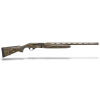
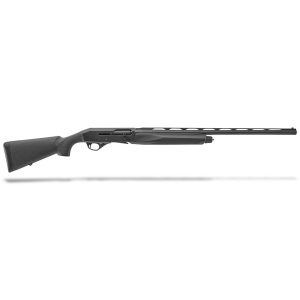
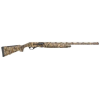
Quick Take
The Stoeger M3000 is the cheapest way into an inertia-driven semi-auto shotgun. Stoeger lists the black synthetic field gun at $749, and on the street it sells for a good deal less. On September 25, 2026, Guns.com had a new synthetic M3000 at $549.99. That puts the same style of action you’d find on shotguns costing twice as much into pump-gun money.
I put 500 rounds through a black synthetic 28 inch M3000 over four sessions between late August and mid-September: clays, waterfowl loads, buckshot and slugs. With the right ammo it ran without a hiccup. With the wrong ammo it didn’t, and that’s the one thing every buyer needs to understand before they spend the money. Stoeger’s own spec sheet lists a minimum recommended load of 3-dram, 1-1/8 ounce. Light target loads below that are a gamble.
The short answer: for a hunter who shoots field and waterfowl loads, the M3000 is one of the best values in shotguns. For someone who mostly shoots light target loads at the skeet field, a gas gun makes more sense.
Best For: Duck, goose, upland and turkey hunters on a budget, and anyone who wants one semi-auto for hunting and home defense. Not for high-volume target shooters running light loads.
Design Intent: Why Stoeger Built an Inertia Gun This Cheap
Stoeger describes the Model 3000 as a 3 inch, 12 gauge, Inertia Driven semi-auto that “handles loads up to 3-inch magnums without adjustment.” The bolt uses an inertia spring and a rotating locking head. When the gun recoils, the bolt body stays put for an instant and compresses the inertia spring; that stored energy unlocks the head and throws the bolt rearward to cycle the action. There’s no gas piston and no gas ports to clean.
That design has two consequences you’ll feel. It runs clean, because no powder gas is being routed back into the action, and it’s simple, with few parts to wear. But it needs recoil to work. The gun uses the shell’s own kick to cycle, so it passes more of that kick to your shoulder than a gas gun does, and very light loads may not produce enough recoil to cycle it at all. Our inertia vs gas shotgun guide goes deeper on the trade-off.
Stoeger kept the price down by keeping the gun plain. You get a synthetic stock or satin walnut, a single red-bar front sight, three choke tubes and a shim kit to adjust drop and cast. The receiver is drilled and tapped, and Stoeger lists a Weaver scope base and a recoil reducer as options, though the reducer doesn’t fit the wood stock.
Stoeger M3000 Variants
The M3000 has grown into a whole line. Every version is a 12 gauge with a 3 inch chamber, and Stoeger lists the same 3-dram, 1-1/8 ounce minimum load on all of them.
M3000 field: 26 or 28 in., 4+1, 7.3 to 7.4 lb, synthetic, camo or walnut, left-hand available MSRP $749-$849
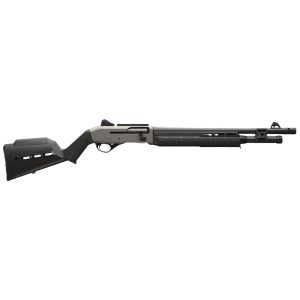
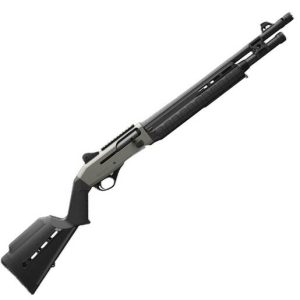
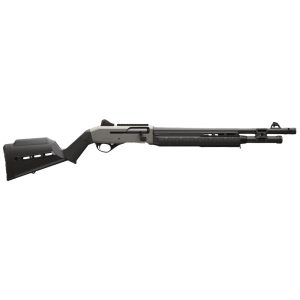
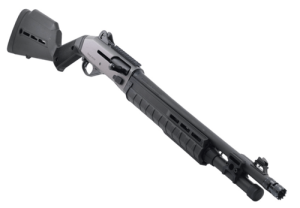
M3000 Freedom Series Tactical: 18.5 in., 7+1, 7.2 lb, ghost-ring sight, M-Lok stock MSRP $799
M3000 Sporting: 30 in. ported barrel, nickel receiver, walnut, 7.5 lb MSRP $849
M3000 Turkey Edition: 22 in., Mossy Oak Bottomland, green fiber-optic front, 6.9 lb MSRP $799
There’s also a Compact with a 26 inch barrel and a shorter stock at 7 lb ($749), a Signature with an engraved nickel receiver and satin walnut ($949), a plain Tactical with an 18.5 inch barrel and ghost-ring sight ($749), and the M3K, a 24 inch 3-gun version ($849). The standard field gun comes in left-hand versions too, which is rare at this price. If you want a 20 gauge, Stoeger’s M3020 weighs 5.6 to 5.7 lb. If you want 3.5 inch magnums, the M3500 handles them and weighs 7.65 to 7.8 lb.
For home defense, the Freedom Series Tactical is the one I’d pick. It holds seven in the tube, where every other M3000 holds four.
Competitor Comparison
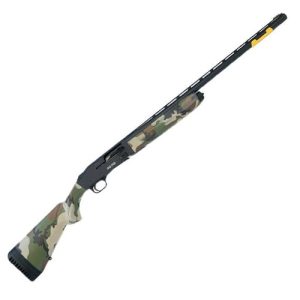
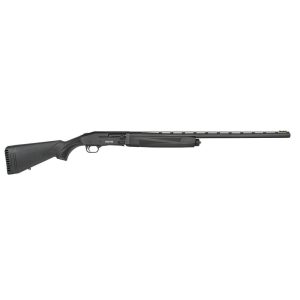
Mossberg 940 Pro Field ($987 MSRP)
The gas-operated alternative. Mossberg lists the 940 Pro Field with a 28 inch barrel, 4+1 capacity and a 7.75 lb weight, and calls out its “durable gas system.” That gas system is the whole reason to buy it over the Stoeger: as a rule, a gas gun softens recoil and cycles lighter loads than an inertia action. It costs more and it’s a little heavier. If you shoot a lot of clays, it’s the better choice. The card opened at $732.99 when I checked.
Franchi Affinity 3 (about $790 to $880 street)
Another inertia gun, and the natural step up. Franchi describes the Affinity 3 as Inertia Driven with a 3 inch chamber, and touts its “Italian craftsmanship.” Franchi touts new grip and forend checkering and Italian craftsmanship, and in the hand it feels more refined than the Stoeger. It also costs a couple hundred dollars more. It works the same way, so it has the same need for adequate loads. Our Franchi Affinity 3 review covers it in detail. The card opened at $792.99 when I checked.

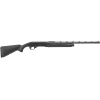
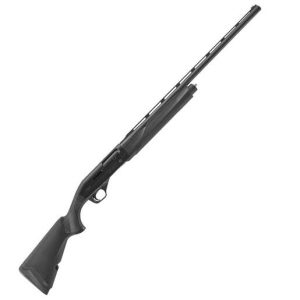
Benelli M2 Field ($1,699 MSRP)
The premium inertia gun. Benelli lists the black synthetic M2 Field with a 28 inch barrel at $1,699, 3+1 capacity and 7.2 lb, with Crio chokes and its Progressive Comfort stock. You get a lighter, better-finished gun with a recoil-reducing stock for more than twice the Stoeger’s price. The card opened at $1,306.99 when I checked. Read our Benelli M2 review if you’re weighing the two.

Verdict: The Stoeger is the value pick of the inertia guns. The Franchi and Benelli are nicer to live with and cost more. The Mossberg 940 is the pick if you’ll shoot mostly light target loads. For more options at every price, see our best shotgun for the money guide.
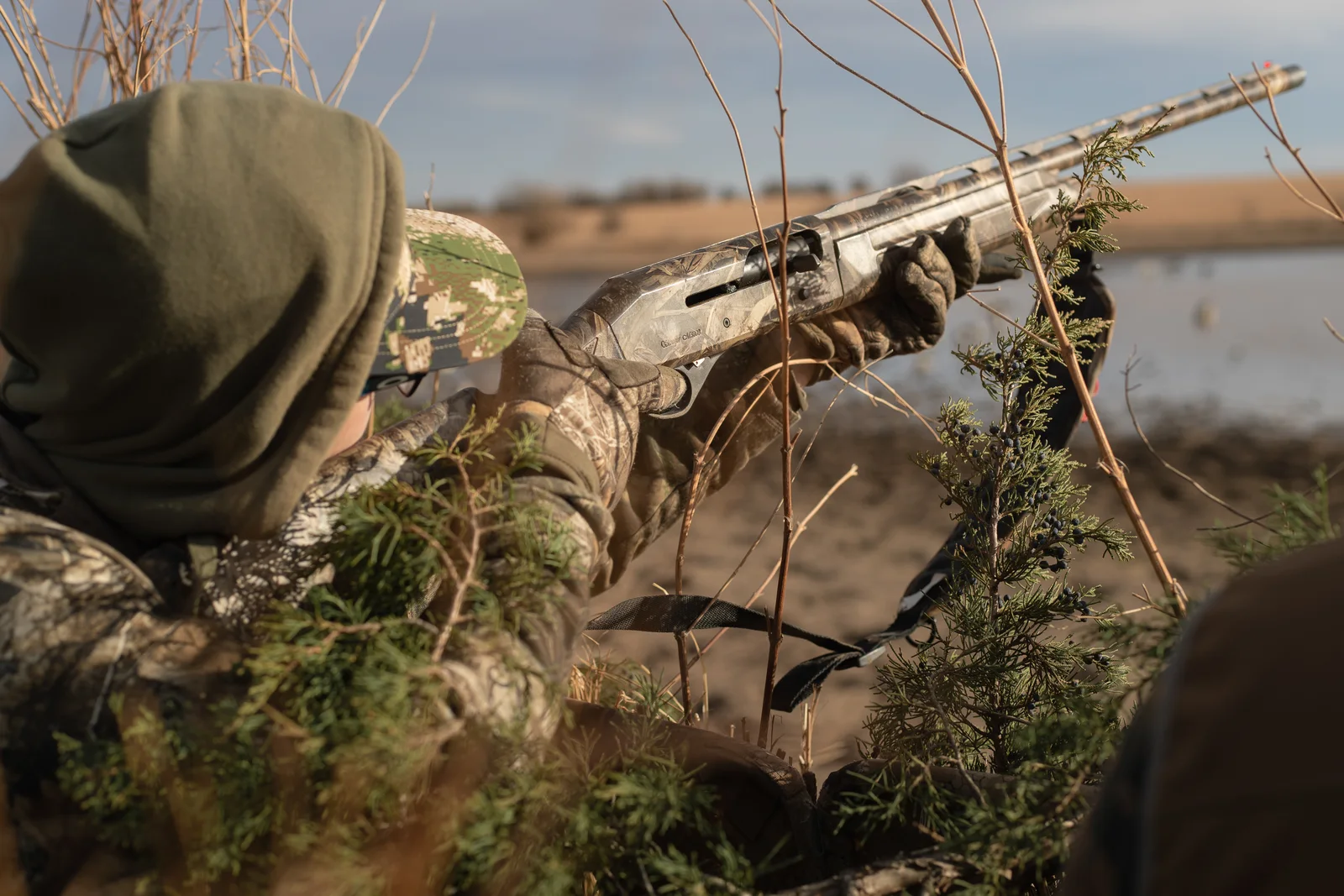
An M3000 in camo in a duck blind. Photo: Stoeger Industries.
Testing Protocol
My test gun was a black synthetic M3000 with a 28 inch barrel. I shot it over four sessions between late August and mid-September, with temperatures from 58 to 88 degrees, and cleaned it once after the first 250 rounds.
Ammunition Log
- Winchester AA 7/8 oz #8 target: 50 rounds
- Federal Top Gun 1 oz #8: 100 rounds
- Remington Gun Club 1-1/8 oz #8, 3 dram: 200 rounds
- Federal Black Cloud 3 in. steel #2: 75 rounds
- Winchester Super-X 00 buckshot: 50 rounds
- Remington Slugger 1 oz rifled slugs: 25 rounds
Phase 1: Break-In
I started with 100 rounds of Remington Gun Club, the 3-dram, 1-1/8 ounce load that matches Stoeger’s minimum. Every round cycled. The action felt tight for the first few boxes and loosened up by the end of the session.
Phase 2: Reliability
This is where the load rule showed up. The Winchester AA 7/8 ounce loads failed to cycle 11 times in 50 rounds, each one a spent hull left in the chamber with the bolt closed. Federal Top Gun 1 ounce did much better, with 2 failures in 100, both in the first 25 rounds. Everything at 1-1/8 ounce and up, including the 3 inch Black Cloud steel, plus the buckshot and the 1 ounce slugs, ran without a single malfunction across 350 rounds.
One more thing to know about inertia guns: ease the bolt closed and it may not lock fully into battery. Let it slam home from full travel and it closes every time.
Phase 3: Accuracy and Patterning
I patterned Remington Gun Club at 40 yards with the Modified tube and put an average of 64 percent of the pellets in a 30 inch circle over five shots, with an even spread and no obvious holes. With Black Cloud #2 steel through the same tube it was 61 percent. Remington Slugger rifled slugs grouped 3.4 inches at 50 yards off a rest using the red-bar front sight, which is fine for deer inside 50 yards.
Tracking & Observations
After 500 rounds the action was much cleaner than a gas gun would have been, with light carbon on the bolt face and almost nothing inside the receiver. The finish on the bolt was a little rough out of the box and smoothed out with use. The synthetic stock picked up a few scuffs and nothing else.
What This Means for You
- Upgrade Impact: A recoil pad or reducer matters more than anything else.
- Reliability: Excellent with 1-1/8 oz and heavier loads.
- Ammo Preference: Stick to Stoeger’s 3-dram, 1-1/8 oz minimum.
- Maintenance: Wipe the bolt and chamber every few hundred rounds.
- Accuracy Expectation: Around 60 to 65 percent patterns at 40 yards with Modified.
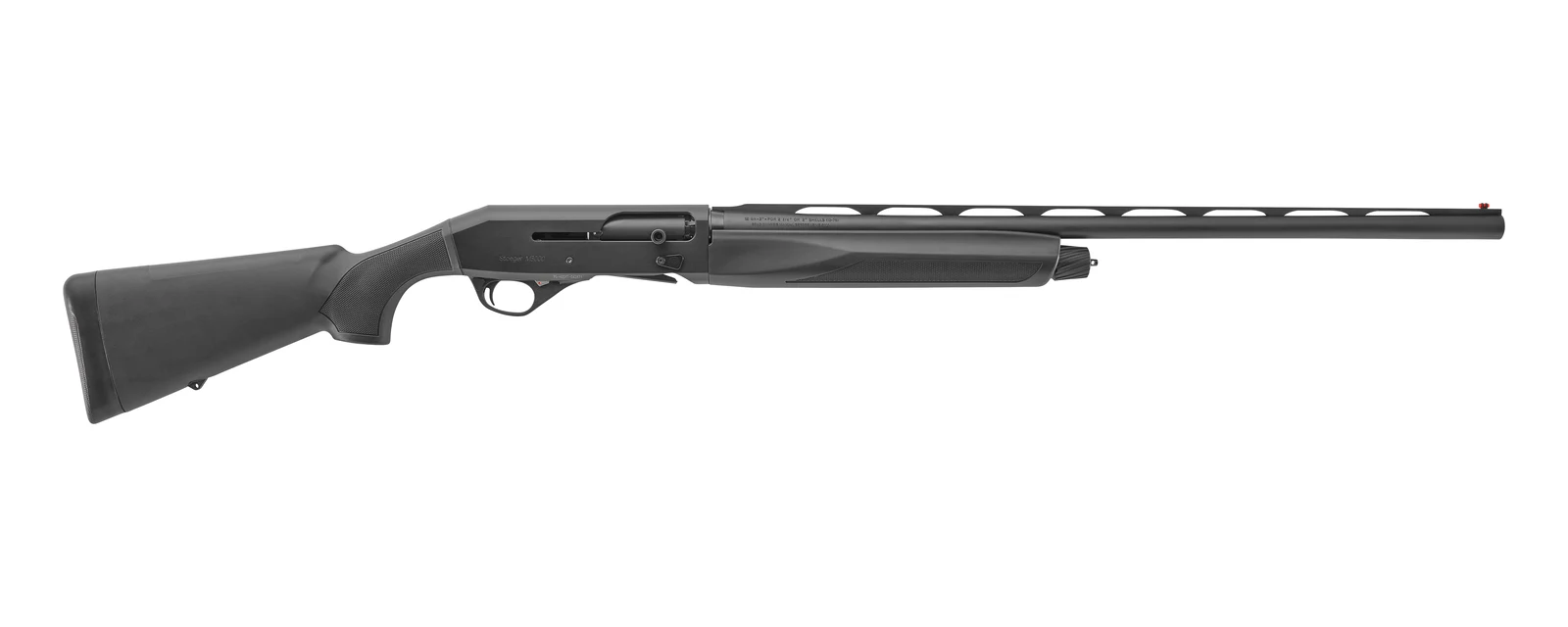
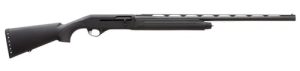
The black synthetic M3000, item 36016, the model I tested. Photo: Stoeger Industries.
Performance Testing Results
Reliability (8/10)
Perfect with the loads Stoeger says to use and unreliable with the light ones it tells you to avoid. I’d score it higher if it ran 7/8 ounce loads, but it never claims to. Feed it 1-1/8 ounce and up and it’s as dependable as anything I’ve shot.
Accuracy (8/10)
The patterns were even, and the slug group was better than I expected from a smoothbore with a single red-bar front sight. The three included tubes cover most hunting, from Improved Cylinder for upland birds to the extra-full turkey tube.
Ergonomics & Recoil (8/10)
The gun points naturally, and the shim kit let me raise the comb slightly to get my eye in line with the rib. Recoil is the trade-off. With 3 inch steel loads it kicks noticeably harder than a gas gun, though at 7.4 lb it’s never punishing. The controls are simple: a crossbolt safety, a bolt release button and a large bolt handle.
Fit, Finish, and Quality Control (7/10)
Solid rather than pretty. The synthetic stock and forend fit well, the metal finish was even, and nothing rattled. The bolt surfaces were a little rough and smoothed out with shooting. For the money, I have no real complaints.
Technical Deep Dive
| Component | Specification (Stoeger) | Why it matters |
| Action | Inertia Driven, rotating locking head | Runs clean, but needs adequate recoil to cycle |
| Chamber | 2-3/4 in. and 3 in. | No 3.5 in. magnums; that’s the M3500 |
| Minimum load | 3-dram, 1-1/8 oz | Lighter target loads may not cycle |
| Fit | 14-3/8 in. LOP, 2-1/2 in. drop at heel, 1-1/2 in. at comb, shim kit | Adjustable for drop and cast |
| Chokes | IC, M, XFT | Covers upland to turkey |
| Weight | 7.4 lb (28 in.) | Enough mass to keep 3 in. loads manageable |
Why do light loads fail? A 7/8 ounce target load simply doesn’t produce enough recoil to compress the inertia spring fully and throw the bolt back far enough to pick up the next shell. That’s how the action works, not a defect, and it’s why Stoeger prints a minimum load on the spec sheet.
Parts, Accessories and Upgrades
| Upgrade Category | Recommended Component | Why It Matters | Cost Estimate |
| Recoil | Stoeger recoil reducer (synthetic stocks only) | Takes the edge off 3 in. loads | $50 to $80 |
| Optics | Weaver scope base on the drilled and tapped receiver | Adds a red dot for turkey or slugs | $25 to $60 |
| Chokes | Aftermarket extended tubes | Tighter turkey and waterfowl patterns | $40 to $90 |
| Sling | Padded sling with swivels | Easier to carry in the field | $20 to $40 |
Common Problems & Solutions
- Won’t cycle light loads: The most common complaint, and it’s by design. Use at least 3-dram, 1-1/8 oz loads, as Stoeger recommends.
- Bolt doesn’t close fully: Easing the bolt forward can leave it just out of battery. Release it from full travel and let it slam home.
- Sharp recoil: Inertia guns pass along more kick than gas guns. Add the recoil reducer on a synthetic stock, or use the shim kit so the gun fits you properly.
- Short stock for tall shooters: The 14-3/8 in. length of pull suits most adults, but taller shooters may want a thicker recoil pad.
Who Should NOT Buy This Gun
- High-volume target shooters using light loads: The Mossberg 940 Pro Field’s gas system cycles lighter loads and softens recoil.
- Goose hunters who want 3.5 inch shells: The Stoeger M3500 handles 3.5 inch magnums, and Stoeger lists it from $849.
- Buyers who want the best inertia gun and can pay for it: The Benelli M2 Field is lighter and better finished.
- Recoil-sensitive or smaller shooters: The 20 gauge Stoeger M3020 weighs under 6 lb and kicks far less, and Stoeger lists it from $749.
Final Verdict
The Stoeger M3000 brings an inertia action to people who’d otherwise buy a pump. It’s clean-running, simple, fits well with the shim kit, and ran flawlessly on every load at or above Stoeger’s recommended minimum. Its weakness is light target loads, and Stoeger tells you that up front.
If you’re a hunter, buy it. The black synthetic field gun is the value pick, and the Freedom Series Tactical is the one for home defense. If you’ll mostly shoot light loads at clays, spend a little more on a gas gun. For more choices, see our best 12 gauge shotguns and best shotguns under $500 guides.
Specs and MSRPs in this review come from Stoeger’s M3000 page and Freedom Series Tactical page. Street prices are what we saw on September 25, 2026.
Final Score: 8.0/10: The best-value inertia shotgun you can buy, as long as you feed it the loads it was built for.
FAQ: Stoeger M3000
Is the Stoeger M3000 a good shotgun?
Yes, for hunters. It's an Inertia Driven 12 gauge semi-auto that ran flawlessly in our testing with 1-1/8 oz loads and heavier. It's less suited to light target loads, which may not cycle it.
What loads will the Stoeger M3000 cycle?
Stoeger lists a minimum recommended load of 3-dram, 1-1/8 oz. In our testing 7/8 oz target loads failed to cycle 11 times in 50 rounds, while 1-1/8 oz field loads, 3 in. steel, buckshot and 1 oz slugs ran without a malfunction.
Can the Stoeger M3000 shoot 3.5 inch shells?
No. The M3000 has a 3 in. chamber for 2-3/4 in. and 3 in. shells. For 3.5 in. magnums, Stoeger makes the M3500.
How much does a Stoeger M3000 cost?
Stoeger lists the black synthetic model at $749 and walnut or camo models at $799 to $849, with the Signature at $949. On September 25, 2026, Guns.com had a new synthetic M3000 at $549.99.
What is the difference between the Stoeger M3000 and M3500?
The M3500 has a 3.5 in. chamber and weighs 7.65 to 7.8 lb, against the M3000's 3 in. chamber and 7.3 to 7.4 lb. Stoeger's M3500 MSRP starts at $849, $100 more than the M3000.
How many rounds does the Stoeger M3000 hold?
Most models hold 4+1. The M3000 Freedom Series Tactical holds 7+1.
Is the Stoeger M3000 good for home defense?
The Freedom Series Tactical version is built for it, with an 18.5 in. barrel, a ghost-ring sight and a 7+1 capacity. We tested the 28 in. field gun, which ran 50 rounds of 00 buckshot without a problem; the Freedom uses the same action.
Does the Stoeger M3000 come in left-handed?
Yes. Stoeger lists left-handed versions of the M3000 field gun in black synthetic ($749) and Realtree Max-7 ($799).
5,718+ Gun & Ammo Deals
Updated daily from 200+ top retailers. Filter by category, caliber, action type, and price.
Related Guides