
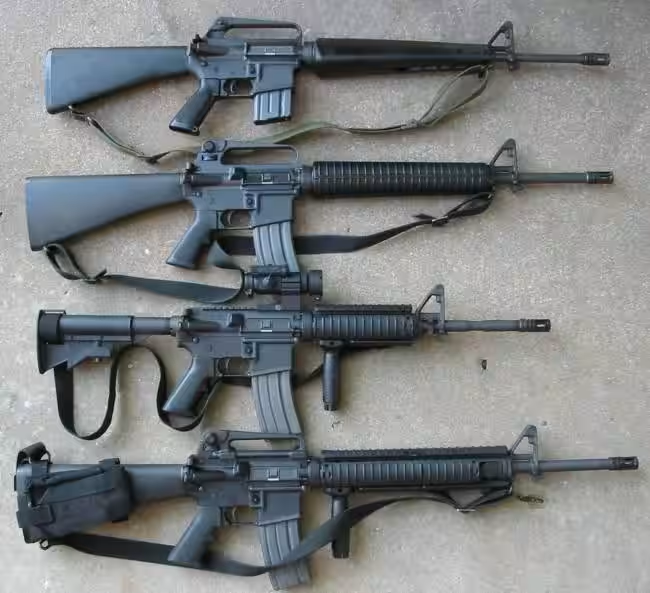
Trace the standard-issue US service rifle across the last 120 years and you get a tidy history of the whole country’s fighting doctrine, from bolt-action marksmanship to spray-and-pray firepower and back toward a heavier hitting round. Here is every main-line US military rifle in order, why each one shoved the last one aside, and a few of the legends that got attached along the way that simply are not true.
Table of Contents
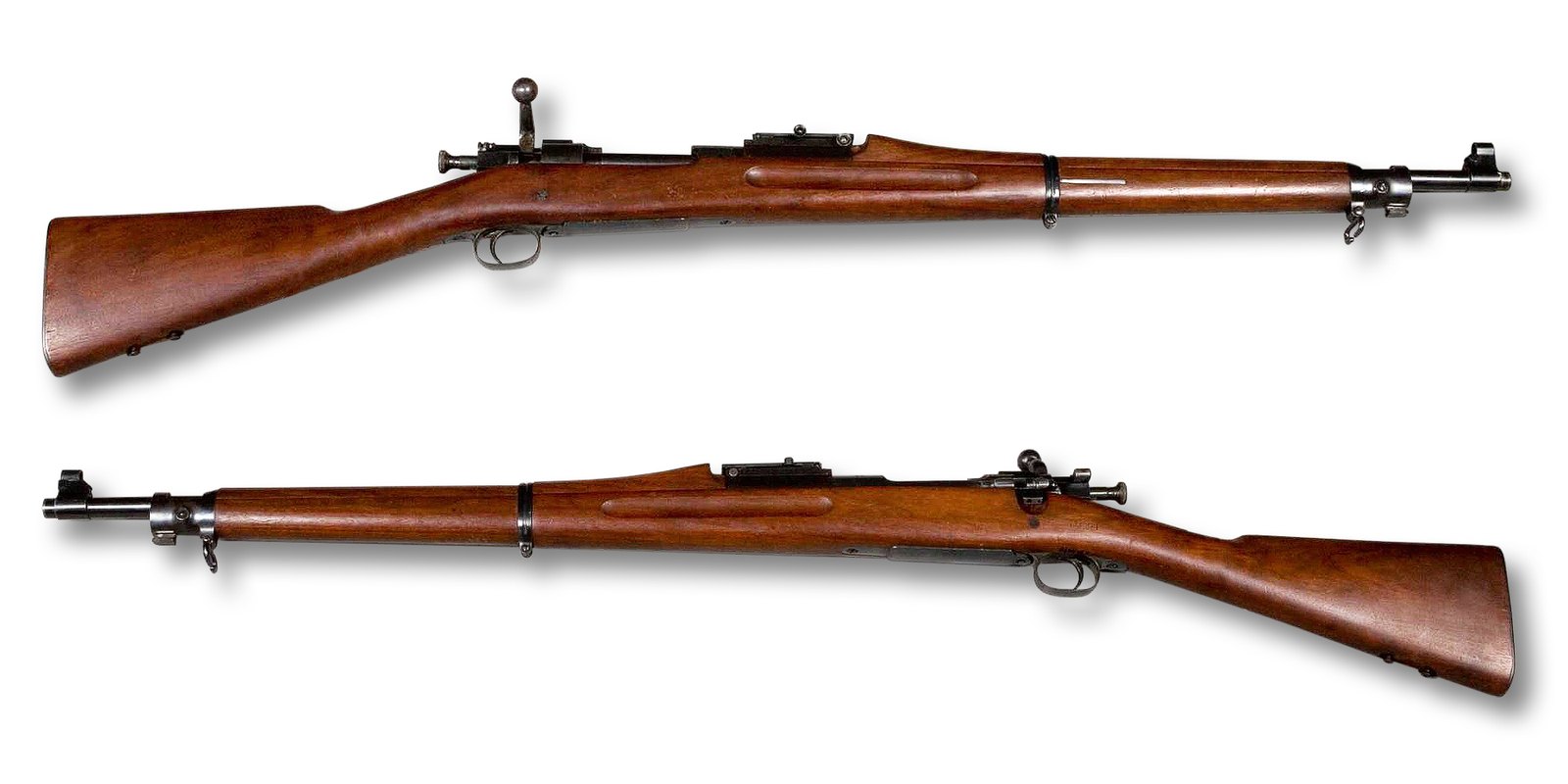
Springfield M1903
After Spanish Mausers embarrassed the US Army’s .30-40 Krag rifles in Cuba in 1898, the Army wanted a Mauser of its own. The result was the bolt-action Springfield M1903, chambered in the legendary .30-06 from 1906 on and fed by 5-round stripper clips. It copied Mauser’s design so closely that the US actually paid Mauser royalties. It carried American riflemen through World War I and served as a sniper rifle all the way into Vietnam. It is the gun that made American marksmanship a point of pride. Our WW1 guns guide puts it beside the M1917 Enfield that most American soldiers in France actually carried.
M1 Garand
Adopted in 1936, the M1 Garand was the first semi-automatic rifle general-issued to any nation’s infantry, and it handed American riflemen a rate-of-fire advantage that bolt-action enemies could not match. General Patton called it “the greatest battle implement ever devised,” and he was not just cheerleading. Gas-operated, chambered in .30-06, and fed by an 8-round en-bloc clip, it defined the American soldier of World War II and Korea. You can still own a piece of that history; see our used M1 Garand guide.
Now the myth: the “ping” of the ejecting clip supposedly gave your position away and got GIs killed. It is a great story with essentially no evidence behind it. Battlefield noise drowns out a single ping, men rarely fought or reloaded alone, and plenty of veterans actually liked it as an audible cue to reload. Treat it as campfire legend, not history. Our WW2 guns guide puts the Garand beside the rifles every other army carried.

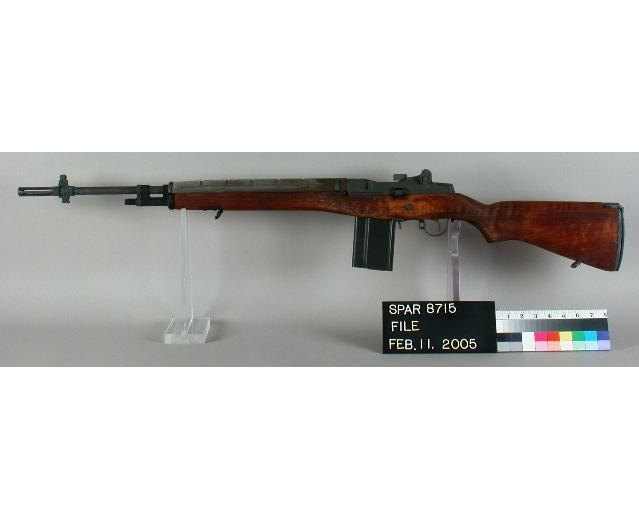
M14
The M14, adopted in 1959, was basically a modernized Garand: a detachable 20-round box magazine, select-fire capability, and the new 7.62 NATO cartridge, all meant to replace the rifle, the carbine, and the Browning Automatic Rifle with one gun. On paper it did everything. In practice it was long, heavy, and nearly uncontrollable in full-auto with a full-power .30 round. It holds the record as the shortest-lived standard US service rifle; production was halted in 1963. It never really died, though, and lives on as a designated-marksman rifle to this day.
M16
The M16 flipped the script. A lightweight rifle firing the small, fast 5.56 round let a soldier carry two or three times the ammo of an M14 shooter and put far more rounds downrange. The A1 arrived in 1967, and the Marine-driven A2 in the early 1980s added a heavier barrel, better sights, and a three-round burst. For the civilian, the M16 and its shorter cousin live on as the AR-15, the most popular rifle in America; our best AR-15 rifles roundup covers the modern versions.
Here is the correction that matters most. The M16 did not “jam in Vietnam because it was a bad design.” The malfunction wave of 1967 traced mostly to the Army swapping the specified powder for a dirtier ball propellant, telling troops the rifle was self-cleaning, and issuing no cleaning kits. Congress called the handling of it near-criminal. Once the Army added cleaning kits, a chrome-lined chamber, and a powder fix, the gun ran, and it has run ever since.
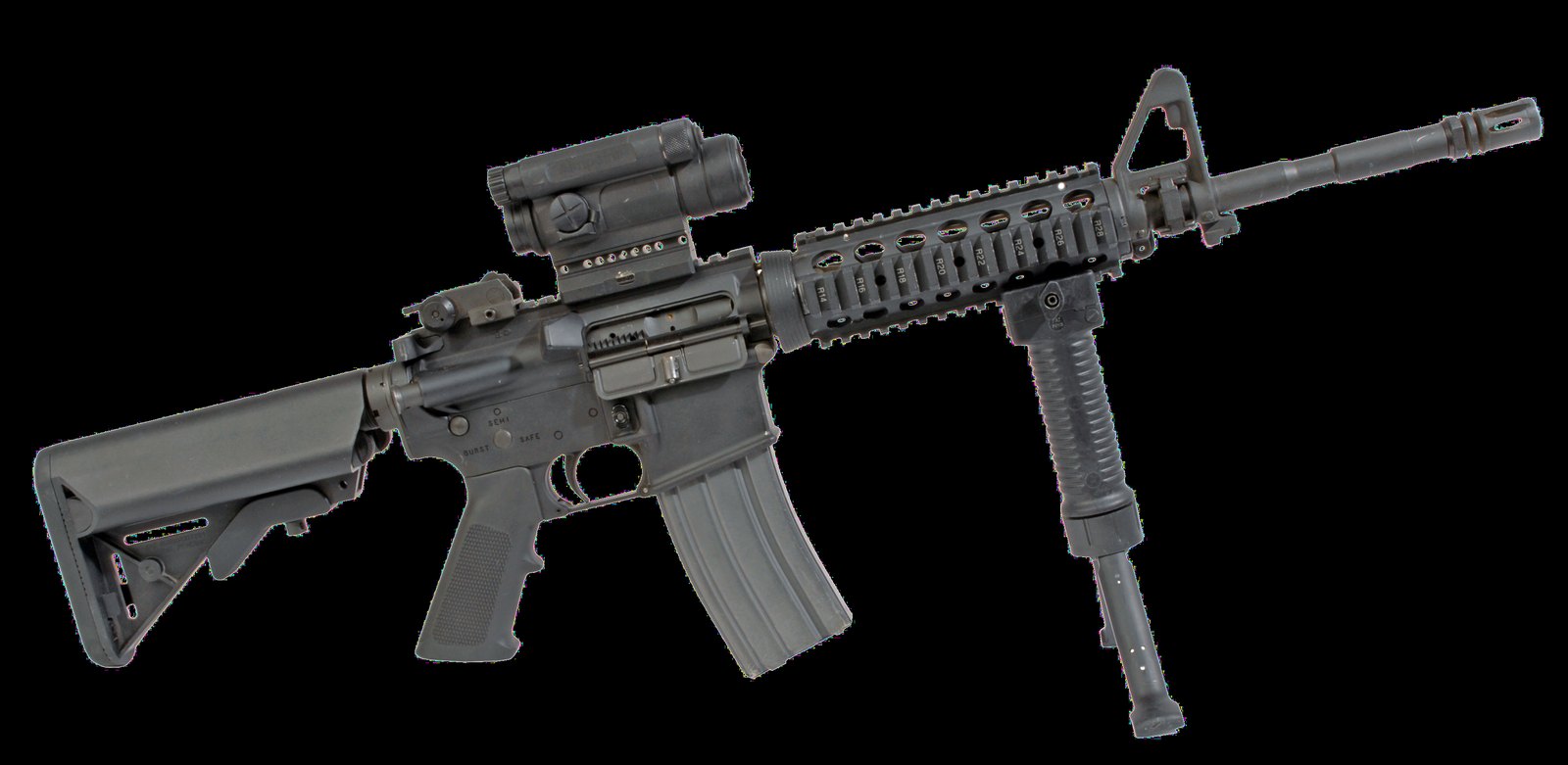
M4 Carbine
The M4, standardized in 1994, is the M16A2 shortened and given a collapsible stock, roughly a 14.5-inch barrel, and around 80 percent parts commonality with the full-size rifle. Handier in vehicles and buildings, it quietly became the general-issue rifle rather than just a carbine, and the full-auto M4A1 is what most of the Army carries today. If you want the round it runs, our best AR-15 ammo guide breaks down 5.56 and .223.
M7 (the New XM7)
The newest chapter is the SIG-built rifle that won the Army’s Next Generation Squad Weapon contest in 2022. It was type-classified as the M7 in 2025, and a short-barreled carbine version was designated the XM8 in early 2026. It fires a heavier, higher-pressure 6.8mm round designed to defeat modern body armor at ranges where 5.56 runs out of steam, and it pairs with a smart fire-control optic.
One big myth to kill right now: the M7 is not replacing the M4 across the whole Army. It is going to close-combat units, infantry, scouts, combat engineers, on the order of about 107,000 rifles, while the M4A1 stays in the hands of everyone else. It first reached the 101st Airborne in 2024 and the 25th Infantry Division in early 2026. The Marines and special operations have so far taken a pass.
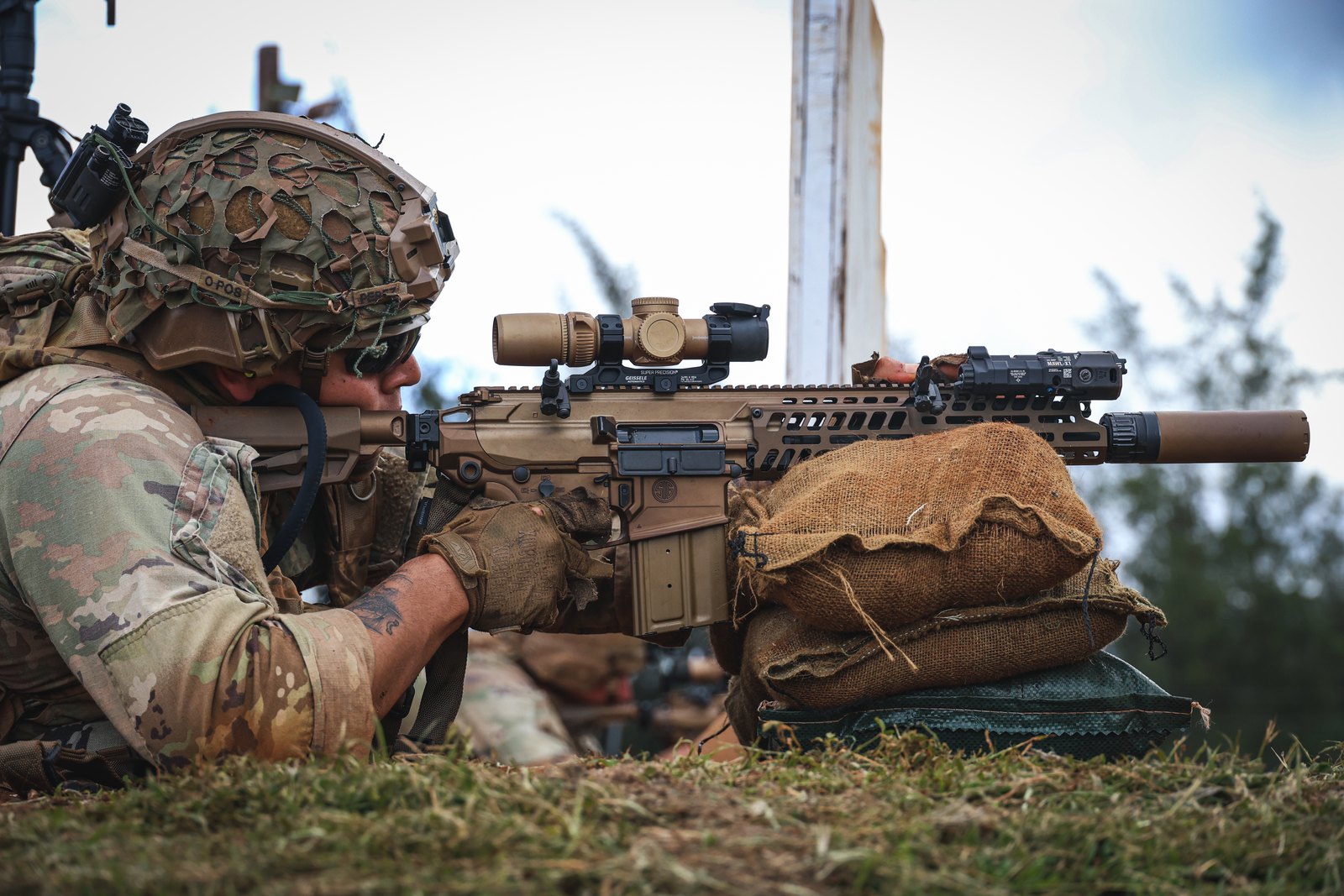
120 Years of US Service Rifles
Line them up and the story writes itself: bolt-action precision gave way to semi-auto firepower, which gave way to lightweight full-auto volume, which is now swinging back toward a heavier round for a new threat. Every one of these rifles answered a problem the last one could not, and most of them have a civilian descendant you can shoot today. That is the fun of it, the history is not locked in a museum, it is sitting on the rack at your local shop. Our guide to classic American rifles adds the Winchesters, Sharps and sporting rifles that grew up alongside them.
4,021+ Gun & Ammo Deals
Updated daily from 200+ top retailers. Filter by category, caliber, action type, and price.
Related Guides