

Last updated November 21st 2026
Some of the links below are affiliate links, meaning at no additional cost to you, we may earn a commission if you click through and make a purchase.
By Nick Hall, a competitive shooter for over 35 years, who wrote our Picatinny vs M-LOK guide.
Table of Contents
Are Weaver and Picatinny the Same?
Weaver vs Picatinny comes down to the slots. Both rails have the same basic dovetail shape, but a Picatinny slot is 0.206 in. wide and spaced exactly 0.394 in. apart, while a Weaver slot is about 0.180 in. wide and placed wherever the maker wants it. Picatinny is a military standard, MIL-STD-1913. Weaver never had one, so in the Picatinny vs Weaver match-up only one side has a drawing to check against.
That difference sets the one rule worth remembering. A Weaver ring or mount will fit a Picatinny rail, because its narrow crossbolt drops into the wider slot. A Picatinny ring with a full-size recoil lug will not fit a Weaver rail, because the lug is wider than the slot. If you have a Picatinny rail, buy Picatinny rings. If you have a Weaver base, buy Weaver-style rings, or rings sold as fitting both.
What Is a Picatinny Rail?
A Picatinny rail is the accessory rail defined by MIL-STD-1913, a US military standard dated February 3, 1995 and managed from Picatinny Arsenal in New Jersey, which is where the name comes from. The standard calls it an accessory mounting rail, and its scope line is plain: “This document establishes standard methods of dimensioning accessory mounting rails for small arms weapon systems.”
The cross slots are what make it work. The standard calls them recoil grooves and defines each one as “a groove on the accessory mounting rail that prevents forward and aft movement of an accessory.” A ring or mount drops a bar or bolt into one of those grooves, so recoil pushes against a steel wall instead of relying on clamp friction alone.
The design grew out of the Weaver rail. Commercial work by A.R.M.S. in the 1980s fed into the Army standard, and the result kept the Weaver shape but fixed every dimension that matters, from slot width to slot spacing. A 1999 change notice revised the profile drawing, and the Army reviewed the standard again in 2004 and 2013 and kept it in use. NATO carried the same rail as Draft STANAG 2324 before writing its own version. You’ll find it on the top of almost every AR-15 upper, on most scope bases sold today, and on the top rail of modern M-LOK handguards.
Picatinny Rail Dimensions, Per MIL-STD-1913
Picatinny rail dimensions are set by MIL-STD-1913, in inches, and every Picatinny rail is supposed to match them. Metric figures you see elsewhere are conversions; the standard itself prints none. Converted, the slot is 5.23 mm wide and 3.0 mm deep on 10.01 mm centers, and the rail is 21.08 to 21.21 mm across.
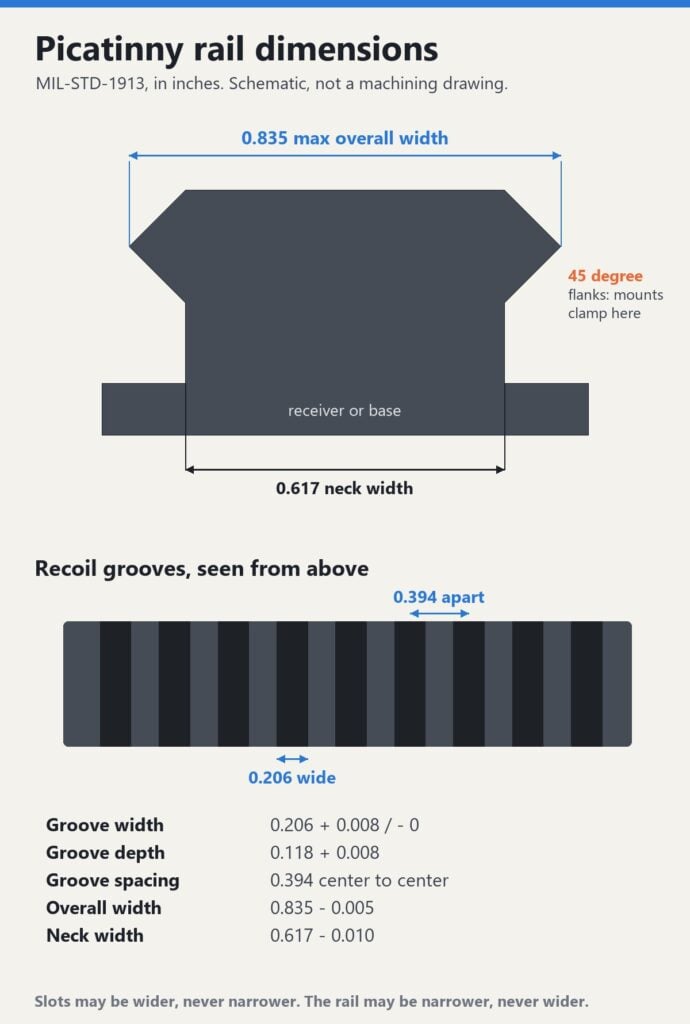
- Slot width: 0.206 in., plus 0.008 and minus nothing, so 0.206 to 0.214 in.
- Slot depth: 0.118 in., plus 0.008.
- Slot spacing: 0.394 in. center to center, between every pair of adjacent slots.
- Overall width: 0.835 in., minus 0.005, so 0.830 to 0.835 in.
- Neck width: 0.617 in., minus 0.010.
- Flanks: four 45 degree surfaces, two on top and two underneath, which are what a mount clamps against.
- Height: at least 0.367 in. of clearance, and the top surface held flat to within 0.005 in.
Two details trip up a lot of dimension charts. First, the 0.748 in. figure on the drawing is not the width of the flat top. It’s a reference width measured between points on the angled flanks, which is why a ruler across the top of a rail won’t give you 0.748. Second, the tolerances only run one way. A slot may be cut wider than 0.206 but never narrower, and the rail may be narrower than 0.835 but never wider. That is deliberate: it guarantees that a mount built to the standard always drops in, and it’s also why a narrow Weaver crossbolt always has room in a Picatinny slot.
Neither length nor slot count is fixed. The standard says the number of grooves depends on the application, so a short rail on a shotgun and a long rail on a precision rifle are both Picatinny as long as the slots and profile match. At 0.394 in. per slot you get about 2.5 slots per inch.
What Is a Weaver Rail?
The Weaver rail is the older design. The company says “The original Weaver® rail was introduced way back around 1930 by gunsmith William R. Weaver.” William Ralph Weaver founded W.R. Weaver Co. in 1930, and the rail was built as a scope base, and the original setup used two small bases, one in front of the action and one behind, so the shooter could still work the bolt and load.
There is no Weaver standard. No drawing, no standards body and no tolerance table exists, so Weaver dimensions are whatever each maker cuts. The slot width most sources print, and the one the brand uses on its main comparison page and setup guide, is 0.180 in.: “A slot on a traditional Weaver® rail is 0.180 inches wide, whereas a Picatinny slot is slightly wider at 0.206 inches.” Another Weaver article lists 0.156 in., which tells you how loose the dimensions are even inside one company.
Slot spacing is looser still. In Weaver’s own words: “Slot spacing is not standard: spacing varies by model, and Weaver® compatible rails from other manufacturers vary as well.” Most Weaver bases have only a few slots, sometimes just one or two per base, placed where a particular rifle needs them. Some makers cut the slots square and some round, and some Weaver-style rings have a bar that sits in the slot while others use the slot only as clearance for the clamp screw.
Weaver vs Picatinny Comparison Table
| Picatinny | Weaver | |
|---|---|---|
| Standard | MIL-STD-1913, 1995 | None |
| Slot width | 0.206 in. minimum | About 0.180 in., varies |
| Slot depth | 0.118 in. | Varies by maker |
| Slot spacing | 0.394 in. center to center | Not standardized |
| Number of slots | Continuous along the rail | A few, placed per rifle |
| Profile | 45 degree flanks, 0.835 in. max width | Same basic dovetail shape |
| Takes Weaver rings | Yes, push them forward | Yes |
| Takes Picatinny rings | Yes | Only if the lug is narrow enough |
| Found on | AR-15 uppers, most new scope bases, handguard top rails | Older and budget hunting rifle bases, rimfire bases |
Will Weaver Rings Fit a Picatinny Rail?
Yes. This is the direction that works. Leupold sells its PRW2 rings as “Weaver-style rings that work with both Weaver or Picatinny rails”, and Weaver’s own setup guide answers the same question with a yes, while warning that the reverse is not true.
The catch is the gap. A Weaver-style crossbolt is about 0.149 in. wide, and it sits in a slot that is at least 0.206 in. wide, which leaves more than 0.05 in. of room fore and aft. Warne puts it simply: “In short, the answer is yes, there is more forward and back play in a picatinny slot.”
The fix is to take that play out when you mount the scope. Push each ring toward the muzzle until its crossbolt bears against the front wall of the slot, then tighten it. Recoil drives the rifle back under the scope, so the rings try to move forward, and if they already sit against the front wall they have nowhere to go. EGW tells its customers to “push the weaver rings as far forward in the lug as possible.” Warne recommends the same and calls the play “a moot point” once you do. EGW also tells customers “We recommend using weaver or picatinny rings with a full crossbolt on our Standard Duty bases.” and warns off QD rings and rings with only a center lug.
Will Picatinny Rings Fit a Weaver Rail?
Sometimes, and it depends entirely on the lug. Weaver’s comparison page states the rule: “A Picatinny-only accessory will not fit on a traditional Weaver® rail if it has a full-size Picatinny recoil lug.” A full Picatinny lug is close to 0.2 in. wide, about 0.196 in., and it won’t drop into a 0.180 in. slot.
Plenty of rings marketed for Picatinny don’t have a full-size lug, though. Weaver says “lots of products labeled for Picatinny use actually have a small enough crossbolt to work on traditional Weaver® rails, essentially making them universal.” That’s why so many boxes say Picatinny and Weaver. There’s a second trap Warne points out: some Picatinny mounts use two or more lugs spaced 0.394 in. apart, and those won’t line up with Weaver slots placed at random intervals even if each lug is narrow enough.
So check the product page before you buy. If the maker lists Weaver fit, the crossbolt is sized for a Weaver slot, and on an odd or older base the maker’s fit list settles it. If it says Picatinny only, or MIL-STD-1913 only, assume it won’t go on a Weaver base.
Why a Loose Fit Can Cost You Your Zero
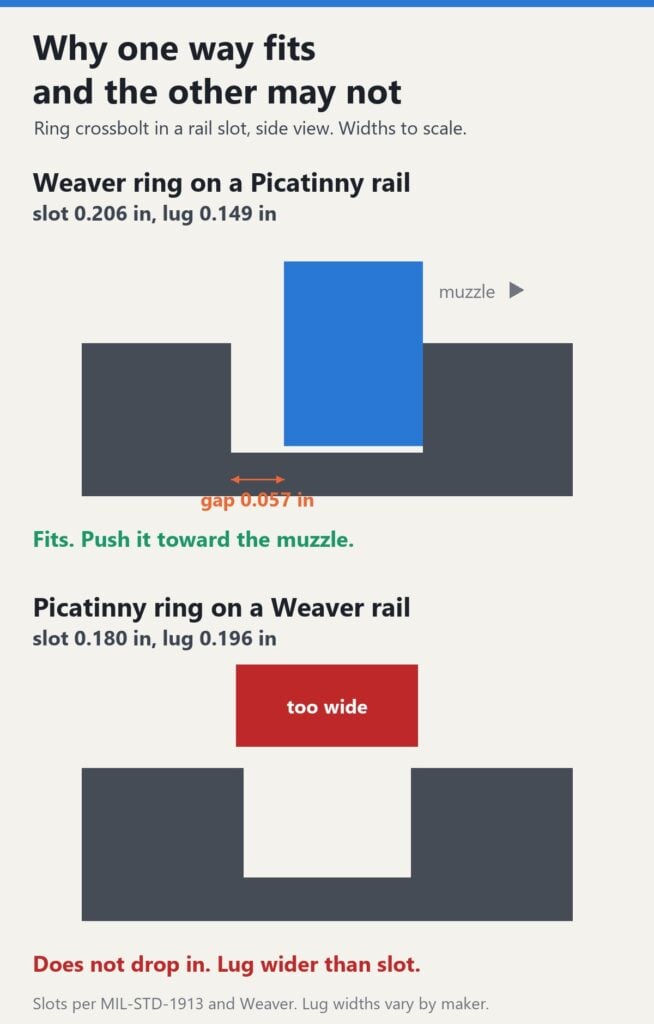
A ring that fits is not the same as a ring that fits well. Weaver warns that “a narrow bar in a wide slot leaves the ring free to shift fore and aft under recoil, which is not what you want on anything with authority.” On a .22 that barely matters. On a magnum hunting rifle a ring left loose in the slot gets driven forward on the first shots until it hits the front wall, and your zero moves with it. Pushing the ring forward before you tighten it takes that shift out in advance, and a crossbolt that fills the slot leaves almost nothing to take out. A full Picatinny crossbolt leaves about 0.010 in. of play in a Picatinny slot, against 0.057 in. for a Weaver bar. That is why Weaver steers Picatinny rail owners to its Picatinny rings with a crossbolt sized to fill the slot.
The numbers involved are tiny. One MOA is an angle of 1/60 of a degree, so across a mount 4 in. long it takes only about 0.0012 in. of height difference between front and back to move your point of aim by 1 MOA. A ring that shifts, rocks or reseats a hair differently can cost you that much, which is why a ring that fills the slot, pushed forward and torqued to spec, is the setup to hold a zero.
Where the NATO Rail Fits In
NATO approved its own version, the NATO Accessory Rail under STANAG 4694, on May 8, 2009. It is a metric drawing of the same rail with tighter straightness tolerances, and the NATO working group that wrote it says “The NATO Accessory Rail has full backwards compatibility with MIL-STD-1913 rail grabbers/mounts.” That means a Picatinny ring fits a NATO rail. NATO does not claim the reverse, so a mount built to the NATO drawing isn’t promised to fit every 1913 rail.
The working group also changed where a mount should reference the rail. Instead of the 45 degree flanks, its presentation says: “We recommend instead that the top surface is used as a reference and alignment of the grabbers.” The reason is repeatability, getting a mount back to the same spot after you remove and refit it. That advice is aimed at the people who design mounts. A standard Picatinny ring still clamps on the 45 degree flanks, so your part is the same as always: put it back in the same slot and torque it the same way.
How to Tell Which Rail You Have
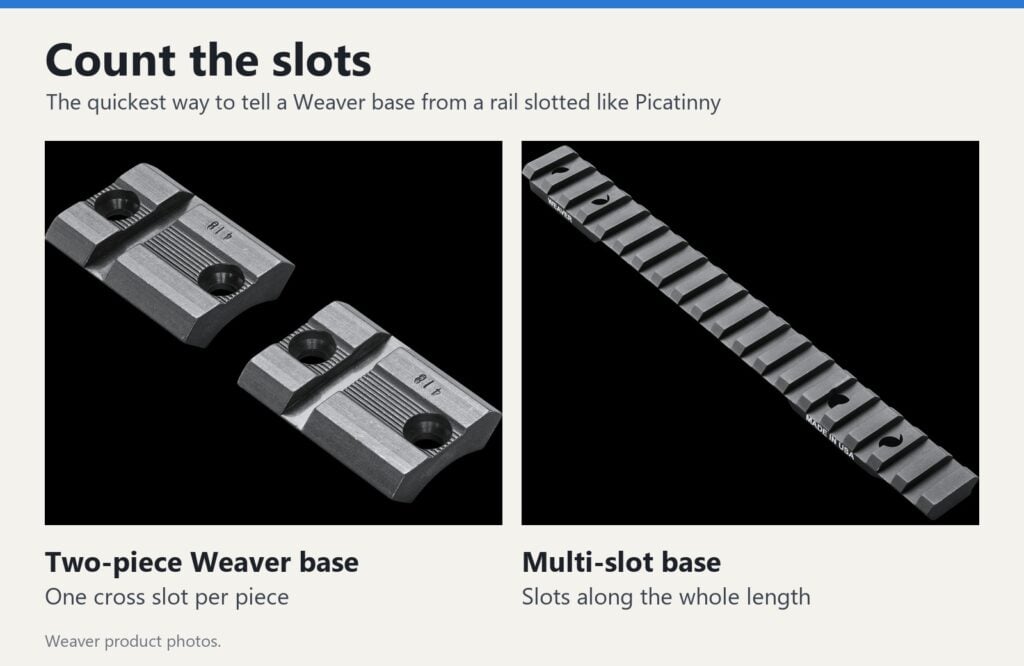
Look at the slots first, then measure one. Weaver’s own checklist is a good start: evenly spaced slots of the same size along the whole rail point to Picatinny, a few narrower slots at uneven spacing point to Weaver, and a rail with no cross slots at all is a dovetail, 11 mm or 3/8 in.
- Count the slots. A Picatinny rail has a slot every 0.394 in. all the way along. A Weaver base has a handful, with long flat stretches between them.
- Measure a slot with calipers. 0.206 in. or a hair over is Picatinny. About 0.180 in. is Weaver. A slot that reads 0.200 in. is Weaver or an out-of-spec rail, because a true Picatinny slot is never under 0.206 in.
- Measure the spacing. Measure from the far edge of one slot to the far edge of the next; if it reads 0.394 in., the rail is on the Picatinny pitch.
- Check for numbers. White numbers or T-marks engraved along the top point to a Picatinny rail. They’re a maker convention for putting an optic back in the same slot, not part of the standard.
- Check the maker spec sheet. It’s the fastest answer for a factory base, and the examples below show why it pays to check your exact model. A Weaver base number, like a #46, is a catalog number for the rifle it fits, not a size.
One warning: a rail sold as Picatinny is not always cut to the standard. Some have cross slots cut too shallow, so the lug bottoms out before the mount seats on the 45 degree flanks. If a Picatinny ring rocks on a rail that measures right across the slot, check the slot depth against 0.118 in.
The Weaver vs Picatinny question confuses people partly because the sources contradict each other, including the people who make the rails. Weaver’s own beginner glossary states the fit rule backwards: “Picatinny rings can often fit Weaver bases, but Weaver rings may not always fit Picatinny rails due to the width difference.” Weaver’s own comparison page and setup guide say the opposite, and so do Warne, Leupold and EGW, and the slot widths prove it: a narrow lug always fits a wider slot, and a wide lug can’t fit a narrow one.
Retail listings are just as loose. “Picatinny/Weaver” can mean a ring that fits both, or a Picatinny ring someone tagged with both words for search. The same glossary also claims “Every Picatinny rail from every manufacturer is cut to the same dimensions”, which the shallow-slot rails above disprove. Trust the maker spec sheet, then trust your calipers.
Which Rifles and Pistols Use Which Rail
Factory bases changed a lot over the last decade, so check the exact model and generation:
- AR-15 flat-top uppers carry a MIL-STD-1913 Picatinny rail, and so do the top rails on almost every M-LOK handguard. Our Picatinny vs M-LOK guide covers the handguard side.
- Ruger American Rifle Gen II ships with a “Factory-installed, one-piece Picatinny scope base.” Ignore older guides that call the Ruger American a two-piece setup; for the Gen II, Ruger’s spec sheet is the answer. See our Ruger American Gen II review.
- Savage Axis XP and Axis II XP packages list their scope bases as 2 Piece, Weaver Style. Our Savage Axis II review and Savage Axis models guide cover the rest of the rifle.
- Ruger 10/22 receivers take Ruger’s Combination Scope Base Adapter, item 90226, which “Uses tip-off or Weaver®-style rings.” Some models include it and some need it bought separately. Our 10/22 models guide shows which models come with what.
- Rimfires and airguns with no base use an 11 mm or 3/8 in. dovetail, which is neither Weaver nor Picatinny and needs dovetail rings or an adapter.
- Glock pistols use the Universal Glock rail, not a Picatinny rail. That’s why weapon lights ship with separate rail keys for Glock-style and MIL-STD-1913 rails. Our best weapon lights guide lists what fits.
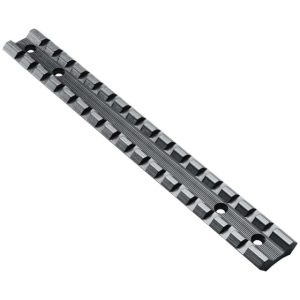
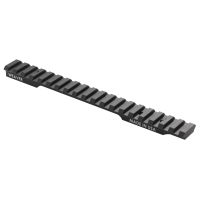
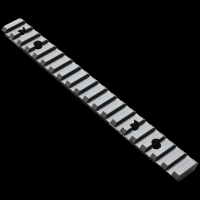
If you have a Savage Axis, Weaver makes both a two-piece Classic base pair and a one-piece multi-slot base for it. The multi-slot base takes rings made for both Weaver and Picatinny. Match the screws to your receiver: the multi-slot bases use 8-40 screws for the newer Axis receiver, and listings marked Post-June 2021 are for that receiver.
Torque Specs and Mounting Tips
Use the torque figure for your exact ring and base, not a generic number. Weaver’s own chart gives 15 in-lbs for 6-48 base screws and 18 in-lbs for 8-40 base screws. For rings it says “For rings, there is no single torque spec number. Values differ by family and by fastener.” Across the three ring families in that chart, cap screws run 15 to 25 in-lbs and crossbolts 30 to 65 in-lbs.
And the scope maker’s number wins if it’s lower. Weaver itself says “If your scope’s maker publishes a lower cap torque than we do, use the optic manufacturer’s number.” For any Weaver ring on a Picatinny rail, work in this order, which matches Weaver’s own mounting guide with the push-forward step added:
- Seat each ring bottom in a slot, push it toward the muzzle until the crossbolt touches the front wall, and torque the crossbolt to the ring maker’s figure.
- Lay the scope in the ring bottoms, set eye relief and level the reticle before you tighten the caps.
- Torque the caps in an even crisscross pattern so the gaps stay equal on both sides.
- Note the slot numbers or count the slots, so the scope goes back in the same place if you remove it.
My Recommendation
If your rifle has a Picatinny rail, buy Picatinny rings with a full-width crossbolt and push them forward when you mount them. They leave far less play in the slot than a Weaver crossbolt, and pushed forward they have nowhere left to move. Note the slot number and they go back in the same place. For anything that kicks hard, that is the setup I’d use.
If your rifle has a Weaver base, which is still common on budget hunting rifles, buy Weaver-style rings or rings the maker says fit both. They’re cheap, they work, and they’ll also move to a Picatinny rail later. And if you’re choosing a base for a new build, pick Picatinny. A standard with a drawing behind it beats a design every maker cuts a little differently. For specific rings, see our best scope rings and mounts guide.
Picatinny and Weaver Rings Live Pricing
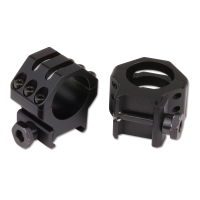
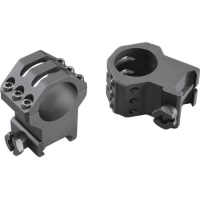
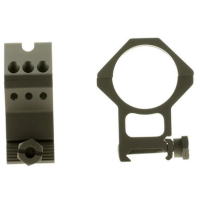
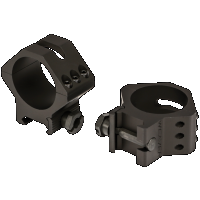
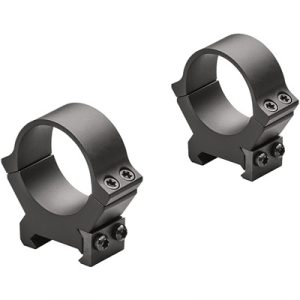
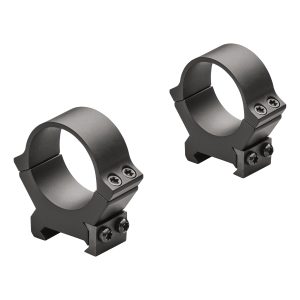
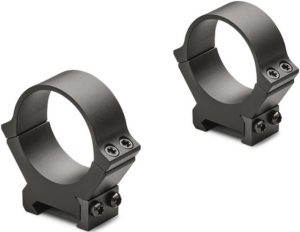
For a Picatinny rail, Weaver’s own Six-Hole Picatinny rings use a crossbolt built to the Picatinny slot size, so they fill the slot instead of sliding in it:
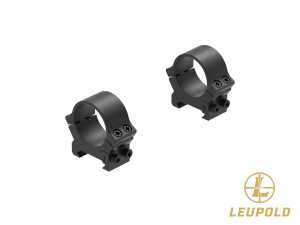
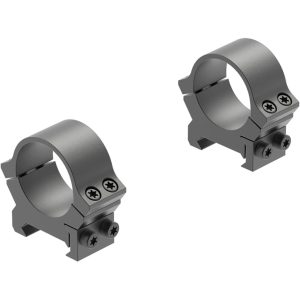
For a Weaver base, Leupold’s PRW2 rings are Weaver-style and also fit Picatinny rails, so they move with you to a new rifle:
Frequently Asked Questions
Are Weaver and Picatinny the same?
No. They share the same basic shape, but Picatinny slots are 0.206 in. wide on a fixed 0.394 in. spacing, set by MIL-STD-1913. Weaver slots are about 0.180 in. wide and spaced however the maker chooses, because Weaver has no standard.
Will Weaver rings fit a Picatinny rail?
Yes. The narrow Weaver crossbolt drops into the wider Picatinny slot. Push each ring toward the muzzle before tightening so it can't shift under recoil.
Will Picatinny rings fit a Weaver rail?
Only if the lug is narrow enough. A full-size Picatinny recoil lug is wider than a 0.180 in. Weaver slot and won't drop in. Rings the maker lists as fitting Weaver will work.
What are the dimensions of a Picatinny rail?
Per MIL-STD-1913: slots 0.206 in. wide and 0.118 in. deep, spaced 0.394 in. center to center, an overall width of 0.835 in. maximum, a 0.617 in. neck and 45 degree flanks.
How wide is a Weaver rail slot?
About 0.180 in., though no standard fixes it and Weaver's own pages list more than one figure. Measure your base if it matters.
Is MIL-STD-1913 the same as Picatinny?
Yes. MIL-STD-1913 is the military standard that defines the Picatinny rail, named after Picatinny Arsenal in New Jersey, where the standard is managed.
Is a NATO rail the same as Picatinny?
Close. The NATO Accessory Rail, STANAG 4694, is a metric update with tighter tolerances, and NATO says it has full backwards compatibility with MIL-STD-1913 mounts.
Is the Glock rail a Picatinny rail?
No. Glock uses its own Universal Glock rail. Lights and lasers that fit both ship with separate rail keys.
What does a Weaver base number mean?
It's a catalog number, not a size. Weaver says the number doesn't encode height, length or hole spacing. It tells you which rifle the base fits.
Which is better for a scope, Weaver or Picatinny?
Picatinny, because the slots are standardized and a Picatinny ring fills the slot. Weaver works fine on light-recoiling rifles if you push the rings forward.
How much play does a Weaver ring have in a Picatinny slot?
About 0.057 in.: a Weaver-style crossbolt is about 0.149 in. wide in a slot at least 0.206 in. wide. A full Picatinny crossbolt, about 0.196 in., leaves about 0.010 in. Push either ring toward the muzzle before you tighten it.
3,972+ Gun & Ammo Deals
Updated daily from 200+ top retailers. Filter by category, caliber, action type, and price.
Related Guides