

Affiliate disclosure: This article contains affiliate links. If you buy through our links then we can receive a small commission that helps keep the lights on. You don’t pay anything more.
Last updated September 2026 · By Nick Hall, CCW instructor familiar with Alaska gun laws including concealed carry and bear-country realities
Disclaimer: This is an editorial round-up of Alaska gun laws. We do our best to make sure it’s correct, but do not rely on this as legal advice. If you’re unsure about anything, consult a lawyer.
Best-priced firearms across 200+ retailers · Updated every 4 hours
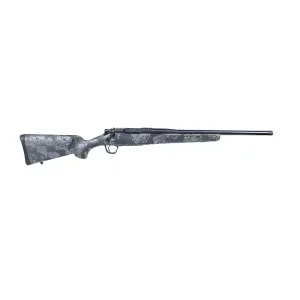
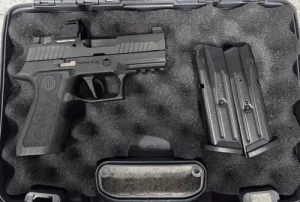
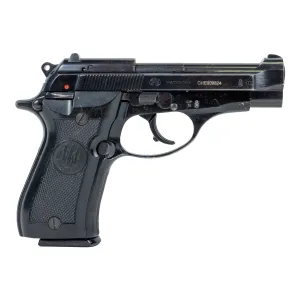
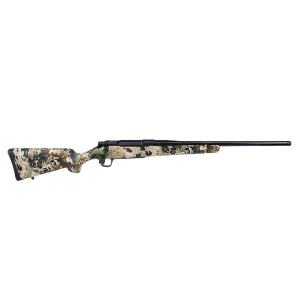
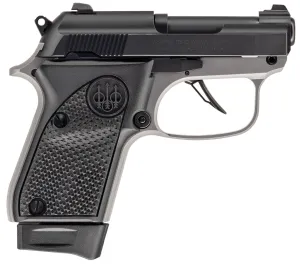
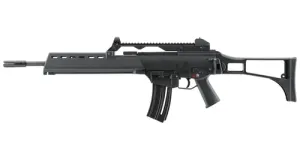
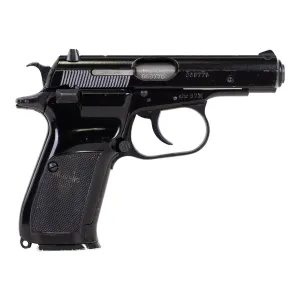
![FN 509 COMPACT [BLK] *10-ROUND*](https://www.usa-gun-shop.com/wp-content/uploads/ugs/img-cache/db4f97c202e578c705506c0de2da3203.webp)
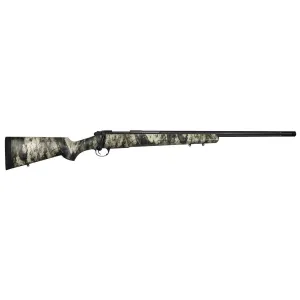
![FN 509 TACTICAL [FDE]](https://www.usa-gun-shop.com/wp-content/uploads/ugs/img-cache/e97bf240ddda937825b9668fe322ae39.webp)
Looking for a brick-and-mortar shop in Alaska? See our best gun stores in Alaska guide for verified FFL dealers, ranges, and gunsmiths near you.
Best-priced ammunition across 200+ retailers · Updated every 4 hours




Table of Contents
Intro
Alaska, often referred to as “The Last Frontier,” is renowned not just for its breathtaking landscapes and rugged wilderness but also for its relaxed approach to gun laws.
Citizens live deep into bear country, depend on hunting for food and also have the occasional wolf or home invader to contend with. Law enforcement can be hours, not minutes, away, and Alaskans are pretty self-sufficient and hardy by nature. Independence and individual freedom is woven into the tapestry of this wilderness state.
It’s a State identity that goes hand in hand with gun ownership. And a lot of folks have a range of firearms in their home, from handguns and shotguns for bear defense through to large caliber hunting rifles to take down the largest elk and moose.
But reputation doesn’t replace statute books. So I went through the actual law, checked the enforcement guidance, and pulled the official state sources. Here’s what actually applies in 2026.
Alaskan Gun Laws: The Highlights
We’ll get into the details below, but the main highlights of the gun laws in Alaska are:
- Alaska is seriously Pro Second Amendment and actively resists the idea of gun control.
- Constitutional Carry State – Permitless carry if you’re over 21 and not prohibited by Federal Law.
- No restrictions on AR-15s or magazine capacity.
- Common sense self defense laws based on Stand Your Ground doctrine.
- No background checks for private firearms sales.
For the latest information on firearms restrictions in Alaska, visit the local government page here.
Key Information at a Glance
Key Information: Alaska Gun Laws at a Glance (2026)
Fast answers first, with official sources at the bottom.
| Permitless Carry | Yes (Constitutional Carry) |
|---|---|
| Open Carry | Legal, 18+ |
| Concealed Carry | Legal without permit, 21+ |
| Background Checks | Required for dealer sales (federal NICS). No state requirement for private sales. |
| Firearm Registration | Not required |
| Magazine Capacity Limits | None |
| Assault Weapon Ban | No |
| Red Flag Law | No |
| Duty to Inform Police | Yes (when contacted) |
| Stand Your Ground | Yes |
| State Preemption | Yes |
Constitutional Carry is a Given Here
Alaska stands out as the pioneer in embracing constitutional carry, allowing individuals to carry concealed firearms without the need for a permit. It was the first State to implement this widely copied legislation and is based on trust in the population to exercise its Second Amendment Rights responsibly.
The concept of constitutional carry in Alaska underscores a fundamental belief in personal freedom and responsibility, distinguishing the state as a bastion of gun rights.
Alaska has allowed permitless carry since 2003. That’s real constitutional carry. If you are legally allowed to possess a firearm, you can carry openly or concealed without getting a state permit first. But there are still some basic rules.
Who Can Carry a Gun in Alaska?
You can open carry at 18. Concealed carry without a permit requires you to be 21 or older.
And there’s something else that matters: Alaska requires you to inform law enforcement if you are carrying concealed and an officer contacts you for official reasons. That’s not optional. Forget that detail and you’ve just stepped into misconduct territory.
Alaska is permissive. It’s not sloppy.
State Preemption
Alaska has strong state preemption.
Local governments cannot create their own gun control regulations that conflict with state law. Anchorage cannot suddenly ban something that is legal statewide.
That consistency matters. It means the rules don’t change city to city.
Federal Law Still Sets the Ceiling
This is the biggest misconception I see.
Alaska’s permissive laws do not cancel federal law.
You still cannot carry in federal buildings. You still cannot possess firearms if federally prohibited. You still must comply with NFA rules for regulated items.
State freedom operates inside a federal framework.
Ignore that, and you’re playing with felony territory.
Reciprocity: Out-of-State Permits
Alaska Concealed Carry at a Glance
Constitutional carry: Yes
Honors non-resident permits: Yes — broad reciprocity
Classification: Constitutional carry / honors all valid permits
Map base: Wikimedia Commons (CC BY-SA). Color overlay and reciprocity data by USA Gun Shop.
Can I Carry in Alaska?
Select your home state to see if your permit authorizes carry in Alaska.
Even though you don’t need a permit to carry in Alaska, the state recognizes all valid concealed carry permits from every other state. If you have a permit from anywhere, it works here. Alaska also allows constitutional carry for everyone (resident and non-resident), so even visitors without any permit can carry concealed.
Even though you don’t need a permit to carry in Alaska, the state still issues the Concealed Handgun Permit (CHP) through the Department of Public Safety. Why bother? Reciprocity. Your constitutional carry rights stop at the Alaska border. The CHP gives you carry rights in 35+ other states and also lets you bypass the NICS check at the gun counter. You need to be an Alaska resident for at least 90 days to apply.
States That Recognize Alaska CHP
| Full Reciprocity (35+) | NOT Recognized In |
| Alabama, Arizona, Arkansas, Colorado, Delaware, Florida, Georgia, Idaho, Indiana, Iowa, Kansas, Kentucky, Louisiana, Maine, Michigan, Mississippi, Missouri, Montana, Nebraska, Nevada, New Hampshire, New Mexico, North Carolina, North Dakota, Ohio, Oklahoma, Pennsylvania, South Carolina, South Dakota, Tennessee, Texas, Utah, Vermont, Virginia, West Virginia, Wisconsin, Wyoming | California, Connecticut, Hawaii, Illinois, Maryland, Massachusetts, Minnesota, New Jersey, New York, Oregon, Rhode Island, Washington, Washington D.C. |
Critical Details for Travelers
- No Non-Resident Permits: Alaska does not issue non-resident CHPs. Non-residents carry in Alaska under constitutional carry (no permit needed). If you want reciprocity in the Lower 48, pair an Alaska CHP with a non-resident Florida CWFL or Utah permit.
- Constitutional Carry Isn’t Portable: Your right to carry without a permit in Alaska doesn’t extend to other states. Many states that recognize Alaska permits are also constitutional carry states, but not all. Get the CHP if you travel.
- Age Requirements: Some states that recognize the Alaska CHP require the holder to be 21+. Alaska issues the CHP at 21, so this generally isn’t an issue, but verify before traveling.
If you travel outside Alaska frequently, the CHP is a practical necessity. The reciprocity coverage alone justifies the application process.
Restrictions and Prohibited Places
Prohibited Places in Alaska
Alaska is a constitutional carry state with a narrow prohibited-places list. The state's vast rural character leaves most public lands open for lawful carry.
- K-12 schools and school grounds
- School buses
- Courthouses and courtrooms
- Shelters for victims of domestic violence
- Establishments where alcohol is sold for on-site consumption (unless posted permissive)
- Federal courthouses, post offices, agency offices
- National parks subject to federal building rules
- Posted private property where owner has communicated a no-firearms policy
Despite its liberal gun laws, Alaska imposes certain restrictions on where you can carry firearms. Places such as schools, child care centers, courthouses, and bars that derive a significant portion of their income from alcohol sales are off-limits for carrying firearms. Additionally, federal laws prohibit firearms in federal buildings and national parks, underscoring the importance of being aware of and respecting these boundaries.
You’ll find a very different attitude when it comes to enforcement of those rules than you’ll see in less gun friendly States, naturally.
Where You Can’t Carry
This is where oversimplified blog posts usually fall apart.
You cannot carry firearms in certain locations, including:
- K–12 schools, with limited statutory exceptions
- Courthouses
- Domestic violence shelters
- Certain government buildings
- Any location prohibited under federal law
Private property owners can also prohibit firearms. If a business posts signage and you ignore it, that becomes a trespassing issue.
Carrying while intoxicated is another fast way to end up charged. Alaska law specifically addresses misconduct involving weapons when alcohol is involved.
Freedom does not mean no boundaries.
Alaska’s Self Defense Laws
Alaska’s self-defense laws are grounded in the principle of defending oneself or others from imminent harm. The state follows a “stand your ground” doctrine, allowing individuals to use deadly force in defense without the duty to retreat, provided they are in a place where they have a right to be and are not engaged in criminal activity.
This law reflects a strong commitment to personal safety and the right to protect oneself and others. There is no duty to retreat if you are somewhere you are legally allowed to be. Your home, your vehicle, public space, it all falls under that umbrella.
But this is still governed by reason and common sense. You must have a reasonable belief that force is necessary to prevent death, serious physical injury, kidnapping, robbery, or sexual assault.
If you escalate a situation unnecessarily, you don’t get to hide behind the phrase “Stand Your Ground.”
Purchasing and Owning Firearms
The process of purchasing a firearm in Alaska is straightforward, with no state-imposed waiting periods or mandatory registration of firearms.
If you walk into a gun store in Anchorage or Fairbanks, the process looks like anywhere else in America.
You fill out ATF Form 4473. The dealer runs a federal NICS background check. If you’re clear, you walk out with your firearm.
There’s no state waiting period. No state purchase permit. No registration system.
Private sales between residents do not require background checks under Alaska law. That said, federal prohibitions still apply. If someone is legally barred from possessing a firearm under federal law, a private sale does not magically make that lawful.
Alaska removes extra layers. It doesn’t override federal restrictions.
No Magazine Limits, No Feature Bans
Alaska does not impose magazine capacity limits.
There is no assault weapon ban, so your custom AR-15 is safe. There are no state-level feature restrictions layered on top of federal law.
If a firearm configuration is legal under federal law, Alaska generally allows it. That includes NFA-regulated items like suppressors and short-barreled rifles, provided you comply with federal tax stamp and registration requirements.
The state does not add extra hoops.
Red Flag Laws and Protective Orders
Alaska does not have an Extreme Risk Protection Order system, commonly known as a red flag law.
However, firearms can be restricted through domestic violence protective orders. If a court issues a qualifying order, firearm possession can become illegal under both state and federal law.
That shift can happen quickly. It’s not something people should assume doesn’t apply simply because Alaska is gun-friendly.
NFA Items in Alaska (Suppressors, SBRs, Machine Guns)
Alaska is one of the most NFA-friendly states in the country. Suppressors, short-barreled rifles (SBRs), short-barreled shotguns (SBSs), and pre-1986 transferable machine guns are all legal to own with proper federal ATF registration. Alaska adds no state-level NFA layer or permit on top of the federal process, and the 2026 federal change dropped the transfer tax on suppressors, SBRs, SBSs, and AOWs to $0.
Alaska Suppressor Facts & Figures
| Suppressor ownership | Legal for civilians with federal ATF registration (Form 4, fingerprints, NICS check). Alaska adds no state suppressor ban. |
| Hunting with a suppressor | Legal, Alaska places no state-level restriction on suppressor use for hunting. You need only a valid Alaska hunting license; there is no separate state suppressor permit. |
| State suppressor permit | None required beyond the federal Form 4. |
| 2026 federal $0 tax stamp | $0 for suppressors, SBRs, SBSs and AOWs (down from $200), effective January 1, 2026. Machine guns and destructive devices are still taxed at $200. |
Thinking about buying a suppressor? See our guides on how to buy a suppressor in 2026, the best suppressors for every caliber, and the $0 tax stamp explained.
Hunting and Outdoor Heritage
Hunting is an integral part of Alaska’s culture and economy, and the state’s gun laws reflect a deep respect for this tradition. With vast wilderness areas and abundant wildlife, Alaska offers unparalleled opportunities for hunting.
The state’s gun laws facilitate this heritage by allowing the use of firearms for hunting in accordance with state and federal regulations, emphasizing the importance of responsible gun ownership and environmental stewardship.
So if you want to take a 50 BMG rifle out hunting grizzlies, you can.
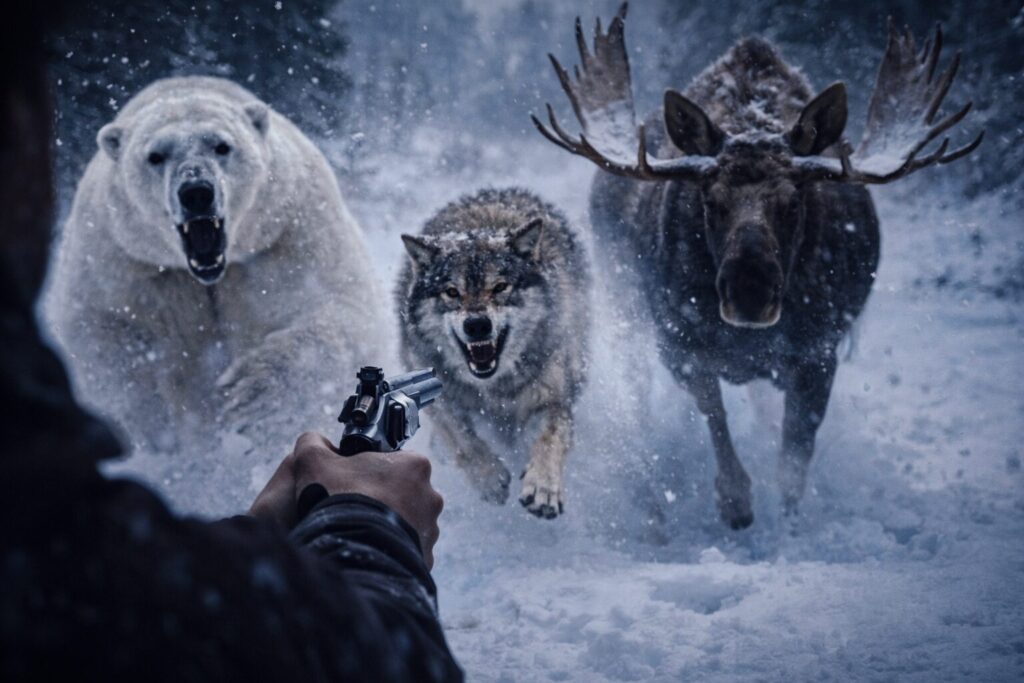
Dangerous Animals in Alaska
Large predators and dangerous game are part of the landscape in Alaska and that is one of the major reasons why gun control simply won’t work there.
Here are just a few of the animals to look out for:
- Polar Bears
- Bison
- Grizzly Bears
- Moose
- Wolves
- Black Bear
With this ensemble of animals running round the woods, the right to bear high-power firearms with high-capacity magazines honestly seems reasonable. Of course mosquitoes, ticks and mites are more dangerous, but they tend not to rip you apart or smash you.
Snubnose 44 Magnum revolvers and, increasingly, 10mm Glocks are the guns Alaskans keep in their big coat pocket for when the unexpected happens.
In the home, 308 rifles and shotguns are just a normal part of any Alaskan household.
Education and Safety
Recognizing the paramount importance of safety, Alaska offers various educational resources and courses on firearm safety and handling. These programs, often provided by local law enforcement agencies, wildlife conservation organizations, and private entities, are designed to promote safe and responsible gun ownership.
Participation in such education, while not mandatory, is highly encouraged to ensure that all gun owners are equipped with the knowledge and skills to handle firearms safely.
Alaska-Specific Carry Questions
When did Alaska become a permitless-carry state, and is the concealed permit still issued?
Alaska enacted permitless concealed carry in 2003, making it one of the earliest US states to do so. The Alaska Concealed Handgun Permit continues to be issued by the Alaska Department of Public Safety for residents who want the reciprocity benefit, as the permit is honored by more states than the permitless-carry framework alone. The permit also satisfies certain federal pre-vetting standards at the point of sale.
Can I carry on Alaska tribal land?
Alaska Native villages and federally-recognized tribal lands within Alaska may have their own firearm rules that differ from state law. Carriers entering tribal land should verify the local rules with the village council or tribal government before relying on Alaska state law alone. The state Concealed Handgun Permit does not automatically authorize carry on sovereign tribal territory.
What are Alaska’s rules for carry in bears’ country and remote travel?
Alaska’s firearm laws apply uniformly across state-jurisdiction land regardless of whether the carrier is in Anchorage, the Brooks Range, or the Alaska Peninsula. A carrier in remote backcountry is subject to the same in-state rules as a carrier on the Glenn Highway. Federal land within Alaska, Denali National Park, federal wildlife refuges, follows federal rules, which generally permit lawful concealed carry on federal land but restrict carry inside federal buildings and visitor centers.
Does Alaska have any state-level Red Flag or assault-weapon law?
No. Alaska has not enacted a state-level Extreme Risk Protection Order statute or assault-weapon ban, and state preemption blocks any city or borough from enacting one. Federal restrictions on machine guns and short-barreled rifles still apply through the NFA, but Alaska adds no state-level restriction on top of federal law.
Conclusion: The Last Frontier of Gun Freedom
Alaska’s gun laws embody a unique blend of freedom, responsibility, and respect for individual rights. This landscape offers a model of trust in its citizens to exercise their Second Amendment rights wisely and responsibly.
In Alaska, the right to bear arms goes hand in hand with a commitment to community safety. Whether you’re a resident or a visitor, understanding and respecting Alaska’s approach to gun laws is key to enjoying the freedoms and fulfilling the responsibilities that come with gun ownership in “The Last Frontier.”
Alaska is one of the most gun-friendly states in the country. That reputation is earned.
There’s no registration system. No magazine caps. No state-level feature bans. Constitutional carry is real. But it’s structured freedom. There are age thresholds, location restrictions, and Federal overlays.
If you understand the details, Alaska is straightforward. If you ignore them, it isn’t.
For our complete state-by-state comparison, see this state’s place in the national patchwork.
Explore More States
Alabama Gun Laws (2026): Constitutional Carry, Stand Your Ground & Full Freedom, Arizona Gun Laws (2026): Constitutional Carry, No Limits & Stand Your Ground, Arkansas Gun Laws (2026): Constitutional Carry, No Limits & Stand Your Ground, Bruen Decision Explained (2026): NYSRPA v. Bruen, History-and-Tradition Test & Downstream Litigation, California Gun Laws (2026): CCW, AWB, Roster & Everything You Need to Know, Castle Doctrine Explained (2026): All 50 States, Civil Immunity & Presumption of Reasonable Fear, Colorado Gun Laws (2026): 15-Round Cap, SB25-003 Semi-Auto Ban & Red Flag Law, Connecticut Gun Laws (2026): Permits, Carry Rules & Restrictions, Constitutional Carry States (2026): Complete List of 29 Permitless Carry States, Florida Gun Laws (2026): Constitutional Carry, Open Carry & Stand Your Ground, Georgia Gun Laws (2026): Constitutional Carry, No Limits & Full Freedom, Hawaii Gun Laws (2026): Registration, Permits & The Strictest State, Idaho Gun Laws (2026): Constitutional Carry, Stand Your Ground & Full Freedom, Illinois Gun Laws (2026): FOID Card, CCL, AWB & What You Need to Know, Indiana Gun Laws (2026): Constitutional Carry, Free Lifetime License & Stand Your Ground, Iowa Gun Laws (2026): Constitutional Carry, Strict Scrutiny & Full Freedom, Kansas Gun Laws (2026): Constitutional Carry, Stand Your Ground & Full Immunity, Kentucky Gun Laws (2026): Constitutional Carry, CDWL & Stand Your Ground, Louisiana Gun Laws (2026): Constitutional Carry at 18, CHP & Stand Your Ground, Louisiana Lets 18-Year-Olds Carry, Then Won’t Issue Them a Permit, Maine Gun Laws (2026): Constitutional Carry, 72-Hour Wait & Red Flag Law, Maryland Gun Laws (2026): HQL, Wear and Carry Permit, AWB & Sensitive Places, Massachusetts Gun Laws (2026): Chapter 135, LTC, FID & AWB, Michigan Gun Laws (2026): CPL, License to Purchase, Red Flag & Safe Storage, Minnesota Gun Laws (2026): Permit to Carry, Permit to Purchase & Red Flag, Mississippi Gun Laws (2026): Constitutional Carry, Enhanced Permit & Stand Your Ground, Missouri Gun Laws (2026): Constitutional Carry, Lifetime CCW & Stand Your Ground, Montana Gun Laws (2026): Constitutional Carry (HB 102), MCWP & Stand Your Ground, Nebraska Gun Laws (2026): Constitutional Carry (LB 77), CHP, HPC & Castle Doctrine, Nevada Gun Laws (2026): CCW, Universal Background Checks, Red Flag & Ghost Gun Ban, New Hampshire Gun Laws (2026): Constitutional Carry, PRL & Stand Your Ground, New Jersey Gun Laws (2026): FPIC, PPH, Chapter 131 CCP & Sensitive Places, New Mexico Gun Laws (2026): CHL, Universal Background Checks, HB 129 Status & Article 2 Section 6, New Mexico’s Waiting Period Lost in Court and Still Applies to You, New York Gun Laws (2026): CCIA, Pistol License, SAFE Act & Sensitive Locations, North Carolina Gun Laws (2026): CHP, SB 41 Repeal & Stand Your Ground, North Dakota Gun Laws (2026): Constitutional Carry, Class 1 & Class 2 CWL, Ohio Gun Laws (2026): Constitutional Carry (SB 215), CHL & Stand Your Ground, Oklahoma Gun Laws (2026): Constitutional Carry (HB 2597), SDA License & Make My Day, Oregon Gun Laws (2026): CHL, Measure 114 Status, SB 243 & Sandoval, Pennsylvania Gun Laws (2026): LTCF, PICS, Crawford & 18 Pa.C.S. § 6109, Red Flag Laws by State (2026): Complete List of 21 ERPO States, Rhode Island Gun Laws (2026): Blue Card, Dual Permits, 10-Round Cap & 2026 AWB, South Carolina Gun Laws (2026): Constitutional Carry, CWP & Stand Your Ground, South Dakota Gun Laws (2026): Constitutional Carry, Three-Tier Permits & Stand Your Ground, Stand Your Ground States (2026): Complete List of 38 SYG States, Tennessee Gun Laws (2026): Constitutional Carry, Enhanced HCP & Stand Your Ground, Texas Gun Laws (2026): Constitutional Carry, LTC, Castle Doctrine & Civil Immunity, Universal Background Check States (2026): Complete List of 22 UBC States, Utah Gun Laws (2026): Constitutional Carry, CFP, Stand Your Ground & Reciprocity, Vermont Gun Laws (2026): “Vermont Carry,” Universal Background Check & Magazine Cap, Virginia Gun Laws (2026): CHP, Universal Background Checks & Substantial Risk Order, Virginia Halts Private-Sale Background Checks Again (2026), Washington Gun Laws (2026): CPL, Universal Background Checks, Magazine Cap & 2023 AWB, West Virginia Gun Laws (2026): Constitutional Carry, CHL & Stand Your Ground, Wisconsin Gun Laws (2026): CCL, Castle Doctrine & Reciprocity, Wyoming Gun Laws (2026): Constitutional Carry, CFP, Stand Your Ground & 2A Sanctuary
4,021+ Gun & Ammo Deals
Updated daily from 200+ top retailers. Filter by category, caliber, action type, and price.