

Affiliate disclosure: This Springfield M1A review contains affiliate links. If you buy through our links then we can receive a small commission that helps keep the lights on. You don’t pay anything more.
- Treat every gun as loaded
- Point the muzzle in a safe direction
- Keep your finger off the trigger until you’re ready to shoot
- Know your target and what’s beyond
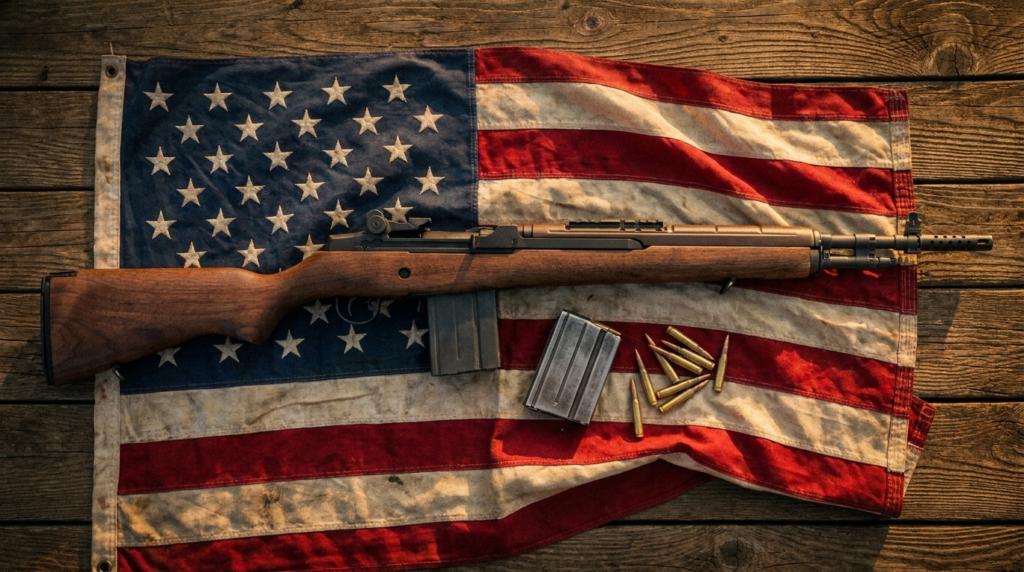
The CMP has since announced it will sell surplus M14 rifles converted to semi-automatic, which for the first time puts a government-issue M14 within reach of civilian buyers.
Table of Contents
How we tested: Every pick here is ranked against our testing methodology. Minimum round counts, accuracy and reliability protocols, the failures that disqualify a gun.
Review: Springfield M1A – The Civilian M14 Still Earns Its Keep
Our Rating: 8.4/10
- RRP: $1,987 (MSRP, Standard Issue walnut)
- Street Price: about $1,520 to $1,720 (Check our live pricing for the best current deal)
- Caliber: .308 Winchester / 7.62x51mm NATO (also 6.5 Creedmoor on some models)
- Action: Gas-operated, rotating bolt, semi-automatic (civilian M14)
- Capacity: 10 or 20-round detachable box magazine
- Barrel Length: 22″ (Standard); 18″ Scout Squad; 16.25″ SOCOM 16
- Overall Length: 44.3″ (Standard)
- Weight: 9.3-9.8 lb (Standard)
- Sights: Military-style aperture rear, blade front (excellent GI irons)
- Stocks: Walnut or black composite
- Made in: Geneseo, Illinois, USA
Pros
- Battle-proven M14 design that runs dirty, wet, and neglected without complaint
- The best iron sights in the business: a true military aperture that shoots to distance
- Full-power .308 in a rifle you can hand down for generations
- Made in the USA with real steel and walnut, not a stamped parts kit
- Genuine heritage that a plastic AR-10 will never have
Cons
- Heavy at nearly ten pounds, and the balance is nose-forward
- Mounting a scope is awkward and can drift zero if the mount isn’t right
- Expensive: a modern .308 AR does most of the same work for less money and weight
Quick Take
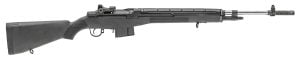
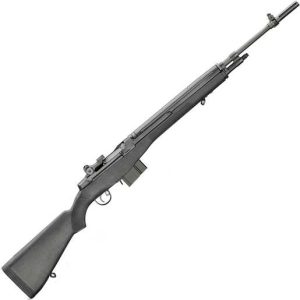
The Springfield M1A is the civilian, semi-auto version of the M14 battle rifle: a full-power .308 that runs forever, wears the finest iron sights ever issued, and costs and weighs more than a modern AR-10. It is heritage steel in an age of polymer.
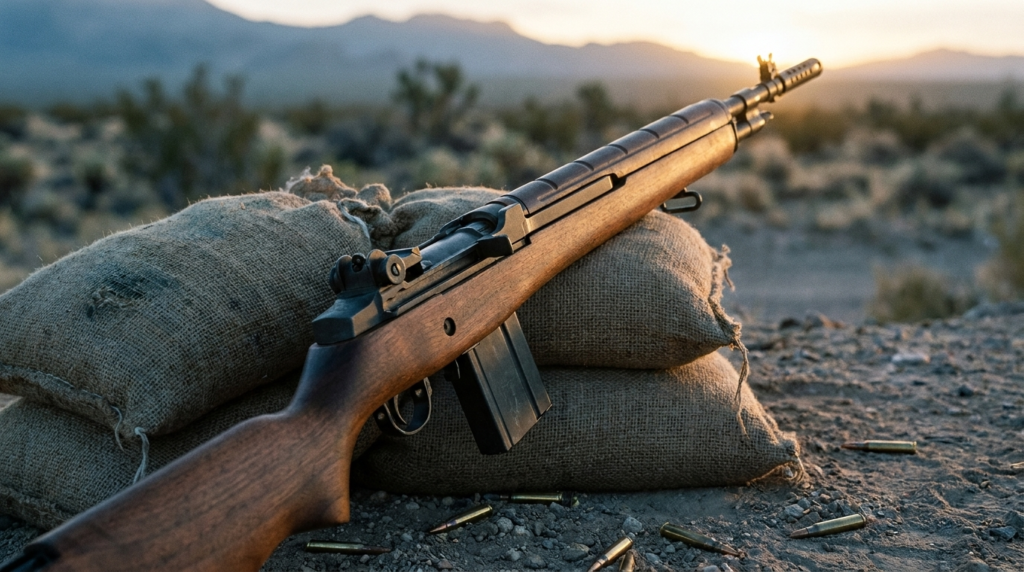
Springfield Armory has been building the M1A since 1974, and it remains the closest thing you can buy to a real M14 without a machine gun stamp. It carried American troops from Vietnam to the modern designated-marksman role, and its reputation for reliability and reach is entirely earned. This is a rifle with a soul.
I put a walnut M1A through a proper workout, running it at the range and shooting the irons out to distance. What you get is a rifle that simply works, sights that make a scope feel optional, and .308 authority in a package that feels like history. What you also get is nearly ten pounds of nose-heavy steel and a two-thousand-dollar price tag. Whether that trade is worth it comes down to what you want the rifle to be.
Best For: Traditionalists, iron-sight shooters, collectors, and anyone who wants a full-power .308 with genuine military lineage. See how it ranks in our best .308 rifles guide.
Why the M1A Is Built the Way It Is
The M1A exists to put a real M14 in civilian hands, and Springfield changed as little as legally possible to do it. The M14 was the U.S. military’s full-power battle rifle, itself the final evolution of the M1 Garand. The M1A is the same rifle, minus the select-fire capability.
That lineage is the whole point. You get the Garand’s rugged gas system and rotating bolt, a long-stroke action that shrugs off dirt and grit, and a rifle designed to send full-power .308 accurately at real distance. Where a modern .308 AR is a parts-kit built for modularity, the M1A is a forged, machined, bedded rifle built like a tool from another era.
The tradeoffs come straight from that heritage. It is heavy, because battle rifles were. Its sights are GI aperture irons, which are superb but assume you will shoot without glass. Scope mounting was an afterthought, bolted on decades later, and it still is the M1A’s weakest area. None of that is an accident. The M1A is what it is because the M14 was what it was, and buyers want exactly that. If easy scope mounting matters more to you, the G3 pattern is worth a look: our PTR-91 guide covers the models with a welded rail.
Springfield M1A Variants
The M1A comes in a whole family of configurations. Here’s how to choose.
The classic full-length rifle with a 22-inch barrel, GI aperture sights, and walnut or black composite furniture. This is the M14 experience and the one to buy if you want the real thing. Best For: traditionalists who want the full-size, full-power original.
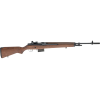
The accuracy upgrade: a National Match barrel, match sights and a tuned trigger over the Standard. If you plan to shoot the M1A for groups and want the best factory accuracy without going full custom, the Loaded is the sweet spot. Best For: shooters who want match-grade accuracy from the box.
A handier 18-inch barrel with a forward scout rail and muzzle brake, lighter and quicker than the Standard while keeping most of the ballistics. A great do-everything M1A. Best For: shooters who want a lighter, more maneuverable full-power rifle.
The shortest, most compact M1A: a 16.25-inch barrel, a proprietary muzzle brake, and a forward optics rail. It kicks harder and is loud, but it is the truck-gun and close-country M1A. Best For: those who want the most compact, fast-handling M1A.
Competitor Comparison
The full-power semi-auto market has moved on to the AR-10 pattern. Here’s how the M1A stacks against the guns you’ll cross-shop.
A modern .308 AR like the PSA PA-10 is lighter, cheaper, takes optics natively on a full-length rail, and is endlessly modular. It does most of what the M1A does for less money and weight. What it lacks is the heritage, the GI irons, and the soul. For pure practicality, the AR wins; for character, the M1A does.
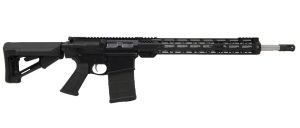
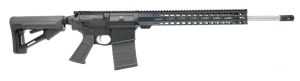
The SCAR 17 is the modern premium battle rifle: lighter, optics-ready, and arguably more capable. It also costs nearly double the M1A. If money is no object and you want the current-issue answer, the SCAR is it. The M1A gives you 80 percent of the capability with far more history for half the price.
If you only want precision and don’t need semi-auto, a bolt gun like the Remington 700 shoots tighter for a fraction of the price and half the weight. The M1A’s answer is fast follow-up shots and battle-rifle toughness. Different tools for different jobs.
Verdict: Buy the M1A for what it is, a real M14 with unmatched heritage and iron sights. If you want the lightest, cheapest, most practical full-power semi-auto, a modern .308 AR is the smarter money.
| Dimension | Springfield M1A | .308 AR (PA-10) | FN SCAR 17S | Bolt .308 (700) |
|---|---|---|---|---|
| Street Price (2026) | $1,699-$1,899 | $900-$1,600 | $3,500-$4,000 | $700-$1,300 |
| Action | Semi (M14) | Semi (AR) | Semi | Bolt |
| Weight | ~9.5 lb | ~8.5 lb | ~8.0 lb | ~7.5 lb |
| Optics Mounting | Awkward side-mount | Full-length rail | Full-length rail | Easy, D&T |
| Iron Sights | Best in class (GI) | Add-on | Excellent folding | None |
| Heritage | Genuine M14 | Modern | Modern issue | Classic |
| Our Score | 8.4/10 | 8.5/10 | 9.0/10 | 8.7/10 |
| Best For | Heritage & irons | Value & optics | Premium modern | Pure precision |
Features and Build Quality
The Action and Gas System
The M1A runs the M14’s proven gas system, and it is the reason for the rifle’s legendary reliability. A gas piston and long op-rod drive a rotating bolt, a design descended straight from the M1 Garand. It is over-built, tolerant of filth, and cycles full-power .308 without drama in conditions that choke fussier rifles.
That toughness is the M1A’s calling card. It feeds from steel detachable magazines, locks up tight, and keeps running when it’s dirty, wet, or cold. There’s a heft and solidity to cycling the action that a stamped or polymer rifle can’t replicate. This is machined steel doing a machined-steel job.
Sights, Stock, and the Optics Problem
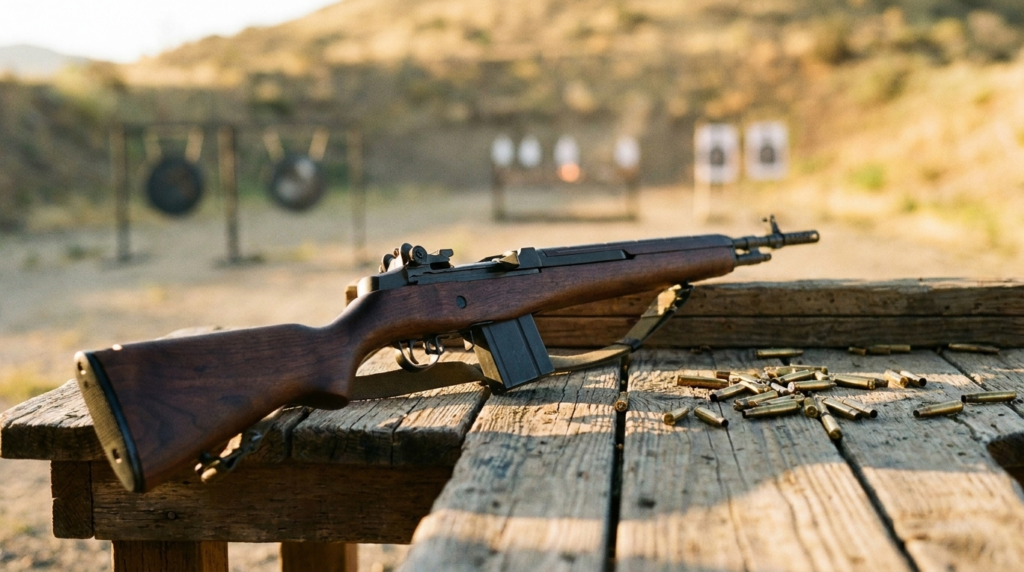
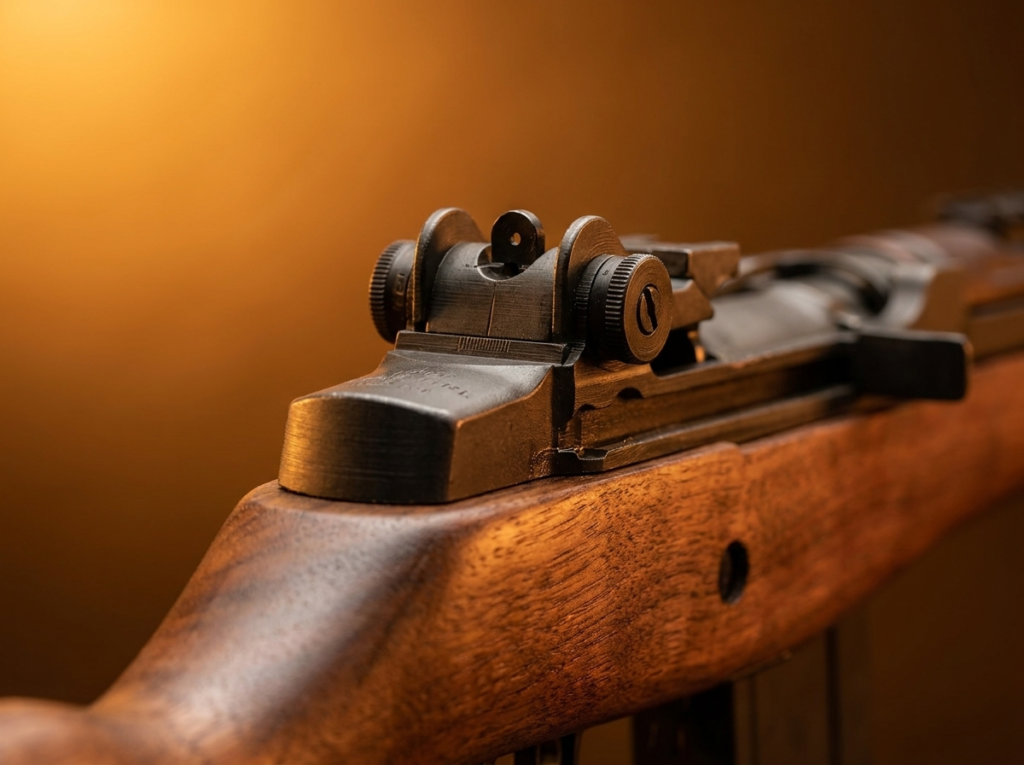
The GI aperture sights are the best iron sights you can get on a factory rifle, period. The rear aperture is adjustable for windage and elevation in precise clicks, and with practice you can ring steel at 500 yards with irons alone. Shooters who learn these sights often stop wishing for a scope.
Which is good, because mounting glass is the M1A’s Achilles’ heel. There is no top rail from the factory on most models; you bolt a scope mount to the side of the receiver, and a cheap or poorly fitted mount can shift zero. The Scout and SOCOM models add a forward rail for a scout scope or red dot, which sidesteps the problem. The walnut or composite stock is solid, and a properly bedded M1A shoots noticeably better than a loose one, which is why accuracy nuts glass-bed their rifles.
At the Range: 300-Round Test
I ran roughly 300 rounds of mixed .308 through a Standard M1A over three sessions, shooting the irons at 100 and 200 yards and testing feel, recoil, and reliability. Here’s how the old warhorse held up.
Reliability
Perfect. Not a single malfunction across the test with a mix of surplus 7.62 NATO and commercial .308, from good magazines. The M1A eats what you feed it and asks for nothing. This is exactly the reputation the M14 built over decades, and the civilian rifle honors it. Use quality GI-spec magazines and it just runs.
Accuracy
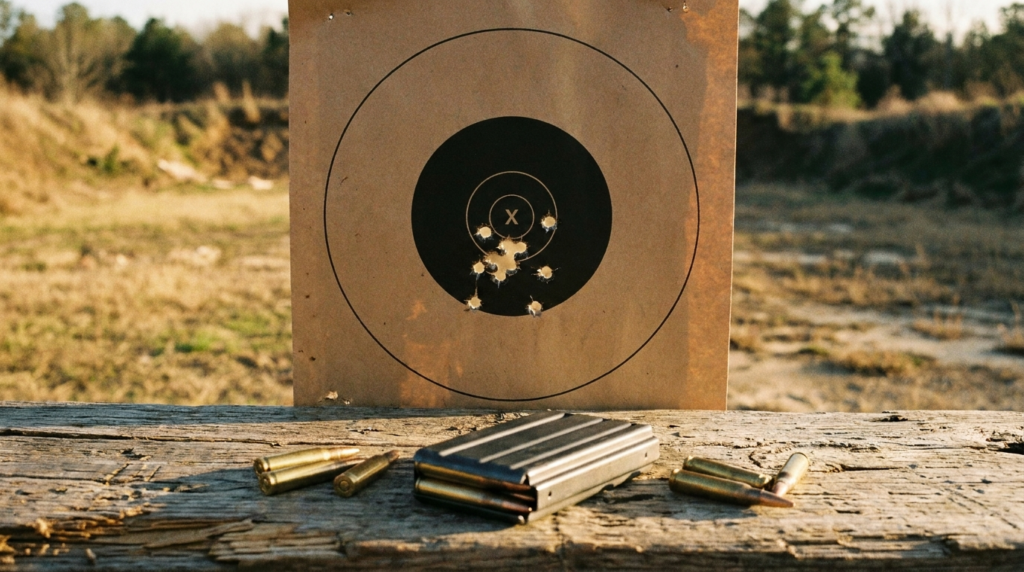
A Standard M1A with irons and decent ammo will hold around 2 to 2.5 MOA, which is excellent for a battle rifle on iron sights. Step up to a Loaded or National Match with its match barrel and the groups tighten toward 1.5 MOA or better. The rifle rewards good ammo and a bedded stock; feed it match .308 and it shoots to its heritage.
Recoil and Handling
The weight that makes the M1A a chore to carry pays you back in recoil. Nearly ten pounds of steel soaks up .308 into a firm but controllable push, and the design tracks back onto target well for a full-power rifle. The balance is nose-heavy, so offhand shooting takes some muscle, but from a supported position it’s rock steady. This is a rifle that rewards a good position over a fast one.
Ammunition Log
- Federal Gold Medal Match 168gr: 60 rounds, best accuracy
- PMC Bronze 147gr FMJ: 120 rounds, reliable plinking
- Military surplus 7.62 NATO 147gr: 100 rounds, ran flawlessly
- Hornady 150gr SST: 20 rounds, accurate hunting load
A note on gas and ammo: the M1A’s gas system is tuned for standard-pressure, medium-burn-rate powders. Very slow-burning magnum-style .308 loads can bend the op-rod over time. Stick to standard 147-168gr loads or use an adjustable gas plug for heavier bullets.
Performance Testing Results
Reliability (9/10)
Battle-rifle dependable. The M14 gas system runs through dirt, water and neglect, and the civilian M1A inherits every bit of it. Feed it GI-spec magazines and standard-pressure ammo and malfunctions are essentially non-existent. This is the rifle’s whole reputation and it’s fully deserved.
Accuracy (8/10)
2 to 2.5 MOA on irons from a Standard, better with a Loaded or National Match barrel and good ammo. That’s strong for a full-power semi-auto, especially one designed as a battle rifle rather than a target gun. The optics-mounting headache is the only thing keeping it from a higher score.
Handling (7/10)
Heavy and nose-forward. The weight tames recoil and steadies a supported shot, but it wears on you offhand and on the carry. The GI sights are a handling triumph; the balance is a handling compromise. A shorter Scout or SOCOM helps if maneuverability matters.
Heritage and Value (7/10)
The heritage is priceless; the value math is harder. At around two thousand dollars, a modern .308 AR undercuts it on price, weight, and optics-friendliness. You’re paying for real steel, real walnut, and a genuine M14. Worth every penny to the right buyer, a tough sell to the pure pragmatist.
Common Problems and Solutions
- Scope zero drifts or won’t hold: The side-mount is the culprit. Use a quality Springfield or reputable aftermarket mount, torque it correctly, and consider a scout-scope setup instead. On Scout and SOCOM models, use the factory forward rail.
- Accuracy is mediocre: A loose stock fit costs groups. Glass-bedding the action or fitting a quality stock tightens things up dramatically, and match ammo makes a bigger difference on the M1A than on most rifles.
- Bent op-rod worries: Avoid slow-burning magnum-pressure .308 loads, which stress the gas system. Stick to standard 147-168gr ammo, or install an adjustable gas plug if you want to shoot heavier hunting loads regularly.
- Magazine fit is stiff: The M1A rocks the magazine in front-first like an AK. Seat the front lug first, then rock back until it clicks. Quality GI-spec mags fit best; some cheap aftermarket mags are out of spec.
Who Should NOT Buy the Springfield M1A
The M1A is a magnificent rifle, but it is the wrong choice for several buyers. Here’s who should look elsewhere.
- The optics-first shooter: If you want to run a scope or red dot as your primary sight, a .308 AR with its full-length rail is far easier and cheaper. The M1A fights you on glass.
- The weight-conscious buyer: Nearly ten pounds is a lot to carry. If you want a light full-power rifle, an AR-10 or a lightweight bolt gun like the Ruger Precision in 6.5 will save your shoulders.
- The value shopper: Two thousand dollars buys a lot of practical rifle elsewhere. If you don’t care about the M14 heritage, you’re overpaying for history.
- The pure precision shooter: If tiny groups are the only goal, a bolt-action .308 shoots tighter for less. The M1A trades ultimate precision for semi-auto firepower and toughness.
The Verdict
The Springfield M1A is the last of the true battle rifles you can buy new, and it still earns its keep. It runs through anything, wears the finest iron sights ever issued, and delivers full-power .308 with a solidity no polymer rifle can match. As a piece of living history that still shoots to distance, nothing else is quite like it.
It asks you to accept its era. It’s heavy, it’s nose-forward, mounting a scope is a project, and it costs as much as a nicer, lighter, more practical AR-10. None of that matters to the buyer who wants a real M14, and all of it matters to the buyer who just wants a working .308. Know which one you are before you buy.
Buy the Standard for the classic experience, the Loaded if you want accuracy, or a Scout or SOCOM if you want it handier. Learn the irons, feed it standard-pressure ammo, and you’ll own a rifle that shoots as well as it did fifty years ago and will outlive you. Some rifles are appliances; the M1A is an heirloom.
Final Score: 8.4/10 – A heavy, expensive, gloriously over-built battle rifle that rewards the shooter who wants exactly what it is.
Best For: Iron-sight shooters, traditionalists, and collectors who want a genuine full-power M14. See the full field in our best .308 rifles guide.
FAQ: Springfield M1A
A modern .308 semi-auto is our Ruger SFAR review.
Is the Springfield M1A a good rifle?
Yes, it is one of the most reliable and well-built semi-autos you can buy. As a full-power .308 with genuine M14 heritage and superb iron sights, it excels. Its weaknesses are weight, price and awkward optics mounting, so whether it is right for you depends on what you want from a .308.
What is the difference between the M1A and the M14?
The M14 is the U.S. military's select-fire battle rifle. The Springfield M1A is the civilian, semi-automatic-only version of that same rifle. Mechanically they are nearly identical apart from the full-auto capability, which the M1A lacks.
How much does a Springfield M1A cost?
A Standard Issue M1A runs about $1,520 to $1,720 street, with an MSRP near $1,987. Loaded, Scout Squad and SOCOM models run $1,900 to $2,200, and National Match and Super Match models climb well past that. These are premium prices for a premium rifle.
What caliber is the Springfield M1A?
The M1A is chambered in .308 Winchester, which also accepts 7.62x51mm NATO. Some current models are also offered in 6.5 Creedmoor for flatter long-range performance, but .308 is the classic and most common chambering.
Can you put a scope on an M1A?
You can, but it is the M1A's weakest area. Most models need a side-mounted scope base bolted to the receiver, and a poorly fitted mount can shift zero. Scout Squad and SOCOM models add a forward scout rail that makes mounting a scout scope or red dot much easier.
M1A or AR-10, which is better?
They serve the same role differently. A modern .308 AR like the PSA PA-10 is lighter, cheaper and far easier to scope. The M1A gives you battle-rifle toughness, unmatched iron sights and genuine M14 heritage. Choose the AR for practicality, the M1A for character and history.
How accurate is a Springfield M1A?
A Standard M1A holds about 2 to 2.5 MOA on irons with good ammo, which is excellent for a battle rifle. Loaded and National Match models with match barrels tighten that toward 1.5 MOA or better. Glass-bedding the action and using match ammo improve accuracy noticeably.
Where is the Springfield M1A made?
The M1A is made in the United States, at Springfield Armory in Geneseo, Illinois. Springfield has produced the M1A there since 1974, and the rifles are built from forged and machined steel components.
4,021+ Gun & Ammo Deals
Updated daily from 200+ top retailers. Filter by category, caliber, action type, and price.
Related Guides