

Affiliate disclosure: This Winchester Model 70 review contains affiliate links. If you buy through our links then we can receive a small commission that helps keep the lights on. You don’t pay anything more.
- Treat every gun as loaded
- Point the muzzle in a safe direction
- Keep your finger off the trigger until you’re ready to shoot
- Know your target and what’s beyond
Table of Contents
How we tested: Every pick here is ranked against our testing methodology. Minimum round counts, accuracy and reliability protocols, the failures that disqualify a gun.
Winchester Model 70 Review: Featherweight .270 Win
Our Rating: 8.3/10
This Winchester Model 70 review covers one rifle: my own Featherweight in .270 Winchester, bought new in the spring of 2026 and shot for 180 rounds over three range sessions that June. It fed and extracted every round, and its three-shot groups averaged 1.14 inches at 100 yards across four factory loads.
- MSRP: $1,369.99 for the .270 Win Featherweight, Winchester item 535200226
- Street Price: from about $1,115 (Use our live pricing for the best up to date deal)
- Caliber: .270 Winchester as tested; Winchester lists 14 Featherweight chamberings
- Action: Bolt action, controlled round feed with a claw extractor and blade ejector
- Barrel Length: 22 inches, Featherweight contour, free-floated
- Rifling/Twist Rate: 1:10
- Muzzle: Recessed target crown, no threads
- Capacity: 5 rounds in the magazine, hinged steel floorplate
- Overall Length: 42 3/4 inches
- Weight: 7 lb bare on Winchester’s spec sheet; 8 lb 1 oz with my scope and mounts
- Length of Pull: 13 3/4 inches
- Stock: Grade I black walnut, satin finish, cut checkering, Schnabel fore-end, Pachmayr Decelerator recoil pad
- Trigger: M.O.A. trigger, 3 lb 9 oz trigger pull on my gauge
- Safety: Three-position, on the bolt shroud
- Sights: None; receiver drilled and tapped for scope bases
Pros
- Zero feed failures in 180 rounds
- Three-position safety locks or frees the bolt
- Crisp, creep-free M.O.A. trigger
- Walnut, cut checkering and polished steel
Cons
- Thin barrel walks after three shots
- No sights, bases or rings included
- Pricier than its push-feed rivals
Here’s every .270 Win Featherweight for sale at the stores we track. The price at the top of each card is not always the lowest row on it, so read every row before you buy.
Quick Take
Winchester still calls the Model 70 the Rifleman’s Rifle, and the Featherweight is the version most hunters picture: walnut, blued steel, controlled round feed and a three-position safety. It never failed to feed in testing, and its trigger broke at 3 pounds 9 ounces.
It is not a benchrest rifle. It’s a seven-pound sporter built to be carried all day.
The Winchester Model 70 price is the catch. Winchester lists the .270 at $1,369.99, and the live card above led with $1,169.99 at Sportsman’s Warehouse on October 12, 2026. What you pay for is the action, the wood and how the rifle carries.
Best For: Deer, antelope and hog hunters who want a classic walnut rifle with controlled round feed and plan to keep it for decades. If the chambering is already settled, the best .270 Winchester rifles list shows what else it’s up against.
Why Winchester Built the Model 70 This Way
Winchester started building the Model 70 in 1936 as the follow-up to its Model 54 of 1925, the rifle that introduced the .270 Winchester. The action it settled on is the reason the Model 70 still sells.
A claw extractor takes hold of about a quarter of the case base as the round leaves the magazine and doesn’t let go until the empty is thrown clear. That’s controlled round feed. The extractor behind it is Peter Paul Mauser’s idea, now more than a century old.
Because the bolt has hold of the cartridge the whole way, a round can’t tip loose when the rifle is canted. Winchester’s manual adds that a cartridge can be extracted even if it is not fully chambered.
The three-position safety is the other half of the idea. All the way back, it locks the firing pin and the bolt handle. In the middle, the firing pin stays locked but I can lift the bolt handle and empty the chamber with the rifle still on safe. Forward is fire.
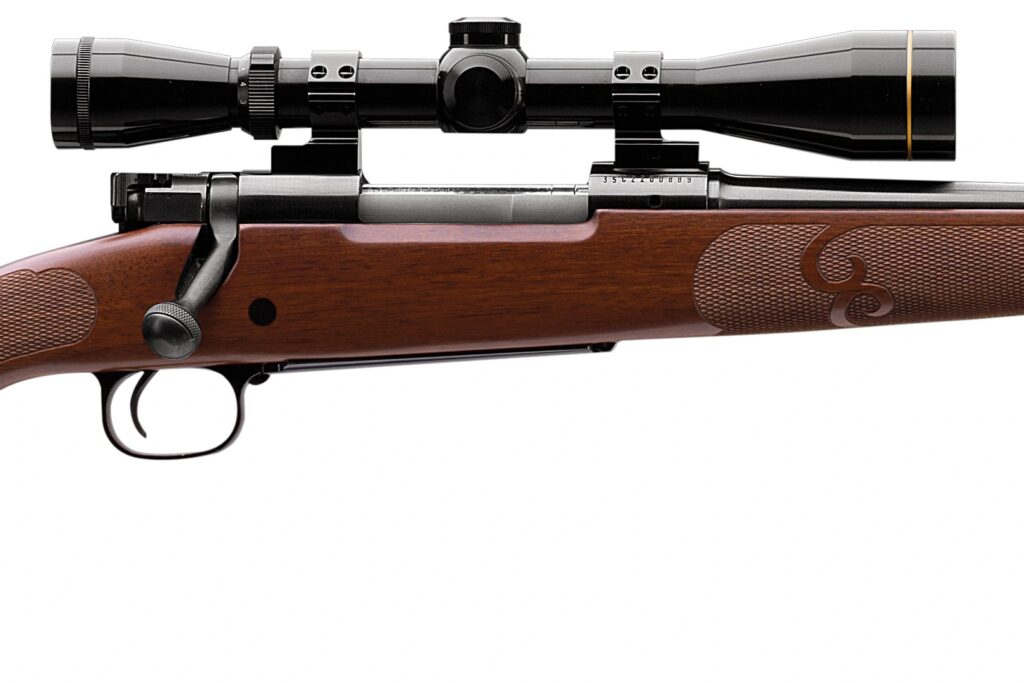
The Featherweight arrived in 1952 with a slimmer barrel and stock, and that profile is the one most hunters picture when they hear the name. Marine sniper Carlos Hathcock used a Model 70 in Vietnam in 1966.
Variants: Which Winchester Model 70 Should You Buy?
Winchester’s catalog runs from walnut sporters to stainless rifles with muzzle brakes, and these three cover most buyers. For all 16 current models side by side, see our Winchester Model 70 models explained guide.
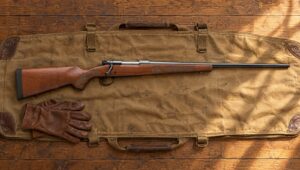
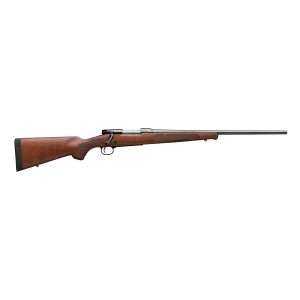
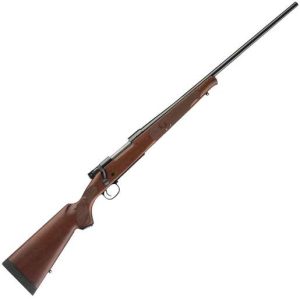
This is the rifle I tested. It wears Grade I black walnut with a Schnabel fore-end, a slim Featherweight-contour barrel and polished blued steel. Winchester lists it at 6 lb 12 oz in short-action chamberings such as .243 Win and .308 Win, 7 lb in .270 and .30-06, and 7 lb 4 oz in the belted magnums. Best For: hunters who want the classic walnut Model 70 at the lowest list price in the line.
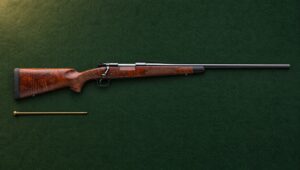
Winchester dresses the same action in Grade V/VI black walnut with a shadowline cheekpiece and an ebony fore-end tip, then adds high-gloss bluing, a steel grip cap and steel bottom metal. All of that weighs more: 7 lb 12 oz to 8 lb 8 oz on Winchester’s list. Best For: buyers who want figured walnut and gloss bluing on the same action.
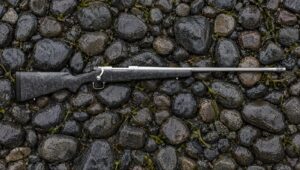
For rain, snow and salt air there’s the current all-weather Model 70: a matte stainless barreled action with a fluted barrel and muzzle brake, set in a Bell and Carlson composite stock with an aluminum bedding block. Winchester says 1 MOA accuracy can be expected from it. Best For: hunters who don’t want to baby walnut.
Competitor Comparison
Four bolt actions get cross-shopped against the Featherweight most, and only one of them shares its controlled round feed. Each heading shows the price that led the live card on October 12, 2026.
Winchester Model 70 vs Remington 700 SPS (from $648.22)
The Winchester Model 70 vs Remington 700 argument is as old as the 700 itself. The 700 is a push-feed action with a two-position safety, and RemArms lists the current SPS with a Timney Impact 700 trigger and a hinged floorplate.
Our Remington 700 review covers the heavy-barreled SPS Tactical, which shot under an inch with match ammo. Its aftermarket for stocks, triggers and barrels dwarfs the Winchester’s, so it’s the one to buy if you plan to rebuild a rifle piece by piece.
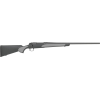

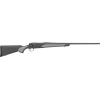
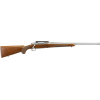
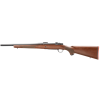
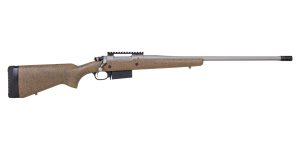
Ruger M77 Hawkeye Hunter (from $1,088.99)
This is the closest rival, because Ruger builds the Hawkeye around a non-rotating, Mauser-type controlled round feed extractor and a three-position safety of its own. The Hawkeye Hunter adds a stainless barreled action, a threaded muzzle and a 20 MOA Picatinny rail over Ruger’s integral scope mounts.
Ruger’s list price is $1,499, which is $129 more than the Featherweight’s. On the street it went the other way: the Hawkeye card led about $25 below the .270 I shot. I gave the Ruger 8.1 in our Ruger M77 Hawkeye review, and I’d still take the Winchester’s trigger and slimmer stock over the Ruger’s threads and rail.

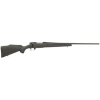
Weatherby Vanguard (from about $505)
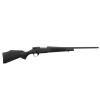
The Vanguard is the value pick. Weatherby guarantees a three-shot group of .99 inch or less at 100 yards from a cold barrel with its factory or premium ammunition, and the rifle comes with a two-stage trigger and a three-position safety. It’s a push-feed action with a recessed bolt face.
Winchester makes no written promise like that for the Featherweight, and my rifle’s 1.14-inch average would not have met Weatherby’s standard. So the Vanguard promises tighter groups for less than half the money. It is also the heavier rifle, at 7.5 to 8 pounds for the synthetic model in our Weatherby Vanguard review.

Browning X-Bolt 2 (from $769.99)
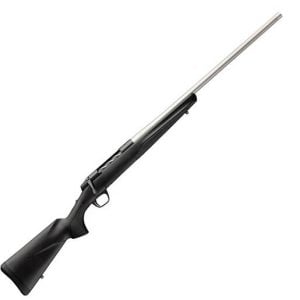
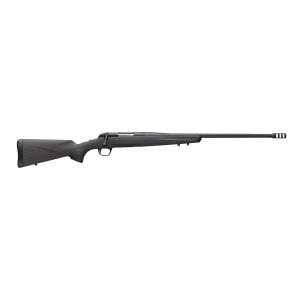
Browning and Winchester Repeating Arms are both based in Morgan, Utah, and the X-Bolt 2 is the modern answer to the Model 70’s tradition. It has a 60-degree bolt lift, a top-tang safety with a bolt unlock button, a detachable rotary magazine and a DLX trigger that Browning presets at 3.5 pounds.
The X-Bolt 2 Hunter comes in walnut too, and Browning’s own site lists it at $1,249.99 to $1,259.99. The Browning X-Bolt review has the details. A detachable magazine and a short bolt throw are the reasons to choose it.
Verdict: The Hawkeye is the only one of the four that matches the Model 70’s feeding and safety. The other three do more per dollar. None of them carries like a Featherweight.
| Dimension | Model 70 Featherweight .270 | Remington 700 SPS | Ruger Hawkeye Hunter | Weatherby Vanguard | Browning X-Bolt 2 |
|---|---|---|---|---|---|
| Lead price on our card | $1,113.89 | $648.22 | $1,088.99 | $507.09 | $769.99 |
| Feed | Controlled round | Push feed | Controlled round | Push feed | Push feed |
| Safety | Three-position, bolt shroud | Two-position | Three-position | Three-position | Top tang, bolt unlock button |
| Trigger | M.O.A., adjustable 3 to 5 lb | Timney Impact 700 | LC6 | Two-stage, adjustable to 2.5 lb | DLX, preset 3.5 lb |
| Our review score | 8.3/10 | 8.0/10 | 8.1/10 | 8.7/10 | 8.7/10 |
| Best for | Walnut and a claw extractor | Building and upgrading | Controlled feed with threads | A written accuracy guarantee | Detachable magazine, short bolt lift |
Testing Protocol
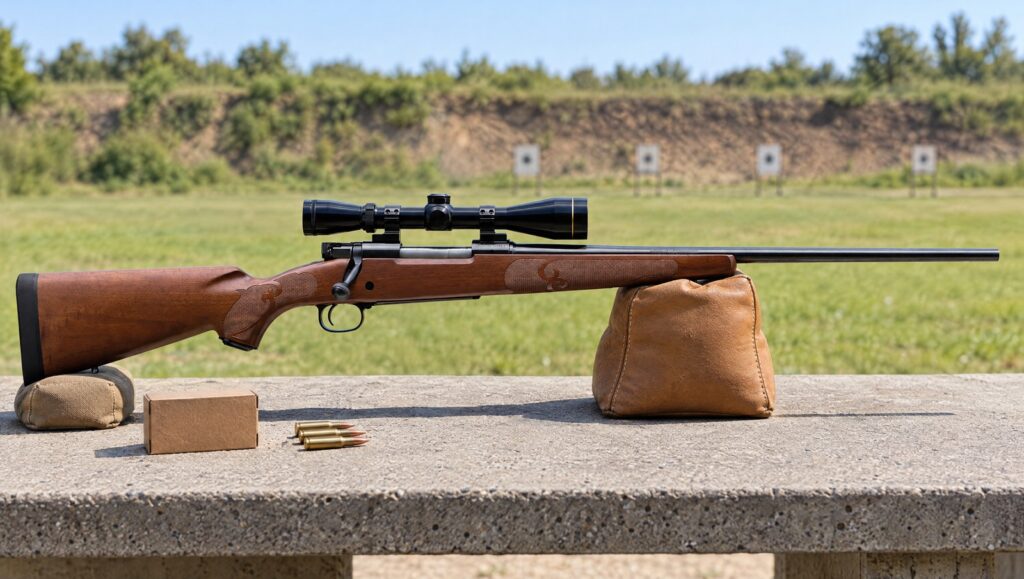
I shot the Winchester Model 70 Featherweight on June 6, June 13 and June 20, 2026, from a covered bench at 100 yards, with 180 rounds of four factory .270 loads. The scope was a Leupold VX-3HD 3.5-10×40 in Leupold BackCountry ring mounts, and the rifle weighed 8 pounds 1 ounce that way.
Phase 1: Break-In
The first 20 rounds went downrange on June 6 at 74 degrees under overcast skies, all of them Federal Power-Shok. Winchester’s break-in advice is to clean with a copper solvent after each of the first ten shots. I did, and then used ten more rounds to zero an inch and a half high at 100 yards.
Before the first shot I checked the two action screws at Winchester’s 35 inch-pounds and measured the trigger pull. Five pulls on a Lyman gauge averaged 3 pounds 9 ounces, with no creep I could feel. It stayed where the factory set it.
Phase 2: Reliability
The next 90 rounds were a mix on June 13 at 81 degrees: 25 Winchester Deer Season XP, 25 Federal Power-Shok, 25 Hornady Precision Hunter and 15 Remington Core-Lokt. I ran the bolt fast, slow, from the shoulder and from the bench, and loaded the magazine to its full five each time.
Malfunction log: none. No failure to feed, no failure to extract, no failure to eject. I short-stroked the bolt on purpose twice, and both times the claw kept its grip on the round and chambered it on the next push instead of jamming a second cartridge in behind it.
I also cycled a full magazine through the action with the rifle rolled on its side and again held upside down, muzzle downrange, without firing. All five fed and ejected both times. Work the bolt slowly and the blade ejector drops the empty beside the action. Work it hard and the case lands six feet away.
One thing did go in the log. A single round dropped straight into the chamber took a firm shove on the bolt before the extractor snapped over it. Five tries, same result each time.
Phase 3: Accuracy
The last 70 rounds were for groups on the morning of June 20, at 68 to 77 degrees with wind under 5 mph. I fired five three-shot groups with each load from a front rest and rear bag, waiting three minutes between groups so the barrel could cool.
| Load | Average of five 3-shot groups | Best group |
|---|---|---|
| Winchester Deer Season XP 130gr | 1.02 in | 0.84 in |
| Hornady Precision Hunter 145gr ELD-X | 1.11 in | 0.93 in |
| Federal Power-Shok 130gr | 1.19 in | 0.98 in |
| Remington Core-Lokt 130gr | 1.24 in | 1.06 in |
That works out to a 1.14-inch average for all 20 groups. Two five-shot strings of Deer Season XP, fired without letting the barrel cool, measured 1.78 and 1.91 inches. Shots four and five climbed toward one o’clock both times.
Ammunition Log
- Winchester Deer Season XP 130gr polymer tip, 50 rounds
- Federal Power-Shok 130gr Jacketed Soft Point, 60 rounds
- Hornady Precision Hunter 145gr ELD-X, 40 rounds
- Remington Core-Lokt 130gr Pointed Soft Point, 30 rounds
Tracking and Observations
After 180 rounds the rifle showed almost no wear. The bolt lugs had even contact marks, the extractor claw was unmarked, and the jeweling on the bolt body had one faint track where it rides the receiver.
Zero held between sessions. My first cold-bore shots on June 13 and June 20 both landed within half an inch of the zero I set on June 6, and the action screws were still at 35 inch-pounds. A dollar bill slid under the barrel all the way back to the receiver before and after the test.
What This Means for You
- Reliability: It was reliable at every bolt speed and every angle I tried.
- Accuracy Expectation: Plan on an inch to an inch and a quarter with factory hunting loads.
- Ammo Preference: Mine shot Winchester Deer Season XP 130gr best and Remington Core-Lokt worst, with about a fifth of an inch between them.
- Maintenance: Winchester recommends a copper solvent for the bore and only a light film of oil, because oil that drains into the wood softens it.
- Upgrade Impact: A scope and a way to mount it are the only additions it needs.
Performance Testing Results
Each scorecard number in this Winchester Model 70 review comes from the 180-round test above. The overall score counts reliability and value twice.
Reliability (9/10)
The rifle was reliable for all 180 rounds I fired. I’m holding back the last point because 180 rounds is a short test, and because of the stiff single-loading I logged in Phase 2.
Value (7/10)
Every rival in the comparison led its price card below the .270 I shot. The Winchester Model 70 price buys controlled round feed, a three-position safety and cut-checkered walnut, and that’s worth it only if you care about those things.
Accuracy (8/10)
An inch and change for three shots with factory hunting ammo is good for a seven-pound sporter, and it’ll hold a deer’s vitals well past 300 yards. The five-shot strings in Phase 3 are where it lost its points.
Features (8/10)
The safety, the trigger, the hinged floorplate and the Pachmayr recoil pad are all first rate. But the Featherweight has no iron sights and no muzzle threads, and mine came with filler screws in the receiver instead of scope bases.
Ergonomics and Recoil (9/10)
Handling is the Featherweight’s best argument. The stock is slim through the wrist, the Schnabel tip gives the front hand a place to stop, and the rifle comes to the shoulder with the scope already lined up. Recoil from 130-grain loads is a quick, firm push that the pad soaks up well.
Fit, Finish, and Quality Control (9/10)
Sharp, even checkering with no overruns at the borders. That was my first impression, and it held up under a loupe. Winchester gives the metal a soft brushed polish and jewels the bolt, and I could not find a gap where wood meets steel. Both sides of the barrel channel are even.
Technical Deep Dive
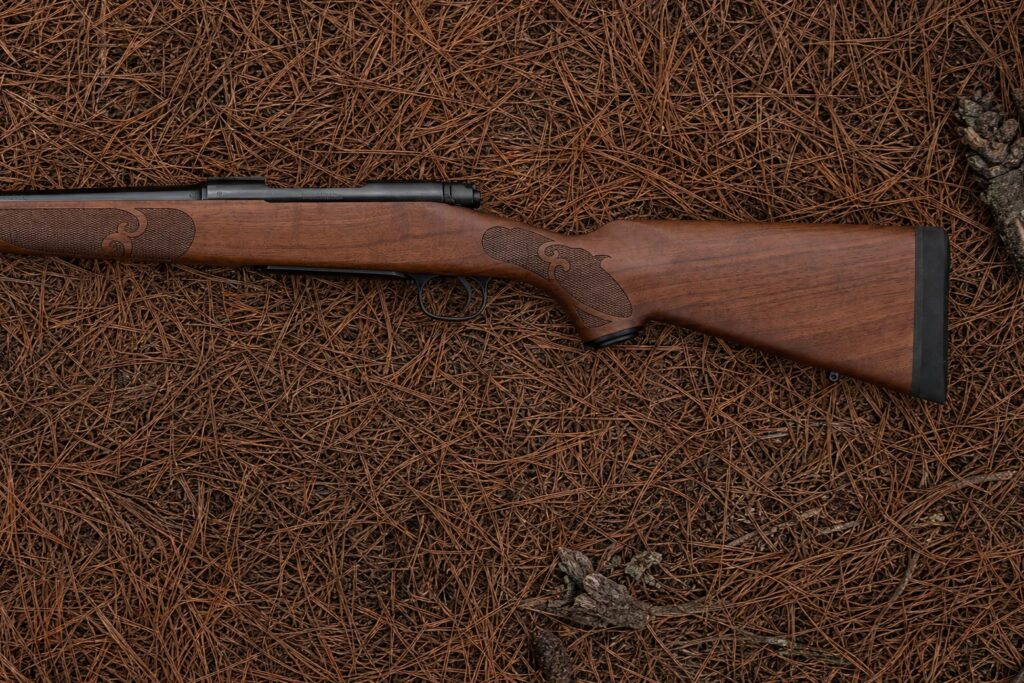
The Featherweight is a forged steel receiver, a button-rifled barrel and a one-piece walnut stock, and each part has a detail that explains how the rifle shot. Here it is, apart on the bench.
Action and Bolt
The receiver is forged with a flat bottom, and its recoil lug is machined as part of it instead of being sandwiched between barrel and action. On the bolt you get two locking lugs, a long claw extractor on the right side and a fixed blade ejector.
Barrel and Bedding
Winchester beds the receiver in epoxy at the front and the rear and leaves the barrel free-floated. It is a thin Featherweight contour, button rifled, with a recessed target crown and a 1:10 twist. Nothing touches it forward of the receiver.
Trigger
The M.O.A. trigger is a three-lever design, and every Model 70 made since 2008 has it. Winchester’s manual says it’s preset at about 3 1/2 pounds and adjusts between 3 and 5. Getting at the screw means pulling the two action screws and lifting the action out of the stock. Winchester recommends a gunsmith do it.
Stock, Magazine and Bottom Metal
Grade I black walnut, satin finish, 13 3/4-inch length of pull. The bottom metal is one piece of alloy with a steel floorplate, and its release sits in front of the trigger guard. Press it with the safety in the middle position and the magazine empties into your hand.
| Component | Specification | Benefit |
| Extractor | Claw, controlled round feed | Holds the round from magazine to ejection |
| Ejector | Fixed blade | Ejection force follows your bolt speed |
| Safety | Three-position | Unload with the firing pin locked |
| Trigger | M.O.A., 3 to 5 lb range | No creep to pull through |
| Bedding | Epoxy, front and rear | Zero held between my sessions |
| Barrel | 22 in, button rifled, free-floated | Keeps the rifle at seven pounds |
| Recoil pad | Pachmayr Decelerator | Softens a seven-pound .270 |
Pre-64 vs Current Winchester Model 70
A pre-64 rifle is a Model 70 made from 1936 through 1963, with the original controlled round feed action. Winchester’s own serial number record ends 1963 at number 581471 and starts 1964 at 700000.
The post-64 rifles began with a cost-cutting redesign that swapped the claw for a push-feed bolt. Winchester returned the pre-64 style action to general production in 1992. Production in New Haven, Connecticut ended in 2006, and the rifle came back in 2008 with the M.O.A. trigger.
So a current Featherweight gives you the claw extractor that collectors pay for, plus a trigger and bedding the old rifles never had. Does that make a new one the better hunting rifle? For most people, yes.
And if you’re looking at a used post-64 or pre-64 rifle, the serial number on the right side of the receiver, just forward of the ejection port, dates it. Run it through the Winchester serial number lookup before you pay a pre-64 price.
Parts, Accessories and Upgrades
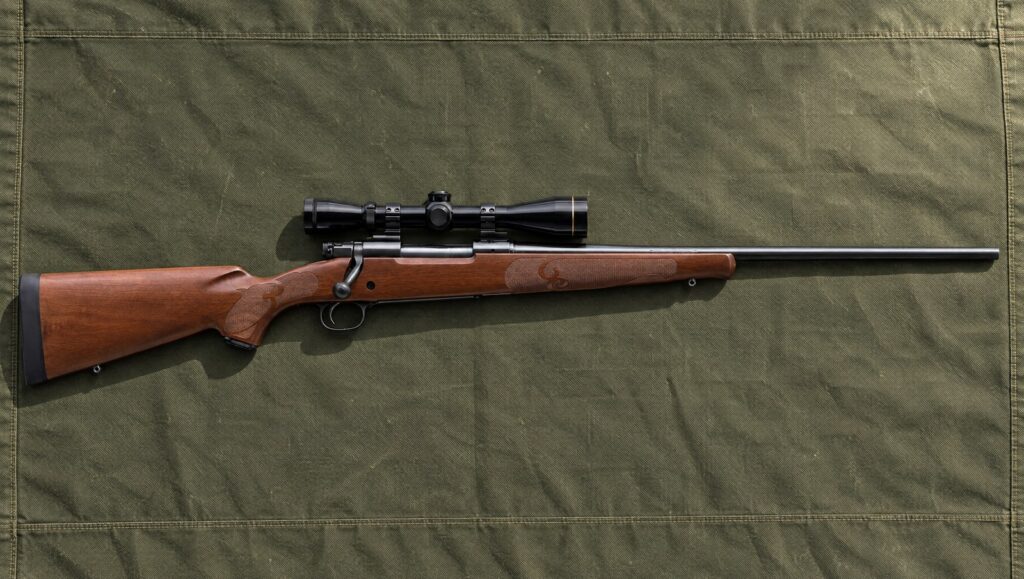
The Featherweight ships without scope bases or rings, so a scope and a way to mount it are the first purchases. The costs below are Leupold’s list prices on October 12, 2026.
| Upgrade Category | Recommended Component | Why It Matters | Cost Estimate |
| Scope mounts | Leupold BackCountry Winchester 70 two-piece ring mounts, 1 inch, medium | Aluminum, 3.2 oz, and they bolt straight to the receiver | $89.99 |
| Scope | Leupold VX-3HD 3.5-10×40 CDS-ZL | 13.1 oz, so the rifle stays near eight pounds | $599.99 |
| Trigger weight | Factory M.O.A. trigger, adjusted | Goes as low as 3 lb if the factory setting feels heavy | Gunsmith labor |
| Sling | Any sling with standard swivels | The studs are already in the stock | Varies |
Winchester’s manual calls for 25 inch-pounds on scope base screws, and Leupold’s sheet for the BackCountry mounts says 22. Leupold’s number is the one to use for Leupold’s mounts. The best rifle scopes guide has more options if you want a different magnification range.
Common Problems and Solutions
The only accuracy problems I found came from barrel heat, and the other problems on this list come with any walnut sporter that has a claw extractor.
- Groups open as the barrel heats: Fire three shots and let it cool for three minutes. My uncooled five-shot strings ran 0.76 and 0.89 inch wider than the three-shot average for the same load.
- Single rounds are stiff to chamber: Press a single cartridge down into the magazine and feed it from there, the way the manual describes. It protects the extractor.
- Walnut and wet weather: Wipe the rifle down after rain and go easy on oil near the stock. If you hunt wet country every season, the Extreme Weather MB is the Model 70 built for it.
Who Should NOT Buy the Winchester Model 70
Any honest Model 70 Featherweight review has to say who the rifle is wrong for. Here’s who should look elsewhere, and at what.
- The value buyer: If you want an accurate deer rifle for the least money, a Weatherby Vanguard or a Ruger American Gen II will fill the freezer for far less.
- The precision shooter: If you shoot long strings at steel, buy a heavy-barreled rifle like the Bergara B-14 HMR.
- The tinkerer: If you want to swap stocks, triggers and barrels, the Remington 700 has the parts support that the Model 70 lacks.
- The ounce counter: Eight pounds scoped is not light anymore. The best mountain rifles guide covers the lighter options.
- The left-handed shooter: Winchester’s current catalog has no left-hand Model 70. Look at a Tikka T3x, which comes in left-hand versions.
Final Verdict
The Winchester Model 70 Featherweight is still a reliable deer rifle that feeds every time, carries easily and puts three shots into about an inch. It also costs more than rifles that promise tighter groups.
I’d buy the .270 again for deer and antelope, mount a light 3.5-10x scope, and stop there. If I hunted where a long shot follows a long climb, or where it rains for a week at a time, I would look hard at a lighter or stainless rifle first, because the Featherweight’s walnut and its blued barrel are the two things about it that ask for care.
Still, only the Hawkeye matches its feeding and its safety, and the Ruger isn’t this slim. The Featherweight has earned the Rifleman’s Rifle name the slow way, one hunting season at a time. For the wider field, see the best deer hunting rifles guide.
Final Score: 8.3/10: A classic that still works, at a price that makes you want it for more than its group sizes.
Want a different chambering? This second card covers every standard Featherweight. It led with $1,089.99 at Palmetto State Armory on October 12, 2026, for a 6.8 Western.
FAQ: Winchester Model 70
These questions come up after every Model 70 Featherweight review, and the answers below draw on the same 180-round test.
Is the Winchester Model 70 a good rifle?
Yes. I shot 180 rounds through a current Model 70 Featherweight in .270 Winchester in June 2026 without a single failure to feed, extract or eject, and its three-shot groups averaged 1.14 inches at 100 yards. It's a hunting rifle, and it shoots like a good one.
How much does a Winchester Model 70 cost?
Winchester lists the Model 70 Featherweight from $1,369.99 and the Super Grade from $1,789.99. On October 12, 2026 the live price card on this page for the .270 Win Featherweight led with $1,169.99 at Sportsman's Warehouse, and the card for every Featherweight chambering led with $1,089.99. Prices move, so check the cards before you buy.
How accurate is the Winchester Model 70 Featherweight?
My .270 averaged 1.02 inches for three shots at 100 yards with Winchester Deer Season XP 130gr and 1.24 inches with Remington Core-Lokt, its best and worst loads. Two five-shot strings fired without cooling measured 1.78 and 1.91 inches. Winchester does not publish an accuracy guarantee for the Featherweight.
What is controlled round feed and why does it matter?
Controlled round feed means a claw extractor takes hold of the case base as the round leaves the magazine and keeps it until the empty case is ejected. Winchester says the claw secures about a quarter of the case base. The round can't fall out of line if the rifle is tilted, and a round that is only partly chambered still comes out when you pull the bolt back.
Winchester Model 70 or Remington 700, which is better?
They do different jobs. The Model 70 has controlled round feed and a three-position safety, and the Featherweight comes in walnut. The Remington 700 is a push-feed rifle with a two-position safety, a lower price and far more aftermarket stocks, triggers and barrels. Buy the 700 to build on and the Model 70 to hunt with as it comes.
What is the difference between a pre-64 and a current Model 70?
A pre-64 is a Model 70 built from 1936 through 1963 with the original controlled round feed action. The post-64 redesign of 1964 made the rifle a push feed, and Winchester returned the pre-64 style action to general production in 1992. Rifles made since 2008 add the M.O.A. trigger, so a current Model 70 has the old feeding system and a better trigger.
What calibers does the Winchester Model 70 Featherweight come in?
Winchester lists 14 current chamberings for the Featherweight: .22-250 Rem, .243 Win, 6.5 Creedmoor, 6.8 Western, 7mm-08 Rem, .308 Win, 6.5 PRC, .270 WSM, .300 WSM, .25-06 Rem, .270 Win, .30-06 Springfield, .264 Win Mag and .300 Win Mag. Standard chamberings hold five rounds in the magazine and 6.5 Creedmoor holds four. The magnums, both WSMs, 6.5 PRC and 6.8 Western hold three.
How much does the Winchester Model 70 Featherweight weigh?
Winchester lists the Featherweight at 6 pounds 12 ounces in short-action chamberings with a 22-inch barrel, 7 pounds in .270 Win and .30-06, and 7 pounds 4 ounces in .264 Win Mag and .300 Win Mag. My .270 weighed 8 pounds 1 ounce with a Leupold VX-3HD 3.5-10x40 scope and ring mounts on it.
4,021+ Gun & Ammo Deals
Updated daily from 200+ top retailers. Filter by category, caliber, action type, and price.
Related Guides