

Saving Private Ryan earned its reputation. The actors went through a real boot camp, the armorers used real weapons, and the film gets things right that almost nobody bothers with, down to the sound an M1 Garand makes when it spits out an empty clip. Nearly thirty years on it’s still the benchmark.
Which is exactly why the handful of things it gets wrong are worth knowing. The film’s most famous rifle wears the wrong scope in every single scene, and it wears two different wrong scopes. Here are the guns of Saving Private Ryan, who actually carries what, and what you’d buy today. For every army’s rifles, pistols and submachine guns beyond the film, see our guide to WW2 guns.
Table of Contents
Captain Miller’s Thompson

Tom Hanks’ Captain Miller carries an M1A1 Thompson from the landing craft to the bridge at Ramelle. Not a Garand. That trips people up constantly, probably because Miller is the lead and the Garand is the iconic American rifle, but he’s a Ranger captain and the Thompson is what he has.
The shot above is a detail I love. Miller is tearing his Thompson out of a clear plastic sleeve on the beach. That’s PLIOFILM, a rubber-based wrap the US used to waterproof weapons for amphibious landings. It held up better than anything else available at the time and it was discontinued after the war because the chemicals involved were making the factory workers ill. A prop department that wraps the gun in the right plastic is a prop department paying attention.
The M1A1 was the simplified wartime Thompson. Gone were the Cutts compensator, the finned barrel, the Blish lock and the drum magazine that everyone pictures. What was left was cheaper, faster to build, and just as effective at the ranges it was used at.
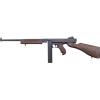
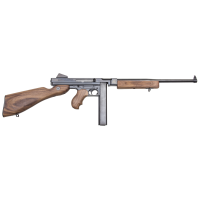
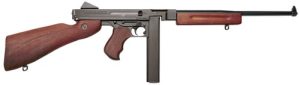
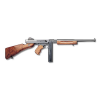
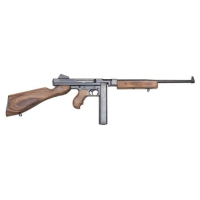
Auto-Ordnance still builds semi-automatic Thompsons, including an M1 pattern close to Miller’s. We covered the ownership route in our how to buy a Tommy gun guide.
Sergeant Horvath’s M1 Carbine
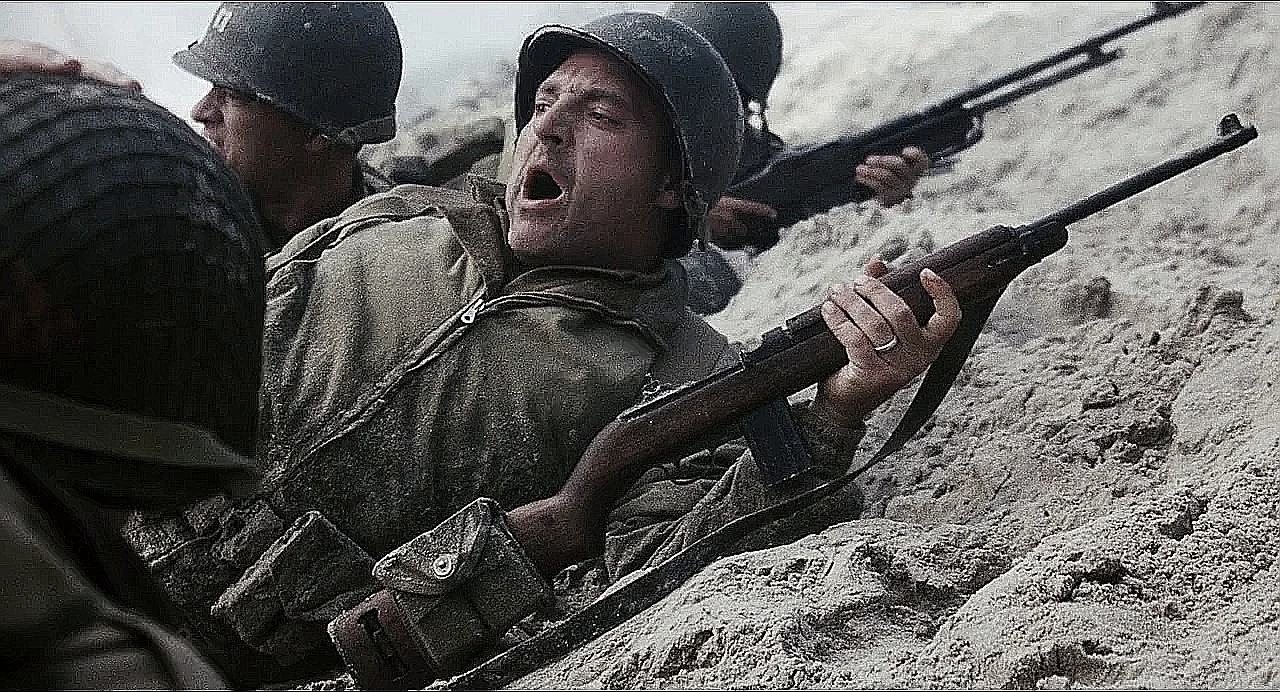
Tom Sizemore’s Sergeant Horvath runs an M1 Carbine with a two-magazine pouch strapped to the buttstock, which is exactly how GIs carried spare ammunition for them.
The carbine gets unfairly maligned. It was never meant to replace the Garand, and comparing .30 Carbine to .30-06 misses the point entirely. It was built for the people who couldn’t lug ten pounds of rifle around all day: officers, radio operators, mortar crews, drivers. Five and a half pounds, fifteen rounds, and far handier in a hedgerow than a Garand. Horvath is a senior NCO and it suits him.
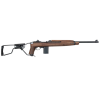

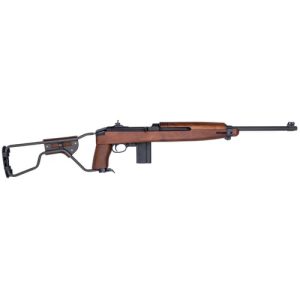
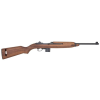
Auto-Ordnance and Inland both build new M1 Carbines, and Inland’s are made by a company that traces back to the wartime General Motors division. The paratroopers in the film carry the folding-stock M1A1 version, which is what airborne troops were actually issued.
The M1 Garand, and that ping
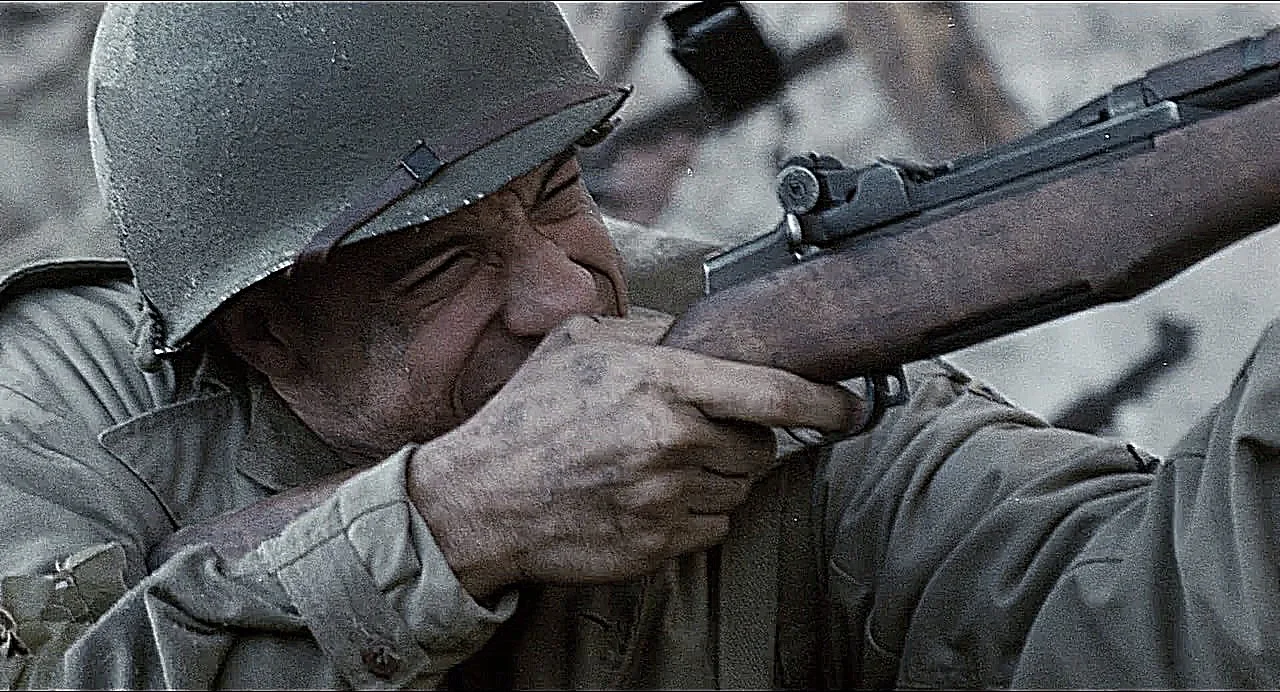
The M1 Garand is what everyone else is carrying. Mellish, Caparzo, Upham, Sergeant Hill, Ryan himself. Patton’s “greatest battle implement ever devised” line gets quoted to death but he wasn’t wrong about what a semi-automatic rifle did to a firefight against bolt-action opposition.
Look at the top of that frame. The empty en bloc clip is in mid-air. The Garand feeds from an eight-round steel clip that loads as a unit and is flung clear when the last round fires, and it makes a distinct metallic ring on the way out. Almost no film bothers with this. Saving Private Ryan not only includes the sound, it shows you the clip.
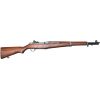
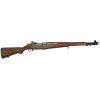
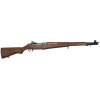
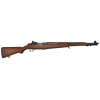
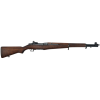
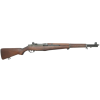
Original Garands are still out there in quantity, from Springfield Armory, Winchester, International Harvester and Harrington & Richardson production. Buying one is its own subject and we covered it in our used M1 Garand guide. If you want the cartridge in something modern, the best .30-06 rifles roundup is the place to start.
Jackson’s Springfield, and the scope that is wrong twice
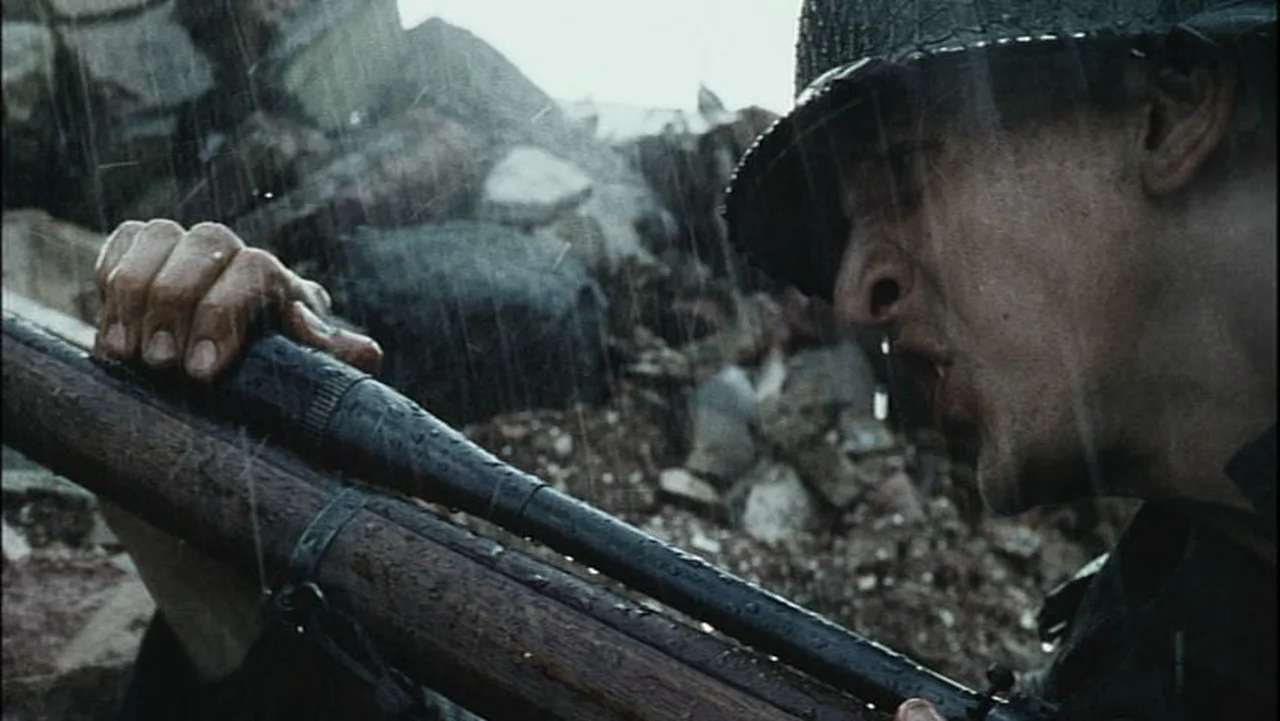
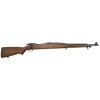
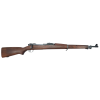
Barry Pepper’s Private Jackson carries an M1903A4, the sniper version of the Springfield. It’s the film’s most memorable weapon and the one thing about it that everybody misses is the glass.
The M1903A4 shipped with a Weaver 330C, a stubby little 2.5x scope that the Army designated the M73B1. Jackson never has one. Early in the film he’s running a Lyman Alaskan, and at Neuville he swaps to a long 8x Unertl target scope, which is what you can see him fiddling with above. Neither is correct. The Lyman was considered for the A4 and lost to the Weaver because Lyman couldn’t produce enough of them. The Unertl was a Marine Corps item, issued to USMC 1903A1 rifles in the Pacific, and it will not go onto an A4 at all without changing the mounts, which is exactly what the production had to do.
There is a better one buried in the same rifle, and Forgotten Weapons is where I saw it first. Watch Jackson dial in his windage. He is turning the parallax ring. On a target scope those are two different controls doing two different jobs, and the one he reaches for does nothing whatsoever to where the bullet lands.
So the most carefully made war film of its generation put the wrong optic on its sniper rifle, then changed it to a different wrong optic halfway through. My guess is somebody wanted a scope that read as a sniper scope on camera, and the correct one is small and undramatic.
What the film gets right is Jackson himself. He’s left-handed, working a bolt built for right-handers, and you can watch him fight the rifle every time he cycles it. Left-handed shooters lived with that for most of the twentieth century.
About the shot through the scope
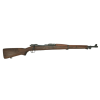
Jackson kills the German sniper in the bell tower with a round straight through the man’s own scope. That’s a direct nod to Carlos Hathcock, the Marine sniper who did it in Vietnam, and it is one of the most famous shots in the history of the trade.
It doesn’t really work at the distance the film implies. Hathcock’s shot was at close range and downhill, with the bullet arriving on a flat enough path to pass down the tube. At the 400 yards Jackson is shooting, the bullet is dropping steeply and coming in at an angle that would clip the scope body rather than thread all the lenses. It’s a great moment. It is not a repeatable one. There is more on Hathcock in our most famous military snipers rundown, and modern hardware in best military sniper rifles.
Reiben’s BAR, with the bipod thrown away
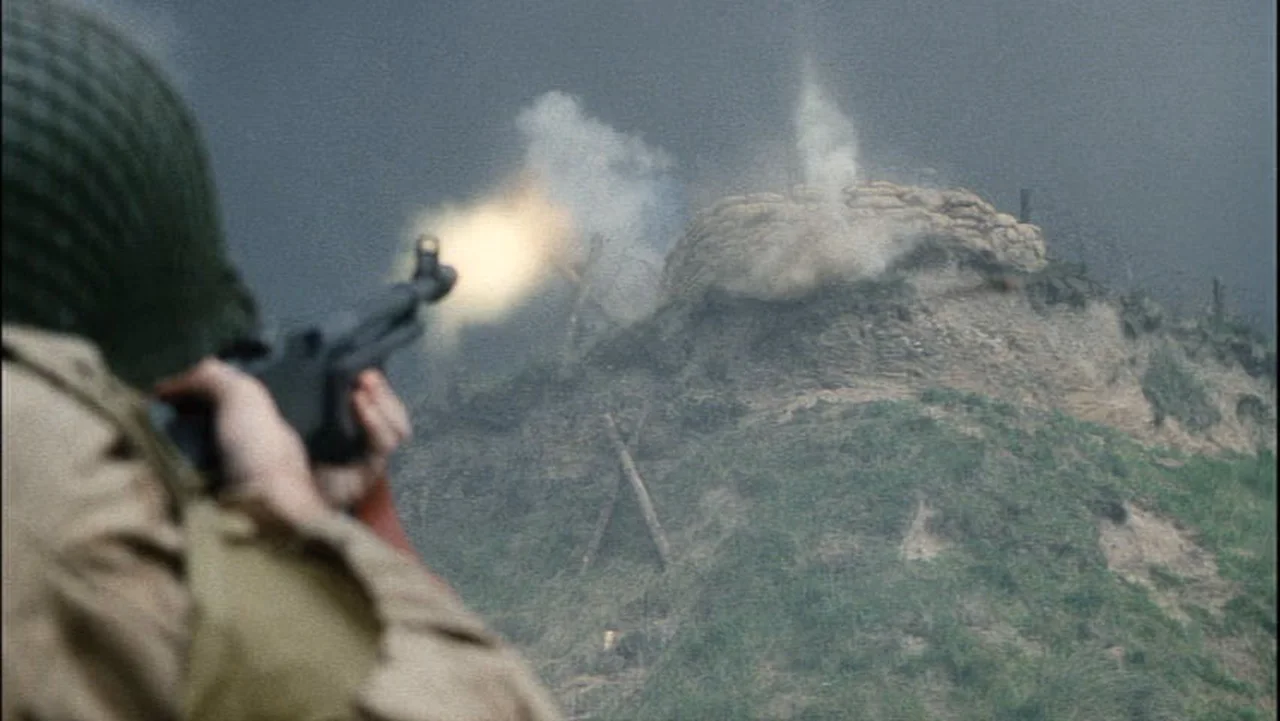
Edward Burns’ Reiben is the squad’s automatic rifleman with an M1918A2 Browning Automatic Rifle. Look at the muzzle in that shot. No bipod.
That’s not a mistake, it’s a period-correct habit. The A2’s bipod added around two and a half pounds to a gun that already weighed close to twenty, and BAR men stripped them off constantly so they could move and shoot from the shoulder. Reiben also runs it on the faster of its two automatic settings rather than the slow rate meant for supporting fire, which turns a light machine gun into something closer to an assault rifle. Both choices tell you he’s fighting the way a rifleman fights, not the way the manual says.
He also mentions losing his original BAR in the water on D-Day, which is a quiet nod to how much equipment went to the bottom of the Channel that morning.
Semi-automatic BAR reproductions do exist, built by Ohio Ordnance Works, but they’re a specialist item and I couldn’t find one listed with any of the retailers we track, so I’m not going to put a card here pretending otherwise.
The German side
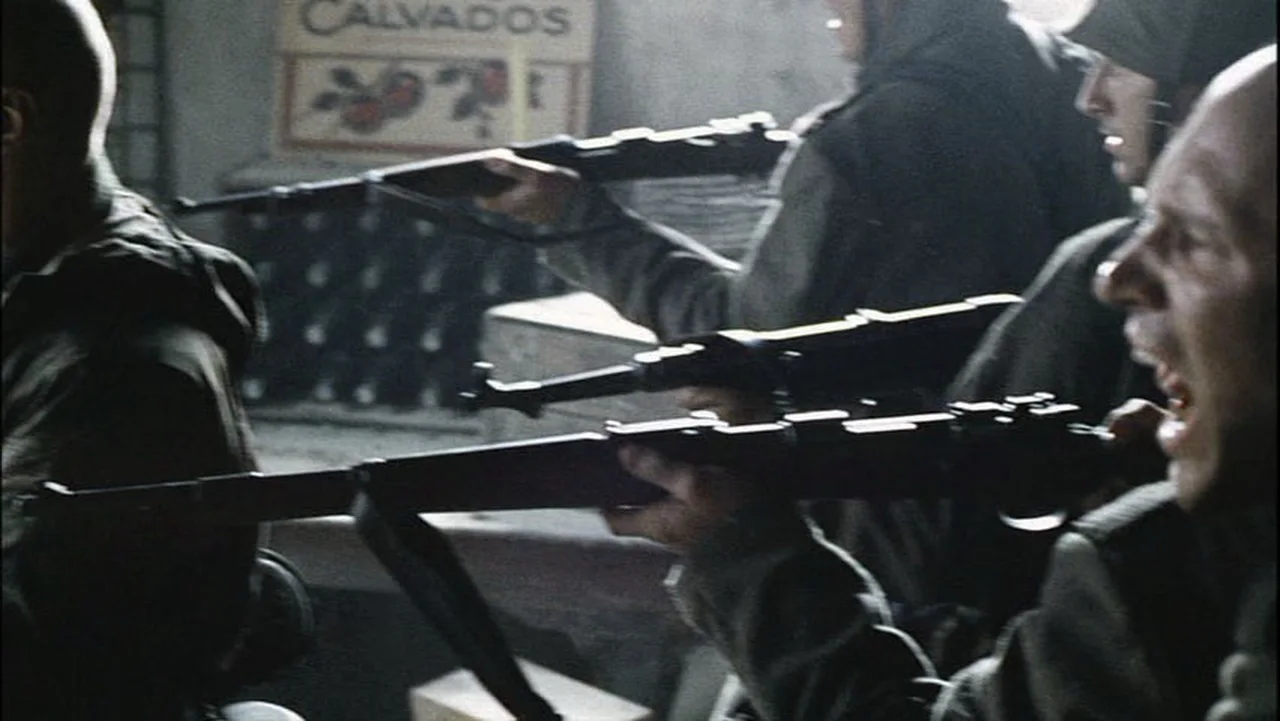
The Karabiner 98k does for the Germans what the Garand does for the Americans, and the film makes the contrast do real work. Five rounds, worked by hand, against eight rounds that come as fast as you can pull the trigger. Steamboat Willie kills Miller with one at the end, which is the film closing its own loop.
Here is a detail for the properly obsessed. Most of the Kar98ks in the film are missing their hooded front sights and their cleaning rods. That is the signature of Russian-capture rifles, guns taken by the Soviets in 1945, refurbished, stored for decades and eventually sold off. Half the Kar98ks in the West came home that way, and the film’s armory almost certainly went shopping in the same place everyone else does.
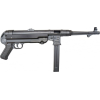
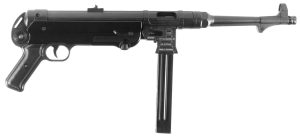
The MP 40 turns up throughout, mostly with NCOs and in the Ramelle fighting, which is right. It was never a general-issue weapon the way films usually suggest. Squad leaders got them, riflemen got Mausers.
The MG 42 over Omaha
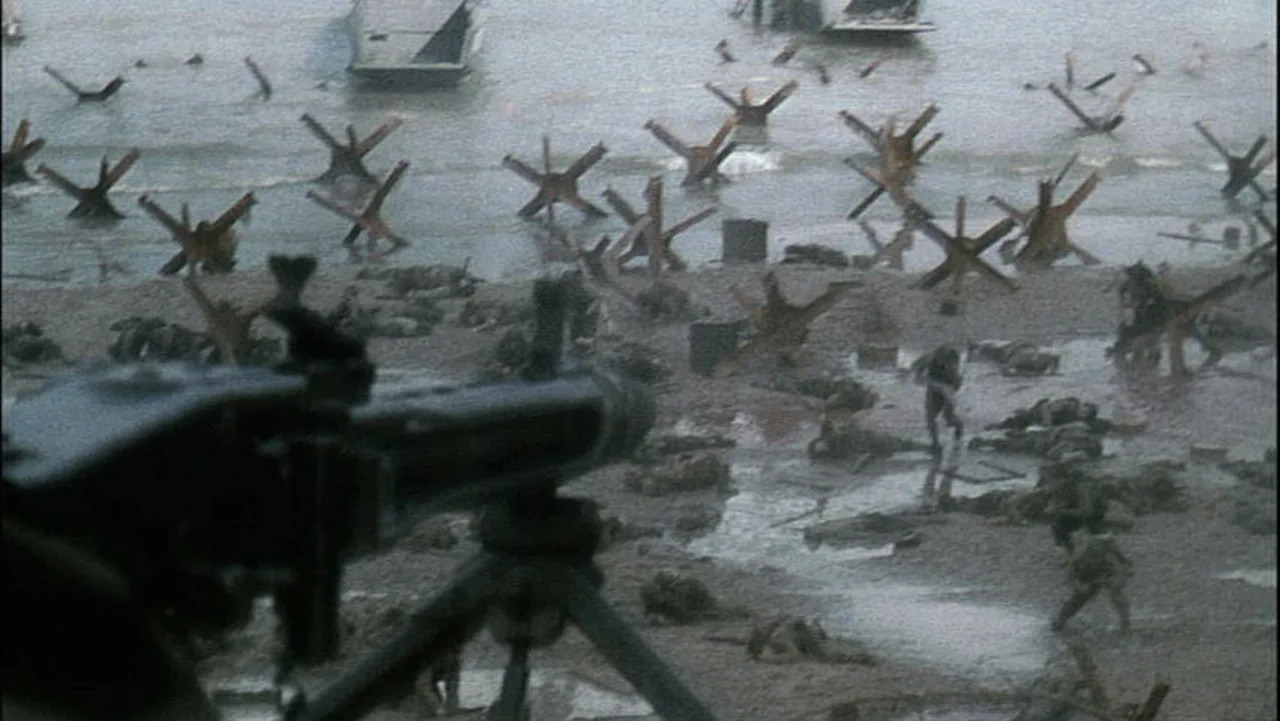
The MG 42 is the reason the beach sequence works. Around 1,200 rounds a minute, fast enough that the individual shots blur into a tearing noise, which is where “Hitler’s buzzsaw” came from. The film reproduces that rate honestly rather than slowing it down for the soundtrack, and looking down the gun at the sand is the most effective thing in the whole opening.
One liberty worth noting: the concrete positions the guns fire from are Schnabelstand bunkers, which were built as observation and spotting posts rather than machine gun emplacements, and there were none of them on the real Omaha Beach anyway. Dramatically it’s the right call. Historically it’s a compression.
A pistol against a tank that is really a tractor
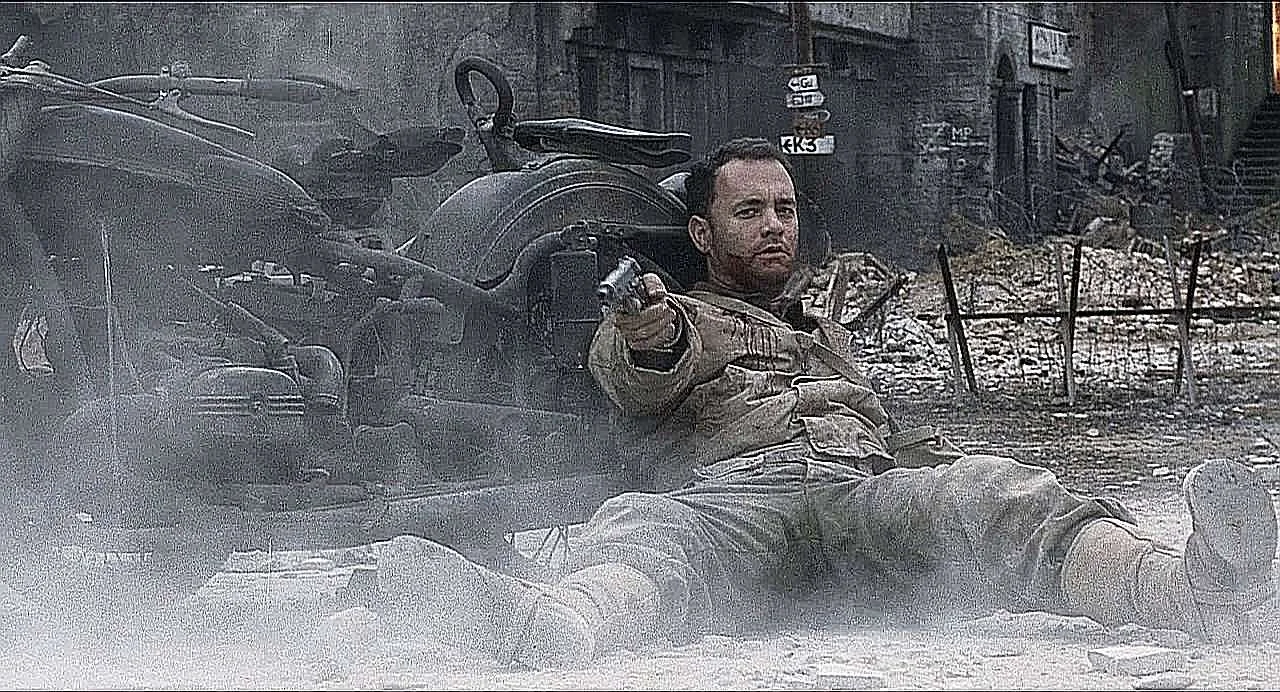
Miller, dying on the bridge, empties his M1911A1 into an oncoming Tiger. It’s the emotional peak of the film and it’s stacked with things worth knowing.
The Tiger is not a Tiger. Real ones barely exist and none were available, so the production built mock-ups on Soviet T-34 chassis. If the running gear looks wrong to you, that’s why. The coaxial and hull machine guns on them are MG 34 Panzerlauf, the tank version of the MG 34.
Count Miller’s shots and you get six, not the seven a loaded 1911 holds. That one I’ll defend: nobody tops off a magazine mid-battle, and he had fired the gun earlier. In one cut the slide is locked back out of battery and in the next it is working fine, which is harder to explain.
And the tank does not blow up because he shot it. A P-51 does that, which is the point of the scene. Miller dies believing his pistol did nothing, and it did nothing, and he did it anyway.
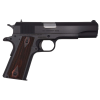
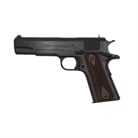
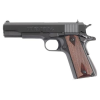
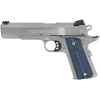
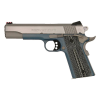
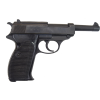
Colt still builds the Government Model and it has barely changed. We reviewed one in our Colt 1911 Government review. An SS Panzergrenadier also puts a Walther P38 into Horvath during the last fight.
Where the realism actually stops
The one that surprised me most is the weight. A real M1 Garand is nine and a half pounds and a BAR is nearly twice that, and in several shots the actors are swinging them around one-handed like broom handles. A number of the rifles and at least one BAR were lightweight props built for exactly that reason. It’s completely understandable and it’s also the clearest tell in the film once you notice it.
A few more, briefly. Mellish shouts that his Garand has jammed while the rifle is visibly still in battery. One paratrooper has to slap his Garand’s bolt closed, which does happen with a dirty rifle but should not on a clean one. Jackson gets more than five rounds out of the Springfield without reloading. Parker calls out that he is empty behind a machine gun with belt still loaded on it.
And one that goes the other way. Ryan and Miller arm 60mm mortar shells by hand and throw them like grenades, which sounds like pure invention. It is not. Corporal Charles “Commando” Kelly of the 143rd Infantry did exactly that near Altavilla in September 1943 and took the Medal of Honor for it. His citation reads that he picked up 60mm mortar shells, pulled the safety pins and used them as grenades, killing at least five of the enemy. The film has Ryan arm his against the mortar’s base plate instead, but the tactic is real. It borrowed a true story that reads as fiction.
Every weapon in Saving Private Ryan
Twenty-three of them, cross-checked one by one against IMFDB’s screen-by-screen breakdown of the film.
| Weapon | Who carries it | Note |
|---|---|---|
| M1A1 Thompson | Capt. Miller, Capt. Hamill, Cpl. Henderson | Miller’s, not Horvath’s; unwrapped from Pliofilm on the beach |
| M1 Carbine | TSgt. Horvath | Magazine pouch on the stock |
| M1A1 Carbine | 101st Airborne paratroopers | Folding stock, the correct airborne issue |
| M1 Garand | Mellish, Caparzo, Upham, Ryan, Hill | En bloc clip and ping both shown correctly |
| M7 rifle grenade launcher | US infantry on Omaha | Mounted on a Garand, firing an M9A1 grenade once the line breaks |
| M1903A4 Springfield | Pvt. Jackson | Wrong scope throughout: Lyman Alaskan, then Unertl |
| M1918A2 BAR | PFC Reiben | Bipod removed, fired on the fast auto setting |
| Browning M1919A4 | Pvt. Parker, Cpl. Henderson | Two at Ramelle, one fabric belt and one disintegrating link |
| M1911A1 | Miller, Horvath, Jackson | Six shots fired at the tank, not seven |
| Karabiner 98k | German infantry, Steamboat Willie | Props show Russian-capture features |
| Kar98k sniper | Heer sniper at Neuville | Zeiss ZF42 scope; kills Caparzo |
| MP 40 | German NCOs, SS Grenadiers | Correctly issued to leaders, not everyone |
| MG 42 | Beach defenders, MG nest | Rate of fire accurately reproduced |
| MG 34 Panzerlauf | “Tiger” tanks | The tanks are mocked-up T-34s |
| M1A1 Bazooka | Ryan, Horvath, Miller | Rocket deflects off the Tiger’s armor |
| Panzerschreck RPzB 54 | SS Grenadiers | The German answer to the bazooka |
| M1 Flamethrower | PFC Doyle | Clears the bunker above the beach |
| M1A1 Bangalore torpedo | Miller and beach engineers | Homage to Gen. Norman “Dutch” Cota |
| 2 cm Flak 38 | SS Grenadiers at Ramelle | Anti-aircraft gun used on infantry |
| M2 60mm mortar | Ryan and Miller | Shells thrown by hand, based on a real Medal of Honor action |
| Mk 2 hand grenade | Miller’s squad | Thrown back by a German at the MG nest; later into a disabled tank |
| Model 24 Stielhandgranate | SS Grenadiers | Two thrown at Mellish and Henderson on the M1919 |
| 15 cm TbtsK C/36 naval gun | German bunker, Omaha | Naval gun emplaced in a beach position |
Frequently asked questions
What gun does Captain Miller carry in Saving Private Ryan?
An M1A1 Thompson submachine gun in .45 ACP, carried from Omaha Beach through to the bridge at Ramelle. He also uses an M1911A1 pistol, most memorably in the final scene.
What rifle does Private Jackson use?
An M1903A4 Springfield, the sniper variant. It should wear a Weaver 330C scope. In the film it wears a Lyman Alaskan early on and a Unertl target scope later, and neither is correct for the rifle.
Are the guns in Saving Private Ryan accurate?
Unusually so. The weapons are the right models for the units and the period, the Garand’s en bloc clip is shown correctly, and the MG 42’s rate of fire is reproduced honestly. The main departures are Jackson’s scopes, some lightweight prop rifles, and the Tiger tanks being mock-ups on T-34 chassis.
Why does the M1 Garand make a ping sound?
The Garand loads from an eight-round en bloc clip that stays in the rifle while it feeds. When the last round is fired the clip is ejected upward and rings as it goes. You can see it in mid-air in the film.
Can you buy the guns from Saving Private Ryan?
Most of them. Original M1 Garands, Springfield 1903s, Kar98ks and P38s are all on the collector market, and Auto-Ordnance and Inland build new Thompsons and M1 Carbines. The MP 40 is available as a GSG semi-automatic. The BAR, MG 42 and MG 34 are machine guns and effectively out of reach.
Were the Tiger tanks real?
No. Surviving Tigers are museum pieces, so the production built visual mock-ups on Soviet T-34 chassis. They carry MG 34 Panzerlauf machine guns coaxially and in the hull.
Auto-Ordnance still builds the Thompson and the M1 Carbine as current semi-autos, and the 1911 has never stopped being made. Our cheap 1911 pistols under $500 guide covers the affordable end, and the gun deals page tracks the rest.
Keep exploring
More screen guns identified: Dirty Harry, Civil War, Django Unchained and Bullet Train.
4,015+ Gun & Ammo Deals
Updated daily from 200+ top retailers. Filter by category, caliber, action type, and price.
Related Guides