Last updated August 2026 · By Nick Hall, has shot ported and unported versions of the same pistol back to back and knows what the trade actually costs
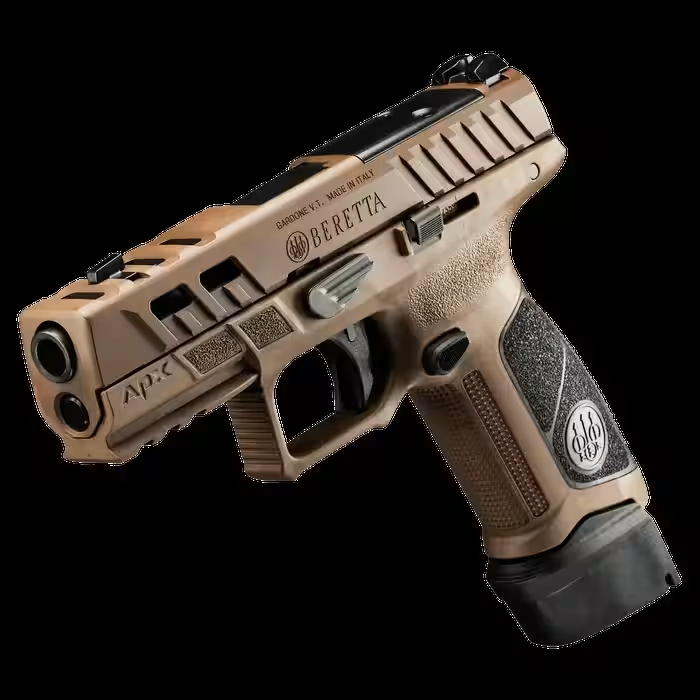
Quick take: Beretta has added the APX A1 Ported to its striker-fired line. A single angled port in the barrel lines up with seven ports cut through the slide, which is a more serious approach than the single hole most ported factory guns get. MSRP is $629, it ships with three magazines and three backstraps, and the slide is optics-ready.
- What it is: The Beretta APX A1 Ported, a 9mm striker-fired pistol with a 4.25-inch hammer-forged barrel carrying a single angled port that vents through seven ports in the slide.
- Price: $629 MSRP, shipping with three magazines, three interchangeable backstraps and a hard case.
- Magazine options: Three 10-round magazines, three 15-round magazines, or two 15-rounders plus one extended 21-round magazine.
- Colors: Olive drab green grip module with a black slide, or flat dark earth grip module and slide.
Beretta has been making firearms since 1526, which means the company was building guns before the pistol as we understand it existed. Five hundred years later the new product is a vented slide, and that is a more interesting sentence than it first appears.
Deals of the Day
Today's best discounts · Updated 3x daily
Gun Deals
See All →
Ammo Deals
See All →




Table of Contents
What Porting Does, and What It Costs
A port is a hole. Propellant gas escaping upward through it pushes the muzzle down, which counteracts the muzzle rise that recoil produces. The gun comes back onto target faster and the sights move less.
Nothing is free. Porting costs you muzzle velocity, because gas that vents is gas not pushing the bullet. It makes the pistol louder and brighter from the shooter’s position, which matters at an indoor range and matters more in the dark.
And it can spray gas and unburnt powder upward, which is the specific reason porting and appendix carry are an argument rather than a settled question.
Beretta’s Approach Is Not the Usual One
Most factory-ported pistols get a single hole in the barrel and a matching slot in the slide. It works, and it is cheap to machine.
The APX A1 Ported uses one angled port in the barrel aligned with seven ports cut through the slide. Spreading the vented gas across multiple exits changes how the pressure is distributed rather than concentrating it in one jet, which is the more considered engineering answer.
Beretta publishes the full specification on its APX A1 Ported page. The barrel is 4.25 inches and hammer-forged, which is the same barrel process the rest of the A1 line uses.
Where the APX Sits in Beretta’s World
Beretta entered the polymer-framed striker-fired market in 2017 with the original APX, which was late by roughly three decades and everybody knew it. The company that built the 92 had spent a very long time being the hammer-fired option in a striker-fired world. We tested the standard, unported A1 in our Beretta APX A1 review.
The A1 revision fixed most of what the first APX got wrong, and the line has quietly become competent rather than remarkable. That is not an insult. Competent is what most of this market is.
If you want the other Beretta, our 92FS review covers the gun the company is actually famous for.
Optics-Ready Matters More Than the Ports
The slide is cut for a red dot. In 2026 that is not a feature, it is a requirement, and a new duty-sized pistol arriving without one would be dead on arrival.
The interesting interaction is that porting and optics work well together. A dot magnifies your perception of muzzle movement, because you are watching a floating reticle rather than aligning two static sights, so anything that reduces muzzle rise makes a dot easier to track.
Our optics-ready pistol guide and pistol red dot guide cover the mounting standards, which remain the most confusing part of buying one.
The Magazine Options Tell You Who It Is For
Three 10-round magazines, three 15-rounders, or two 15-rounders and a 21-round extended magazine. The 10-round configuration exists because roughly ten states cap magazine capacity, and shipping a compliant version is now standard practice.
The 21-round option points at competition, and that is where a ported optics-ready 9mm makes the most obvious sense. Flatter shooting and faster follow-ups are worth real time on a stage in a way they are rarely worth anything in a defensive encounter.
Three backstraps and a hard case round out the package, which at $629 is a fair amount of kit.
Should You Buy a Ported Gun At All
For competition and range use, the case is straightforward. Less muzzle rise, faster splits, easier dot tracking, and the noise and flash costs are irrelevant on a square range in daylight.
For concealed carry, it is a genuine argument with reasonable people on both sides, because the flash signature at night is a real consideration and so is the gas venting upward from a gun drawn from an appendix holster, and neither of those concerns is manufactured by people who dislike porting.
For a first pistol, skip porting entirely. Learn to shoot the gun before you buy a solution to a problem you have not yet diagnosed. Our 9mm pistol guide covers the sensible starting points.
What $629 Buys in This Market
It is a competitive price for a duty-sized optics-ready 9mm with three magazines and a factory ported barrel. The comparable ported offerings from the larger American manufacturers land in similar territory or above it.
But Beretta’s problem in this segment has never been price or specification. It is that the striker-fired market has entrenched defaults, and displacing one is difficult even with a good gun.
The APX A1 Ported is a good gun. Whether that is enough is the same question Beretta has been answering since 2017.
One angled barrel port. Seven ports in the slide. Five hundred years of practice behind it.
Frequently Asked Questions
How much does the Beretta APX A1 Ported cost?
MSRP is $629. That includes three magazines, three interchangeable backstraps and a hard case.
What barrel length is the APX A1 Ported?
4.25 inches, hammer-forged, carrying a single angled port that vents through seven ports cut in the slide.
What magazine options are available?
Three 10-round magazines, three 15-round magazines, or two 15-round magazines plus one extended 21-round magazine, depending on the configuration you buy.
Is the slide optics-ready?
Yes. The slide is cut for a red dot, which pairs well with porting because a dot makes muzzle movement more visible than iron sights do.
What does porting a pistol actually do?
Gas vents upward through holes in the barrel and slide, pushing the muzzle down and reducing muzzle rise. The costs are lost velocity, more noise and more muzzle flash from the shooter's position.
Is a ported pistol good for concealed carry?
It is genuinely debated. Flash at night and gas venting upward from an appendix draw are real considerations. For competition and range use the trade is much more clearly favourable.
What colors does it come in?
An olive drab green grip module with a black slide, or a flat dark earth grip module and slide.
When did Beretta start making striker-fired pistols?
2017, with the original APX. The A1 revision addressed most of the first generation's shortcomings. Beretta itself has been manufacturing firearms since 1526.
Related Reading
- The best 9mm pistols
- The best optics-ready pistols
- The best pistol red dot sights
- Beretta 92FS review
- The best carry optics pistols
4,335+ Gun & Ammo Deals
Updated daily from 200+ top retailers. Filter by category, caliber, action type, and price.
Related Guides